


29901 Résultats
Classification:
articles
articles
Actions:
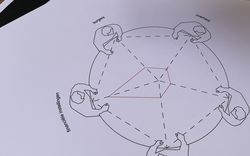
Francesco Garutti introduit Les choses qui nous entourent
Dossier:
Avec et au sein de
Avec et au sein de
Publié:
30 juin 2020
30 juin 2020
Titre:
Au sein d’une écologie de la pratique architecturale
Francesco Garutti introduit Les choses qui nous entourent
Actions:
Au sein d’une écologie de la pratique architecturale
Francesco Garutti introduit Les choses qui nous entourent
Actions:
Dossier:
Avec et au sein de
Avec et au sein de
Classification:
photographies
photographies
Numéro de référence:
ARCH268881
Description:
Contains photographic materials on 3 projects by Abalos & Herreros: - Amberes, exposición, AP164.S2.SS1.D12 (8 slides: interior views of the exhibition); - Es Pil•larí, zonas verdes?, AP164.S1.2000.D5 (30 slides: views of graphics, flowers and gardens); - Pabellón de gimnasia en el parque del Retiro, AP164.S1.2000.D3 (169 slides: site plans, maps, reference materials and aerial views).
ARCH268881
Description:
Contains photographic materials on 3 projects by Abalos & Herreros: - Amberes, exposición, AP164.S2.SS1.D12 (8 slides: interior views of the exhibition); - Es Pil•larí, zonas verdes?, AP164.S1.2000.D5 (30 slides: views of graphics, flowers and gardens); - Pabellón de gimnasia en el parque del Retiro, AP164.S1.2000.D3 (169 slides: site plans, maps, reference materials and aerial views).
Personnes et institutions:
Date:
between 1993 and 2004
between 1993 and 2004
Titre:
Ring binder with photographic materials related to three projects by Abalos & Herreros
Actions:
ARCH268881
Description:
Contains photographic materials on 3 projects by Abalos & Herreros: - Amberes, exposición, AP164.S2.SS1.D12 (8 slides: interior views of the exhibition); - Es Pil•larí, zonas verdes?, AP164.S1.2000.D5 (30 slides: views of graphics, flowers and gardens); - Pabellón de gimnasia en el parque del Retiro, AP164.S1.2000.D3 (169 slides: site plans, maps, reference materials and aerial views).
Ring binder with photographic materials related to three projects by Abalos & Herreros
Actions:
ARCH268881
Description:
Contains photographic materials on 3 projects by Abalos & Herreros: - Amberes, exposición, AP164.S2.SS1.D12 (8 slides: interior views of the exhibition); - Es Pil•larí, zonas verdes?, AP164.S1.2000.D5 (30 slides: views of graphics, flowers and gardens); - Pabellón de gimnasia en el parque del Retiro, AP164.S1.2000.D3 (169 slides: site plans, maps, reference materials and aerial views).
Classification:
photographies
photographies
Date:
between 1993 and 2004
between 1993 and 2004
Personnes et institutions:
Classification:
photographies
photographies
Numéro de référence:
ARCH256427
Description:
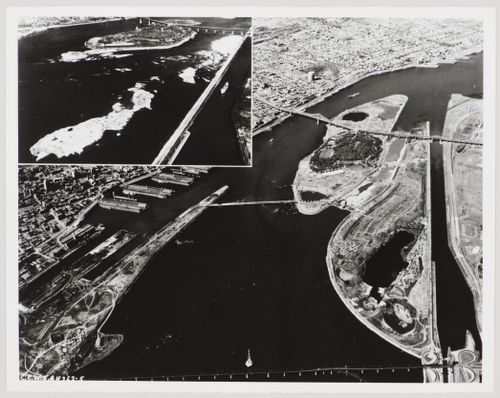
"The site of Expo, then and now. The inset shows Ile Sainte-Helene as of July 23, 1963, just before work began on enlarging the site. The main picture shows the Exhibition grounds today. / On voit ci-dessus le terrain de l'Exposition universelle et internationale de Montréal avant le début des travaux d'agrandissement, le 23 juillet 1963 en haut à gauche. Dans le reste de la photo, on voit sa configuration telle qu'elle est aujourd'hui."--Description.
ARCH256427
Description:
"The site of Expo, then and now. The inset shows Ile Sainte-Helene as of July 23, 1963, just before work began on enlarging the site. The main picture shows the Exhibition grounds today. / On voit ci-dessus le terrain de l'Exposition universelle et internationale de Montréal avant le début des travaux d'agrandissement, le 23 juillet 1963 en haut à gauche. Dans le reste de la photo, on voit sa configuration telle qu'elle est aujourd'hui."--Description.
Personnes et institutions:
Date:
1963-1965
1963-1965
Titre:
Aerial views of the Île Sainte-Hélène and Île Notre-Dame sites prior and after their enlargement, Expo 67, Montréal, Québec
Actions:
ARCH256427
Description:
"The site of Expo, then and now. The inset shows Ile Sainte-Helene as of July 23, 1963, just before work began on enlarging the site. The main picture shows the Exhibition grounds today. / On voit ci-dessus le terrain de l'Exposition universelle et internationale de Montréal avant le début des travaux d'agrandissement, le 23 juillet 1963 en haut à gauche. Dans le reste de la photo, on voit sa configuration telle qu'elle est aujourd'hui."--Description.
Aerial views of the Île Sainte-Hélène and Île Notre-Dame sites prior and after their enlargement, Expo 67, Montréal, Québec
Actions:
ARCH256427
Description:
"The site of Expo, then and now. The inset shows Ile Sainte-Helene as of July 23, 1963, just before work began on enlarging the site. The main picture shows the Exhibition grounds today. / On voit ci-dessus le terrain de l'Exposition universelle et internationale de Montréal avant le début des travaux d'agrandissement, le 23 juillet 1963 en haut à gauche. Dans le reste de la photo, on voit sa configuration telle qu'elle est aujourd'hui."--Description.
Classification:
photographies
photographies
Date:
1963-1965
1963-1965
Personnes et institutions:
Classification:
documents textuels
documents textuels
Numéro de référence:
CD042.S1.001
Description:
Box contains a spiral bound volume of texts for the exhibition "Money Matters: A Critical Look at Bank Architecture" by the Museum of Fine Arts, Houston, various slides of bank buildings in Canada and in the United States, research materials on Canadian bank building, including photocopies of publications, press clippings, and publications. Also contains a first spiral bound volume of press clippings on American bank buildings.
CD042.S1.001
Description:
Box contains a spiral bound volume of texts for the exhibition "Money Matters: A Critical Look at Bank Architecture" by the Museum of Fine Arts, Houston, various slides of bank buildings in Canada and in the United States, research materials on Canadian bank building, including photocopies of publications, press clippings, and publications. Also contains a first spiral bound volume of press clippings on American bank buildings.
Personnes et institutions:
Date:
1980-1990
1980-1990
Titre:
Research material on Canadian bank buildings
Actions:
CD042.S1.001
Description:
Box contains a spiral bound volume of texts for the exhibition "Money Matters: A Critical Look at Bank Architecture" by the Museum of Fine Arts, Houston, various slides of bank buildings in Canada and in the United States, research materials on Canadian bank building, including photocopies of publications, press clippings, and publications. Also contains a first spiral bound volume of press clippings on American bank buildings.
Research material on Canadian bank buildings
Actions:
CD042.S1.001
Description:
Box contains a spiral bound volume of texts for the exhibition "Money Matters: A Critical Look at Bank Architecture" by the Museum of Fine Arts, Houston, various slides of bank buildings in Canada and in the United States, research materials on Canadian bank building, including photocopies of publications, press clippings, and publications. Also contains a first spiral bound volume of press clippings on American bank buildings.
Classification:
documents textuels
documents textuels
Date:
1980-1990
1980-1990
Personnes et institutions:
Niveau de description archivistique:
Projet
Projet
Titre:
Carbon Tower (2001)
Carbon Tower (2001)
Numéro de référence:
AP174.S1.2001.D1
Description:
This project file documents an unbuilt design by Testa & Weiser for Carbon Tower (2001), a forty-storey building made almost entirely of carbon fibre. The project was developed in parallel with scripting software designed while Peter Testa and Devyn Weiser co-directed the Emergent Design Group at MIT. "The tower consists of an interdependent set of parts: floor plates hang from a diagrid structure of bundled fibres reinforced by two double-helix covered ramps, which are run in and out of the structure and are themselves made of strands woven at a finer scale. A thin composite skin—glass would be too heavy—wraps the tower’s parts together. A collaboration with Arup in 2002 allowed Testa & Weiser to simplify the scheme even further, by moving all core elements, from elevators to structural supports, to the tower’s perimeter. To take full advantage of the flexibility and energy efficiency of composite materials, Testa & Weiser also imagined that the carbon fibre structures would be formed on site through a process called pultrusion."[1] The file contains a large number of digital files documenting the conceptual and design development of the project; consultation with Arup Consulting Engineers, New York; research on composite materials; fabrication of 3D printed physical models by 3D Systems and Windform; and exhibition of the project at several museums and galleries, including the Museum of Contemporary Art, Los Angeles and the Cooper-Hewitt Smithsonian Design Museum, New York. Also contained in the file are 56 paper drawings (including some sketches done on top of printed computer-aided designs) and two 3D printed physical models produced by 3D Systems. Sources: [1] Canadian Centre for Architecture. Archaeology of the Digital 12: Testa & Weiser, Carbon Tower, ed. Greg Lynn (2015), ISBN 978-1-927071-25-0.
AP174.S1.2001.D1
Description:
This project file documents an unbuilt design by Testa & Weiser for Carbon Tower (2001), a forty-storey building made almost entirely of carbon fibre. The project was developed in parallel with scripting software designed while Peter Testa and Devyn Weiser co-directed the Emergent Design Group at MIT. "The tower consists of an interdependent set of parts: floor plates hang from a diagrid structure of bundled fibres reinforced by two double-helix covered ramps, which are run in and out of the structure and are themselves made of strands woven at a finer scale. A thin composite skin—glass would be too heavy—wraps the tower’s parts together. A collaboration with Arup in 2002 allowed Testa & Weiser to simplify the scheme even further, by moving all core elements, from elevators to structural supports, to the tower’s perimeter. To take full advantage of the flexibility and energy efficiency of composite materials, Testa & Weiser also imagined that the carbon fibre structures would be formed on site through a process called pultrusion."[1] The file contains a large number of digital files documenting the conceptual and design development of the project; consultation with Arup Consulting Engineers, New York; research on composite materials; fabrication of 3D printed physical models by 3D Systems and Windform; and exhibition of the project at several museums and galleries, including the Museum of Contemporary Art, Los Angeles and the Cooper-Hewitt Smithsonian Design Museum, New York. Also contained in the file are 56 paper drawings (including some sketches done on top of printed computer-aided designs) and two 3D printed physical models produced by 3D Systems. Sources: [1] Canadian Centre for Architecture. Archaeology of the Digital 12: Testa & Weiser, Carbon Tower, ed. Greg Lynn (2015), ISBN 978-1-927071-25-0.
Personnes et institutions:
Date:
2002-2014
2002-2014
Titre:
Carbon Tower (2001)
Actions:
AP174.S1.2001.D1
Description:
This project file documents an unbuilt design by Testa & Weiser for Carbon Tower (2001), a forty-storey building made almost entirely of carbon fibre. The project was developed in parallel with scripting software designed while Peter Testa and Devyn Weiser co-directed the Emergent Design Group at MIT. "The tower consists of an interdependent set of parts: floor plates hang from a diagrid structure of bundled fibres reinforced by two double-helix covered ramps, which are run in and out of the structure and are themselves made of strands woven at a finer scale. A thin composite skin—glass would be too heavy—wraps the tower’s parts together. A collaboration with Arup in 2002 allowed Testa & Weiser to simplify the scheme even further, by moving all core elements, from elevators to structural supports, to the tower’s perimeter. To take full advantage of the flexibility and energy efficiency of composite materials, Testa & Weiser also imagined that the carbon fibre structures would be formed on site through a process called pultrusion."[1] The file contains a large number of digital files documenting the conceptual and design development of the project; consultation with Arup Consulting Engineers, New York; research on composite materials; fabrication of 3D printed physical models by 3D Systems and Windform; and exhibition of the project at several museums and galleries, including the Museum of Contemporary Art, Los Angeles and the Cooper-Hewitt Smithsonian Design Museum, New York. Also contained in the file are 56 paper drawings (including some sketches done on top of printed computer-aided designs) and two 3D printed physical models produced by 3D Systems. Sources: [1] Canadian Centre for Architecture. Archaeology of the Digital 12: Testa & Weiser, Carbon Tower, ed. Greg Lynn (2015), ISBN 978-1-927071-25-0.
Carbon Tower (2001)
Actions:
AP174.S1.2001.D1
Description:
This project file documents an unbuilt design by Testa & Weiser for Carbon Tower (2001), a forty-storey building made almost entirely of carbon fibre. The project was developed in parallel with scripting software designed while Peter Testa and Devyn Weiser co-directed the Emergent Design Group at MIT. "The tower consists of an interdependent set of parts: floor plates hang from a diagrid structure of bundled fibres reinforced by two double-helix covered ramps, which are run in and out of the structure and are themselves made of strands woven at a finer scale. A thin composite skin—glass would be too heavy—wraps the tower’s parts together. A collaboration with Arup in 2002 allowed Testa & Weiser to simplify the scheme even further, by moving all core elements, from elevators to structural supports, to the tower’s perimeter. To take full advantage of the flexibility and energy efficiency of composite materials, Testa & Weiser also imagined that the carbon fibre structures would be formed on site through a process called pultrusion."[1] The file contains a large number of digital files documenting the conceptual and design development of the project; consultation with Arup Consulting Engineers, New York; research on composite materials; fabrication of 3D printed physical models by 3D Systems and Windform; and exhibition of the project at several museums and galleries, including the Museum of Contemporary Art, Los Angeles and the Cooper-Hewitt Smithsonian Design Museum, New York. Also contained in the file are 56 paper drawings (including some sketches done on top of printed computer-aided designs) and two 3D printed physical models produced by 3D Systems. Sources: [1] Canadian Centre for Architecture. Archaeology of the Digital 12: Testa & Weiser, Carbon Tower, ed. Greg Lynn (2015), ISBN 978-1-927071-25-0.
Niveau de description archivistique:
Project
Project
Date:
2002-2014
2002-2014
Personnes et institutions:
Niveau de description archivistique:
Série(s)
Série(s)
Numéro de référence:
AP177.S1
Description:
This series documents Jesse Reiser and Nanako Umemoto’s design process for the Kansai-kan of the National Diet Library competition in 1996. The variety of formats present in the series relate to the firm’s design process for this project, where manual drawings, physical models and CAD software contributed to one another throughout design iteration. Some digital files were created after the competition. Manual drawings include penciled sketches, detailed inked plans and printed CAD files generally taped on larger mylar sheets. They represent either plans or details of the building’s design. The printed renderings most often present elevations and sections of the buildings. For plans, other printed CAD files were inked back on mylar sheets. Drawings are often annotated and precisely identify the different elements of the library’s program. Digital files represent either elements of the architectural design (conveyors, auditorium, store, etc.) or detailed plans, including topographical lines and 3-D models. They include rendered and scanned images and plans in TIFF, GIF, JPEG, PICT (MacIntosh QuickDraw) and FH5 (Macromedia Freehand) file formats. Most CAD models were created in form*Z, although Microstation DGN files and IGES files created in Alias are also present in the project records. The directory “Kansai Documents” contains a few textual records created with the publishing software QuarkXPress, including labels to be printed and used on physical drawings, correspondence and a text by Jesse Reiser for the Reversible Destiny exhibition catalogue in 1997. Most directories and file names are indicative of the file’s content, clearly referring to building elements, although in some cases files names are non-descriptive. For example, some files use the name of one of the assistants (Yama). File names are sometimes repeated in different directories, including files that are part of AP177.S2.001
AP177.S1
Description:
This series documents Jesse Reiser and Nanako Umemoto’s design process for the Kansai-kan of the National Diet Library competition in 1996. The variety of formats present in the series relate to the firm’s design process for this project, where manual drawings, physical models and CAD software contributed to one another throughout design iteration. Some digital files were created after the competition. Manual drawings include penciled sketches, detailed inked plans and printed CAD files generally taped on larger mylar sheets. They represent either plans or details of the building’s design. The printed renderings most often present elevations and sections of the buildings. For plans, other printed CAD files were inked back on mylar sheets. Drawings are often annotated and precisely identify the different elements of the library’s program. Digital files represent either elements of the architectural design (conveyors, auditorium, store, etc.) or detailed plans, including topographical lines and 3-D models. They include rendered and scanned images and plans in TIFF, GIF, JPEG, PICT (MacIntosh QuickDraw) and FH5 (Macromedia Freehand) file formats. Most CAD models were created in form*Z, although Microstation DGN files and IGES files created in Alias are also present in the project records. The directory “Kansai Documents” contains a few textual records created with the publishing software QuarkXPress, including labels to be printed and used on physical drawings, correspondence and a text by Jesse Reiser for the Reversible Destiny exhibition catalogue in 1997. Most directories and file names are indicative of the file’s content, clearly referring to building elements, although in some cases files names are non-descriptive. For example, some files use the name of one of the assistants (Yama). File names are sometimes repeated in different directories, including files that are part of AP177.S2.001
Personnes et institutions:
Date:
1996-2014
1996-2014
Titre:
RUR Architecture working files
Actions:
AP177.S1
Description:
This series documents Jesse Reiser and Nanako Umemoto’s design process for the Kansai-kan of the National Diet Library competition in 1996. The variety of formats present in the series relate to the firm’s design process for this project, where manual drawings, physical models and CAD software contributed to one another throughout design iteration. Some digital files were created after the competition. Manual drawings include penciled sketches, detailed inked plans and printed CAD files generally taped on larger mylar sheets. They represent either plans or details of the building’s design. The printed renderings most often present elevations and sections of the buildings. For plans, other printed CAD files were inked back on mylar sheets. Drawings are often annotated and precisely identify the different elements of the library’s program. Digital files represent either elements of the architectural design (conveyors, auditorium, store, etc.) or detailed plans, including topographical lines and 3-D models. They include rendered and scanned images and plans in TIFF, GIF, JPEG, PICT (MacIntosh QuickDraw) and FH5 (Macromedia Freehand) file formats. Most CAD models were created in form*Z, although Microstation DGN files and IGES files created in Alias are also present in the project records. The directory “Kansai Documents” contains a few textual records created with the publishing software QuarkXPress, including labels to be printed and used on physical drawings, correspondence and a text by Jesse Reiser for the Reversible Destiny exhibition catalogue in 1997. Most directories and file names are indicative of the file’s content, clearly referring to building elements, although in some cases files names are non-descriptive. For example, some files use the name of one of the assistants (Yama). File names are sometimes repeated in different directories, including files that are part of AP177.S2.001
RUR Architecture working files
Actions:
AP177.S1
Description:
This series documents Jesse Reiser and Nanako Umemoto’s design process for the Kansai-kan of the National Diet Library competition in 1996. The variety of formats present in the series relate to the firm’s design process for this project, where manual drawings, physical models and CAD software contributed to one another throughout design iteration. Some digital files were created after the competition. Manual drawings include penciled sketches, detailed inked plans and printed CAD files generally taped on larger mylar sheets. They represent either plans or details of the building’s design. The printed renderings most often present elevations and sections of the buildings. For plans, other printed CAD files were inked back on mylar sheets. Drawings are often annotated and precisely identify the different elements of the library’s program. Digital files represent either elements of the architectural design (conveyors, auditorium, store, etc.) or detailed plans, including topographical lines and 3-D models. They include rendered and scanned images and plans in TIFF, GIF, JPEG, PICT (MacIntosh QuickDraw) and FH5 (Macromedia Freehand) file formats. Most CAD models were created in form*Z, although Microstation DGN files and IGES files created in Alias are also present in the project records. The directory “Kansai Documents” contains a few textual records created with the publishing software QuarkXPress, including labels to be printed and used on physical drawings, correspondence and a text by Jesse Reiser for the Reversible Destiny exhibition catalogue in 1997. Most directories and file names are indicative of the file’s content, clearly referring to building elements, although in some cases files names are non-descriptive. For example, some files use the name of one of the assistants (Yama). File names are sometimes repeated in different directories, including files that are part of AP177.S2.001
Niveau de description archivistique:
Series
Series
Date:
1996-2014
1996-2014
Personnes et institutions:
Classification:
documents textuels
documents textuels
Numéro de référence:
AP206.S2.045
Description:
File was originally housed in a binder along with content arranged in AP206.S2.046 and AP206.S2.047. This file includes the following papers: "Purpose of Architecture," 1977 Poem in Urdu "Is Architecture Responsible?" 1981 Speech given at inauguration of an exhibition of art, 1980 Untitled papers, 1979-1980 "To be Protected," 1979 "Destiny and Discretion," 1979 "Leadership" "Your Circle," 1979 "Deliverance" "Urbanisation and Environmental Problems: Hill Ecosystem"
AP206.S2.045
Description:
File was originally housed in a binder along with content arranged in AP206.S2.046 and AP206.S2.047. This file includes the following papers: "Purpose of Architecture," 1977 Poem in Urdu "Is Architecture Responsible?" 1981 Speech given at inauguration of an exhibition of art, 1980 Untitled papers, 1979-1980 "To be Protected," 1979 "Destiny and Discretion," 1979 "Leadership" "Your Circle," 1979 "Deliverance" "Urbanisation and Environmental Problems: Hill Ecosystem"
Personnes et institutions:
Date:
1977-1998
1977-1998
Titre:
Published and unpublished papers (folder 1 of 3)
Actions:
AP206.S2.045
Description:
File was originally housed in a binder along with content arranged in AP206.S2.046 and AP206.S2.047. This file includes the following papers: "Purpose of Architecture," 1977 Poem in Urdu "Is Architecture Responsible?" 1981 Speech given at inauguration of an exhibition of art, 1980 Untitled papers, 1979-1980 "To be Protected," 1979 "Destiny and Discretion," 1979 "Leadership" "Your Circle," 1979 "Deliverance" "Urbanisation and Environmental Problems: Hill Ecosystem"
Published and unpublished papers (folder 1 of 3)
Actions:
AP206.S2.045
Description:
File was originally housed in a binder along with content arranged in AP206.S2.046 and AP206.S2.047. This file includes the following papers: "Purpose of Architecture," 1977 Poem in Urdu "Is Architecture Responsible?" 1981 Speech given at inauguration of an exhibition of art, 1980 Untitled papers, 1979-1980 "To be Protected," 1979 "Destiny and Discretion," 1979 "Leadership" "Your Circle," 1979 "Deliverance" "Urbanisation and Environmental Problems: Hill Ecosystem"
Classification:
documents textuels
documents textuels
Date:
1977-1998
1977-1998
Personnes et institutions:
Classification:
expositions
expositions
Actions:
Description:
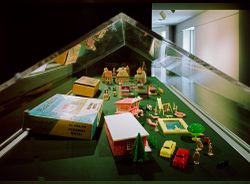
Les jouets sont de précieux témoignages sur la vie sociale et économique d’une époque. De plus, des blocs de construction en bois aux jeux de construction en fer et en acier, ils reflètent des changements techniques et des styles d’architecture très en vogue à un certain moment. Par ailleurs, les principes des techniques nouvelles à l’origine des nouveaux bâtiments, ont(...)
Les jouets sont de précieux témoignages sur la vie sociale et économique d’une époque. De plus, des blocs de construction en bois aux jeux de construction en fer et en acier, ils reflètent des changements techniques et des styles d’architecture très en vogue à un certain moment. Par ailleurs, les principes des techniques nouvelles à l’origine des nouveaux bâtiments, ont(...)
Localisation:
Salle octogonale
Salle octogonale
Date:
28 novembre 1990 au 31 mars 1991
28 novembre 1990 au 31 mars 1991
Titre:
L'architecture en jeux : jeux de construction du CCA
Actions:
Description:
Les jouets sont de précieux témoignages sur la vie sociale et économique d’une époque. De plus, des blocs de construction en bois aux jeux de construction en fer et en acier, ils reflètent des changements techniques et des styles d’architecture très en vogue à un certain moment. Par ailleurs, les principes des techniques nouvelles à l’origine des nouveaux bâtiments, ont(...)
L'architecture en jeux : jeux de construction du CCA
Actions:
Description:
Les jouets sont de précieux témoignages sur la vie sociale et économique d’une époque. De plus, des blocs de construction en bois aux jeux de construction en fer et en acier, ils reflètent des changements techniques et des styles d’architecture très en vogue à un certain moment. Par ailleurs, les principes des techniques nouvelles à l’origine des nouveaux bâtiments, ont(...)
Classification:
expositions
expositions
Date:
28 novembre 1990 au
31 mars 1991
28 novembre 1990 au
31 mars 1991
Localisation:
Salle octogonale
Salle octogonale
Classification:
documents textuels
documents textuels
Numéro de référence:
AP206.S2.059
Description:
File was originally housed in a binder along with content arranged in AP206.S2.056, AP206.S2.057 and AP206.S2.058. This file includes the following papers: "The Role of Architects in Urban and Rural Growth" "The Environment of Chandigarh," 1985 "Memo on a possible New Capital for Haryana" "Manifesto of the Peoples of Haryana" "Spatial Planning of Human Settlements," 1984 Poem delivered at art exhibition inauguration at Lalit Kala Academy, 1985
AP206.S2.059
Description:
File was originally housed in a binder along with content arranged in AP206.S2.056, AP206.S2.057 and AP206.S2.058. This file includes the following papers: "The Role of Architects in Urban and Rural Growth" "The Environment of Chandigarh," 1985 "Memo on a possible New Capital for Haryana" "Manifesto of the Peoples of Haryana" "Spatial Planning of Human Settlements," 1984 Poem delivered at art exhibition inauguration at Lalit Kala Academy, 1985
Personnes et institutions:
Date:
1982-1985
1982-1985
Titre:
Published and unpublished papers (folder 4 of 4)
Actions:
AP206.S2.059
Description:
File was originally housed in a binder along with content arranged in AP206.S2.056, AP206.S2.057 and AP206.S2.058. This file includes the following papers: "The Role of Architects in Urban and Rural Growth" "The Environment of Chandigarh," 1985 "Memo on a possible New Capital for Haryana" "Manifesto of the Peoples of Haryana" "Spatial Planning of Human Settlements," 1984 Poem delivered at art exhibition inauguration at Lalit Kala Academy, 1985
Published and unpublished papers (folder 4 of 4)
Actions:
AP206.S2.059
Description:
File was originally housed in a binder along with content arranged in AP206.S2.056, AP206.S2.057 and AP206.S2.058. This file includes the following papers: "The Role of Architects in Urban and Rural Growth" "The Environment of Chandigarh," 1985 "Memo on a possible New Capital for Haryana" "Manifesto of the Peoples of Haryana" "Spatial Planning of Human Settlements," 1984 Poem delivered at art exhibition inauguration at Lalit Kala Academy, 1985
Classification:
documents textuels
documents textuels
Date:
1982-1985
1982-1985
Personnes et institutions:
Niveau de description archivistique:
Série(s)
Série(s)
Numéro de référence:
AP189.S2
Description:
Series 2, Software for producing the projection and narration, 2007-2008, is composed of ten different versions of the module that generates the projection and narration in the open gallery. Seven of the versions were among the files saved to a compact disc following the CCA exhibition and have been kept together as group ARCH275207. Three of the versions were on a hard drive that was used in Rovereto and comprise group ARCH275212. The core elements of each module are two application files. One of these, whose name begins with "VE1" uses parameters contained in a file called "config.txt". The other application file, called "VECalibration" displays the entire volume of the projected architectural space. The geometric parameters for a room are recorded in a separate image file called "ecan-angles.jpg". A readme file in each module explains how the different files interact with one another. It also identifies the version of the "VE1" application files and any issues that may be related to the version. Each module includes hundreds of Shockwave Flash files (.swf), each containing an animated or still image of a person or persons and/or one or more pieces of furniture. Some of the .swf files contain an image of one or more furnished rooms inhabited by one or more persons. In most versions, the config.txt file contains a URL that accesses the database containing the sensor data. The URL references the file "captorsxml.aspx". As mentioned earlier, the config.txt file also contains parameters for the projected image, including scene geometry, colors and space occupation, and lists of the .swf files for persons and objects. Most versions of the module also include twenty-one .mp3 files, one of which is "empty". The other twenty each contain an audio recording of a female voice that states values for temperature, illumination and relative humidity and narrates a scenario written by Alain Robbe-Grillet. There is a French- and English-language version of each scenario
AP189.S2
Description:
Series 2, Software for producing the projection and narration, 2007-2008, is composed of ten different versions of the module that generates the projection and narration in the open gallery. Seven of the versions were among the files saved to a compact disc following the CCA exhibition and have been kept together as group ARCH275207. Three of the versions were on a hard drive that was used in Rovereto and comprise group ARCH275212. The core elements of each module are two application files. One of these, whose name begins with "VE1" uses parameters contained in a file called "config.txt". The other application file, called "VECalibration" displays the entire volume of the projected architectural space. The geometric parameters for a room are recorded in a separate image file called "ecan-angles.jpg". A readme file in each module explains how the different files interact with one another. It also identifies the version of the "VE1" application files and any issues that may be related to the version. Each module includes hundreds of Shockwave Flash files (.swf), each containing an animated or still image of a person or persons and/or one or more pieces of furniture. Some of the .swf files contain an image of one or more furnished rooms inhabited by one or more persons. In most versions, the config.txt file contains a URL that accesses the database containing the sensor data. The URL references the file "captorsxml.aspx". As mentioned earlier, the config.txt file also contains parameters for the projected image, including scene geometry, colors and space occupation, and lists of the .swf files for persons and objects. Most versions of the module also include twenty-one .mp3 files, one of which is "empty". The other twenty each contain an audio recording of a female voice that states values for temperature, illumination and relative humidity and narrates a scenario written by Alain Robbe-Grillet. There is a French- and English-language version of each scenario
Personnes et institutions:
Date:
2007-2008
2007-2008
Titre:
Software for producing the projection and narration
Actions:
AP189.S2
Description:
Series 2, Software for producing the projection and narration, 2007-2008, is composed of ten different versions of the module that generates the projection and narration in the open gallery. Seven of the versions were among the files saved to a compact disc following the CCA exhibition and have been kept together as group ARCH275207. Three of the versions were on a hard drive that was used in Rovereto and comprise group ARCH275212. The core elements of each module are two application files. One of these, whose name begins with "VE1" uses parameters contained in a file called "config.txt". The other application file, called "VECalibration" displays the entire volume of the projected architectural space. The geometric parameters for a room are recorded in a separate image file called "ecan-angles.jpg". A readme file in each module explains how the different files interact with one another. It also identifies the version of the "VE1" application files and any issues that may be related to the version. Each module includes hundreds of Shockwave Flash files (.swf), each containing an animated or still image of a person or persons and/or one or more pieces of furniture. Some of the .swf files contain an image of one or more furnished rooms inhabited by one or more persons. In most versions, the config.txt file contains a URL that accesses the database containing the sensor data. The URL references the file "captorsxml.aspx". As mentioned earlier, the config.txt file also contains parameters for the projected image, including scene geometry, colors and space occupation, and lists of the .swf files for persons and objects. Most versions of the module also include twenty-one .mp3 files, one of which is "empty". The other twenty each contain an audio recording of a female voice that states values for temperature, illumination and relative humidity and narrates a scenario written by Alain Robbe-Grillet. There is a French- and English-language version of each scenario
Software for producing the projection and narration
Actions:
AP189.S2
Description:
Series 2, Software for producing the projection and narration, 2007-2008, is composed of ten different versions of the module that generates the projection and narration in the open gallery. Seven of the versions were among the files saved to a compact disc following the CCA exhibition and have been kept together as group ARCH275207. Three of the versions were on a hard drive that was used in Rovereto and comprise group ARCH275212. The core elements of each module are two application files. One of these, whose name begins with "VE1" uses parameters contained in a file called "config.txt". The other application file, called "VECalibration" displays the entire volume of the projected architectural space. The geometric parameters for a room are recorded in a separate image file called "ecan-angles.jpg". A readme file in each module explains how the different files interact with one another. It also identifies the version of the "VE1" application files and any issues that may be related to the version. Each module includes hundreds of Shockwave Flash files (.swf), each containing an animated or still image of a person or persons and/or one or more pieces of furniture. Some of the .swf files contain an image of one or more furnished rooms inhabited by one or more persons. In most versions, the config.txt file contains a URL that accesses the database containing the sensor data. The URL references the file "captorsxml.aspx". As mentioned earlier, the config.txt file also contains parameters for the projected image, including scene geometry, colors and space occupation, and lists of the .swf files for persons and objects. Most versions of the module also include twenty-one .mp3 files, one of which is "empty". The other twenty each contain an audio recording of a female voice that states values for temperature, illumination and relative humidity and narrates a scenario written by Alain Robbe-Grillet. There is a French- and English-language version of each scenario
Niveau de description archivistique:
Series 2
Series 2
Date:
2007-2008
2007-2008
Personnes et institutions:


