


2560 Résultats
Classification:
livres
livres
Titre:
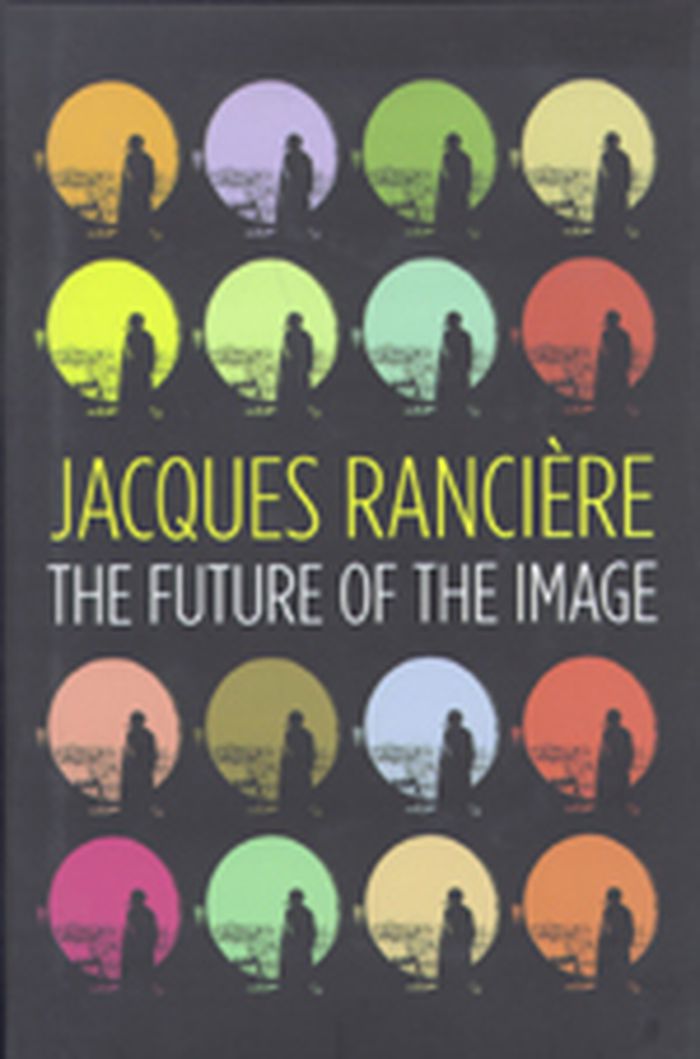
The future of the image
The future of the image
Actions:
Prix:
$33.50
(disponible sur commande)
Résumé:
In "The future of the image", Jacques Rancière develops a fascinating new concept of the image in contemporary art, showing how art and politics have always been intrinsically intertwined. Covering a range of art movements, and thinkers such as Foucault, Deleuze, Adorno, Barthes, Lyotard and Greenberg, Rancière argues that contemporary theorists of the image are suffering(...)
Titre:
The future of the image
Actions:
Prix:
$33.50
(disponible sur commande)
Résumé:
In "The future of the image", Jacques Rancière develops a fascinating new concept of the image in contemporary art, showing how art and politics have always been intrinsically intertwined. Covering a range of art movements, and thinkers such as Foucault, Deleuze, Adorno, Barthes, Lyotard and Greenberg, Rancière argues that contemporary theorists of the image are suffering from religious tendencies. He suggests that there is a stark political choice in art : it can either reinforce a radical democracy, or create a new reactionary mysticism. For Rancière there is never a pure art : the aesthetic revolution will always embrace egalitarian ideals.
Classification:
livres
livres
Publication:
juin 2007, London, New York
juin 2007, London, New York
Sujet:
Théorie/ philosophie
Théorie/ philosophie
Classification:
livres
livres

Actions:
Prix:
$82.00
(disponible en magasin)
Résumé:
The desire for color photos has prevailed over the world of photography from the very beginning. What were the early techniques? And when did color become accessible to everyone? The Albertina’s unique collection sheds light on the complex topic of historical color photos. Photography’s various coloring processes opened up a radiant new cosmos. This publication(...)
Titre:
True colors: Color in photography from 1848-1955
Actions:
Prix:
$82.00
(disponible en magasin)
Résumé:
The desire for color photos has prevailed over the world of photography from the very beginning. What were the early techniques? And when did color become accessible to everyone? The Albertina’s unique collection sheds light on the complex topic of historical color photos. Photography’s various coloring processes opened up a radiant new cosmos. This publication includes works ranging from early colorized one-offs to the emergence of mass-produced color photographs on a positive-negative basis. The numerous techniques, many of them little-known, and the resulting diverse applications reveal a revolution across our entire visual culture.
Classification:
livres
livres
Publication:
août 2025
août 2025
Sujet:
Photographie- collections
Photographie- collections
Classification:
livres
livres

Titre:
The future of the image
The future of the image
Actions:
Prix:
$18.50
(disponible sur commande)
Résumé:
In The Future of the Image, Jacques Rancière develops a fascinating new concept of the image in contemporary art, showing how art and politics have always been intrinsically intertwined. Covering a range of art movements, and thinkers such as Foucault, Deleuze, Adorno, Barthes, Lyotard and Greenberg, Rancière argues that contemporary theorists of the image are suffering(...)
Titre:
The future of the image
Actions:
Prix:
$18.50
(disponible sur commande)
Résumé:
In The Future of the Image, Jacques Rancière develops a fascinating new concept of the image in contemporary art, showing how art and politics have always been intrinsically intertwined. Covering a range of art movements, and thinkers such as Foucault, Deleuze, Adorno, Barthes, Lyotard and Greenberg, Rancière argues that contemporary theorists of the image are suffering from religious tendencies. He suggests that there is a stark political choice in art: it can either reinforce a radical democracy, or create a new reactionary mysticism. For Rancière there is never a pure art: the aesthetic revolution will always embrace egalitarian ideals.
Classification:
livres
livres
Publication:
février 2009, London, New York
février 2009, London, New York
Sujet:
Théorie de l’art
Théorie de l’art
Classification:
livres
livres

Prix:
$21.95
(disponible sur commande)
Résumé:
Young people ambitious to change the world and unhinge the rules holding it together, enjoying poking fun at it a little, respectfully but bravely, even daring to bring about 'revolution', but 'without anybody actually noticing', as the master Bruno Munari would have pointed out with a smile. And as our King Midas of communication and design, who would really be at home(...)
Titre:
How to break the rules of brand design in 10+8 easy exercises
Actions:
Prix:
$21.95
(disponible sur commande)
Résumé:
Young people ambitious to change the world and unhinge the rules holding it together, enjoying poking fun at it a little, respectfully but bravely, even daring to bring about 'revolution', but 'without anybody actually noticing', as the master Bruno Munari would have pointed out with a smile. And as our King Midas of communication and design, who would really be at home here with these people, would have said, the healthy rule that now needs to be applied much more often and with greater clarity is that of breaking them (the rules) in order to move beyond them.
Classification:
livres
livres
Publication:
avril 2008, Mantova
avril 2008, Mantova
Sujet:
Théorie du design
Théorie du design
Classification:
livres
livres

Prix:
$40.00
(disponible sur commande)
Résumé:
The cultural legacy of Romantic Paris includes a museum that shelters fragments rescued from the rubble of the Revolution and the display of masterpieces open to one and all that we visit today as the Louvre. Old neighbourhoods were renewed with gleaming arcades of iron and glass prefiguring contemporary shopping malls, and entire neighbourhoods were built from scratch.(...)
Titre:
Romantic Paris: histories of a cultural landscape, 1800 - 1850
Actions:
Prix:
$40.00
(disponible sur commande)
Résumé:
The cultural legacy of Romantic Paris includes a museum that shelters fragments rescued from the rubble of the Revolution and the display of masterpieces open to one and all that we visit today as the Louvre. Old neighbourhoods were renewed with gleaming arcades of iron and glass prefiguring contemporary shopping malls, and entire neighbourhoods were built from scratch. Marrinan plots the zigzag trajectory of the monuments, spaces, and habits of a city that both looks back to the past and forward in time with all the optimism, self-doubts, and creative energy of a culture poised at the threshold of modernity.
Classification:
livres
livres
Publication:
janvier 1900, Stanford
janvier 1900, Stanford
Sujet:
Théorie de l’architecture
Théorie de l’architecture
Classification:
livres
livres
Prix:
$49.95
(disponible sur commande)
Résumé:
Simpson describes the transformation of America from wilderness into an agrarian and suburban landscape as the nation expanded westward after the Revolution. He highlights the role of influential people in this transformation and the critical policies and programs they used to acquire, survey, and dispose(...)
Titre:
Visions of paradise : glimpses of our landscape's legacy
Actions:
Prix:
$49.95
(disponible sur commande)
Résumé:
Simpson describes the transformation of America from wilderness into an agrarian and suburban landscape as the nation expanded westward after the Revolution. He highlights the role of influential people in this transformation and the critical policies and programs they used to acquire, survey, and dispose of the public domain. He shows how their actions reflected changes in our traditional values that considered land as property and a commodity primarily for functional use. This transformation in values has yielded a landscape of contradictions: it is at once a landscape of freedom and opportunity, order and disorder, permanence and transience.
Classification:
livres
livres
Publication:
avril 1999, Berkeley
avril 1999, Berkeley
Sujet:
Théorie du paysage
Théorie du paysage
Classification:
livres
livres

Actions:
Prix:
$56.95
(disponible sur commande)
Résumé:
Bringing together essays and architectural projects that discuss housing as a key component in the social and urban development of the Ethiopian capital, which has undergone rapid changes over the past two decades – and led to disruptive consequences for the city’s physical and social fabric. Housing has been one of the key factors in this transformation, impacting job(...)
Titre:
Global housing: dwelling in Addis Ababa
Actions:
Prix:
$56.95
(disponible sur commande)
Résumé:
Bringing together essays and architectural projects that discuss housing as a key component in the social and urban development of the Ethiopian capital, which has undergone rapid changes over the past two decades – and led to disruptive consequences for the city’s physical and social fabric. Housing has been one of the key factors in this transformation, impacting job creation, craftsmanship, social and spatial equality, dwelling practices, and more. Presenting twelve projects developed by graduate students from TU Delft’s Global Housing educational programme, the book explores alternative approaches to housing design from the perspective of this urban revolution.
Classification:
livres
livres
Publication:
septembre 2020
septembre 2020
Sujet:
L'humain et la ville
L'humain et la ville
Classification:
livres
livres

Actions:
Prix:
$60.00
(disponible sur commande)
Résumé:
Artificial Intelligence’s (AI) encounter with architecture is still in its infancy. However, current experiments and applications already are a testimony to their gradual intersection. This book provides an introduction to the topic through the triple lens of History, Application, and Theory. A chronology of architecture’s technological evolution first puts AI back in the(...)
Titre:
Artificial intelligence and architecture: From research to practice
Actions:
Prix:
$60.00
(disponible sur commande)
Résumé:
Artificial Intelligence’s (AI) encounter with architecture is still in its infancy. However, current experiments and applications already are a testimony to their gradual intersection. This book provides an introduction to the topic through the triple lens of History, Application, and Theory. A chronology of architecture’s technological evolution first puts AI back in the context of the discipline. The author then presents a collection of AI’s applications in architecture. The book finally gives the stage to contributors working at the forefront of this revolution. From Harvard to Foster & Partners, their perspectives provide a panorama of the discourse surrounding AI’s presence in the field.
Classification:
livres
livres
Publication:
mai 2022
mai 2022
Sujet:
Architecture numérique
Architecture numérique
Classification:
livres
livres

Prix:
$43.50
(disponible sur commande)
Résumé:
When Lenin asked, "Who will beat whom?" (Kto kogo?), he had no plan to wage revolutionary class war in culture. Many young Communists thought differently, however. Seeking in the name of the proletariat to wrest "cultural hegemony" from the intelligentsia, they turned culture into a battlefield in the 1920s. But was this, as Communist militants thought, a genuine class(...)
Titre:
The cultural front: power and culture in Revolutionary Russia
Actions:
Prix:
$43.50
(disponible sur commande)
Résumé:
When Lenin asked, "Who will beat whom?" (Kto kogo?), he had no plan to wage revolutionary class war in culture. Many young Communists thought differently, however. Seeking in the name of the proletariat to wrest "cultural hegemony" from the intelligentsia, they turned culture into a battlefield in the 1920s. But was this, as Communist militants thought, a genuine class struggle between "proletarian" Communists and the "bourgeois" intelligentsia? Or was it, as the intelligentsia believed, an onslaught by the ruling Communist Party on the eternal principles of cultural autonomy and intellectual freedom? In this volume, one of the foremost historians of the Soviet Union chronicles the fierce battle on "the cultural front" from the October Revolution through the Stalinist 1930s. Sheila Fitzpatrick brings together ten of her essays- two previously unpublished and all revised for inclusion here- which illuminate key arenas of the prolonged struggle over cultural values and institutional control. Individual essays deal with such major issues as the Cultural Revolution, the formation of the new Stalinist elite, and socialist realism, as well as recounting colorful episodes including the uproar over Shostakovich's opera Lady Macbeth of the Mtsensk District, arguments over sexual mores, and the new consumerism of the 1930s. Closely examining the cultural elites and orthodoxies that developed under Stalin, Fitzpatrick offers a provocative reinterpretation of the struggle's final outcome in which the intelligentsia, despite its loss of autonomy and the debasement of its culture, emerged as a partial victor.
Classification:
livres
livres
Publication:
octobre 1992
octobre 1992
Sujet:
Expositions en cours
Expositions en cours
Classification:
livres
livres

Actions:
Prix:
$32.00
(disponible sur commande)
Résumé:
Simple, healthy, and comforting, breakfast cereals are a perennially popular way to start the day. This book examines cereal’s long, distinguished, and surprising history—dating back to when, around 10,000 years ago, the agricultural revolution led people to break their fasts with wheat, rice, and corn porridges. Only in the second half of the nineteenth century did(...)
Titre:
Breakfast cereal: a global history
Actions:
Prix:
$32.00
(disponible sur commande)
Résumé:
Simple, healthy, and comforting, breakfast cereals are a perennially popular way to start the day. This book examines cereal’s long, distinguished, and surprising history—dating back to when, around 10,000 years ago, the agricultural revolution led people to break their fasts with wheat, rice, and corn porridges. Only in the second half of the nineteenth century did entrepreneurs and food reformers create the breakfast cereals we recognize today: Kellogg’s Corn Flakes, Cheerios, and Quaker Oats, among others. In this entertaining, well-illustrated account, Kathryn Cornell Dolan explores the history of breakfast cereals, including many historical and modern recipes that the reader can try at home.
Classification:
livres
livres
Publication:
mai 2023
mai 2023
Sujet:
Bouffe
Bouffe


