


29168 Résultats
Classification:
événements
événements
Titre:
Images parlantes, un circuit
Images parlantes, un circuit
Actions:
Description:
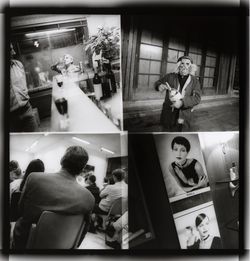
Tout au long d’un parcours d’interventions et d’installations en neuf segments à travers les espaces du CCA, Francesca Ammon, Davide Deriu, Reto Geiser, Sara Goldsmith, Catalina Mejía Moreno, Bas Princen, Mika Savela et Peter Sealy nous proposent de réfléchir aux relations essentielles et créatives qui unissent photographie et architecture. Au cours des dix huit(...)
Tout au long d’un parcours d’interventions et d’installations en neuf segments à travers les espaces du CCA, Francesca Ammon, Davide Deriu, Reto Geiser, Sara Goldsmith, Catalina Mejía Moreno, Bas Princen, Mika Savela et Peter Sealy nous proposent de réfléchir aux relations essentielles et créatives qui unissent photographie et architecture. Au cours des dix huit(...)
Mot(s)-clé(s):
Andrew W. Mellon Foundation, photographie, photographies, Francesca Ammon, Davide Deriu, Reto Geiser, Sara Goldsmith, Catalina Mejía Moreno, Bas Princen, Mika Savela, Peter Sealy
Andrew W. Mellon Foundation, photographie, photographies, Francesca Ammon, Davide Deriu, Reto Geiser, Sara Goldsmith, Catalina Mejía Moreno, Bas Princen, Mika Savela, Peter Sealy
Date:
14 octobre 2017, 16h
14 octobre 2017, 16h
Titre:
Images parlantes, un circuit
Actions:
Description:
Tout au long d’un parcours d’interventions et d’installations en neuf segments à travers les espaces du CCA, Francesca Ammon, Davide Deriu, Reto Geiser, Sara Goldsmith, Catalina Mejía Moreno, Bas Princen, Mika Savela et Peter Sealy nous proposent de réfléchir aux relations essentielles et créatives qui unissent photographie et architecture. Au cours des dix huit(...)
Images parlantes, un circuit
Actions:
Description:
Tout au long d’un parcours d’interventions et d’installations en neuf segments à travers les espaces du CCA, Francesca Ammon, Davide Deriu, Reto Geiser, Sara Goldsmith, Catalina Mejía Moreno, Bas Princen, Mika Savela et Peter Sealy nous proposent de réfléchir aux relations essentielles et créatives qui unissent photographie et architecture. Au cours des dix huit(...)
Classification:
événements
événements
Date:
14 octobre 2017
16h
14 octobre 2017
16h
Classification:
événements
événements

Titre:
Maristella Casciato : « Introducing Pierre Jeanneret—architect, designer, educator—in Chandigarh »
Maristella Casciato : « Introducing Pierre Jeanneret—architect, designer, educator—in Chandigarh »
Actions:
Description:
Le 18 novembre, Maristella Casciato, boursière et professeur d’histoire de l’architecture à l’École d’architecture « Aldo Rossi » de Cesenade, Université de Bologne, parle de la contribution essentielle de Pierre Jeanneret dans la construction de Chandigarh, en Inde. Ce séminaire présente « un autre » point de vue sur Pierre Jeanneret, cousin – moins connu – de Le Corbusier.
Le 18 novembre, Maristella Casciato, boursière et professeur d’histoire de l’architecture à l’École d’architecture « Aldo Rossi » de Cesenade, Université de Bologne, parle de la contribution essentielle de Pierre Jeanneret dans la construction de Chandigarh, en Inde. Ce séminaire présente « un autre » point de vue sur Pierre Jeanneret, cousin – moins connu – de Le Corbusier.
Localisation:
Théâtre Paul-Desmarais
Présentée en anglais Mot(s)-clé(s):
Maristella Casciato, Pierre Jeanneret
Théâtre Paul-Desmarais
Présentée en anglais Mot(s)-clé(s):
Maristella Casciato, Pierre Jeanneret
Date:
18 novembre 2010 , 18h
18 novembre 2010 , 18h
Titre:
Maristella Casciato : « Introducing Pierre Jeanneret—architect, designer, educator—in Chandigarh »
Actions:
Description:
Le 18 novembre, Maristella Casciato, boursière et professeur d’histoire de l’architecture à l’École d’architecture « Aldo Rossi » de Cesenade, Université de Bologne, parle de la contribution essentielle de Pierre Jeanneret dans la construction de Chandigarh, en Inde. Ce séminaire présente « un autre » point de vue sur Pierre Jeanneret, cousin – moins connu – de Le Corbusier.
Maristella Casciato : « Introducing Pierre Jeanneret—architect, designer, educator—in Chandigarh »
Actions:
Description:
Le 18 novembre, Maristella Casciato, boursière et professeur d’histoire de l’architecture à l’École d’architecture « Aldo Rossi » de Cesenade, Université de Bologne, parle de la contribution essentielle de Pierre Jeanneret dans la construction de Chandigarh, en Inde. Ce séminaire présente « un autre » point de vue sur Pierre Jeanneret, cousin – moins connu – de Le Corbusier.
Classification:
événements
événements
Date:
18 novembre 2010
18h
18 novembre 2010
18h
Localisation:
Théâtre Paul-Desmarais
Présentée en anglais Mot(s)-clé(s):
Maristella Casciato, Pierre Jeanneret
Théâtre Paul-Desmarais
Présentée en anglais Mot(s)-clé(s):
Maristella Casciato, Pierre Jeanneret
Classification:
événements
événements
Actions:
Description:
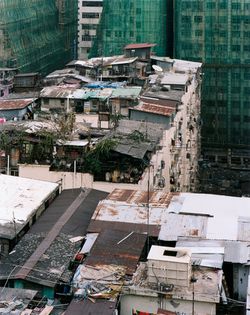
Les logements construits sur les toits des grandes tours par les résidents eux-mêmes font partie de l’histoire de Hong Kong depuis plus de cinquante ans. Ces structures vont de l’abri rudimentaire où se logent les plus démunis aux constructions à plusieurs étages dotées des commodités de la vie moderne. L’architecte Rufina Wu et le photographe Stefan Canham utilisent les(...)
Les logements construits sur les toits des grandes tours par les résidents eux-mêmes font partie de l’histoire de Hong Kong depuis plus de cinquante ans. Ces structures vont de l’abri rudimentaire où se logent les plus démunis aux constructions à plusieurs étages dotées des commodités de la vie moderne. L’architecte Rufina Wu et le photographe Stefan Canham utilisent les(...)
Localisation:
Théâtre Paul Desmarais
Théâtre Paul Desmarais
Date:
3 mai 2012 , 19h
3 mai 2012 , 19h
Titre:
L'enseignement de... Hong Kong
Actions:
Description:
Les logements construits sur les toits des grandes tours par les résidents eux-mêmes font partie de l’histoire de Hong Kong depuis plus de cinquante ans. Ces structures vont de l’abri rudimentaire où se logent les plus démunis aux constructions à plusieurs étages dotées des commodités de la vie moderne. L’architecte Rufina Wu et le photographe Stefan Canham utilisent les(...)
L'enseignement de... Hong Kong
Actions:
Description:
Les logements construits sur les toits des grandes tours par les résidents eux-mêmes font partie de l’histoire de Hong Kong depuis plus de cinquante ans. Ces structures vont de l’abri rudimentaire où se logent les plus démunis aux constructions à plusieurs étages dotées des commodités de la vie moderne. L’architecte Rufina Wu et le photographe Stefan Canham utilisent les(...)
Classification:
événements
événements
Date:
3 mai 2012
19h
3 mai 2012
19h
Localisation:
Théâtre Paul Desmarais
Théâtre Paul Desmarais
Classification:
archives
Niveau de description archivistique:
Collection
archives
Niveau de description archivistique:
Collection
Titre:
Futurecasting collection
Futurecasting collection
Numéro de référence:
CD048
Résumé:
This collection documents the activities of the “Futurecasting: Indigenous-led Architecture and Design in the Arctic” group formed by Jenni Hakovirta, Naomi Ratte, Nicole Luke, Magnus Antaris Tuolja, Andrea McIntosh, Robyn Adams, Berit Kristine Andersen Guvsám, Laila Susanna Kuhmunen, Johanna Minde, and Reanna Merasty. It contains materials related to the planning of seminars and workshops, and the creative process and projects created by its participants in 2022-2023 that were later presented in the Canadian Centre for Architecture’s exhibition and related publication “ᐊᖏᕐᕋᒧᑦ / Ruovttu Guvlui / Towards home” (2022-2023).
CD048
Résumé:
This collection documents the activities of the “Futurecasting: Indigenous-led Architecture and Design in the Arctic” group formed by Jenni Hakovirta, Naomi Ratte, Nicole Luke, Magnus Antaris Tuolja, Andrea McIntosh, Robyn Adams, Berit Kristine Andersen Guvsám, Laila Susanna Kuhmunen, Johanna Minde, and Reanna Merasty. It contains materials related to the planning of seminars and workshops, and the creative process and projects created by its participants in 2022-2023 that were later presented in the Canadian Centre for Architecture’s exhibition and related publication “ᐊᖏᕐᕋᒧᑦ / Ruovttu Guvlui / Towards home” (2022-2023).
Personnes et institutions:
Date:
2008-2023
2008-2023
Titre:
Futurecasting collection
Actions:
CD048
Résumé:
This collection documents the activities of the “Futurecasting: Indigenous-led Architecture and Design in the Arctic” group formed by Jenni Hakovirta, Naomi Ratte, Nicole Luke, Magnus Antaris Tuolja, Andrea McIntosh, Robyn Adams, Berit Kristine Andersen Guvsám, Laila Susanna Kuhmunen, Johanna Minde, and Reanna Merasty. It contains materials related to the planning of seminars and workshops, and the creative process and projects created by its participants in 2022-2023 that were later presented in the Canadian Centre for Architecture’s exhibition and related publication “ᐊᖏᕐᕋᒧᑦ / Ruovttu Guvlui / Towards home” (2022-2023).
Futurecasting collection
Actions:
CD048
Résumé:
This collection documents the activities of the “Futurecasting: Indigenous-led Architecture and Design in the Arctic” group formed by Jenni Hakovirta, Naomi Ratte, Nicole Luke, Magnus Antaris Tuolja, Andrea McIntosh, Robyn Adams, Berit Kristine Andersen Guvsám, Laila Susanna Kuhmunen, Johanna Minde, and Reanna Merasty. It contains materials related to the planning of seminars and workshops, and the creative process and projects created by its participants in 2022-2023 that were later presented in the Canadian Centre for Architecture’s exhibition and related publication “ᐊᖏᕐᕋᒧᑦ / Ruovttu Guvlui / Towards home” (2022-2023).
Classification:
archives
Niveau de description archivistique:
Collection
archives
Niveau de description archivistique:
Collection
Date:
2008-2023
2008-2023
Personnes et institutions:
Classification:
événements
événements
Actions:
Description:
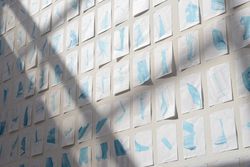
Quand Gordon Matta-Clark se procure les titres de propriété et la documentation d’une douzaine de petites parcelles non occupées à New York entre 1974 et 1977 (qui, en 1992, ont fait l’objet d’une exposition intitulée Reality Properties: Fake Estates), il n’a pas d’intention précise – autre que sa conviction suivant laquelle « l’existence de lots vacants et sous-utilisés(...)
Quand Gordon Matta-Clark se procure les titres de propriété et la documentation d’une douzaine de petites parcelles non occupées à New York entre 1974 et 1977 (qui, en 1992, ont fait l’objet d’une exposition intitulée Reality Properties: Fake Estates), il n’a pas d’intention précise – autre que sa conviction suivant laquelle « l’existence de lots vacants et sous-utilisés(...)
Localisation:
Théâtre Paul-Desmarais
Théâtre Paul-Desmarais
Date:
22 septembre 2016, 18h
22 septembre 2016, 18h
Titre:
Nicholas de Monchaux : Local Code
Actions:
Description:
Quand Gordon Matta-Clark se procure les titres de propriété et la documentation d’une douzaine de petites parcelles non occupées à New York entre 1974 et 1977 (qui, en 1992, ont fait l’objet d’une exposition intitulée Reality Properties: Fake Estates), il n’a pas d’intention précise – autre que sa conviction suivant laquelle « l’existence de lots vacants et sous-utilisés(...)
Nicholas de Monchaux : Local Code
Actions:
Description:
Quand Gordon Matta-Clark se procure les titres de propriété et la documentation d’une douzaine de petites parcelles non occupées à New York entre 1974 et 1977 (qui, en 1992, ont fait l’objet d’une exposition intitulée Reality Properties: Fake Estates), il n’a pas d’intention précise – autre que sa conviction suivant laquelle « l’existence de lots vacants et sous-utilisés(...)
Classification:
événements
événements
Date:
22 septembre 2016
18h
22 septembre 2016
18h
Localisation:
Théâtre Paul-Desmarais
Théâtre Paul-Desmarais
Classification:
événements
événements
Actions:
Description:
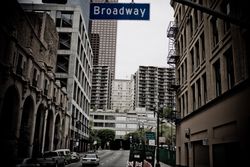
Richard Schave, un historien et guide de Los Angeles, analyse le développement de la ville depuis le tournage du documentaire urbain Reyner Banham Loves Los Angeles (R.-U.,1972), il y a 35 ans. Schave, un ancien étudiant de Banham, présente les recherches de son professeur en confrontant ses propres photographies documentaires à des extraits du film. Il analyse plus(...)
Richard Schave, un historien et guide de Los Angeles, analyse le développement de la ville depuis le tournage du documentaire urbain Reyner Banham Loves Los Angeles (R.-U.,1972), il y a 35 ans. Schave, un ancien étudiant de Banham, présente les recherches de son professeur en confrontant ses propres photographies documentaires à des extraits du film. Il analyse plus(...)
Localisation:
Théâtre Paul-Desmarais
Théâtre Paul-Desmarais
Date:
28 mai 2009
28 mai 2009
Titre:
L'enseignement de... Los Angeles
Actions:
Description:
Richard Schave, un historien et guide de Los Angeles, analyse le développement de la ville depuis le tournage du documentaire urbain Reyner Banham Loves Los Angeles (R.-U.,1972), il y a 35 ans. Schave, un ancien étudiant de Banham, présente les recherches de son professeur en confrontant ses propres photographies documentaires à des extraits du film. Il analyse plus(...)
L'enseignement de... Los Angeles
Actions:
Description:
Richard Schave, un historien et guide de Los Angeles, analyse le développement de la ville depuis le tournage du documentaire urbain Reyner Banham Loves Los Angeles (R.-U.,1972), il y a 35 ans. Schave, un ancien étudiant de Banham, présente les recherches de son professeur en confrontant ses propres photographies documentaires à des extraits du film. Il analyse plus(...)
Classification:
événements
événements
Date:
28 mai 2009
28 mai 2009
Localisation:
Théâtre Paul-Desmarais
Théâtre Paul-Desmarais
Classification:
articles
articles
Actions:
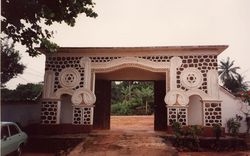
Ikem Stanley Okoye redéfinit les origines du modernisme africain
Titre:
Où n’y avait-il pas de modernisme?
Ikem Stanley Okoye redéfinit les origines du modernisme africain
Actions:
Où n’y avait-il pas de modernisme?
Ikem Stanley Okoye redéfinit les origines du modernisme africain
Actions:
Classification:
documents textuels, oeuvres d'art
documents textuels, oeuvres d'art

Actions:
Numéro de référence:
DR1974:0002:005:001-018
Description:
- This album contains four folios of text in Italian concerning the history and architecture of the Museo di fiscia e storia naturale, Florence. The names of the museum's patrons and the parts of the museum have been inserted by a contemporary hand on the lithographs in pen and black ink. The text is followed by ten lithographs, including a perspectival view of the museum, four general plans, two sections, and more detailed sections, plans and elevations of the Tribuna de Galileo designed by Giuseppe Martelli and the Osservatorio Astronomico designed by Gaspero Paoletti. Also included in the album are four manuscripts, all in French: a letter presenting the album to Rohault de Fleury from Vincenzio Antinori, the director of the museum, a transcript of Rohault de Fleury's letters of thanks to Antorini and to the Grand Duke of Tuscany, a note from the Légation de Toscanne in Paris concerning the presentation of the album, and a booklet containing Rohault de Fleury's translation of the album text into French.
DR1974:0002:005:001-018
Description:
- This album contains four folios of text in Italian concerning the history and architecture of the Museo di fiscia e storia naturale, Florence. The names of the museum's patrons and the parts of the museum have been inserted by a contemporary hand on the lithographs in pen and black ink. The text is followed by ten lithographs, including a perspectival view of the museum, four general plans, two sections, and more detailed sections, plans and elevations of the Tribuna de Galileo designed by Giuseppe Martelli and the Osservatorio Astronomico designed by Gaspero Paoletti. Also included in the album are four manuscripts, all in French: a letter presenting the album to Rohault de Fleury from Vincenzio Antinori, the director of the museum, a transcript of Rohault de Fleury's letters of thanks to Antorini and to the Grand Duke of Tuscany, a note from the Légation de Toscanne in Paris concerning the presentation of the album, and a booklet containing Rohault de Fleury's translation of the album text into French.
Personnes et institutions:
Sujet:
architecture
architecture
Date:
printed between 1845 and 1846, manuscripts written 1846
printed between 1845 and 1846, manuscripts written 1846
Titre:
Presentation album of prints of the Museo di fisica e storia naturelle, Florence
Actions:
DR1974:0002:005:001-018
Description:
- This album contains four folios of text in Italian concerning the history and architecture of the Museo di fiscia e storia naturale, Florence. The names of the museum's patrons and the parts of the museum have been inserted by a contemporary hand on the lithographs in pen and black ink. The text is followed by ten lithographs, including a perspectival view of the museum, four general plans, two sections, and more detailed sections, plans and elevations of the Tribuna de Galileo designed by Giuseppe Martelli and the Osservatorio Astronomico designed by Gaspero Paoletti. Also included in the album are four manuscripts, all in French: a letter presenting the album to Rohault de Fleury from Vincenzio Antinori, the director of the museum, a transcript of Rohault de Fleury's letters of thanks to Antorini and to the Grand Duke of Tuscany, a note from the Légation de Toscanne in Paris concerning the presentation of the album, and a booklet containing Rohault de Fleury's translation of the album text into French.
Presentation album of prints of the Museo di fisica e storia naturelle, Florence
Actions:
DR1974:0002:005:001-018
Description:
- This album contains four folios of text in Italian concerning the history and architecture of the Museo di fiscia e storia naturale, Florence. The names of the museum's patrons and the parts of the museum have been inserted by a contemporary hand on the lithographs in pen and black ink. The text is followed by ten lithographs, including a perspectival view of the museum, four general plans, two sections, and more detailed sections, plans and elevations of the Tribuna de Galileo designed by Giuseppe Martelli and the Osservatorio Astronomico designed by Gaspero Paoletti. Also included in the album are four manuscripts, all in French: a letter presenting the album to Rohault de Fleury from Vincenzio Antinori, the director of the museum, a transcript of Rohault de Fleury's letters of thanks to Antorini and to the Grand Duke of Tuscany, a note from the Légation de Toscanne in Paris concerning the presentation of the album, and a booklet containing Rohault de Fleury's translation of the album text into French.
Classification:
documents textuels, oeuvres d'art
documents textuels, oeuvres d'art
Date:
printed between 1845 and 1846, manuscripts written 1846
printed between 1845 and 1846, manuscripts written 1846
Personnes et institutions:
Sujet:
architecture
architecture
Classification:
expositions
expositions
Actions:
Description:
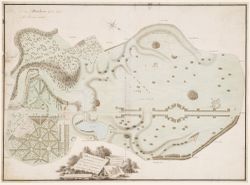
Les jardins de Grande-Bretagne et leurs bâtiments ont joué un rôle important dans l’art et la culture britanniques au cours des quatre derniers siècles, et ils ont influencé les architectes et architectes paysagistes d’Europe et d’Amérique du Nord. L’exposition Une Arcadie anglaise, 1600-1990 rassemble des documents sur l’histoire de ces jardins et bâtiments. Les 125(...)
Les jardins de Grande-Bretagne et leurs bâtiments ont joué un rôle important dans l’art et la culture britanniques au cours des quatre derniers siècles, et ils ont influencé les architectes et architectes paysagistes d’Europe et d’Amérique du Nord. L’exposition Une Arcadie anglaise, 1600-1990 rassemble des documents sur l’histoire de ces jardins et bâtiments. Les 125(...)
Localisation:
Salles principales
Salles principales
Date:
12 février 1992 au 19 avril 1992
12 février 1992 au 19 avril 1992
Titre:
Une arcadie anglaise, 1600-1990 : jardins et bâtiments sous la garde du National Trust avec des œuvres tirées des collections du CCA
Actions:
Description:
Les jardins de Grande-Bretagne et leurs bâtiments ont joué un rôle important dans l’art et la culture britanniques au cours des quatre derniers siècles, et ils ont influencé les architectes et architectes paysagistes d’Europe et d’Amérique du Nord. L’exposition Une Arcadie anglaise, 1600-1990 rassemble des documents sur l’histoire de ces jardins et bâtiments. Les 125(...)
Une arcadie anglaise, 1600-1990 : jardins et bâtiments sous la garde du National Trust avec des œuvres tirées des collections du CCA
Actions:
Description:
Les jardins de Grande-Bretagne et leurs bâtiments ont joué un rôle important dans l’art et la culture britanniques au cours des quatre derniers siècles, et ils ont influencé les architectes et architectes paysagistes d’Europe et d’Amérique du Nord. L’exposition Une Arcadie anglaise, 1600-1990 rassemble des documents sur l’histoire de ces jardins et bâtiments. Les 125(...)
Classification:
expositions
expositions
Date:
12 février 1992 au
19 avril 1992
12 février 1992 au
19 avril 1992
Localisation:
Salles principales
Salles principales
Classification:
événements
événements
Description:
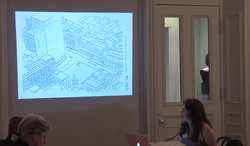
Michela Rosso, allocataire d’une bourse d’appui en 2013, présente sa recherche dans les archives de Peter Carter sur le schéma du manoir carré (1962-1985) et montre les différentes facettes de la controverse entourant la tour non construite de Mies van der Rohe, au cœur de Londres. Michela Rosso a obtenu un doctorat de l’École polytechnique de Turin, où elle est depuis(...)
Michela Rosso, allocataire d’une bourse d’appui en 2013, présente sa recherche dans les archives de Peter Carter sur le schéma du manoir carré (1962-1985) et montre les différentes facettes de la controverse entourant la tour non construite de Mies van der Rohe, au cœur de Londres. Michela Rosso a obtenu un doctorat de l’École polytechnique de Turin, où elle est depuis(...)
Localisation:
Maison Shaughnessy
Maison Shaughnessy
Date:
30 mai 2013, 18h
30 mai 2013, 18h
Titre:
« Friends and Enemies of Mies’s Mansion House Square »
Actions:
Description:
Michela Rosso, allocataire d’une bourse d’appui en 2013, présente sa recherche dans les archives de Peter Carter sur le schéma du manoir carré (1962-1985) et montre les différentes facettes de la controverse entourant la tour non construite de Mies van der Rohe, au cœur de Londres. Michela Rosso a obtenu un doctorat de l’École polytechnique de Turin, où elle est depuis(...)
« Friends and Enemies of Mies’s Mansion House Square »
Actions:
Description:
Michela Rosso, allocataire d’une bourse d’appui en 2013, présente sa recherche dans les archives de Peter Carter sur le schéma du manoir carré (1962-1985) et montre les différentes facettes de la controverse entourant la tour non construite de Mies van der Rohe, au cœur de Londres. Michela Rosso a obtenu un doctorat de l’École polytechnique de Turin, où elle est depuis(...)
Classification:
événements
événements
Date:
30 mai 2013
18h
30 mai 2013
18h
Localisation:
Maison Shaughnessy
Maison Shaughnessy


