


36938 Résultats
Classification:
documents textuels
documents textuels
Numéro de référence:
AP075.S3.SS2.149
Description:
This box contains professional correspondence, organized in chronological order, from 1958-1993, with a bulk of documents dated from 1978-1993. This correspondence contains chiefly letters related to publishing in landscape architecture publications, correspondence with schools of architecture and landscape architects associations, such as the Canadian Society of Landscape Architects, about membership or attendance to events. It also comprises correspondence related to research on play and playgrounds, collaboration with organizations for children education, research and involvement in sustainable development. It also contains correspondence with city planning committees or other governmental institutions related to projects or consultation in landscape design, and letters of reference or offer of services. This correspondence also comprises a few letters related to Oberlander's projects such as Children's Creative Centre Playground at Expo '67 in Montréal, University of British Columbia Faculty Club additions (which includes correspondence with Arthur Erickson), the Museum of Anthropology. It includes mainly letters of congratulations or comments for her design.
AP075.S3.SS2.149
Description:
This box contains professional correspondence, organized in chronological order, from 1958-1993, with a bulk of documents dated from 1978-1993. This correspondence contains chiefly letters related to publishing in landscape architecture publications, correspondence with schools of architecture and landscape architects associations, such as the Canadian Society of Landscape Architects, about membership or attendance to events. It also comprises correspondence related to research on play and playgrounds, collaboration with organizations for children education, research and involvement in sustainable development. It also contains correspondence with city planning committees or other governmental institutions related to projects or consultation in landscape design, and letters of reference or offer of services. This correspondence also comprises a few letters related to Oberlander's projects such as Children's Creative Centre Playground at Expo '67 in Montréal, University of British Columbia Faculty Club additions (which includes correspondence with Arthur Erickson), the Museum of Anthropology. It includes mainly letters of congratulations or comments for her design.
Personnes et institutions:
Date:
1958-1993
1958-1993
Titre:
Professional correspondence from 1958-1993
Actions:
AP075.S3.SS2.149
Description:
This box contains professional correspondence, organized in chronological order, from 1958-1993, with a bulk of documents dated from 1978-1993. This correspondence contains chiefly letters related to publishing in landscape architecture publications, correspondence with schools of architecture and landscape architects associations, such as the Canadian Society of Landscape Architects, about membership or attendance to events. It also comprises correspondence related to research on play and playgrounds, collaboration with organizations for children education, research and involvement in sustainable development. It also contains correspondence with city planning committees or other governmental institutions related to projects or consultation in landscape design, and letters of reference or offer of services. This correspondence also comprises a few letters related to Oberlander's projects such as Children's Creative Centre Playground at Expo '67 in Montréal, University of British Columbia Faculty Club additions (which includes correspondence with Arthur Erickson), the Museum of Anthropology. It includes mainly letters of congratulations or comments for her design.
Professional correspondence from 1958-1993
Actions:
AP075.S3.SS2.149
Description:
This box contains professional correspondence, organized in chronological order, from 1958-1993, with a bulk of documents dated from 1978-1993. This correspondence contains chiefly letters related to publishing in landscape architecture publications, correspondence with schools of architecture and landscape architects associations, such as the Canadian Society of Landscape Architects, about membership or attendance to events. It also comprises correspondence related to research on play and playgrounds, collaboration with organizations for children education, research and involvement in sustainable development. It also contains correspondence with city planning committees or other governmental institutions related to projects or consultation in landscape design, and letters of reference or offer of services. This correspondence also comprises a few letters related to Oberlander's projects such as Children's Creative Centre Playground at Expo '67 in Montréal, University of British Columbia Faculty Club additions (which includes correspondence with Arthur Erickson), the Museum of Anthropology. It includes mainly letters of congratulations or comments for her design.
Classification:
documents textuels
documents textuels
Date:
1958-1993
1958-1993
Personnes et institutions:
Classification:
expositions
expositions
Actions:
Description:
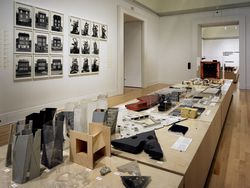
Herzog de Meuron: archéologie de l’imaginaire présente un éventail exhaustif de documents provenant des archives des architectes Herzog de Meuron et de collections connexes. À l’image d’une exposition d’histoire naturelle, celle-ci comprend maquettes d’étude, livres, photographies, jouets, photographies, fossiles, pierres de lettrés chinois ainsi que quelques œuvres(...)
Herzog de Meuron: archéologie de l’imaginaire présente un éventail exhaustif de documents provenant des archives des architectes Herzog de Meuron et de collections connexes. À l’image d’une exposition d’histoire naturelle, celle-ci comprend maquettes d’étude, livres, photographies, jouets, photographies, fossiles, pierres de lettrés chinois ainsi que quelques œuvres(...)
Localisation:
Salles principales
Salles principales
Date:
23 octobre 2002 au 6 avril 2003
23 octobre 2002 au 6 avril 2003
Titre:
Herzog & de Meuron : archéologie de l'imaginaire
Actions:
Description:
Herzog de Meuron: archéologie de l’imaginaire présente un éventail exhaustif de documents provenant des archives des architectes Herzog de Meuron et de collections connexes. À l’image d’une exposition d’histoire naturelle, celle-ci comprend maquettes d’étude, livres, photographies, jouets, photographies, fossiles, pierres de lettrés chinois ainsi que quelques œuvres(...)
Herzog & de Meuron : archéologie de l'imaginaire
Actions:
Description:
Herzog de Meuron: archéologie de l’imaginaire présente un éventail exhaustif de documents provenant des archives des architectes Herzog de Meuron et de collections connexes. À l’image d’une exposition d’histoire naturelle, celle-ci comprend maquettes d’étude, livres, photographies, jouets, photographies, fossiles, pierres de lettrés chinois ainsi que quelques œuvres(...)
Classification:
expositions
expositions
Date:
23 octobre 2002 au
6 avril 2003
23 octobre 2002 au
6 avril 2003
Localisation:
Salles principales
Salles principales
Classification:
expositions
expositions
Actions:
Description:
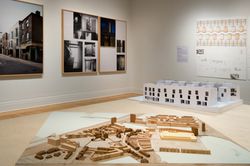
Cette exposition se consacre aux projets architecturaux récents de Stephen Taylor à Londres et de Ryue Nishizawa à Tokyo, qui proposent de nouvelles approches de la vie en milieu urbain. Perspectives de vie à Londres et à Tokyo imaginées par Stephen Taylor et Ryue Nishizawa marque la première présentation en Amérique du Nord des projets résidentiels de Taylor et Nishizawa(...)
Cette exposition se consacre aux projets architecturaux récents de Stephen Taylor à Londres et de Ryue Nishizawa à Tokyo, qui proposent de nouvelles approches de la vie en milieu urbain. Perspectives de vie à Londres et à Tokyo imaginées par Stephen Taylor et Ryue Nishizawa marque la première présentation en Amérique du Nord des projets résidentiels de Taylor et Nishizawa(...)
Localisation:
Salles principales
Salles principales
Date:
14 mai 2008 au 26 octobre 2008
14 mai 2008 au 26 octobre 2008
Titre:
Perspectives de vie à Londres et à Tokyo imaginées par Stephen Taylor et Ryue Nishizawa
Actions:
Description:
Cette exposition se consacre aux projets architecturaux récents de Stephen Taylor à Londres et de Ryue Nishizawa à Tokyo, qui proposent de nouvelles approches de la vie en milieu urbain. Perspectives de vie à Londres et à Tokyo imaginées par Stephen Taylor et Ryue Nishizawa marque la première présentation en Amérique du Nord des projets résidentiels de Taylor et Nishizawa(...)
Perspectives de vie à Londres et à Tokyo imaginées par Stephen Taylor et Ryue Nishizawa
Actions:
Description:
Cette exposition se consacre aux projets architecturaux récents de Stephen Taylor à Londres et de Ryue Nishizawa à Tokyo, qui proposent de nouvelles approches de la vie en milieu urbain. Perspectives de vie à Londres et à Tokyo imaginées par Stephen Taylor et Ryue Nishizawa marque la première présentation en Amérique du Nord des projets résidentiels de Taylor et Nishizawa(...)
Classification:
expositions
expositions
Date:
14 mai 2008 au
26 octobre 2008
14 mai 2008 au
26 octobre 2008
Localisation:
Salles principales
Salles principales
Niveau de description archivistique:
Projet
Projet
Titre:
Habitat Pavilion
Habitat Pavilion
Numéro de référence:
AP022.S1.1975.PR04
Description:
File documents a temporary pavilion built for the 1976 United Nations Conference on Human Settlements, Vancouver, British Columbia. The pavilion consisted of a reception and public information centre primarily constructed out of paper maché modules, and it displayed an exhibition related to a parallel event, the Manila-Tondo Foreshore Architectural Compeition (1976) held in Manilla, the Plilippines. File contains sketches, photographs, textual documents.
AP022.S1.1975.PR04
Description:
File documents a temporary pavilion built for the 1976 United Nations Conference on Human Settlements, Vancouver, British Columbia. The pavilion consisted of a reception and public information centre primarily constructed out of paper maché modules, and it displayed an exhibition related to a parallel event, the Manila-Tondo Foreshore Architectural Compeition (1976) held in Manilla, the Plilippines. File contains sketches, photographs, textual documents.
Personnes et institutions:
Date:
1975-1976
1975-1976
Titre:
Habitat Pavilion
Actions:
AP022.S1.1975.PR04
Description:
File documents a temporary pavilion built for the 1976 United Nations Conference on Human Settlements, Vancouver, British Columbia. The pavilion consisted of a reception and public information centre primarily constructed out of paper maché modules, and it displayed an exhibition related to a parallel event, the Manila-Tondo Foreshore Architectural Compeition (1976) held in Manilla, the Plilippines. File contains sketches, photographs, textual documents.
Habitat Pavilion
Actions:
AP022.S1.1975.PR04
Description:
File documents a temporary pavilion built for the 1976 United Nations Conference on Human Settlements, Vancouver, British Columbia. The pavilion consisted of a reception and public information centre primarily constructed out of paper maché modules, and it displayed an exhibition related to a parallel event, the Manila-Tondo Foreshore Architectural Compeition (1976) held in Manilla, the Plilippines. File contains sketches, photographs, textual documents.
Niveau de description archivistique:
Project
Project
Date:
1975-1976
1975-1976
Personnes et institutions:
Niveau de description archivistique:
Projet
Projet
Numéro de référence:
AP140.S2.SS1.D62
Description:
File documents an unexecuted project for Houston Circle, a public space situated in the city centre of Houston, Texas, United States. Material in this file was produced between 1980 and 1982. File contains several conceptual and design development drawings, as well as presentation drawings. Photographic materials consists of views of a presentation model by John Donat Photography. File also contains textual records.
AP140.S2.SS1.D62
Description:
File documents an unexecuted project for Houston Circle, a public space situated in the city centre of Houston, Texas, United States. Material in this file was produced between 1980 and 1982. File contains several conceptual and design development drawings, as well as presentation drawings. Photographic materials consists of views of a presentation model by John Donat Photography. File also contains textual records.
Personnes et institutions:
Date:
1980-1982
1980-1982
Titre:
Houston Circle, Houston, Texas
Actions:
AP140.S2.SS1.D62
Description:
File documents an unexecuted project for Houston Circle, a public space situated in the city centre of Houston, Texas, United States. Material in this file was produced between 1980 and 1982. File contains several conceptual and design development drawings, as well as presentation drawings. Photographic materials consists of views of a presentation model by John Donat Photography. File also contains textual records.
Houston Circle, Houston, Texas
Actions:
AP140.S2.SS1.D62
Description:
File documents an unexecuted project for Houston Circle, a public space situated in the city centre of Houston, Texas, United States. Material in this file was produced between 1980 and 1982. File contains several conceptual and design development drawings, as well as presentation drawings. Photographic materials consists of views of a presentation model by John Donat Photography. File also contains textual records.
Niveau de description archivistique:
File 62
File 62
Date:
1980-1982
1980-1982
Personnes et institutions:
Niveau de description archivistique:
Série(s)
Série(s)
Titre:
Charles Rohault de Fleury
Charles Rohault de Fleury
Numéro de référence:
CI001.S2
Description:
Series documents works by Charles Rohault de Fleury, including objects related to his architectural education as well as private and government commissions and including domestic work, institutional buildings, commercial buildings, urban planning. Material in this series was produced between 1717 and 1868. Series is arranged into six files: Education; Domestic Commissions; Opera Houses; Public and Urban Architecture; Muséum nationale d'histoire naturelle; and Miscellanea.
CI001.S2
Description:
Series documents works by Charles Rohault de Fleury, including objects related to his architectural education as well as private and government commissions and including domestic work, institutional buildings, commercial buildings, urban planning. Material in this series was produced between 1717 and 1868. Series is arranged into six files: Education; Domestic Commissions; Opera Houses; Public and Urban Architecture; Muséum nationale d'histoire naturelle; and Miscellanea.
Personnes et institutions:
Date:
1717-[1884]
1717-[1884]
Titre:
Charles Rohault de Fleury
CI001.S2
Description:
Series documents works by Charles Rohault de Fleury, including objects related to his architectural education as well as private and government commissions and including domestic work, institutional buildings, commercial buildings, urban planning. Material in this series was produced between 1717 and 1868. Series is arranged into six files: Education; Domestic Commissions; Opera Houses; Public and Urban Architecture; Muséum nationale d'histoire naturelle; and Miscellanea.
Charles Rohault de Fleury
CI001.S2
Description:
Series documents works by Charles Rohault de Fleury, including objects related to his architectural education as well as private and government commissions and including domestic work, institutional buildings, commercial buildings, urban planning. Material in this series was produced between 1717 and 1868. Series is arranged into six files: Education; Domestic Commissions; Opera Houses; Public and Urban Architecture; Muséum nationale d'histoire naturelle; and Miscellanea.
Niveau de description archivistique:
Series 2
Series 2
Date:
1717-[1884]
1717-[1884]
Personnes et institutions:
Classification:
documents textuels
documents textuels
Numéro de référence:
ARCH267394
Description:
This group consists of minutes of meetings, notes, schedules, correspondence and related documents concerning the Palais des Congrès de Montréal. There are also a partnership agreement between the architects of the Palais des Congrès, an organization chart and a professional services contract between the architects and the Ministère des Travaux publics et de l'Approvisionnement du Québec.
ARCH267394
Description:
This group consists of minutes of meetings, notes, schedules, correspondence and related documents concerning the Palais des Congrès de Montréal. There are also a partnership agreement between the architects of the Palais des Congrès, an organization chart and a professional services contract between the architects and the Ministère des Travaux publics et de l'Approvisionnement du Québec.
Personnes et institutions:
Date:
1978-1982
1978-1982
Titre:
Centre de Congrès / Contrat avec MTPA / Convention de société
Actions:
ARCH267394
Description:
This group consists of minutes of meetings, notes, schedules, correspondence and related documents concerning the Palais des Congrès de Montréal. There are also a partnership agreement between the architects of the Palais des Congrès, an organization chart and a professional services contract between the architects and the Ministère des Travaux publics et de l'Approvisionnement du Québec.
Centre de Congrès / Contrat avec MTPA / Convention de société
Actions:
ARCH267394
Description:
This group consists of minutes of meetings, notes, schedules, correspondence and related documents concerning the Palais des Congrès de Montréal. There are also a partnership agreement between the architects of the Palais des Congrès, an organization chart and a professional services contract between the architects and the Ministère des Travaux publics et de l'Approvisionnement du Québec.
Classification:
documents textuels
documents textuels
Date:
1978-1982
1978-1982
Personnes et institutions:
Niveau de description archivistique:
Projet
Projet
Titre:
O.C.H. Feasibility Study
O.C.H. Feasibility Study
Numéro de référence:
AP144.S2.D59
Description:
File documents a feasibility study commissioned by J. Lyons Co. Ltd for the conversion of the Oxford Corner House, in London, England, United Kingdom, into a combined information, education and skill centre. The unrealized project was to include a 'self-pace public skill and information hive' with facilities for conferences, teaching, exhibitions, computer use, planetarium, audio-visual library, and public eating areas. The project included a movable floor system and projection screens. Reference material includes plans and details of London Electric Railway subway line, alterations to Oxford Street Corner House by J. Lyons and Co. Ltd., field notes, photographs and photomontages of site. Conceptual diagrammatic plans explore designs for the organization of activities. Charts show variables, including number of people, monitors/screens, and study carrels; circulation patterns; and maximization of viewing capacity. Preliminary presentation boards illustrate project feasibility and include photographs of model and existing conditions. Design development drawings include floor plans, plans exploring the relationships between various activities, analysis of building volumes and networks, comparative plans showing main structural grid, sections, diagrammatic sections for public activity areas, axonometric drawings of roof, perspectives of projection screens and moveable floor system, progress charts, and diagrams and graphs of communication and travel modes, routes, and time into central London from outlying areas. Some material in this file was published in Price, Cedric. 'Cedric Price-Works II' (London: Architectural Press, 1984), 11, 54, 112; Landau, Royston. 'New Directions in British Architecture'. New York: George Braziller, 1968. 108-111; and 'Self-Pace Public Skill and Information Hive.' 'Architectural Design'. (May 1968), 237-239. Material in this file was produced between 1927 and 1967, but predominantly between 1965 and 1966. Group DR1995:0224:001-013 contains reference drawings attributed to London Transport Architect's Department and J. Lyons & Company Limited Architect's Office. Group DR1995:0224:333-341 contains drawings attributed to Richard Sutcliffe Limited, Felix J. Samuely & Partners, and G.E.C. (Process Engineering) Ltd. File contains conceptual drawings, consultant drawings, design development drawings, presentation drawings, presentation panels, reference drawings, photographic material, and textual records.
AP144.S2.D59
Description:
File documents a feasibility study commissioned by J. Lyons Co. Ltd for the conversion of the Oxford Corner House, in London, England, United Kingdom, into a combined information, education and skill centre. The unrealized project was to include a 'self-pace public skill and information hive' with facilities for conferences, teaching, exhibitions, computer use, planetarium, audio-visual library, and public eating areas. The project included a movable floor system and projection screens. Reference material includes plans and details of London Electric Railway subway line, alterations to Oxford Street Corner House by J. Lyons and Co. Ltd., field notes, photographs and photomontages of site. Conceptual diagrammatic plans explore designs for the organization of activities. Charts show variables, including number of people, monitors/screens, and study carrels; circulation patterns; and maximization of viewing capacity. Preliminary presentation boards illustrate project feasibility and include photographs of model and existing conditions. Design development drawings include floor plans, plans exploring the relationships between various activities, analysis of building volumes and networks, comparative plans showing main structural grid, sections, diagrammatic sections for public activity areas, axonometric drawings of roof, perspectives of projection screens and moveable floor system, progress charts, and diagrams and graphs of communication and travel modes, routes, and time into central London from outlying areas. Some material in this file was published in Price, Cedric. 'Cedric Price-Works II' (London: Architectural Press, 1984), 11, 54, 112; Landau, Royston. 'New Directions in British Architecture'. New York: George Braziller, 1968. 108-111; and 'Self-Pace Public Skill and Information Hive.' 'Architectural Design'. (May 1968), 237-239. Material in this file was produced between 1927 and 1967, but predominantly between 1965 and 1966. Group DR1995:0224:001-013 contains reference drawings attributed to London Transport Architect's Department and J. Lyons & Company Limited Architect's Office. Group DR1995:0224:333-341 contains drawings attributed to Richard Sutcliffe Limited, Felix J. Samuely & Partners, and G.E.C. (Process Engineering) Ltd. File contains conceptual drawings, consultant drawings, design development drawings, presentation drawings, presentation panels, reference drawings, photographic material, and textual records.
Personnes et institutions:
Date:
1927-1967, predominant 1965-1966
1927-1967, predominant 1965-1966
Titre:
O.C.H. Feasibility Study
Actions:
AP144.S2.D59
Description:
File documents a feasibility study commissioned by J. Lyons Co. Ltd for the conversion of the Oxford Corner House, in London, England, United Kingdom, into a combined information, education and skill centre. The unrealized project was to include a 'self-pace public skill and information hive' with facilities for conferences, teaching, exhibitions, computer use, planetarium, audio-visual library, and public eating areas. The project included a movable floor system and projection screens. Reference material includes plans and details of London Electric Railway subway line, alterations to Oxford Street Corner House by J. Lyons and Co. Ltd., field notes, photographs and photomontages of site. Conceptual diagrammatic plans explore designs for the organization of activities. Charts show variables, including number of people, monitors/screens, and study carrels; circulation patterns; and maximization of viewing capacity. Preliminary presentation boards illustrate project feasibility and include photographs of model and existing conditions. Design development drawings include floor plans, plans exploring the relationships between various activities, analysis of building volumes and networks, comparative plans showing main structural grid, sections, diagrammatic sections for public activity areas, axonometric drawings of roof, perspectives of projection screens and moveable floor system, progress charts, and diagrams and graphs of communication and travel modes, routes, and time into central London from outlying areas. Some material in this file was published in Price, Cedric. 'Cedric Price-Works II' (London: Architectural Press, 1984), 11, 54, 112; Landau, Royston. 'New Directions in British Architecture'. New York: George Braziller, 1968. 108-111; and 'Self-Pace Public Skill and Information Hive.' 'Architectural Design'. (May 1968), 237-239. Material in this file was produced between 1927 and 1967, but predominantly between 1965 and 1966. Group DR1995:0224:001-013 contains reference drawings attributed to London Transport Architect's Department and J. Lyons & Company Limited Architect's Office. Group DR1995:0224:333-341 contains drawings attributed to Richard Sutcliffe Limited, Felix J. Samuely & Partners, and G.E.C. (Process Engineering) Ltd. File contains conceptual drawings, consultant drawings, design development drawings, presentation drawings, presentation panels, reference drawings, photographic material, and textual records.
O.C.H. Feasibility Study
Actions:
AP144.S2.D59
Description:
File documents a feasibility study commissioned by J. Lyons Co. Ltd for the conversion of the Oxford Corner House, in London, England, United Kingdom, into a combined information, education and skill centre. The unrealized project was to include a 'self-pace public skill and information hive' with facilities for conferences, teaching, exhibitions, computer use, planetarium, audio-visual library, and public eating areas. The project included a movable floor system and projection screens. Reference material includes plans and details of London Electric Railway subway line, alterations to Oxford Street Corner House by J. Lyons and Co. Ltd., field notes, photographs and photomontages of site. Conceptual diagrammatic plans explore designs for the organization of activities. Charts show variables, including number of people, monitors/screens, and study carrels; circulation patterns; and maximization of viewing capacity. Preliminary presentation boards illustrate project feasibility and include photographs of model and existing conditions. Design development drawings include floor plans, plans exploring the relationships between various activities, analysis of building volumes and networks, comparative plans showing main structural grid, sections, diagrammatic sections for public activity areas, axonometric drawings of roof, perspectives of projection screens and moveable floor system, progress charts, and diagrams and graphs of communication and travel modes, routes, and time into central London from outlying areas. Some material in this file was published in Price, Cedric. 'Cedric Price-Works II' (London: Architectural Press, 1984), 11, 54, 112; Landau, Royston. 'New Directions in British Architecture'. New York: George Braziller, 1968. 108-111; and 'Self-Pace Public Skill and Information Hive.' 'Architectural Design'. (May 1968), 237-239. Material in this file was produced between 1927 and 1967, but predominantly between 1965 and 1966. Group DR1995:0224:001-013 contains reference drawings attributed to London Transport Architect's Department and J. Lyons & Company Limited Architect's Office. Group DR1995:0224:333-341 contains drawings attributed to Richard Sutcliffe Limited, Felix J. Samuely & Partners, and G.E.C. (Process Engineering) Ltd. File contains conceptual drawings, consultant drawings, design development drawings, presentation drawings, presentation panels, reference drawings, photographic material, and textual records.
Niveau de description archivistique:
File 59
File 59
Date:
1927-1967, predominant 1965-1966
1927-1967, predominant 1965-1966
Personnes et institutions:
Classification:
photographies
photographies
Actions:
Numéro de référence:
PH2025:0003:056
Description:
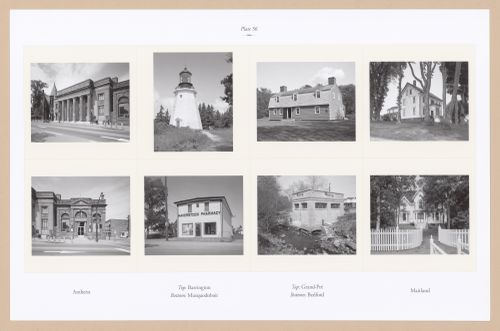
Sheet includes eight images of structures and architectural details in Nova Scotia. Depicted are the Dominion Public Building in Amherst, a lighthouse in Barrington, the Jeremiah and Mary Calkin House in Grand Pré, the Lawrence House in Maitland, the Old Amherst Police Station, Haverstock Pharmacy in Musquodoboit, Moir`s Power House in Bedford, and Springhurst House in Maitland.
PH2025:0003:056
Description:
Sheet includes eight images of structures and architectural details in Nova Scotia. Depicted are the Dominion Public Building in Amherst, a lighthouse in Barrington, the Jeremiah and Mary Calkin House in Grand Pré, the Lawrence House in Maitland, the Old Amherst Police Station, Haverstock Pharmacy in Musquodoboit, Moir`s Power House in Bedford, and Springhurst House in Maitland.
Personnes et institutions:
Date:
1984-1994 (printed 2020)
1984-1994 (printed 2020)
Titre:
Plate 56: Misc (2 of 5), from the portfolio, A Nova Scotia Archive
Actions:
PH2025:0003:056
Description:
Sheet includes eight images of structures and architectural details in Nova Scotia. Depicted are the Dominion Public Building in Amherst, a lighthouse in Barrington, the Jeremiah and Mary Calkin House in Grand Pré, the Lawrence House in Maitland, the Old Amherst Police Station, Haverstock Pharmacy in Musquodoboit, Moir`s Power House in Bedford, and Springhurst House in Maitland.
Plate 56: Misc (2 of 5), from the portfolio, A Nova Scotia Archive
Actions:
PH2025:0003:056
Description:
Sheet includes eight images of structures and architectural details in Nova Scotia. Depicted are the Dominion Public Building in Amherst, a lighthouse in Barrington, the Jeremiah and Mary Calkin House in Grand Pré, the Lawrence House in Maitland, the Old Amherst Police Station, Haverstock Pharmacy in Musquodoboit, Moir`s Power House in Bedford, and Springhurst House in Maitland.
Classification:
photographies
photographies
Date:
1984-1994 (printed 2020)
1984-1994 (printed 2020)
Personnes et institutions:
Classification:
événements
événements
Actions:
Description:
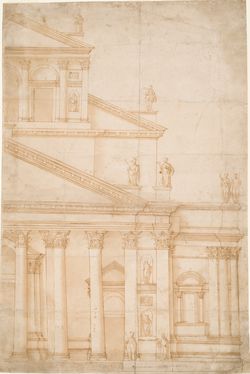
L’histoire de l’architecture traite des relations entre espace, bâtiment, géométrie urbaine et pratiques sociales – elle exprime comment l’expérience de l’espace correspond à une expérience du monde. Cette conférence présentera une analyse du débat qui, au XVIe siècle, a entouré l’achèvement de la façade de la basilique San Petronio à Bologne, construite en partie dans un(...)
L’histoire de l’architecture traite des relations entre espace, bâtiment, géométrie urbaine et pratiques sociales – elle exprime comment l’expérience de l’espace correspond à une expérience du monde. Cette conférence présentera une analyse du débat qui, au XVIe siècle, a entouré l’achèvement de la façade de la basilique San Petronio à Bologne, construite en partie dans un(...)
Localisation:
Théâtre Paul-Desmarais Mot(s)-clé(s):
Guido Beltramini, basilique San Petronio, Bologne, Andrea Palladio, Baldassare Peruzzi, Giacomo da Vignola
Théâtre Paul-Desmarais Mot(s)-clé(s):
Guido Beltramini, basilique San Petronio, Bologne, Andrea Palladio, Baldassare Peruzzi, Giacomo da Vignola
Date:
5 octobre 2017, 18h30
5 octobre 2017, 18h30
Titre:
Guido Beltramini, quel sens avait l’histoire pour les architectes et leurs mécènes à Bologne, en 1579?
Actions:
Description:
L’histoire de l’architecture traite des relations entre espace, bâtiment, géométrie urbaine et pratiques sociales – elle exprime comment l’expérience de l’espace correspond à une expérience du monde. Cette conférence présentera une analyse du débat qui, au XVIe siècle, a entouré l’achèvement de la façade de la basilique San Petronio à Bologne, construite en partie dans un(...)
Guido Beltramini, quel sens avait l’histoire pour les architectes et leurs mécènes à Bologne, en 1579?
Actions:
Description:
L’histoire de l’architecture traite des relations entre espace, bâtiment, géométrie urbaine et pratiques sociales – elle exprime comment l’expérience de l’espace correspond à une expérience du monde. Cette conférence présentera une analyse du débat qui, au XVIe siècle, a entouré l’achèvement de la façade de la basilique San Petronio à Bologne, construite en partie dans un(...)
Classification:
événements
événements
Date:
5 octobre 2017
18h30
5 octobre 2017
18h30
Localisation:
Théâtre Paul-Desmarais Mot(s)-clé(s):
Guido Beltramini, basilique San Petronio, Bologne, Andrea Palladio, Baldassare Peruzzi, Giacomo da Vignola
Théâtre Paul-Desmarais Mot(s)-clé(s):
Guido Beltramini, basilique San Petronio, Bologne, Andrea Palladio, Baldassare Peruzzi, Giacomo da Vignola


