


2495 Résultats
Classification:
livres
livres
Actions:
Prix:
$84.00
(disponible sur commande)
Résumé:
Arthur Brown Jr. (1874-1957) is celebrated by his peers for such masterpieces as the City Hall, War Memorial Opera House, Temple Emanu-El, and Coit Tower in San Francisco; the Pasadena City Hall; and the Labor-ICC block of the Federal Triangle in Washington, DC. Brown epitomized the idea that architecture not only houses society’s daily rituals and defining events but(...)
$84.00
(disponible sur commande)
Résumé:
Arthur Brown Jr. (1874-1957) is celebrated by his peers for such masterpieces as the City Hall, War Memorial Opera House, Temple Emanu-El, and Coit Tower in San Francisco; the Pasadena City Hall; and the Labor-ICC block of the Federal Triangle in Washington, DC. Brown epitomized the idea that architecture not only houses society’s daily rituals and defining events but(...)
Titre:
Arthur Brown, Jr. : progressive classicist
Actions:
Prix:
$84.00
(disponible sur commande)
Résumé:
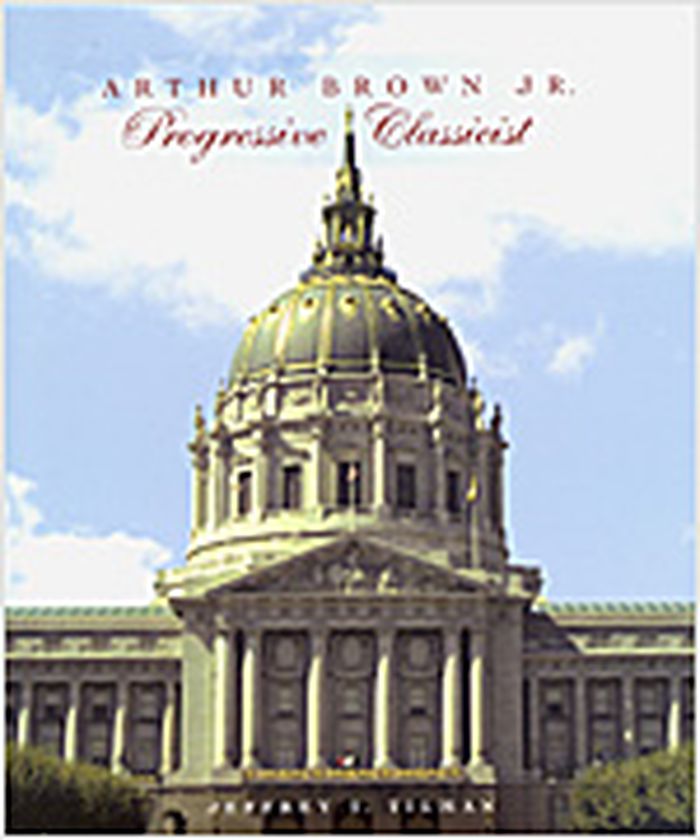
Arthur Brown Jr. (1874-1957) is celebrated by his peers for such masterpieces as the City Hall, War Memorial Opera House, Temple Emanu-El, and Coit Tower in San Francisco; the Pasadena City Hall; and the Labor-ICC block of the Federal Triangle in Washington, DC. Brown epitomized the idea that architecture not only houses society’s daily rituals and defining events but also can itself shape the sociopolitical landscape of America. "Arthur Brown Jr.: progressive classicist" unifies the varied strands of the architect’s life, from the architectural forms and methods of the Ecole des Beaux-Arts in Paris to the reforming spirit and self-reliant confidence of San Francisco after the earthquake and fire of 1906 to the challenging economics and changing aesthetics of machine-age America. It details the development of Brown’s major works and many other civic, commercial, religious, academic, and residential buildings. It chronicles his unflagging commitment to the classical tradition, which he employed in contemporary, forward-looking institutional buildings that emphasized continuity with the past while meeting the needs of the future. To Brown, the classical tradition was not a sacrosanct, unchanging body of knowledge; it was an expanding and evolving set of ideas about architectural design that permitted, and even demanded, change as new conditions and technologies were developed.
Arthur Brown, Jr. : progressive classicist
Actions:
Prix:
$84.00
(disponible sur commande)
Résumé:
Arthur Brown Jr. (1874-1957) is celebrated by his peers for such masterpieces as the City Hall, War Memorial Opera House, Temple Emanu-El, and Coit Tower in San Francisco; the Pasadena City Hall; and the Labor-ICC block of the Federal Triangle in Washington, DC. Brown epitomized the idea that architecture not only houses society’s daily rituals and defining events but also can itself shape the sociopolitical landscape of America. "Arthur Brown Jr.: progressive classicist" unifies the varied strands of the architect’s life, from the architectural forms and methods of the Ecole des Beaux-Arts in Paris to the reforming spirit and self-reliant confidence of San Francisco after the earthquake and fire of 1906 to the challenging economics and changing aesthetics of machine-age America. It details the development of Brown’s major works and many other civic, commercial, religious, academic, and residential buildings. It chronicles his unflagging commitment to the classical tradition, which he employed in contemporary, forward-looking institutional buildings that emphasized continuity with the past while meeting the needs of the future. To Brown, the classical tradition was not a sacrosanct, unchanging body of knowledge; it was an expanding and evolving set of ideas about architectural design that permitted, and even demanded, change as new conditions and technologies were developed.
Classification:
livres
livres
Publication:
novembre 2005, New York
novembre 2005, New York
Sujet:
Architecture, monographies
Architecture, monographies
Classification:
livres
livres
Actions:
Prix:
$98.00
(disponible sur commande)
Résumé:
Gilmore D. Clarke and Michael Rapuano were the foremost spatial designers of the American century. Their vast portfolio of public landscapes propelled the legacy of Frederick Law Olmsted and Calvert Vaux into the motor age, touching the lives of millions and changing the face of the nation. This book recovers the forgotten legacy of Clarke and Rapuano, whose parks and(...)
$98.00
(disponible sur commande)
Résumé:
Gilmore D. Clarke and Michael Rapuano were the foremost spatial designers of the American century. Their vast portfolio of public landscapes propelled the legacy of Frederick Law Olmsted and Calvert Vaux into the motor age, touching the lives of millions and changing the face of the nation. This book recovers the forgotten legacy of Clarke and Rapuano, whose parks and(...)
Titre:
Designing the American century: The public landscapes of Clarke and Rapuano, 1915-1965
Actions:
Prix:
$98.00
(disponible sur commande)
Résumé:
Gilmore D. Clarke and Michael Rapuano were the foremost spatial designers of the American century. Their vast portfolio of public landscapes propelled the legacy of Frederick Law Olmsted and Calvert Vaux into the motor age, touching the lives of millions and changing the face of the nation. This book recovers the forgotten legacy of Clarke and Rapuano, whose parks and parkways, highways and housing estates helped modernize—for better or worse—the American metropolis. With the patronage of public-works titan Robert Moses, Clarke and Rapuano transformed New York over a span of fifty years, revitalizing the city’s immense park system but also planning expressways, public housing, and urban renewal projects that laid waste to entire sections of the city. In this work, Thomas J. Campanella describes how Clarke and Rapuano helped create some of the metropolitan region’s most iconic landscapes, from the Central Park Zoo and Conservatory Garden to the Henry Hudson Parkway and Riverside Park, Jones Beach, the Palisades and Taconic State Parkways, and the Brooklyn Heights Promenade. He shows how they left their mark far beyond Gotham as well, with projects as diverse as Yellowstone’s Mammoth Hot Springs, the Mount Vernon Memorial Highway, site plans for the Pentagon and CIA headquarters, and Montreal’s Olympic Park.
Designing the American century: The public landscapes of Clarke and Rapuano, 1915-1965
Actions:
Prix:
$98.00
(disponible sur commande)
Résumé:
Gilmore D. Clarke and Michael Rapuano were the foremost spatial designers of the American century. Their vast portfolio of public landscapes propelled the legacy of Frederick Law Olmsted and Calvert Vaux into the motor age, touching the lives of millions and changing the face of the nation. This book recovers the forgotten legacy of Clarke and Rapuano, whose parks and parkways, highways and housing estates helped modernize—for better or worse—the American metropolis. With the patronage of public-works titan Robert Moses, Clarke and Rapuano transformed New York over a span of fifty years, revitalizing the city’s immense park system but also planning expressways, public housing, and urban renewal projects that laid waste to entire sections of the city. In this work, Thomas J. Campanella describes how Clarke and Rapuano helped create some of the metropolitan region’s most iconic landscapes, from the Central Park Zoo and Conservatory Garden to the Henry Hudson Parkway and Riverside Park, Jones Beach, the Palisades and Taconic State Parkways, and the Brooklyn Heights Promenade. He shows how they left their mark far beyond Gotham as well, with projects as diverse as Yellowstone’s Mammoth Hot Springs, the Mount Vernon Memorial Highway, site plans for the Pentagon and CIA headquarters, and Montreal’s Olympic Park.
Classification:
livres
livres
Publication:
juillet 2025
juillet 2025
Classification:
livres
livres
Titre:
Passage
Passage
Actions:
Prix:
$72.00
(disponible sur commande)
Résumé:
Andy Goldsworthy's Passage focuses on the journeys that people, rivers, landscapes, and even stones take through space and time. A cairn made by the renowned sculptor in the Scottish village where he lives reveals the influence that his work close to home has on projects he creates elsewhere. A series involving elm trees, from glowing yellow leaves to dead branches,(...)
$72.00
(disponible sur commande)
Résumé:
Andy Goldsworthy's Passage focuses on the journeys that people, rivers, landscapes, and even stones take through space and time. A cairn made by the renowned sculptor in the Scottish village where he lives reveals the influence that his work close to home has on projects he creates elsewhere. A series involving elm trees, from glowing yellow leaves to dead branches,(...)
Titre:
Passage
Actions:
Prix:
$72.00
(disponible sur commande)
Résumé:
Andy Goldsworthy's Passage focuses on the journeys that people, rivers, landscapes, and even stones take through space and time. A cairn made by the renowned sculptor in the Scottish village where he lives reveals the influence that his work close to home has on projects he creates elsewhere. A series involving elm trees, from glowing yellow leaves to dead branches, exemplifies his work's vigorous beauty as well as its association with death and decay. Creations on the beach and in rivers explore the passage of time, while a white chalk path investigates the passing from day into night. Passage also includes the Garden of Stones, a Holocaust memorial at the Museum of Jewish Heritage in New York, where the artist planted 18 oak trees through holes in hollowed-out, earth-filled boulders. Documenting these and other recent works, this beautiful book is an eloquent testament to Goldsworthy's determination to deepen his understanding of the world around him, and his relationship with it, through his art. Andy Goldsworthy's work is regularly exhibited in Britain, France, the United States, Japan, and elsewhere. Although commissions take him all over the world, the landscape around his home in Dumfriesshire, Scotland, remains at the heart of his work.
Passage
Actions:
Prix:
$72.00
(disponible sur commande)
Résumé:
Andy Goldsworthy's Passage focuses on the journeys that people, rivers, landscapes, and even stones take through space and time. A cairn made by the renowned sculptor in the Scottish village where he lives reveals the influence that his work close to home has on projects he creates elsewhere. A series involving elm trees, from glowing yellow leaves to dead branches, exemplifies his work's vigorous beauty as well as its association with death and decay. Creations on the beach and in rivers explore the passage of time, while a white chalk path investigates the passing from day into night. Passage also includes the Garden of Stones, a Holocaust memorial at the Museum of Jewish Heritage in New York, where the artist planted 18 oak trees through holes in hollowed-out, earth-filled boulders. Documenting these and other recent works, this beautiful book is an eloquent testament to Goldsworthy's determination to deepen his understanding of the world around him, and his relationship with it, through his art. Andy Goldsworthy's work is regularly exhibited in Britain, France, the United States, Japan, and elsewhere. Although commissions take him all over the world, the landscape around his home in Dumfriesshire, Scotland, remains at the heart of his work.
Classification:
livres
livres
Publication:
novembre 2004, New York
novembre 2004, New York
Sujet:
Land Art
Land Art
Classification:
livres
livres
Actions:
Prix:
$18.50
(disponible sur commande)
Résumé:
An essential toolkit for understanding architecture as both art form and the setting for our everyday lives We spend most of our days and nights in buildings, living and working and sometimes playing. Architecture is both the setting for our everyday lives and a public art form - but it remains mysterious to most of us. In "How architecture works", Witold Rybczynski, (...)
$18.50
(disponible sur commande)
Résumé:
An essential toolkit for understanding architecture as both art form and the setting for our everyday lives We spend most of our days and nights in buildings, living and working and sometimes playing. Architecture is both the setting for our everyday lives and a public art form - but it remains mysterious to most of us. In "How architecture works", Witold Rybczynski, (...)
Titre:
How architecture works: a humanist's toolkit
Actions:
Prix:
$18.50
(disponible sur commande)
Résumé:
An essential toolkit for understanding architecture as both art form and the setting for our everyday lives We spend most of our days and nights in buildings, living and working and sometimes playing. Architecture is both the setting for our everyday lives and a public art form - but it remains mysterious to most of us. In "How architecture works", Witold Rybczynski, answers our most fundamental questions about how good - and not so good - buildings are designed and constructed. Introducing the reader to the rich and varied world of modern architecture, he reveals how architects as diverse as Frank Gehry, Renzo Piano, and Robert A. M. Stern envision and create their designs. He teaches us how to read" plans, how buildingsrespond to their settings, and how the smallest detail - of a stair balustrade, for instance - can convey an architect's vision. How Architecture Works explains the central elements that make up good building design, ranging from a war memorial in London to an opera house in Saint Petersburg, from the National Museum of African American History and Culture in Washington, D.C., to a famous architect's private retreat in Princeton, New Jersey. It is an enlightening humanist's toolkit for thinking about the built environment and seeing it afresh.
How architecture works: a humanist's toolkit
Actions:
Prix:
$18.50
(disponible sur commande)
Résumé:
An essential toolkit for understanding architecture as both art form and the setting for our everyday lives We spend most of our days and nights in buildings, living and working and sometimes playing. Architecture is both the setting for our everyday lives and a public art form - but it remains mysterious to most of us. In "How architecture works", Witold Rybczynski, answers our most fundamental questions about how good - and not so good - buildings are designed and constructed. Introducing the reader to the rich and varied world of modern architecture, he reveals how architects as diverse as Frank Gehry, Renzo Piano, and Robert A. M. Stern envision and create their designs. He teaches us how to read" plans, how buildingsrespond to their settings, and how the smallest detail - of a stair balustrade, for instance - can convey an architect's vision. How Architecture Works explains the central elements that make up good building design, ranging from a war memorial in London to an opera house in Saint Petersburg, from the National Museum of African American History and Culture in Washington, D.C., to a famous architect's private retreat in Princeton, New Jersey. It is an enlightening humanist's toolkit for thinking about the built environment and seeing it afresh.
Classification:
livres
livres
Publication:
octobre 2014
octobre 2014
Sujet:
Théorie de l’architecture
Théorie de l’architecture
Classification:
livres
livres
Actions:
Exemplaires:
Description:
xix, 321 pages : illustrations ; 26 cm
Description:
xix, 321 pages : illustrations ; 26 cm
Auteur:
Sujet:
Publication:
Durham : Duke University Press, 2008.
Durham : Duke University Press, 2008.
Titre:
Down in the dumps : place, modernity, American Depression / Jani Scandura.
Actions:
Exemplaires:
Description:
xix, 321 pages : illustrations ; 26 cm
Down in the dumps : place, modernity, American Depression / Jani Scandura.
Actions:
Exemplaires:
Description:
xix, 321 pages : illustrations ; 26 cm
Classification:
livres
livres
Publication:
Durham : Duke University Press, 2008.
Durham : Duke University Press, 2008.
Auteur:
Sujet:
Classification:
livres
livres
Titre:
And the pursuit of happiness
And the pursuit of happiness
Actions:
Prix:
$37.50
(disponible sur commande)
Résumé:
This publication is beloved artist and author Maira Kalman's yearlong investigation of democracy and how it works. Energized and inspired by the 2008 elections, on inauguration day Kalman traveled to Washington, D.C., launching a national tour that would take her from a town hall meeting in Newfane, Vermont, to the inner chambers of the Supreme Court. As we follow(...)
$37.50
(disponible sur commande)
Résumé:
This publication is beloved artist and author Maira Kalman's yearlong investigation of democracy and how it works. Energized and inspired by the 2008 elections, on inauguration day Kalman traveled to Washington, D.C., launching a national tour that would take her from a town hall meeting in Newfane, Vermont, to the inner chambers of the Supreme Court. As we follow(...)
Titre:
And the pursuit of happiness
Actions:
Prix:
$37.50
(disponible sur commande)
Résumé:
This publication is beloved artist and author Maira Kalman's yearlong investigation of democracy and how it works. Energized and inspired by the 2008 elections, on inauguration day Kalman traveled to Washington, D.C., launching a national tour that would take her from a town hall meeting in Newfane, Vermont, to the inner chambers of the Supreme Court. As we follow Kalman's wholly idiosyncratic journey, we fall in love with Lincoln alongside her as she imagines making a home for herself in the center of his magisterial memorial; ponder Alexis de Tocqueville's America; witness the inner workings of a Bronx middle-school student council; take a high-speed lesson in great American women in the National Portrait Gallery; and consider the cost of war to the brave American service families of Fort Campbell, Kentucky. The observations she makes as she travels charm and inform, and-as we have come to expect with Kalman-the route is always one of fascinating indirection. Kalman finds evidence of democracy at work all around us. And the cast of characters we meet along the way is rousing good company, featuring visits from Benjamin Franklin, Eleanor Roosevelt, and many others. And the Pursuit of Happiness is a remarkable tribute to our history and a powerful reminder of the potential our future holds, from a true national treasure.
And the pursuit of happiness
Actions:
Prix:
$37.50
(disponible sur commande)
Résumé:
This publication is beloved artist and author Maira Kalman's yearlong investigation of democracy and how it works. Energized and inspired by the 2008 elections, on inauguration day Kalman traveled to Washington, D.C., launching a national tour that would take her from a town hall meeting in Newfane, Vermont, to the inner chambers of the Supreme Court. As we follow Kalman's wholly idiosyncratic journey, we fall in love with Lincoln alongside her as she imagines making a home for herself in the center of his magisterial memorial; ponder Alexis de Tocqueville's America; witness the inner workings of a Bronx middle-school student council; take a high-speed lesson in great American women in the National Portrait Gallery; and consider the cost of war to the brave American service families of Fort Campbell, Kentucky. The observations she makes as she travels charm and inform, and-as we have come to expect with Kalman-the route is always one of fascinating indirection. Kalman finds evidence of democracy at work all around us. And the cast of characters we meet along the way is rousing good company, featuring visits from Benjamin Franklin, Eleanor Roosevelt, and many others. And the Pursuit of Happiness is a remarkable tribute to our history and a powerful reminder of the potential our future holds, from a true national treasure.
Classification:
livres
livres
Publication:
février 2011
février 2011
Sujet:
Illustration
Illustration
Classification:
livres
livres
Titre:
The dominion of the dead
The dominion of the dead
Actions:
Prix:
$17.50
(disponible sur commande)
Résumé:
How do the living maintain relations to the dead? Why do we bury people when they die? And what is at stake when we do? In "The dominion of the dead", Robert Pogue Harrison considers the supreme importance of these questions to Western civilization, exploring the many places where the dead cohabit the world of the living-the graves, images, literature, architecture, and(...)
$17.50
(disponible sur commande)
Résumé:
How do the living maintain relations to the dead? Why do we bury people when they die? And what is at stake when we do? In "The dominion of the dead", Robert Pogue Harrison considers the supreme importance of these questions to Western civilization, exploring the many places where the dead cohabit the world of the living-the graves, images, literature, architecture, and(...)
Titre:
The dominion of the dead
Actions:
Prix:
$17.50
(disponible sur commande)
Résumé:
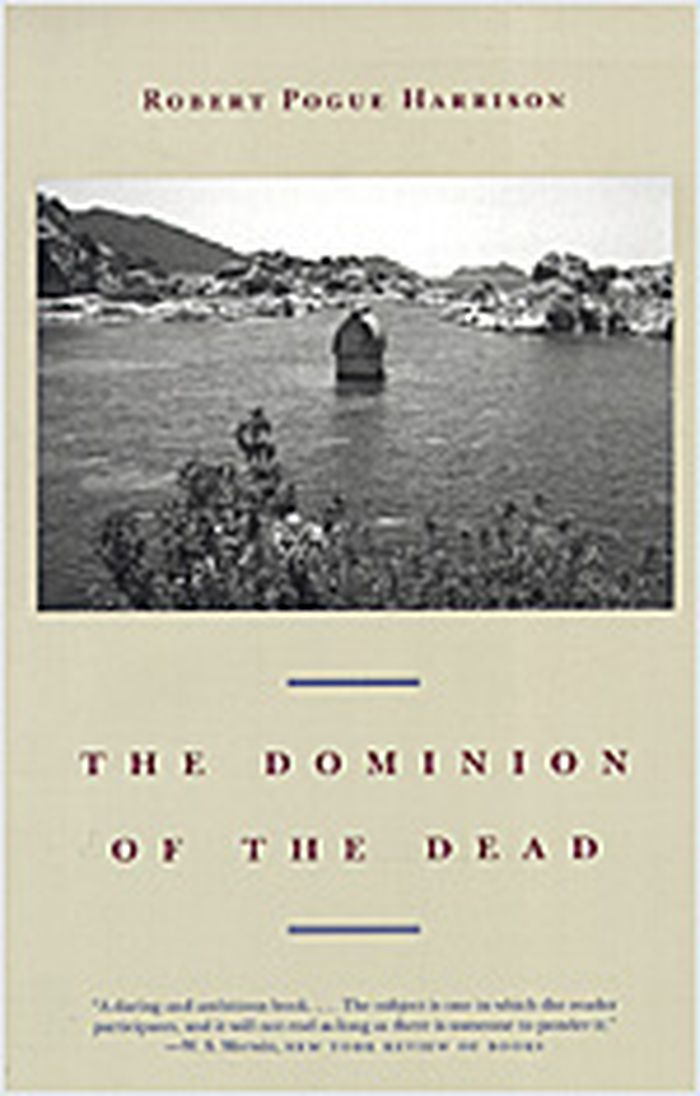
How do the living maintain relations to the dead? Why do we bury people when they die? And what is at stake when we do? In "The dominion of the dead", Robert Pogue Harrison considers the supreme importance of these questions to Western civilization, exploring the many places where the dead cohabit the world of the living-the graves, images, literature, architecture, and monuments that house the dead in their afterlife among us. This work devotes particular attention to the practice of burial. Harrison contends that we bury our dead to humanize the lands where we build our present and imagine our future. As long as the dead are interred in graves and tombs, they never truly depart from this world, but remain, if only symbolically, among the living. Spanning a broad range of examples, from the graves of our first human ancestors to the empty tomb of the Gospels to the Vietnam Veterans Memorial, Harrison also considers the authority of predecessors in both modern and premodern societies. Through inspired readings of major writers and thinkers such as Vico, Virgil, Dante, Pater, Nietzsche, Heidegger, and Rilke, he argues that the buried dead form an essential foundation where future generations can retrieve their past, while burial grounds provide an important bedrock where past generations can preserve their legacy for the unborn.
The dominion of the dead
Actions:
Prix:
$17.50
(disponible sur commande)
Résumé:
How do the living maintain relations to the dead? Why do we bury people when they die? And what is at stake when we do? In "The dominion of the dead", Robert Pogue Harrison considers the supreme importance of these questions to Western civilization, exploring the many places where the dead cohabit the world of the living-the graves, images, literature, architecture, and monuments that house the dead in their afterlife among us. This work devotes particular attention to the practice of burial. Harrison contends that we bury our dead to humanize the lands where we build our present and imagine our future. As long as the dead are interred in graves and tombs, they never truly depart from this world, but remain, if only symbolically, among the living. Spanning a broad range of examples, from the graves of our first human ancestors to the empty tomb of the Gospels to the Vietnam Veterans Memorial, Harrison also considers the authority of predecessors in both modern and premodern societies. Through inspired readings of major writers and thinkers such as Vico, Virgil, Dante, Pater, Nietzsche, Heidegger, and Rilke, he argues that the buried dead form an essential foundation where future generations can retrieve their past, while burial grounds provide an important bedrock where past generations can preserve their legacy for the unborn.
Classification:
livres
livres
Publication:
mai 2005, Chicago, London
mai 2005, Chicago, London
Sujet:
Théorie du paysage
Théorie du paysage
Classification:
livres
livres
Titre:
Peter Eisenman : feints
Peter Eisenman : feints
Actions:
Prix:
$49.95
(disponible sur commande)
Résumé:
Impregnated with “culture” in the broadest sense, the works of Peter Eisenman reflect many years of important study on the meaning and sense of design. Architecture understood as history, as philosophy, as art, as mathematics, as literature, architecture understood – as it should be that is – as a strict discipline that aims to recover its operational fields, defining(...)
$49.95
(disponible sur commande)
Résumé:
Impregnated with “culture” in the broadest sense, the works of Peter Eisenman reflect many years of important study on the meaning and sense of design. Architecture understood as history, as philosophy, as art, as mathematics, as literature, architecture understood – as it should be that is – as a strict discipline that aims to recover its operational fields, defining(...)
Sujet:
Architecture, monographies
Architecture, monographies
Publication:
mai 2006, Milano
mai 2006, Milano
Titre:
Peter Eisenman : feints
Actions:
Prix:
$49.95
(disponible sur commande)
Résumé:
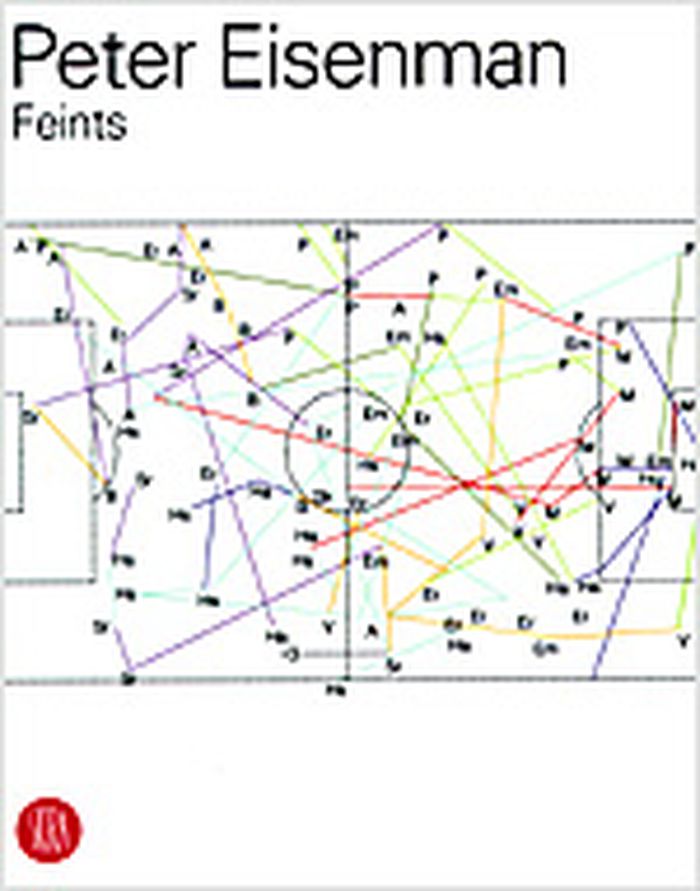
Impregnated with “culture” in the broadest sense, the works of Peter Eisenman reflect many years of important study on the meaning and sense of design. Architecture understood as history, as philosophy, as art, as mathematics, as literature, architecture understood – as it should be that is – as a strict discipline that aims to recover its operational fields, defining with precision its limits and the potential for a profession that must constantly face destabilising visual and technological systems. Within history and yet outside it so that it can continue, within tradition yet outside of Tradition in order to avoid becoming sterile, the architecture of Peter Eisenman does not aim to console with the simple suggestion of a difficult-to-define aesthetic or the illusion of an evanescent technique. The unpredictability of his work anchors design to individuation and the clarification of its objectives by focussing on the value of the sign understood as a fundamental conceptual expression and not as simple formal distortion. The validity of this formidable theoretical system intended to return a renewed and personal linguistic system to fields of architecture, is confirmed by examining the continued expansion of the territorial system, as evidenced by projects on a territorial scale such as the Memorial of Berlin or the Cultural Centre of Galizia, the most recent projects which demonstrate the vitality of a design system that is constantly renewing itself.
Peter Eisenman : feints
Actions:
Prix:
$49.95
(disponible sur commande)
Résumé:
Impregnated with “culture” in the broadest sense, the works of Peter Eisenman reflect many years of important study on the meaning and sense of design. Architecture understood as history, as philosophy, as art, as mathematics, as literature, architecture understood – as it should be that is – as a strict discipline that aims to recover its operational fields, defining with precision its limits and the potential for a profession that must constantly face destabilising visual and technological systems. Within history and yet outside it so that it can continue, within tradition yet outside of Tradition in order to avoid becoming sterile, the architecture of Peter Eisenman does not aim to console with the simple suggestion of a difficult-to-define aesthetic or the illusion of an evanescent technique. The unpredictability of his work anchors design to individuation and the clarification of its objectives by focussing on the value of the sign understood as a fundamental conceptual expression and not as simple formal distortion. The validity of this formidable theoretical system intended to return a renewed and personal linguistic system to fields of architecture, is confirmed by examining the continued expansion of the territorial system, as evidenced by projects on a territorial scale such as the Memorial of Berlin or the Cultural Centre of Galizia, the most recent projects which demonstrate the vitality of a design system that is constantly renewing itself.
Classification:
livres
livres
Publication:
mai 2006, Milano
mai 2006, Milano
Sujet:
Architecture, monographies
Architecture, monographies
Classification:
audio
audio
Actions:
Description:
1 online resource.
Auteur:
Sujet:
Publication:
[Place of publication not identified] : The Funambulist, 2014.
[Place of publication not identified] : The Funambulist, 2014.
Titre:
A Weaponized Urbanity : Morning Drift in Militarized Downtown Oakland.
Actions:
Description:
1 online resource.
A Weaponized Urbanity : Morning Drift in Militarized Downtown Oakland.
Actions:
Description:
1 online resource.
Classification:
audio
audio
Publication:
[Place of publication not identified] : The Funambulist, 2014.
[Place of publication not identified] : The Funambulist, 2014.
Auteur:
Sujet:
Classification:
livres
livres
Actions:
Prix:
$29.99
(disponible sur commande)
Résumé:
Architect Stanley Saitowitz, based in San Francisco, is known for a practice that unites the qualities of early modern architecture with the construction techniques, materials, and urban and social attributes of the twenty-first century. Recurring themes in his work include the careful connection to time and place; the construction of spaces that allow fields of(...)
$29.99
(disponible sur commande)
Résumé:
Architect Stanley Saitowitz, based in San Francisco, is known for a practice that unites the qualities of early modern architecture with the construction techniques, materials, and urban and social attributes of the twenty-first century. Recurring themes in his work include the careful connection to time and place; the construction of spaces that allow fields of(...)
Publication:
octobre 2005, New York
octobre 2005, New York
Titre:
Stanley Saitowitz : buildings and projects
Actions:
Prix:
$29.99
(disponible sur commande)
Résumé:
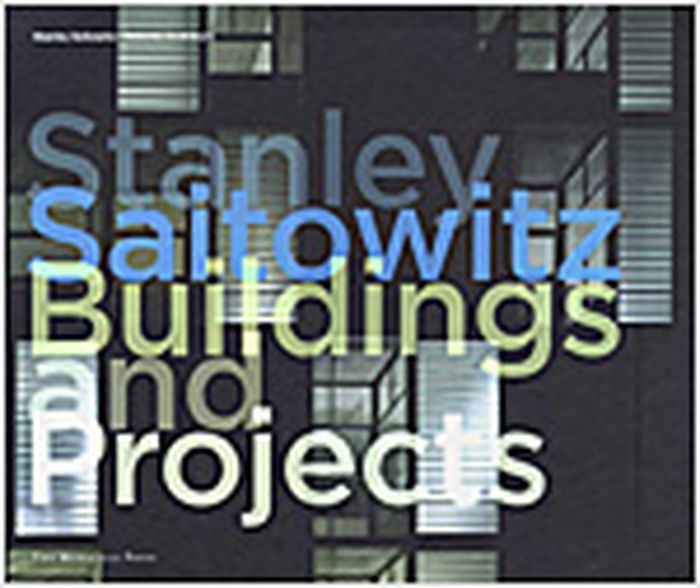
Architect Stanley Saitowitz, based in San Francisco, is known for a practice that unites the qualities of early modern architecture with the construction techniques, materials, and urban and social attributes of the twenty-first century. Recurring themes in his work include the careful connection to time and place; the construction of spaces that allow fields of opportunity; the use of generative systems; the role of architecture as a support for human activity; and the visible trace of building techniques. This monograph, the first on Stanley Saitowitz office, presents fifty projects from more than thirty years of practice. The projects, divided by building type, are accompanied by a personal text in which Saitowitz plainly discusses his influences and interests. Landscape houses, often built on spectacular sites in Marin, Napa, and Sonoma, have evolved to include the noted "bar houses." Urban houses, while compact and dense, incorporate a sense of volume; similarly, multifamily housing provides indeterminate space to allow for personalization. Buildings for schools range from the riverside campus of the Oxbow School in Napa to the structurally innovative Building 23B at UCSF Mission Bay. Among the public landscapes is Mill Race Park in Columbus, Indiana, an assemblage of constructions specific to both place and function. Finally, Saitowitz has developed a series of designs that explore the formation of a Jewish architecture, notably synagogues in San Francisco and La Jolla and the Holocaust Memorial in Boston. Principal photography by Richard Barnes and Tim Griffith.
Stanley Saitowitz : buildings and projects
Actions:
Prix:
$29.99
(disponible sur commande)
Résumé:
Architect Stanley Saitowitz, based in San Francisco, is known for a practice that unites the qualities of early modern architecture with the construction techniques, materials, and urban and social attributes of the twenty-first century. Recurring themes in his work include the careful connection to time and place; the construction of spaces that allow fields of opportunity; the use of generative systems; the role of architecture as a support for human activity; and the visible trace of building techniques. This monograph, the first on Stanley Saitowitz office, presents fifty projects from more than thirty years of practice. The projects, divided by building type, are accompanied by a personal text in which Saitowitz plainly discusses his influences and interests. Landscape houses, often built on spectacular sites in Marin, Napa, and Sonoma, have evolved to include the noted "bar houses." Urban houses, while compact and dense, incorporate a sense of volume; similarly, multifamily housing provides indeterminate space to allow for personalization. Buildings for schools range from the riverside campus of the Oxbow School in Napa to the structurally innovative Building 23B at UCSF Mission Bay. Among the public landscapes is Mill Race Park in Columbus, Indiana, an assemblage of constructions specific to both place and function. Finally, Saitowitz has developed a series of designs that explore the formation of a Jewish architecture, notably synagogues in San Francisco and La Jolla and the Holocaust Memorial in Boston. Principal photography by Richard Barnes and Tim Griffith.
Classification:
livres
livres
Publication:
octobre 2005, New York
octobre 2005, New York


