


2705 Résultats
Classification:
livres
livres
Titre:
Lines: a brief history
Lines: a brief history
Actions:
Prix:
$49.50
(disponible sur commande)
Résumé:
This is the first book to explore the production and significance of lines. As walking, talking, gesticulating creatures, human beings generate lines wherever they go: here, Ingold lays the foundations for an anthropological archaeology of the line. He investigates: speech and song in the cultures of Papua New Guinea, the Navaho and Meso America; paths, trails and maps(...)
Titre:
Lines: a brief history
Actions:
Prix:
$49.50
(disponible sur commande)
Résumé:
This is the first book to explore the production and significance of lines. As walking, talking, gesticulating creatures, human beings generate lines wherever they go: here, Ingold lays the foundations for an anthropological archaeology of the line. He investigates: speech and song in the cultures of Papua New Guinea, the Navaho and Meso America; paths, trails and maps drawing, writing and calligraphy; and the modern and postmodern world. Written by a leading expert in the field and including over seventy illustrations, this text offers a radically different approach to anthropological and archaeological studies, taking us on a journey which will change the way we look at the world and how we move within it, and archaeological studies.
Classification:
livres
livres
Publication:
juillet 2007, New York
juillet 2007, New York
Sujet:
Dessin d’architecture
Dessin d’architecture
Classification:
audio
audio
Actions:
Description:
1 online resource.
Auteur:
Sujet:
Publication:
[Place of publication not identified] : Lateral Addition, 2018.
[Place of publication not identified] : Lateral Addition, 2018.
Classification:
audio
audio
Publication:
[Place of publication not identified] : Lateral Addition, 2018.
[Place of publication not identified] : Lateral Addition, 2018.
Auteur:
Sujet:
Classification:
livres
livres
Prix:
$79.95
(disponible sur commande)
Résumé:
Although both are central to architecture, siting and construction are often treated as separate domains. In "Uncommon Ground", David Leatherbarrow illuminates their relationship, focusing on the years between 1930 and 1960, when utopian ideas about the role of technology in (...)
Sujet:
Théorie de l’architecture
Théorie de l’architecture
Publication:
mai 2002, Cambridge, Mass.
mai 2002, Cambridge, Mass.
Titre:
Uncommon ground : architecture, technology. and topography
Actions:
Prix:
$79.95
(disponible sur commande)
Résumé:
Although both are central to architecture, siting and construction are often treated as separate domains. In "Uncommon Ground", David Leatherbarrow illuminates their relationship, focusing on the years between 1930 and 1960, when utopian ideas about the role of technology in building gave way to an awareness of its disruptive impact on cities and culture. He examines the work of three architects, Richard Neutra, Antonin Raymond, and Aris Konstantinidis, who practiced in the United States, Japan, and Greece respectively. Leatherbarrow rejects the assumption that buildings of the modern period, particularly those that used the latest technology, were designed without regard to their surroundings. Although the prefabricated elements used in the buildings were designed independent of siting considerations, architects used these elements to modulate the environment. Leatherbarrow shows how the role of walls, the traditional element of architectural definition and platform partition, became less significant than that of the platforms themselves, the floors, ceilings, and intermediate levels. He shows how frontality was replaced by the building's four-sided extension into its surroundings, resulting in frontal configurations previously characteristic of the back. Arguing that the boundary between inside and outside was radically redefined, Leatherbarrow challenges cherished notions about the autonomy of the architectural object and about regional coherence. Modern architectural topography, he suggests, is an interplay of buildings, landscapes, and cities, as well as the humans who use them. The conflict between technological progress and cultural continuity, Leatherbarrow claims, exists only in theory, not in the real world of architecture. He argues that the act of building is not a matter of restoring regional identity by re-creating familiar signs, but of incorporating construction into the process of topography's perpetual becoming.
Classification:
livres
livres
Publication:
mai 2002, Cambridge, Mass.
mai 2002, Cambridge, Mass.
Sujet:
Théorie de l’architecture
Théorie de l’architecture
Classification:
livres
livres
Prix:
$56.95
(disponible sur commande)
Résumé:
Although both are central to architecture, siting and construction are often treated as separate domains. In "Uncommon Ground", David Leatherbarrow illuminates their relationship, focusing on the years between 1930 and 1960, when utopian ideas about the role of technology in (...)
Sujet:
Théorie de l’architecture
Théorie de l’architecture
Publication:
octobre 2000, Cambridge, Mass.
octobre 2000, Cambridge, Mass.
Titre:
Uncommon ground : architecture, technology, and topography
Actions:
Prix:
$56.95
(disponible sur commande)
Résumé:
Although both are central to architecture, siting and construction are often treated as separate domains. In "Uncommon Ground", David Leatherbarrow illuminates their relationship, focusing on the years between 1930 and 1960, when utopian ideas about the role of technology in building gave way to an awareness of its disruptive impact on cities and culture. He examines the work of three architects, Richard Neutra, Antonin Raymond, and Aris Konstantinidis, who practiced in the United States, Japan, and Greece respectively. Leatherbarrow rejects the assumption that buildings of the modern period, particularly those that used the latest technology, were designed without regard to their surroundings. Although the prefabricated elements used in the buildings were designed independent of siting considerations, architects used these elements to modulate the environment. Leatherbarrow shows how the role of walls, the traditional element of architectural definition and platform partition, became less significant than that of the platforms themselves, the floors, ceilings, and intermediate levels. He shows how frontality was replaced by the building's four-sided extension into its surroundings, resulting in frontal configurations previously characteristic of the back. Arguing that the boundary between inside and outside was radically redefined, Leatherbarrow challenges cherished notions about the autonomy of the architectural object and about regional coherence. Modern architectural topography, he suggests, is an interplay of buildings, landscapes, and cities, as well as the humans who use them. The conflict between technological progress and cultural continuity, Leatherbarrow claims, exists only in theory, not in the real world of architecture. He argues that the act of building is not a matter of restoring regional identity by re-creating familiar signs, but of incorporating construction into the process of topography's perpetual becoming.
Classification:
livres
livres
Publication:
octobre 2000, Cambridge, Mass.
octobre 2000, Cambridge, Mass.
Sujet:
Théorie de l’architecture
Théorie de l’architecture
Classification:
livres
livres
Actions:
Prix:
$50.00
(disponible sur commande)
Résumé:
Daring, bold, dramatic, towering, impossibly glamorous: this is how we imagine New York in its golden age, and this is how Samuel H. Gottscho, the preeminent architectural photographer of his generation, captured it. Through his lens, New York of the 1930s became the quintessential modern metropolis, a round-the-clock city in which night was as charismatic as day.(...)
Titre:
The mythic city : photographs of New York by Samuel H. Gottscho, 1925-1940
Actions:
Prix:
$50.00
(disponible sur commande)
Résumé:
Daring, bold, dramatic, towering, impossibly glamorous: this is how we imagine New York in its golden age, and this is how Samuel H. Gottscho, the preeminent architectural photographer of his generation, captured it. Through his lens, New York of the 1930s became the quintessential modern metropolis, a round-the-clock city in which night was as charismatic as day. Rigorously editing out the Depression-weary city's more seamy aspects—its tenement slums, breadlines, and soup kitchens—Gottscho presented a dreamlike Gotham of skyscrapers and penthouse luxury that literally and figuratively glowed with glamour's sheen. His gimlet eye focused on the bold interplay of sun and shadow, dramatizing the chiseled forms of Manhattan's signature skyline and bridges. The Empire State and Chrysler buildings, Rockefeller Center, the Plaza, the George Washington Bridge—Gottscho brought them all to sparkling life. In this book, historian Donald Albrecht presents 175 of Gottscho's images of the city, from the Battery to Harlem. An introductory essay tells the story of this photographer, describing his working methods and philosophy, while placing his work in the broader context of photographic history.
Classification:
livres
livres
Publication:
octobre 2005, New York
octobre 2005, New York
Sujet:
Monographies photo
Monographies photo
Classification:
livres
livres
Actions:
Prix:
$65.50
(disponible sur commande)
Résumé:
The evolution of Jo Nagasaka’s design process is unveiled in a unique publication about his practice. This book tells the story of Schemata Architects, encapsulating the essence of the studio’s work. Highlighting methods and processes through a series of essays, the designer offers insight into how concepts were developed in order to realise the wide-ranging portfolio of(...)
Titre:
Jo Nagasaka, Schemata Architects: objects and spaces
Actions:
Prix:
$65.50
(disponible sur commande)
Résumé:
The evolution of Jo Nagasaka’s design process is unveiled in a unique publication about his practice. This book tells the story of Schemata Architects, encapsulating the essence of the studio’s work. Highlighting methods and processes through a series of essays, the designer offers insight into how concepts were developed in order to realise the wide-ranging portfolio of Schemata Architects that are showcased in the book. Nagasaka’s focus is often drawn to tired, found objects or unused spaces. Through investigations to seek modern solutions and pioneering re-purposing techniques, he manages to transform interiors and breathe life back into objects. His projects range from large-scale installations and interactive interior environments to smaller-scale products. Revealing insights into his way of working, the book highlights new findings about how the designer is able to capture the essence of his thoughts and relate the key aspects of a project in creative and innovative ways. The articles emphasise the designer's concepts, giving unique insight into the firm's process from the designer’s perspective.
Classification:
livres
livres
Publication:
mai 2017
mai 2017
Sujet:
Architecture, monographies
Architecture, monographies
Classification:
livres
livres
Actions:
Prix:
$31.50
(disponible sur commande)
Résumé:
Frank Lloyd Wright’s Larkin building has become an icon of modern architecture. And the fact that it was demolished only forty-six years after its 1904 completion makes Jack Quinan’s study of the building — which housed a Buffalo, New York, soap company — all the more valuable. Quinan’s history draws on engineering documents, personal accounts of the building, and(...)
Titre:
Frank Lloyd Wright's Larkin building : myth and fact
Actions:
Prix:
$31.50
(disponible sur commande)
Résumé:
Frank Lloyd Wright’s Larkin building has become an icon of modern architecture. And the fact that it was demolished only forty-six years after its 1904 completion makes Jack Quinan’s study of the building — which housed a Buffalo, New York, soap company — all the more valuable. Quinan’s history draws on engineering documents, personal accounts of the building, and other papers he acquired from the family of Darwin D. Martin, a Larkin executive who proposed commissioning Wright to design the company’s offices. With access to these rare sources, Quinan reveals how a young Wright landed the commission and traces the evolution of his cutting-edge plans. Quinan then takes Wright studies to a new level, examining the Larkin building as a structure at the center of economic and personal relationships. Illustrated with more than one hundred photographs, floor plans, maps, and diagrams, Frank Lloyd Wright’s Larkin Building provides a concise but complete record of how the building was conceived, built, evaluated, and finally demolished in what has been called a tragic loss for American architecture.
Classification:
livres
livres
Publication:
mai 2006, Chicago, London
mai 2006, Chicago, London
Sujet:
Architecture, monographies
Architecture, monographies
Classification:
livres
livres
Actions:
Prix:
$85.00
(disponible en magasin)
Résumé:
From early reports of the invention to its wide application during World War I, the idea of photography created anticipation and participation in the modern world. The first volume of ''A History of Photography in Canada'' captures this phenomenon by looking at hundreds of photographs generated in and about Canada-in-the-making and by listening to the chords they struck(...)
Titre:
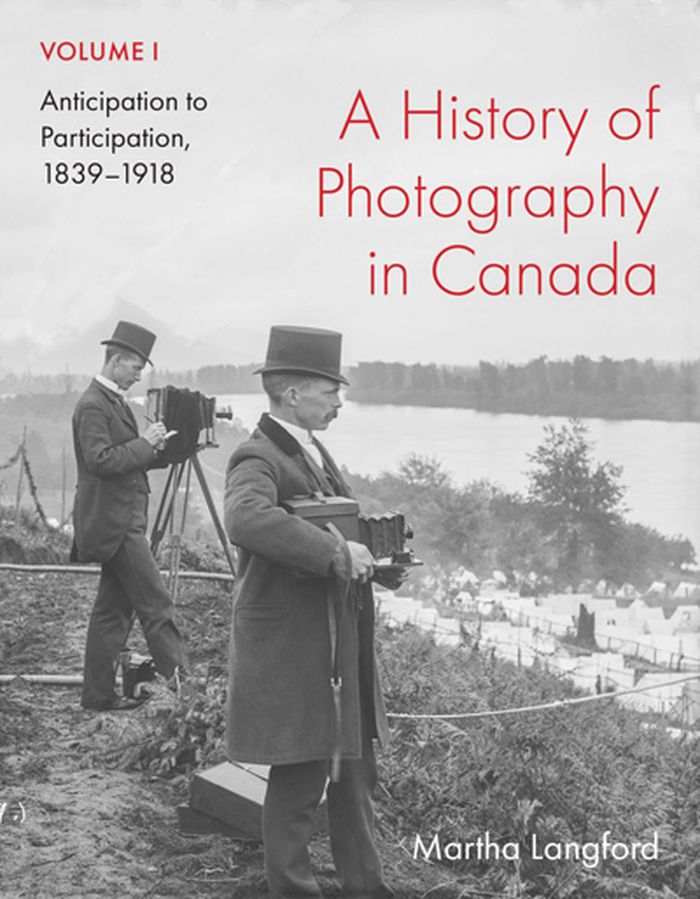
History of photography in Canada, Volume 1
Actions:
Prix:
$85.00
(disponible en magasin)
Résumé:
From early reports of the invention to its wide application during World War I, the idea of photography created anticipation and participation in the modern world. The first volume of ''A History of Photography in Canada'' captures this phenomenon by looking at hundreds of photographs generated in and about Canada-in-the-making and by listening to the chords they struck in the collective imagination. Emphasizing technological readiness and cultural eagerness for the medium, Martha Langford shows how photography served ideals of progress and improvement as Canada’s settler society looked to master the world by seizing its visible traces. The imposition of these programs on Indigenous Peoples and indentured labourers is confronted throughout this volume, which offers both narratives and counternarratives of subjectification. Reproducing images of people, places, events, and objects from the unceded territories of the First Nations, Inuit, and Métis, from British North America, and from the Dominion of Canada and the Dominion of Newfoundland, Langford asks where and when photographs were taken, why, and by whom. How did the making and preservation of a photograph alter the circumstances in which it was produced, and how did this affect individual and collective consciousness? Alongside accomplished portraits, landscapes, still lifes, and their vernacular counterparts, the book draws glimmers of photographic experience from treatises and doggerel, official reports and personal diaries, newspapers, magazines, letters, and travelogues.
Classification:
livres
livres
Publication:
juillet 2025
juillet 2025
Sujet:
Photographie- collections
Photographie- collections
Classification:
livres
livres
Prix:
$58.95
(disponible sur commande)
Résumé:
In the years of reconstruction and economic boom that followed the Second World War, the domestic sphere encountered new expectations regarding social behaviour, modes of living, and forms of dwelling. This book brings together an international group of scholars from architecture, design, urban planning, and interior design to reappraise mid-twentieth century modern life,(...)
Titre:
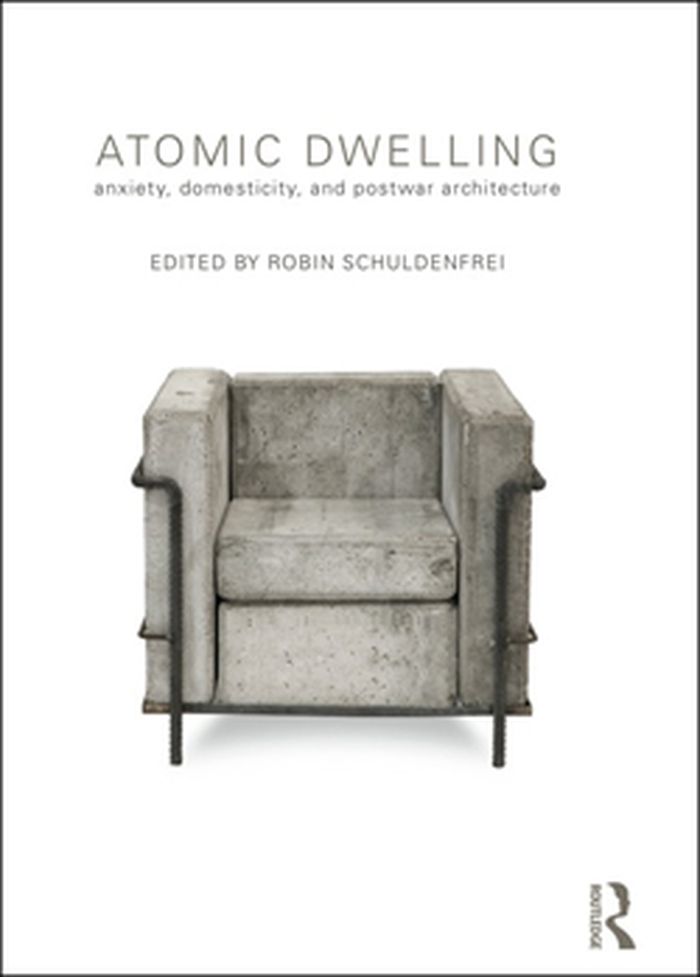
Atomic dwelling: anxiety, domesticity, and postwar architecture
Actions:
Prix:
$58.95
(disponible sur commande)
Résumé:
In the years of reconstruction and economic boom that followed the Second World War, the domestic sphere encountered new expectations regarding social behaviour, modes of living, and forms of dwelling. This book brings together an international group of scholars from architecture, design, urban planning, and interior design to reappraise mid-twentieth century modern life, offering a timely reassessment of culture and the economic and political effects on civilian life. This collection contains essays that examine the material of art, objects, and spaces in the context of practices of dwelling over the long span of the postwar period. It asks what role material objects, interior spaces, and architecture played in quelling or fanning the anxieties of modernism’s ordinary denizens, and how this role informs their legacy today.
Classification:
livres
livres
Publication:
mai 2012
mai 2012
Sujet:
Théorie de l’architecture
Théorie de l’architecture
Classification:
livres
livres
Titre:
From cliché to archetype
From cliché to archetype
Actions:
Prix:
$27.95
(disponible sur commande)
Résumé:
In this publication, readers learn how to look at stale clichés with fresh eyes, as artists do, and discover that clichés provide the key to understanding Modernism, from the puns of James Joyce to Ionesco’s Theater of the Absurd. McLuhan mines the greats of modern literature, such as Yeats, Eliot, and Pound, and points the way to richer understanding of their work.(...)
Titre:
From cliché to archetype
Actions:
Prix:
$27.95
(disponible sur commande)
Résumé:
In this publication, readers learn how to look at stale clichés with fresh eyes, as artists do, and discover that clichés provide the key to understanding Modernism, from the puns of James Joyce to Ionesco’s Theater of the Absurd. McLuhan mines the greats of modern literature, such as Yeats, Eliot, and Pound, and points the way to richer understanding of their work. Discussion ranges over conventional topics of literary analysis such as genres, esthetics, rhetoric, paradox, mimesis, and parody, though never in conventional fashion, because McLuhan deliberately stakes his turf in a manner that draws technology and culture together. As a result, the key terms cliché and archetype are not confined to language but are shown to have counterparts in the non-linguistic world.
Classification:
livres
livres
Publication:
janvier 2012
janvier 2012
Sujet:
Théorie/ philosophie
Théorie/ philosophie


