


274 Résultats
Classification:
livres
livres
Actions:
Exemplaires:
Description:
x, 256 pages : illustrations ; 26 cm
Description:
x, 256 pages : illustrations ; 26 cm
Auteur:
Sujet:
Publication:
London ; New York, NY : Bloomsbury Academic, an imprint of Bloomsbury Publishing Plc, 2017., ©2017
London ; New York, NY : Bloomsbury Academic, an imprint of Bloomsbury Publishing Plc, 2017., ©2017
Titre:
Shopping towns Europe : commercial collectivity and the architecture of the shopping centre, 1945-1975 / edited by Janina Gosseye and Tom Avermaete.
Actions:
Exemplaires:
Description:
x, 256 pages : illustrations ; 26 cm
Shopping towns Europe : commercial collectivity and the architecture of the shopping centre, 1945-1975 / edited by Janina Gosseye and Tom Avermaete.
Actions:
Exemplaires:
Description:
x, 256 pages : illustrations ; 26 cm
Classification:
livres
livres
Publication:
London ; New York, NY : Bloomsbury Academic, an imprint of Bloomsbury Publishing Plc, 2017., ©2017
London ; New York, NY : Bloomsbury Academic, an imprint of Bloomsbury Publishing Plc, 2017., ©2017
Auteur:
Sujet:
Classification:
livres
livres
Titre:
Soviet metro stations
Soviet metro stations
Actions:
Prix:
$49.95
(disponible sur commande)
Résumé:
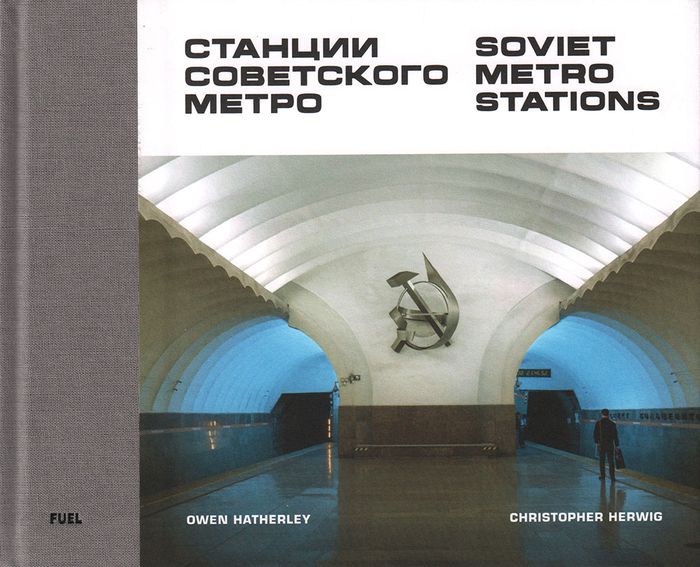
Canadian photographer Christopher Herwig has completed a subterranean expedition photographing the stations of each Metro network of the former USSR. From extreme marble and chandelier opulence to brutal futuristic minimalist glory, 'Soviet Metro Stations' documents this wealth of diverse architecture.
$49.95
(disponible sur commande)
Résumé:
Canadian photographer Christopher Herwig has completed a subterranean expedition photographing the stations of each Metro network of the former USSR. From extreme marble and chandelier opulence to brutal futuristic minimalist glory, 'Soviet Metro Stations' documents this wealth of diverse architecture.
Titre:
Soviet metro stations
Actions:
Prix:
$49.95
(disponible sur commande)
Résumé:
Canadian photographer Christopher Herwig has completed a subterranean expedition photographing the stations of each Metro network of the former USSR. From extreme marble and chandelier opulence to brutal futuristic minimalist glory, 'Soviet Metro Stations' documents this wealth of diverse architecture.
Soviet metro stations
Actions:
Prix:
$49.95
(disponible sur commande)
Résumé:
Canadian photographer Christopher Herwig has completed a subterranean expedition photographing the stations of each Metro network of the former USSR. From extreme marble and chandelier opulence to brutal futuristic minimalist glory, 'Soviet Metro Stations' documents this wealth of diverse architecture.
Classification:
livres
livres
Publication:
septembre 2019
septembre 2019
Sujet:
Photographie- collections
Photographie- collections
Classification:
livres
livres
Titre:
Komiks: comic art in Russia
Komiks: comic art in Russia
Actions:
Prix:
$39.00
(disponible sur commande)
Résumé:
José Alaniz explores the problematic publication history of komiks--an art form much-maligned as "bourgeois" mass diversion before, during, and after the collapse of the USSR-- with an emphasis on the last twenty years. The book provides heretofore unavailable access to a rich artistry through unique archival research, interviews with major artists and publishers, and(...)
$39.00
(disponible sur commande)
Résumé:
José Alaniz explores the problematic publication history of komiks--an art form much-maligned as "bourgeois" mass diversion before, during, and after the collapse of the USSR-- with an emphasis on the last twenty years. The book provides heretofore unavailable access to a rich artistry through unique archival research, interviews with major artists and publishers, and(...)
Titre:
Komiks: comic art in Russia
Actions:
Prix:
$39.00
(disponible sur commande)
Résumé:
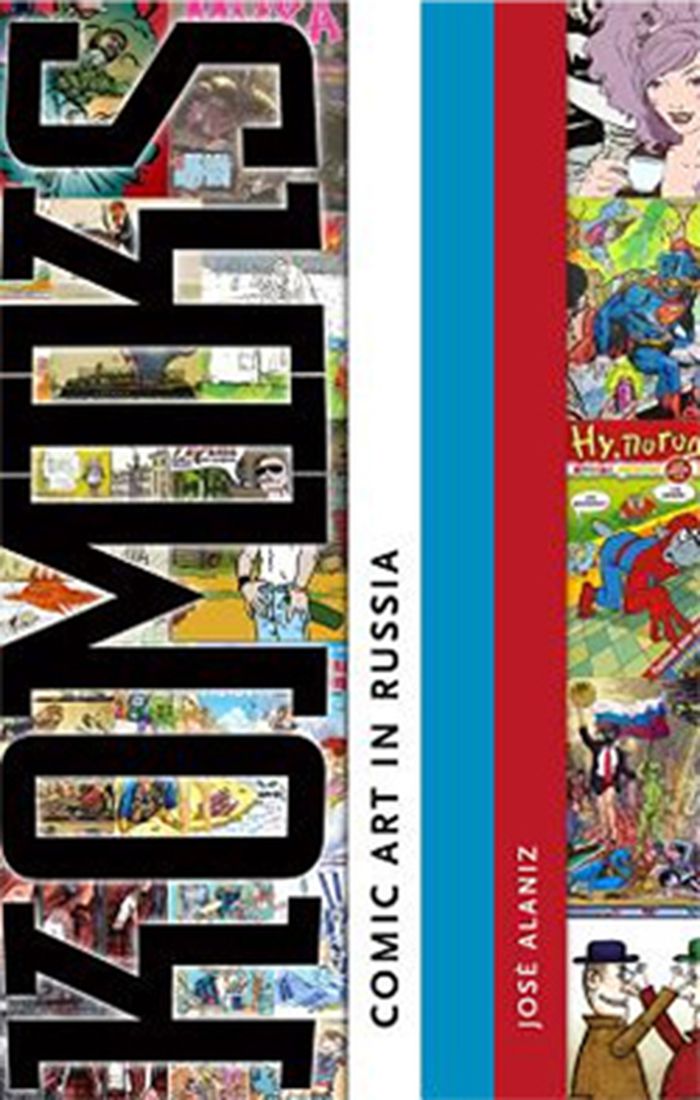
José Alaniz explores the problematic publication history of komiks--an art form much-maligned as "bourgeois" mass diversion before, during, and after the collapse of the USSR-- with an emphasis on the last twenty years. The book provides heretofore unavailable access to a rich artistry through unique archival research, interviews with major artists and publishers, and readings of several artists and works--many unknown in the West.
Komiks: comic art in Russia
Actions:
Prix:
$39.00
(disponible sur commande)
Résumé:
José Alaniz explores the problematic publication history of komiks--an art form much-maligned as "bourgeois" mass diversion before, during, and after the collapse of the USSR-- with an emphasis on the last twenty years. The book provides heretofore unavailable access to a rich artistry through unique archival research, interviews with major artists and publishers, and readings of several artists and works--many unknown in the West.
Classification:
livres
livres
Publication:
février 2014
février 2014
Sujet:
Illustration
Illustration
Classification:
livres
livres
Actions:
Prix:
$200.00
(disponible sur commande)
Résumé:
The Soviet Union was unique in its dynamic use of the illustrated book as a means of propaganda. Through the form of the book, the USSR articulated its utopian (and eventually totalitarian) ideologies and expressed its absolute power through avant-garde writing and radical graphic design that was in full flower during the 1920s and 1930s. The Soviet Photobook 1920-1941(...)
$200.00
(disponible sur commande)
Résumé:
The Soviet Union was unique in its dynamic use of the illustrated book as a means of propaganda. Through the form of the book, the USSR articulated its utopian (and eventually totalitarian) ideologies and expressed its absolute power through avant-garde writing and radical graphic design that was in full flower during the 1920s and 1930s. The Soviet Photobook 1920-1941(...)
Publication:
janvier 2016
janvier 2016
Titre:
The Soviet photobook, 1920-1941
Actions:
Prix:
$200.00
(disponible sur commande)
Résumé:
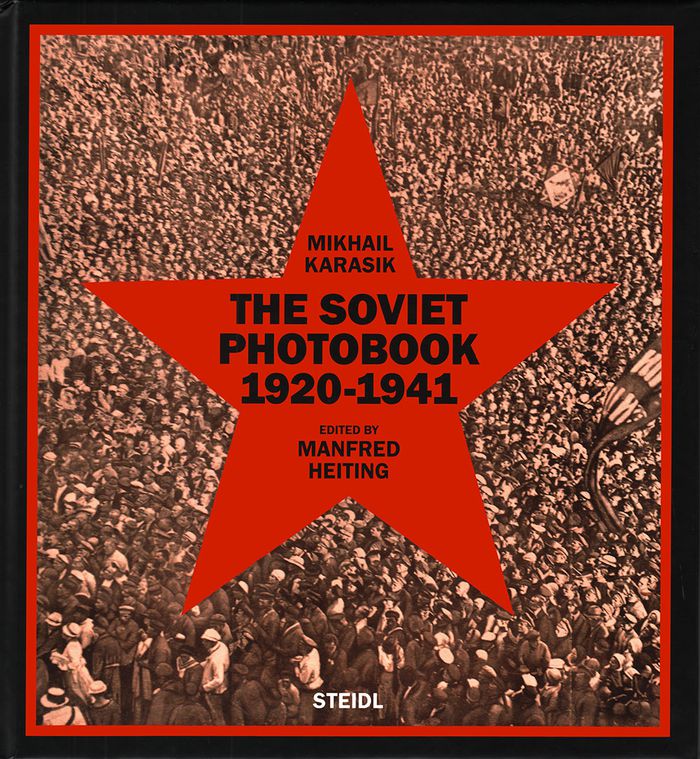
The Soviet Union was unique in its dynamic use of the illustrated book as a means of propaganda. Through the form of the book, the USSR articulated its utopian (and eventually totalitarian) ideologies and expressed its absolute power through avant-garde writing and radical graphic design that was in full flower during the 1920s and 1930s. The Soviet Photobook 1920-1941 presents 160 produced photobooks from this period and includes more than 400 additional reference illustrations.
The Soviet photobook, 1920-1941
Actions:
Prix:
$200.00
(disponible sur commande)
Résumé:
The Soviet Union was unique in its dynamic use of the illustrated book as a means of propaganda. Through the form of the book, the USSR articulated its utopian (and eventually totalitarian) ideologies and expressed its absolute power through avant-garde writing and radical graphic design that was in full flower during the 1920s and 1930s. The Soviet Photobook 1920-1941 presents 160 produced photobooks from this period and includes more than 400 additional reference illustrations.
Classification:
livres
livres
Publication:
janvier 2016
janvier 2016
Classification:
livres
livres
Actions:
Prix:
$59.95
(disponible sur commande)
Résumé:
101 projets de petites maisons présentés par Olivier Leblois tels que : "Habiter un mur comme un lézard", "Dove or eagle", "Sous les jupes de maman", "Back to the USSR", "Hitchcock va à la pêche", "Housse music", "La grange, la ruelle et la ligne d'horizon", "Voir sans être vu", "Giacometti ou l'entre-deux", "Hommage à...", "Like a chair on the grass", "Legoland ou la(...)
$59.95
(disponible sur commande)
Résumé:
101 projets de petites maisons présentés par Olivier Leblois tels que : "Habiter un mur comme un lézard", "Dove or eagle", "Sous les jupes de maman", "Back to the USSR", "Hitchcock va à la pêche", "Housse music", "La grange, la ruelle et la ligne d'horizon", "Voir sans être vu", "Giacometti ou l'entre-deux", "Hommage à...", "Like a chair on the grass", "Legoland ou la(...)
Titre:
101 petites maisons - small houses
Actions:
Prix:
$59.95
(disponible sur commande)
Résumé:
101 projets de petites maisons présentés par Olivier Leblois tels que : "Habiter un mur comme un lézard", "Dove or eagle", "Sous les jupes de maman", "Back to the USSR", "Hitchcock va à la pêche", "Housse music", "La grange, la ruelle et la ligne d'horizon", "Voir sans être vu", "Giacometti ou l'entre-deux", "Hommage à...", "Like a chair on the grass", "Legoland ou la Victoire de Samothrace", "Micro-Pyranèse", "The wind towers"... Des propositions - autant de dessins - présentés sous l'angle du manifeste, du rêve, de l'allégorie, ou de la réalité habitée.
101 petites maisons - small houses
Actions:
Prix:
$59.95
(disponible sur commande)
Résumé:
101 projets de petites maisons présentés par Olivier Leblois tels que : "Habiter un mur comme un lézard", "Dove or eagle", "Sous les jupes de maman", "Back to the USSR", "Hitchcock va à la pêche", "Housse music", "La grange, la ruelle et la ligne d'horizon", "Voir sans être vu", "Giacometti ou l'entre-deux", "Hommage à...", "Like a chair on the grass", "Legoland ou la Victoire de Samothrace", "Micro-Pyranèse", "The wind towers"... Des propositions - autant de dessins - présentés sous l'angle du manifeste, du rêve, de l'allégorie, ou de la réalité habitée.
Classification:
livres
livres
Publication:
octobre 2006, Marseille
octobre 2006, Marseille
Sujet:
Architecture résidentielle
Architecture résidentielle
Classification:
livres
livres
Actions:
Prix:
$49.95
(disponible en magasin)
Résumé:
Drawing on the early Soviet atheist magazines "Godless" and "Godless at the Machine", and postwar posters by Communist Party publishers, author Roland Elliott Brown presents an unsettling tour of atheist ideology in the USSR. Here are uncanny, imaginative and downright blasphemous visions from the very guts of the Soviet atheist apparatus: sinister priests rub shoulders(...)
$49.95
(disponible en magasin)
Résumé:
Drawing on the early Soviet atheist magazines "Godless" and "Godless at the Machine", and postwar posters by Communist Party publishers, author Roland Elliott Brown presents an unsettling tour of atheist ideology in the USSR. Here are uncanny, imaginative and downright blasphemous visions from the very guts of the Soviet atheist apparatus: sinister priests rub shoulders(...)
Titre:
Godless utopia: Soviet anti-religious propaganda
Actions:
Prix:
$49.95
(disponible en magasin)
Résumé:
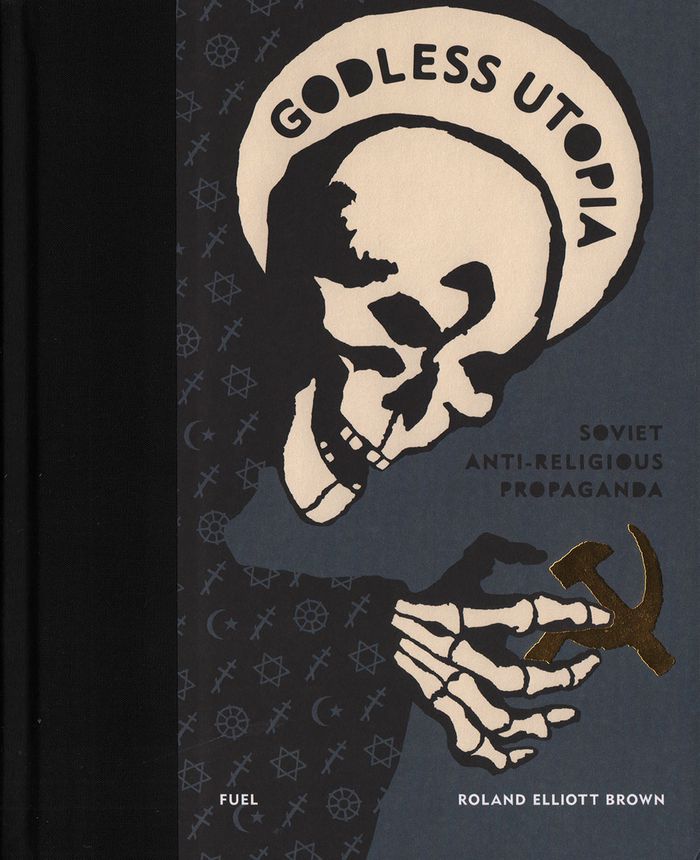
Drawing on the early Soviet atheist magazines "Godless" and "Godless at the Machine", and postwar posters by Communist Party publishers, author Roland Elliott Brown presents an unsettling tour of atheist ideology in the USSR. Here are uncanny, imaginative and downright blasphemous visions from the very guts of the Soviet atheist apparatus: sinister priests rub shoulders with cross-bearing colonial torturers, greedy mullahs, a cyclopean Jehovah and a crypto-fascist Jesus; Russian cosmonauts mock God from space while vigilant border guards nab American Bible smugglers. "Godless Utopia" is the occult grimoire of a lost socialist anti-theology.
Godless utopia: Soviet anti-religious propaganda
Actions:
Prix:
$49.95
(disponible en magasin)
Résumé:
Drawing on the early Soviet atheist magazines "Godless" and "Godless at the Machine", and postwar posters by Communist Party publishers, author Roland Elliott Brown presents an unsettling tour of atheist ideology in the USSR. Here are uncanny, imaginative and downright blasphemous visions from the very guts of the Soviet atheist apparatus: sinister priests rub shoulders with cross-bearing colonial torturers, greedy mullahs, a cyclopean Jehovah and a crypto-fascist Jesus; Russian cosmonauts mock God from space while vigilant border guards nab American Bible smugglers. "Godless Utopia" is the occult grimoire of a lost socialist anti-theology.
Classification:
livres
livres
Publication:
octobre 2019
octobre 2019
Sujet:
Théorie de l’art
Théorie de l’art
Classification:
livres
livres
Prix:
$51.95
(disponible sur commande)
Résumé:
Ilya Rabinovich is a Dutch-Moldovan photographer, internationally acclaimed for his unique photo projects. Rabinovich is based in Amsterdam, where he graduated from the Rijksakademie in 2000. In 2008 he travelled to his birthplace Chiinu in Moldova to photograph the exhibitions in its national museums. Here he encountered a remarkable process, which led to the(...)
$51.95
(disponible sur commande)
Résumé:
Ilya Rabinovich is a Dutch-Moldovan photographer, internationally acclaimed for his unique photo projects. Rabinovich is based in Amsterdam, where he graduated from the Rijksakademie in 2000. In 2008 he travelled to his birthplace Chiinu in Moldova to photograph the exhibitions in its national museums. Here he encountered a remarkable process, which led to the(...)
Titre:
Museutopia : a photographic research project by Ilya Rabinovich
Actions:
Prix:
$51.95
(disponible sur commande)
Résumé:
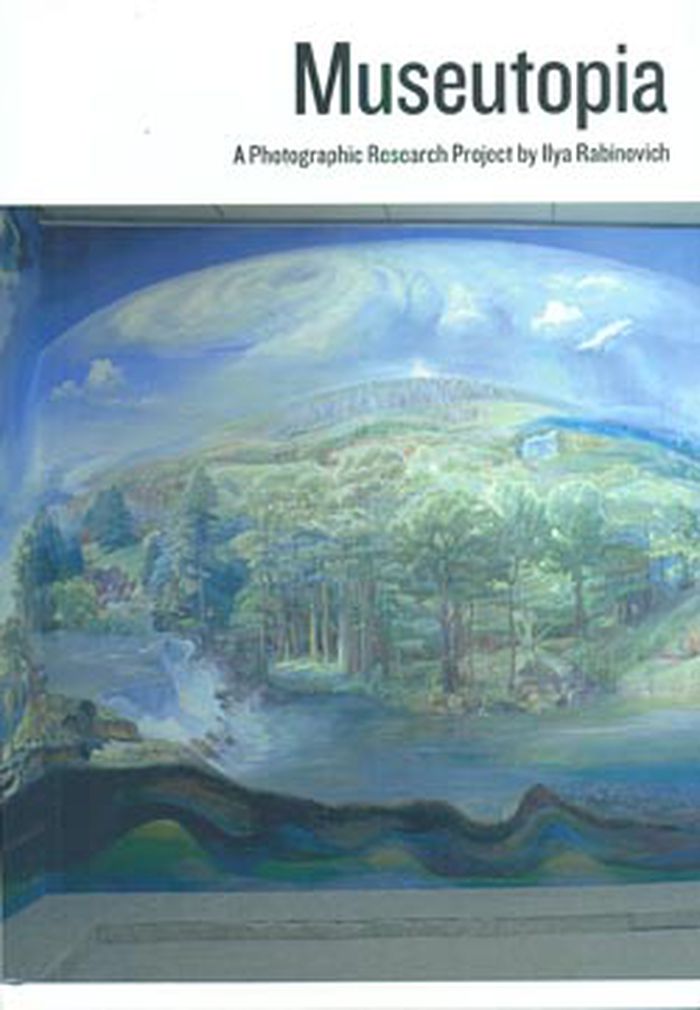
Ilya Rabinovich is a Dutch-Moldovan photographer, internationally acclaimed for his unique photo projects. Rabinovich is based in Amsterdam, where he graduated from the Rijksakademie in 2000. In 2008 he travelled to his birthplace Chiinu in Moldova to photograph the exhibitions in its national museums. Here he encountered a remarkable process, which led to the photographic project Museutopia. The country, formerly known as Moldavia, was annexed by the former USSR in 1940 and remained under Soviet rule till 1991. This period of its history has become distorted or totally erased in the national museums. Each museum orchestrates its own ideal image of Moldova.
Museutopia : a photographic research project by Ilya Rabinovich
Actions:
Prix:
$51.95
(disponible sur commande)
Résumé:
Ilya Rabinovich is a Dutch-Moldovan photographer, internationally acclaimed for his unique photo projects. Rabinovich is based in Amsterdam, where he graduated from the Rijksakademie in 2000. In 2008 he travelled to his birthplace Chiinu in Moldova to photograph the exhibitions in its national museums. Here he encountered a remarkable process, which led to the photographic project Museutopia. The country, formerly known as Moldavia, was annexed by the former USSR in 1940 and remained under Soviet rule till 1991. This period of its history has become distorted or totally erased in the national museums. Each museum orchestrates its own ideal image of Moldova.
Classification:
livres
livres
Publication:
décembre 2012
décembre 2012
Sujet:
Monographies photo
Monographies photo
Classification:
livres
livres
Prix:
$50.00
(disponible sur commande)
Résumé:
A photographic exploration of the Soviet monotowns - urban settlements erected around single industries in the hinterlands of the former USSR -; some thriving, others struggling to survive, still others partially abandoned. Through nine chapters with over 130 photographs taken by Russian photographer Alexander Veryovkin, Monotowns by Zupagrafika captures the(...)
$50.00
(disponible sur commande)
Résumé:
A photographic exploration of the Soviet monotowns - urban settlements erected around single industries in the hinterlands of the former USSR -; some thriving, others struggling to survive, still others partially abandoned. Through nine chapters with over 130 photographs taken by Russian photographer Alexander Veryovkin, Monotowns by Zupagrafika captures the(...)
Titre:
Monotowns: Soviet landscapes of post-industrial Russia
Actions:
Prix:
$50.00
(disponible sur commande)
Résumé:
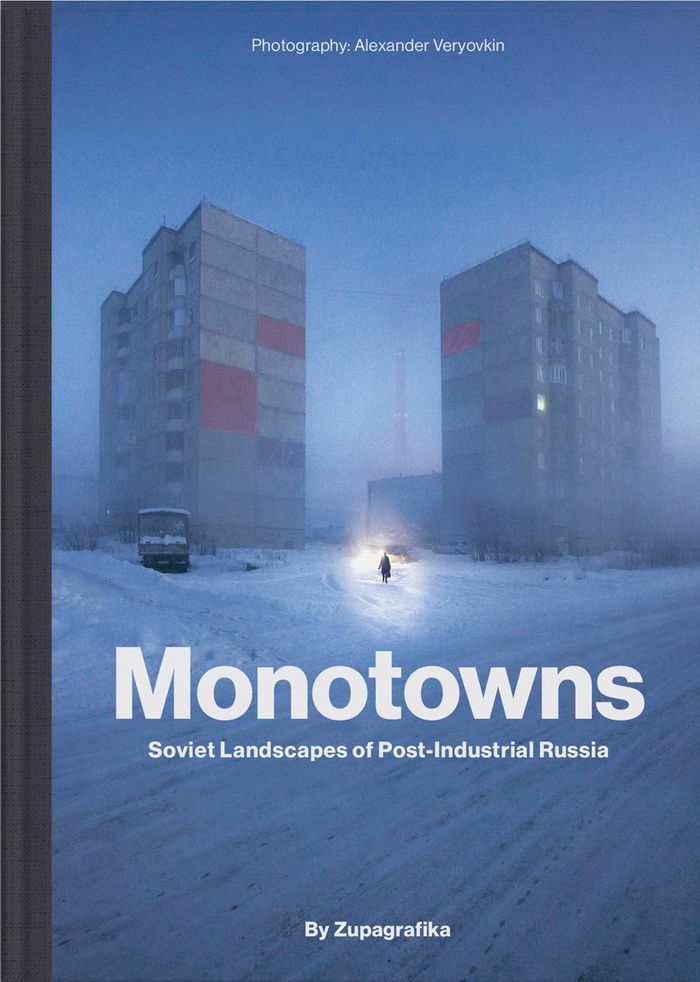
A photographic exploration of the Soviet monotowns - urban settlements erected around single industries in the hinterlands of the former USSR -; some thriving, others struggling to survive, still others partially abandoned. Through nine chapters with over 130 photographs taken by Russian photographer Alexander Veryovkin, Monotowns by Zupagrafika captures the post-industrial landscapes and Soviet-era architecture of the monogorods extending from the Arctic Circle to the Russian Far East, such as Vorkuta, Norilsk, Mirny, Kirovsk, Tolyatti, Cherepovets, Magnitogorsk, Monchegorsk and Nikel, and the daily lives of their inhabitants. Includes informative texts providing a valuable insight into the urban development of the featured cities and a foreword by the architectural critic Konstantin Budarin.
Monotowns: Soviet landscapes of post-industrial Russia
Actions:
Prix:
$50.00
(disponible sur commande)
Résumé:
A photographic exploration of the Soviet monotowns - urban settlements erected around single industries in the hinterlands of the former USSR -; some thriving, others struggling to survive, still others partially abandoned. Through nine chapters with over 130 photographs taken by Russian photographer Alexander Veryovkin, Monotowns by Zupagrafika captures the post-industrial landscapes and Soviet-era architecture of the monogorods extending from the Arctic Circle to the Russian Far East, such as Vorkuta, Norilsk, Mirny, Kirovsk, Tolyatti, Cherepovets, Magnitogorsk, Monchegorsk and Nikel, and the daily lives of their inhabitants. Includes informative texts providing a valuable insight into the urban development of the featured cities and a foreword by the architectural critic Konstantin Budarin.
Classification:
livres
livres
Publication:
septembre 2021
septembre 2021
Sujet:
Modernisme
Modernisme
Classification:
livres
livres
Actions:
Prix:
$80.95
(disponible sur commande)
Résumé:
Photographer Frédéric Chaubin reveals 90 buildings sited in fourteen former Soviet Republics which express what he considers to be the fourth age of Soviet architecture. His poetic pictures reveal an unexpected rebirth of imagination, an unknown burgeoning that took place from 1970 until 1990. Contrary to the 1920s and 1950s, no “school” or main trend emerges here. These(...)
$80.95
(disponible sur commande)
Résumé:
Photographer Frédéric Chaubin reveals 90 buildings sited in fourteen former Soviet Republics which express what he considers to be the fourth age of Soviet architecture. His poetic pictures reveal an unexpected rebirth of imagination, an unknown burgeoning that took place from 1970 until 1990. Contrary to the 1920s and 1950s, no “school” or main trend emerges here. These(...)
Sujet:
Monographies photo
Monographies photo
Publication:
septembre 2010
septembre 2010
Titre:
Cosmic communist constructions photographed
Actions:
Prix:
$80.95
(disponible sur commande)
Résumé:
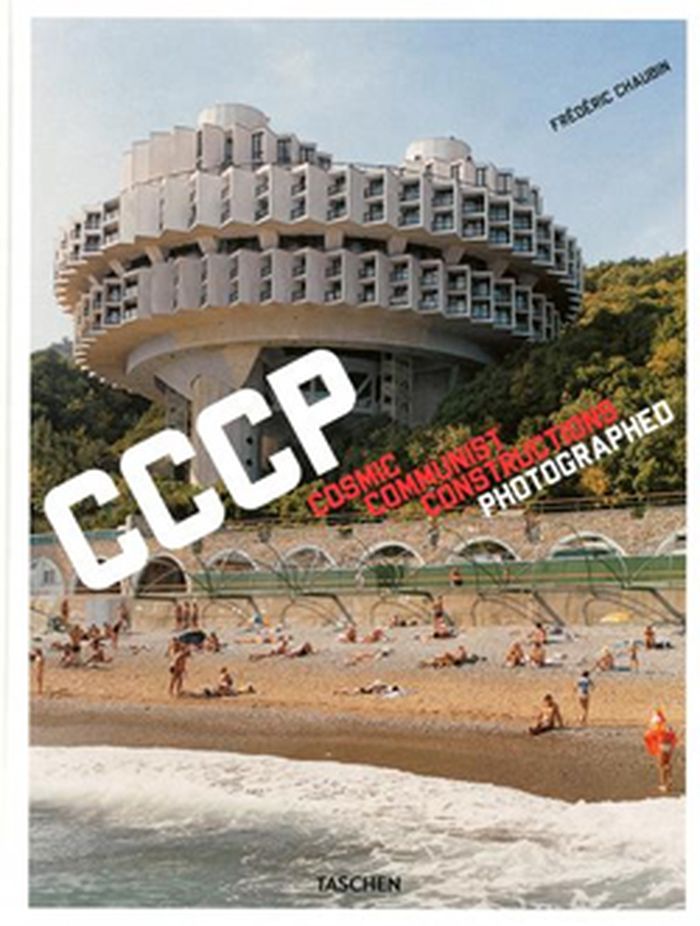
Photographer Frédéric Chaubin reveals 90 buildings sited in fourteen former Soviet Republics which express what he considers to be the fourth age of Soviet architecture. His poetic pictures reveal an unexpected rebirth of imagination, an unknown burgeoning that took place from 1970 until 1990. Contrary to the 1920s and 1950s, no “school” or main trend emerges here. These buildings represent a chaotic impulse brought about by a decaying system. Their diversity announced the end of the Soviet Union. Taking advantage of the collapsing monolithic structure, the holes in the widening net, architects went far beyond modernism, going back to the roots or freely innovating. Some of the daring ones completed projects that the Constructivists would have dreamt of (Druzhba Sanatorium, Yalta), others expressed their imagination in an expressionist way (Palace of Weddings, Tbilisi). A summer camp, inspired by sketches of a prototype lunar base, lays claim to Suprematist influence (Prometheus youth camp, Bogatyr). Then comes the "speaking architecture" widespread in the last years of the USSR : a crematorium adorned with concrete flames (Crematorium, Kiev), a technological institute with a flying saucer crashed on the roof (Institute of Scientific Research, Kiev), a political center watching you like Big Brother (House of Soviets, Kaliningrad). This puzzle of styles testifies to all the ideological dreams of the period, from the obsession with the cosmos to the rebirth of identity. It also outlines the geography of the USSR, showing how local influences made their exotic twists before the country was brought to its end.
Cosmic communist constructions photographed
Actions:
Prix:
$80.95
(disponible sur commande)
Résumé:
Photographer Frédéric Chaubin reveals 90 buildings sited in fourteen former Soviet Republics which express what he considers to be the fourth age of Soviet architecture. His poetic pictures reveal an unexpected rebirth of imagination, an unknown burgeoning that took place from 1970 until 1990. Contrary to the 1920s and 1950s, no “school” or main trend emerges here. These buildings represent a chaotic impulse brought about by a decaying system. Their diversity announced the end of the Soviet Union. Taking advantage of the collapsing monolithic structure, the holes in the widening net, architects went far beyond modernism, going back to the roots or freely innovating. Some of the daring ones completed projects that the Constructivists would have dreamt of (Druzhba Sanatorium, Yalta), others expressed their imagination in an expressionist way (Palace of Weddings, Tbilisi). A summer camp, inspired by sketches of a prototype lunar base, lays claim to Suprematist influence (Prometheus youth camp, Bogatyr). Then comes the "speaking architecture" widespread in the last years of the USSR : a crematorium adorned with concrete flames (Crematorium, Kiev), a technological institute with a flying saucer crashed on the roof (Institute of Scientific Research, Kiev), a political center watching you like Big Brother (House of Soviets, Kaliningrad). This puzzle of styles testifies to all the ideological dreams of the period, from the obsession with the cosmos to the rebirth of identity. It also outlines the geography of the USSR, showing how local influences made their exotic twists before the country was brought to its end.
Classification:
livres
livres
Publication:
septembre 2010
septembre 2010
Sujet:
Monographies photo
Monographies photo
Classification:
livres
livres
Prix:
$48.00
(disponible sur commande)
Résumé:
"Soviet Asia" explores the Soviet modernist architecture of Central Asia. Italian photographers Roberto Conte and Stefano Perego crossed the former Soviet republics of Kazakhstan, Kyrgyzstan, Uzbekistan and Tajikistan, documenting buildings constructed from the 1950s until the fall of the USSR. The resulting images showcase the majestic, largely unknown, modernist(...)
$48.00
(disponible sur commande)
Résumé:
"Soviet Asia" explores the Soviet modernist architecture of Central Asia. Italian photographers Roberto Conte and Stefano Perego crossed the former Soviet republics of Kazakhstan, Kyrgyzstan, Uzbekistan and Tajikistan, documenting buildings constructed from the 1950s until the fall of the USSR. The resulting images showcase the majestic, largely unknown, modernist(...)
Titre:
Soviet Asia: Soviet modernist architecture in Central Asia
Actions:
Prix:
$48.00
(disponible sur commande)
Résumé:
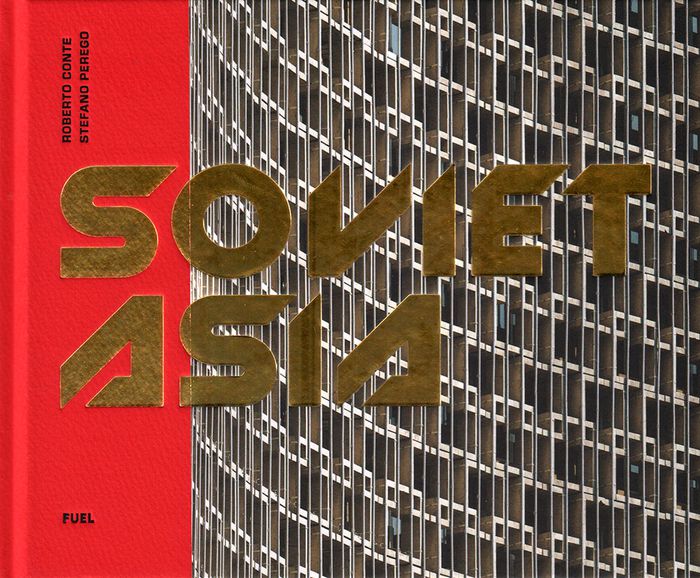
"Soviet Asia" explores the Soviet modernist architecture of Central Asia. Italian photographers Roberto Conte and Stefano Perego crossed the former Soviet republics of Kazakhstan, Kyrgyzstan, Uzbekistan and Tajikistan, documenting buildings constructed from the 1950s until the fall of the USSR. The resulting images showcase the majestic, largely unknown, modernist buildings of the region. Museums, housing complexes, universities, circuses, ritual palaces—all were constructed using a composite aesthetic. Influenced by Persian and Islamic architecture, pattern and mosaic motifs articulated a connection with Central Asia. Gray concrete slabs were juxtaposed with colourful tiling and rectilinear shapes broken by ornate curved forms: the brutal designs normally associated with Soviet-era architecture were reconstructed with Eastern characteristics.
Soviet Asia: Soviet modernist architecture in Central Asia
Actions:
Prix:
$48.00
(disponible sur commande)
Résumé:
"Soviet Asia" explores the Soviet modernist architecture of Central Asia. Italian photographers Roberto Conte and Stefano Perego crossed the former Soviet republics of Kazakhstan, Kyrgyzstan, Uzbekistan and Tajikistan, documenting buildings constructed from the 1950s until the fall of the USSR. The resulting images showcase the majestic, largely unknown, modernist buildings of the region. Museums, housing complexes, universities, circuses, ritual palaces—all were constructed using a composite aesthetic. Influenced by Persian and Islamic architecture, pattern and mosaic motifs articulated a connection with Central Asia. Gray concrete slabs were juxtaposed with colourful tiling and rectilinear shapes broken by ornate curved forms: the brutal designs normally associated with Soviet-era architecture were reconstructed with Eastern characteristics.
Classification:
livres
livres
Publication:
mai 2019
mai 2019
Sujet:
Modernisme
Modernisme


