


254 Résultats
Classification:
livres
livres
Actions:
Prix:
$32.95
(disponible en magasin)
Résumé:
A small but growing group of today's knowledge workers actively seek a lifestyle of freedom, using technology to perform their jobs, traveling far and wide, and moving as often as they like. These digital nomads have left their local coffee shops behind and now proudly post their "office of the day" photos from exotic locales, but what do their lives really look like? In(...)
$32.95
(disponible en magasin)
Résumé:
A small but growing group of today's knowledge workers actively seek a lifestyle of freedom, using technology to perform their jobs, traveling far and wide, and moving as often as they like. These digital nomads have left their local coffee shops behind and now proudly post their "office of the day" photos from exotic locales, but what do their lives really look like? In(...)
Publication:
janvier 2021
janvier 2021
Titre:
Digital nomads: In search of freedom, community and meaningful work in the new economy
Actions:
Prix:
$32.95
(disponible en magasin)
Résumé:
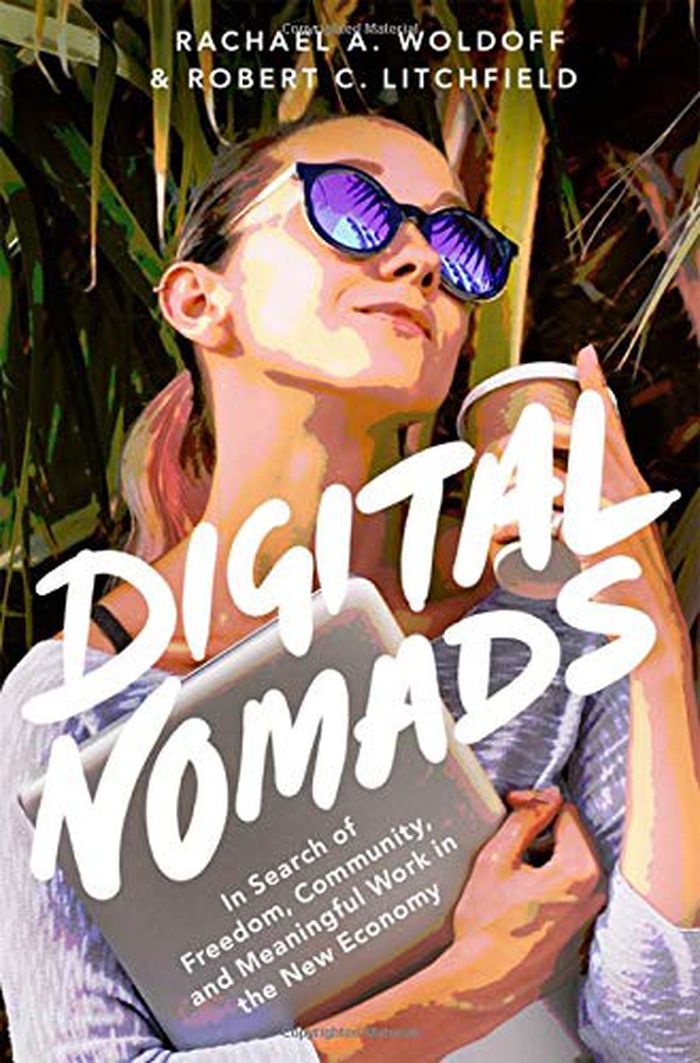
A small but growing group of today's knowledge workers actively seek a lifestyle of freedom, using technology to perform their jobs, traveling far and wide, and moving as often as they like. These digital nomads have left their local coffee shops behind and now proudly post their "office of the day" photos from exotic locales, but what do their lives really look like? In ''Digital nomads,'' Rachael Woldoff and Robert Litchfield take readers into an expatriate digital nomad community in Bali, Indonesia to better understand this growing demographic of typically Millennial workers. Through dozens of interviews and several stints living in a digital nomad hub, Woldoff and Litchfield present new answers to classic questions about community, creativity, and work. They further show why digital nomads leave their conventional lives behind, arguing that creative class and Millennial workers, though successful, often feel that their "world class cities" and desirable jobs are anything but paradise. They first follow their transitions into freelancing, entrepreneurship, and remote work, then explain how digital nomads create a fluid but intimate community abroad in the company of like-minded others. Ultimately, Woldoff and Litchfield provide insight into digital nomads' efforts to live and work in ways that balance freedom, community, and creative fulfillment in the digital age. A sympathetic yet critical take on this emerging group of workers, ''Digital nomads'' provides a revealing take on the changing nature of work and the problems of the new economy.
Digital nomads: In search of freedom, community and meaningful work in the new economy
Actions:
Prix:
$32.95
(disponible en magasin)
Résumé:
A small but growing group of today's knowledge workers actively seek a lifestyle of freedom, using technology to perform their jobs, traveling far and wide, and moving as often as they like. These digital nomads have left their local coffee shops behind and now proudly post their "office of the day" photos from exotic locales, but what do their lives really look like? In ''Digital nomads,'' Rachael Woldoff and Robert Litchfield take readers into an expatriate digital nomad community in Bali, Indonesia to better understand this growing demographic of typically Millennial workers. Through dozens of interviews and several stints living in a digital nomad hub, Woldoff and Litchfield present new answers to classic questions about community, creativity, and work. They further show why digital nomads leave their conventional lives behind, arguing that creative class and Millennial workers, though successful, often feel that their "world class cities" and desirable jobs are anything but paradise. They first follow their transitions into freelancing, entrepreneurship, and remote work, then explain how digital nomads create a fluid but intimate community abroad in the company of like-minded others. Ultimately, Woldoff and Litchfield provide insight into digital nomads' efforts to live and work in ways that balance freedom, community, and creative fulfillment in the digital age. A sympathetic yet critical take on this emerging group of workers, ''Digital nomads'' provides a revealing take on the changing nature of work and the problems of the new economy.
Classification:
livres
livres
Publication:
janvier 2021
janvier 2021
Classification:
livres
livres
Actions:
Prix:
$39.95
(disponible en magasin)
Résumé:
For E. C. Relph, the landscape of late twentieth-century cities must be envisioned as a total environment—not just streets and buildings but billboards and parking meters as well. "The modern urban landscape" traces the developments since 1880 in architecture, technology, planning, and society that have formed the visual context of daily life. Each of these shaping(...)
$39.95
(disponible en magasin)
Résumé:
For E. C. Relph, the landscape of late twentieth-century cities must be envisioned as a total environment—not just streets and buildings but billboards and parking meters as well. "The modern urban landscape" traces the developments since 1880 in architecture, technology, planning, and society that have formed the visual context of daily life. Each of these shaping(...)
Titre:
The modern urban landscape: 1880 to the present
Actions:
Prix:
$39.95
(disponible en magasin)
Résumé:
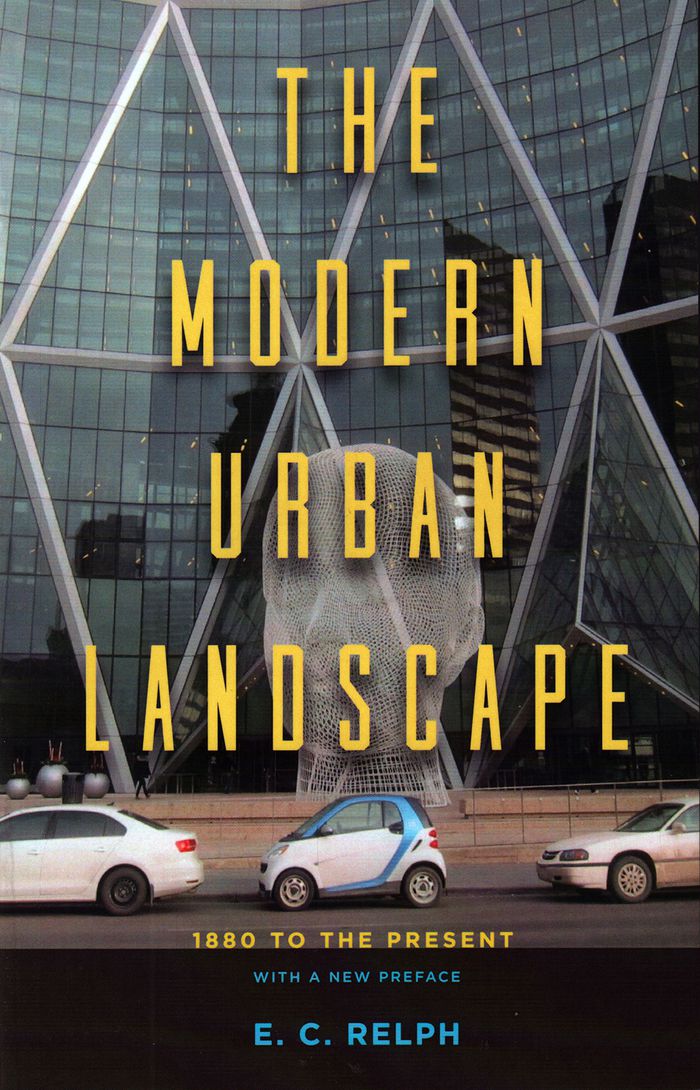
For E. C. Relph, the landscape of late twentieth-century cities must be envisioned as a total environment—not just streets and buildings but billboards and parking meters as well. "The modern urban landscape" traces the developments since 1880 in architecture, technology, planning, and society that have formed the visual context of daily life. Each of these shaping influences is often viewed in isolation, but Relph surveys the ways in which they have operated independently to create what we see when we walk down a street, shop in a mall, or stare through a windshield on an expressway. Two sets of ideas and fashions, Relph argues, have had an especially important impact on urban landscapes in the twentieth century. An "internationalism" made possible by new building technologies and design ideologies has replaced regional style and custom as the dominant feature of city appearance, while a firm belief in the merits of self-consciousness has imposed logical analysis and technical manipulation on such commonplace objects as curbstones and park benches. "As a result," writes Relph, "the modern urban landscape is both rationalized and artificial, which is another way of saying that it is intensely human." This edition features a new preface in which the author identifies the major visible changes in urban landscapes over the past thirty years, including destination architecture, coffee shops, condominium towers, revitalized downtown streets, and the creation of edge cities. He also considers the less visible yet pervasive impacts associated with the emergence of electronic technologies and sustainable development.
The modern urban landscape: 1880 to the present
Actions:
Prix:
$39.95
(disponible en magasin)
Résumé:
For E. C. Relph, the landscape of late twentieth-century cities must be envisioned as a total environment—not just streets and buildings but billboards and parking meters as well. "The modern urban landscape" traces the developments since 1880 in architecture, technology, planning, and society that have formed the visual context of daily life. Each of these shaping influences is often viewed in isolation, but Relph surveys the ways in which they have operated independently to create what we see when we walk down a street, shop in a mall, or stare through a windshield on an expressway. Two sets of ideas and fashions, Relph argues, have had an especially important impact on urban landscapes in the twentieth century. An "internationalism" made possible by new building technologies and design ideologies has replaced regional style and custom as the dominant feature of city appearance, while a firm belief in the merits of self-consciousness has imposed logical analysis and technical manipulation on such commonplace objects as curbstones and park benches. "As a result," writes Relph, "the modern urban landscape is both rationalized and artificial, which is another way of saying that it is intensely human." This edition features a new preface in which the author identifies the major visible changes in urban landscapes over the past thirty years, including destination architecture, coffee shops, condominium towers, revitalized downtown streets, and the creation of edge cities. He also considers the less visible yet pervasive impacts associated with the emergence of electronic technologies and sustainable development.
Classification:
livres
livres
Publication:
juillet 2016
juillet 2016
Sujet:
Théorie de l’urbanisme
Théorie de l’urbanisme
Classification:
livres
livres
Titre:
Van Nelle factory in stereo
Van Nelle factory in stereo
Actions:
Prix:
$39.95
(disponible sur commande)
Résumé:
The design of the Van Nelle factory is in many ways revolutionary. While acknowledging the inventiveness of the young Van der Vlugt, this innovation is equally attributable to the dedication of the client, C.H. van der Leeuw. Besides optimum functioning of the concern, great emphasis was placed on providing improved working conditions for the employees. The factory(...)
$39.95
(disponible sur commande)
Résumé:
The design of the Van Nelle factory is in many ways revolutionary. While acknowledging the inventiveness of the young Van der Vlugt, this innovation is equally attributable to the dedication of the client, C.H. van der Leeuw. Besides optimum functioning of the concern, great emphasis was placed on providing improved working conditions for the employees. The factory(...)
Sujet:
Structures d’ingénierie
Structures d’ingénierie
Publication:
décembre 2002, Rotterdam
décembre 2002, Rotterdam
Titre:
Van Nelle factory in stereo
Actions:
Prix:
$39.95
(disponible sur commande)
Résumé:
The design of the Van Nelle factory is in many ways revolutionary. While acknowledging the inventiveness of the young Van der Vlugt, this innovation is equally attributable to the dedication of the client, C.H. van der Leeuw. Besides optimum functioning of the concern, great emphasis was placed on providing improved working conditions for the employees. The factory proper is in three volumes of decreasing height, one of eight levels for tobacco, a coffee section of five levels with a double-height entresol, and a three-level tea department. All three zones adjoin a main service route and are further connected by bridges (almost the hallmark of this factory) to a row along the water of dispatch and storage spaces, a bicycle shed, a boiler house and workshops. The combination of an objective functionalism and a humane view of architecture resulted in one of the absolute pinnacles of the Dutch Modern Movement. The Dutch photographer Martin van den Oever has made a fascinating stereoscopic (3-D) series of photographs on the architecture of Brinkman and Van der Vlugt's world famous Van Nelle Factory. This book contains twenty of his best photographs which together clearly demonstrate the delicate transparency of this functionalist masterpiece and confront the viewer with its spatiality. As an extra the dust wrapper of this book is a one-to-one reprint of an original drawing by Brinkman and Van der Vlugt (62cm x 145cm) which can also be used as a poster. Introduction by Joris Molenaar. With 20 anaglyph stereoscopic (3D) photographs and special stereo glasses.
Van Nelle factory in stereo
Actions:
Prix:
$39.95
(disponible sur commande)
Résumé:
The design of the Van Nelle factory is in many ways revolutionary. While acknowledging the inventiveness of the young Van der Vlugt, this innovation is equally attributable to the dedication of the client, C.H. van der Leeuw. Besides optimum functioning of the concern, great emphasis was placed on providing improved working conditions for the employees. The factory proper is in three volumes of decreasing height, one of eight levels for tobacco, a coffee section of five levels with a double-height entresol, and a three-level tea department. All three zones adjoin a main service route and are further connected by bridges (almost the hallmark of this factory) to a row along the water of dispatch and storage spaces, a bicycle shed, a boiler house and workshops. The combination of an objective functionalism and a humane view of architecture resulted in one of the absolute pinnacles of the Dutch Modern Movement. The Dutch photographer Martin van den Oever has made a fascinating stereoscopic (3-D) series of photographs on the architecture of Brinkman and Van der Vlugt's world famous Van Nelle Factory. This book contains twenty of his best photographs which together clearly demonstrate the delicate transparency of this functionalist masterpiece and confront the viewer with its spatiality. As an extra the dust wrapper of this book is a one-to-one reprint of an original drawing by Brinkman and Van der Vlugt (62cm x 145cm) which can also be used as a poster. Introduction by Joris Molenaar. With 20 anaglyph stereoscopic (3D) photographs and special stereo glasses.
Classification:
livres
livres
Publication:
décembre 2002, Rotterdam
décembre 2002, Rotterdam
Sujet:
Structures d’ingénierie
Structures d’ingénierie
Classification:
livres
livres
Actions:
Prix:
$28.00
(disponible en magasin)
Résumé:
Over the past several decades, globalization has homogenized what we eat, and done so ruthlessly. The numbers are stark: Of the roughly six thousand different plants once consumed by human beings, only nine remain major staples today. Just three of these—rice, wheat, and corn—now provide fifty percent of all our calories.The source of much of the world’s food—seeds—is(...)
$28.00
(disponible en magasin)
Résumé:
Over the past several decades, globalization has homogenized what we eat, and done so ruthlessly. The numbers are stark: Of the roughly six thousand different plants once consumed by human beings, only nine remain major staples today. Just three of these—rice, wheat, and corn—now provide fifty percent of all our calories.The source of much of the world’s food—seeds—is(...)
Titre:
Eating to extinction: the world's rarest foods and why we need to save them
Actions:
Prix:
$28.00
(disponible en magasin)
Résumé:
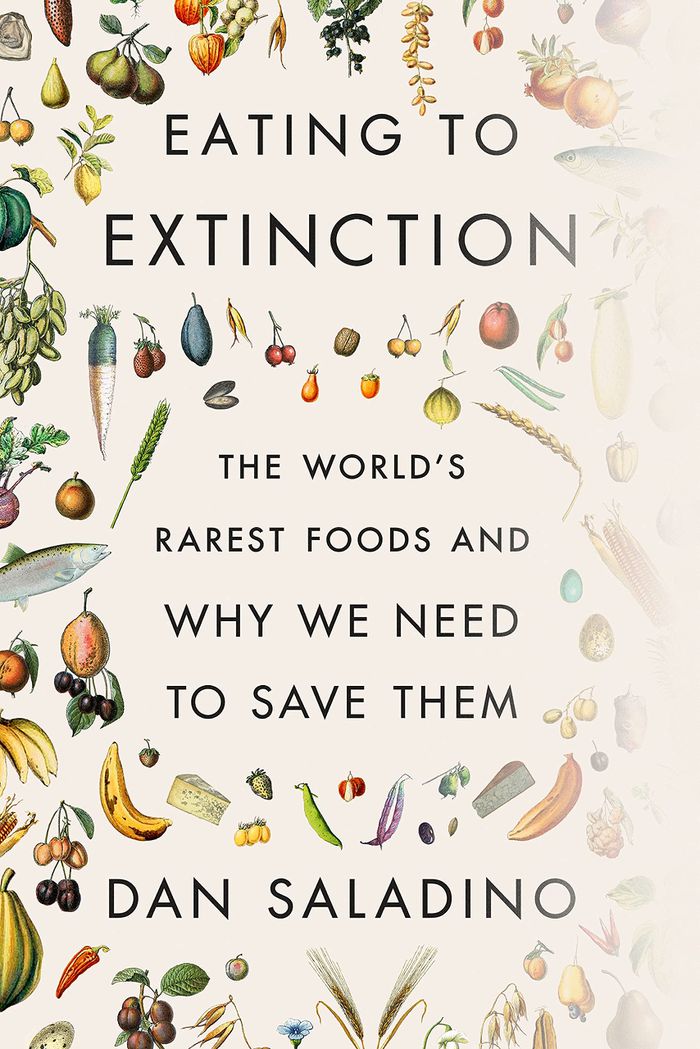
Over the past several decades, globalization has homogenized what we eat, and done so ruthlessly. The numbers are stark: Of the roughly six thousand different plants once consumed by human beings, only nine remain major staples today. Just three of these—rice, wheat, and corn—now provide fifty percent of all our calories.The source of much of the world’s food—seeds—is mostly in the control of just four corporations. Ninety-five percent of milk consumed in the United States comes from a single breed of cow. Half of all the world’s cheese is made with bacteria or enzymes made by one company. And one in four beers drunk around the world is the product of one brewer. When we lose diversity and foods become endangered, we not only risk the loss of traditional foodways, but also of flavors, smells, and textures that may never be experienced again. And the consolidation of our food has other steep costs, including a lack of resilience in the face of climate change, pests, and parasites. Our food monoculture is a threat to our health—and to the planet. In ''Eating to Extinction'', the BBC food journalist Dan Saladino travels the world to experience and document our most at-risk foods before it’s too late. He tells the fascinating stories of the people who continue to cultivate, forage, hunt, cook, and consume what the rest of us have forgotten or didn’t even know existed. Take honey—not the familiar product sold in plastic bottles, but the wild honey gathered by the Hadza people of East Africa, whose diet consists of eight hundred different plants and animals and who communicate with birds in order to locate bees’ nests. Or consider murnong—once the staple food of Aboriginal Australians, this small root vegetable with the sweet taste of coconut is undergoing a revival after nearly being driven to extinction. And in Sierra Leone, there are just a few surviving stenophylla trees, a plant species now considered crucial to the future of coffee.
Eating to extinction: the world's rarest foods and why we need to save them
Actions:
Prix:
$28.00
(disponible en magasin)
Résumé:
Over the past several decades, globalization has homogenized what we eat, and done so ruthlessly. The numbers are stark: Of the roughly six thousand different plants once consumed by human beings, only nine remain major staples today. Just three of these—rice, wheat, and corn—now provide fifty percent of all our calories.The source of much of the world’s food—seeds—is mostly in the control of just four corporations. Ninety-five percent of milk consumed in the United States comes from a single breed of cow. Half of all the world’s cheese is made with bacteria or enzymes made by one company. And one in four beers drunk around the world is the product of one brewer. When we lose diversity and foods become endangered, we not only risk the loss of traditional foodways, but also of flavors, smells, and textures that may never be experienced again. And the consolidation of our food has other steep costs, including a lack of resilience in the face of climate change, pests, and parasites. Our food monoculture is a threat to our health—and to the planet. In ''Eating to Extinction'', the BBC food journalist Dan Saladino travels the world to experience and document our most at-risk foods before it’s too late. He tells the fascinating stories of the people who continue to cultivate, forage, hunt, cook, and consume what the rest of us have forgotten or didn’t even know existed. Take honey—not the familiar product sold in plastic bottles, but the wild honey gathered by the Hadza people of East Africa, whose diet consists of eight hundred different plants and animals and who communicate with birds in order to locate bees’ nests. Or consider murnong—once the staple food of Aboriginal Australians, this small root vegetable with the sweet taste of coconut is undergoing a revival after nearly being driven to extinction. And in Sierra Leone, there are just a few surviving stenophylla trees, a plant species now considered crucial to the future of coffee.
Classification:
livres
livres
Publication:
janvier 2023
janvier 2023
Sujet:
Bouffe
Bouffe


