


2586 Résultats
Classification:
audio
audio
Titre:
Pulsar Threads.
Pulsar Threads.
Actions:
Description:
1 online resource.
Auteur:
Sujet:
Publication:
[Place of publication not identified] : Lateral Addition, 2024.
[Place of publication not identified] : Lateral Addition, 2024.
Classification:
audio
audio
Publication:
[Place of publication not identified] : Lateral Addition, 2024.
[Place of publication not identified] : Lateral Addition, 2024.
Auteur:
Sujet:
Classification:
livres
livres
Prix:
$55.50
(disponible sur commande)
Résumé:
"The boiled frog syndrome" presents compelling evidence to show that the source of the majority of the Western diseases of civilisation that have multiplied over the past 100 years, ranging from cancers to debilitating sicknesses and allergies, can be traced to the modern built environment, our increasing exposure to electromagnetic radiation and the indiscriminate use of(...)
Titre:
The boiled frog syndrome : your health and the built environment
Actions:
Prix:
$55.50
(disponible sur commande)
Résumé:
"The boiled frog syndrome" presents compelling evidence to show that the source of the majority of the Western diseases of civilisation that have multiplied over the past 100 years, ranging from cancers to debilitating sicknesses and allergies, can be traced to the modern built environment, our increasing exposure to electromagnetic radiation and the indiscriminate use of untested advanced technology. It is also due, in part, to the 20th century's repudiation of perennial wisdom. Our physical, mental and spiritual wellbeing will depend on our endeavours to bring about fundamental changes to combat the hazards. But how can this be done? And what can we - the so-called ordinary people - do about it? The text explores how our subtle energy sensitivities respond to the external environment and suggests the steps we can take to ensure our homes and workplaces are safe and conducive to our continued good health. For this it draws on common sense and the author's personal experience as a practising architect and consultant. It is also based on the wisdom and teachings of the past, gleaned from those who knew how to create a healthy, harmonious environment. This book provides the reader with the 'ammunition' to challenge the attitudes of the practitioners and their teaching institutions who are engaged in the built environment.
Classification:
livres
livres
Publication:
juin 2002, Chichester
juin 2002, Chichester
Sujet:
Architecture écologique
Architecture écologique
Classification:
livres
livres
Actions:
Prix:
$83.00
(disponible sur commande)
Résumé:
The ecological approach to building is the great untold story in the architectural history of the past century. This book is essential reading for architects and students. As an urgent wake-up call on the state of our built environment, it will be of interest to everyone who cares about the future of our planet. In the past, many of the key tenets of the ecological(...)
Titre:
Ecological architecture : a critical history
Actions:
Prix:
$83.00
(disponible sur commande)
Résumé:
The ecological approach to building is the great untold story in the architectural history of the past century. This book is essential reading for architects and students. As an urgent wake-up call on the state of our built environment, it will be of interest to everyone who cares about the future of our planet. In the past, many of the key tenets of the ecological philosophy - sustainability, energy efficiency, harmonious relationship with the environment - appeared to stand contrast to the sweep of science-led ‘progress’ that characterized the modern movement. Today, however, past visionaries are vindicated and yesterday’s eccentricities are today’s legal requirements: every architect has an obligation to the environment as well as to his or her client. After an introduction to the terminology of ecological architecture - including terms such as ‘green’ and ‘sustainable’, ’Part one’ identifies recurring themes in ecological architecture. ‘Part two’ features twenty-five case studies each focusing on a specific architect, movement or topic. Some of the names are familiar in this context - Rasem Badran, Hassan Fathy - but there are also plenty of surprises - Le Corbusier, Buckminster Fuller, Rudolf Schindler. ‘Part three’ looks to the future as ecological architecture struggles to deal with global urbanization.
Classification:
livres
livres
Publication:
octobre 2005, London
octobre 2005, London
Sujet:
Architecture écologique
Architecture écologique
Classification:
livres
livres
Titre:
And now: Architecture against a developer presidency. Essays on the occasion of Trump's inauguration
And now: Architecture against a developer presidency. Essays on the occasion of Trump's inauguration
Actions:
Prix:
$26.95
(disponible sur commande)
Résumé:
The election and inauguration of Donald J. Trump as the president of the United States of America have provoked an unprecedented intensity of reflection in virtually all academic disciplines. The professions of architecture and planning, faced with the phenomenon of a self-proclaimed "builder-in-chief," have found themselves facing a series of fundamental questions, both(...)
Titre:
And now: Architecture against a developer presidency. Essays on the occasion of Trump's inauguration
Actions:
Prix:
$26.95
(disponible sur commande)
Résumé:
The election and inauguration of Donald J. Trump as the president of the United States of America have provoked an unprecedented intensity of reflection in virtually all academic disciplines. The professions of architecture and planning, faced with the phenomenon of a self-proclaimed "builder-in-chief," have found themselves facing a series of fundamental questions, both old and new. How should we think, teach, and practice under a developer presidency? What sort of walls will we and won't we choose to build? What are our commitments of critical thought, and what obligations should we turn our energies toward? The essays gathered in And Now explore the nature of architecture's many long-standing complicities. Architecture coordinates colossal expenditures (of material, of energy); it scripts forms of labor (in its construction, in its operation, and in the programs it houses); and it is both a repository and generator of capital. Architecture participates, centrally, in defining modes of life, whether for the privileged or the dispossessed-designing and building the boundaries between the "haves" and the "have-nots." This fundamental reality of architectural practice need not inspire either nihilism or defensiveness but should rather be understood, quite simply, as the terrain we navigate. Naming these complicities and the injustices they perpetuate is a first step toward addressing them.
Classification:
livres
livres
Publication:
septembre 2017
septembre 2017
Sujet:
Architecture contemporaine
Architecture contemporaine
Classification:
livres
livres
Actions:
Prix:
$87.95
(disponible sur commande)
Résumé:
In an age of diminishing natural resources, architects and their clients need to know about an environmentally sustainable alternative to new construction: new life for old buildings. This book presents six case-study buildings, each more than a generation old, that were on the brink of oblivion. Mitchell Giurgola Architects worked closely with the client to determine(...)
Publication:
janvier 2005, Victoria (Australia)
janvier 2005, Victoria (Australia)
Titre:
Boomer buildings : mid-century architecture reborn
Actions:
Prix:
$87.95
(disponible sur commande)
Résumé:
In an age of diminishing natural resources, architects and their clients need to know about an environmentally sustainable alternative to new construction: new life for old buildings. This book presents six case-study buildings, each more than a generation old, that were on the brink of oblivion. Mitchell Giurgola Architects worked closely with the client to determine how each project could be salvaged by incorporating updated program elements to serve a new generation of users. All six case studies present in detail how each project is analyzed, from its energy use and curtain-wall performance to its mechanical, electrical, and plumbing systems, and structural stability. The buildings often expand in size, with a seamless melding of new and old. Contemporary curtain walls not only improve building performance, but also lend a fresh aesthetic appeal. The results are born-again buildings created for a fraction of the cost and consuming far fewer materials than, a new facility built from scratch. Today, our cities and suburbs are peppered with buildings of the same era as those profiled here that are on the brink of failure and are excellent candidates for rebirth. Mitchell Giurgola documents a new, more sustainable approach to design and construction that builds on the past, and makes the old better than new.
Classification:
livres
livres
Publication:
janvier 2005, Victoria (Australia)
janvier 2005, Victoria (Australia)
Classification:
livres
livres

Titre:
Whole earth field guide
Whole earth field guide
Actions:
Prix:
$46.95
(disponible sur commande)
Résumé:
The Whole Earth Catalog was a cultural touchstone of the 1960s and 1970s. Between 1968 and 1971, almost two million copies of its various editions were sold, and not just to commune-dwellers and hippies. Millions of mainstream readers turned to the Whole Earth Catalog for practical advice and intellectual stimulation, finding everything from a review of Buckminster Fuller(...)
Publication:
octobre 2016
octobre 2016
Titre:
Whole earth field guide
Actions:
Prix:
$46.95
(disponible sur commande)
Résumé:
The Whole Earth Catalog was a cultural touchstone of the 1960s and 1970s. Between 1968 and 1971, almost two million copies of its various editions were sold, and not just to commune-dwellers and hippies. Millions of mainstream readers turned to the Whole Earth Catalog for practical advice and intellectual stimulation, finding everything from a review of Buckminster Fuller to recommendations for juicers. This book offers selections from eighty texts from the nearly 1,000 items of "suggested reading" in the Last Whole Earth Catalog. Illustrated and meticulously documented, this fascinating selection of texts cited as 'suggested reading' in the Whole Earth Catalog gives us a fresh, new look at this bible of a generation. Wonderful juxtapositions abound: Buckminster Fuller and Wendell Berry; Timothy Leary and Lao-Tzu; Thoreau and Marshall McLuhan; the Boston Women's Health Collective and Norbert Wiener; Nicholas Negroponte and Kakuzo Okakura; and Margaret Mead and James Baldwin (their A Rap on Race). At once libertarian and communitarian, practical and mystical, scientific and hands-on, Whole Earth Field Guide reveals the astonishing energy and spirit that motivated thousands of young people to challenge the status quo and to grapple, with remarkable prescience, with issues such as ecology and information technology that still confront us today.
Classification:
livres
livres
Publication:
octobre 2016
octobre 2016
Classification:
livres
livres
Actions:
Prix:
$17.95
(disponible sur commande)
Résumé:
This ambitious book describes the many ways in which invention affects the environment (here defined broadly to include all forms of interaction between humans and nature). The book starts with nature itself and then leads readers to examine the built environment and then specific technologies in areas such as public health and energy. Each part focuses on a single(...)
Sujet:
Théorie de l’urbanisme
Théorie de l’urbanisme
Publication:
septembre 2008, Cambridge, London, Washinton
septembre 2008, Cambridge, London, Washinton
Titre:
Inventing for the environment
Actions:
Prix:
$17.95
(disponible sur commande)
Résumé:
This ambitious book describes the many ways in which invention affects the environment (here defined broadly to include all forms of interaction between humans and nature). The book starts with nature itself and then leads readers to examine the built environment and then specific technologies in areas such as public health and energy. Each part focuses on a single environmental issue. Topics range widely, from the role of innovation in urban landscapes to the relationship among technological innovation, public health, and the environment. Each part features an essay by a historian, an essay by a practitioner, and a "portrait of innovation" describing an individual whose work has made a difference. The mixture of historians and practitioners is critical because statements about the environment inevitably measure present and future conditions against those of the past. Early in the industrial revolution, smoke stacks were symbols of prosperity; at its end they were regarded as signs of pollution. Historical examples can also lead to the rediscovery of an old technology, as in the revival of straw bale construction. As it explores the history of invention for the environment, the book suggests many new ways to put the past to use for the common good.
Classification:
livres
livres
Publication:
septembre 2008, Cambridge, London, Washinton
septembre 2008, Cambridge, London, Washinton
Sujet:
Théorie de l’urbanisme
Théorie de l’urbanisme
Classification:
livres
livres
Titre:
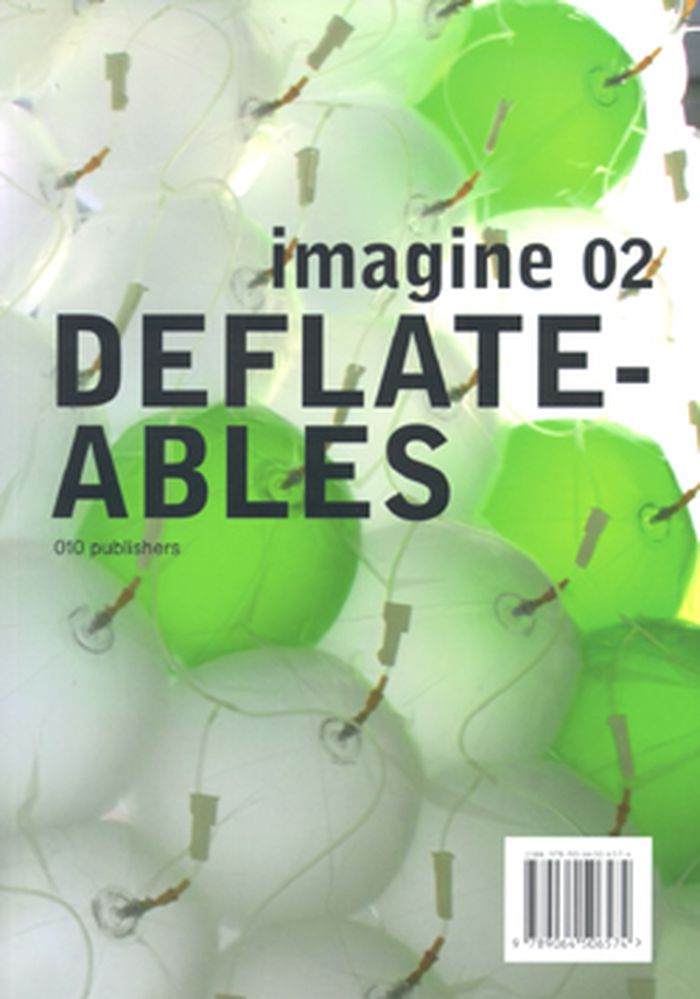
Imagine 02 Deflateables
Imagine 02 Deflateables
Actions:
Prix:
$43.50
(disponible sur commande)
Résumé:
Pneumatic structures have been thoroughly investigated and developed during the 1960s. However, the energy crisis and aesthetic developments stopped the process of employing these structures as a mainstream construction method. Deflateables concentrates on the very limited knowledge of vacuum constructions and develops a range of aesthetic, technical and functional design(...)
Sujet:
Structures d’ingénierie
Structures d’ingénierie
Publication:
octobre 2007, Rotterdam
octobre 2007, Rotterdam
Titre:
Imagine 02 Deflateables
Actions:
Prix:
$43.50
(disponible sur commande)
Résumé:
Pneumatic structures have been thoroughly investigated and developed during the 1960s. However, the energy crisis and aesthetic developments stopped the process of employing these structures as a mainstream construction method. Deflateables concentrates on the very limited knowledge of vacuum constructions and develops a range of aesthetic, technical and functional design possibilities. Until today, there has been a very limited number of designs developed and realized using pressurized constructions – despite the fact that this technology could lead to positive aspects: the air pressure of the earth can be used as a stabilizing and form-giving parameter, creating a specific and inspiring shape. In addition, the very nature of this technology offers varying degrees of thermal and acoustic insulation. Exploiting the possibilities of extremely light and, at the same time, energetically active constructions, deflateables are one of the promising fields of architectural and design developments. The chance to create structures that can move and react to requests such as user and climate requirements as well as formative demands, lifts this topic onto the level of a realistic and usable technology for as yet unknown design possibilities. Two volumes of the Imagine series are planned annually. Façades and Deflateables will appear in May 2008. Performance Driven Envelopes and Rapids will appear at the beginning of 2009.
Classification:
livres
livres
Publication:
octobre 2007, Rotterdam
octobre 2007, Rotterdam
Sujet:
Structures d’ingénierie
Structures d’ingénierie
Classification:
livres
livres
Actions:
Prix:
$56.00
(disponible en magasin)
Résumé:
''Collective Intelligence'' is an innovative monograph that documents the last ten years of Polish-born conceptual artist Agnieszka Kurant’s interdisciplinary practice. It includes newly commissioned texts by renowned thinkers in science, philosophy, art, technology, anthropology, and economics. Kurant’s experimental work investigates collective and nonhuman(...)
Publication:
décembre 2025
décembre 2025
Titre:
Agnieszka Kurant: Collective intelligence
Actions:
Prix:
$56.00
(disponible en magasin)
Résumé:
''Collective Intelligence'' is an innovative monograph that documents the last ten years of Polish-born conceptual artist Agnieszka Kurant’s interdisciplinary practice. It includes newly commissioned texts by renowned thinkers in science, philosophy, art, technology, anthropology, and economics. Kurant’s experimental work investigates collective and nonhuman intelligences and their impact on transformations of the human, the future of labor and creativity, and the exploitations within digital capitalism. Questioning the ideology of individualism, Kurant proposes that we rethink human and more-than-human worlds from a perspective of plural subjectivity, and, through this fundamental shift in perspective, posits the possibility of alternative political imaginaries. Her work probes the replacement of individual authorship with collective intelligence—a phenomenon observed in slime molds, termite colonies, social movements, cities, the internet, and inside our brains. In her collaborative practice, the artist investigates artificial intelligence, emergence, cybernetics, automation, artificial life, mining industries, and energy circuits to explore our collective evolution and the shifting status of objects in relation to agency, value, circulation, and redistribution. Through crowdsourcing the production of her artworks to thousands of humans and nonhumans, Kurant creates unstable, hybrid forms that constantly evolve. Her works, oscillating between biological, digital, and geological, embody the crumbling distinctions between what is natural and artificial, real and synthetic, and life and nonlife.
Classification:
livres
livres
Publication:
décembre 2025
décembre 2025
Classification:
livres
livres
Prix:
$24.95
(disponible sur commande)
Résumé:
During the two hundred millennia we've been on the planet, nothing has shaped us more profoundly than the city. In a fascinating narrative that ranges through cities famous and forgotten, acclaimed historian Ben Wilson tells the glorious story of how urban living has allowed human culture to flourish. Beginning with Uruk, the world's first city, he shows that cities(...)
Titre:
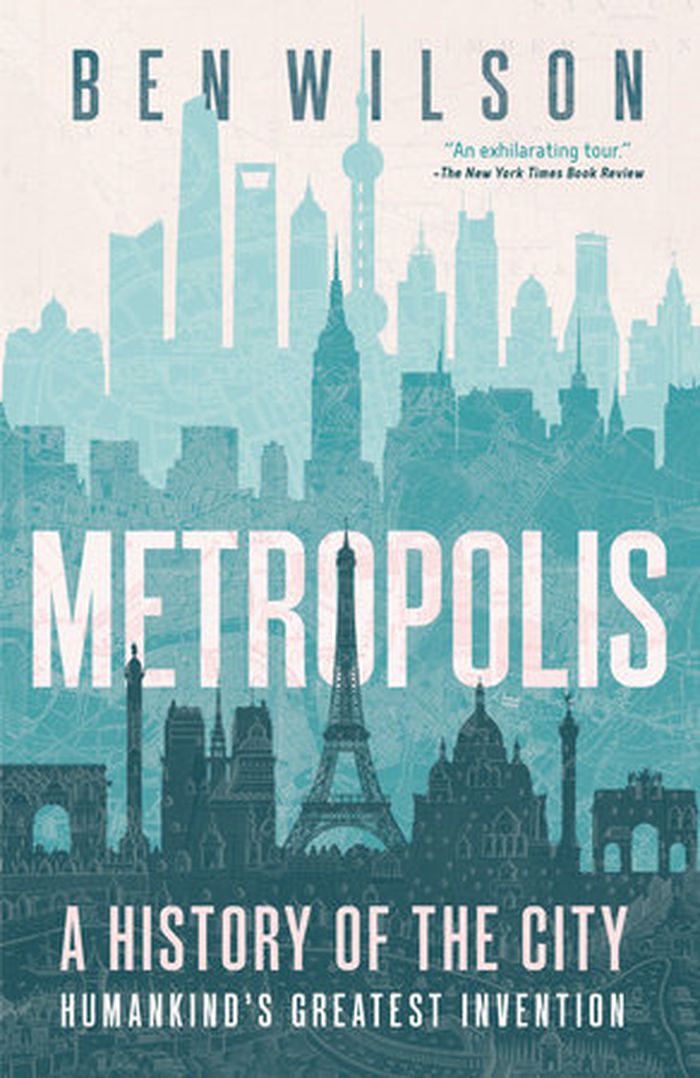
Metropolis: a history of the city, mankind's greatest invention
Actions:
Prix:
$24.95
(disponible sur commande)
Résumé:
During the two hundred millennia we've been on the planet, nothing has shaped us more profoundly than the city. In a fascinating narrative that ranges through cities famous and forgotten, acclaimed historian Ben Wilson tells the glorious story of how urban living has allowed human culture to flourish. Beginning with Uruk, the world's first city, he shows that cities created such a blossoming of human endeavor--new professions, new forms of art, worship, and trade--that they kick-started civilization itself. Despite outbreaks of plague and war, and outlasting empires, the city endured and new cities sprang up to capture the inimitable energy of human beings together. Wilson reveals the innovations nurturned amid the density of urban centers over the centuries: civics in the agora of Athens, global trade in ninth-century Baghdad, finance in the coffeehouses of London, domestic comforts in the heart of Amsterdam, peacocking in Belle Epoque Paris. In the modern age, the skyscrapers of New York City inspired utopian visions of community design, while the trees of twenty-first-century Seattle and Shanghai point to a sustainable future in the age of climate change. Page turning and irresistible, ''Metropolis'' is a history of cities that is also a history of how humanity lives.
Classification:
livres
livres
Publication:
octobre 2021
octobre 2021
Sujet:
Théorie de l’urbanisme
Théorie de l’urbanisme


