


2644 Résultats
Classification:
livres
livres
Actions:
Prix:
$29.95
(disponible sur commande)
Résumé:
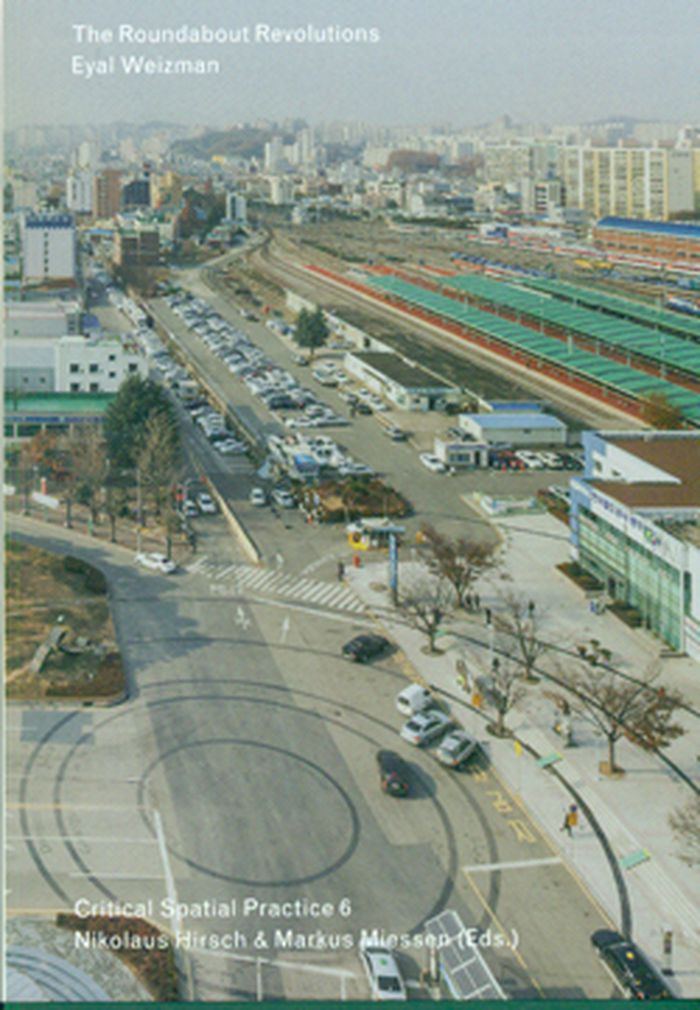
One common feature of the wave of recent revolutions and revolts around the world is not political but rather architectural: many erupted on inner-city roundabouts. In thinking about the relation between protest and urban form, Eyal Weizman starts with the May 1980 uprising in Gwangju, South Korea, the first of the “roundabout revolutions,” and traces its lineage to the(...)
Titre:
Critical spatial practice 6 : Eyal Weizman, the roundabout revolutions
Actions:
Prix:
$29.95
(disponible sur commande)
Résumé:
One common feature of the wave of recent revolutions and revolts around the world is not political but rather architectural: many erupted on inner-city roundabouts. In thinking about the relation between protest and urban form, Eyal Weizman starts with the May 1980 uprising in Gwangju, South Korea, the first of the “roundabout revolutions,” and traces its lineage to the Arab Spring and its hellish aftermath. Rereading the history of the roundabout through the vortices of history that traverse it, the book follows the development of the roundabout in Europe and North America in the early twentieth century, to its subsequent export to the colonial world in the context of attempts to discipline and police the “chaotic” non-Western city. How did an urban apparatus put in the service of authoritarian power became the locus of its undoing?
Classification:
livres
livres
Publication:
octobre 2015
octobre 2015
Sujet:
Théorie/ philosophie
Théorie/ philosophie
Classification:
livres
livres
Actions:
Exemplaires:
Description:
382 pages : illustrations ; 28 cm
Description:
382 pages : illustrations ; 28 cm
Auteur:
Sujet:
Publication:
Buenos Aires, Argentina : Libros de Hispanoamérica, 1986.
Buenos Aires, Argentina : Libros de Hispanoamérica, 1986.
Titre:
Arquitectura del altiplano peruano / Ramón Gutiérrez [and others].
Actions:
Exemplaires:
Description:
382 pages : illustrations ; 28 cm
Arquitectura del altiplano peruano / Ramón Gutiérrez [and others].
Actions:
Exemplaires:
Description:
382 pages : illustrations ; 28 cm
Classification:
livres
livres
Publication:
Buenos Aires, Argentina : Libros de Hispanoamérica, 1986.
Buenos Aires, Argentina : Libros de Hispanoamérica, 1986.
Auteur:
Sujet:
Classification:
livres
livres
Actions:
Exemplaires:
Description:
405 pages : illustrations (some color), maps (some color) ; 25 cm.
Description:
405 pages : illustrations (some color), maps (some color) ; 25 cm.
Auteur:
Sujet:
Publication:
Liège : Mardaga, 1992.
Liège : Mardaga, 1992.
Titre:
Architectures françaises outre-mer : Abidjan, Agadir, Alep, Alger, Bangui, Beyrouth, Brazzaville, Cansado, Casablanca, Conakry, Dakar, Damas, Hanoi, Libreville, Niamey, Orleansville, Ouagadougou, Riyadh, Tananarive, Tunis, Yaounde / realisé sous la direction de Maurice Culot et de Jean-Marie Thiveaud.
Actions:
Exemplaires:
Description:
405 pages : illustrations (some color), maps (some color) ; 25 cm.
Classification:
livres
livres
Publication:
Liège : Mardaga, 1992.
Liège : Mardaga, 1992.
Auteur:
Sujet:
Classification:
livres
livres
Actions:
Prix:
$76.95
(disponible sur commande)
Résumé:
This publication examines the role of national narratives in defining the Arab territory through the strategic implementation of architecture and urban planning. The Arab region, home to 423,000,000 inhabitants, is almost twice the size of the United States but still lacks sufficient and accessible research. "Architecture of the territory" uncovers the mechanisms that(...)
Titre:
Architecture of the territory: Constructing national narratives in the arab world
Actions:
Prix:
$76.95
(disponible sur commande)
Résumé:
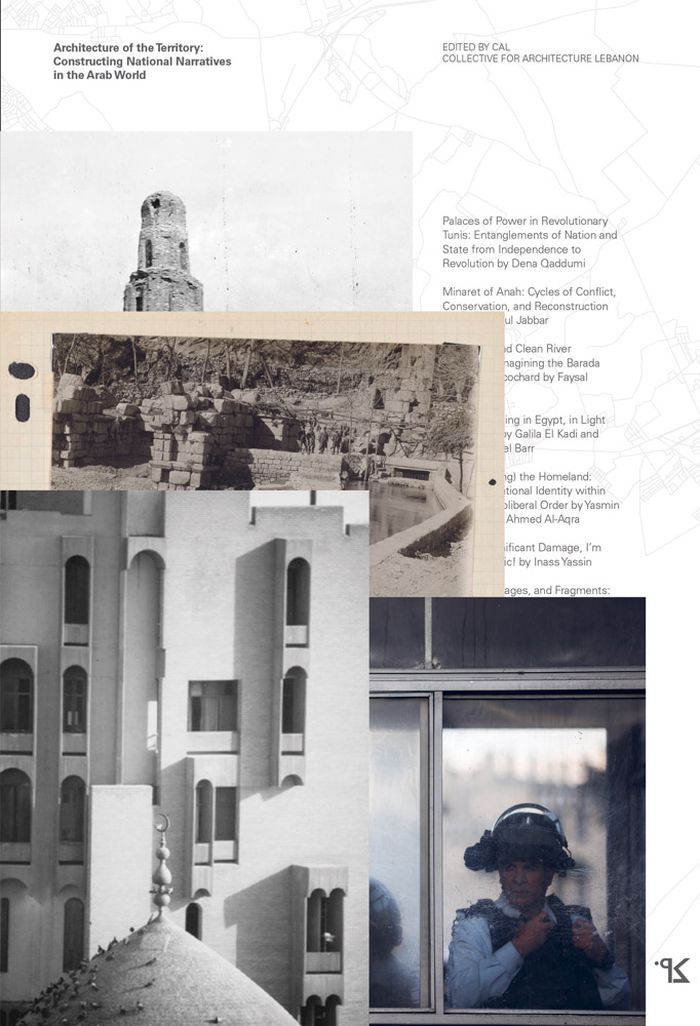
This publication examines the role of national narratives in defining the Arab territory through the strategic implementation of architecture and urban planning. The Arab region, home to 423,000,000 inhabitants, is almost twice the size of the United States but still lacks sufficient and accessible research. "Architecture of the territory" uncovers the mechanisms that have shaped this distinct territory, providing a critically overdue examination of the dichotomy between the overplanned cities of autocratic governments and the post-conflict urban sprawls of precarious states in the Arab world, where national narratives have acted as a vehicle to implement the development of these territories. The book opens a dialogue between young Arab researchers and professionals covering, among other subjects, tensions inherited from colonial borders; agricultural strategies; and imported housing typologies and narratives. The content draws a parallel to similar issues found in the global architectural discourse of today.
Classification:
livres
livres
Publication:
avril 2023
avril 2023
Classification:
livres
livres
Actions:
Prix:
$51.00
(disponible sur commande)
Résumé:
''Africa-Arctic Flyway: Physiocratic states'' gathers documents of Peter Fend's efforts through Ocean Earth for a planet organized according to hydrology—water basins—rather than national and colonial borders. It lays out tools and technologies derived from art, architecture, and science to replace fossil fuels, dams, nuclear industry, and industrial farming. The ensuing(...)
Titre:
Africa-Arctic Flyway: Physiocratic states
Actions:
Prix:
$51.00
(disponible sur commande)
Résumé:
''Africa-Arctic Flyway: Physiocratic states'' gathers documents of Peter Fend's efforts through Ocean Earth for a planet organized according to hydrology—water basins—rather than national and colonial borders. It lays out tools and technologies derived from art, architecture, and science to replace fossil fuels, dams, nuclear industry, and industrial farming. The ensuing proposal for governance builds on what is identified as the first school of economic thought: physiocracy. Here, via satellite-aided eco-taxation, governance pursues an increase in the numbers of fish, marine mammals, migratory birds, and insects. For instance, ideas from Earth art are applied to restoring wetlands and flyways in three swaths—the Americas, East Asia, and Eurafrica—converging on the Arctic. This book focuses on the Eurafrica flyway and surveys four decades of work. It asks, ''How do we go from visual art to reality?'' Fend answers: ''Through architecture.''
Classification:
livres
livres
Publication:
février 2023
février 2023
Classification:
livres
livres

Prix:
$34.95
(disponible sur commande)
Résumé:
From the advent of early colonial photography in the 19th century to contemporary 'white savior' social-media images, photography continues to play an integral role in the maintenance of white sovereignty. As various scholars have shown, the technology of the camera is not innocent, and neither are the images it produces. The invention and continuation of the 'white(...)
Titre:
The image of whiteness: Contemporary photography and racialization
Actions:
Prix:
$34.95
(disponible sur commande)
Résumé:
From the advent of early colonial photography in the 19th century to contemporary 'white savior' social-media images, photography continues to play an integral role in the maintenance of white sovereignty. As various scholars have shown, the technology of the camera is not innocent, and neither are the images it produces. The invention and continuation of the 'white race' is not just a political, social and legal phenomenon; it is also a complexly visual one. What does whiteness look like, and how might we begin to trace an antiracist history of artistic resistance that works against it? ''The image of whiteness'' seeks to introduce its reader to some important extracts from the troubling story of whiteness, to describe its falsehoods, its paradoxes and its oppressive nature, and to highlight some of the crucial work photographic artists have done to subvert and critique its image.
Classification:
livres
livres
Publication:
juillet 2022
juillet 2022
Sujet:
Théorie de la photographie
Théorie de la photographie
Classification:
livres
livres
Titre:
Asmara, the frozen city
Asmara, the frozen city
Actions:
Prix:
$24.99
(disponible sur commande)
Résumé:
Asmara, capital of the state of Eritrea, located in North Eastern Africa, is considered to be an impressive example of European urban construction of the 20th century. To this day, the influence of the former colonial power of Italy on the architecture of the city from the early 20th century to the 1940’s remains visible. Many of the buildings, erected in the futuristic,(...)
Titre:
Asmara, the frozen city
Actions:
Prix:
$24.99
(disponible sur commande)
Résumé:
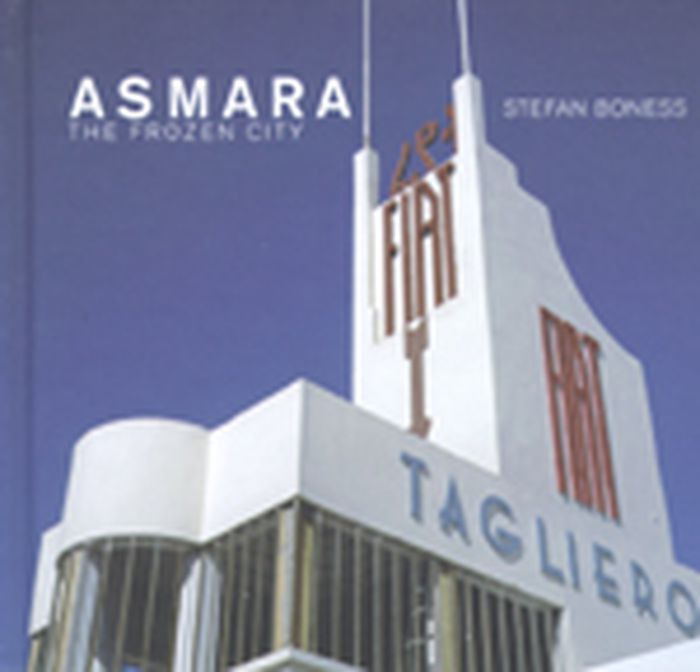
Asmara, capital of the state of Eritrea, located in North Eastern Africa, is considered to be an impressive example of European urban construction of the 20th century. To this day, the influence of the former colonial power of Italy on the architecture of the city from the early 20th century to the 1940’s remains visible. Many of the buildings, erected in the futuristic, monumentalist or rationalistic style have been preserved and dominate the cityscape of Asmara. In particular, architectural projects dating back to the late 1930’s and early 1940’s are the focal point of the work of photographer Stefan Boness. These include private, public and industrial buildings, which he photographed over the course of several months and which he staged incorporating their urban surroundings. Through his photographs, Stefan Boness has succeeded in expressing the unique atmosphere of Asmara, where time seemingly is standing still.
Classification:
livres
livres
Publication:
juillet 2007, Berlin
juillet 2007, Berlin
Classification:
livres
livres
Prix:
$48.99
(disponible en magasin)
Résumé:
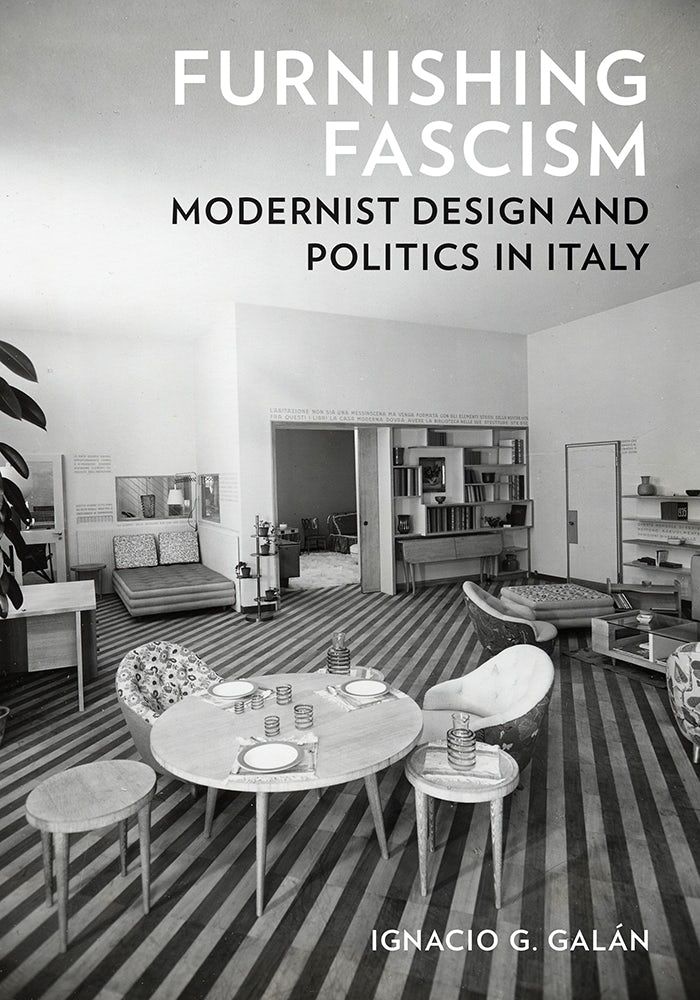
Along with the rise of Mussolini’s fascist regime, the interwar years in Italy also saw the widespread development of its modernist interior design and furnishing practices. While the regime’s politics were overtly manifest in monumental government architecture, ''Furnishing Fascism'' examines the subtler yet effective role of household goods and decor in the cultivation(...)
Titre:
Furnishing fascism: Modernist design and politics in Italy
Actions:
Prix:
$48.99
(disponible en magasin)
Résumé:
Along with the rise of Mussolini’s fascist regime, the interwar years in Italy also saw the widespread development of its modernist interior design and furnishing practices. While the regime’s politics were overtly manifest in monumental government architecture, ''Furnishing Fascism'' examines the subtler yet effective role of household goods and decor in the cultivation of Italy’s exclusionary sense of national identity. Presenting a fresh look at the work of various architects and designers, including iconic figures such as Gio Ponti and Carlo Enrico Rava, Ignacio G. Galán explores how seemingly neutral products of everyday life contributed to the propagation of fascist ideology. Through extensive promotion in popular magazines and department stores, on the film sets of Cinecittà Studios, and throughout the country’s colonial territories, Italy’s modernist design practices were part of a larger political project that aimed to produce a totalizing image of cultural hegemony.
Classification:
livres
livres
Publication:
mai 2025
mai 2025
Sujet:
Théorie de l’architecture
Théorie de l’architecture
Classification:
livres
livres
Actions:
Prix:
$98.00
(disponible sur commande)
Résumé:
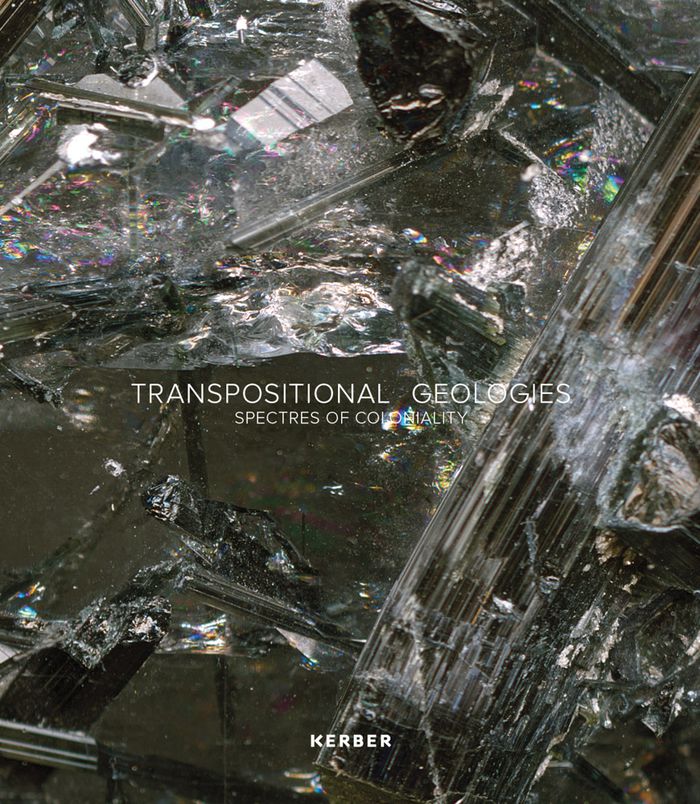
If you enter an institutional mineralogical collection, you typically encounter glass cabinets organized by classification systems according to material properties. Yet, each mineral carries with it a history of extraction, destruction, (dis)possession, and global relations. "Transpositional geologies" localizes such collections as indices of the afterlife of colonialism(...)
Titre:
Transpositional geologies: Spectres of coloniality
Actions:
Prix:
$98.00
(disponible sur commande)
Résumé:
If you enter an institutional mineralogical collection, you typically encounter glass cabinets organized by classification systems according to material properties. Yet, each mineral carries with it a history of extraction, destruction, (dis)possession, and global relations. "Transpositional geologies" localizes such collections as indices of the afterlife of colonialism and proposes an evolving political geology, reading mineral specimens as objects of "culture" rather than of "nature." Capturing his five-year artistic engagement and cultural collaboration in Namibia and Germany, Sascha Mikloweit brings together international voices from fields including anthropology, critical theory, geology, history, museum studies, philosophy, poetry, public administration—and the perspectives of boltwoodite, cerussite, or smithsonite. Rock by rock, this exquisitely designed volume invites us to engage with a progressively nuanced reading of geology’s history: its epistemic violence, omissions and racial regimes, and how the lasting residues of its colonial legacies continue to shape our present-day extractive realities.
Classification:
livres
livres
Publication:
août 2025
août 2025
Sujet:
Théorie de l’art
Théorie de l’art
Classification:
livres
livres
Actions:
Prix:
$41.00
(disponible en magasin)
Résumé:
Globally, Black people are among the most affected by the climate crisis, despite contributing very little to it. For a long time, the crisis was portrayed as yet another injustice for Black people to care about, on top of the day-to-day oppression they face. In ''Black Climates'', Selina Nwulu reframes the crisis to encompass our disconnection from each other and the(...)
Titre:
Black climates: Notes on race, our environment, and visions for equitable futures
Actions:
Prix:
$41.00
(disponible en magasin)
Résumé:
Globally, Black people are among the most affected by the climate crisis, despite contributing very little to it. For a long time, the crisis was portrayed as yet another injustice for Black people to care about, on top of the day-to-day oppression they face. In ''Black Climates'', Selina Nwulu reframes the crisis to encompass our disconnection from each other and the world around us. She argues that the root of climate change lies in historical colonial violence and ongoing exploitation, making it inherently racist. Nwulu, former Young People's Laureate for London, uses her poetic and skilful voice to directly address Black British readers who have been previously ignored in mainstream environmental conversations. She includes interviews with a wide range of creatives and campaigners to explore a variety of subjects, including air pollution, prison ecology, disability justice, migration, food, nature, community care, and radical imagination.
Classification:
livres
livres
Publication:
janvier 2026
janvier 2026


