


2586 Résultats
Classification:
livres
livres
Actions:
Prix:
$44.95
(disponible sur commande)
Résumé:
"Worldchanging : a User's guide for the 21st century " proposes innovative solutions, ideas and inventions emerging today for building a sustainable, livable, prosperous future. From consumer consciousness to a new vision for industry; non-toxic homes to refugee shelters; microfinance to effective philanthropy; socially responsible investing to starting a green business;(...)
Titre:
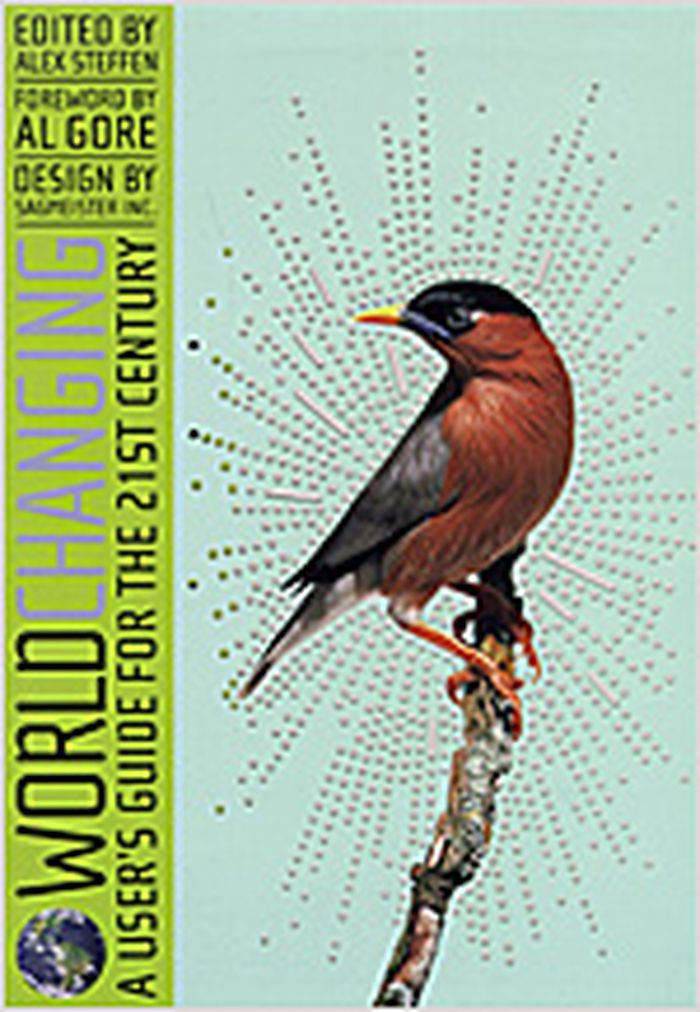
Worldchanging : a user's guide for the 21st century
Actions:
Prix:
$44.95
(disponible sur commande)
Résumé:
"Worldchanging : a User's guide for the 21st century " proposes innovative solutions, ideas and inventions emerging today for building a sustainable, livable, prosperous future. From consumer consciousness to a new vision for industry; non-toxic homes to refugee shelters; microfinance to effective philanthropy; socially responsible investing to starting a green business; citizen media to human rights; ecological economics to climate change, this is a comprehensive, cutting-edge overview. The book contains 7 sections which include those topics - from eco-building to responsible shopping, political action to humanitarian relief : stuff : green design, biomimicry, sustainable food, clothing, trade and technology ; shelter : green building and landscaping, clean energy, water, disaster relief and humanitarian design ; cities : smart growth, sustainable communities, transportation, greening infrastructure, product-service systems, leapfrogging and megacity challenges ; community : education, women's rights, public health, holistic approaches to community development, South-South science, social entrepreneurship and micro-lending, and philanthropy ; business : socially responsible investment, worldchanging start-ups, ecological economics, corporate social responsibility and green business ; politics : networked politics, new media, transparency, human rights, non-violent revolution and peacemaking ; planet : big picture -- everything from placing oneself in a bioregion to climate foresight to environmental history to green space exploration. Brought together by Alex Steffen, co-founder of the web site Worldchanging.com, this team of writers includes Cameron Sinclair, founder of Architecture for Humanity, Geekcorps founder Ethan Zuckerman, sustainable food expert Anna Lappé, and many others. With foreword by Al Gore. Design by Sagmeister.
Classification:
livres
livres
Publication:
janvier 2007, New York
janvier 2007, New York
Sujet:
Architecture écologique
Architecture écologique
Classification:
livres
livres
Actions:
Prix:
$89.99
(disponible sur commande)
Résumé:
Written by the chair of the LEED-Neighborhood Development (LEED-ND) initiative, Sustainable Urbanism: Urban Design with Nature is both an urgent call to action and a comprehensive introduction to "sustainable urbanism"--the emerging and growing design reform movement that combines the creation and enhancement of walkable and diverse places with the need to build(...)
Titre:
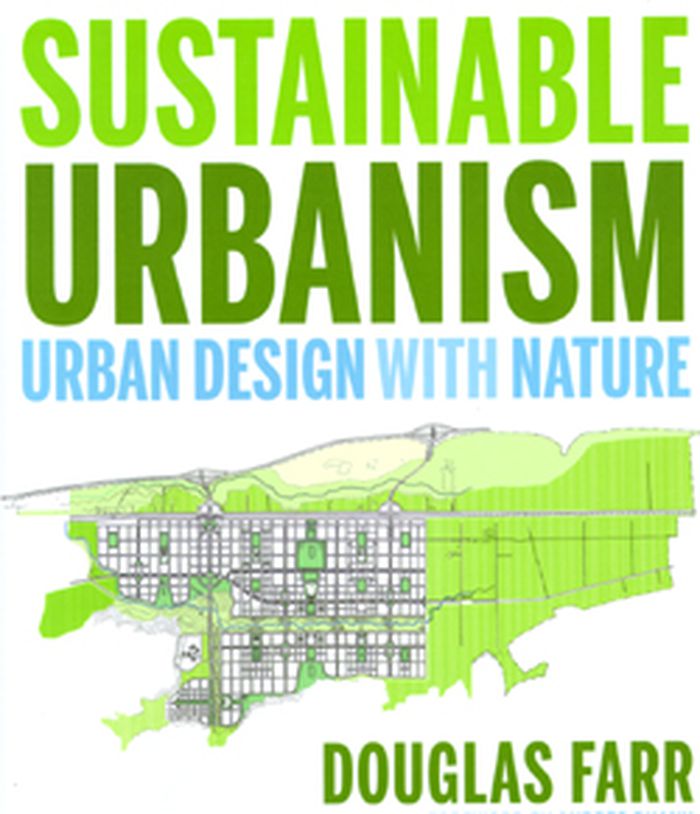
Sustainable urbanism: urban design with nature
Actions:
Prix:
$89.99
(disponible sur commande)
Résumé:
Written by the chair of the LEED-Neighborhood Development (LEED-ND) initiative, Sustainable Urbanism: Urban Design with Nature is both an urgent call to action and a comprehensive introduction to "sustainable urbanism"--the emerging and growing design reform movement that combines the creation and enhancement of walkable and diverse places with the need to build high-performance infrastructure and buildings. Providing a historic perspective on the standards and regulations that got us to where we are today in terms of urban lifestyle and attempts at reform, Douglas Farr makes a powerful case for sustainable urbanism, showing where we went wrong, and where we need to go. He then explains how to implement sustainable urbanism through leadership and communication in cities, communities, and neighborhoods. Essays written by Farr and others delve into such issues as: Increasing sustainability through density. Integrating transportation and land use. Creating sustainable neighborhoods, including housing, car-free areas, locally-owned stores, walkable neighborhoods, and universal accessibility. The health and environmental benefits of linking humans to nature, including walk-to open spaces, neighborhood stormwater systems and waste treatment, and food production. High performance buildings and district energy systems. Enriching the argument are in-depth case studies in sustainable urbanism, from BedZED in London, England and Newington in Sydney, Australia, to New Railroad Square in Santa Rosa, California and Dongtan, Shanghai, China. An epilogue looks to the future of sustainable urbanism over the next 200 years.
Classification:
livres
livres
Publication:
novembre 2007, Hoboken, New Jersey
novembre 2007, Hoboken, New Jersey
Sujet:
Théorie de l’urbanisme
Théorie de l’urbanisme
Classification:
livres
livres
Prix:
$20.95
(disponible sur commande)
Résumé:
In 1950, only 30 percent of the world's population lived in cities. By 2007, the planet's population has doubled, and today, as many people live in cities as populated the entire planet in 1950. Eighty percent of the planet's greenhouse gases are created by these energy-intensive urban centers. Thus, the key to creating climate change solutions resides with cities.(...)
Titre:
Urban meltdown: cities, climate change and politics as usual
Actions:
Prix:
$20.95
(disponible sur commande)
Résumé:
In 1950, only 30 percent of the world's population lived in cities. By 2007, the planet's population has doubled, and today, as many people live in cities as populated the entire planet in 1950. Eighty percent of the planet's greenhouse gases are created by these energy-intensive urban centers. Thus, the key to creating climate change solutions resides with cities. Author and Ottawa city councilor Clive Doucet provides a razor-sharp insider's perspective, stating his central theme: "It's not about planning. It's about politics." Climate change is proceeding so quickly not for lack of knowledge, but because politicians who deviate from the car-based sprawl model cannot get elected. Urban Meltdown describes how we got here, why we got here, and what can be done about it, as evidenced by the author's observations that: Economic growth has no built-in environmental accountability. Until the political thinking about growth and the progress model itself is changed, our environmental concerns will never be properly addressed. We need a new governance paradigm at all three levels. The cautionary tale of how the 1960s tried to take us down a different route failed, not for lack of leadership but because the system didn't permit it. Urban Meltdown reveals, castigates, and inspires. This is an important book for anyone who cares about thinking differently, acting differently, and making a difference. Clive Doucet is an urban activist, well-known journalist, best-selling author, and the first poet ever elected to Ottawa City Council.
Classification:
livres
livres
Publication:
octobre 2007, Gabriola Island
octobre 2007, Gabriola Island
Sujet:
Architecture écologique
Architecture écologique
Classification:
livres
livres
Actions:
Prix:
$88.00
(disponible sur commande)
Résumé:
What we talk about when we talk about Bar Brutal: This is aportrait of one of the world’s best-loved drinking holes and its formative role in the natural wine movement, a two-way symbiosis from Barcelona to the world. Emerging in 2013, Brutal is the place where a legendary cast of winemakers, sommeliers, chefs, musicians, and wanton drinkers have all converged in the(...)
Titre:
Bar Brutal: A cookbook of revelations
Actions:
Prix:
$88.00
(disponible sur commande)
Résumé:
What we talk about when we talk about Bar Brutal: This is aportrait of one of the world’s best-loved drinking holes and its formative role in the natural wine movement, a two-way symbiosis from Barcelona to the world. Emerging in 2013, Brutal is the place where a legendary cast of winemakers, sommeliers, chefs, musicians, and wanton drinkers have all converged in the feeling that something was taking shape there between the never-ending party and an intimate knowledge of the wines. The book combines multiple, intersecting strands that veer between structure and chaos, reflecting the bar’s own underlying methodology. At the centre of the work is Bar Brutal’s first official cookbook, featuring 26 recipes, while collage sections merge archival imagery with the stories—or revelations—of 80-odd contributors, including Stefano Colombo, Joan Ramón Escoda, Christian Tschida, Nuria Renom, John Wurdeman, Thierry Puzelat, LCD Soundsystem, Peggy Gou, 2manydjs, Gilles Peterson, Aziz Ansari, Alice Feiring, and many more. Photo essays by Adrià Cañameras, Nacho Alegre, and Yago Castromil document the dinners, wines, people, and spaces that bring the place alive by day and night, while four written chapters anchor the story in time and place, tracing the bar’s evolution. Brought together by Madeleine Willis, former Apartamento editor and long-time Brutal regular, the work reflects the same energy that Brutal has injected into Barcelona and the wide world of wine since 2013 and celebrates over a decade of happy, chaotic, expansive service.
Classification:
livres
livres
Publication:
juillet 2026
juillet 2026
Sujet:
Bouffe
Bouffe
Classification:
livres
livres
Actions:
Prix:
$54.95
(disponible en magasin)
Résumé:
After living for several years in the chaos of influences that is New York, the visual artist Satoshi Tsuchiyama realized that it is Israel that is the world’s hub for contemporary dance. His experiences of working with both dance and Jewish artefacts fused together. Questions arose in his head: Since the political situation has long been unstable in this religiously and(...)
Titre:
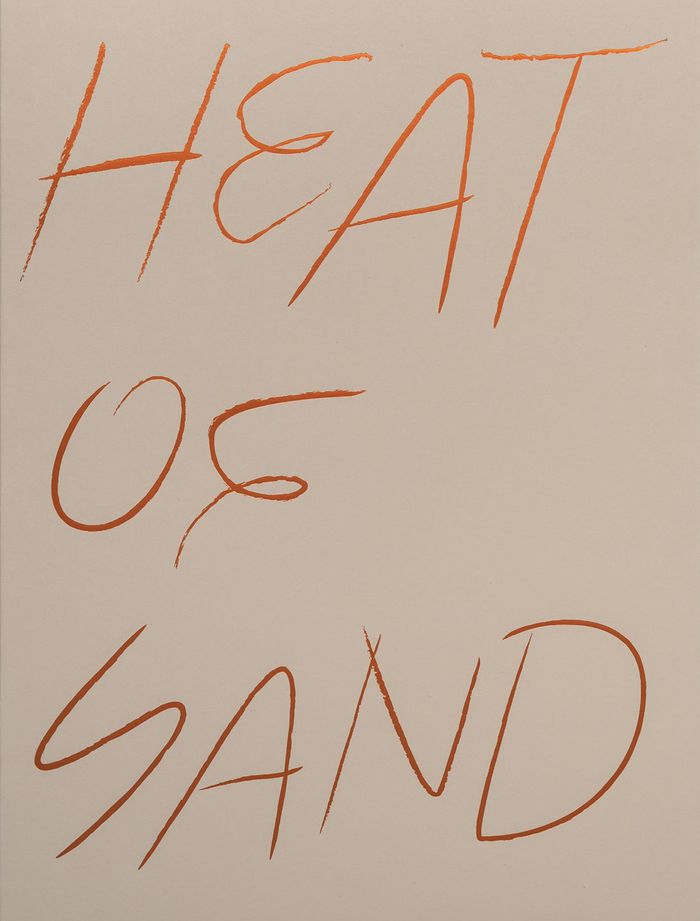
Satoshi Tsuchiyama: Heat of sand
Actions:
Prix:
$54.95
(disponible en magasin)
Résumé:
After living for several years in the chaos of influences that is New York, the visual artist Satoshi Tsuchiyama realized that it is Israel that is the world’s hub for contemporary dance. His experiences of working with both dance and Jewish artefacts fused together. Questions arose in his head: Since the political situation has long been unstable in this religiously and culturally rich region, what kind of normal everyday life can be found there? What colours and scents does a country like this retain, and how do the dancers appear and move under the influence of an environment like this? He decided to go there to witness the extraordinary on a daily basis. During his four visits to Israel and Palestine in 2017–19, he wandered in scorching sand and graffiti-filled streets, climbed to the collapsing top floor of the art school. He followed the desires of his eyes. The dancers he met came from all over the world, but they seemed to share the same mood, the same force that oozed out of the ground. And one and the same aura accompanied their bodies in a common direction. He avoided all the areas at high risk of terror, but death and the random character of life were present wherever he went. The energy of the inhabitants to survive was strong, and he experienced a singular beauty in this raw, tough and vulnerable ordeal of perseverance and adaptation.
Classification:
livres
livres
Publication:
septembre 2022
septembre 2022
Classification:
livres
livres
Actions:
Prix:
$21.00
(disponible sur commande)
Résumé:
For nearly twenty years now, Blair Kamin of the "Chicago Tribune" has explored how architecture captures our imagination and engages our deepest emotions. A winner of the Pulitzer Prize for criticism and writer of the widely read "Cityscapes" blog, Kamin treats his subjects not only as works of art but also as symbols of the cultural and political forces that inspire(...)
Titre:
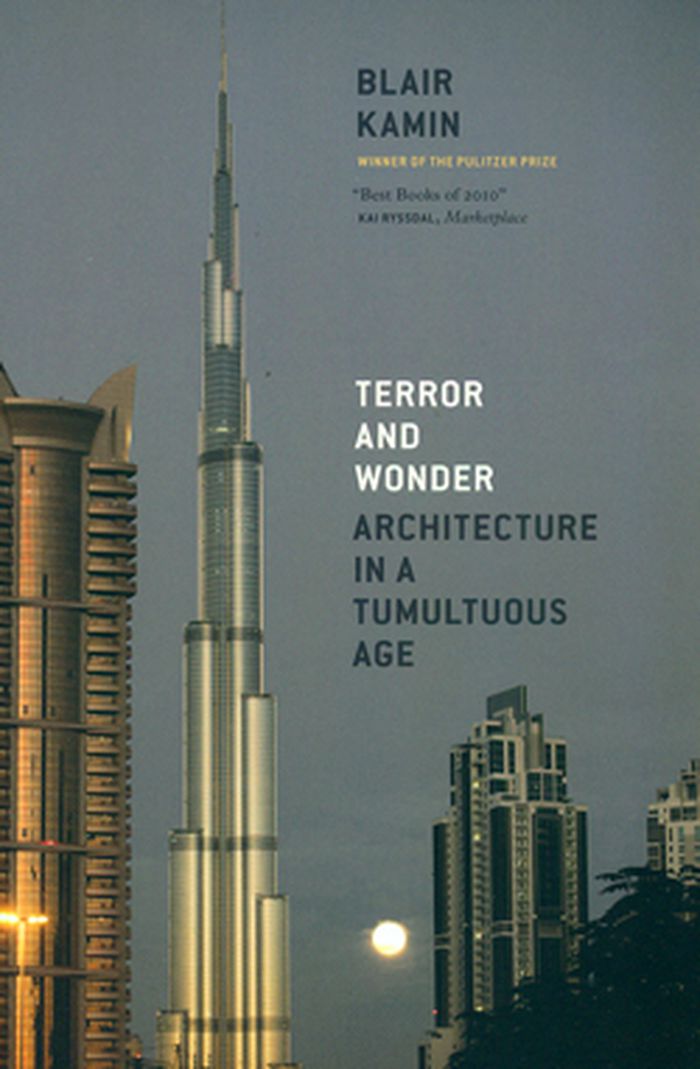
Terror and wonder : architecture in a tumultuous age
Actions:
Prix:
$21.00
(disponible sur commande)
Résumé:
For nearly twenty years now, Blair Kamin of the "Chicago Tribune" has explored how architecture captures our imagination and engages our deepest emotions. A winner of the Pulitzer Prize for criticism and writer of the widely read "Cityscapes" blog, Kamin treats his subjects not only as works of art but also as symbols of the cultural and political forces that inspire them. Terror and Wonder gathers the best of Kamin's writings from the past decade along with new reflections on an era framed by the destruction of the World Trade Center and the opening of the world's tallest skyscraper. Assessing ordinary commercial structures as well as head-turning designs by some of the world's leading architects, Kamin paints a sweeping but finely textured portrait of a tumultuous age torn between the conflicting mandates of architectural spectacle and sustainability. For Kamin, the story of our built environment over the past ten years is, in tangible ways, the story of the decade itself. Terror and Wonder considers how architecture has been central to the main events and crosscurrents in American life since 2001: the devastating and debilitating consequences of 9/11 and Hurricane Katrina; the real estate boom and bust; the use of over-the-top cultural designs as engines of civic renewal; new challenges in saving old buildings; the unlikely rise of energy-saving, green architecture; and growing concern over our nation's crumbling infrastructure.
Classification:
livres
livres
Publication:
septembre 2011
septembre 2011
Sujet:
Théorie de l’architecture
Théorie de l’architecture
Classification:
périodiques
périodiques
Prix:
$43.95
(disponible sur commande)
Résumé:
The new issue is in store ! Forty years on from the first moon landing, architecture in Space is entering a new era. Over the last decade, there has been a fundamental shift in the Space industry from short-term pioneering expeditions to long-term planning for colonisation, and new ventures such as Space tourism. Architects are now involved in designing the interiors of(...)
Titre:
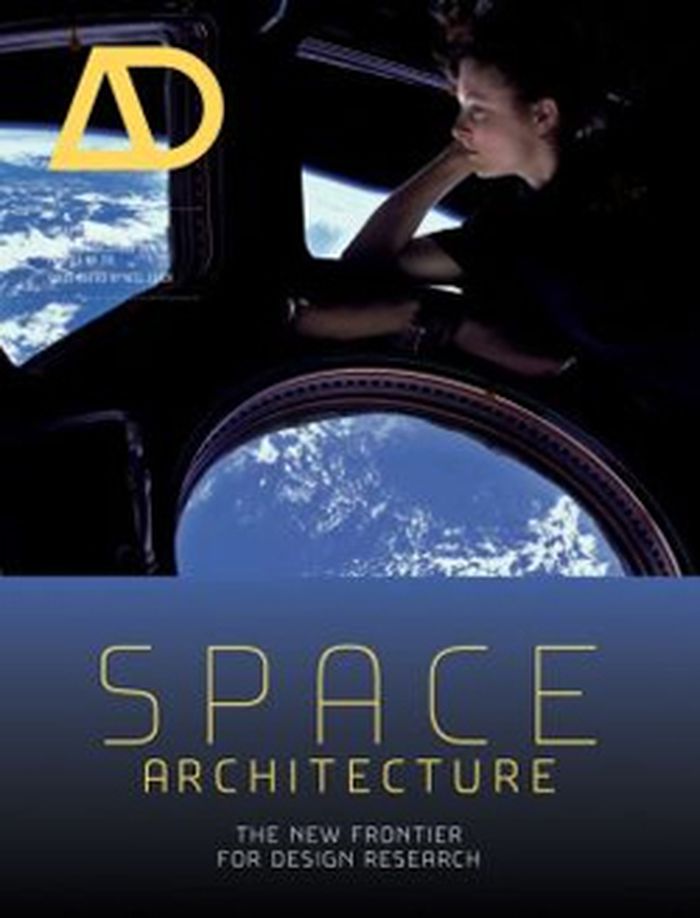
AD 84:6 Space architecture: the new frontier for design research
Actions:
Prix:
$43.95
(disponible sur commande)
Résumé:
The new issue is in store ! Forty years on from the first moon landing, architecture in Space is entering a new era. Over the last decade, there has been a fundamental shift in the Space industry from short-term pioneering expeditions to long-term planning for colonisation, and new ventures such as Space tourism. Architects are now involved in designing the interiors of long-term habitable structures in Space, such as the International Space Station, researching advanced robotic fabrication technologies for building structures on the Moon and Mars, envisioning new 'space yachts' for the super-rich, and building new facilities, such as the Virgin Galactic 'Spaceport America' in New Mexico designed by Foster + Partners. Meanwhile the mystique of Space remains as alluring as ever, as high-profile designers and educators -- such as Greg Lynn -- are running designs studios drawing upon ever more inventive computational design techniques. This issue of AD features the most significant current projects underway and highlights key areas of research in Space, such as energy, materials, manufacture and robotics. It also looks at how this research and investment in new technologies might transfer to terrestrial design and construction. Contributors include: Anders Carlson, Anita Genupta, Behrokh Khoshnevis. Space architects: Constance Adams, Marc Cohen, Ondrej Doule, Scott Howe, Brent Sherwood, John Spencer, Madhu Thangavelu, Andreas Vogler. Architects: Bevk Perovic Arhitekti, Dekleva Gregoric Arhitekti, Foster + Partners, Neil Leach, Greg Lynn, OFIS architects, SADAR + VUGA.
Classification:
périodiques
périodiques
Publication:
décembre 2014
décembre 2014
Sujet:
Revues
Revues
Classification:
livres
livres
Titre:
Massive change
Massive change
Actions:
Prix:
$39.95
(disponible sur commande)
Résumé:
"Massive Change" is a modern illustrated primer on the new inventions, technologies, and events that are affecting the human race worldwide. The book is a part of a broader research project by Bruce Mau Design intended to provoke debate and discussion about the future of design culture, broadly defined as the “familiar objects and techniques that are transforming our(...)
Publication:
novembre 2004, New York
novembre 2004, New York
Titre:
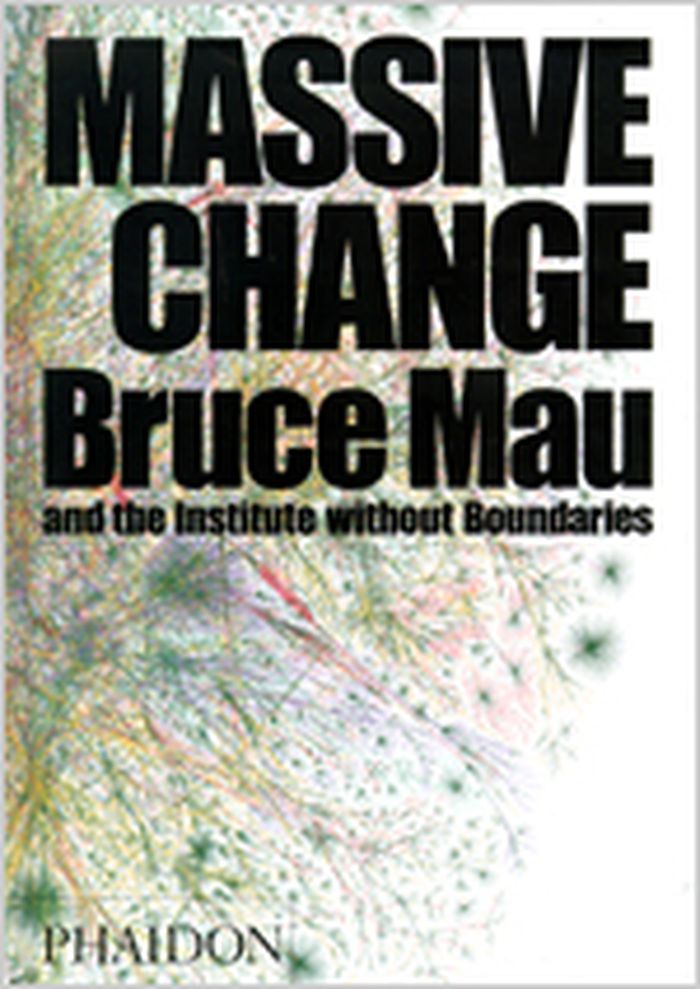
Massive change
Actions:
Prix:
$39.95
(disponible sur commande)
Résumé:
"Massive Change" is a modern illustrated primer on the new inventions, technologies, and events that are affecting the human race worldwide. The book is a part of a broader research project by Bruce Mau Design intended to provoke debate and discussion about the future of design culture, broadly defined as the “familiar objects and techniques that are transforming our lives.” In essays, interviews, and provocative imagery aimed at a broad audience, "Massive Change" explores the changing force of design in the contemporary world, and in doing so expands the definition of design to include the built environment, transportation technologies, revolutionary materials, energy and information systems, and living organisms. The book is divided into 11 heavily illustrated sections covering major areas of change in contemporary society — such as urbanism and architecture, the military, health and living, and wealth and politics. Each section intersperses intriguing documentary images with a general introductory essay, extended captions, and interviews with leading thinkers, including engineers, designers, philosophers, scientists, architects, artists, and writers. Concluding the book is a graphic timeline of significant inventions and world events from 10,000 B.C. to the present. "Massive Change" is a well designed, intelligent, visually provocative exploration of the myriad subjects percolating through popular culture: those we read about in magazines and on Web sites but rarely understand in any meaningful way. It poses the question: “Now that the human race can do almost anything, what will we do next?” Accompanies the internationally touring exhibition produced by Bruce Mau and his Institute without Borders.
Classification:
livres
livres
Publication:
novembre 2004, New York
novembre 2004, New York
Classification:
livres
livres
Titre:
Bad modernisms
Bad modernisms
Actions:
Prix:
$31.50
(disponible sur commande)
Résumé:
At the dawn of the twenty-first century, poets and architects, designers and critics, teachers and artists are rediscovering the virtues of the previous century's most vibrant cultural constellation. Yet this widespread embrace raises questions about modernism's relation to its own success. Modernism's “badness” — its emphasis on outrageous behavior, its elevation of(...)
Titre:
Bad modernisms
Actions:
Prix:
$31.50
(disponible sur commande)
Résumé:
At the dawn of the twenty-first century, poets and architects, designers and critics, teachers and artists are rediscovering the virtues of the previous century's most vibrant cultural constellation. Yet this widespread embrace raises questions about modernism's relation to its own success. Modernism's “badness” — its emphasis on outrageous behavior, its elevation of negativity, its refusal to be condoned —seems essential to its power. But once modernism is accepted as “good” or valuable (as a great deal of modernist art now is), its status as a subversive aesthetic intervention seems undermined. The contributors to "Bad modernisms" tease out the contradictions in modernism's commitment to badness "Bad modernisms" thus builds on and extends the “new modernist studies,” recent work marked by the application of diverse methods and attention to texts and artists not usually labeled as modernist. In this collection, these developments are exemplified by essays ranging from a reading of dandyism in 1920s Harlem as a performance of a “bad” black modernist imaginary to a consideration of Filipino American modernism in the context of anticolonialism. The contributors reconsider familiar figures—such as Virginia Woolf, D. H. Lawrence, Josef von Sternberg, Ludwig Wittgenstein, W. H. Auden, and Wyndham Lewis—and bring to light the work of lesser-known artists, including the writer Carlos Bulosan and the experimental filmmaker Len Lye. Examining cultural artifacts ranging from novels to manifestos, from philosophical treatises to movie musicals, and from anthropological essays to advertising campaigns, these essays signal the capaciousness and energy galvanizing the new modernist studies.
Classification:
livres
livres
Publication:
mars 2006
mars 2006
Sujet:
Théorie de l’architecture
Théorie de l’architecture
Classification:
livres
livres
Titre:
Ant Farm 1968-1978
Ant Farm 1968-1978
Actions:
Prix:
$7.99
(disponible sur commande)
Résumé:
This richly illustrated book, created to accompany the traveling exhibition of the same name, provides a fascinating critical overview of Ant Farm, the radical architecture collective that brought us Cadillac Ranch, Media Burn, and The Eternal Frame. Established by several young renegade architects in 1968, Ant Farm was a collaborative art and design group eager to bring(...)
Sujet:
livres soldés
livres soldés
Publication:
février 2004, Berkeley
février 2004, Berkeley
Titre:
Ant Farm 1968-1978
Actions:
Prix:
$7.99
(disponible sur commande)
Résumé:
This richly illustrated book, created to accompany the traveling exhibition of the same name, provides a fascinating critical overview of Ant Farm, the radical architecture collective that brought us Cadillac Ranch, Media Burn, and The Eternal Frame. Established by several young renegade architects in 1968, Ant Farm was a collaborative art and design group eager to bring to its practice a revolutionary spirit more consistent with the times. Its vision encompassed creations for a nomadic lifestyle, including inflatable structures and radical environments that culminated in projects such as the organically appointed House of the Century and the unrealized aquatic edifice The Dolphin Embassy. Ant Farm 1968-1978 explores the sweeping career of this inspired and inspiring visionary collective as its architectural projects broadened to embrace a range of undertakings that challenged the visual architecture of image, icon, and power. Constance Lewallen provides an in-depth, anecdotally rich interview with founding members Chip Lord, Doug Michels, and Curtis Schreier. An essay by Michael Sorkin gives the multivalent cultural context for Ant Farm's radical architecture. Steve Seid takes a comprehensive look at Ant Farm's influential videotapes. Caroline Maniaque's "Searching for Energy" details the group's inflatable structures in relationship to contemporaneous architects working in a similar vein. The catalog also includes a substantial excerpt from Chip Lord's 1976 meditation on car culture, with a new epilogue; a graphically playful timeline recounting Ant Farm's essential art projects; and a rich montage of images and ephemera capturing the humor, originality, and prescience of this feisty enterprise.
Classification:
livres
livres
Publication:
février 2004, Berkeley
février 2004, Berkeley
Sujet:
livres soldés
livres soldés


