


2586 Résultats
Classification:
livres
livres
Prix:
$40.00
(disponible en magasin)
Résumé:
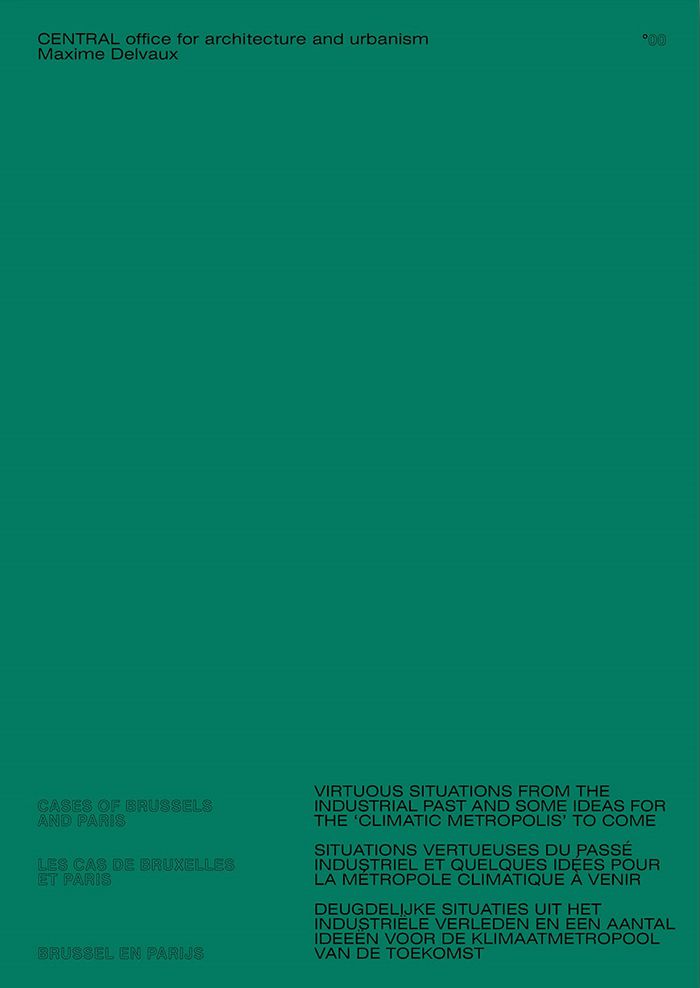
Virtuous situations from the industrial past and some ideas for the ‘climatic metropolis’ to come (cases of Brussels and Paris) compiles examples and projections that question the shape given to the city and territory at a moment of paradigm shift. The rapid evolution of climate change is leading to a clear state of emergency that is going to redefine the values and(...)
Titre:
CENTRAL office for architecture and urbanism & Maxime Delvaux
Actions:
Prix:
$40.00
(disponible en magasin)
Résumé:
Virtuous situations from the industrial past and some ideas for the ‘climatic metropolis’ to come (cases of Brussels and Paris) compiles examples and projections that question the shape given to the city and territory at a moment of paradigm shift. The rapid evolution of climate change is leading to a clear state of emergency that is going to redefine the values and forms of our society and its territories. Several signs of a gradual paradigm shift have appeared and citizen voices are being raised against a social model that is at odds with the environment. Looking towards the past, a fascinated reading of a city’s ability to transform itself radically when necessary, is proposed. The change, generated by the race towards industrialization and social emancipation, forced metropolises such as Brussels and Paris to develop new urban functions and logics. This evolution took shape in territories that were not yet highly urbanized, but also within the city itself, in negotiation with the existing context. A series of 23 situations from the industrial age draws a panorama of virtuous examples, illustrating an assumed cohabitation between the urban fabric and the infrastructural, productive and energy needs at a precise moment of radical change in Paris and Brussels. The development of the ‘climatic metropolis’ must imperatively be based on design values and principles capable of generating a common vision. In this perspective, we propose some ideas for reflection formalized by projects tied to the built stories from the past, outlining potential situations of a new state to come for the European city.
Classification:
livres
livres
Publication:
juillet 2019
juillet 2019
Sujet:
Architecture, monographies
Architecture, monographies
Classification:
livres
livres
Prix:
$47.95
(disponible sur commande)
Résumé:
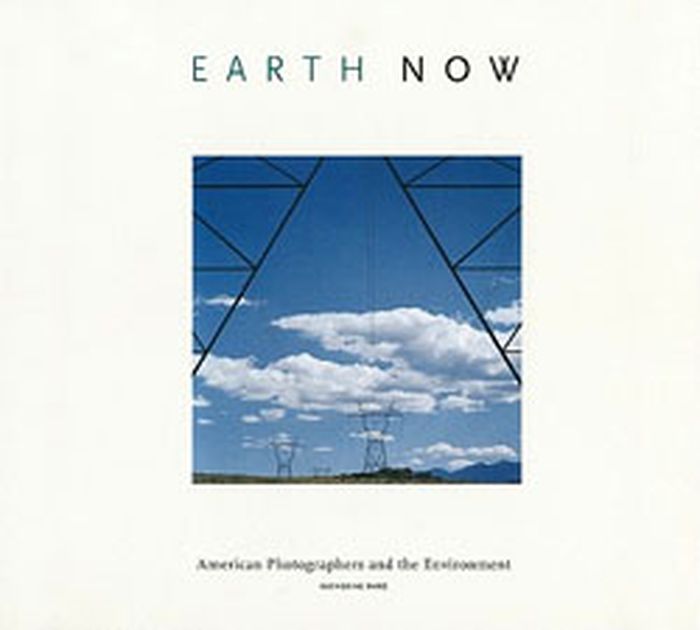
Since its invention, photography has been used to document and interpret the landscape. Survey photographers in the 1860s were the first environmental advocates, arguing for the U.S. national park system. During the first half of the 20th century photographers Ansel Adams and Eliot Porter were central figures in influencing American attitudes toward wilderness and(...)
Sujet:
Photographie par région
Photographie par région
Publication:
avril 2011
avril 2011
Titre:
Earth now: american photographers and the environment
Actions:
Prix:
$47.95
(disponible sur commande)
Résumé:
Since its invention, photography has been used to document and interpret the landscape. Survey photographers in the 1860s were the first environmental advocates, arguing for the U.S. national park system. During the first half of the 20th century photographers Ansel Adams and Eliot Porter were central figures in influencing American attitudes toward wilderness and conservation. This book traces the development of environmental photography beginning with Adams, Porter and others, and the next generation of landscape photographers - Robert Adams, Richard Misrach, Robert Glenn Ketchum, Patrick Nagatani, Mark Klett, whose works confronted the issues of landscape and the environment in less idealised terms. Shifting from the historical framework, the book presents new work by twenty-three photographers working in the U.S., the next wave of artists using the camera to engage the environmental issues of the day. Ranging from documentary to conceptual, the photographs touch on topics such as land and water use, the human place in the landscape, mounting consumer waste, industrial pollution, roof gardens and the green roof initiative, local food production, energy consumption, and the effects of industry on humans and animals. Katherine Ware's text offers insightful commentary on photography and the ways that environmental issues have been framed and advanced through the medium of photography. This is a powerful commentary on global environmental issues as seen through the lens of the newest wave of environmental photographers. This book is published to coincide with an exhibition to open at the New Mexico Museum of Art, Santa Fe, New Mexico, in April 2011.
Classification:
livres
livres
Publication:
avril 2011
avril 2011
Sujet:
Photographie par région
Photographie par région
Classification:
livres
livres
Actions:
Prix:
$46.95
(disponible sur commande)
Résumé:
"XXL-XS" represents the emerging discipline of ecological design by assembling a wide range of innovators with diverse interests. Geo-engineering, synthetic biology, construction site co-robotics, low-energy fabrication, up-cycling waste, minimally invasive design, living materials, and molecular self-assembly are just a few of the important advances explored in the book.(...)
Titre:
XXL-XS: new directions on ecological design
Actions:
Prix:
$46.95
(disponible sur commande)
Résumé:
"XXL-XS" represents the emerging discipline of ecological design by assembling a wide range of innovators with diverse interests. Geo-engineering, synthetic biology, construction site co-robotics, low-energy fabrication, up-cycling waste, minimally invasive design, living materials, and molecular self-assembly are just a few of the important advances explored in the book. At one extreme are massive public works, at the other, micro to nano-sized interventions that can have equally profound impacts on our world. From terraforming to bio-manufacturing, a whole new generation of designers is proposing unique ways of confronting the difficult challenges ahead. In this way design becomes a totality of relationships that affects all disciplines, which can no-longer be thought of as self-contained fields, each handled separately by narrowly focused specialists. Globalization demands a restructuring of the profession, as we know it. This requires a new breed of generalists who can work across fields and engage research on multiple sites around the globe. Today we need planetary designers versed in the craft of integral design. Our thesis is therefore both global and performative in scope. We need an architecture that is more than just a constellation of bio-picturesque images, digitally generated surface effects, and conventional materials. We seek a holistic architecture that uses the best techniques to connect directly with existing natural systems while creating a renewed ecology that can sustain itself well into the future. Along these lines, many of the projects featured in this book simply abandon the old tropes and construction processes of the past by creating numerous green alternatives that proliferate along unexpected pathways.
Classification:
livres
livres
Publication:
juin 2017
juin 2017
Sujet:
Architecture écologique
Architecture écologique
Classification:
livres
livres
Actions:
Prix:
$52.50
(disponible sur commande)
Résumé:
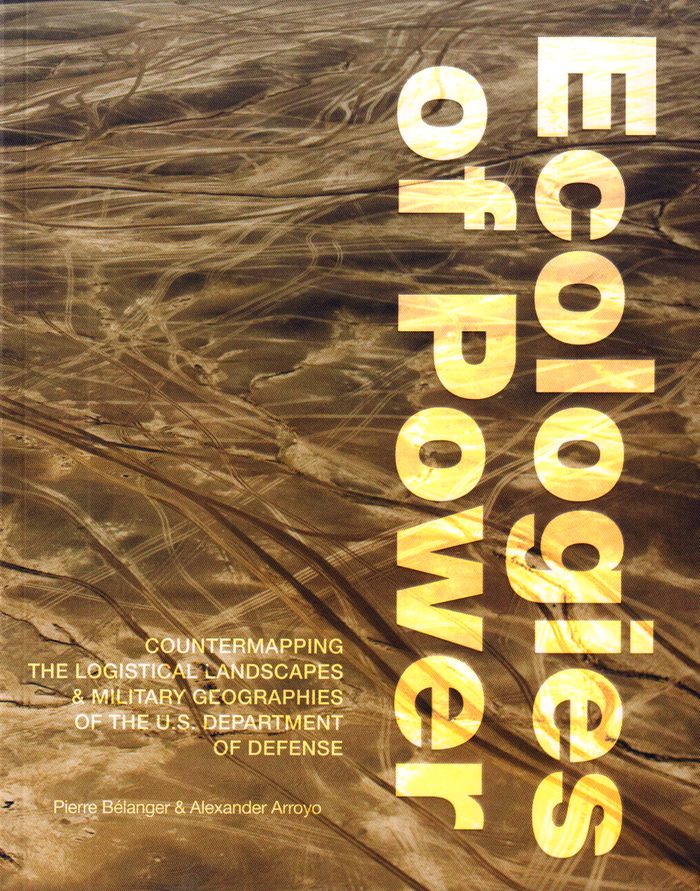
This book is not about war, nor is it a history of war. Avoiding the shock and awe of wartime images, it explores the contemporary spatial configurations of power camouflaged in the infrastructures, environments, and scales of military operations. Instead of wartime highs, this book starts with drawdown lows, when demobilization and decommissioning morph into realignment(...)
Titre:
Ecologies of Power: countermapping the logistical landscapes and military geographies of the US Department of Defense
Actions:
Prix:
$52.50
(disponible sur commande)
Résumé:
This book is not about war, nor is it a history of war. Avoiding the shock and awe of wartime images, it explores the contemporary spatial configurations of power camouflaged in the infrastructures, environments, and scales of military operations. Instead of wartime highs, this book starts with drawdown lows, when demobilization and decommissioning morph into realignment and prepositioning. It is in this transitional milieu that the full material magnitudes and geographic entanglements of contemporary militarism are laid bare. Through this perpetual cycle of build up and breakdown, the U.S. Department of Defense—the single largest developer, landowner, equipment contractor, and energy consumer in the world—has engineered a planetary assemblage of “operational environments” in which militarized, demilitarized, and non-militarized landscapes are increasingly inextricable. In a series of critical cartographic essays, Pierre Bélanger and Alexander Arroyo trace this footprint far beyond the battlefield, countermapping the geographies of U.S. militarism across five of the most important and embattled operational environments: the ocean, the atmosphere, the highway, the city, and the desert. From the Indian Ocean atoll of Diego Garcia to the defense-contractor archipelago around Washington, D.C.; from the A01 Highway circling Afghanistan’s high-altitude steppe to surveillance satellites pinging the planet from low-earth orbit; and from the vast cold chain conveying military perishables worldwide to the global constellation of military dumps, sinks, and scrapyards, the book unearths the logistical infrastructures and residual landscapes that render strategy spatial, militarism material, and power operational. In so doing, Bélanger and Arroyo reveal unseen ecologies of power at work in the making and unmaking of environments—operational, built, and otherwise—to come.
Classification:
livres
livres
Publication:
octobre 2016
octobre 2016
Sujet:
Théorie de l’architecture
Théorie de l’architecture
Classification:
vidéo
vidéo
Titre:
The end of suburbia
The end of suburbia
Actions:
Prix:
$25.00
(disponible sur commande)
Résumé:
Since World War II North Americans have invested much of their newfound wealth in suburbia. It has promised a sense of space, affordability, family life and upward mobility. As the population of suburban sprawl has exploded in the past 50 years, so too has the suburban way of life become embedded in the American consciousness. Suburbia, and all it promises, has become(...)
Titre:
The end of suburbia
Actions:
Prix:
$25.00
(disponible sur commande)
Résumé:
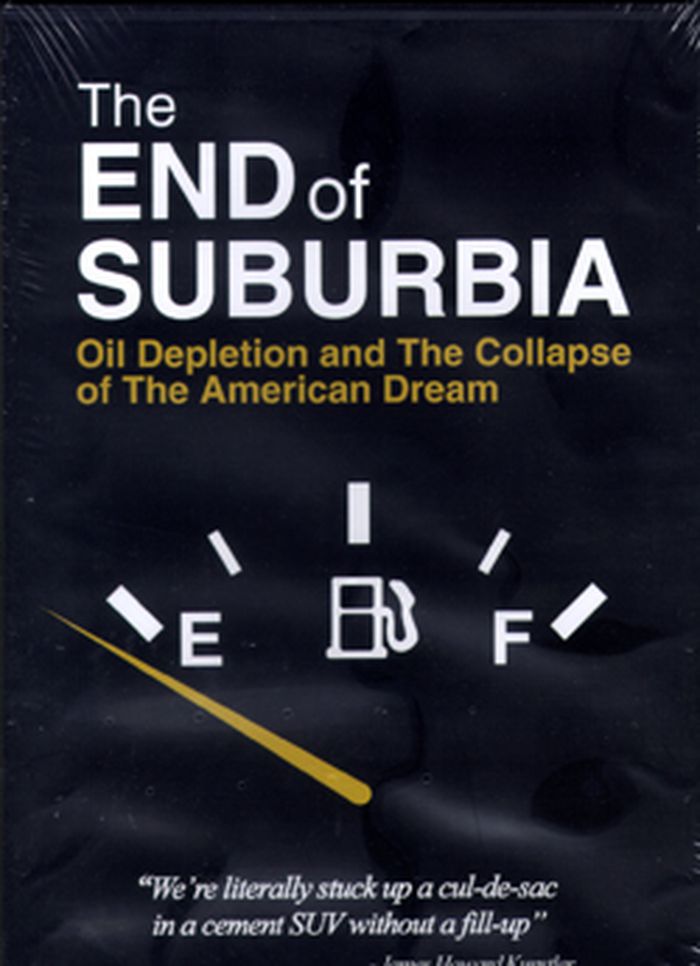
Since World War II North Americans have invested much of their newfound wealth in suburbia. It has promised a sense of space, affordability, family life and upward mobility. As the population of suburban sprawl has exploded in the past 50 years, so too has the suburban way of life become embedded in the American consciousness. Suburbia, and all it promises, has become the American Dream. But as we enter the 21st century, serious questions are beginning to emerge about the sustainability of this way of life. With brutal honesty and a touch of irony, "The End of Suburbia" explores the American Way of Life and its prospects as the planet approaches a critical era, as global demand for fossil fuels begins to outstrip supply. World Oil Peak and the inevitable decline of fossil fuels are upon us now, some scientists and policy makers argue in this documentary. The consequences of inaction in the face of this global crisis are enormous. What does Oil Peak mean for North America? As energy prices skyrocket in the coming years, how will the populations of suburbia react to the collapse of their dream? Are today's suburbs destined to become the slums of tomorrow? And what can be done NOW, individually and collectively, to avoid The End of Suburbia ? Hosted by Barrie Zwicker. Featuring James Howard Kunstler, Peter Calthorpe, Michael Klare, Richard Heinberg, Matthew Simmons, Michael C. Ruppert, Julian Darley, Colin Campbell, Kenneth Deffeyes, Ali Samsam Bakhtiari and Steve Andrews. Directed by Gregory Greene. Produced by Barry Silverthorn. Duration: 78 minutes DVD BONUS: Includes the vintage short films, "In the Suburbs" and "Destination Earth", and producer/director commentary.
Classification:
vidéo
vidéo
Publication:
novembre 2007, Toronto
novembre 2007, Toronto
Sujet:
DVD vidéo
DVD vidéo
Classification:
livres
livres

Actions:
Prix:
$68.50
(disponible sur commande)
Résumé:
No creature on earth is better at pretending than we humans. The title of this book is a way of saying that our daily life is nothing other than a show played out in our minds. We have a talent for creating a fantasy world. Luckily for us. He who is unable to daydream becomes hopelessly depressed. Our talent for simulating is so strong that we are even able to pretend(...)
Titre:
Theo Jansen. The great pretender
Actions:
Prix:
$68.50
(disponible sur commande)
Résumé:
No creature on earth is better at pretending than we humans. The title of this book is a way of saying that our daily life is nothing other than a show played out in our minds. We have a talent for creating a fantasy world. Luckily for us. He who is unable to daydream becomes hopelessly depressed. Our talent for simulating is so strong that we are even able to pretend that we exist. We simulate a first-person form, an ’I’. In The Great Pretender, kinetic artist Theo Jansen shows that the ’I’ we envision is a tool in our evolution. We need this tool to be selfish. There can be no selfishness without the I-fantasy. Since 1990 Theo Jansen has been engaged in creating new forms of life: beach animals. These are not made of protein like the existing life-forms but from another basic stuff, yellow plastic tubing. Skeletons made from these tubes are able to walk. They get their energy from the wind, so they don’t have to eat like regular animals. They evolved over many generations, becoming increasingly adept at surviving storms and and water from the sea. Theo Jansen’s ultimate wish is to release herds of these animals on the shore. In redoing the Creation, so to speak, he hopes to become wiser in his dealings with the existing nature by encountering problems the Real Creator had to face. The Great Pretender is a testimonial to his experiences as God. It’s not easy being God; there are plenty of disappointments along the way. But on the few occasions that things work out, being God is the most wonderful thing in the world. Includes a companiond DVD of beach animal videos.
Classification:
livres
livres
Publication:
octobre 2007, Rotterdam
octobre 2007, Rotterdam
Sujet:
Architecture, monographies
Architecture, monographies
Classification:
livres
livres
Titre:
Le Corbusier's hands
Le Corbusier's hands
Actions:
Prix:
$18.95
(disponible sur commande)
Résumé:
"Le Corbusier's Hands" offers a poetic and personal portrait of Le Corbusier-a nuanced portrayal that is in contrast to the popular image of Le Corbusier the aloof modernist. The author knew Le Corbusier intimately for thirty years, first as his draftsman and main assistant, later as his colleague and personal friend. In this book, written in the mid-1980s, Wogenscky(...)
Sujet:
Architecture, monographies
Architecture, monographies
Publication:
janvier 1900, Cambridge, Mass.
janvier 1900, Cambridge, Mass.
Titre:
Le Corbusier's hands
Actions:
Prix:
$18.95
(disponible sur commande)
Résumé:
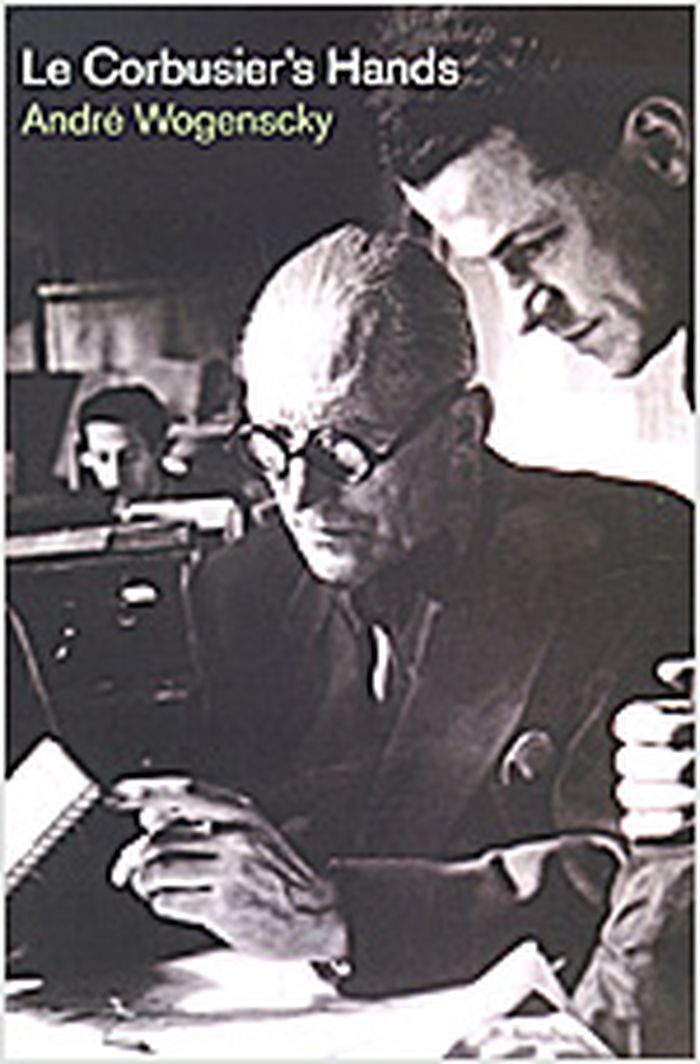
"Le Corbusier's Hands" offers a poetic and personal portrait of Le Corbusier-a nuanced portrayal that is in contrast to the popular image of Le Corbusier the aloof modernist. The author knew Le Corbusier intimately for thirty years, first as his draftsman and main assistant, later as his colleague and personal friend. In this book, written in the mid-1980s, Wogenscky remembers his mentor in a series of revealing personal statements and evocative reflections unlike anything that exists in the vast literature on Le Corbusier. Wogenscky draws a portrait in swift, deft strokes-50 short chapters, one leading to the next, one memory of Le Corbusier opening into another. Appearing and reappearing like a leitmotif are Le Corbusier's hands-touching, taking, drawing, offering, closing, opening, grasping, releasing: "It was his hands that revealed him. . . . They spoke all his feelings, all the vibrations of his inner life that his face tried to conceal." Wogenscky writes about Le Corbusier's work, including the famous design of the chapel at Ronchamp, his ideas for high-density Unités d'Habitation linked to the center of a "Radiant City," and his "Modulor" system for defining proportions-which Wogenscky compares to a piano tuner's finding the exact relation between sounds. He remembers the day Picasso spent with Le Corbusier at the Marseilles building site-"All day long they outdid one another in a show of modesty," he observes in amazement. He adds, speaking for himself and the others present, "We were inside a double energy field." And Wogenscky writes about Le Corbusier more personally. "I have spent years trying to understand what went on in his mind and in his hand," he tells us. With "Le Corbusier's hands", Wogenscky gives us a unique record of an enigmatic genius.
Classification:
livres
livres
Publication:
janvier 1900, Cambridge, Mass.
janvier 1900, Cambridge, Mass.
Sujet:
Architecture, monographies
Architecture, monographies
Classification:
livres
livres
Actions:
Prix:
$67.95
(disponible sur commande)
Résumé:
The dream of the twentieth century was the construction of mass utopia. As the century closes, this dream is being left behind; the belief that industrial modernization can bring about the good society by overcoming material scarcity for all has been challenged by the disintegration(...)
Titre:
Dreamworld and catastrophe : the passing of mass utopia in East and West
Actions:
Prix:
$67.95
(disponible sur commande)
Résumé:
The dream of the twentieth century was the construction of mass utopia. As the century closes, this dream is being left behind; the belief that industrial modernization can bring about the good society by overcoming material scarcity for all has been challenged by the disintegration of European socialism, capitalist restructuring, and ecological constraints. The larger social vision has given way to private dreams of material happiness and to political cynicism. Developing the notion of dreamworld as both a poetic description of a collective mental state and an analytical concept, Susan Buck-Morss attempts to come to terms with mass dreamworlds at the moment of their passing. She shows how dreamworlds became dangerous when their energy was used by the structures of power as an instrument of force against the masses. Stressing the similarities between the East and West and using the end of the Cold War as her point of departure, she examines both extremes of mass utopia, dreamworld and catastrophe. The book is in four parts. "Dreamworlds of Democracy" asks whether collective sovereignty can ever be democratic. "Dreamworlds of History" calls for a rethinking of revolution by political and artistic avant-gardes. "Dreamworlds of Mass Culture" explores the affinities between mass culture's socialist and capitalist forms. An "Afterward" places the book in the historical context of the author's collaboration with a group of Moscow philosophers and artists over the past two tumultuous decades. The book is an experiment in visual culture, using images as philosophy, presenting, literally, a way of seeing the past. Its pictorial narratives rescue historical data that with the end of the Cold War are threatened with oblivion and challenge common conceptions of what this century was all about.
Classification:
livres
livres
Publication:
janvier 1900, Cambridge
janvier 1900, Cambridge
Sujet:
Théorie de l’architecture
Théorie de l’architecture
Classification:
périodiques
périodiques
Actions:
Prix:
$71.50
(disponible sur commande)
Résumé:
A ‘Pacific’ century, an Asian century or a Chinese century? On the threshold between the 20th and the 21st century, the transit from the Atlantic to the Pacific is forecasted by all; the move from America to Asia is noticed by many; and the replacement of the United States by China is feared by some: the awakening of the dragon provokes both wonder and distrust. After the(...)
Titre:
AV Monografias / Monographs 109-110 (2004) : China boom, growth unlimited
Actions:
Prix:
$71.50
(disponible sur commande)
Résumé:
A ‘Pacific’ century, an Asian century or a Chinese century? On the threshold between the 20th and the 21st century, the transit from the Atlantic to the Pacific is forecasted by all; the move from America to Asia is noticed by many; and the replacement of the United States by China is feared by some: the awakening of the dragon provokes both wonder and distrust. After the reforms of Deng Xiaoping in 1978, in the last 25 years China has grown at a rate of 9 percent; in this period, its GNP has tripled, and the percentage of population living in cities has doubled, exceeding 40%. Fueled by exports, and backed by the postotalitarian protectionism of a single-party government, the stunning growth of China has not yet created global companies – the Sony or Hyundai that led the Japanese or Korean booms – but its large oil firms (PetroChina, Sinopec, CNOOC) try to find in several continents the energy needed by the world’s second importer; its technological companies (from Lenovo, that has purchased a division of IBM, to Huawei, that has created in Shenzhen a Silicon Valley-style campus, Doric Disney designs included) make up for scarce innovation with low labor costs; and its new breed of fancy millionaires, who build chateaux or buy French cosmetic brands, spearhead a large consumerist middle class, supplying a strong domestic demand that adds to the thrust of foreign markets. China’s unequal growth does not appear to be a large risk: the differences in income are similar to those of the US, and the contrast between the wealthy coast and the rural inland – where most upheavals have started, from Boxers to communists – is blurred as the development of Shanghai extends upriver along the Yangtze corridor, and as Hong Kong’s dynamism expands in concentric waves over the superregion of Guangdong, from that Pearl River Delta known as ‘the factory of the world’. More dangerous seem to be the weakness of the financial system, the persistence of administrative corruption and the scarcity of energy resources, the supply of which is being secured by heavy investments on the military, something that upsets its neighbors – Japan and Taiwan most of all, but also Korea and another awakening giant, India –, its competitors, and even the US, that urges its European allies to maintain the arms ban on China. On top of all this, in a country that has reached 1,300 million inhabitants in 2005, is the demographic scenario created by the single child policy and the accelerated ageing of the population, with an increasing number of 4+2+1 families, where now there are four grandparents and two parents satisfying the needs of a little emperor, but where in just 30 years a single adult will have to take care of six retirees. This huge economic and social transformation has expressed itself via an unprecedented urban explosion, shaped by titanic public works – large dams and suspended bridges, elevated highways and submarine tunnels – and with the foreseeable devastating impact on the environment and cultural heritage. The building frenzy that has attracted so many foreign architects to China – initially for technically complex or symbolically significant works, like some of the skyscrapers of Shanghai or the olympic projects in Beijing, but now more often for urban plans or conventional commercial developments – receives, according to The Economist, the added boost of a real-estate bubble that feeds on hot money placing its bets on the yuan’s revaluation. This process has turned some districts of Shanghai such as Pudong or Puxi into the most sought-after office areas in the world, and has caused in cities like Beijing an increasing decay of its architectural legacy, which barely respects World Heritage sites (The Great Wall, the Forbidden City, the Summer Palace, the Ming Imperial Tombs and the Temple of Heaven), besieged already by a unanimous tide of trivial constructions.
Classification:
périodiques
périodiques
Publication:
août 2005, Madrid
août 2005, Madrid
Sujet:
Revues
Revues
Classification:
livres
livres
Titre:
Japan-ness in architecture
Japan-ness in architecture
Actions:
Prix:
$35.95
(disponible sur commande)
Résumé:
Japanese architect Arata Isozaki sees buildings not as dead objects but as events that encompass the social and historical context -- not to be defined forever by their "everlasting materiality" but as texts to be interpreted and reread continually. In "Japan-ness in architecture", he identifies what is essentially Japanese in architecture from the seventh to the(...)
Sujet:
Histoire jusqu'à 1900, Asie
Histoire jusqu'à 1900, Asie
Publication:
janvier 1900, Cambridge / London
janvier 1900, Cambridge / London
Titre:
Japan-ness in architecture
Actions:
Prix:
$35.95
(disponible sur commande)
Résumé:
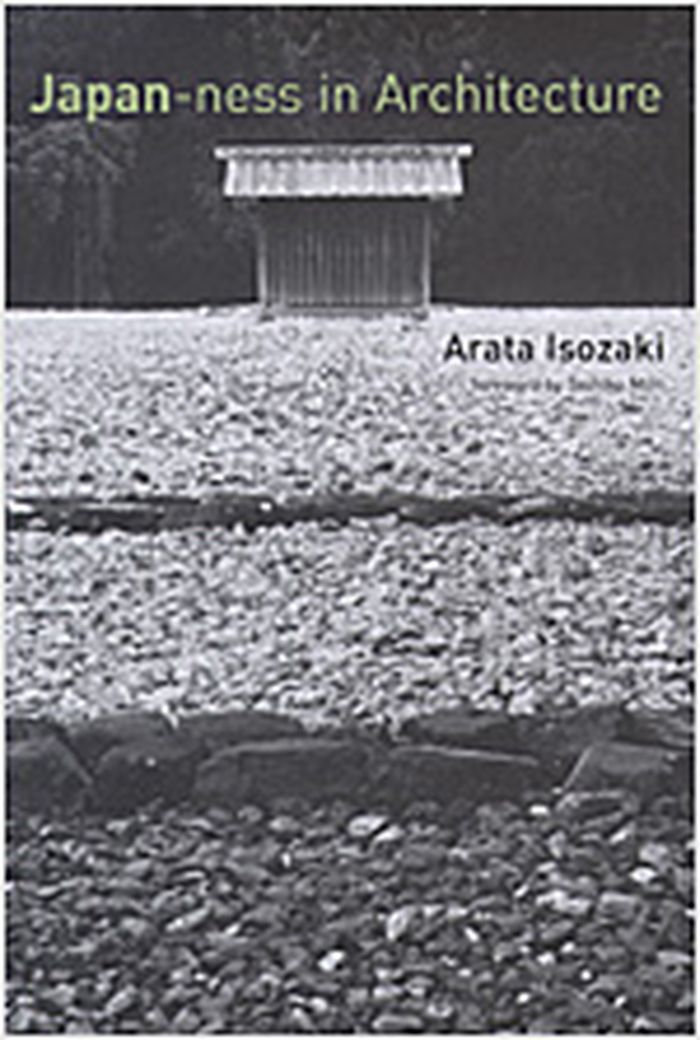
Japanese architect Arata Isozaki sees buildings not as dead objects but as events that encompass the social and historical context -- not to be defined forever by their "everlasting materiality" but as texts to be interpreted and reread continually. In "Japan-ness in architecture", he identifies what is essentially Japanese in architecture from the seventh to the twentieth century. In the opening essay, Isozaki analyzes the struggles of modern Japanese architects, including himself, to create something uniquely Japanese out of modernity. He then circles back in history to find what he calls Japan-ness in the seventh-century Ise shrine, reconstruction of the twelfth-century Todai-ji Temple, and the seventeenth-century Katsura Imperial Villa. He finds the periodic ritual relocation of Ise's precincts a counter to the West's concept of architectural permanence, and the repetition of the ritual an alternative to modernity's anxious quest for origins. He traces the "constructive power" of the Todai-ji Temple to the vision of the director of its reconstruction, the monk Chogen, whose imaginative power he sees as corresponding to the revolutionary turmoil of the times. The Katsura Imperial Villa, with its chimerical spaces, achieved its own Japan-ness as it reinvented the traditional shoin style. And yet, writes Isozaki, what others consider to be the Japanese aesthetic is often the opposite of that essential Japan-ness born in moments of historic self-definition; the purified stylization -- what Isozaki calls "Japanesquization" -- lacks the energy of cultural transformation and reflects an island retrenchment in response to the pressure of other cultures. Combining historical survey, critical analysis, theoretical reflection, and autobiographical account, these essays, written over a period of twenty years, demonstrate Isozaki's standing as one of the world's leading architects and preeminent architectural thinkers. Arata Isosaki is a leading Japanese architect. His works include the Museum of Contemporary Art, Los Angeles, the Olympic Stadium in Barcelona, the Volksbank Center am Postdamer Platz in Berlin, the Team Disney Building in Orlando, and the Tokyo University of Art and Design. Translated by Sabu Kohso. Foreword by Toshiko Mori.
Classification:
livres
livres
Publication:
janvier 1900, Cambridge / London
janvier 1900, Cambridge / London
Sujet:
Histoire jusqu'à 1900, Asie
Histoire jusqu'à 1900, Asie


