


2723 Résultats
Classification:
livres
livres
Titre:
MAP 005 : Chernobyl
MAP 005 : Chernobyl
Actions:
Prix:
$11.95
(disponible sur commande)
Résumé:
This issue charts the history of major nuclear accidents, focusing on the Chernobyl reactor 4 explosion of 1986, mapping a minute by minute description of the events on nuclear plant cut-outs and info graphics. From its medical implications to the social impact of the accident and articles and input from scientists, this issue offers a wide spectrum of commentaries on the(...)
$11.95
(disponible sur commande)
Résumé:
This issue charts the history of major nuclear accidents, focusing on the Chernobyl reactor 4 explosion of 1986, mapping a minute by minute description of the events on nuclear plant cut-outs and info graphics. From its medical implications to the social impact of the accident and articles and input from scientists, this issue offers a wide spectrum of commentaries on the(...)
Titre:
MAP 005 : Chernobyl
Actions:
Prix:
$11.95
(disponible sur commande)
Résumé:
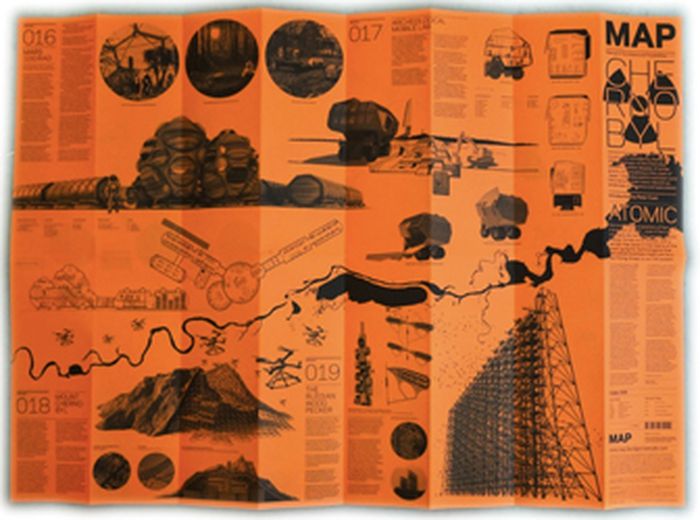
This issue charts the history of major nuclear accidents, focusing on the Chernobyl reactor 4 explosion of 1986, mapping a minute by minute description of the events on nuclear plant cut-outs and info graphics. From its medical implications to the social impact of the accident and articles and input from scientists, this issue offers a wide spectrum of commentaries on the implications of radiation in this scarred landscape. The project page investigates various scenarios; an astrobiology testing base, the reuse of the massive "Woodpecker" ex-soviet antenna into a migratory bird feeding ground, a mobile archeology lab for radioactive landscapes and Mount Chernobyl, an alternative to the new sarcophagus for the damaged reactor.
MAP 005 : Chernobyl
Actions:
Prix:
$11.95
(disponible sur commande)
Résumé:
This issue charts the history of major nuclear accidents, focusing on the Chernobyl reactor 4 explosion of 1986, mapping a minute by minute description of the events on nuclear plant cut-outs and info graphics. From its medical implications to the social impact of the accident and articles and input from scientists, this issue offers a wide spectrum of commentaries on the implications of radiation in this scarred landscape. The project page investigates various scenarios; an astrobiology testing base, the reuse of the massive "Woodpecker" ex-soviet antenna into a migratory bird feeding ground, a mobile archeology lab for radioactive landscapes and Mount Chernobyl, an alternative to the new sarcophagus for the damaged reactor.
Classification:
livres
livres
Publication:
septembre 2012
septembre 2012
Sujet:
Consignation
Consignation
Classification:
livres
livres
Actions:
Prix:
$60.00
(disponible sur commande)
Résumé:
Konstantin Melnikov (1890–1974) is unquestionably one of the outstanding architects of the 20th century—in spite of the fact that he fell silent early, leaving behind only limited work that was insufficiently publicized, and restricted almost exclusively to Moscow, the city of his birth in which he spent nearly his entire life and which did not appreciate him. He was(...)
$60.00
(disponible sur commande)
Résumé:
Konstantin Melnikov (1890–1974) is unquestionably one of the outstanding architects of the 20th century—in spite of the fact that he fell silent early, leaving behind only limited work that was insufficiently publicized, and restricted almost exclusively to Moscow, the city of his birth in which he spent nearly his entire life and which did not appreciate him. He was(...)
Titre:
Konstantin Melnikov and his House
Actions:
Prix:
$60.00
(disponible sur commande)
Résumé:
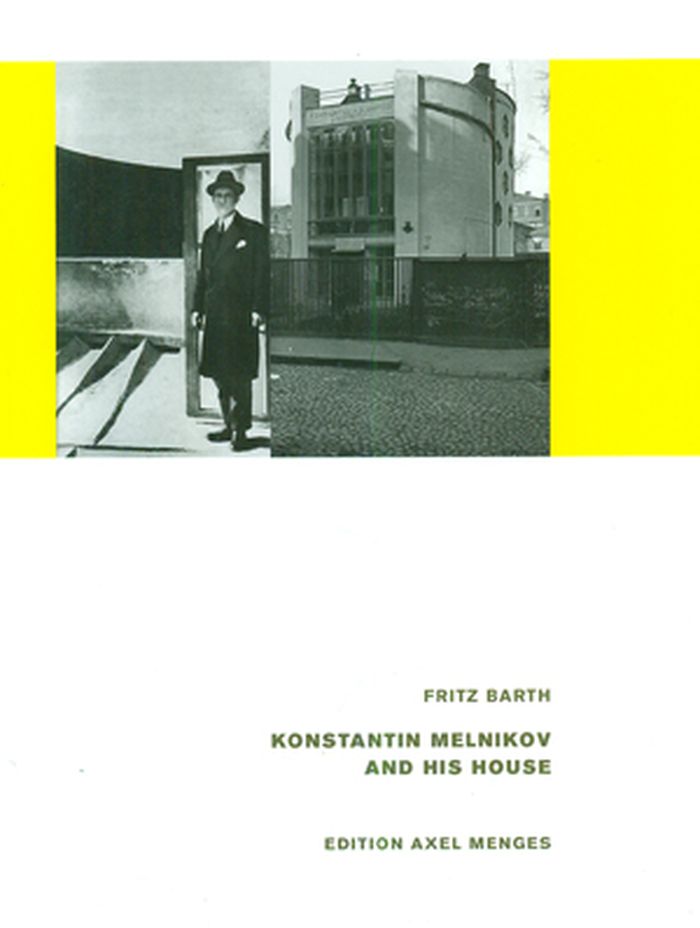
Konstantin Melnikov (1890–1974) is unquestionably one of the outstanding architects of the 20th century—in spite of the fact that he fell silent early, leaving behind only limited work that was insufficiently publicized, and restricted almost exclusively to Moscow, the city of his birth in which he spent nearly his entire life and which did not appreciate him. He was raised in humble circumstances, but enjoyed an excellent education. Beginning in the mid-1920s, after the turmoil that followed the war, revolution and civil war, his career soared at almost meteoric speed as he took the lead in the young Soviet architecture movement with completely autonomous, highly artistic buildings that were free from dogmatism of any kind.
Konstantin Melnikov and his House
Actions:
Prix:
$60.00
(disponible sur commande)
Résumé:
Konstantin Melnikov (1890–1974) is unquestionably one of the outstanding architects of the 20th century—in spite of the fact that he fell silent early, leaving behind only limited work that was insufficiently publicized, and restricted almost exclusively to Moscow, the city of his birth in which he spent nearly his entire life and which did not appreciate him. He was raised in humble circumstances, but enjoyed an excellent education. Beginning in the mid-1920s, after the turmoil that followed the war, revolution and civil war, his career soared at almost meteoric speed as he took the lead in the young Soviet architecture movement with completely autonomous, highly artistic buildings that were free from dogmatism of any kind.
Classification:
livres
livres
Publication:
octobre 2015
octobre 2015
Sujet:
Architecture, monographies
Architecture, monographies
Classification:
livres
livres
Actions:
Prix:
$55.00
(disponible sur commande)
Résumé:
The key figures of this resurgence--a group of architects and artists including Jose Davila, Simon Dybbroe Møller, Ryan Gander, Erik Goengrich, Franka Hörnschemeyer, Victor Nieuwenhuijs & Maartje Seyferth, Tobias Putrih, Tomas Saraceno, Katrin Sigurdardottir and Tilman Wendland--are detailed in this volume through texts and images. Soviet peripheral cities are discussed(...)
$55.00
(disponible sur commande)
Résumé:
The key figures of this resurgence--a group of architects and artists including Jose Davila, Simon Dybbroe Møller, Ryan Gander, Erik Goengrich, Franka Hörnschemeyer, Victor Nieuwenhuijs & Maartje Seyferth, Tobias Putrih, Tomas Saraceno, Katrin Sigurdardottir and Tilman Wendland--are detailed in this volume through texts and images. Soviet peripheral cities are discussed(...)
Sujet:
Architecture expérimentale
Architecture expérimentale
Publication:
novembre 2008, Ostfildern
novembre 2008, Ostfildern
Titre:
Mega-structure reloaded: visionary architecture and urban planning of the 1960s reflected by contemporary artists
Actions:
Prix:
$55.00
(disponible sur commande)
Résumé:
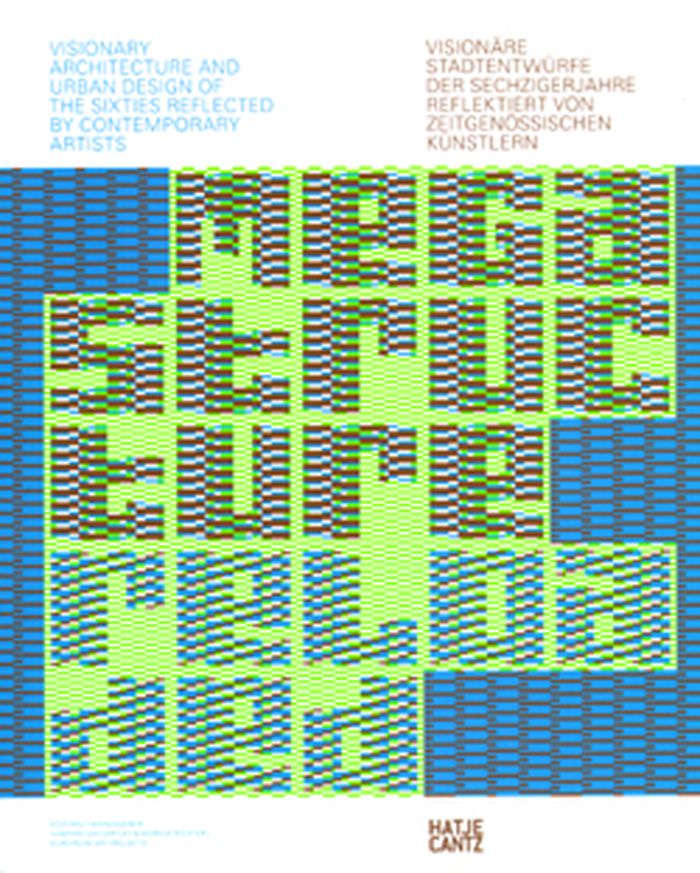
The key figures of this resurgence--a group of architects and artists including Jose Davila, Simon Dybbroe Møller, Ryan Gander, Erik Goengrich, Franka Hörnschemeyer, Victor Nieuwenhuijs & Maartje Seyferth, Tobias Putrih, Tomas Saraceno, Katrin Sigurdardottir and Tilman Wendland--are detailed in this volume through texts and images. Soviet peripheral cities are discussed for their historical precedent and contextualized through ironic responses to them by radical architecture collectives such as Superstudio and Archizoom. The volume is rounded out with texts on Le Corbusier, Oscar Niemeyer, Lucio Costa and the planned cities of Chandigarh and Brasilia, as well as a theoretical section on megastructures and megacities. This volume is published in concert with an extensive European traveling exhibition and a series of symposia and workshops.
Mega-structure reloaded: visionary architecture and urban planning of the 1960s reflected by contemporary artists
Actions:
Prix:
$55.00
(disponible sur commande)
Résumé:
The key figures of this resurgence--a group of architects and artists including Jose Davila, Simon Dybbroe Møller, Ryan Gander, Erik Goengrich, Franka Hörnschemeyer, Victor Nieuwenhuijs & Maartje Seyferth, Tobias Putrih, Tomas Saraceno, Katrin Sigurdardottir and Tilman Wendland--are detailed in this volume through texts and images. Soviet peripheral cities are discussed for their historical precedent and contextualized through ironic responses to them by radical architecture collectives such as Superstudio and Archizoom. The volume is rounded out with texts on Le Corbusier, Oscar Niemeyer, Lucio Costa and the planned cities of Chandigarh and Brasilia, as well as a theoretical section on megastructures and megacities. This volume is published in concert with an extensive European traveling exhibition and a series of symposia and workshops.
Classification:
livres
livres
Publication:
novembre 2008, Ostfildern
novembre 2008, Ostfildern
Sujet:
Architecture expérimentale
Architecture expérimentale
Classification:
livres
livres
Titre:
The Master and Margarita
The Master and Margarita
Actions:
Prix:
$24.00
(disponible sur commande)
Résumé:
Nothing in the whole of literature compares with ''The Master and Margarita.'' One spring afternoon, the Devil, trailing fire and chaos in his wake, weaves himself out of the shadows and into Moscow. Mikhail Bulgakov's fantastical, funny, and devastating satire of Soviet life combines two distinct yet interwoven parts, one set in contemporary Moscow, the other in ancient(...)
$24.00
(disponible sur commande)
Résumé:
Nothing in the whole of literature compares with ''The Master and Margarita.'' One spring afternoon, the Devil, trailing fire and chaos in his wake, weaves himself out of the shadows and into Moscow. Mikhail Bulgakov's fantastical, funny, and devastating satire of Soviet life combines two distinct yet interwoven parts, one set in contemporary Moscow, the other in ancient(...)
Titre:
The Master and Margarita
Actions:
Prix:
$24.00
(disponible sur commande)
Résumé:
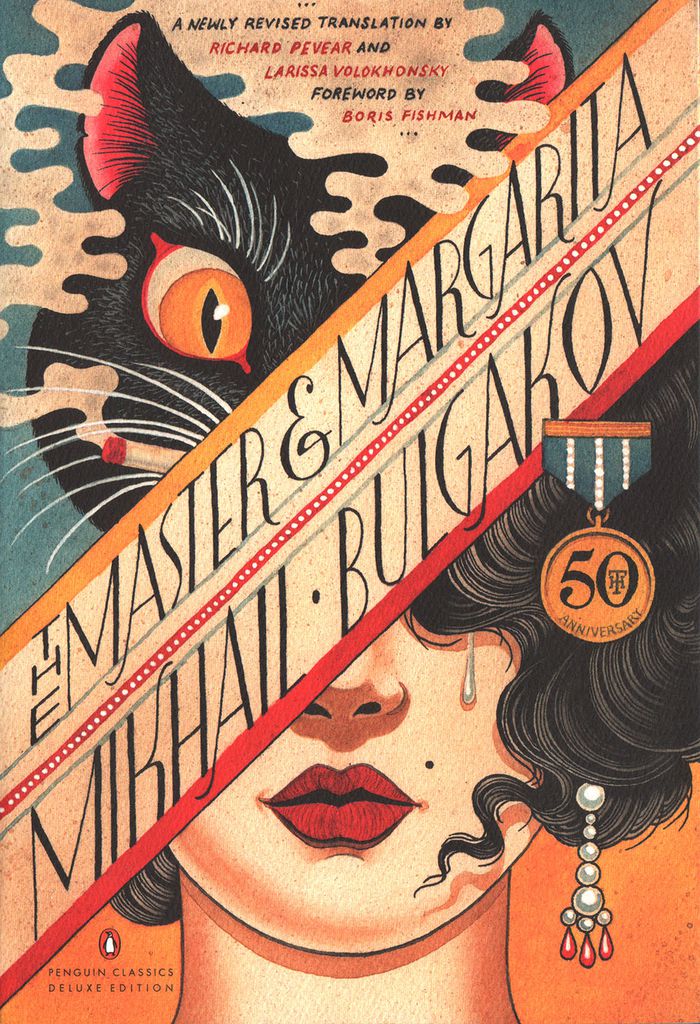
Nothing in the whole of literature compares with ''The Master and Margarita.'' One spring afternoon, the Devil, trailing fire and chaos in his wake, weaves himself out of the shadows and into Moscow. Mikhail Bulgakov's fantastical, funny, and devastating satire of Soviet life combines two distinct yet interwoven parts, one set in contemporary Moscow, the other in ancient Jerusalem, each brimming with historical, imaginary, frightful, and wonderful characters. Written during the darkest days of Stalin's reign, and finally published in 1966 and 1967, ''The Master and Margarita'' became a literary phenomenon, signaling artistic and spiritual freedom for Russians everywhere. This newly revised translation, by the award-winning team of Pevear and Volokhonsky, is made from the complete and unabridged Russian text.
The Master and Margarita
Actions:
Prix:
$24.00
(disponible sur commande)
Résumé:
Nothing in the whole of literature compares with ''The Master and Margarita.'' One spring afternoon, the Devil, trailing fire and chaos in his wake, weaves himself out of the shadows and into Moscow. Mikhail Bulgakov's fantastical, funny, and devastating satire of Soviet life combines two distinct yet interwoven parts, one set in contemporary Moscow, the other in ancient Jerusalem, each brimming with historical, imaginary, frightful, and wonderful characters. Written during the darkest days of Stalin's reign, and finally published in 1966 and 1967, ''The Master and Margarita'' became a literary phenomenon, signaling artistic and spiritual freedom for Russians everywhere. This newly revised translation, by the award-winning team of Pevear and Volokhonsky, is made from the complete and unabridged Russian text.
Classification:
livres
livres
Publication:
mai 2016
mai 2016
Sujet:
Expositions en cours
Expositions en cours
Classification:
livres
livres
Titre:
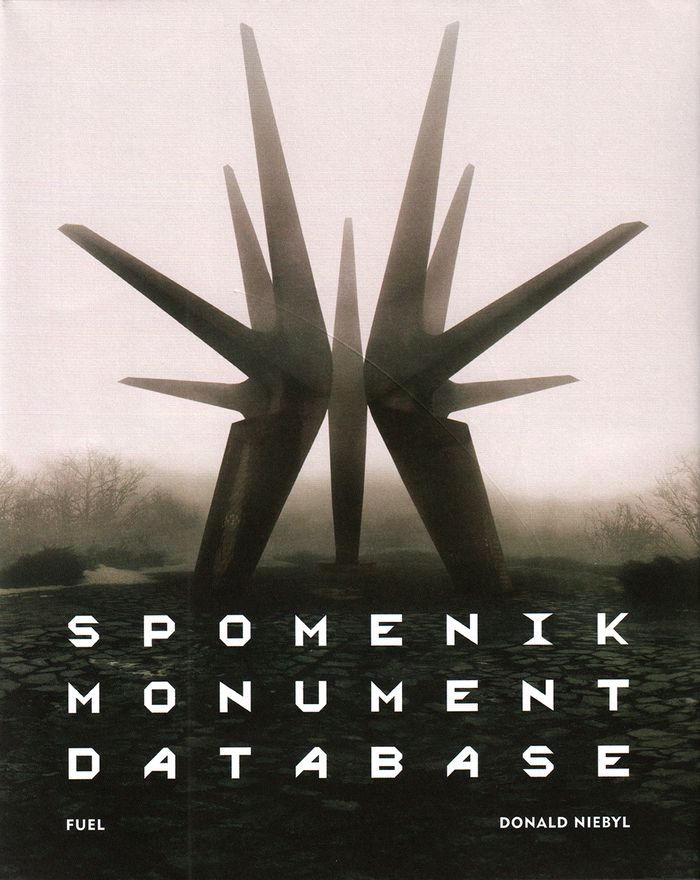
Spomenik monument database
Spomenik monument database
Actions:
Prix:
$42.50
(disponible sur commande)
Résumé:
Spomenik—the Serbo-Croat/Slovenian word for monument—refers to the memorials built in Tito's Republic of Yugoslavia from the 1960s to the 1980s, marking the horror of the occupation and the defeat of Axis forces during World War II. Hundreds were built across the country, from coastal resorts to remote mountains. Through these imaginative forms of concrete and steel, a(...)
$42.50
(disponible sur commande)
Résumé:
Spomenik—the Serbo-Croat/Slovenian word for monument—refers to the memorials built in Tito's Republic of Yugoslavia from the 1960s to the 1980s, marking the horror of the occupation and the defeat of Axis forces during World War II. Hundreds were built across the country, from coastal resorts to remote mountains. Through these imaginative forms of concrete and steel, a(...)
Sujet:
Photographie- collections
Photographie- collections
Publication:
août 2018
août 2018
Titre:
Spomenik monument database
Actions:
Prix:
$42.50
(disponible sur commande)
Résumé:
Spomenik—the Serbo-Croat/Slovenian word for monument—refers to the memorials built in Tito's Republic of Yugoslavia from the 1960s to the 1980s, marking the horror of the occupation and the defeat of Axis forces during World War II. Hundreds were built across the country, from coastal resorts to remote mountains. Through these imaginative forms of concrete and steel, a classless, forward-looking socialist society, free of ethnic tensions, was envisaged. Instead of looking to the ideologically aligned Soviet Union for artistic inspiration, Tito turned to the West and works of abstract expressionism and minimalism. This allowed Yugoslavia to develop its own distinct identity through the monuments, turning them into political tools, articulating Tito's personal vision of a new tomorrow.
Spomenik monument database
Actions:
Prix:
$42.50
(disponible sur commande)
Résumé:
Spomenik—the Serbo-Croat/Slovenian word for monument—refers to the memorials built in Tito's Republic of Yugoslavia from the 1960s to the 1980s, marking the horror of the occupation and the defeat of Axis forces during World War II. Hundreds were built across the country, from coastal resorts to remote mountains. Through these imaginative forms of concrete and steel, a classless, forward-looking socialist society, free of ethnic tensions, was envisaged. Instead of looking to the ideologically aligned Soviet Union for artistic inspiration, Tito turned to the West and works of abstract expressionism and minimalism. This allowed Yugoslavia to develop its own distinct identity through the monuments, turning them into political tools, articulating Tito's personal vision of a new tomorrow.
Classification:
livres
livres
Publication:
août 2018
août 2018
Sujet:
Photographie- collections
Photographie- collections
Classification:
livres
livres
Actions:
Prix:
$38.00
(disponible sur commande)
Résumé:
Sound in Z supplies the astounding and long-lost chapter in the early story of electronic music: the Soviet experiment, a chapter that runs from 1917 to the late 1930s. Its heroes are Arseny Avraamov, inventor of Graphic Sound (drawing directly onto magnetic tape) and a 48-note scale; Alexei Gastev, who coined the term "bio-mechanics"; Leon Theremin, inventor of the(...)
$38.00
(disponible sur commande)
Résumé:
Sound in Z supplies the astounding and long-lost chapter in the early story of electronic music: the Soviet experiment, a chapter that runs from 1917 to the late 1930s. Its heroes are Arseny Avraamov, inventor of Graphic Sound (drawing directly onto magnetic tape) and a 48-note scale; Alexei Gastev, who coined the term "bio-mechanics"; Leon Theremin, inventor of the(...)
Titre:
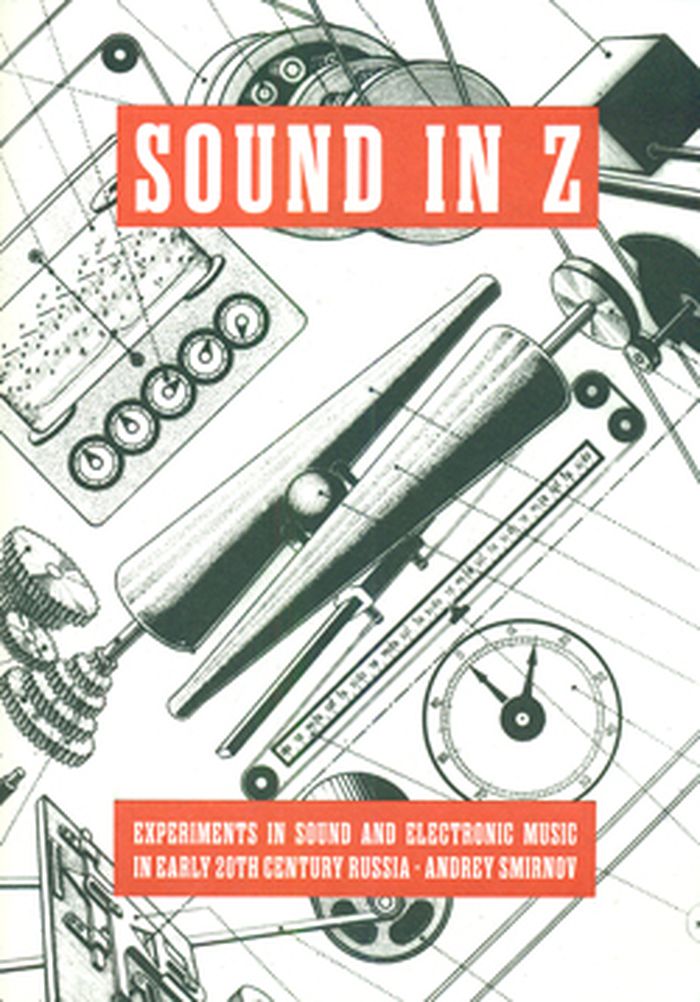
Sound in Z: experiments in sound and electronic music in early 20th century Russia
Actions:
Prix:
$38.00
(disponible sur commande)
Résumé:
Sound in Z supplies the astounding and long-lost chapter in the early story of electronic music: the Soviet experiment, a chapter that runs from 1917 to the late 1930s. Its heroes are Arseny Avraamov, inventor of Graphic Sound (drawing directly onto magnetic tape) and a 48-note scale; Alexei Gastev, who coined the term "bio-mechanics"; Leon Theremin, inventor of the world's first electronic instrument, the Theremin; and others whose dreams for electronic sound were cut short by Stalin's regime. Drawing on materials from numerous Moscow archives, this book reconstructs Avraamov's "Symphony of Sirens," an open-air performance for factory whistles, foghorns and artillery fire first staged in 1922, explores Graphic Sound and recounts Theremin's extraordinary career-compiling the first full account of Russian electronic music.
Sound in Z: experiments in sound and electronic music in early 20th century Russia
Actions:
Prix:
$38.00
(disponible sur commande)
Résumé:
Sound in Z supplies the astounding and long-lost chapter in the early story of electronic music: the Soviet experiment, a chapter that runs from 1917 to the late 1930s. Its heroes are Arseny Avraamov, inventor of Graphic Sound (drawing directly onto magnetic tape) and a 48-note scale; Alexei Gastev, who coined the term "bio-mechanics"; Leon Theremin, inventor of the world's first electronic instrument, the Theremin; and others whose dreams for electronic sound were cut short by Stalin's regime. Drawing on materials from numerous Moscow archives, this book reconstructs Avraamov's "Symphony of Sirens," an open-air performance for factory whistles, foghorns and artillery fire first staged in 1922, explores Graphic Sound and recounts Theremin's extraordinary career-compiling the first full account of Russian electronic music.
Classification:
livres
livres
Publication:
mars 2010
mars 2010
Sujet:
Acoustique
Acoustique
Classification:
livres
livres
Actions:
Prix:
$62.95
(disponible sur commande)
Résumé:
These essays by the critic and art historian Benjamin Buchloh have had a significant impact on the theory and practice of art history. Written over the course of three decades and now collected in one volume, they trace a history of crucial artistic transitions, iterations, and paradigmatic shifts in the twentieth century, considering both the evolution and emergence of(...)
$62.95
(disponible sur commande)
Résumé:
These essays by the critic and art historian Benjamin Buchloh have had a significant impact on the theory and practice of art history. Written over the course of three decades and now collected in one volume, they trace a history of crucial artistic transitions, iterations, and paradigmatic shifts in the twentieth century, considering both the evolution and emergence of(...)
Titre:
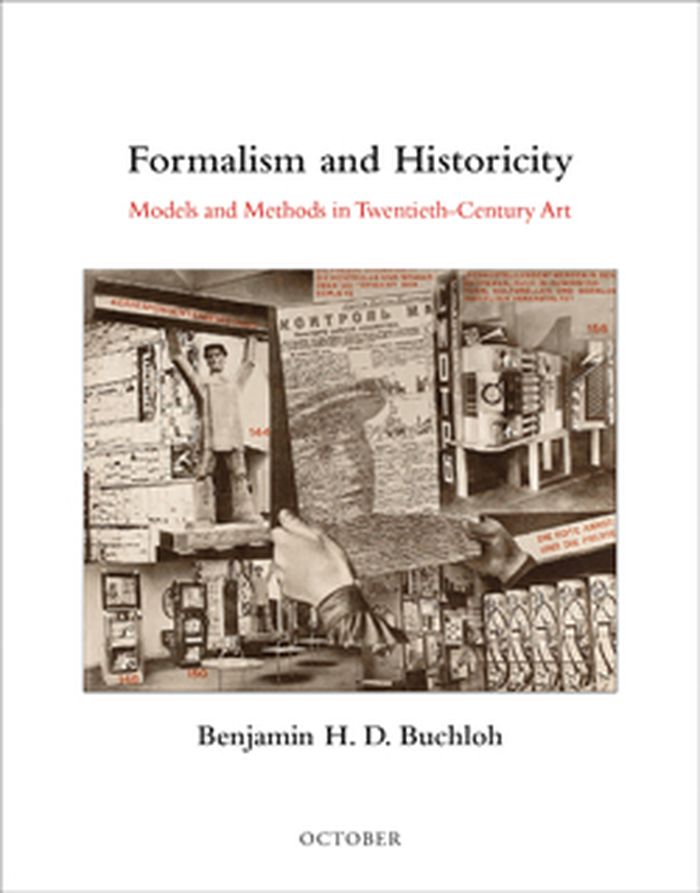
Formalism and historicity : models and methods in Twentieth-Century art
Actions:
Prix:
$62.95
(disponible sur commande)
Résumé:
These essays by the critic and art historian Benjamin Buchloh have had a significant impact on the theory and practice of art history. Written over the course of three decades and now collected in one volume, they trace a history of crucial artistic transitions, iterations, and paradigmatic shifts in the twentieth century, considering both the evolution and emergence of artistic forms and the specific historical moment in which they occurred. Buchloh’s subject matter ranges through various moments in the history of twentieth-century American and European art, from the moment of the retour à l’ordre of 1915 to developments in the Soviet Union in the 1920s to the beginnings of Conceptual art in the late 1960s to the appropriation artists of the 1980s.
Formalism and historicity : models and methods in Twentieth-Century art
Actions:
Prix:
$62.95
(disponible sur commande)
Résumé:
These essays by the critic and art historian Benjamin Buchloh have had a significant impact on the theory and practice of art history. Written over the course of three decades and now collected in one volume, they trace a history of crucial artistic transitions, iterations, and paradigmatic shifts in the twentieth century, considering both the evolution and emergence of artistic forms and the specific historical moment in which they occurred. Buchloh’s subject matter ranges through various moments in the history of twentieth-century American and European art, from the moment of the retour à l’ordre of 1915 to developments in the Soviet Union in the 1920s to the beginnings of Conceptual art in the late 1960s to the appropriation artists of the 1980s.
Classification:
livres
livres
Publication:
mars 2015
mars 2015
Sujet:
Théorie de l’art
Théorie de l’art
Classification:
livres
livres
Titre:
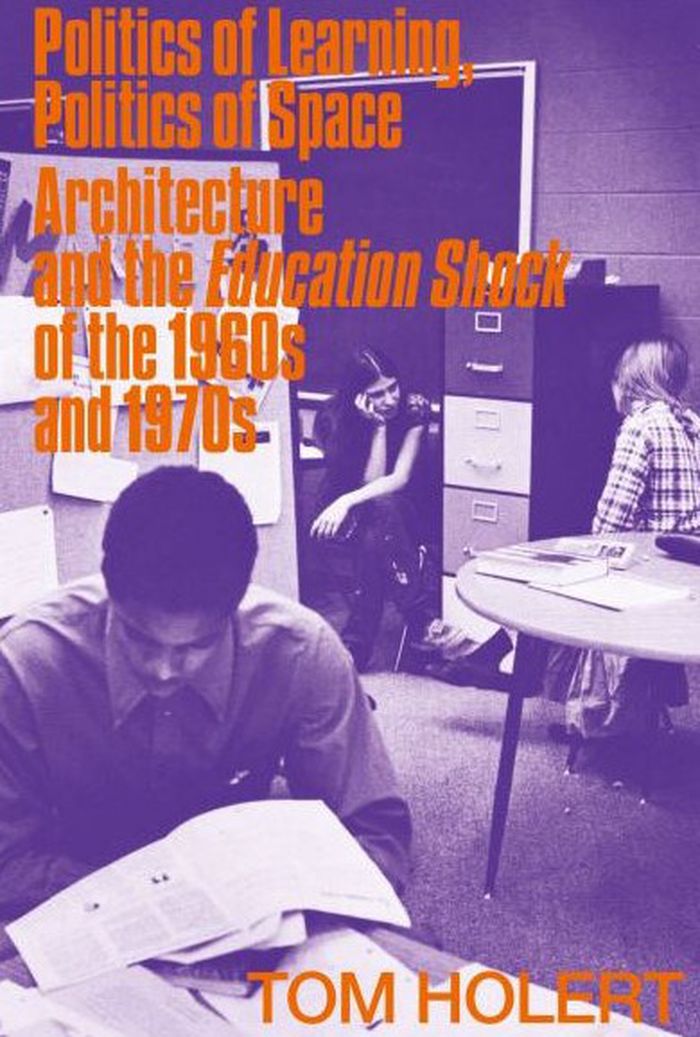
Politics of learning, politics of space: architecture and the education shock of the 1960s and 1970s
Politics of learning, politics of space: architecture and the education shock of the 1960s and 1970s
Actions:
Prix:
$21.95
(disponible sur commande)
Résumé:
How the relationships between education and outer space have developed historically is exemplified in an incisive way by the decades that followed the 'Sputnik shock' of 1957. The wake-up call that resulted from the Soviet space program set the global landscape of learning in motion. New schools and universities came into being against the backdrop of the reform euphoria(...)
$21.95
(disponible sur commande)
Résumé:
How the relationships between education and outer space have developed historically is exemplified in an incisive way by the decades that followed the 'Sputnik shock' of 1957. The wake-up call that resulted from the Soviet space program set the global landscape of learning in motion. New schools and universities came into being against the backdrop of the reform euphoria(...)
Publication:
février 2021
février 2021
Titre:
Politics of learning, politics of space: architecture and the education shock of the 1960s and 1970s
Actions:
Prix:
$21.95
(disponible sur commande)
Résumé:
How the relationships between education and outer space have developed historically is exemplified in an incisive way by the decades that followed the 'Sputnik shock' of 1957. The wake-up call that resulted from the Soviet space program set the global landscape of learning in motion. New schools and universities came into being against the backdrop of the reform euphoria and mood of catastrophe. At the same time, traditional pedagogical concepts were severely called into question—including the call to do away with institutions of education. What is shown in the architectures of learning is not only a politics of space, but also the educational shock that intensively shook up the global societies of the 1960s and 1970s, while they were gradually being transformed into knowledge societies.
Politics of learning, politics of space: architecture and the education shock of the 1960s and 1970s
Actions:
Prix:
$21.95
(disponible sur commande)
Résumé:
How the relationships between education and outer space have developed historically is exemplified in an incisive way by the decades that followed the 'Sputnik shock' of 1957. The wake-up call that resulted from the Soviet space program set the global landscape of learning in motion. New schools and universities came into being against the backdrop of the reform euphoria and mood of catastrophe. At the same time, traditional pedagogical concepts were severely called into question—including the call to do away with institutions of education. What is shown in the architectures of learning is not only a politics of space, but also the educational shock that intensively shook up the global societies of the 1960s and 1970s, while they were gradually being transformed into knowledge societies.
Classification:
livres
livres
Publication:
février 2021
février 2021
Classification:
livres
livres
Actions:
Prix:
$37.95
(disponible sur commande)
Résumé:
The idea of fashion under socialism conjures up images of babushka headscarves and black market blue jeans. And yet, as Djurdja Bartlett shows in this groundbreaking book, the socialist East had an intimate relationship with fashion. Official antagonism—which cast fashion as frivolous and antirevolutionary—eventually gave way to grudging acceptance and creeping(...)
$37.95
(disponible sur commande)
Résumé:
The idea of fashion under socialism conjures up images of babushka headscarves and black market blue jeans. And yet, as Djurdja Bartlett shows in this groundbreaking book, the socialist East had an intimate relationship with fashion. Official antagonism—which cast fashion as frivolous and antirevolutionary—eventually gave way to grudging acceptance and creeping(...)
Titre:
Fashion East : the spectre that haunted socialism
Actions:
Prix:
$37.95
(disponible sur commande)
Résumé:
The idea of fashion under socialism conjures up images of babushka headscarves and black market blue jeans. And yet, as Djurdja Bartlett shows in this groundbreaking book, the socialist East had an intimate relationship with fashion. Official antagonism—which cast fashion as frivolous and antirevolutionary—eventually gave way to grudging acceptance and creeping consumerism. Bartlett outlines three phases in socialist fashion, and illustrates them with abundant images from magazines of the period: postrevolutionary utopian dress, official state-sanctioned socialist fashion, and samizdat-style everyday fashion. Utopian dress, ranging from the geometric abstraction of the constructivists under Bolshevism in the Soviet Union to the no-frills desexualized uniform of a factory worker in Czechoslovakia, reflected the revolutionary urge for a clean break with the past. The highly centralized socialist fashion system, part of Stalinist industrialization, offered official prototypes of high fashion that were never available in stores—mythical images of smart and luxurious dresses that symbolized the economic progress that socialist regimes dreamed of. Everyday fashion, starting in the 1950s, was an unofficial, do-it-yourself enterprise: Western fashions obtained through semiclandestine channels or sewn at home. The state tolerated the demand for Western fashion, promising the burgeoning middle class consumer goods in exchange for political loyalty. Bartlett traces the progress of socialist fashion in the Soviet Union, Czechoslovakia, Hungary, East Germany, Poland, and Yugoslavia, drawing on state-sponsored socialist women’s magazines, etiquette books, socialist manuals on dress, private archives, and her own interviews with designers, fashion editors, and other key figures. Fashion, she suggests, with all its ephemerality and dynamism, was in perpetual conflict with the socialist regimes’ fear of change and need for control. It was, to echo the famous first sentence from the Communist Manifesto, the spectre that haunted socialism until the end.
Fashion East : the spectre that haunted socialism
Actions:
Prix:
$37.95
(disponible sur commande)
Résumé:
The idea of fashion under socialism conjures up images of babushka headscarves and black market blue jeans. And yet, as Djurdja Bartlett shows in this groundbreaking book, the socialist East had an intimate relationship with fashion. Official antagonism—which cast fashion as frivolous and antirevolutionary—eventually gave way to grudging acceptance and creeping consumerism. Bartlett outlines three phases in socialist fashion, and illustrates them with abundant images from magazines of the period: postrevolutionary utopian dress, official state-sanctioned socialist fashion, and samizdat-style everyday fashion. Utopian dress, ranging from the geometric abstraction of the constructivists under Bolshevism in the Soviet Union to the no-frills desexualized uniform of a factory worker in Czechoslovakia, reflected the revolutionary urge for a clean break with the past. The highly centralized socialist fashion system, part of Stalinist industrialization, offered official prototypes of high fashion that were never available in stores—mythical images of smart and luxurious dresses that symbolized the economic progress that socialist regimes dreamed of. Everyday fashion, starting in the 1950s, was an unofficial, do-it-yourself enterprise: Western fashions obtained through semiclandestine channels or sewn at home. The state tolerated the demand for Western fashion, promising the burgeoning middle class consumer goods in exchange for political loyalty. Bartlett traces the progress of socialist fashion in the Soviet Union, Czechoslovakia, Hungary, East Germany, Poland, and Yugoslavia, drawing on state-sponsored socialist women’s magazines, etiquette books, socialist manuals on dress, private archives, and her own interviews with designers, fashion editors, and other key figures. Fashion, she suggests, with all its ephemerality and dynamism, was in perpetual conflict with the socialist regimes’ fear of change and need for control. It was, to echo the famous first sentence from the Communist Manifesto, the spectre that haunted socialism until the end.
Classification:
livres
livres
Publication:
octobre 2010
octobre 2010
Sujet:
Création de mode
Création de mode
Classification:
livres
livres
Titre:
Mosca 1962
Mosca 1962
Actions:
Prix:
$36.95
(disponible sur commande)
Résumé:
In the summer of 1962, while still a university student of architecture, Andrea Branzi went to visit his brother Piergiorgio in Moscow, where he was working as a Rai correspondent. This was the world of the Cold War, but the "thaw" heralded by Nikita Khrushchev had somewhat loosened the grip of the Soviet regime. The young Branzi took the chance to wander around the city,(...)
$36.95
(disponible sur commande)
Résumé:
In the summer of 1962, while still a university student of architecture, Andrea Branzi went to visit his brother Piergiorgio in Moscow, where he was working as a Rai correspondent. This was the world of the Cold War, but the "thaw" heralded by Nikita Khrushchev had somewhat loosened the grip of the Soviet regime. The young Branzi took the chance to wander around the city,(...)
Titre:
Mosca 1962
Actions:
Prix:
$36.95
(disponible sur commande)
Résumé:
In the summer of 1962, while still a university student of architecture, Andrea Branzi went to visit his brother Piergiorgio in Moscow, where he was working as a Rai correspondent. This was the world of the Cold War, but the "thaw" heralded by Nikita Khrushchev had somewhat loosened the grip of the Soviet regime. The young Branzi took the chance to wander around the city, exploring it from top to bottom. With a curiosity for everything, he was struck by the immense size of the capital, by its new neighbourhoods, by the signs of communism and its history, by the omnipresence of the military, but also by the relaxed outlook of the youth, the department stores, the Russians' carefree relationship with nature, the innocence of the children and the widespread love of chess.
Mosca 1962
Actions:
Prix:
$36.95
(disponible sur commande)
Résumé:
In the summer of 1962, while still a university student of architecture, Andrea Branzi went to visit his brother Piergiorgio in Moscow, where he was working as a Rai correspondent. This was the world of the Cold War, but the "thaw" heralded by Nikita Khrushchev had somewhat loosened the grip of the Soviet regime. The young Branzi took the chance to wander around the city, exploring it from top to bottom. With a curiosity for everything, he was struck by the immense size of the capital, by its new neighbourhoods, by the signs of communism and its history, by the omnipresence of the military, but also by the relaxed outlook of the youth, the department stores, the Russians' carefree relationship with nature, the innocence of the children and the widespread love of chess.
Classification:
livres
livres
Publication:
octobre 2025
octobre 2025
Sujet:
Monographies photo
Monographies photo


