


2695 Résultats
Classification:
livres
livres
Prix:
$46.95
(disponible sur commande)
Résumé:
Post, ex, sub and dis - these are but a few of the prefixes that have been used to compose neologisms for describing the contemporary cityscape in Western Europe and North America. Terms such as posturban space, postsuburbia, exurbia, exopolis, suburban downtown and disurbia are part of a dizzying collection of often hotly contested labels. The plethora of neologisms(...)
$46.95
(disponible sur commande)
Résumé:
Post, ex, sub and dis - these are but a few of the prefixes that have been used to compose neologisms for describing the contemporary cityscape in Western Europe and North America. Terms such as posturban space, postsuburbia, exurbia, exopolis, suburban downtown and disurbia are part of a dizzying collection of often hotly contested labels. The plethora of neologisms(...)
Sujet:
Théorie de l’urbanisme
Théorie de l’urbanisme
Publication:
novembre 2002, Rotterdam
novembre 2002, Rotterdam
Titre:
Post ex sub dis : urban fragmentations and constructions
Actions:
Prix:
$46.95
(disponible sur commande)
Résumé:
Post, ex, sub and dis - these are but a few of the prefixes that have been used to compose neologisms for describing the contemporary cityscape in Western Europe and North America. Terms such as posturban space, postsuburbia, exurbia, exopolis, suburban downtown and disurbia are part of a dizzying collection of often hotly contested labels. The plethora of neologisms demonstrates how difficult it has become to name, map and analyse the contemporary cityscape. To many observers, urban environments and urban society have come to evince a radically chaotic and fragmented structure. This book explores how in recent decades the notion of fragmentation - a mainstay already of reflections on urban modernity - has acquired new meanings and how, within the current decentralized and centrifugal context, the urban landscape is constantly being deconstructed and reconstructed, both materially and discursively. Richly illustrated with works by artists and photographers who have visualized various new kinds of urban fragmentation, the volume brings together a series of essays on spatial, social and cultural issues written by distinguished scholars and practitioners from an unusual variety of disciplines. It will be especially useful to students of urban planning, architecture, sociology, literature and the arts. With text contributions by Aaron Betsky, Sophie Body-Gendrot, Stefano Boeri, Lizabeth Cohen, Rosalyn Deutsche, Bart Eeckhout, Adriaan Geuze, Paul Gilroy, Steven Jacobs, Regine Leibinger, Scott Malcomson, Peter Marcuse, Bruce Robbins, Luc Sante, William Sharpe, Edward W. Soja and Mark Wigley.
Post ex sub dis : urban fragmentations and constructions
Actions:
Prix:
$46.95
(disponible sur commande)
Résumé:
Post, ex, sub and dis - these are but a few of the prefixes that have been used to compose neologisms for describing the contemporary cityscape in Western Europe and North America. Terms such as posturban space, postsuburbia, exurbia, exopolis, suburban downtown and disurbia are part of a dizzying collection of often hotly contested labels. The plethora of neologisms demonstrates how difficult it has become to name, map and analyse the contemporary cityscape. To many observers, urban environments and urban society have come to evince a radically chaotic and fragmented structure. This book explores how in recent decades the notion of fragmentation - a mainstay already of reflections on urban modernity - has acquired new meanings and how, within the current decentralized and centrifugal context, the urban landscape is constantly being deconstructed and reconstructed, both materially and discursively. Richly illustrated with works by artists and photographers who have visualized various new kinds of urban fragmentation, the volume brings together a series of essays on spatial, social and cultural issues written by distinguished scholars and practitioners from an unusual variety of disciplines. It will be especially useful to students of urban planning, architecture, sociology, literature and the arts. With text contributions by Aaron Betsky, Sophie Body-Gendrot, Stefano Boeri, Lizabeth Cohen, Rosalyn Deutsche, Bart Eeckhout, Adriaan Geuze, Paul Gilroy, Steven Jacobs, Regine Leibinger, Scott Malcomson, Peter Marcuse, Bruce Robbins, Luc Sante, William Sharpe, Edward W. Soja and Mark Wigley.
Classification:
livres
livres
Publication:
novembre 2002, Rotterdam
novembre 2002, Rotterdam
Sujet:
Théorie de l’urbanisme
Théorie de l’urbanisme
Classification:
livres
livres
Actions:
Prix:
$39.00
(disponible sur commande)
Résumé:
Since they were first established in the 1880s, children’s summer camps have touched the lives of millions of people. Although the camping experience has a special place in the popular imagination, few scholars have given serious thought to this peculiarly American phenomenon. Why were summer camps created? What concerns and ideals motivated their founders? Whom did they(...)
$39.00
(disponible sur commande)
Résumé:
Since they were first established in the 1880s, children’s summer camps have touched the lives of millions of people. Although the camping experience has a special place in the popular imagination, few scholars have given serious thought to this peculiarly American phenomenon. Why were summer camps created? What concerns and ideals motivated their founders? Whom did they(...)
Titre:
A manufactured wilderness: summer camps and the shaping of american youth
Actions:
Prix:
$39.00
(disponible sur commande)
Résumé:
Since they were first established in the 1880s, children’s summer camps have touched the lives of millions of people. Although the camping experience has a special place in the popular imagination, few scholars have given serious thought to this peculiarly American phenomenon. Why were summer camps created? What concerns and ideals motivated their founders? Whom did they serve? How did they change over time? What factors influenced their design? To answer these and many other questions, Abigail A. Van Slyck trains an informed eye on the most visible and evocative aspect of camp life: its landscape and architecture. She argues that summer camps delivered much more than a simple encounter with the natural world. Instead, she suggests, camps provided a man-made version of wilderness, shaped by middle-class anxieties about gender roles, class tensions, race relations, and modernity and its impact on the lives of children. Following a fascinating history of summer camps and a wide-ranging overview of the factors that led to their creation, Van Slyck examines the intersections of the natural landscape with human-built forms and social activities. In particular, she addresses changing attitudes toward such subjects as children’s health, sanitation, play, relationships between the sexes, Native American culture, and evolving ideas about childhood. Generously illustrated with period photographs, maps, plans, and promotional images of camps throughout North America, A Manufactured Wilderness is the first book to offer a thorough consideration of the summer camp environment.
A manufactured wilderness: summer camps and the shaping of american youth
Actions:
Prix:
$39.00
(disponible sur commande)
Résumé:
Since they were first established in the 1880s, children’s summer camps have touched the lives of millions of people. Although the camping experience has a special place in the popular imagination, few scholars have given serious thought to this peculiarly American phenomenon. Why were summer camps created? What concerns and ideals motivated their founders? Whom did they serve? How did they change over time? What factors influenced their design? To answer these and many other questions, Abigail A. Van Slyck trains an informed eye on the most visible and evocative aspect of camp life: its landscape and architecture. She argues that summer camps delivered much more than a simple encounter with the natural world. Instead, she suggests, camps provided a man-made version of wilderness, shaped by middle-class anxieties about gender roles, class tensions, race relations, and modernity and its impact on the lives of children. Following a fascinating history of summer camps and a wide-ranging overview of the factors that led to their creation, Van Slyck examines the intersections of the natural landscape with human-built forms and social activities. In particular, she addresses changing attitudes toward such subjects as children’s health, sanitation, play, relationships between the sexes, Native American culture, and evolving ideas about childhood. Generously illustrated with period photographs, maps, plans, and promotional images of camps throughout North America, A Manufactured Wilderness is the first book to offer a thorough consideration of the summer camp environment.
Classification:
livres
livres
Publication:
octobre 2006, Minnesota
octobre 2006, Minnesota
Sujet:
Théorie de l’architecture
Théorie de l’architecture
Classification:
livres
livres
Actions:
Prix:
$22.50
(disponible en magasin)
Résumé:
When architect Rafael Vinoly was commissioned to design a major new centre for the arts at Duke University, he set about creating his first museum in North America and the first stand-alone museum in Duke's eighty-year history. The resulting 65,000-square-foot building has changed the cultural landscape of the university and indeed the Southeast. This book(...)
$22.50
(disponible en magasin)
Résumé:
When architect Rafael Vinoly was commissioned to design a major new centre for the arts at Duke University, he set about creating his first museum in North America and the first stand-alone museum in Duke's eighty-year history. The resulting 65,000-square-foot building has changed the cultural landscape of the university and indeed the Southeast. This book(...)
Sujet:
Architecture, monographies
Architecture, monographies
Publication:
octobre 2005, Durham, North Carolina
octobre 2005, Durham, North Carolina
Titre:
The Nasher Museum of Art at Duke University : Rafael Vinoly Architects
Actions:
Prix:
$22.50
(disponible en magasin)
Résumé:
When architect Rafael Vinoly was commissioned to design a major new centre for the arts at Duke University, he set about creating his first museum in North America and the first stand-alone museum in Duke's eighty-year history. The resulting 65,000-square-foot building has changed the cultural landscape of the university and indeed the Southeast. This book documents the genesis and design of the new museum, which opens on October 2, 2005. The building is named in honor of the family of Raymond D. Nasher, an internationally prominent art collector who graduated from Duke in 1943. The brilliant core of the Nasher at Duke is a 13,000-square-foot glass and steel canopy rising to a height of 45 feet above the central gallery space. The faceted roof soars above the irregular pentagonal great hall, where five concrete pavilions fan out at different angles. The pavilions will house three large gallery spaces, an auditorium, offices, university and community classrooms, a museum shop, and a café with outdoor seating overlooking a sculpture garden. Set in the forest on Duke's campus, the museum's full-height glass walls and green slate floor connect the pavilions and further blur the division between building and nature. With an essay by art historian Annabel Jane Wharton, a design statement by architect Rafael Vinoly, a foreword by museum namesake Raymond D. Nasher, and photographs by Brad Feinknopf and Jerry Blow, this book documents the building that will become a cornerstone for cultural activities for the university and the public.
The Nasher Museum of Art at Duke University : Rafael Vinoly Architects
Actions:
Prix:
$22.50
(disponible en magasin)
Résumé:
When architect Rafael Vinoly was commissioned to design a major new centre for the arts at Duke University, he set about creating his first museum in North America and the first stand-alone museum in Duke's eighty-year history. The resulting 65,000-square-foot building has changed the cultural landscape of the university and indeed the Southeast. This book documents the genesis and design of the new museum, which opens on October 2, 2005. The building is named in honor of the family of Raymond D. Nasher, an internationally prominent art collector who graduated from Duke in 1943. The brilliant core of the Nasher at Duke is a 13,000-square-foot glass and steel canopy rising to a height of 45 feet above the central gallery space. The faceted roof soars above the irregular pentagonal great hall, where five concrete pavilions fan out at different angles. The pavilions will house three large gallery spaces, an auditorium, offices, university and community classrooms, a museum shop, and a café with outdoor seating overlooking a sculpture garden. Set in the forest on Duke's campus, the museum's full-height glass walls and green slate floor connect the pavilions and further blur the division between building and nature. With an essay by art historian Annabel Jane Wharton, a design statement by architect Rafael Vinoly, a foreword by museum namesake Raymond D. Nasher, and photographs by Brad Feinknopf and Jerry Blow, this book documents the building that will become a cornerstone for cultural activities for the university and the public.
Classification:
livres
livres
Publication:
octobre 2005, Durham, North Carolina
octobre 2005, Durham, North Carolina
Sujet:
Architecture, monographies
Architecture, monographies
Classification:
livres
livres
Prix:
$39.95
(disponible sur commande)
Résumé:
This book examines the development of Vancouver’s unique approach to zoning, planning, and urban design from its inception in the early 1970's to its maturity in the management of urban change at the beginning of the twenty-first century. By the late 1990's, Vancouver had established a reputation in North America for its planning achievement, especially for its creation(...)
$39.95
(disponible sur commande)
Résumé:
This book examines the development of Vancouver’s unique approach to zoning, planning, and urban design from its inception in the early 1970's to its maturity in the management of urban change at the beginning of the twenty-first century. By the late 1990's, Vancouver had established a reputation in North America for its planning achievement, especially for its creation(...)
Titre:
The Vancouver achievement : urban planning and design
Actions:
Prix:
$39.95
(disponible sur commande)
Résumé:
This book examines the development of Vancouver’s unique approach to zoning, planning, and urban design from its inception in the early 1970's to its maturity in the management of urban change at the beginning of the twenty-first century. By the late 1990's, Vancouver had established a reputation in North America for its planning achievement, especially for its creation of a participative, responsive, and design-led approach to urban regeneration and redevelopment. This system has other important features: an innovative approach to megaproject planning, a system of cost and amenity levies on major schemes, a participative CityPlan process to underpin active neighbourhood planning, and a sophisticated panoply of design guidelines. These systems, processes, and their achievements place Vancouver at the forefront of international planning practice. "The Vancouver Achievement" explains the evolution and evaluates the outcomes of Vancouver’s unique system of discretionary zoning. The introductory chapters set the context for the study: they cover the invention and refinement of this system in the reform movement, its development of policies, guidelines, and control processes, and its translation into official development plans and neighbourhood design in the 1970's. Subsequent chapters focus upon the downtown, waterfront megaprojects, single-family neighbourhoods, the city-wide strategic planning programme (CityPlan), pressures for reform of control processes, and current downtown and inner city developments, especially issues of affordable housing, social exclusion, and multiple deprivation. The concluding chapter summarizes "The Vancouver Achievement," explains the keys to its success, and evaluates its design success against internationally accepted criteria.
The Vancouver achievement : urban planning and design
Actions:
Prix:
$39.95
(disponible sur commande)
Résumé:
This book examines the development of Vancouver’s unique approach to zoning, planning, and urban design from its inception in the early 1970's to its maturity in the management of urban change at the beginning of the twenty-first century. By the late 1990's, Vancouver had established a reputation in North America for its planning achievement, especially for its creation of a participative, responsive, and design-led approach to urban regeneration and redevelopment. This system has other important features: an innovative approach to megaproject planning, a system of cost and amenity levies on major schemes, a participative CityPlan process to underpin active neighbourhood planning, and a sophisticated panoply of design guidelines. These systems, processes, and their achievements place Vancouver at the forefront of international planning practice. "The Vancouver Achievement" explains the evolution and evaluates the outcomes of Vancouver’s unique system of discretionary zoning. The introductory chapters set the context for the study: they cover the invention and refinement of this system in the reform movement, its development of policies, guidelines, and control processes, and its translation into official development plans and neighbourhood design in the 1970's. Subsequent chapters focus upon the downtown, waterfront megaprojects, single-family neighbourhoods, the city-wide strategic planning programme (CityPlan), pressures for reform of control processes, and current downtown and inner city developments, especially issues of affordable housing, social exclusion, and multiple deprivation. The concluding chapter summarizes "The Vancouver Achievement," explains the keys to its success, and evaluates its design success against internationally accepted criteria.
Classification:
livres
livres
Publication:
avril 2004, Vancouver
avril 2004, Vancouver
Sujet:
Architecture du Canada
Architecture du Canada
Classification:
livres
livres
Titre:
Ed Ruscha, photographer
Ed Ruscha, photographer
Actions:
Prix:
$54.95
(disponible sur commande)
Résumé:
Although known for his paintings and drawings, California artist Ed Ruscha has also attracted critical attention for his photography. A new exhibition and accompanying catalogue, "Ed Ruscha, photographer", depart from earlier books to explore how the artist’s different disciplines — painting, drawing, printmaking, and photography — are guided and shaped by a single(...)
$54.95
(disponible sur commande)
Résumé:
Although known for his paintings and drawings, California artist Ed Ruscha has also attracted critical attention for his photography. A new exhibition and accompanying catalogue, "Ed Ruscha, photographer", depart from earlier books to explore how the artist’s different disciplines — painting, drawing, printmaking, and photography — are guided and shaped by a single(...)
Titre:
Ed Ruscha, photographer
Actions:
Prix:
$54.95
(disponible sur commande)
Résumé:
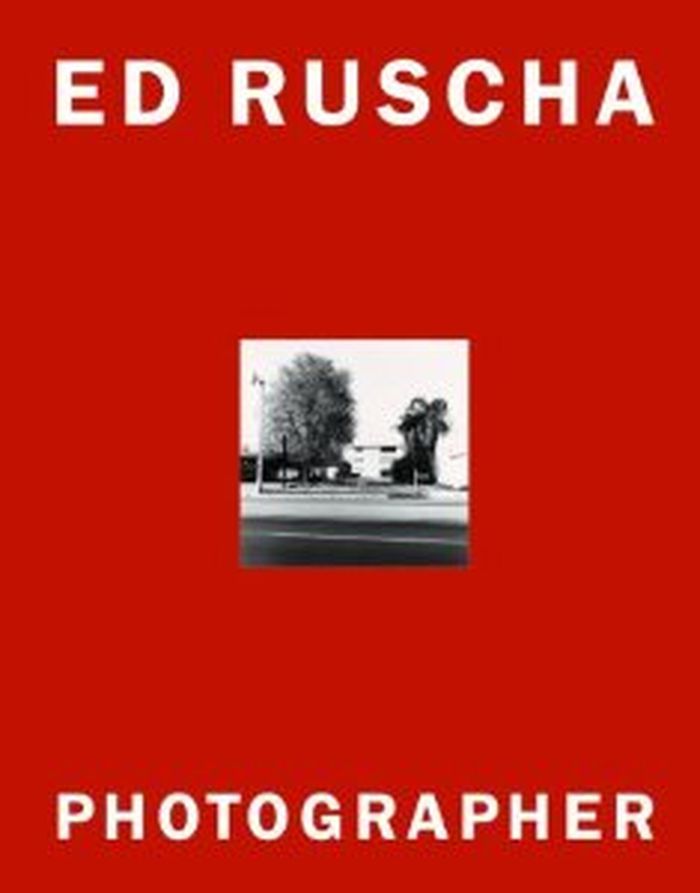
Although known for his paintings and drawings, California artist Ed Ruscha has also attracted critical attention for his photography. A new exhibition and accompanying catalogue, "Ed Ruscha, photographer", depart from earlier books to explore how the artist’s different disciplines — painting, drawing, printmaking, and photography — are guided and shaped by a single vision. Ruscha’s relationship to photography is complex and ambivalent, and the work is difficult to define. He has referred to his photography as a “hobby” but from the outset it has drawn considerable critical interest. The small books of photographs that Ruscha produced in the sixties and seventies earned him a reputation as an underground artist among his peers, and have influenced subsequent generations of artists in Europe and North America. The photographs were snapshot size, with an amateurish quality that intrigued his contemporaries. Neither purely documentary nor solely artistic, their subject matter was stereotypical and banal, with motifs drawn from sites in Southern California or the western United States. This, combined with their serial presentation, created a mythical road-movie or photo-novel effect with Beat Generation innuendos and inspired interest among artists at a time when serial logic was prominent in Pop art and Minimalism, and later in Conceptual art. This volume is produced in conjunction with a traveling exhibition to be shown in Europe in 2006, organized by The Whitney Museum of American Art, New York. The exhibition photographs have been selected from the collections of the Whitney and the artist by independent curator Margit Rowell.
Ed Ruscha, photographer
Actions:
Prix:
$54.95
(disponible sur commande)
Résumé:
Although known for his paintings and drawings, California artist Ed Ruscha has also attracted critical attention for his photography. A new exhibition and accompanying catalogue, "Ed Ruscha, photographer", depart from earlier books to explore how the artist’s different disciplines — painting, drawing, printmaking, and photography — are guided and shaped by a single vision. Ruscha’s relationship to photography is complex and ambivalent, and the work is difficult to define. He has referred to his photography as a “hobby” but from the outset it has drawn considerable critical interest. The small books of photographs that Ruscha produced in the sixties and seventies earned him a reputation as an underground artist among his peers, and have influenced subsequent generations of artists in Europe and North America. The photographs were snapshot size, with an amateurish quality that intrigued his contemporaries. Neither purely documentary nor solely artistic, their subject matter was stereotypical and banal, with motifs drawn from sites in Southern California or the western United States. This, combined with their serial presentation, created a mythical road-movie or photo-novel effect with Beat Generation innuendos and inspired interest among artists at a time when serial logic was prominent in Pop art and Minimalism, and later in Conceptual art. This volume is produced in conjunction with a traveling exhibition to be shown in Europe in 2006, organized by The Whitney Museum of American Art, New York. The exhibition photographs have been selected from the collections of the Whitney and the artist by independent curator Margit Rowell.
Classification:
livres
livres
Publication:
janvier 1900, Göttingen
janvier 1900, Göttingen
Classification:
livres
livres
Titre:
For the temporary accomodation of settlers: Architecture and immigrant reception in Canada 1870-1930
For the temporary accomodation of settlers: Architecture and immigrant reception in Canada 1870-1930
Actions:
Prix:
$75.00
(disponible sur commande)
Résumé:
For immigrants making the transoceanic journey from Europe or Asia to North America, the experience of a new country began when they disembarked. In Canada the federal government built a network of buildings that provided newcomers with shelter, services, and state support. "Immigration sheds" such as Pier 21 in Halifax – where ocean liners would dock and global migrants(...)
$75.00
(disponible sur commande)
Résumé:
For immigrants making the transoceanic journey from Europe or Asia to North America, the experience of a new country began when they disembarked. In Canada the federal government built a network of buildings that provided newcomers with shelter, services, and state support. "Immigration sheds" such as Pier 21 in Halifax – where ocean liners would dock and global migrants(...)
Titre:
For the temporary accomodation of settlers: Architecture and immigrant reception in Canada 1870-1930
Actions:
Prix:
$75.00
(disponible sur commande)
Résumé:
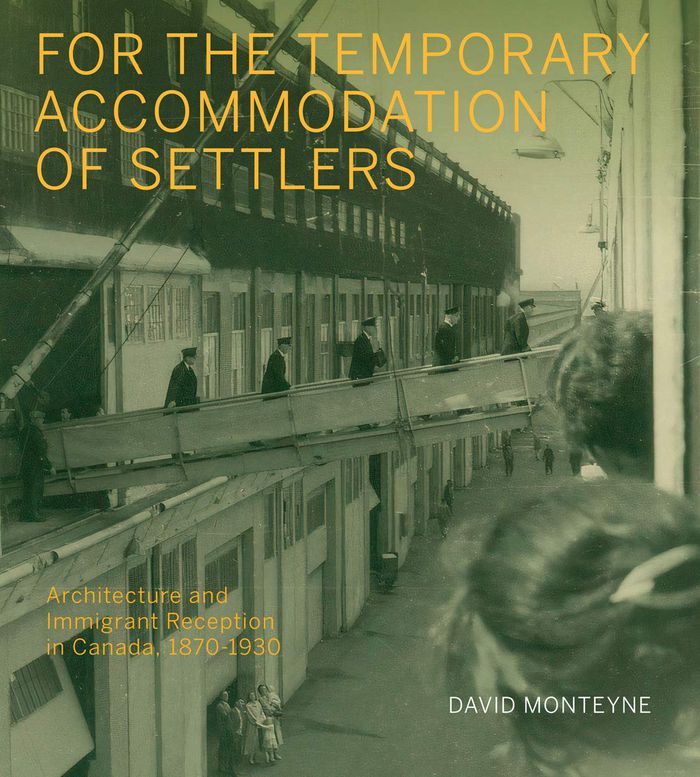
For immigrants making the transoceanic journey from Europe or Asia to North America, the experience of a new country began when they disembarked. In Canada the federal government built a network of buildings that provided newcomers with shelter, services, and state support. "Immigration sheds" such as Pier 21 in Halifax – where ocean liners would dock and global migrants arrived and were processed – had many counterparts across the country: new arrivals were accommodated or incarcerated at reception halls, quarantine stations, and immigrant detention hospitals. For the Temporary Accommodation of Settlers reconstructs the experiences of people in these spaces – both immigrants and government agents – to pose a question at the heart of architectural thinking: how is meaning produced in the built environments that we encounter? David Monteyne interprets official governmental intentions and policy goals embodied by the architecture of immigration but foregrounds the unofficial, informal practices of people who negotiated these spaces to satisfy basic needs, ensure the safety of their families, learn about land and job opportunities, and ultimately arrive at their destinations. The extent of this Canadian network, which peaked in the early twentieth century at over sixty different sites, and the range of building types that comprised it are unique among immigrant-receiving nations in this period. In our era of pandemic quarantine and migrant detention facilities, ''For the temporary accommodation of settlers'' offers new ways of seeing and thinking about the historical processes of immigration, challenging readers to consider government architecture and the experience of migrants across global networks.
For the temporary accomodation of settlers: Architecture and immigrant reception in Canada 1870-1930
Actions:
Prix:
$75.00
(disponible sur commande)
Résumé:
For immigrants making the transoceanic journey from Europe or Asia to North America, the experience of a new country began when they disembarked. In Canada the federal government built a network of buildings that provided newcomers with shelter, services, and state support. "Immigration sheds" such as Pier 21 in Halifax – where ocean liners would dock and global migrants arrived and were processed – had many counterparts across the country: new arrivals were accommodated or incarcerated at reception halls, quarantine stations, and immigrant detention hospitals. For the Temporary Accommodation of Settlers reconstructs the experiences of people in these spaces – both immigrants and government agents – to pose a question at the heart of architectural thinking: how is meaning produced in the built environments that we encounter? David Monteyne interprets official governmental intentions and policy goals embodied by the architecture of immigration but foregrounds the unofficial, informal practices of people who negotiated these spaces to satisfy basic needs, ensure the safety of their families, learn about land and job opportunities, and ultimately arrive at their destinations. The extent of this Canadian network, which peaked in the early twentieth century at over sixty different sites, and the range of building types that comprised it are unique among immigrant-receiving nations in this period. In our era of pandemic quarantine and migrant detention facilities, ''For the temporary accommodation of settlers'' offers new ways of seeing and thinking about the historical processes of immigration, challenging readers to consider government architecture and the experience of migrants across global networks.
Classification:
livres
livres
Publication:
décembre 2021
décembre 2021
Sujet:
Architecture du Canada
Architecture du Canada
Classification:
livres
livres
Actions:
Prix:
$37.50
(disponible sur commande)
Résumé:
Toward the end of the sixteenth century, and throughout the seventeenth, thinking in spatial terms assumed extraordinary urgency among Russia's ruling elites. The two great developments of this era in Russian history - the enserfment of the peasantry and the conquest of a vast Eastern empire-fundamentally concerned spatial control and concepts of movements across the(...)
$37.50
(disponible sur commande)
Résumé:
Toward the end of the sixteenth century, and throughout the seventeenth, thinking in spatial terms assumed extraordinary urgency among Russia's ruling elites. The two great developments of this era in Russian history - the enserfment of the peasantry and the conquest of a vast Eastern empire-fundamentally concerned spatial control and concepts of movements across the(...)
Titre:
Cartographies of tsardom : the land and its meaning in seventeenth-century Russia
Actions:
Prix:
$37.50
(disponible sur commande)
Résumé:
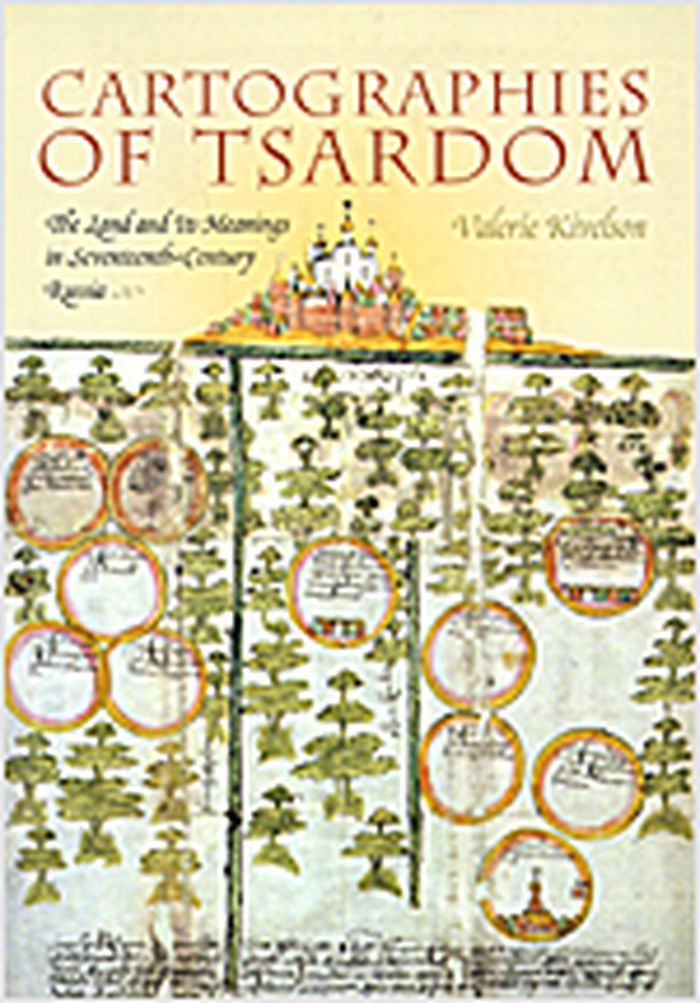
Toward the end of the sixteenth century, and throughout the seventeenth, thinking in spatial terms assumed extraordinary urgency among Russia's ruling elites. The two great developments of this era in Russian history - the enserfment of the peasantry and the conquest of a vast Eastern empire-fundamentally concerned spatial control and concepts of movements across the land. In "Cartographies of tsardom", Valerie Kivelson explores how these twin themes of fixity and mobility obliged Russians, from tsar to peasant, to think in spatial terms. She builds her case through close study of two very different kinds of maps: the hundreds of local maps hand-drawn by amateurs as evidence in property litigations, and the maps of the new territories that stretched from the Urals to the Pacific. In both the simple maps that local residents drafted and in the more formal maps of the newly conquered Siberian spaces, Kivelson shows that the Russians saw the land (be it a peasant's plot or the Siberian taiga) as marked by the grace of divine providence. She argues that the unceasing tension between fixity and mobility led to the emergence in Eurasia of an empire quite different from that in North America. In her words, the Russian empire that took shape in the decades before Peter the Great proclaimed its existence was a “spacious mantle,” a “patchwork quilt of difference under a single tsar” that granted religious and cultural space to non-Russian, non-Orthodox populations even as it strove to tie them down to serve its own growing fiscal needs. The unresolved, perhaps unresolvable, tension between these contrary impulses was both the strength and the weakness of empire in Russia.
Cartographies of tsardom : the land and its meaning in seventeenth-century Russia
Actions:
Prix:
$37.50
(disponible sur commande)
Résumé:
Toward the end of the sixteenth century, and throughout the seventeenth, thinking in spatial terms assumed extraordinary urgency among Russia's ruling elites. The two great developments of this era in Russian history - the enserfment of the peasantry and the conquest of a vast Eastern empire-fundamentally concerned spatial control and concepts of movements across the land. In "Cartographies of tsardom", Valerie Kivelson explores how these twin themes of fixity and mobility obliged Russians, from tsar to peasant, to think in spatial terms. She builds her case through close study of two very different kinds of maps: the hundreds of local maps hand-drawn by amateurs as evidence in property litigations, and the maps of the new territories that stretched from the Urals to the Pacific. In both the simple maps that local residents drafted and in the more formal maps of the newly conquered Siberian spaces, Kivelson shows that the Russians saw the land (be it a peasant's plot or the Siberian taiga) as marked by the grace of divine providence. She argues that the unceasing tension between fixity and mobility led to the emergence in Eurasia of an empire quite different from that in North America. In her words, the Russian empire that took shape in the decades before Peter the Great proclaimed its existence was a “spacious mantle,” a “patchwork quilt of difference under a single tsar” that granted religious and cultural space to non-Russian, non-Orthodox populations even as it strove to tie them down to serve its own growing fiscal needs. The unresolved, perhaps unresolvable, tension between these contrary impulses was both the strength and the weakness of empire in Russia.
Classification:
livres
livres
Publication:
septembre 2006, Ithaca, London
septembre 2006, Ithaca, London
Sujet:
Histoire jusqu’à 1900
Histoire jusqu’à 1900
Classification:
livres
livres

Actions:
Prix:
$75.00
(disponible sur commande)
Résumé:
This large-format monograph is the first to chronicle exclusively Shigeru Ban’s explorations in "paper architecture." Informed by a thorough and early interest in sustainable forms, his innovative practice pioneered the use of paper as a structural element in buildings. This book features permanent and temporary structures, ranging from one-off museums and exhibition(...)
$75.00
(disponible sur commande)
Résumé:
This large-format monograph is the first to chronicle exclusively Shigeru Ban’s explorations in "paper architecture." Informed by a thorough and early interest in sustainable forms, his innovative practice pioneered the use of paper as a structural element in buildings. This book features permanent and temporary structures, ranging from one-off museums and exhibition(...)
Titre:
Shigeru Ban: paper in architecture
Actions:
Prix:
$75.00
(disponible sur commande)
Résumé:
This large-format monograph is the first to chronicle exclusively Shigeru Ban’s explorations in "paper architecture." Informed by a thorough and early interest in sustainable forms, his innovative practice pioneered the use of paper as a structural element in buildings. This book features permanent and temporary structures, ranging from one-off museums and exhibition spaces to emergency structures for communities displaced by natural and man-made catastrophes. The forty projects featured in the book showcase the variety of possible applications for paper and its derivative forms (cardboard, fiber-based composites). As flexible as it is adaptable, when used in tandem with other locally sourced building materials or post-industrial surplus (maritime shipping containers), Ban’s singular use of paper knowingly references paper’s traditional uses in vernacular Japanese buildings, and advances modern construction technology, reducing its environmental impact. A number of prominent works from the last decade are featured, including the Nomadic Museums built in New York, Los Angeles, and Tokyo, his work for the Centre Pompidou in Paris and Metz, the Papertainer Museum in Seoul, his pavilions for design and luxury brands like Louis Vuitton and Artek, as well as a number of landmark residences in Japan, Europe, and North America. Of particular focus will be Ban’s humanitarian work. Documented in a book for the first time are all the relief projects his studio has undertaken in the last two decades for the U.N. High Commission on Refugees. These include housing for tsunami victims in Sri Lanka and earthquake victims in Turkey and Japan, and emergency shelter for war-ravaged communities in Rwanda and the Congo.
Shigeru Ban: paper in architecture
Actions:
Prix:
$75.00
(disponible sur commande)
Résumé:
This large-format monograph is the first to chronicle exclusively Shigeru Ban’s explorations in "paper architecture." Informed by a thorough and early interest in sustainable forms, his innovative practice pioneered the use of paper as a structural element in buildings. This book features permanent and temporary structures, ranging from one-off museums and exhibition spaces to emergency structures for communities displaced by natural and man-made catastrophes. The forty projects featured in the book showcase the variety of possible applications for paper and its derivative forms (cardboard, fiber-based composites). As flexible as it is adaptable, when used in tandem with other locally sourced building materials or post-industrial surplus (maritime shipping containers), Ban’s singular use of paper knowingly references paper’s traditional uses in vernacular Japanese buildings, and advances modern construction technology, reducing its environmental impact. A number of prominent works from the last decade are featured, including the Nomadic Museums built in New York, Los Angeles, and Tokyo, his work for the Centre Pompidou in Paris and Metz, the Papertainer Museum in Seoul, his pavilions for design and luxury brands like Louis Vuitton and Artek, as well as a number of landmark residences in Japan, Europe, and North America. Of particular focus will be Ban’s humanitarian work. Documented in a book for the first time are all the relief projects his studio has undertaken in the last two decades for the U.N. High Commission on Refugees. These include housing for tsunami victims in Sri Lanka and earthquake victims in Turkey and Japan, and emergency shelter for war-ravaged communities in Rwanda and the Congo.
Classification:
livres
livres
Publication:
octobre 2009
octobre 2009
Sujet:
Architecture, monographies
Architecture, monographies
Classification:
livres
livres
Actions:
Prix:
$25.95
(disponible sur commande)
Résumé:
The 100 block of Vancouver's West Hastings Street is the gateway to one of the most contested and controversial inner-city neighborhoods in North America – Vancouver’s infamous and impoverished downtown eastside. Lining the south side of the block are Edwardian-era buildings which have born the brunt of shifting market forces over the years. Developed in the wake of(...)
$25.95
(disponible sur commande)
Résumé:
The 100 block of Vancouver's West Hastings Street is the gateway to one of the most contested and controversial inner-city neighborhoods in North America – Vancouver’s infamous and impoverished downtown eastside. Lining the south side of the block are Edwardian-era buildings which have born the brunt of shifting market forces over the years. Developed in the wake of(...)
Titre:
Stan Douglas : Every building on 100 West Hastings
Actions:
Prix:
$25.95
(disponible sur commande)
Résumé:
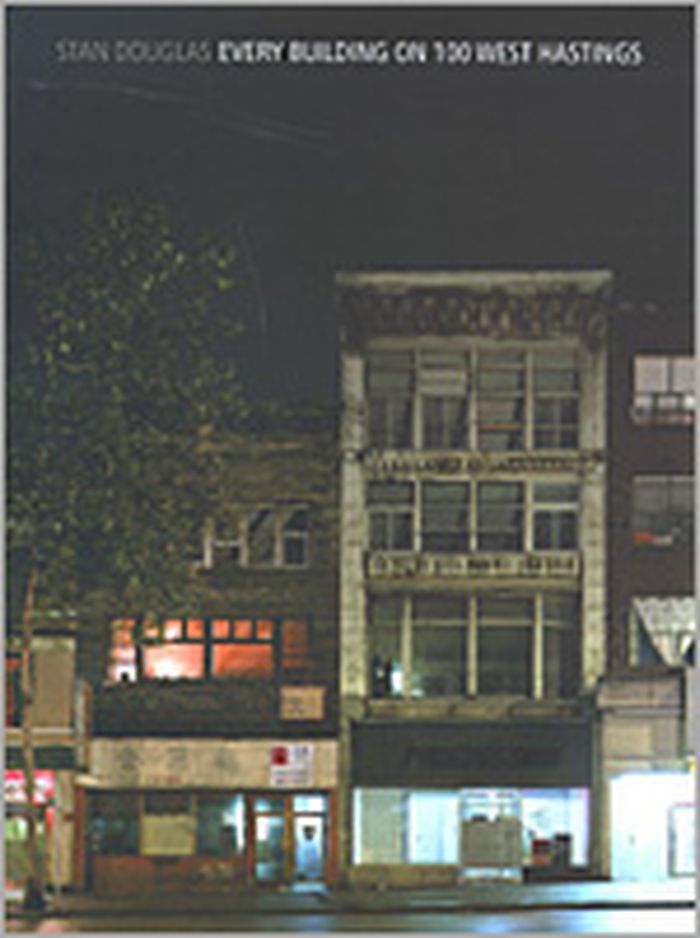
The 100 block of Vancouver's West Hastings Street is the gateway to one of the most contested and controversial inner-city neighborhoods in North America – Vancouver’s infamous and impoverished downtown eastside. Lining the south side of the block are Edwardian-era buildings which have born the brunt of shifting market forces over the years. Developed in the wake of Vancouver’s "emergence" as the terminus for the country’s national railroad, the buildings in the area have been in decline since the 1930s, when the locus of the city’s commerce began moving. But the "story" of the 100 block is not strictly one of global market forces, nor does it belong to those who, through whatever political stripe, lay claim to it. The book is based on a monumental-sized digital print of the 100 block of West Hastings Street by Stan Douglas who utilized current technologies to create a 16'×3' panorama of epic scope, photographing each building and compositing the individual prints to assume a fantastic, impossible perspective; which is reproduced in the book as a removable full-colour poster, 5½" tall and 30½" wide. Essays by Denise Olekszijuk, Nicholas Blomley, and Neil Smith use Douglas’s photograph as a template for assessing the state of Vancouver’s contested downtown eastside; its moral, economic and social implications. Ultimately, how can art affect society in a meaningful way? Scattered throughout the book are additional images highlighting Vancouver’s history as well as work from other artistic ventures that informed Douglas’s project. This book unravels the dynamics of history and sociology, combined with photography and art, to create a compelling and visually arresting document that informs our understanding of what makes a neighbourhood.
Stan Douglas : Every building on 100 West Hastings
Actions:
Prix:
$25.95
(disponible sur commande)
Résumé:
The 100 block of Vancouver's West Hastings Street is the gateway to one of the most contested and controversial inner-city neighborhoods in North America – Vancouver’s infamous and impoverished downtown eastside. Lining the south side of the block are Edwardian-era buildings which have born the brunt of shifting market forces over the years. Developed in the wake of Vancouver’s "emergence" as the terminus for the country’s national railroad, the buildings in the area have been in decline since the 1930s, when the locus of the city’s commerce began moving. But the "story" of the 100 block is not strictly one of global market forces, nor does it belong to those who, through whatever political stripe, lay claim to it. The book is based on a monumental-sized digital print of the 100 block of West Hastings Street by Stan Douglas who utilized current technologies to create a 16'×3' panorama of epic scope, photographing each building and compositing the individual prints to assume a fantastic, impossible perspective; which is reproduced in the book as a removable full-colour poster, 5½" tall and 30½" wide. Essays by Denise Olekszijuk, Nicholas Blomley, and Neil Smith use Douglas’s photograph as a template for assessing the state of Vancouver’s contested downtown eastside; its moral, economic and social implications. Ultimately, how can art affect society in a meaningful way? Scattered throughout the book are additional images highlighting Vancouver’s history as well as work from other artistic ventures that informed Douglas’s project. This book unravels the dynamics of history and sociology, combined with photography and art, to create a compelling and visually arresting document that informs our understanding of what makes a neighbourhood.
Classification:
livres
livres
Publication:
décembre 2002, Vancouver
décembre 2002, Vancouver
Sujet:
Monographies photo
Monographies photo
Classification:
livres
livres
Titre:
Zaha Hadid
Zaha Hadid
Actions:
Prix:
$10.50
(disponible sur commande)
Résumé:
This fully illustrated catalogue of the major retrospective exhibition provides an in-depth examination of the work of one of today’s most visionary architects. The first woman to be awarded the Pritzker Architecture Prize, in 2004, Zaha Hadid is known for projects that have literally "shifted the geometry of buildings." The Iraqi-born, London-based architect has(...)
$10.50
(disponible sur commande)
Résumé:
This fully illustrated catalogue of the major retrospective exhibition provides an in-depth examination of the work of one of today’s most visionary architects. The first woman to be awarded the Pritzker Architecture Prize, in 2004, Zaha Hadid is known for projects that have literally "shifted the geometry of buildings." The Iraqi-born, London-based architect has(...)
Publication:
août 2006, New York
août 2006, New York
Titre:
Zaha Hadid
Actions:
Prix:
$10.50
(disponible sur commande)
Résumé:
This fully illustrated catalogue of the major retrospective exhibition provides an in-depth examination of the work of one of today’s most visionary architects. The first woman to be awarded the Pritzker Architecture Prize, in 2004, Zaha Hadid is known for projects that have literally "shifted the geometry of buildings." The Iraqi-born, London-based architect has collaborated with the Guggenheim on several projects leading up to this comprehensive retrospective, including the design for the museum’s exhibition The Great Utopia in 1992. Each of Hadid’s dynamic and innovative works builds on over 30 years of experimentation and research in the interrelated fields of urbanism, architecture and design. True to Hadid’s interdisciplinary approach to architecture, all mediums will be covered here. Having first achieved international recognition through her striking images and designs, Zaha Hadid is now widely known as an innovator who consistently tests the boundaries of architecture, urbanism and design. One of her most important "testing fields" has been her drawings. Her reconsideration of the architectural drawing through nontraditional floor plans has had a major impact on all areas of design and architecture. Once considered unbuildable, her projects can now be seen around the world, including major projects in Europe, North America and Asia. Hadid’s most recent work incorporates smooth surfaces where walls seem to melt, floors curving upward, and ceilings that appear to compress, bend and expand. In her designs, architecture emerges not as an isolated object but out of the surrounding landscape and urban environment, and as a result of its users' movements and paths. Her work addresses "fluid geometries" and "artificial natures." The book features color illustrations of designs and models, previously unpublished paintings and photographs of buildings at all stages of construction, as well as two previously unpublished interviews with Hadid by Alvin Boyarsky.
Zaha Hadid
Actions:
Prix:
$10.50
(disponible sur commande)
Résumé:
This fully illustrated catalogue of the major retrospective exhibition provides an in-depth examination of the work of one of today’s most visionary architects. The first woman to be awarded the Pritzker Architecture Prize, in 2004, Zaha Hadid is known for projects that have literally "shifted the geometry of buildings." The Iraqi-born, London-based architect has collaborated with the Guggenheim on several projects leading up to this comprehensive retrospective, including the design for the museum’s exhibition The Great Utopia in 1992. Each of Hadid’s dynamic and innovative works builds on over 30 years of experimentation and research in the interrelated fields of urbanism, architecture and design. True to Hadid’s interdisciplinary approach to architecture, all mediums will be covered here. Having first achieved international recognition through her striking images and designs, Zaha Hadid is now widely known as an innovator who consistently tests the boundaries of architecture, urbanism and design. One of her most important "testing fields" has been her drawings. Her reconsideration of the architectural drawing through nontraditional floor plans has had a major impact on all areas of design and architecture. Once considered unbuildable, her projects can now be seen around the world, including major projects in Europe, North America and Asia. Hadid’s most recent work incorporates smooth surfaces where walls seem to melt, floors curving upward, and ceilings that appear to compress, bend and expand. In her designs, architecture emerges not as an isolated object but out of the surrounding landscape and urban environment, and as a result of its users' movements and paths. Her work addresses "fluid geometries" and "artificial natures." The book features color illustrations of designs and models, previously unpublished paintings and photographs of buildings at all stages of construction, as well as two previously unpublished interviews with Hadid by Alvin Boyarsky.
Classification:
livres
livres
Publication:
août 2006, New York
août 2006, New York


