


2695 Résultats
Classification:
livres
livres
Prix:
$56.50
(disponible sur commande)
Résumé:
Studies of the landscape have ranged from discussions of cultural geography at one end and botany at the other, with quite a mix in between. In this book Marc Treib focuses on the subject of the designed landscape, which he takes to include gardens, cemeteries, plazas, as well as a number of other landscape forms. His writings begin with an investigation of order and its(...)
Titre:
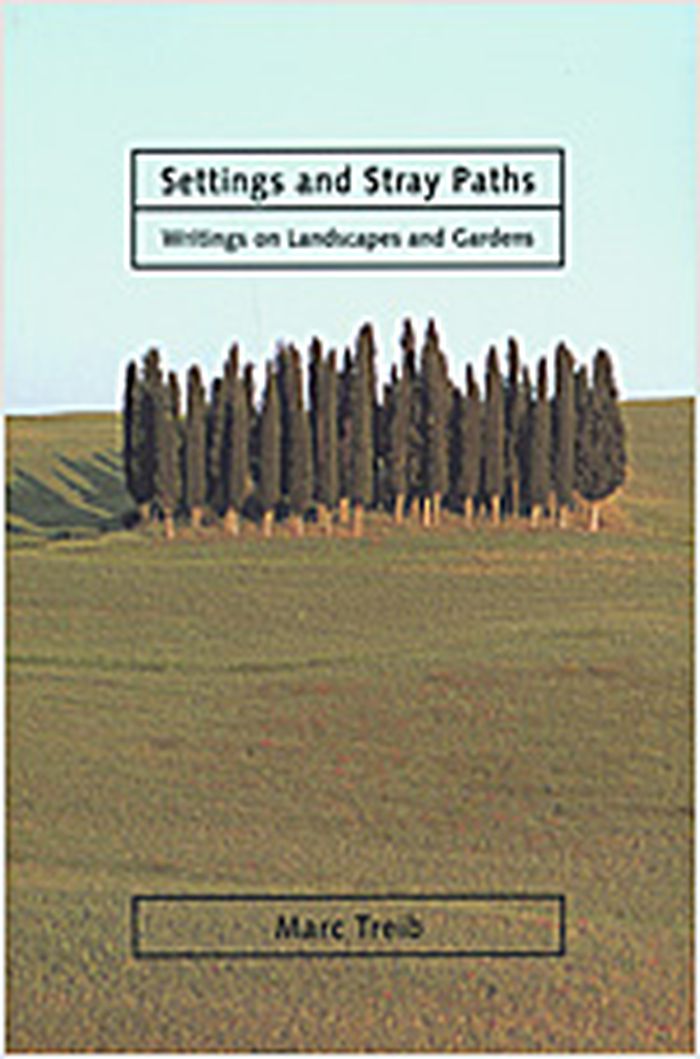
Settings and stray paths : writing on landscapes and gardens
Actions:
Prix:
$56.50
(disponible sur commande)
Résumé:
Studies of the landscape have ranged from discussions of cultural geography at one end and botany at the other, with quite a mix in between. In this book Marc Treib focuses on the subject of the designed landscape, which he takes to include gardens, cemeteries, plazas, as well as a number of other landscape forms. His writings begin with an investigation of order and its perception: How have humans organized landscapes so that the experience of them could be directed, or even "read," decoded, and understood? His writings include analyses of both historical and contemporary works, with a geographic distribution that treats Asia as well as Europe and North America. Certain essays address the question of content in landscape design, others its meaning; others examine the lives and contributions of major figures in the field, for example, cultural landscape historian John Brinckerhoff Jackson and landscape architect Garrett Eckbo; subjects such as influence also receive the author's attention. As a whole, the essays cover a remarkable range, examining issues that few other writers have attempted to explain in detail. Treib brings a designer's eye to his work, paring observation and formal analysis with a more theorical formulation of the ideas from which or by which landscape architecture is produced. Photographs by the author complement his writings, adding a visual dimension to the provocative ideas outlined in the essays. While all of these essays have appeared in print over a period of some twenty-five years, many have been published in specialist journals or in a foreign language. Settings and Stray paths assembles a vital collection of Marc Treib's writings on landscape architecture, for the first time in a single source book.
Classification:
livres
livres
Publication:
juin 2005, London, New York
juin 2005, London, New York
Sujet:
Théorie du paysage
Théorie du paysage
Classification:
livres
livres
Prix:
$49.95
(disponible sur commande)
Résumé:
"Last Landscapes" is an exploration of the cult and celebration of death, loss and memory. It traces the history and design of burial places throughout Europe and the USA, ranging from the picturesque tradition of the village churchyard to tightly packed ‘cities of the dead’, such as the Jewish Cemetery in Prague and Père Lachaise in Paris. Other landscapes that feature(...)
Titre:
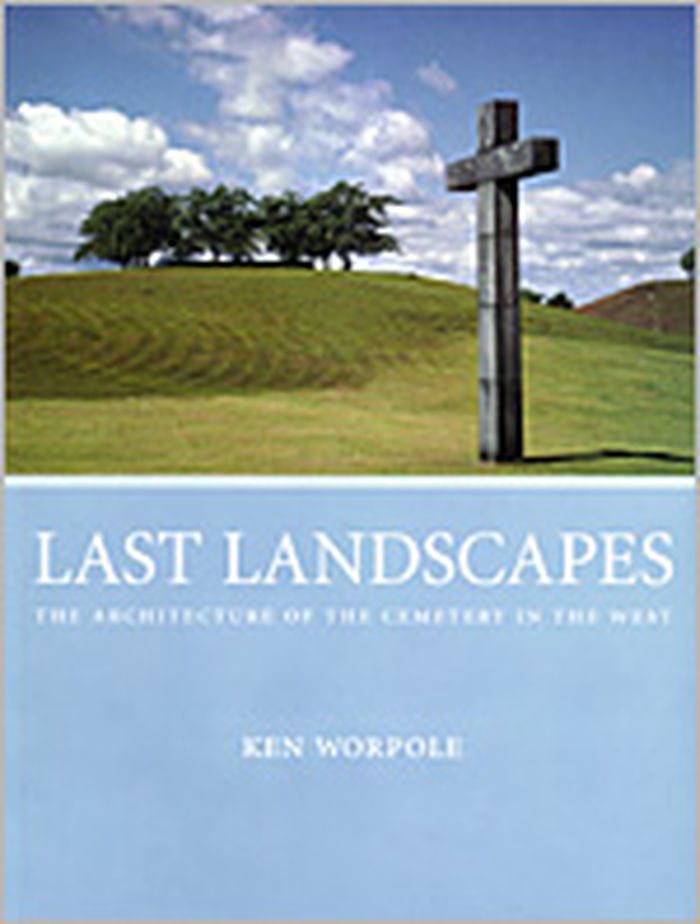
Last landscapes : the architecture of the cemetery in the west
Actions:
Prix:
$49.95
(disponible sur commande)
Résumé:
"Last Landscapes" is an exploration of the cult and celebration of death, loss and memory. It traces the history and design of burial places throughout Europe and the USA, ranging from the picturesque tradition of the village churchyard to tightly packed ‘cities of the dead’, such as the Jewish Cemetery in Prague and Père Lachaise in Paris. Other landscapes that feature in this book include the war cemeteries of northern France, Viking burial islands in central Sweden, Etruscan tombs and early Christian catacombs in Italy, the 17th-century Portuguese–Jewish cemetery 'Beth Haim' at Ouderkerk in the Netherlands, Forest Lawns in California, Derek Jarman’s garden in Kent and the Stockholm Woodland Cemetery. It is a fact that architecture ‘began with the tomb', yet, as Ken Worpole shows us in Last Landscapes, many historic cemeteries have been demolished or abandoned in recent times (notably the case with Jewish cemeteries in Eastern Europe), and there has been an increasing loss of inscription and memorialization in the modern urban cemetery. Too often cemeteries today are both poorly designed and physically and culturally marginalized. Worse, cremation denies a full architectural response to the mystery and solemnity of death. The author explores how modes of disposal – burial, cremation, inhumation in mausoleums and wall tombs – vary across Europe and North America, according to religious and other cultural influences. And Last Landscapes raises profound questions as to how, in an age of mass cremation, architects and landscape designers might create meaningful structures and settings in the absence of a body, since for most of history the human body itself has provided the fundamental structural scale. This evocative book also contemplates other forms of memorialization within modern societies, from sculptures to parks, most notably the extraordinary Duisberg Park, set in a former giant steelworks in Germany’s Ruhr Valley.
Classification:
livres
livres
Publication:
juin 2003, London
juin 2003, London
Sujet:
Jardins
Jardins
Classification:
audio
audio
Description:
1 online resource.
Auteur:
Sujet:
Publication:
[Place of publication not identified] : Lateral Addition, 2018.
[Place of publication not identified] : Lateral Addition, 2018.
Titre:
June 21, 2018 : Listening for Southwest Key in San Diego.
Actions:
Description:
1 online resource.
June 21, 2018 : Listening for Southwest Key in San Diego.
Actions:
Description:
1 online resource.
Classification:
audio
audio
Publication:
[Place of publication not identified] : Lateral Addition, 2018.
[Place of publication not identified] : Lateral Addition, 2018.
Auteur:
Sujet:
Classification:
périodiques
périodiques
Titre:
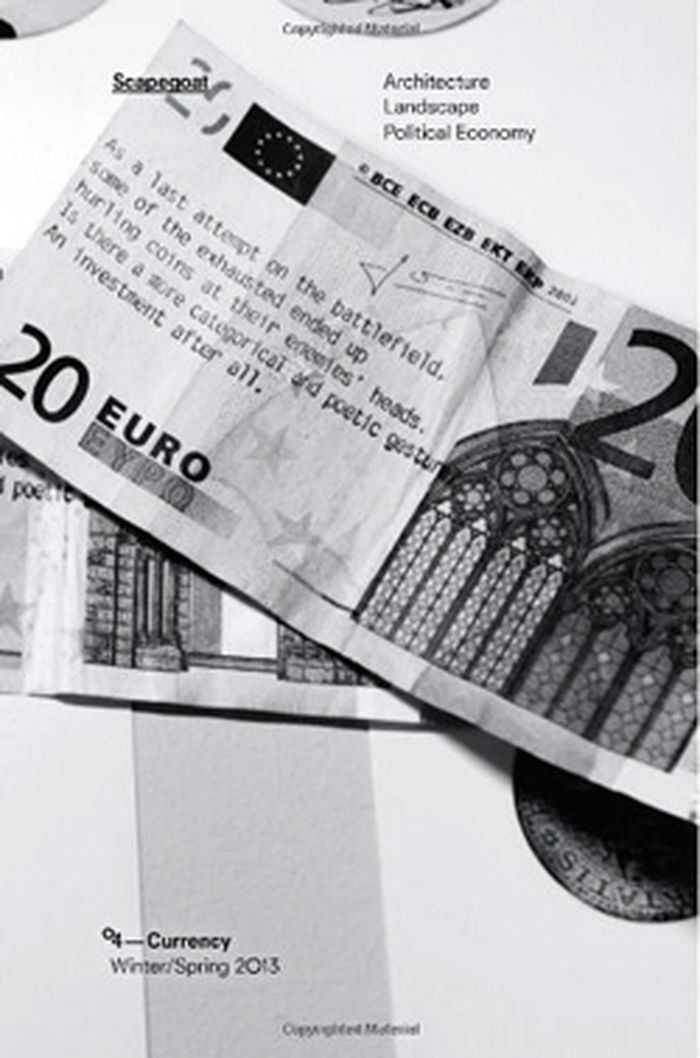
Scapegoat 04: currency
Scapegoat 04: currency
Actions:
Prix:
$20.00
(disponible sur commande)
Résumé:
Currency is structured by a fundamental contradiction between its necessary circulation and its stubborn foundation in sovereign territories. On the one hand, it is designed to represent value and facilitate its exchange in standardized, fungible units; on the other, its relative scarcity generates a strong incentive to hoard it, withdrawing and storing its value,(...)
Titre:
Scapegoat 04: currency
Actions:
Prix:
$20.00
(disponible sur commande)
Résumé:
Currency is structured by a fundamental contradiction between its necessary circulation and its stubborn foundation in sovereign territories. On the one hand, it is designed to represent value and facilitate its exchange in standardized, fungible units; on the other, its relative scarcity generates a strong incentive to hoard it, withdrawing and storing its value, converting it into fixed assets such as property whose existence relies on the same institutions of coercion that maintain national borders. Today's globalized capitalism only exacerbates this paradox. The ascendency of finance capital in North America and Europe has created a condition where the accumulation of capital is based almost purely on speculation, and money is multiplied through its circulation. At the same time, the struggle to secure the territories and bodies that guarantee it has become ever more desperate as civilian spaces have been more and more militarized. The result has been an increasingly complex space of value, where the borders that produce its distinctions are no longer located at a nation's edges, but rather lie both within and beyond it. The diverse contributions to Scapegoat's fifth issue, Currency, investigate these contradictory tendencies within the spatiality of currency and present ways that they can be resisted. We follow a line that runs from the material to the immaterial, exploring divergent scales and topologies in the process.
Classification:
périodiques
périodiques
Publication:
juin 2013
juin 2013
Sujet:
Revues
Revues
Classification:
livres
livres
Prix:
$59.95
(disponible sur commande)
Résumé:
The book reproduces a series of the collages made by David Wild. Their subject is modern architecture in the first half of the twentieth century: in the Netherlands, in Russia, and in the work of Le Corbusier. The method of the book is to show a collage on a right-hand page; then on the facing page is a (...)
Titre:
Fragments of utopia: collage reflections of heroic modernism
Actions:
Prix:
$59.95
(disponible sur commande)
Résumé:
The book reproduces a series of the collages made by David Wild. Their subject is modern architecture in the first half of the twentieth century: in the Netherlands, in Russia, and in the work of Le Corbusier. The method of the book is to show a collage on a right-hand page; then on the facing page is a prose commentary by Wild and supporting smaller images. Introducing the book, David Wild explains that the impulse for this work lies in the aftermath of a fire in his house: his scorched books lent themselves to collage. He goes on to sketch the cultural-political climate in Britain over the last 40 years: the backdrop to his work as an architect and (less directly) to this book. In the opening section on the Netherlands, the leading theme is an architecture of social equity and continuity. Rooted in old cultural traditions, and in the particular ‘football-pitch’ landscape of the country, modern architecture could realise some of its dreams in everyday buildings. Postage stamps play an active part in many of the book’s collages, and especially in this section: the design of stamps flourished in the Netherlands, through the enlightened patronage of the Dutch post office — with several architects designing stamps too. Politics and history come to prominence in the Russian section, as a motivating force in the work of the early 1920s, and then as a heavy burden — with the onset of totalitarian control and repression. At the centre of the discussion here is the architecture of constructivism: formally brilliant, but with a clear social programme. Flight and the exploration of space are recurring topics in this section, as another and particularly Russian dimension of utopian striving The work of Le Corbusier, in Europe, North and South America, Russia and India, is treated in the third section. Le Corbusier is presented as a brilliant artist, a master architect of the greatest skill and the greatest ambition — and without scruple in pursuing commissions. The images and text follow him into the years after the Second World War, culminating in the work in India. Here there is a vision of another kind of politics, of co-operation and non-violence.
Classification:
livres
livres
Publication:
janvier 1900, London
janvier 1900, London


