


280 Résultats
Classification:
livres
livres
Prix:
$37.00
(disponible sur commande)
Résumé:
Elaborately conceived, grandly constructed insane asylums�ranging in appearance from classical temples to Gothic castles�were once a common sight looming on the outskirts of American towns and cities. Many of these buildings were razed long ago, and those that remain stand as grim reminders of an often cruel system. For much of the nineteenth century, however, these(...)
$37.00
(disponible sur commande)
Résumé:
Elaborately conceived, grandly constructed insane asylums�ranging in appearance from classical temples to Gothic castles�were once a common sight looming on the outskirts of American towns and cities. Many of these buildings were razed long ago, and those that remain stand as grim reminders of an often cruel system. For much of the nineteenth century, however, these(...)
Publication:
juin 2007, Minnieapolis, London
juin 2007, Minnieapolis, London
Titre:
The architecture of madness : insane asylums in the united states
Actions:
Prix:
$37.00
(disponible sur commande)
Résumé:
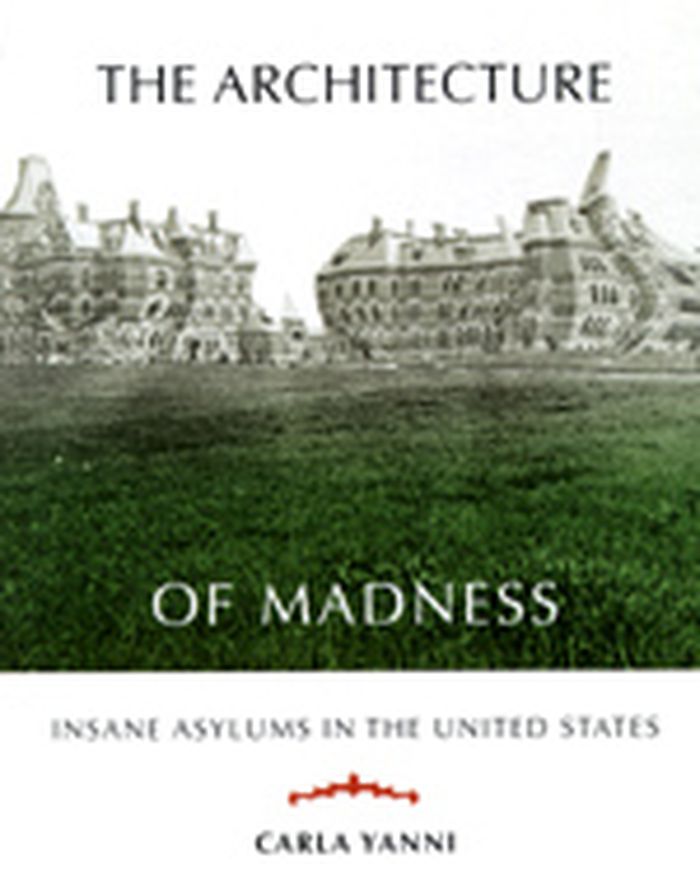
Elaborately conceived, grandly constructed insane asylums�ranging in appearance from classical temples to Gothic castles�were once a common sight looming on the outskirts of American towns and cities. Many of these buildings were razed long ago, and those that remain stand as grim reminders of an often cruel system. For much of the nineteenth century, however, these asylums epitomized the widely held belief among doctors and social reformers that insanity was a curable disease and that environment�architecture in particular�was the most effective means of treatment. In The Architecture of Madness, Carla Yanni tells a compelling story of therapeutic design, from America�s earliest purpose�built institutions for the insane to the asylum construction frenzy in the second half of the century. At the center of Yanni�s inquiry is Dr. Thomas Kirkbride, a Pennsylvania-born Quaker, who in the 1840s devised a novel way to house the mentally diseased that emphasized segregation by severity of illness, ease of treatment and surveillance, and ventilation. After the Civil War, American architects designed Kirkbride-plan hospitals across the country.
The architecture of madness : insane asylums in the united states
Actions:
Prix:
$37.00
(disponible sur commande)
Résumé:
Elaborately conceived, grandly constructed insane asylums�ranging in appearance from classical temples to Gothic castles�were once a common sight looming on the outskirts of American towns and cities. Many of these buildings were razed long ago, and those that remain stand as grim reminders of an often cruel system. For much of the nineteenth century, however, these asylums epitomized the widely held belief among doctors and social reformers that insanity was a curable disease and that environment�architecture in particular�was the most effective means of treatment. In The Architecture of Madness, Carla Yanni tells a compelling story of therapeutic design, from America�s earliest purpose�built institutions for the insane to the asylum construction frenzy in the second half of the century. At the center of Yanni�s inquiry is Dr. Thomas Kirkbride, a Pennsylvania-born Quaker, who in the 1840s devised a novel way to house the mentally diseased that emphasized segregation by severity of illness, ease of treatment and surveillance, and ventilation. After the Civil War, American architects designed Kirkbride-plan hospitals across the country.
Classification:
livres
livres
Publication:
juin 2007, Minnieapolis, London
juin 2007, Minnieapolis, London
Classification:
livres
livres
Actions:
Prix:
$12.00
(disponible sur commande)
Résumé:
Thirteen Postcards of illustrations from the book of narrative poetry We Will Be Fish. These images are compiled from turn-of-the-century mail-order catalogs, medical & zoological textbooks, and engineering diagrams. We Will Be Fish is a collection of narrative poems and illustrations, which can be viewed here, published by Pistol Press in 2008. It was listed for the(...)
$12.00
(disponible sur commande)
Résumé:
Thirteen Postcards of illustrations from the book of narrative poetry We Will Be Fish. These images are compiled from turn-of-the-century mail-order catalogs, medical & zoological textbooks, and engineering diagrams. We Will Be Fish is a collection of narrative poems and illustrations, which can be viewed here, published by Pistol Press in 2008. It was listed for the(...)
Titre:
JP King : 13 postcards from the book We will be fish
Actions:
Prix:
$12.00
(disponible sur commande)
Résumé:
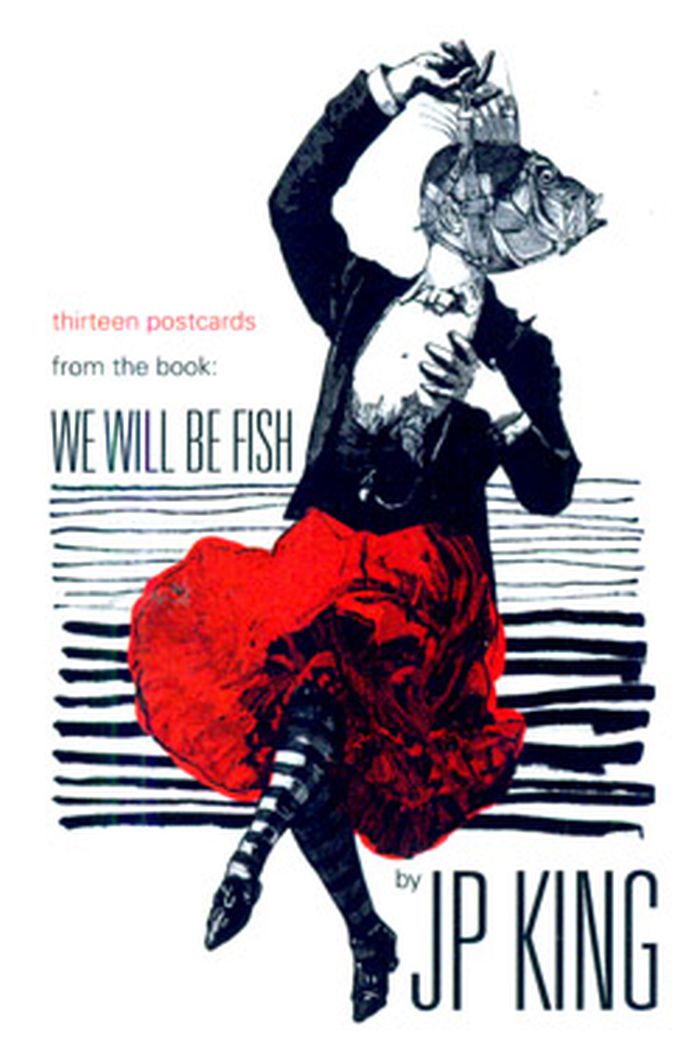
Thirteen Postcards of illustrations from the book of narrative poetry We Will Be Fish. These images are compiled from turn-of-the-century mail-order catalogs, medical & zoological textbooks, and engineering diagrams. We Will Be Fish is a collection of narrative poems and illustrations, which can be viewed here, published by Pistol Press in 2008. It was listed for the 2008 ReLit Awards and 2009 Expozine Awards, and a top ten seller at Drawn & Quarterley in 2008. The story follows the life of Leopold Canary, who loses his wife to sleeping sickness and gets tangled up in a government scam covering the truth behind the disease. He goes on to try and find his place in other small towns, at times working as an appliance designer, a self-appointed dentist, and the guide of his own basement museum. With thirteen cards you can choose your favorites for the fridge and use the rest to tell your grandma about all the nifty things you've been up to as of late.
JP King : 13 postcards from the book We will be fish
Actions:
Prix:
$12.00
(disponible sur commande)
Résumé:
Thirteen Postcards of illustrations from the book of narrative poetry We Will Be Fish. These images are compiled from turn-of-the-century mail-order catalogs, medical & zoological textbooks, and engineering diagrams. We Will Be Fish is a collection of narrative poems and illustrations, which can be viewed here, published by Pistol Press in 2008. It was listed for the 2008 ReLit Awards and 2009 Expozine Awards, and a top ten seller at Drawn & Quarterley in 2008. The story follows the life of Leopold Canary, who loses his wife to sleeping sickness and gets tangled up in a government scam covering the truth behind the disease. He goes on to try and find his place in other small towns, at times working as an appliance designer, a self-appointed dentist, and the guide of his own basement museum. With thirteen cards you can choose your favorites for the fridge and use the rest to tell your grandma about all the nifty things you've been up to as of late.
Classification:
livres
livres
Publication:
septembre 2012
septembre 2012
Classification:
livres
livres
Prix:
$52.50
(disponible en magasin)
Résumé:
"Breathing Space" is a compelling and wide-ranging analysis of pneumatic phenomena in modern culture. Architect and historian Tim Altenhof brilliantly explores the physiology of breathing and its reciprocal relationship to bodies and buildings, both of which share a common atmosphere. Because breathing is controlled by the autonomic nervous system and cannot be willfully(...)
$52.50
(disponible en magasin)
Résumé:
"Breathing Space" is a compelling and wide-ranging analysis of pneumatic phenomena in modern culture. Architect and historian Tim Altenhof brilliantly explores the physiology of breathing and its reciprocal relationship to bodies and buildings, both of which share a common atmosphere. Because breathing is controlled by the autonomic nervous system and cannot be willfully(...)
Titre:
Breathing space: The architecture of pneumatic beings
Actions:
Prix:
$52.50
(disponible en magasin)
Résumé:
"Breathing Space" is a compelling and wide-ranging analysis of pneumatic phenomena in modern culture. Architect and historian Tim Altenhof brilliantly explores the physiology of breathing and its reciprocal relationship to bodies and buildings, both of which share a common atmosphere. Because breathing is controlled by the autonomic nervous system and cannot be willfully overridden, it takes place unconsciously and involuntarily—most of the time. However, beginning in the mid-nineteenth century, attitudes toward breathing changed significantly. Breathing became a widely investigated cultural and physiological phenomenon and was the basis for techniques and bodily practices that heightened pulmonary awareness. New understandings of air pollution and disease stimulated a widespread preoccupation with ventilation, impacting architecture in countless ways. Altenhof’s close readings of built structures show how the science of breathing was incorporated into architecture, whether in the design of factories, residences, or medical facilities. The lungs form a major part of the respiratory system and like no other organ tie the living body directly to its surroundings. Yet the role of lungs also poses a topological problem: engaging in atmospheric transfer, they dissolve the division between inside and outside, and despite being an internal organ, they sustain a permanent and living connection to the external world. This ambiguity and permeability constitute the spatial dimension of breathing.
Breathing space: The architecture of pneumatic beings
Actions:
Prix:
$52.50
(disponible en magasin)
Résumé:
"Breathing Space" is a compelling and wide-ranging analysis of pneumatic phenomena in modern culture. Architect and historian Tim Altenhof brilliantly explores the physiology of breathing and its reciprocal relationship to bodies and buildings, both of which share a common atmosphere. Because breathing is controlled by the autonomic nervous system and cannot be willfully overridden, it takes place unconsciously and involuntarily—most of the time. However, beginning in the mid-nineteenth century, attitudes toward breathing changed significantly. Breathing became a widely investigated cultural and physiological phenomenon and was the basis for techniques and bodily practices that heightened pulmonary awareness. New understandings of air pollution and disease stimulated a widespread preoccupation with ventilation, impacting architecture in countless ways. Altenhof’s close readings of built structures show how the science of breathing was incorporated into architecture, whether in the design of factories, residences, or medical facilities. The lungs form a major part of the respiratory system and like no other organ tie the living body directly to its surroundings. Yet the role of lungs also poses a topological problem: engaging in atmospheric transfer, they dissolve the division between inside and outside, and despite being an internal organ, they sustain a permanent and living connection to the external world. This ambiguity and permeability constitute the spatial dimension of breathing.
Classification:
livres
livres
Publication:
mars 2026
mars 2026
Sujet:
Théorie de l’architecture
Théorie de l’architecture
Classification:
livres
livres
Titre:
Screening the city
Screening the city
Actions:
Prix:
$29.00
(disponible sur commande)
Résumé:
In this provocative collection of essays, films as diverse as "The Man with a Movie Camera", "Annie Hall", "Street of Crocodiles", "Boyz N the Hood", "Three Colors Red", and "Crash" are examined in terms of the relationship between cinema and the changing urban experience in Europe and the United States since the early twentieth century. Peter Jelavich, for example, links(...)
$29.00
(disponible sur commande)
Résumé:
In this provocative collection of essays, films as diverse as "The Man with a Movie Camera", "Annie Hall", "Street of Crocodiles", "Boyz N the Hood", "Three Colors Red", and "Crash" are examined in terms of the relationship between cinema and the changing urban experience in Europe and the United States since the early twentieth century. Peter Jelavich, for example, links(...)
Sujet:
Théorie de l’urbanisme
Théorie de l’urbanisme
Publication:
mars 2003, London / New York
mars 2003, London / New York
Titre:
Screening the city
Actions:
Prix:
$29.00
(disponible sur commande)
Résumé:
In this provocative collection of essays, films as diverse as "The Man with a Movie Camera", "Annie Hall", "Street of Crocodiles", "Boyz N the Hood", "Three Colors Red", and "Crash" are examined in terms of the relationship between cinema and the changing urban experience in Europe and the United States since the early twentieth century. Peter Jelavich, for example, links the suppression of the creative, liberal Weimar Berlin in the 1931 film "Berlin Alexanderplatz" to the rise of the Nazi regime and the end of one of the great eras of modernist experimentation in German visual culture; Jessie Labov considers Kieslowski’s treatment of the Warsaw housing blok in "Dekalog" in terms of Solidarity’s strategy of resisting totalitarianism in 1980's Poland; Allan Siegel examines the motif of the city in a broad range of American and international cinema to demonstrate how film and society since the 1960's have been driven by the fading of mass political radicalism and the triumph of privatization and capital; Paula Massood uses the socially illuminating theories of Mikhail Bakhtin to examine the representation of the ghetto and urban underclass in recent African-American films such as "Menace II Society"; and Matthew Gandy examines the focus on disease in Todd Haynes’s "[Safe]" as a metaphor for social and spatial breakdown in contemporary Los Angeles.
Screening the city
Actions:
Prix:
$29.00
(disponible sur commande)
Résumé:
In this provocative collection of essays, films as diverse as "The Man with a Movie Camera", "Annie Hall", "Street of Crocodiles", "Boyz N the Hood", "Three Colors Red", and "Crash" are examined in terms of the relationship between cinema and the changing urban experience in Europe and the United States since the early twentieth century. Peter Jelavich, for example, links the suppression of the creative, liberal Weimar Berlin in the 1931 film "Berlin Alexanderplatz" to the rise of the Nazi regime and the end of one of the great eras of modernist experimentation in German visual culture; Jessie Labov considers Kieslowski’s treatment of the Warsaw housing blok in "Dekalog" in terms of Solidarity’s strategy of resisting totalitarianism in 1980's Poland; Allan Siegel examines the motif of the city in a broad range of American and international cinema to demonstrate how film and society since the 1960's have been driven by the fading of mass political radicalism and the triumph of privatization and capital; Paula Massood uses the socially illuminating theories of Mikhail Bakhtin to examine the representation of the ghetto and urban underclass in recent African-American films such as "Menace II Society"; and Matthew Gandy examines the focus on disease in Todd Haynes’s "[Safe]" as a metaphor for social and spatial breakdown in contemporary Los Angeles.
Classification:
livres
livres
Publication:
mars 2003, London / New York
mars 2003, London / New York
Sujet:
Théorie de l’urbanisme
Théorie de l’urbanisme
Classification:
livres
livres
Actions:
Prix:
$27.95
(disponible sur commande)
Résumé:
"Filth" is concerned with what waste reveals about the culture that creates it. From floating barges of urban refuse to dung-encrusted works of art, from toxic landfills to dirty movies, filth has become a major presence and a point of volatile contention in modern life. This book explores the question of what filth has to do with culture: what critical role the lost,(...)
$27.95
(disponible sur commande)
Résumé:
"Filth" is concerned with what waste reveals about the culture that creates it. From floating barges of urban refuse to dung-encrusted works of art, from toxic landfills to dirty movies, filth has become a major presence and a point of volatile contention in modern life. This book explores the question of what filth has to do with culture: what critical role the lost,(...)
Sujet:
Théorie de l’architecture
Théorie de l’architecture
Publication:
janvier 2005, Minneapolis
janvier 2005, Minneapolis
Titre:
Filth : dirt, disgust, and modern life
Actions:
Prix:
$27.95
(disponible sur commande)
Résumé:
"Filth" is concerned with what waste reveals about the culture that creates it. From floating barges of urban refuse to dung-encrusted works of art, from toxic landfills to dirty movies, filth has become a major presence and a point of volatile contention in modern life. This book explores the question of what filth has to do with culture: what critical role the lost, the rejected, the abject, and the dirty play in social management and identity formation. It suggests the ongoing power of culturally mandated categories of exclusion and repression. Focusing on filth in literary and cultural materials from London, Paris, and their colonial outposts in the nineteenth and early twentieth centuries, the essays in "Filth" - all but one previously unpublished - range over topics as diverse as the building of sewers in nineteenth-century European metropolises, the link between interior design and bourgeois sanitary phobias, the fictional representation of labouring women and foreigners as polluting, and relations among disease, disorder, and sexual-racial disharmony. "Filth" provides the first sustained consideration, both theoretical and historical, of a subject whose power to horrify, fascinate, and repel is as old as civilization itself. Contributors: David S. Barnes, Neil Blackadder, Joseph Bristow, Joseph W. Childers, Eileen Cleere, Natalka Freeland, Pamela K. Gilbert, Christopher Hamlin, William Kupinse, Benjamin Lazier, David L. Pike, David Trotter.
Filth : dirt, disgust, and modern life
Actions:
Prix:
$27.95
(disponible sur commande)
Résumé:
"Filth" is concerned with what waste reveals about the culture that creates it. From floating barges of urban refuse to dung-encrusted works of art, from toxic landfills to dirty movies, filth has become a major presence and a point of volatile contention in modern life. This book explores the question of what filth has to do with culture: what critical role the lost, the rejected, the abject, and the dirty play in social management and identity formation. It suggests the ongoing power of culturally mandated categories of exclusion and repression. Focusing on filth in literary and cultural materials from London, Paris, and their colonial outposts in the nineteenth and early twentieth centuries, the essays in "Filth" - all but one previously unpublished - range over topics as diverse as the building of sewers in nineteenth-century European metropolises, the link between interior design and bourgeois sanitary phobias, the fictional representation of labouring women and foreigners as polluting, and relations among disease, disorder, and sexual-racial disharmony. "Filth" provides the first sustained consideration, both theoretical and historical, of a subject whose power to horrify, fascinate, and repel is as old as civilization itself. Contributors: David S. Barnes, Neil Blackadder, Joseph Bristow, Joseph W. Childers, Eileen Cleere, Natalka Freeland, Pamela K. Gilbert, Christopher Hamlin, William Kupinse, Benjamin Lazier, David L. Pike, David Trotter.
Classification:
livres
livres
Publication:
janvier 2005, Minneapolis
janvier 2005, Minneapolis
Sujet:
Théorie de l’architecture
Théorie de l’architecture
Classification:
livres
livres
Prix:
$24.95
(disponible sur commande)
Résumé:
Industrialization created cities of Dickensian squalor that were crowded, smoky, dirty, and disease-ridden. By the beginning of the twentieth century, urban visionaries were looking for ways to improve living and working conditions in industrial cities. In "Invented Edens", Robert Kargon and Arthur Molella trace the arc of one form of urban design, which they term the(...)
$24.95
(disponible sur commande)
Résumé:
Industrialization created cities of Dickensian squalor that were crowded, smoky, dirty, and disease-ridden. By the beginning of the twentieth century, urban visionaries were looking for ways to improve living and working conditions in industrial cities. In "Invented Edens", Robert Kargon and Arthur Molella trace the arc of one form of urban design, which they term the(...)
Sujet:
Architecture écologique
Architecture écologique
Publication:
octobre 2005, Cambridge (MA), London
octobre 2005, Cambridge (MA), London
Titre:
Invented Edens : techno-cities of the twentieth century
Actions:
Prix:
$24.95
(disponible sur commande)
Résumé:
Industrialization created cities of Dickensian squalor that were crowded, smoky, dirty, and disease-ridden. By the beginning of the twentieth century, urban visionaries were looking for ways to improve living and working conditions in industrial cities. In "Invented Edens", Robert Kargon and Arthur Molella trace the arc of one form of urban design, which they term the techno-city : a planned city developed in conjunction with large industrial or technological enterprises, blending the technological and the pastoral, the mill town and the garden city. Techno-cities of the twentieth century range from factory towns in Mussolini's Italy to the Disney creation of Celebration, Florida. Kargon and Molella show that the techno-city represents an experiment in integrating modern technology into the world of ideal life. Techno-cities mirror society's understanding of current technologies and, at the same time, seek to regain the lost virtues of the edenic pre-industrial village. The idea of the techno-city transcended ideologies, crossed national borders, and spanned the entire twentieth century. Kargon and Molella map the concept through a series of exemplars. These include Norris, Tennessee, home to the Tennessee Valley Authority; Torviscosa, Italy, built by Italy's Fascist government to accommodate synthetic textile manufacturing (and featured in an early short by Michelangelo Antonioni); Ciudad Guayana, Venezuela, planned by a team from MIT and Harvard; and, finally, Disney's Celebration - perhaps the ultimate techno-city, a fantasy city reflecting an era in which virtual experiences are rapidly replacing actual ones.
Invented Edens : techno-cities of the twentieth century
Actions:
Prix:
$24.95
(disponible sur commande)
Résumé:
Industrialization created cities of Dickensian squalor that were crowded, smoky, dirty, and disease-ridden. By the beginning of the twentieth century, urban visionaries were looking for ways to improve living and working conditions in industrial cities. In "Invented Edens", Robert Kargon and Arthur Molella trace the arc of one form of urban design, which they term the techno-city : a planned city developed in conjunction with large industrial or technological enterprises, blending the technological and the pastoral, the mill town and the garden city. Techno-cities of the twentieth century range from factory towns in Mussolini's Italy to the Disney creation of Celebration, Florida. Kargon and Molella show that the techno-city represents an experiment in integrating modern technology into the world of ideal life. Techno-cities mirror society's understanding of current technologies and, at the same time, seek to regain the lost virtues of the edenic pre-industrial village. The idea of the techno-city transcended ideologies, crossed national borders, and spanned the entire twentieth century. Kargon and Molella map the concept through a series of exemplars. These include Norris, Tennessee, home to the Tennessee Valley Authority; Torviscosa, Italy, built by Italy's Fascist government to accommodate synthetic textile manufacturing (and featured in an early short by Michelangelo Antonioni); Ciudad Guayana, Venezuela, planned by a team from MIT and Harvard; and, finally, Disney's Celebration - perhaps the ultimate techno-city, a fantasy city reflecting an era in which virtual experiences are rapidly replacing actual ones.
Classification:
livres
livres
Publication:
octobre 2005, Cambridge (MA), London
octobre 2005, Cambridge (MA), London
Sujet:
Architecture écologique
Architecture écologique
Classification:
livres
livres
Prix:
$40.00
(disponible sur commande)
Résumé:
Cities can make us sick. They always have—diseases spread more easily when more people are close to one another. And disease is hardly the only ill that accompanies urban density. Cities have been demonized as breeding grounds for vice and crime from Sodom and Gomorrah on. But cities have flourished nonetheless because they are humanity’s greatest invention, indispensable(...)
$40.00
(disponible sur commande)
Résumé:
Cities can make us sick. They always have—diseases spread more easily when more people are close to one another. And disease is hardly the only ill that accompanies urban density. Cities have been demonized as breeding grounds for vice and crime from Sodom and Gomorrah on. But cities have flourished nonetheless because they are humanity’s greatest invention, indispensable(...)
Titre:
Survival of the city: Living and thriving in an age of isolation
Actions:
Prix:
$40.00
(disponible sur commande)
Résumé:
Cities can make us sick. They always have—diseases spread more easily when more people are close to one another. And disease is hardly the only ill that accompanies urban density. Cities have been demonized as breeding grounds for vice and crime from Sodom and Gomorrah on. But cities have flourished nonetheless because they are humanity’s greatest invention, indispensable engines for creativity, innovation, wealth, and connection, the loom on which the fabric of civilization is woven. But cities now stand at a crossroads. During the global COVID crisis, cities grew silent as people worked from home—if they could work at all. The normal forms of socializing ground to a halt. How permanent are these changes? Advances in digital technology mean that many people can opt out of city life as never before. Will they? Are we on the brink of a post-urban world? City life will survive but individual cities face terrible risks, argue Edward Glaeser and David Cutler, and a wave of urban failure would be absolutely disastrous. In terms of intimacy and inspiration, nothing can replace what cities offer. Great cities have always demanded great management, and our current crisis has exposed fearful gaps in our capacity for good governance. It is possible to drive a city into the ground, pandemic or not. Glaeser and Cutler examine the evolution that is already happening, and describe the possible futures that lie before us.
Survival of the city: Living and thriving in an age of isolation
Actions:
Prix:
$40.00
(disponible sur commande)
Résumé:
Cities can make us sick. They always have—diseases spread more easily when more people are close to one another. And disease is hardly the only ill that accompanies urban density. Cities have been demonized as breeding grounds for vice and crime from Sodom and Gomorrah on. But cities have flourished nonetheless because they are humanity’s greatest invention, indispensable engines for creativity, innovation, wealth, and connection, the loom on which the fabric of civilization is woven. But cities now stand at a crossroads. During the global COVID crisis, cities grew silent as people worked from home—if they could work at all. The normal forms of socializing ground to a halt. How permanent are these changes? Advances in digital technology mean that many people can opt out of city life as never before. Will they? Are we on the brink of a post-urban world? City life will survive but individual cities face terrible risks, argue Edward Glaeser and David Cutler, and a wave of urban failure would be absolutely disastrous. In terms of intimacy and inspiration, nothing can replace what cities offer. Great cities have always demanded great management, and our current crisis has exposed fearful gaps in our capacity for good governance. It is possible to drive a city into the ground, pandemic or not. Glaeser and Cutler examine the evolution that is already happening, and describe the possible futures that lie before us.
Classification:
livres
livres
Publication:
septembre 2021
septembre 2021
Sujet:
Théorie de l’urbanisme
Théorie de l’urbanisme
Classification:
livres
livres
Prix:
$71.95
(disponible sur commande)
Résumé:
Victorian cities evoke images of crowded tenements where social unrest and epidemic disease were rampant. Conditions in nineteenth-century London, in particular, sparked efforts to find alternative plans for urban development. The most influential alternative to the Victorian city was Ebenezer Howard's Garden City, an idea he sketched in his modest book «To-morrow : a(...)
$71.95
(disponible sur commande)
Résumé:
Victorian cities evoke images of crowded tenements where social unrest and epidemic disease were rampant. Conditions in nineteenth-century London, in particular, sparked efforts to find alternative plans for urban development. The most influential alternative to the Victorian city was Ebenezer Howard's Garden City, an idea he sketched in his modest book «To-morrow : a(...)
Sujet:
Théorie de l’urbanisme
Théorie de l’urbanisme
Publication:
novembre 2002, Baltimore / London
novembre 2002, Baltimore / London
Titre:
The legacy of Ebenezer Howard from garden city to green city
Actions:
Prix:
$71.95
(disponible sur commande)
Résumé:
Victorian cities evoke images of crowded tenements where social unrest and epidemic disease were rampant. Conditions in nineteenth-century London, in particular, sparked efforts to find alternative plans for urban development. The most influential alternative to the Victorian city was Ebenezer Howard's Garden City, an idea he sketched in his modest book «To-morrow : a peaceful path to real reform». First published in 1898, To-Morrow attempted to improve the material condition of working-class families through a vision of new communities which would provide a better quality of life. Howard's legacy grew throughout the twentieth century in garden cities, suburbs, and green towns; a century later, architects and planners are still motivated by his ideas. Published on the one hundredth anniversary of Garden Cities of To-Morrow (1902), the more familiar version of Howard's pathbreaking book, the ten essays in this new volume place Howard's legacy in its historic context and show its continuing relevance for urban, regional, and environmental planners. Following a biographical essay, three articles trace the influence of Howard's ideas on the development of the modern metropolis, while another four address his concepts regarding the arrangement of housing and community life and show how they have influenced subsequent development. Two closing essays assess critical aspects of Howard's legacy for the twenty-first century. The contributors focus on the timeless significance of Howard's ideas about limits to growth, the effectiveness of agricultural greenbelts in growth management, and the use of physical space to promote human interaction, as well as the relevance of Howard's work to the new urbanism and sustainability movements.
The legacy of Ebenezer Howard from garden city to green city
Actions:
Prix:
$71.95
(disponible sur commande)
Résumé:
Victorian cities evoke images of crowded tenements where social unrest and epidemic disease were rampant. Conditions in nineteenth-century London, in particular, sparked efforts to find alternative plans for urban development. The most influential alternative to the Victorian city was Ebenezer Howard's Garden City, an idea he sketched in his modest book «To-morrow : a peaceful path to real reform». First published in 1898, To-Morrow attempted to improve the material condition of working-class families through a vision of new communities which would provide a better quality of life. Howard's legacy grew throughout the twentieth century in garden cities, suburbs, and green towns; a century later, architects and planners are still motivated by his ideas. Published on the one hundredth anniversary of Garden Cities of To-Morrow (1902), the more familiar version of Howard's pathbreaking book, the ten essays in this new volume place Howard's legacy in its historic context and show its continuing relevance for urban, regional, and environmental planners. Following a biographical essay, three articles trace the influence of Howard's ideas on the development of the modern metropolis, while another four address his concepts regarding the arrangement of housing and community life and show how they have influenced subsequent development. Two closing essays assess critical aspects of Howard's legacy for the twenty-first century. The contributors focus on the timeless significance of Howard's ideas about limits to growth, the effectiveness of agricultural greenbelts in growth management, and the use of physical space to promote human interaction, as well as the relevance of Howard's work to the new urbanism and sustainability movements.
Classification:
livres
livres
Publication:
novembre 2002, Baltimore / London
novembre 2002, Baltimore / London
Sujet:
Théorie de l’urbanisme
Théorie de l’urbanisme
Classification:
livres
livres

Titre:
Rat
Rat
Actions:
Prix:
$25.00
(disponible sur commande)
Résumé:
The rat has been described as the shadow of the human. From ancient times it spread via the routes of commerce and conquest to eventually inhabit almost every part of the world. Its impact on history has been enormous in terms of the damage done through plague and disease, the destruction of agricultural produce, and the infestations of cities. At the same time the rat(...)
$25.00
(disponible sur commande)
Résumé:
The rat has been described as the shadow of the human. From ancient times it spread via the routes of commerce and conquest to eventually inhabit almost every part of the world. Its impact on history has been enormous in terms of the damage done through plague and disease, the destruction of agricultural produce, and the infestations of cities. At the same time the rat(...)
Titre:
Rat
Actions:
Prix:
$25.00
(disponible sur commande)
Résumé:
The rat has been described as the shadow of the human. From ancient times it spread via the routes of commerce and conquest to eventually inhabit almost every part of the world. Its impact on history has been enormous in terms of the damage done through plague and disease, the destruction of agricultural produce, and the infestations of cities. At the same time the rat has provided science with a huge resource for experimentation. This highly adaptable, fertile and intelligent creature is almost universally loathed, but there are cultures in which it is revered, even deified. This book traces the history of the human relationship with rats from the first archaeological finds to the genetically engineered rats of the present day, describing its role in the arts and sciences, religion and myth, psychoanalysis and medicine. The author includes wide-ranging examples of the rat’s appearance: in literature – 'The Pied Piper'; Beatrix Potter stories, 'The Wind in the Willows'; in culture – Victorian rat-and-dog baiting pits, its popularity as a pet, even the subject of a ’70s pop song; folklore – it was a good luck symbol in ancient Rome, symbol of cunning in Chinese mythology; and psychoanalysis – Freud’s Rat Man, for example. The book also seeks to answer two problems raised by the complexity of human attitudes to the rat. The first concerns how it was that the rat came to be seen not just as verminous, but also as being particularly despised for being so – more so, in fact, than other parasitic animals. The second concerns the manner in which human attitudes to the rat can be so contradictory, when admiration for its abilities are set against this idea of hatred. The rat can be found at the heart of human preoccupations with hygiene, sexuality and appetite, and exists as a perverse totem for the worst excesses of human behaviour. In 'Rat', Jonathan Burt provides a fascinating account of this animal in history, myth and culture.
Rat
Actions:
Prix:
$25.00
(disponible sur commande)
Résumé:
The rat has been described as the shadow of the human. From ancient times it spread via the routes of commerce and conquest to eventually inhabit almost every part of the world. Its impact on history has been enormous in terms of the damage done through plague and disease, the destruction of agricultural produce, and the infestations of cities. At the same time the rat has provided science with a huge resource for experimentation. This highly adaptable, fertile and intelligent creature is almost universally loathed, but there are cultures in which it is revered, even deified. This book traces the history of the human relationship with rats from the first archaeological finds to the genetically engineered rats of the present day, describing its role in the arts and sciences, religion and myth, psychoanalysis and medicine. The author includes wide-ranging examples of the rat’s appearance: in literature – 'The Pied Piper'; Beatrix Potter stories, 'The Wind in the Willows'; in culture – Victorian rat-and-dog baiting pits, its popularity as a pet, even the subject of a ’70s pop song; folklore – it was a good luck symbol in ancient Rome, symbol of cunning in Chinese mythology; and psychoanalysis – Freud’s Rat Man, for example. The book also seeks to answer two problems raised by the complexity of human attitudes to the rat. The first concerns how it was that the rat came to be seen not just as verminous, but also as being particularly despised for being so – more so, in fact, than other parasitic animals. The second concerns the manner in which human attitudes to the rat can be so contradictory, when admiration for its abilities are set against this idea of hatred. The rat can be found at the heart of human preoccupations with hygiene, sexuality and appetite, and exists as a perverse totem for the worst excesses of human behaviour. In 'Rat', Jonathan Burt provides a fascinating account of this animal in history, myth and culture.
Classification:
livres
livres
Publication:
août 2005, London
août 2005, London
Sujet:
Faune et flore
Faune et flore
Classification:
livres
livres
Actions:
Exemplaires:
Description:
volumes : illustrations, plates, portraits, maps ; 31 cm
Description:
volumes : illustrations, plates, portraits, maps ; 31 cm
Auteur:
Sujet:
Publication:
St. John's : Newfoundland Book Publishers, [©1937]-
St. John's : Newfoundland Book Publishers, [©1937]-
Titre:
The book of Newfoundland / editor, Joseph R. Smallwood ; associate editor, James R. Thomas.
Actions:
Exemplaires:
Description:
volumes : illustrations, plates, portraits, maps ; 31 cm
The book of Newfoundland / editor, Joseph R. Smallwood ; associate editor, James R. Thomas.
Actions:
Exemplaires:
Description:
volumes : illustrations, plates, portraits, maps ; 31 cm
Classification:
livres
livres
Publication:
St. John's : Newfoundland Book Publishers, [©1937]-
St. John's : Newfoundland Book Publishers, [©1937]-
Auteur:
Sujet:


