


2737 Résultats
Classification:
livres
livres

Actions:
Prix:
$84.95
(disponible sur commande)
Résumé:
The all-out war in Ukraine, started by the Russian Federation in 2022 has disproportionally affected housing and residential infrastructure. The destruction is so targeted, and the damage so significant that it has disfigured entire neighborhoods and erased entire cities. With the scale of damage and loss in mind, and the future wide-ranging reconstruction that will(...)
Titre:
Mass Housing in Ukraine: Building Typologies and Catalogue of Series
Actions:
Prix:
$84.95
(disponible sur commande)
Résumé:
The all-out war in Ukraine, started by the Russian Federation in 2022 has disproportionally affected housing and residential infrastructure. The destruction is so targeted, and the damage so significant that it has disfigured entire neighborhoods and erased entire cities. With the scale of damage and loss in mind, and the future wide-ranging reconstruction that will inevitably take place after the war, this study examines the history and typologies of mass housing in Ukraine. It does so in order to evaluate what is lost, explain the diversity of modes of urban living that exist in Ukrainian cities, and finally, reconsider the narrative of how Ukrainian housing came about. The study covers the period of the last 100 years: the time of the most dramatic expansion and change in character of Ukrainian cities. It begins with the experimental buildings constructed in the Soviet Central and Eastern Ukraine and Polish Western Ukraine in the 1920s and 1930s, continues by looking at type projects from the Stalin era, as well as the serial apartment blocks built during the reigns of Khrushchev and Brezhnev and in the late USSR. Finally, it showcases individually designed, yet also typical residential buildings from the turbo-capitalist period of the 1990s and 2000s.
Classification:
livres
livres
Publication:
novembre 2024
novembre 2024
Sujet:
Logements collectifs
Logements collectifs
Classification:
livres
livres
Prix:
$44.95
(disponible sur commande)
Résumé:
Many readers will doubtless be astonished to learn that animals were being fired aloft in U.S. and Soviet research rockets in the late 1940s. In fact most people not only believe that the Russian space dog Laika was the first canine to be launched into space, but also that the high-profile, precursory Mercury flights of chimps Ham and Enos were the only primate flights(...)
Titre:
Animals in space, from research rockets to the space shuttle
Actions:
Prix:
$44.95
(disponible sur commande)
Résumé:
Many readers will doubtless be astonished to learn that animals were being fired aloft in U.S. and Soviet research rockets in the late 1940s. In fact most people not only believe that the Russian space dog Laika was the first canine to be launched into space, but also that the high-profile, precursory Mercury flights of chimps Ham and Enos were the only primate flights conducted by the United States. In fact, both countries had sent literally dozens of animals aloft for many years prior to these events and continued to do so for many years after. Other latter-day space nations, such as France and China, would also begin to use animals in their own space research. Animals in Space will explain why dogs, primates, mice and other rodents were chosen and tested, at a time when dedicated scientists from both space nations were determined to establish the survivability of human subjects on both ballistic and orbital space flights. It will also recount the way this happened; the secrecy involved and the methods employed, and offer an objective analysis of how the role of animals as spaceflight test subjects not only evolved, but subsequently changed over the years in response to a public outcry led by animal activists.
Classification:
livres
livres
Publication:
novembre 2007
novembre 2007
Classification:
livres
livres

Actions:
Prix:
$32.95
(disponible sur commande)
Résumé:
The role of popular music is widely recognized in giving voice to radical political views, the plight of the oppressed, and the desire for social change. Avant-garde music, by contrast, is often thought to prioritize the pursuit of new technical or conceptual territory over issues of human and social concern. Yet throughout the activist 1960s, many avant-garde musicians(...)
Titre:
Sound commitments : avant-garde music in the sixties
Actions:
Prix:
$32.95
(disponible sur commande)
Résumé:
The role of popular music is widely recognized in giving voice to radical political views, the plight of the oppressed, and the desire for social change. Avant-garde music, by contrast, is often thought to prioritize the pursuit of new technical or conceptual territory over issues of human and social concern. Yet throughout the activist 1960s, many avant-garde musicians were convinced that aesthetic experiment and social progressiveness made natural bedfellows. Intensely involved in the era's social and political upheavals, they often sought to reflect this engagement in their music. Yet how could avant-garde musicians make a meaningful contribution to social change if their music remained the preserve of a tiny, initiated clique? In answer, this publication examines the encounter of avant-garde music and "the Sixties" across a range of genres, aesthetic positions and geographical locations. Through music for the concert hall, tape and electronic music, jazz and improvisation, participatory "events," performance art, and experimental popular music, the essays in this volume explore developments in the United States, France, West Germany, Italy, the Netherlands, the Soviet Union, Japan and parts of the "Third World," delving into the deep richness of avant-garde musicians' response to the decade's defining cultural shifts.
Classification:
livres
livres
Publication:
février 2009, Oxford
février 2009, Oxford
Sujet:
Acoustique
Acoustique
Classification:
livres
livres
Actions:
Exemplaires:
Description:
223 pages : illustrations (chiefly color), plans ; 34 cm
Description:
223 pages : illustrations (chiefly color), plans ; 34 cm
Auteur:
Sujet:
Publication:
Bruxelles : Archives d'architecture moderne, [2019]
Bruxelles : Archives d'architecture moderne, [2019]
Titre:
Architecture du téléphone = Architectuur en telefonie / sous la direction de Marc Dubois, Yaron Pesztat ; preface, Dominique Leroy, Stefaan De Clerck ; auteurs, Jean-Marc Basyn [and four others] ; photographies, Karin Borghouts, Filip Dujardin ; maquette, Marc Gierst.
Actions:
Exemplaires:
Description:
223 pages : illustrations (chiefly color), plans ; 34 cm
Classification:
livres
livres
Publication:
Bruxelles : Archives d'architecture moderne, [2019]
Bruxelles : Archives d'architecture moderne, [2019]
Auteur:
Sujet:
Classification:
livres
livres

Actions:
Prix:
$30.00
(disponible sur commande)
Résumé:
Issue 101 of Texte zur Kunst takes “Polarities” as its theme—a term that in the first degree we associate with what’s unfolding around us right now: ideological polarization, from Pegida to Donald Trump. In turn, this issue looks to the macro conditions in which art critical and art historical discourses are currently being formed, and within which they will need to(...)
Titre:
Texte zur Kunst 101: Polarities
Actions:
Prix:
$30.00
(disponible sur commande)
Résumé:
Issue 101 of Texte zur Kunst takes “Polarities” as its theme—a term that in the first degree we associate with what’s unfolding around us right now: ideological polarization, from Pegida to Donald Trump. In turn, this issue looks to the macro conditions in which art critical and art historical discourses are currently being formed, and within which they will need to position themselves. What’s particularly striking, we argue, is that this trend toward polarization is happening despite the popular tendency, in recent decades, to speak of increased unification. How, then, can such polarization be reconciled with the dominant, and inherently continuous, neoliberal system—one characterized by the global economy’s promise of inclusiveness; utopian visions of peace (if not survival) via the “singularity” of screen, mind, and body; and a European Union as project of post-Soviet unification, striving to push all conflict to its periphery? What do we make of this growing difference between the ideals of technological/smooth space (where the art world often resides, swiftly neutralizing any resistance as “content”) and the broadening expanses of material unrest? Could the image of polarization be something not to avoid but to engage, at least as a potentially generative model, for understanding true opposition within a continuous system—for times that are anything but free from ideological division?
Classification:
livres
livres
Publication:
mars 2016
mars 2016
Sujet:
Revues
Revues
Classification:
livres
livres
Actions:
Exemplaires:
Description:
158 pages : illustrations ; 21 cm
Description:
158 pages : illustrations ; 21 cm
Auteur:
Sujet:
Publication:
Paris : T&P publishing, [2019]
Paris : T&P publishing, [2019]
Titre:
Staatliche Bauhaus cent pour cent : 1919-2019 / sous la direction de David Bihanic.
Actions:
Exemplaires:
Description:
158 pages : illustrations ; 21 cm
Staatliche Bauhaus cent pour cent : 1919-2019 / sous la direction de David Bihanic.
Actions:
Exemplaires:
Description:
158 pages : illustrations ; 21 cm
Classification:
livres
livres
Publication:
Paris : T&P publishing, [2019]
Paris : T&P publishing, [2019]
Auteur:
Sujet:
Classification:
livres
livres

Prix:
$49.95
(disponible sur commande)
Résumé:
Seduced by Modernity is the first book devoted to the life and work of Canadian-born modernist photographer Margaret Watkins. Best known for art and advertising photography executed in New York in the 1920s, Watkins was active in the Clarence White school of photography and a participant in the shift from pictorialism to modernism. Mary O'Connor and Katherine Tweedie tell(...)
Sujet:
Monographies photo
Monographies photo
Publication:
septembre 2007, Montreal Kingston London Ithica
septembre 2007, Montreal Kingston London Ithica
Titre:
Seduced by modernity : The photography of Margaret Watkins
Actions:
Prix:
$49.95
(disponible sur commande)
Résumé:
Seduced by Modernity is the first book devoted to the life and work of Canadian-born modernist photographer Margaret Watkins. Best known for art and advertising photography executed in New York in the 1920s, Watkins was active in the Clarence White school of photography and a participant in the shift from pictorialism to modernism. Mary O'Connor and Katherine Tweedie tell the story of a dedicated artist in difficult circumstances whose working life spanned a Victorian upbringing in Hamilton, Ontario, and the witnessing of the first Soviet Five-Year Plan. The authors use feminist and historical questions as well as close readings of the photographs to relate Watkins' work to questions of gender, modernity, and visual culture. Watkins' modernism, which involved experimentation and a radical focus on form, transgressed boundaries of conventional, high-art subject matter. Her focus was daily life and her photographs, whether an exploration of the objects in her New York kitchen or the public and industrial spaces of Glasgow, Paris, Cologne, Moscow, and Leningrad in the 1930s, strike a balance between abstraction and an evocation of the everyday, offering a unique gendered perspective on modernism and modernity. Seduced by Modernity makes available for the first time an extensive representation of Watkins' work in high-quality reproduction as part of an exemplary interdisciplinary study that honours an intrepid Canadian artist who refused to be confined by borders, convention, or gender.
Classification:
livres
livres
Publication:
septembre 2007, Montreal Kingston London Ithica
septembre 2007, Montreal Kingston London Ithica
Sujet:
Monographies photo
Monographies photo
Classification:
livres
livres

Actions:
Prix:
$55.00
(disponible en magasin)
Résumé:
The oldest churches shown in this book were built as early as in the 15th century, most of those still standing were built in the 18th and 19th centuries, and quite a few are still being built today. Many were destroyed in the two world wars, many fell victim to ethnic cleansing after 1945, some fell into disrepair during the Soviet era, others were burnt down by(...)
Publication:
avril 2024
avril 2024
Titre:
Wooden churches in Eastern Europe
Actions:
Prix:
$55.00
(disponible en magasin)
Résumé:
The oldest churches shown in this book were built as early as in the 15th century, most of those still standing were built in the 18th and 19th centuries, and quite a few are still being built today. Many were destroyed in the two world wars, many fell victim to ethnic cleansing after 1945, some fell into disrepair during the Soviet era, others were burnt down by lightning or short circuits, and quite a few simply gave way to the more "representative" stone churches as early as the 19th century. But a large number are still standing, consecrated, and believers gather in them. In fact almost of them in the various Carpathian countries are protected monuments, and many have been lovingly restored in recent times. More than the architectural-historical value, the question arises here of the aesthetic assessment of these small buildings. It is not a refined canon of forms of great architecture that can be derived and proven from the history of architecture that inspires us so much. Ba-sically, they are not overly sophisticated constructions in terms of craftsmanship, they are safe and beautiful in their simplicity. Their aesthetic appeal, however, also includes the surface-weathered material, deformed structures, colour improvisations, recently ornamented sheet metal, inside wall paintings, altar and iconostasis furnishings derived from Renaissance and Baroque periods, but above all their location in the village, mostly isolated, often elevated, surrounded by old trees, enclosures and graves without cemetery order.
Classification:
livres
livres
Publication:
avril 2024
avril 2024
Classification:
livres
livres
Actions:
Prix:
$34.95
(disponible sur commande)
Résumé:
For as long as humans have gathered in cities, those cities have had their shining—or shadowy—counterparts. Imaginary cities, potential cities, future cities, perfect cities. It is as if the city itself, its inescapable gritty reality and elbow-to-elbow nature, demands we call into being some alternative, yearned-for better place. This book is about those cities. It’s(...)
Titre:
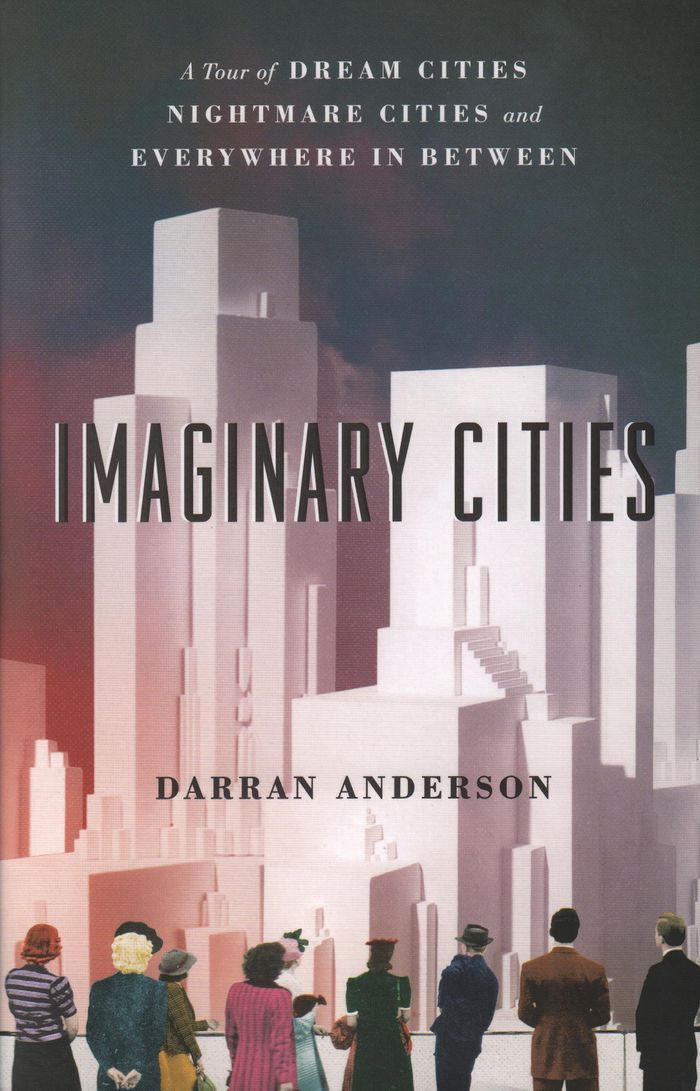
Imaginary cities: a tour of dream cities, nightmare cities and everywhere in between
Actions:
Prix:
$34.95
(disponible sur commande)
Résumé:
For as long as humans have gathered in cities, those cities have had their shining—or shadowy—counterparts. Imaginary cities, potential cities, future cities, perfect cities. It is as if the city itself, its inescapable gritty reality and elbow-to-elbow nature, demands we call into being some alternative, yearned-for better place. This book is about those cities. It’s neither a history of grand plans nor a literary exploration of the utopian impulse, but rather something different, hybrid, idiosyncratic. It’s a magpie’s book, full of characters and incidents and ideas drawn from cities real and imagined around the globe and throughout history. Thomas More’s allegorical island shares space with Soviet mega-planning; Marco Polo links up with James Joyce’s meticulously imagined Dublin; the medieval land of Cockaigne meets the hopeful future of Star Trek. With Darran Anderson as our guide, we find common themes and recurring dreams, tied to the seemingly ineluctable problems of our actual cities, of poverty and exclusion and waste and destruction. And that’s where Imaginary Cities becomes more than a mere—if ecstatically entertaining—intellectual exercise: for, as Anderson says, “If a city can be imagined into being, it can be re-imagined.” Every architect, philosopher, artist, writer, planner, or citizen who dreams up an imaginary city offers lessons for our real ones; harnessing those flights of hopeful fancy can help us improve the streets where we live.
Classification:
livres
livres
Publication:
avril 2017
avril 2017
Sujet:
Théorie de l’urbanisme
Théorie de l’urbanisme
Classification:
livres
livres

Prix:
$43.50
(disponible sur commande)
Résumé:
When Lenin asked, "Who will beat whom?" (Kto kogo?), he had no plan to wage revolutionary class war in culture. Many young Communists thought differently, however. Seeking in the name of the proletariat to wrest "cultural hegemony" from the intelligentsia, they turned culture into a battlefield in the 1920s. But was this, as Communist militants thought, a genuine class(...)
Titre:
The cultural front: power and culture in Revolutionary Russia
Actions:
Prix:
$43.50
(disponible sur commande)
Résumé:
When Lenin asked, "Who will beat whom?" (Kto kogo?), he had no plan to wage revolutionary class war in culture. Many young Communists thought differently, however. Seeking in the name of the proletariat to wrest "cultural hegemony" from the intelligentsia, they turned culture into a battlefield in the 1920s. But was this, as Communist militants thought, a genuine class struggle between "proletarian" Communists and the "bourgeois" intelligentsia? Or was it, as the intelligentsia believed, an onslaught by the ruling Communist Party on the eternal principles of cultural autonomy and intellectual freedom? In this volume, one of the foremost historians of the Soviet Union chronicles the fierce battle on "the cultural front" from the October Revolution through the Stalinist 1930s. Sheila Fitzpatrick brings together ten of her essays- two previously unpublished and all revised for inclusion here- which illuminate key arenas of the prolonged struggle over cultural values and institutional control. Individual essays deal with such major issues as the Cultural Revolution, the formation of the new Stalinist elite, and socialist realism, as well as recounting colorful episodes including the uproar over Shostakovich's opera Lady Macbeth of the Mtsensk District, arguments over sexual mores, and the new consumerism of the 1930s. Closely examining the cultural elites and orthodoxies that developed under Stalin, Fitzpatrick offers a provocative reinterpretation of the struggle's final outcome in which the intelligentsia, despite its loss of autonomy and the debasement of its culture, emerged as a partial victor.
Classification:
livres
livres
Publication:
octobre 1992
octobre 1992
Sujet:
Expositions en cours
Expositions en cours


