


13362 Résultats
Numéro de référence:
PHCON2002:0016:007
Description:
Binder documents the years 1980-1989 and consists of correspondence with Jane Crawford concerning the sale and exhibition of Gordon Matta-Clark's work and the efforts made to save the project Office Baroque (1977) in Antwerp, Belguim. Also included are reviews of exhibitions, catalogues, periodicals, photographs and color slides. Extensive documentation on the exhibition "Gordon Matta-Clark: A Retrospective" organized by the Museum of Contemporary Art, Chicago, Illinois, which opened in 1985 and travelled to fourteen venues, is included, along with more limited documentation on smaller exhibitions. Binder contains photographs, slides, textual records and transparencies.
PHCON2002:0016:007
Description:
Binder documents the years 1980-1989 and consists of correspondence with Jane Crawford concerning the sale and exhibition of Gordon Matta-Clark's work and the efforts made to save the project Office Baroque (1977) in Antwerp, Belguim. Also included are reviews of exhibitions, catalogues, periodicals, photographs and color slides. Extensive documentation on the exhibition "Gordon Matta-Clark: A Retrospective" organized by the Museum of Contemporary Art, Chicago, Illinois, which opened in 1985 and travelled to fourteen venues, is included, along with more limited documentation on smaller exhibitions. Binder contains photographs, slides, textual records and transparencies.
Personnes et institutions:
Date:
1981-1989
1981-1989
Titre:
Reviews, Announcements, Catalogues 1981-89
Actions:
PHCON2002:0016:007
Description:
Binder documents the years 1980-1989 and consists of correspondence with Jane Crawford concerning the sale and exhibition of Gordon Matta-Clark's work and the efforts made to save the project Office Baroque (1977) in Antwerp, Belguim. Also included are reviews of exhibitions, catalogues, periodicals, photographs and color slides. Extensive documentation on the exhibition "Gordon Matta-Clark: A Retrospective" organized by the Museum of Contemporary Art, Chicago, Illinois, which opened in 1985 and travelled to fourteen venues, is included, along with more limited documentation on smaller exhibitions. Binder contains photographs, slides, textual records and transparencies.
Reviews, Announcements, Catalogues 1981-89
Actions:
PHCON2002:0016:007
Description:
Binder documents the years 1980-1989 and consists of correspondence with Jane Crawford concerning the sale and exhibition of Gordon Matta-Clark's work and the efforts made to save the project Office Baroque (1977) in Antwerp, Belguim. Also included are reviews of exhibitions, catalogues, periodicals, photographs and color slides. Extensive documentation on the exhibition "Gordon Matta-Clark: A Retrospective" organized by the Museum of Contemporary Art, Chicago, Illinois, which opened in 1985 and travelled to fourteen venues, is included, along with more limited documentation on smaller exhibitions. Binder contains photographs, slides, textual records and transparencies.
Date:
1981-1989
1981-1989
Personnes et institutions:
Classification:
né numérique
Quantité:
25 digital file(s)
né numérique
Quantité:
25 digital file(s)
Numéro de référence:
AP174.S1.2006.D2.002
Description:
Contains two sets of animations relating to the MMOG and Monster iterations of the Strand Tower. One set of animations dating from 2006 appears to have been created for use at the Museum of Contemporary Art, Los Angeles, and contains instructions from Devyn Wesier on how to combine the individual .mov files into a continuous loop. The second set of animations contains higher resolution renders of the digital models created by the firm in 2014. Original directory name: "ANIMATIONS". Most common file formats: Quicktime, MPEG-4 Media File, DS_store file (MAC), Plain Text File
AP174.S1.2006.D2.002
Description:
Contains two sets of animations relating to the MMOG and Monster iterations of the Strand Tower. One set of animations dating from 2006 appears to have been created for use at the Museum of Contemporary Art, Los Angeles, and contains instructions from Devyn Wesier on how to combine the individual .mov files into a continuous loop. The second set of animations contains higher resolution renders of the digital models created by the firm in 2014. Original directory name: "ANIMATIONS". Most common file formats: Quicktime, MPEG-4 Media File, DS_store file (MAC), Plain Text File
Personnes et institutions:
Date:
2006-2014
2006-2014
Titre:
Presentation animations
Actions:
AP174.S1.2006.D2.002
Description:
Contains two sets of animations relating to the MMOG and Monster iterations of the Strand Tower. One set of animations dating from 2006 appears to have been created for use at the Museum of Contemporary Art, Los Angeles, and contains instructions from Devyn Wesier on how to combine the individual .mov files into a continuous loop. The second set of animations contains higher resolution renders of the digital models created by the firm in 2014. Original directory name: "ANIMATIONS". Most common file formats: Quicktime, MPEG-4 Media File, DS_store file (MAC), Plain Text File
Presentation animations
Actions:
AP174.S1.2006.D2.002
Description:
Contains two sets of animations relating to the MMOG and Monster iterations of the Strand Tower. One set of animations dating from 2006 appears to have been created for use at the Museum of Contemporary Art, Los Angeles, and contains instructions from Devyn Wesier on how to combine the individual .mov files into a continuous loop. The second set of animations contains higher resolution renders of the digital models created by the firm in 2014. Original directory name: "ANIMATIONS". Most common file formats: Quicktime, MPEG-4 Media File, DS_store file (MAC), Plain Text File
Classification:
né numérique
Quantité:
25 digital file(s)
né numérique
Quantité:
25 digital file(s)
Date:
2006-2014
2006-2014
Personnes et institutions:
Classification:
documents textuels
documents textuels
Numéro de référence:
AP197.S1.SS9.001
Description:
This box contains notes, drafts, articles, book reviews and lectures by Kenneth Frampton. The materials are organized alphabetically by either title or the architect's last name, from A-Z. The contents are mostly older texts by Frampton, circa 1960-1990. Subjects and architects explored in these texts include: Raimund Abraham; Tadao Ando; contemporary architecture; the modern urban form; Gustave Eiffel; English neoclassicism; Louis Kahn; John Hejduk; Herman Hertzberger; postmodern theory; Steven Holl; industrialization; Le Corbusier; El Lissitzky; modernism; Palais Royale; Carlo Scarpa; James Stirling; Team 10; technology; and Otto Wagner.
AP197.S1.SS9.001
Description:
This box contains notes, drafts, articles, book reviews and lectures by Kenneth Frampton. The materials are organized alphabetically by either title or the architect's last name, from A-Z. The contents are mostly older texts by Frampton, circa 1960-1990. Subjects and architects explored in these texts include: Raimund Abraham; Tadao Ando; contemporary architecture; the modern urban form; Gustave Eiffel; English neoclassicism; Louis Kahn; John Hejduk; Herman Hertzberger; postmodern theory; Steven Holl; industrialization; Le Corbusier; El Lissitzky; modernism; Palais Royale; Carlo Scarpa; James Stirling; Team 10; technology; and Otto Wagner.
Personnes et institutions:
Date:
circa 1964-1990
circa 1964-1990
Titre:
Kenneth Frampton texts, articles and notes (A-Z)
Actions:
AP197.S1.SS9.001
Description:
This box contains notes, drafts, articles, book reviews and lectures by Kenneth Frampton. The materials are organized alphabetically by either title or the architect's last name, from A-Z. The contents are mostly older texts by Frampton, circa 1960-1990. Subjects and architects explored in these texts include: Raimund Abraham; Tadao Ando; contemporary architecture; the modern urban form; Gustave Eiffel; English neoclassicism; Louis Kahn; John Hejduk; Herman Hertzberger; postmodern theory; Steven Holl; industrialization; Le Corbusier; El Lissitzky; modernism; Palais Royale; Carlo Scarpa; James Stirling; Team 10; technology; and Otto Wagner.
Kenneth Frampton texts, articles and notes (A-Z)
Actions:
AP197.S1.SS9.001
Description:
This box contains notes, drafts, articles, book reviews and lectures by Kenneth Frampton. The materials are organized alphabetically by either title or the architect's last name, from A-Z. The contents are mostly older texts by Frampton, circa 1960-1990. Subjects and architects explored in these texts include: Raimund Abraham; Tadao Ando; contemporary architecture; the modern urban form; Gustave Eiffel; English neoclassicism; Louis Kahn; John Hejduk; Herman Hertzberger; postmodern theory; Steven Holl; industrialization; Le Corbusier; El Lissitzky; modernism; Palais Royale; Carlo Scarpa; James Stirling; Team 10; technology; and Otto Wagner.
Classification:
documents textuels
documents textuels
Date:
circa 1964-1990
circa 1964-1990
Personnes et institutions:
Classification:
articles
articles
Actions:
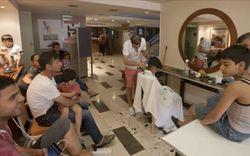
Lev Bratishenko anime une discussion sur le rôle de l’architecte dans le contexte de la migration, avec des réponses de Shumi Bose
Mot(s)-clé(s):
migration, Lev Bratishenko, Shumi Bose, Christoph Wagner, Wenke Schladitz, Antigone Kotanidis, Yasaman Esmaili, Studio Chahar, Alice Covatta
migration, Lev Bratishenko, Shumi Bose, Christoph Wagner, Wenke Schladitz, Antigone Kotanidis, Yasaman Esmaili, Studio Chahar, Alice Covatta
Publié:
17 avril 2023
17 avril 2023
Titre:
Pour celles et ceux qui arriveront
Lev Bratishenko anime une discussion sur le rôle de l’architecte dans le contexte de la migration, avec des réponses de Shumi Bose
Actions:
Pour celles et ceux qui arriveront
Lev Bratishenko anime une discussion sur le rôle de l’architecte dans le contexte de la migration, avec des réponses de Shumi Bose
Actions:
Classification:
expositions
expositions
Titre:
Espaces oscillants
Espaces oscillants
Actions:
Localisation:
Salle octogonale
Salle octogonale
Date:
25 avril 2025 au 1 février 2026
25 avril 2025 au 1 février 2026
Classification:
expositions
expositions
Date:
25 avril 2025 au
1 février 2026
25 avril 2025 au
1 février 2026
Localisation:
Salle octogonale
Salle octogonale
Niveau de description archivistique:
Projet
Projet
Numéro de référence:
AP056.S1.1988.PR09
Description:
This project series documents renovations and additions to the Art Gallery of Ontario in Toronto from 1988-1993. The office identified the project number as 18703. This project, known as Phase 3, built upon two other major expansion projects to the art gallery, Phase I and Phase II, that were completed by the architecture firm Parkin Architects Planners in the 1970s. Phase 3 was the winning entry for a limited competition won by KPMB, with Thomas Payne as partner-in-charge, in joint venture with the firm of Barton Myers Inc. This project consisted of 100,000 square feet of additions to the building including a prints and drawings study centre, a reference library and administrative offices in the southwest corner and new vaulted galleries, a tower and pyramidal arrival hall along Dundas Street. The Dundas Street elevation was transformed by these additions and brick facades were added. A new double height sculpture atrium, connected to the Victorian Grange mansion, was also added. This project also included 190,000 square feet of renovations to the existing building including changes to galleries, circulation, vaults, staff areas, the restaurant, bookstore and volunteer shop. The goal of these changes was to create a more coherent design between old and new parts of the building and to reinforce the role of art galleries in contemporary life by increasing the scale of the building and creating new spaces for interaction and participation. This project won the Canadian Architect Award of Excellence in 1988. The project is recorded through drawings, photographic materials and accompanying notes dating from 1986-1992. The drawings include site plans and surveys, sketches, plans, elevations, sections, perspectives, details, studies, axonometric drawings, furnishing and structural drawings and some presentation drawings.
AP056.S1.1988.PR09
Description:
This project series documents renovations and additions to the Art Gallery of Ontario in Toronto from 1988-1993. The office identified the project number as 18703. This project, known as Phase 3, built upon two other major expansion projects to the art gallery, Phase I and Phase II, that were completed by the architecture firm Parkin Architects Planners in the 1970s. Phase 3 was the winning entry for a limited competition won by KPMB, with Thomas Payne as partner-in-charge, in joint venture with the firm of Barton Myers Inc. This project consisted of 100,000 square feet of additions to the building including a prints and drawings study centre, a reference library and administrative offices in the southwest corner and new vaulted galleries, a tower and pyramidal arrival hall along Dundas Street. The Dundas Street elevation was transformed by these additions and brick facades were added. A new double height sculpture atrium, connected to the Victorian Grange mansion, was also added. This project also included 190,000 square feet of renovations to the existing building including changes to galleries, circulation, vaults, staff areas, the restaurant, bookstore and volunteer shop. The goal of these changes was to create a more coherent design between old and new parts of the building and to reinforce the role of art galleries in contemporary life by increasing the scale of the building and creating new spaces for interaction and participation. This project won the Canadian Architect Award of Excellence in 1988. The project is recorded through drawings, photographic materials and accompanying notes dating from 1986-1992. The drawings include site plans and surveys, sketches, plans, elevations, sections, perspectives, details, studies, axonometric drawings, furnishing and structural drawings and some presentation drawings.
Personnes et institutions:
Date:
1986-1992
1986-1992
Titre:
Art Gallery of Ontario, Phase 3, Toronto (1988-1993)
Actions:
AP056.S1.1988.PR09
Description:
This project series documents renovations and additions to the Art Gallery of Ontario in Toronto from 1988-1993. The office identified the project number as 18703. This project, known as Phase 3, built upon two other major expansion projects to the art gallery, Phase I and Phase II, that were completed by the architecture firm Parkin Architects Planners in the 1970s. Phase 3 was the winning entry for a limited competition won by KPMB, with Thomas Payne as partner-in-charge, in joint venture with the firm of Barton Myers Inc. This project consisted of 100,000 square feet of additions to the building including a prints and drawings study centre, a reference library and administrative offices in the southwest corner and new vaulted galleries, a tower and pyramidal arrival hall along Dundas Street. The Dundas Street elevation was transformed by these additions and brick facades were added. A new double height sculpture atrium, connected to the Victorian Grange mansion, was also added. This project also included 190,000 square feet of renovations to the existing building including changes to galleries, circulation, vaults, staff areas, the restaurant, bookstore and volunteer shop. The goal of these changes was to create a more coherent design between old and new parts of the building and to reinforce the role of art galleries in contemporary life by increasing the scale of the building and creating new spaces for interaction and participation. This project won the Canadian Architect Award of Excellence in 1988. The project is recorded through drawings, photographic materials and accompanying notes dating from 1986-1992. The drawings include site plans and surveys, sketches, plans, elevations, sections, perspectives, details, studies, axonometric drawings, furnishing and structural drawings and some presentation drawings.
Art Gallery of Ontario, Phase 3, Toronto (1988-1993)
Actions:
AP056.S1.1988.PR09
Description:
This project series documents renovations and additions to the Art Gallery of Ontario in Toronto from 1988-1993. The office identified the project number as 18703. This project, known as Phase 3, built upon two other major expansion projects to the art gallery, Phase I and Phase II, that were completed by the architecture firm Parkin Architects Planners in the 1970s. Phase 3 was the winning entry for a limited competition won by KPMB, with Thomas Payne as partner-in-charge, in joint venture with the firm of Barton Myers Inc. This project consisted of 100,000 square feet of additions to the building including a prints and drawings study centre, a reference library and administrative offices in the southwest corner and new vaulted galleries, a tower and pyramidal arrival hall along Dundas Street. The Dundas Street elevation was transformed by these additions and brick facades were added. A new double height sculpture atrium, connected to the Victorian Grange mansion, was also added. This project also included 190,000 square feet of renovations to the existing building including changes to galleries, circulation, vaults, staff areas, the restaurant, bookstore and volunteer shop. The goal of these changes was to create a more coherent design between old and new parts of the building and to reinforce the role of art galleries in contemporary life by increasing the scale of the building and creating new spaces for interaction and participation. This project won the Canadian Architect Award of Excellence in 1988. The project is recorded through drawings, photographic materials and accompanying notes dating from 1986-1992. The drawings include site plans and surveys, sketches, plans, elevations, sections, perspectives, details, studies, axonometric drawings, furnishing and structural drawings and some presentation drawings.
Niveau de description archivistique:
Project
Project
Date:
1986-1992
1986-1992
Personnes et institutions:
Niveau de description archivistique:
Sous-série
Sous-série
Numéro de référence:
AP178.S1.2002.PR05.SS1
Description:
This project subseries documents the Parque de Vidago Complexo Termal e Hotel Palace in Vidago, Portugal. While the records were held in the office’s archives this project was assigned the number 49/00. The office assigned the date 2002 to this project. The project consisted of major renovations to update and modernize the Vidago Palace Hotel, originally opened in 1910, and the addition of a new thermal spa. Architects José Pedro Lopes Vieira and Diogo Rosa Lã were responsible for the interior decoration of the Palace Hotel, while Siza designed the Spa. The full or partial demolition of some parts of the hotel and nearby buildings was necessary to maintain the original character of the resort. In contrast to the historic hotel, the new spa was contemporary and minimalist with marble interiors. It included pools, Turkish baths, treatment and relaxation rooms, a gym, bars and meditation area. This project subseries is documented through drawings, photographic materials, study models and textual records dating from 2002-2012. These materials primarily document the spa but documentation for the surrounding site, Palace Hotel, Fonte Salus (spring), gatehouse and Serralves exhibition space is also included. The drawings are largely reprographic copies of printed CAD drawings and include sketches, studies, plans, details, sections, elevations, demolition drawings and mechanical, electrical and structural drawings. The textual records include correspondence, meeting minutes, studies, building programs, furniture and spa equipment documentation, budgets and contracts. A large amount of documentation on various electrical, structural and mechanical systems is also included. The photographic materials are mostly printed digital photos showing buildings across the site, pre and post construction work and reference images. There are also a number of photos, postcards and brochures showing historical images of the hotel.
AP178.S1.2002.PR05.SS1
Description:
This project subseries documents the Parque de Vidago Complexo Termal e Hotel Palace in Vidago, Portugal. While the records were held in the office’s archives this project was assigned the number 49/00. The office assigned the date 2002 to this project. The project consisted of major renovations to update and modernize the Vidago Palace Hotel, originally opened in 1910, and the addition of a new thermal spa. Architects José Pedro Lopes Vieira and Diogo Rosa Lã were responsible for the interior decoration of the Palace Hotel, while Siza designed the Spa. The full or partial demolition of some parts of the hotel and nearby buildings was necessary to maintain the original character of the resort. In contrast to the historic hotel, the new spa was contemporary and minimalist with marble interiors. It included pools, Turkish baths, treatment and relaxation rooms, a gym, bars and meditation area. This project subseries is documented through drawings, photographic materials, study models and textual records dating from 2002-2012. These materials primarily document the spa but documentation for the surrounding site, Palace Hotel, Fonte Salus (spring), gatehouse and Serralves exhibition space is also included. The drawings are largely reprographic copies of printed CAD drawings and include sketches, studies, plans, details, sections, elevations, demolition drawings and mechanical, electrical and structural drawings. The textual records include correspondence, meeting minutes, studies, building programs, furniture and spa equipment documentation, budgets and contracts. A large amount of documentation on various electrical, structural and mechanical systems is also included. The photographic materials are mostly printed digital photos showing buildings across the site, pre and post construction work and reference images. There are also a number of photos, postcards and brochures showing historical images of the hotel.
Personnes et institutions:
Date:
2002-2012
2002-2012
Titre:
Parque de Vidago, Complexo Termal e Hotel Palace [Vidago Palace Hotel and Spa], Vidago, Portugal (2002)
Actions:
AP178.S1.2002.PR05.SS1
Description:
This project subseries documents the Parque de Vidago Complexo Termal e Hotel Palace in Vidago, Portugal. While the records were held in the office’s archives this project was assigned the number 49/00. The office assigned the date 2002 to this project. The project consisted of major renovations to update and modernize the Vidago Palace Hotel, originally opened in 1910, and the addition of a new thermal spa. Architects José Pedro Lopes Vieira and Diogo Rosa Lã were responsible for the interior decoration of the Palace Hotel, while Siza designed the Spa. The full or partial demolition of some parts of the hotel and nearby buildings was necessary to maintain the original character of the resort. In contrast to the historic hotel, the new spa was contemporary and minimalist with marble interiors. It included pools, Turkish baths, treatment and relaxation rooms, a gym, bars and meditation area. This project subseries is documented through drawings, photographic materials, study models and textual records dating from 2002-2012. These materials primarily document the spa but documentation for the surrounding site, Palace Hotel, Fonte Salus (spring), gatehouse and Serralves exhibition space is also included. The drawings are largely reprographic copies of printed CAD drawings and include sketches, studies, plans, details, sections, elevations, demolition drawings and mechanical, electrical and structural drawings. The textual records include correspondence, meeting minutes, studies, building programs, furniture and spa equipment documentation, budgets and contracts. A large amount of documentation on various electrical, structural and mechanical systems is also included. The photographic materials are mostly printed digital photos showing buildings across the site, pre and post construction work and reference images. There are also a number of photos, postcards and brochures showing historical images of the hotel.
Parque de Vidago, Complexo Termal e Hotel Palace [Vidago Palace Hotel and Spa], Vidago, Portugal (2002)
Actions:
AP178.S1.2002.PR05.SS1
Description:
This project subseries documents the Parque de Vidago Complexo Termal e Hotel Palace in Vidago, Portugal. While the records were held in the office’s archives this project was assigned the number 49/00. The office assigned the date 2002 to this project. The project consisted of major renovations to update and modernize the Vidago Palace Hotel, originally opened in 1910, and the addition of a new thermal spa. Architects José Pedro Lopes Vieira and Diogo Rosa Lã were responsible for the interior decoration of the Palace Hotel, while Siza designed the Spa. The full or partial demolition of some parts of the hotel and nearby buildings was necessary to maintain the original character of the resort. In contrast to the historic hotel, the new spa was contemporary and minimalist with marble interiors. It included pools, Turkish baths, treatment and relaxation rooms, a gym, bars and meditation area. This project subseries is documented through drawings, photographic materials, study models and textual records dating from 2002-2012. These materials primarily document the spa but documentation for the surrounding site, Palace Hotel, Fonte Salus (spring), gatehouse and Serralves exhibition space is also included. The drawings are largely reprographic copies of printed CAD drawings and include sketches, studies, plans, details, sections, elevations, demolition drawings and mechanical, electrical and structural drawings. The textual records include correspondence, meeting minutes, studies, building programs, furniture and spa equipment documentation, budgets and contracts. A large amount of documentation on various electrical, structural and mechanical systems is also included. The photographic materials are mostly printed digital photos showing buildings across the site, pre and post construction work and reference images. There are also a number of photos, postcards and brochures showing historical images of the hotel.
Niveau de description archivistique:
Project
Project
Date:
2002-2012
2002-2012
Personnes et institutions:
Niveau de description archivistique:
Sous-série
Sous-série
Titre:
Miscellanea
Miscellanea
Numéro de référence:
CI001.S1.D4
Description:
The three portfolios of "Croquis", originally attributed to Hubert Rohault de Fleury, but probably also including work by Charles, are particularly informative of the range of artistic and architectural interests of these architects. While some of the drawings in these portfolios may be travel sketches or based on travel sketches (Charles is known to have visited some of the locations depicted (1)), the majority are probably copied or adapted from books and prints. In some cases, these sources have been identified. The stylistic range of the drawings is eclectic; in addition to the expected Classical material, Gothic, Romanesque, Islamic, Exotic Revival (namely Etruscan and Egyptian), Renaissance and Baroque periods and styles as well as contemporary 19th century architecture are all represented. The subject matter is equally varied. DR1974:0002:032:001-066, two portfolios, includes arabesque ornament (some from Palazzo del Te and Palazzo Ducal in Mantua (2)), Islamic ornament motifs, tile patterns, Sicilian architectural subjects - mainly church interiors, and stonework and woodwork from Romanesque and Gothic structures . DR1974:0002:031:001-055, three portfolios, contains drawings of classical figures, Christian imagery and architectural sculpture from antique, medieval [?] and 19th century sources, sculpture from the 16th century sepulchral monument of Maximillian I, Italian Classical structures and contemporary classically-inspired subject matter including a number of Parisian fountains and monuments, and several English townhouses. DR1974:0002:030:001-065, four portfolios, includes drawings of Classical, Gothic and Exotic Revival buildings and interiors as well as a number of drawings of non-architectural subject matter including military subjects - fortification, armaments, soldiers, and revolutionary battle scenes - and topographic views. A folder of Italian views and buildings in this portfolio may have been intended for publication. The designs for interiors, Empire furniture, garden structures and several of the buildings are probably original designs by Hubert. (1) A description of Charles' travels based on his sketchbooks held by the Académie d'architecture is found in Académie d'architecture, 'Catalogue des collection' (Paris: Académie d'architecture, 1988) 35-36 and 230-241. (2) These drawings were copied from Wilhelm Zahn, 'Gemalte Ornamente von Julio Romano' (s.l., s.n, ca. 1833)., The three portfolios of "Croquis" were originally attributed to Hubert Rohault de Fleury, but probably also including work by Charles. The source and purpose of many of these drawings is unclear; some may be record drawings and travel sketches or based on travel sketches, but the majority are probably copied or adapted from books and prints. The stylistic range and subject matter of the drawings is broad and eclectic: arabesques, Islamic ornament, stonework and woodwork from Romanesque and Gothic structures (DR1974:0002:032:001-066); classical and Christian imagery, architectural sculpture from antique, medieval [?] and 19th century sources, Italian Classical structures, nineteenth century classically-inspired subject matter (DR1974:0002:031:001-055); non-architectural subject matter including military subjects, topographic views, and Italian views and buildings, possibly intended for publication (DR1974:0002:030:001-065). Portfolio, DR1974:0002:030:001-065 also includes interiors, Empire furniture, garden structures and Classical, Gothic and Exotic Revival buildings, some of which are probably original designs by Hubert Rohault de Fleury. Bibliography: - Bergdoll, Barry. "Hubert Rohault de Fleury: Cinquième Partie: Équisses et Dessins d'Ornament." 'CCA Research Report.' n.d. - Académie d'architecture (France). 'Catalogue des collections' (Paris: L'Academie, 1988), 35-37 and 230-241.
CI001.S1.D4
Description:
The three portfolios of "Croquis", originally attributed to Hubert Rohault de Fleury, but probably also including work by Charles, are particularly informative of the range of artistic and architectural interests of these architects. While some of the drawings in these portfolios may be travel sketches or based on travel sketches (Charles is known to have visited some of the locations depicted (1)), the majority are probably copied or adapted from books and prints. In some cases, these sources have been identified. The stylistic range of the drawings is eclectic; in addition to the expected Classical material, Gothic, Romanesque, Islamic, Exotic Revival (namely Etruscan and Egyptian), Renaissance and Baroque periods and styles as well as contemporary 19th century architecture are all represented. The subject matter is equally varied. DR1974:0002:032:001-066, two portfolios, includes arabesque ornament (some from Palazzo del Te and Palazzo Ducal in Mantua (2)), Islamic ornament motifs, tile patterns, Sicilian architectural subjects - mainly church interiors, and stonework and woodwork from Romanesque and Gothic structures . DR1974:0002:031:001-055, three portfolios, contains drawings of classical figures, Christian imagery and architectural sculpture from antique, medieval [?] and 19th century sources, sculpture from the 16th century sepulchral monument of Maximillian I, Italian Classical structures and contemporary classically-inspired subject matter including a number of Parisian fountains and monuments, and several English townhouses. DR1974:0002:030:001-065, four portfolios, includes drawings of Classical, Gothic and Exotic Revival buildings and interiors as well as a number of drawings of non-architectural subject matter including military subjects - fortification, armaments, soldiers, and revolutionary battle scenes - and topographic views. A folder of Italian views and buildings in this portfolio may have been intended for publication. The designs for interiors, Empire furniture, garden structures and several of the buildings are probably original designs by Hubert. (1) A description of Charles' travels based on his sketchbooks held by the Académie d'architecture is found in Académie d'architecture, 'Catalogue des collection' (Paris: Académie d'architecture, 1988) 35-36 and 230-241. (2) These drawings were copied from Wilhelm Zahn, 'Gemalte Ornamente von Julio Romano' (s.l., s.n, ca. 1833)., The three portfolios of "Croquis" were originally attributed to Hubert Rohault de Fleury, but probably also including work by Charles. The source and purpose of many of these drawings is unclear; some may be record drawings and travel sketches or based on travel sketches, but the majority are probably copied or adapted from books and prints. The stylistic range and subject matter of the drawings is broad and eclectic: arabesques, Islamic ornament, stonework and woodwork from Romanesque and Gothic structures (DR1974:0002:032:001-066); classical and Christian imagery, architectural sculpture from antique, medieval [?] and 19th century sources, Italian Classical structures, nineteenth century classically-inspired subject matter (DR1974:0002:031:001-055); non-architectural subject matter including military subjects, topographic views, and Italian views and buildings, possibly intended for publication (DR1974:0002:030:001-065). Portfolio, DR1974:0002:030:001-065 also includes interiors, Empire furniture, garden structures and Classical, Gothic and Exotic Revival buildings, some of which are probably original designs by Hubert Rohault de Fleury. Bibliography: - Bergdoll, Barry. "Hubert Rohault de Fleury: Cinquième Partie: Équisses et Dessins d'Ornament." 'CCA Research Report.' n.d. - Académie d'architecture (France). 'Catalogue des collections' (Paris: L'Academie, 1988), 35-37 and 230-241.
Personnes et institutions:
Date:
[1800-1868]
[1800-1868]
Titre:
Miscellanea
CI001.S1.D4
Description:
The three portfolios of "Croquis", originally attributed to Hubert Rohault de Fleury, but probably also including work by Charles, are particularly informative of the range of artistic and architectural interests of these architects. While some of the drawings in these portfolios may be travel sketches or based on travel sketches (Charles is known to have visited some of the locations depicted (1)), the majority are probably copied or adapted from books and prints. In some cases, these sources have been identified. The stylistic range of the drawings is eclectic; in addition to the expected Classical material, Gothic, Romanesque, Islamic, Exotic Revival (namely Etruscan and Egyptian), Renaissance and Baroque periods and styles as well as contemporary 19th century architecture are all represented. The subject matter is equally varied. DR1974:0002:032:001-066, two portfolios, includes arabesque ornament (some from Palazzo del Te and Palazzo Ducal in Mantua (2)), Islamic ornament motifs, tile patterns, Sicilian architectural subjects - mainly church interiors, and stonework and woodwork from Romanesque and Gothic structures . DR1974:0002:031:001-055, three portfolios, contains drawings of classical figures, Christian imagery and architectural sculpture from antique, medieval [?] and 19th century sources, sculpture from the 16th century sepulchral monument of Maximillian I, Italian Classical structures and contemporary classically-inspired subject matter including a number of Parisian fountains and monuments, and several English townhouses. DR1974:0002:030:001-065, four portfolios, includes drawings of Classical, Gothic and Exotic Revival buildings and interiors as well as a number of drawings of non-architectural subject matter including military subjects - fortification, armaments, soldiers, and revolutionary battle scenes - and topographic views. A folder of Italian views and buildings in this portfolio may have been intended for publication. The designs for interiors, Empire furniture, garden structures and several of the buildings are probably original designs by Hubert. (1) A description of Charles' travels based on his sketchbooks held by the Académie d'architecture is found in Académie d'architecture, 'Catalogue des collection' (Paris: Académie d'architecture, 1988) 35-36 and 230-241. (2) These drawings were copied from Wilhelm Zahn, 'Gemalte Ornamente von Julio Romano' (s.l., s.n, ca. 1833)., The three portfolios of "Croquis" were originally attributed to Hubert Rohault de Fleury, but probably also including work by Charles. The source and purpose of many of these drawings is unclear; some may be record drawings and travel sketches or based on travel sketches, but the majority are probably copied or adapted from books and prints. The stylistic range and subject matter of the drawings is broad and eclectic: arabesques, Islamic ornament, stonework and woodwork from Romanesque and Gothic structures (DR1974:0002:032:001-066); classical and Christian imagery, architectural sculpture from antique, medieval [?] and 19th century sources, Italian Classical structures, nineteenth century classically-inspired subject matter (DR1974:0002:031:001-055); non-architectural subject matter including military subjects, topographic views, and Italian views and buildings, possibly intended for publication (DR1974:0002:030:001-065). Portfolio, DR1974:0002:030:001-065 also includes interiors, Empire furniture, garden structures and Classical, Gothic and Exotic Revival buildings, some of which are probably original designs by Hubert Rohault de Fleury. Bibliography: - Bergdoll, Barry. "Hubert Rohault de Fleury: Cinquième Partie: Équisses et Dessins d'Ornament." 'CCA Research Report.' n.d. - Académie d'architecture (France). 'Catalogue des collections' (Paris: L'Academie, 1988), 35-37 and 230-241.
Miscellanea
CI001.S1.D4
Description:
The three portfolios of "Croquis", originally attributed to Hubert Rohault de Fleury, but probably also including work by Charles, are particularly informative of the range of artistic and architectural interests of these architects. While some of the drawings in these portfolios may be travel sketches or based on travel sketches (Charles is known to have visited some of the locations depicted (1)), the majority are probably copied or adapted from books and prints. In some cases, these sources have been identified. The stylistic range of the drawings is eclectic; in addition to the expected Classical material, Gothic, Romanesque, Islamic, Exotic Revival (namely Etruscan and Egyptian), Renaissance and Baroque periods and styles as well as contemporary 19th century architecture are all represented. The subject matter is equally varied. DR1974:0002:032:001-066, two portfolios, includes arabesque ornament (some from Palazzo del Te and Palazzo Ducal in Mantua (2)), Islamic ornament motifs, tile patterns, Sicilian architectural subjects - mainly church interiors, and stonework and woodwork from Romanesque and Gothic structures . DR1974:0002:031:001-055, three portfolios, contains drawings of classical figures, Christian imagery and architectural sculpture from antique, medieval [?] and 19th century sources, sculpture from the 16th century sepulchral monument of Maximillian I, Italian Classical structures and contemporary classically-inspired subject matter including a number of Parisian fountains and monuments, and several English townhouses. DR1974:0002:030:001-065, four portfolios, includes drawings of Classical, Gothic and Exotic Revival buildings and interiors as well as a number of drawings of non-architectural subject matter including military subjects - fortification, armaments, soldiers, and revolutionary battle scenes - and topographic views. A folder of Italian views and buildings in this portfolio may have been intended for publication. The designs for interiors, Empire furniture, garden structures and several of the buildings are probably original designs by Hubert. (1) A description of Charles' travels based on his sketchbooks held by the Académie d'architecture is found in Académie d'architecture, 'Catalogue des collection' (Paris: Académie d'architecture, 1988) 35-36 and 230-241. (2) These drawings were copied from Wilhelm Zahn, 'Gemalte Ornamente von Julio Romano' (s.l., s.n, ca. 1833)., The three portfolios of "Croquis" were originally attributed to Hubert Rohault de Fleury, but probably also including work by Charles. The source and purpose of many of these drawings is unclear; some may be record drawings and travel sketches or based on travel sketches, but the majority are probably copied or adapted from books and prints. The stylistic range and subject matter of the drawings is broad and eclectic: arabesques, Islamic ornament, stonework and woodwork from Romanesque and Gothic structures (DR1974:0002:032:001-066); classical and Christian imagery, architectural sculpture from antique, medieval [?] and 19th century sources, Italian Classical structures, nineteenth century classically-inspired subject matter (DR1974:0002:031:001-055); non-architectural subject matter including military subjects, topographic views, and Italian views and buildings, possibly intended for publication (DR1974:0002:030:001-065). Portfolio, DR1974:0002:030:001-065 also includes interiors, Empire furniture, garden structures and Classical, Gothic and Exotic Revival buildings, some of which are probably original designs by Hubert Rohault de Fleury. Bibliography: - Bergdoll, Barry. "Hubert Rohault de Fleury: Cinquième Partie: Équisses et Dessins d'Ornament." 'CCA Research Report.' n.d. - Académie d'architecture (France). 'Catalogue des collections' (Paris: L'Academie, 1988), 35-37 and 230-241.
Niveau de description archivistique:
File 4
File 4
Date:
[1800-1868]
[1800-1868]
Personnes et institutions:
Classification:
archives
Niveau de description archivistique:
Fonds
archives
Niveau de description archivistique:
Fonds
Numéro de référence:
AP186
Résumé:
The Cloud 9 Villa Nurbs project records,1990s-2013, document the firm’s Villa Nurbs project, a private residence in Empuriabrava (Costa Brava), Spain. The archive consists of the firm’s total born-digital archive for the project, as well as physical materials in a number of formats, including drawings, textual records, slides, presentation materials, photographs, paintings, protoypes, material samples, and models.
AP186
Résumé:
The Cloud 9 Villa Nurbs project records,1990s-2013, document the firm’s Villa Nurbs project, a private residence in Empuriabrava (Costa Brava), Spain. The archive consists of the firm’s total born-digital archive for the project, as well as physical materials in a number of formats, including drawings, textual records, slides, presentation materials, photographs, paintings, protoypes, material samples, and models.
Personnes et institutions:
Date:
1990s-2013
1990s-2013
Titre:
Documents d’archives de Cloud 9 pour le projet Villa Nurbs
Actions:
AP186
Résumé:
The Cloud 9 Villa Nurbs project records,1990s-2013, document the firm’s Villa Nurbs project, a private residence in Empuriabrava (Costa Brava), Spain. The archive consists of the firm’s total born-digital archive for the project, as well as physical materials in a number of formats, including drawings, textual records, slides, presentation materials, photographs, paintings, protoypes, material samples, and models.
Documents d’archives de Cloud 9 pour le projet Villa Nurbs
Actions:
AP186
Résumé:
The Cloud 9 Villa Nurbs project records,1990s-2013, document the firm’s Villa Nurbs project, a private residence in Empuriabrava (Costa Brava), Spain. The archive consists of the firm’s total born-digital archive for the project, as well as physical materials in a number of formats, including drawings, textual records, slides, presentation materials, photographs, paintings, protoypes, material samples, and models.
Classification:
archives
Niveau de description archivistique:
Fonds
archives
Niveau de description archivistique:
Fonds
Date:
1990s-2013
1990s-2013
Personnes et institutions:
Classification:
événements
événements
Actions:
Description:
Quand Gordon Matta-Clark se procure les titres de propriété et la documentation d’une douzaine de petites parcelles non occupées à New York entre 1974 et 1977 (qui, en 1992, ont fait l’objet d’une exposition intitulée Reality Properties: Fake Estates), il n’a pas d’intention précise – autre que sa conviction suivant laquelle « l’existence de lots vacants et sous-utilisés(...)
Quand Gordon Matta-Clark se procure les titres de propriété et la documentation d’une douzaine de petites parcelles non occupées à New York entre 1974 et 1977 (qui, en 1992, ont fait l’objet d’une exposition intitulée Reality Properties: Fake Estates), il n’a pas d’intention précise – autre que sa conviction suivant laquelle « l’existence de lots vacants et sous-utilisés(...)
Localisation:
Théâtre Paul-Desmarais
Théâtre Paul-Desmarais
Date:
22 septembre 2016, 18h
22 septembre 2016, 18h
Titre:
Nicholas de Monchaux : Local Code
Actions:
Description:
Quand Gordon Matta-Clark se procure les titres de propriété et la documentation d’une douzaine de petites parcelles non occupées à New York entre 1974 et 1977 (qui, en 1992, ont fait l’objet d’une exposition intitulée Reality Properties: Fake Estates), il n’a pas d’intention précise – autre que sa conviction suivant laquelle « l’existence de lots vacants et sous-utilisés(...)
Nicholas de Monchaux : Local Code
Actions:
Description:
Quand Gordon Matta-Clark se procure les titres de propriété et la documentation d’une douzaine de petites parcelles non occupées à New York entre 1974 et 1977 (qui, en 1992, ont fait l’objet d’une exposition intitulée Reality Properties: Fake Estates), il n’a pas d’intention précise – autre que sa conviction suivant laquelle « l’existence de lots vacants et sous-utilisés(...)
Classification:
événements
événements
Date:
22 septembre 2016
18h
22 septembre 2016
18h
Localisation:
Théâtre Paul-Desmarais
Théâtre Paul-Desmarais


