


16871 Résultats
Classification:
archives
Niveau de description archivistique:
Collection
archives
Niveau de description archivistique:
Collection
Titre:
Collection Rohault de Fleury
Collection Rohault de Fleury
Numéro de référence:
CI001
Résumé:
The Rohault de Fleury collection documents the work of three generations of French architects, Hubert, his son Charles, and his grandson Georges, spanning from the early 18th to late 19th century. The collection is extremely varied encompassing both private and government commissions and including domestic work, institutional buildings, commercial buildings, urban planning, and student work from both the École des beaux-arts and the École polytechnique, and archaeological studies. Stylistically, the projects incorporate the two dominant contemporary directions in French architecture - functionalism as advocated by Jean-Nicolas-Louis Durand and the classicism of the École des beaux-arts.
CI001
Résumé:
The Rohault de Fleury collection documents the work of three generations of French architects, Hubert, his son Charles, and his grandson Georges, spanning from the early 18th to late 19th century. The collection is extremely varied encompassing both private and government commissions and including domestic work, institutional buildings, commercial buildings, urban planning, and student work from both the École des beaux-arts and the École polytechnique, and archaeological studies. Stylistically, the projects incorporate the two dominant contemporary directions in French architecture - functionalism as advocated by Jean-Nicolas-Louis Durand and the classicism of the École des beaux-arts.
Personnes et institutions:
Date:
1717-[1884]
1717-[1884]
Titre:
Collection Rohault de Fleury
CI001
Résumé:
The Rohault de Fleury collection documents the work of three generations of French architects, Hubert, his son Charles, and his grandson Georges, spanning from the early 18th to late 19th century. The collection is extremely varied encompassing both private and government commissions and including domestic work, institutional buildings, commercial buildings, urban planning, and student work from both the École des beaux-arts and the École polytechnique, and archaeological studies. Stylistically, the projects incorporate the two dominant contemporary directions in French architecture - functionalism as advocated by Jean-Nicolas-Louis Durand and the classicism of the École des beaux-arts.
Collection Rohault de Fleury
CI001
Résumé:
The Rohault de Fleury collection documents the work of three generations of French architects, Hubert, his son Charles, and his grandson Georges, spanning from the early 18th to late 19th century. The collection is extremely varied encompassing both private and government commissions and including domestic work, institutional buildings, commercial buildings, urban planning, and student work from both the École des beaux-arts and the École polytechnique, and archaeological studies. Stylistically, the projects incorporate the two dominant contemporary directions in French architecture - functionalism as advocated by Jean-Nicolas-Louis Durand and the classicism of the École des beaux-arts.
Classification:
archives
Niveau de description archivistique:
Collection 1
archives
Niveau de description archivistique:
Collection 1
Date:
1717-[1884]
1717-[1884]
Personnes et institutions:
Classification:
archives
Niveau de description archivistique:
Fonds
archives
Niveau de description archivistique:
Fonds
Titre:
Fonds Peter Caspari
Fonds Peter Caspari
Numéro de référence:
AP123
Résumé:
The Peter Caspari fonds documents the education, personal and military activities of architect Peter Caspari from student work in Berlin to his immigration to England, and participation in WWII. The majority of the documents in the fonds consist of drawings relating to student building design projects, and textual records relating to architecture course notes, training for the Pioneer Corps, and professional registration as an architect.
AP123
Résumé:
The Peter Caspari fonds documents the education, personal and military activities of architect Peter Caspari from student work in Berlin to his immigration to England, and participation in WWII. The majority of the documents in the fonds consist of drawings relating to student building design projects, and textual records relating to architecture course notes, training for the Pioneer Corps, and professional registration as an architect.
Personnes et institutions:
Date:
1928-1941
1928-1941
Titre:
Fonds Peter Caspari
Actions:
AP123
Résumé:
The Peter Caspari fonds documents the education, personal and military activities of architect Peter Caspari from student work in Berlin to his immigration to England, and participation in WWII. The majority of the documents in the fonds consist of drawings relating to student building design projects, and textual records relating to architecture course notes, training for the Pioneer Corps, and professional registration as an architect.
Fonds Peter Caspari
Actions:
AP123
Résumé:
The Peter Caspari fonds documents the education, personal and military activities of architect Peter Caspari from student work in Berlin to his immigration to England, and participation in WWII. The majority of the documents in the fonds consist of drawings relating to student building design projects, and textual records relating to architecture course notes, training for the Pioneer Corps, and professional registration as an architect.
Classification:
archives
Niveau de description archivistique:
Fonds
archives
Niveau de description archivistique:
Fonds
Date:
1928-1941
1928-1941
Personnes et institutions:
Classification:
expositions
expositions
Titre:
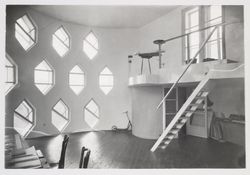
Sur les traces de… fenêtres
Sur les traces de… fenêtres
Actions:
Description:
Une fenêtre peut être un vide, une ouverture ou devenir une surface de verre. Placées aux frontières de l’intérieur et de l’extérieur, les fenêtres permettent à la lumière et à l’air d’entrer, et cadrent les vues. L’idée de fenêtre, combinée aux avancées dans les domaines du verre et des matériaux de construction, devient centrale dans l’expérimentation architecturale au(...)
Une fenêtre peut être un vide, une ouverture ou devenir une surface de verre. Placées aux frontières de l’intérieur et de l’extérieur, les fenêtres permettent à la lumière et à l’air d’entrer, et cadrent les vues. L’idée de fenêtre, combinée aux avancées dans les domaines du verre et des matériaux de construction, devient centrale dans l’expérimentation architecturale au(...)
Localisation:
Vitrines
Vitrines
Date:
17 juin 2010 au 27 septembre 2010
17 juin 2010 au 27 septembre 2010
Titre:
Sur les traces de… fenêtres
Actions:
Description:
Une fenêtre peut être un vide, une ouverture ou devenir une surface de verre. Placées aux frontières de l’intérieur et de l’extérieur, les fenêtres permettent à la lumière et à l’air d’entrer, et cadrent les vues. L’idée de fenêtre, combinée aux avancées dans les domaines du verre et des matériaux de construction, devient centrale dans l’expérimentation architecturale au(...)
Sur les traces de… fenêtres
Actions:
Description:
Une fenêtre peut être un vide, une ouverture ou devenir une surface de verre. Placées aux frontières de l’intérieur et de l’extérieur, les fenêtres permettent à la lumière et à l’air d’entrer, et cadrent les vues. L’idée de fenêtre, combinée aux avancées dans les domaines du verre et des matériaux de construction, devient centrale dans l’expérimentation architecturale au(...)
Classification:
expositions
expositions
Date:
17 juin 2010 au
27 septembre 2010
17 juin 2010 au
27 septembre 2010
Localisation:
Vitrines
Vitrines
Classification:
recherche
recherche
Actions:
Description:
Thème : Le phénomène de changements de paradigmes en architecture depuis l’Antiquité : Brigitte Desrochers, Musée des Beaux-Arts du Canada, Ottawa, Canada Sujet : Au-delà du style. Naissance du classicisme structurel dans les ruines de Pompei Joseph Disponzio, Graduate School of Design, Harvard University, Cambridge, États-Unis Sujet : Jean-Marie Morel and the Invention(...)
Thème : Le phénomène de changements de paradigmes en architecture depuis l’Antiquité : Brigitte Desrochers, Musée des Beaux-Arts du Canada, Ottawa, Canada Sujet : Au-delà du style. Naissance du classicisme structurel dans les ruines de Pompei Joseph Disponzio, Graduate School of Design, Harvard University, Cambridge, États-Unis Sujet : Jean-Marie Morel and the Invention(...)
Date:
septembre 2001 au août 2002
septembre 2001 au août 2002
Titre:
Chercheurs en résidence 2001-2002
Actions:
Description:
Thème : Le phénomène de changements de paradigmes en architecture depuis l’Antiquité : Brigitte Desrochers, Musée des Beaux-Arts du Canada, Ottawa, Canada Sujet : Au-delà du style. Naissance du classicisme structurel dans les ruines de Pompei Joseph Disponzio, Graduate School of Design, Harvard University, Cambridge, États-Unis Sujet : Jean-Marie Morel and the Invention(...)
Chercheurs en résidence 2001-2002
Actions:
Description:
Thème : Le phénomène de changements de paradigmes en architecture depuis l’Antiquité : Brigitte Desrochers, Musée des Beaux-Arts du Canada, Ottawa, Canada Sujet : Au-delà du style. Naissance du classicisme structurel dans les ruines de Pompei Joseph Disponzio, Graduate School of Design, Harvard University, Cambridge, États-Unis Sujet : Jean-Marie Morel and the Invention(...)
Classification:
recherche
recherche
Date:
septembre 2001 au
août 2002
septembre 2001 au
août 2002
Classification:
recherche
recherche
Titre:
Chercheurs en résidence 2009
Chercheurs en résidence 2009
Actions:
Description:
Esra Akcan, University of Illinois, Chicago, États-Unis Sujet : Modernity in Translation: Geopolitical Interactions in Residential Culture Christopher Drew Armstrong, University of Pittsburgh, Pittsburgh, États-Unis Sujet : Julien-David LeRoy and the Making of Architectural History Christina Cogdell, College of Santa Fe, Gainesville, États-Unis Sujet : Emergent Genetic(...)
Esra Akcan, University of Illinois, Chicago, États-Unis Sujet : Modernity in Translation: Geopolitical Interactions in Residential Culture Christopher Drew Armstrong, University of Pittsburgh, Pittsburgh, États-Unis Sujet : Julien-David LeRoy and the Making of Architectural History Christina Cogdell, College of Santa Fe, Gainesville, États-Unis Sujet : Emergent Genetic(...)
Date:
23 mars 2009 au 30 octobre 2009
23 mars 2009 au 30 octobre 2009
Titre:
Chercheurs en résidence 2009
Actions:
Description:
Esra Akcan, University of Illinois, Chicago, États-Unis Sujet : Modernity in Translation: Geopolitical Interactions in Residential Culture Christopher Drew Armstrong, University of Pittsburgh, Pittsburgh, États-Unis Sujet : Julien-David LeRoy and the Making of Architectural History Christina Cogdell, College of Santa Fe, Gainesville, États-Unis Sujet : Emergent Genetic(...)
Chercheurs en résidence 2009
Actions:
Description:
Esra Akcan, University of Illinois, Chicago, États-Unis Sujet : Modernity in Translation: Geopolitical Interactions in Residential Culture Christopher Drew Armstrong, University of Pittsburgh, Pittsburgh, États-Unis Sujet : Julien-David LeRoy and the Making of Architectural History Christina Cogdell, College of Santa Fe, Gainesville, États-Unis Sujet : Emergent Genetic(...)
Classification:
recherche
recherche
Date:
23 mars 2009 au
30 octobre 2009
23 mars 2009 au
30 octobre 2009
Classification:
archives
Niveau de description archivistique:
Fonds
archives
Niveau de description archivistique:
Fonds
Titre:
Fonds John Bird
Fonds John Bird
Numéro de référence:
AP108
Résumé:
The John Bird fonds documents the professional practice of the Westmount-based architect, and includes drawings and photographs of 24 architectural projects carried out in and around Montréal, Québec between 1954 and 1992. The fonds also contains a number of published articles that document John Bird's professional activities. Key projects that are represented include the Canadian Technical Tape Building, St. Laurent (1955-1963), Saint Gabriel's Church, Montréal (1959-1960), and Saint John Brebeuf Church, Lasalle (1962-1966). The fonds also includes numerous projects for Toronto-Dominion Bank buildings (1959-1992) as well as residential designs completed for the Central Mortgage and Housing Corporation (1956-1969).
AP108
Résumé:
The John Bird fonds documents the professional practice of the Westmount-based architect, and includes drawings and photographs of 24 architectural projects carried out in and around Montréal, Québec between 1954 and 1992. The fonds also contains a number of published articles that document John Bird's professional activities. Key projects that are represented include the Canadian Technical Tape Building, St. Laurent (1955-1963), Saint Gabriel's Church, Montréal (1959-1960), and Saint John Brebeuf Church, Lasalle (1962-1966). The fonds also includes numerous projects for Toronto-Dominion Bank buildings (1959-1992) as well as residential designs completed for the Central Mortgage and Housing Corporation (1956-1969).
Personnes et institutions:
Date:
1942 - 1992
1942 - 1992
Titre:
Fonds John Bird
Actions:
AP108
Résumé:
The John Bird fonds documents the professional practice of the Westmount-based architect, and includes drawings and photographs of 24 architectural projects carried out in and around Montréal, Québec between 1954 and 1992. The fonds also contains a number of published articles that document John Bird's professional activities. Key projects that are represented include the Canadian Technical Tape Building, St. Laurent (1955-1963), Saint Gabriel's Church, Montréal (1959-1960), and Saint John Brebeuf Church, Lasalle (1962-1966). The fonds also includes numerous projects for Toronto-Dominion Bank buildings (1959-1992) as well as residential designs completed for the Central Mortgage and Housing Corporation (1956-1969).
Fonds John Bird
Actions:
AP108
Résumé:
The John Bird fonds documents the professional practice of the Westmount-based architect, and includes drawings and photographs of 24 architectural projects carried out in and around Montréal, Québec between 1954 and 1992. The fonds also contains a number of published articles that document John Bird's professional activities. Key projects that are represented include the Canadian Technical Tape Building, St. Laurent (1955-1963), Saint Gabriel's Church, Montréal (1959-1960), and Saint John Brebeuf Church, Lasalle (1962-1966). The fonds also includes numerous projects for Toronto-Dominion Bank buildings (1959-1992) as well as residential designs completed for the Central Mortgage and Housing Corporation (1956-1969).
Classification:
archives
Niveau de description archivistique:
Fonds
archives
Niveau de description archivistique:
Fonds
Date:
1942 - 1992
1942 - 1992
Personnes et institutions:
Classification:
documents textuels
documents textuels
Numéro de référence:
AP197.S3.011
Description:
The box is comprised of correspondence for the years of 2002-2014, organized in chronological order. The box documents Frampton’s career as Ware professor at the Graduate School of Architecture, Planning and Preservation, Columbia University and his related professional activities. Correspondence in this box includes: offers of teaching positions; requests to write articles, reviews, books and recommendation letters; invitations to teach, present, or attend at lectures/symposiums/conferences; and requests to serve on juries. Throughout this period, Frampton corresponded with various universities, architects, professors, publishers, and editors of various publications such as: Alvaro Siza; Mario Botta; Glenn Murcutt; Angelo Bucci; Kengo Kuma; Charles Correa; Rafael Moneo; Raj Rewal; Harry Wolf; Tadao Ando; and David Chipperfield. Correspondence relates to Frampton participation/involvement in: writing Richard Meier and Steven Holl essays for Electa Architecture and the Labor, Work and Architecture publication; in the Chinese translation of Studies in Tectonic Culture; in the International Committee for Documentation and Conservation of Buildings, Sites and Neighbourhoods of the Modern Movement’s (do.co,mo.mo) "The Challenge of the Modern Movement;" lecturing at the Bard Graduate Center; providing the keynote address at the Architectural Association of Ireland Symposium; acting as a jury member for the Museum of the History of Polish Jews.
AP197.S3.011
Description:
The box is comprised of correspondence for the years of 2002-2014, organized in chronological order. The box documents Frampton’s career as Ware professor at the Graduate School of Architecture, Planning and Preservation, Columbia University and his related professional activities. Correspondence in this box includes: offers of teaching positions; requests to write articles, reviews, books and recommendation letters; invitations to teach, present, or attend at lectures/symposiums/conferences; and requests to serve on juries. Throughout this period, Frampton corresponded with various universities, architects, professors, publishers, and editors of various publications such as: Alvaro Siza; Mario Botta; Glenn Murcutt; Angelo Bucci; Kengo Kuma; Charles Correa; Rafael Moneo; Raj Rewal; Harry Wolf; Tadao Ando; and David Chipperfield. Correspondence relates to Frampton participation/involvement in: writing Richard Meier and Steven Holl essays for Electa Architecture and the Labor, Work and Architecture publication; in the Chinese translation of Studies in Tectonic Culture; in the International Committee for Documentation and Conservation of Buildings, Sites and Neighbourhoods of the Modern Movement’s (do.co,mo.mo) "The Challenge of the Modern Movement;" lecturing at the Bard Graduate Center; providing the keynote address at the Architectural Association of Ireland Symposium; acting as a jury member for the Museum of the History of Polish Jews.
Personnes et institutions:
Date:
2002-2014
2002-2014
Titre:
Personal and professional correspondence from 2002-2014
Actions:
AP197.S3.011
Description:
The box is comprised of correspondence for the years of 2002-2014, organized in chronological order. The box documents Frampton’s career as Ware professor at the Graduate School of Architecture, Planning and Preservation, Columbia University and his related professional activities. Correspondence in this box includes: offers of teaching positions; requests to write articles, reviews, books and recommendation letters; invitations to teach, present, or attend at lectures/symposiums/conferences; and requests to serve on juries. Throughout this period, Frampton corresponded with various universities, architects, professors, publishers, and editors of various publications such as: Alvaro Siza; Mario Botta; Glenn Murcutt; Angelo Bucci; Kengo Kuma; Charles Correa; Rafael Moneo; Raj Rewal; Harry Wolf; Tadao Ando; and David Chipperfield. Correspondence relates to Frampton participation/involvement in: writing Richard Meier and Steven Holl essays for Electa Architecture and the Labor, Work and Architecture publication; in the Chinese translation of Studies in Tectonic Culture; in the International Committee for Documentation and Conservation of Buildings, Sites and Neighbourhoods of the Modern Movement’s (do.co,mo.mo) "The Challenge of the Modern Movement;" lecturing at the Bard Graduate Center; providing the keynote address at the Architectural Association of Ireland Symposium; acting as a jury member for the Museum of the History of Polish Jews.
Personal and professional correspondence from 2002-2014
Actions:
AP197.S3.011
Description:
The box is comprised of correspondence for the years of 2002-2014, organized in chronological order. The box documents Frampton’s career as Ware professor at the Graduate School of Architecture, Planning and Preservation, Columbia University and his related professional activities. Correspondence in this box includes: offers of teaching positions; requests to write articles, reviews, books and recommendation letters; invitations to teach, present, or attend at lectures/symposiums/conferences; and requests to serve on juries. Throughout this period, Frampton corresponded with various universities, architects, professors, publishers, and editors of various publications such as: Alvaro Siza; Mario Botta; Glenn Murcutt; Angelo Bucci; Kengo Kuma; Charles Correa; Rafael Moneo; Raj Rewal; Harry Wolf; Tadao Ando; and David Chipperfield. Correspondence relates to Frampton participation/involvement in: writing Richard Meier and Steven Holl essays for Electa Architecture and the Labor, Work and Architecture publication; in the Chinese translation of Studies in Tectonic Culture; in the International Committee for Documentation and Conservation of Buildings, Sites and Neighbourhoods of the Modern Movement’s (do.co,mo.mo) "The Challenge of the Modern Movement;" lecturing at the Bard Graduate Center; providing the keynote address at the Architectural Association of Ireland Symposium; acting as a jury member for the Museum of the History of Polish Jews.
Classification:
documents textuels
documents textuels
Date:
2002-2014
2002-2014
Personnes et institutions:
Niveau de description archivistique:
Projet
Projet
Numéro de référence:
AP075.S1.1960.PR02
Description:
This project series documents Cornelia Hahn Oberlander's landscape project for the McLean Park Rental Housing Project, a low-income housing development spread across four city blocks in the Strathcona neighbourhood, Vancouver. Oberlander worked on this project in the early 1960s. The architectural firm in charge of the project was Underwood McKinley Cameron. The housing development "was comprised of a nine-storey apartment building with one-bedroom apartments and studios, and a series of three- and four-storey maisonettes." [1] As landscape architect, Oberlander worked on the site planning, grading and drainage, as well as the planting plan. She also designed recreational spaces for adults and children. The project series contains five photographs of the project, specifications, a plant list and a reprographic copy of a working drawing. Source: [1] Herrington, Susan. Cornelia Hahn Oberlander: Making the Modern Landscape, University of Virginia Press, 2014, 304 pages, p. 62.
AP075.S1.1960.PR02
Description:
This project series documents Cornelia Hahn Oberlander's landscape project for the McLean Park Rental Housing Project, a low-income housing development spread across four city blocks in the Strathcona neighbourhood, Vancouver. Oberlander worked on this project in the early 1960s. The architectural firm in charge of the project was Underwood McKinley Cameron. The housing development "was comprised of a nine-storey apartment building with one-bedroom apartments and studios, and a series of three- and four-storey maisonettes." [1] As landscape architect, Oberlander worked on the site planning, grading and drainage, as well as the planting plan. She also designed recreational spaces for adults and children. The project series contains five photographs of the project, specifications, a plant list and a reprographic copy of a working drawing. Source: [1] Herrington, Susan. Cornelia Hahn Oberlander: Making the Modern Landscape, University of Virginia Press, 2014, 304 pages, p. 62.
Personnes et institutions:
Date:
1960-1963
1960-1963
Titre:
McLean Park Rental Housing Project, Vancouver, British Columbia (1960-1963)
Actions:
AP075.S1.1960.PR02
Description:
This project series documents Cornelia Hahn Oberlander's landscape project for the McLean Park Rental Housing Project, a low-income housing development spread across four city blocks in the Strathcona neighbourhood, Vancouver. Oberlander worked on this project in the early 1960s. The architectural firm in charge of the project was Underwood McKinley Cameron. The housing development "was comprised of a nine-storey apartment building with one-bedroom apartments and studios, and a series of three- and four-storey maisonettes." [1] As landscape architect, Oberlander worked on the site planning, grading and drainage, as well as the planting plan. She also designed recreational spaces for adults and children. The project series contains five photographs of the project, specifications, a plant list and a reprographic copy of a working drawing. Source: [1] Herrington, Susan. Cornelia Hahn Oberlander: Making the Modern Landscape, University of Virginia Press, 2014, 304 pages, p. 62.
McLean Park Rental Housing Project, Vancouver, British Columbia (1960-1963)
Actions:
AP075.S1.1960.PR02
Description:
This project series documents Cornelia Hahn Oberlander's landscape project for the McLean Park Rental Housing Project, a low-income housing development spread across four city blocks in the Strathcona neighbourhood, Vancouver. Oberlander worked on this project in the early 1960s. The architectural firm in charge of the project was Underwood McKinley Cameron. The housing development "was comprised of a nine-storey apartment building with one-bedroom apartments and studios, and a series of three- and four-storey maisonettes." [1] As landscape architect, Oberlander worked on the site planning, grading and drainage, as well as the planting plan. She also designed recreational spaces for adults and children. The project series contains five photographs of the project, specifications, a plant list and a reprographic copy of a working drawing. Source: [1] Herrington, Susan. Cornelia Hahn Oberlander: Making the Modern Landscape, University of Virginia Press, 2014, 304 pages, p. 62.
Niveau de description archivistique:
Project
Project
Date:
1960-1963
1960-1963
Personnes et institutions:
Niveau de description archivistique:
Projet
Projet
Numéro de référence:
AP075.S1.2009.PR01
Description:
Project series documents Cornelia Hahn Oberlander's project for the new Visitor Centre of VanDusen Botanical Garden in Vancouver, British Columbia. Oberlander worked on this project from 2007 to 2011 with architectural firm Busby Perkins+Will Architects and landscape architecture firm Sharp and Diamond Landscape Architects. The project consisted in building an access to the botanical garden from Oak Street. The building includes a undulating green roof shaped as a native orchid leaf and covered in plants inspired by the Pacific Northwest Coastal grassland. The building entrance is marked by "a single petal raised above the others" [1] while another of the giant roof petal in the back "almost touched the ground, and transported water to Oberlander's rainwater garden." [2] The project series contains design developement drawings such as site plans, planting plans, landscape plans, landscape sections and a few sketches, and also sets of building drawings or older landscape drawings of the garden used as reference. The project is also documented through textual records, including correspondence with architects, consultants and clients, project proposals, documentation on botanical garden or on the VanDusen Botanical Garden, and press articles and clippings about the project. The project series comprises also digital photographs of the completed building. Source: [1] [2] Herrington, Susan. Cornelia Hahn Oberlander: Making the Modern Landscape, University of Virginia Press, 2014, 304 pages, p. 225.
AP075.S1.2009.PR01
Description:
Project series documents Cornelia Hahn Oberlander's project for the new Visitor Centre of VanDusen Botanical Garden in Vancouver, British Columbia. Oberlander worked on this project from 2007 to 2011 with architectural firm Busby Perkins+Will Architects and landscape architecture firm Sharp and Diamond Landscape Architects. The project consisted in building an access to the botanical garden from Oak Street. The building includes a undulating green roof shaped as a native orchid leaf and covered in plants inspired by the Pacific Northwest Coastal grassland. The building entrance is marked by "a single petal raised above the others" [1] while another of the giant roof petal in the back "almost touched the ground, and transported water to Oberlander's rainwater garden." [2] The project series contains design developement drawings such as site plans, planting plans, landscape plans, landscape sections and a few sketches, and also sets of building drawings or older landscape drawings of the garden used as reference. The project is also documented through textual records, including correspondence with architects, consultants and clients, project proposals, documentation on botanical garden or on the VanDusen Botanical Garden, and press articles and clippings about the project. The project series comprises also digital photographs of the completed building. Source: [1] [2] Herrington, Susan. Cornelia Hahn Oberlander: Making the Modern Landscape, University of Virginia Press, 2014, 304 pages, p. 225.
Personnes et institutions:
Date:
1973-2018
1973-2018
Titre:
VanDusen Botanical Garden, Vancouver, British Columbia (2009)
Actions:
AP075.S1.2009.PR01
Description:
Project series documents Cornelia Hahn Oberlander's project for the new Visitor Centre of VanDusen Botanical Garden in Vancouver, British Columbia. Oberlander worked on this project from 2007 to 2011 with architectural firm Busby Perkins+Will Architects and landscape architecture firm Sharp and Diamond Landscape Architects. The project consisted in building an access to the botanical garden from Oak Street. The building includes a undulating green roof shaped as a native orchid leaf and covered in plants inspired by the Pacific Northwest Coastal grassland. The building entrance is marked by "a single petal raised above the others" [1] while another of the giant roof petal in the back "almost touched the ground, and transported water to Oberlander's rainwater garden." [2] The project series contains design developement drawings such as site plans, planting plans, landscape plans, landscape sections and a few sketches, and also sets of building drawings or older landscape drawings of the garden used as reference. The project is also documented through textual records, including correspondence with architects, consultants and clients, project proposals, documentation on botanical garden or on the VanDusen Botanical Garden, and press articles and clippings about the project. The project series comprises also digital photographs of the completed building. Source: [1] [2] Herrington, Susan. Cornelia Hahn Oberlander: Making the Modern Landscape, University of Virginia Press, 2014, 304 pages, p. 225.
VanDusen Botanical Garden, Vancouver, British Columbia (2009)
Actions:
AP075.S1.2009.PR01
Description:
Project series documents Cornelia Hahn Oberlander's project for the new Visitor Centre of VanDusen Botanical Garden in Vancouver, British Columbia. Oberlander worked on this project from 2007 to 2011 with architectural firm Busby Perkins+Will Architects and landscape architecture firm Sharp and Diamond Landscape Architects. The project consisted in building an access to the botanical garden from Oak Street. The building includes a undulating green roof shaped as a native orchid leaf and covered in plants inspired by the Pacific Northwest Coastal grassland. The building entrance is marked by "a single petal raised above the others" [1] while another of the giant roof petal in the back "almost touched the ground, and transported water to Oberlander's rainwater garden." [2] The project series contains design developement drawings such as site plans, planting plans, landscape plans, landscape sections and a few sketches, and also sets of building drawings or older landscape drawings of the garden used as reference. The project is also documented through textual records, including correspondence with architects, consultants and clients, project proposals, documentation on botanical garden or on the VanDusen Botanical Garden, and press articles and clippings about the project. The project series comprises also digital photographs of the completed building. Source: [1] [2] Herrington, Susan. Cornelia Hahn Oberlander: Making the Modern Landscape, University of Virginia Press, 2014, 304 pages, p. 225.
Niveau de description archivistique:
Project
Project
Date:
1973-2018
1973-2018
Personnes et institutions:
Classification:
photographies
photographies
Numéro de référence:
ARCH256322
Description:
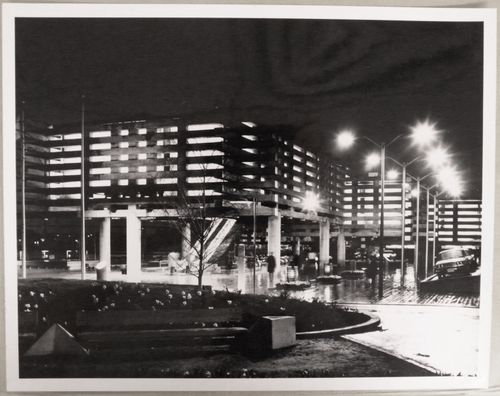
"Pavillon du Japon / Le pavillon du Japon allie le passé au présent sous le thème: "Le Japon en progrès"[.] On y sert le thé dans un décor de plantes tropicales et de jeux d'eau. / Japanese Pavilion at Expo 67 / This modern interpretation of traditional Japanese architecture contains exhibits of the life, art, and industry of Japan. Three exhibit buildings at descending levels lead down to a Japanese garden and restaurant. The pavilion is on the Ile Sainte-Helene riverbank facing the Montreal skyline."--Description.
ARCH256322
Description:
"Pavillon du Japon / Le pavillon du Japon allie le passé au présent sous le thème: "Le Japon en progrès"[.] On y sert le thé dans un décor de plantes tropicales et de jeux d'eau. / Japanese Pavilion at Expo 67 / This modern interpretation of traditional Japanese architecture contains exhibits of the life, art, and industry of Japan. Three exhibit buildings at descending levels lead down to a Japanese garden and restaurant. The pavilion is on the Ile Sainte-Helene riverbank facing the Montreal skyline."--Description.
Personnes et institutions:
Date:
1967
1967
Titre:
Night view of the Pavilion of Japan, Expo 67, Montréal, Québec
Actions:
ARCH256322
Description:
"Pavillon du Japon / Le pavillon du Japon allie le passé au présent sous le thème: "Le Japon en progrès"[.] On y sert le thé dans un décor de plantes tropicales et de jeux d'eau. / Japanese Pavilion at Expo 67 / This modern interpretation of traditional Japanese architecture contains exhibits of the life, art, and industry of Japan. Three exhibit buildings at descending levels lead down to a Japanese garden and restaurant. The pavilion is on the Ile Sainte-Helene riverbank facing the Montreal skyline."--Description.
Night view of the Pavilion of Japan, Expo 67, Montréal, Québec
Actions:
ARCH256322
Description:
"Pavillon du Japon / Le pavillon du Japon allie le passé au présent sous le thème: "Le Japon en progrès"[.] On y sert le thé dans un décor de plantes tropicales et de jeux d'eau. / Japanese Pavilion at Expo 67 / This modern interpretation of traditional Japanese architecture contains exhibits of the life, art, and industry of Japan. Three exhibit buildings at descending levels lead down to a Japanese garden and restaurant. The pavilion is on the Ile Sainte-Helene riverbank facing the Montreal skyline."--Description.
Classification:
photographies
photographies
Date:
1967
1967
Personnes et institutions:


