


2056 Résultats
Classification:
articles
articles
Titre:
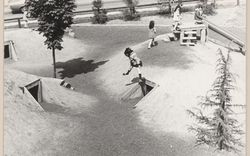
À un mètre de haut
À un mètre de haut
Actions:
Émilie Retailleau partage ses réflexions sur les programmes jeunesse du CCA
Titre:
À un mètre de haut
Émilie Retailleau partage ses réflexions sur les programmes jeunesse du CCA
Actions:
À un mètre de haut
Émilie Retailleau partage ses réflexions sur les programmes jeunesse du CCA
Actions:
Classification:
dessins
Quantité:
33 working drawing(s)
dessins
Quantité:
33 working drawing(s)
Numéro de référence:
DR1995:0185:178-214
Description:
consultant drawings showing structural details for cables, assemblies, mesh, steps, aviary access equipment, walks, gutters, railings, retaining walls, seats, shelter, entrance gate, concrete supports, including plans, elevations, site plan axonometric drawing, and sections
DR1995:0185:178-214
Description:
consultant drawings showing structural details for cables, assemblies, mesh, steps, aviary access equipment, walks, gutters, railings, retaining walls, seats, shelter, entrance gate, concrete supports, including plans, elevations, site plan axonometric drawing, and sections
Personnes et institutions:
Titre:
Consultant drawings showing structural details for cables
Actions:
DR1995:0185:178-214
Description:
consultant drawings showing structural details for cables, assemblies, mesh, steps, aviary access equipment, walks, gutters, railings, retaining walls, seats, shelter, entrance gate, concrete supports, including plans, elevations, site plan axonometric drawing, and sections
Consultant drawings showing structural details for cables
Actions:
DR1995:0185:178-214
Description:
consultant drawings showing structural details for cables, assemblies, mesh, steps, aviary access equipment, walks, gutters, railings, retaining walls, seats, shelter, entrance gate, concrete supports, including plans, elevations, site plan axonometric drawing, and sections
Classification:
dessins
Quantité:
33 working drawing(s)
dessins
Quantité:
33 working drawing(s)
Personnes et institutions:
Classification:
photographies
photographies
Actions:
Numéro de référence:
PH1993:0430:001-027
Description:
- Binding consists of blue cloth-covered boards and spine. There is a silver gilt inscription on a grey paper label attached to the spine. Endpapers are of black paper. Title page is of white paper. Secondary supports are of black paper.
PH1993:0430:001-027
Description:
- Binding consists of blue cloth-covered boards and spine. There is a silver gilt inscription on a grey paper label attached to the spine. Endpapers are of black paper. Title page is of white paper. Secondary supports are of black paper.
Personnes et institutions:
Sujet:
architecture
architecture
Date:
between 1893 and 1894
between 1893 and 1894
Titre:
Album of views of the Fine Arts Building (now the Museum of Science & Industry), World's Columbian Exposition of 1893, Chicago, Illinois, United States
Actions:
PH1993:0430:001-027
Description:
- Binding consists of blue cloth-covered boards and spine. There is a silver gilt inscription on a grey paper label attached to the spine. Endpapers are of black paper. Title page is of white paper. Secondary supports are of black paper.
Album of views of the Fine Arts Building (now the Museum of Science & Industry), World's Columbian Exposition of 1893, Chicago, Illinois, United States
Actions:
PH1993:0430:001-027
Description:
- Binding consists of blue cloth-covered boards and spine. There is a silver gilt inscription on a grey paper label attached to the spine. Endpapers are of black paper. Title page is of white paper. Secondary supports are of black paper.
Classification:
photographies
photographies
Date:
between 1893 and 1894
between 1893 and 1894
Personnes et institutions:
Sujet:
architecture
architecture
Niveau de description archivistique:
Projet
Projet
Numéro de référence:
AP164.S1.2004.D9
Description:
The project series documents the entry for a competition organised by the École Polytechnique Fédérale de Lausanne. The firm identified this project as number 187. “The Learning Center occupies the closest point to the two existing pedestrian accesses and distributes its programme in two large pieces: the green platform which puts in relation the different levels of mobility and houses the active program and the helix which defines the library as a huge ascending space which winds around itself at the interior as well as exterior culminating in an observatory which contains a restaurant. An isolated pavilion emerges over the green platform as a scenic counterpoint. […] Three materials: water, lawn and show form the base of the choice of materials and chromatic proposal supported by a regular structure of white concrete.” (ARCH270975) Abalos & Herreros and Renata Sentkiewicz worked with Olivia de Oliveira, Blaise Sahy, Verónica Meléndez, Juanju González Castellón, Rubén Briongos and Teresa Galí. Documenting the project are conceptual, design development and presentation drawings, cartographic, graphic, photographic and reference materials, correspondence, and presentation documents.
AP164.S1.2004.D9
Description:
The project series documents the entry for a competition organised by the École Polytechnique Fédérale de Lausanne. The firm identified this project as number 187. “The Learning Center occupies the closest point to the two existing pedestrian accesses and distributes its programme in two large pieces: the green platform which puts in relation the different levels of mobility and houses the active program and the helix which defines the library as a huge ascending space which winds around itself at the interior as well as exterior culminating in an observatory which contains a restaurant. An isolated pavilion emerges over the green platform as a scenic counterpoint. […] Three materials: water, lawn and show form the base of the choice of materials and chromatic proposal supported by a regular structure of white concrete.” (ARCH270975) Abalos & Herreros and Renata Sentkiewicz worked with Olivia de Oliveira, Blaise Sahy, Verónica Meléndez, Juanju González Castellón, Rubén Briongos and Teresa Galí. Documenting the project are conceptual, design development and presentation drawings, cartographic, graphic, photographic and reference materials, correspondence, and presentation documents.
Personnes et institutions:
Date:
1986, 2003-2004, predominant 2004
1986, 2003-2004, predominant 2004
Titre:
EPFL learning center, Lausanne, Switzerland (2004)
Actions:
AP164.S1.2004.D9
Description:
The project series documents the entry for a competition organised by the École Polytechnique Fédérale de Lausanne. The firm identified this project as number 187. “The Learning Center occupies the closest point to the two existing pedestrian accesses and distributes its programme in two large pieces: the green platform which puts in relation the different levels of mobility and houses the active program and the helix which defines the library as a huge ascending space which winds around itself at the interior as well as exterior culminating in an observatory which contains a restaurant. An isolated pavilion emerges over the green platform as a scenic counterpoint. […] Three materials: water, lawn and show form the base of the choice of materials and chromatic proposal supported by a regular structure of white concrete.” (ARCH270975) Abalos & Herreros and Renata Sentkiewicz worked with Olivia de Oliveira, Blaise Sahy, Verónica Meléndez, Juanju González Castellón, Rubén Briongos and Teresa Galí. Documenting the project are conceptual, design development and presentation drawings, cartographic, graphic, photographic and reference materials, correspondence, and presentation documents.
EPFL learning center, Lausanne, Switzerland (2004)
Actions:
AP164.S1.2004.D9
Description:
The project series documents the entry for a competition organised by the École Polytechnique Fédérale de Lausanne. The firm identified this project as number 187. “The Learning Center occupies the closest point to the two existing pedestrian accesses and distributes its programme in two large pieces: the green platform which puts in relation the different levels of mobility and houses the active program and the helix which defines the library as a huge ascending space which winds around itself at the interior as well as exterior culminating in an observatory which contains a restaurant. An isolated pavilion emerges over the green platform as a scenic counterpoint. […] Three materials: water, lawn and show form the base of the choice of materials and chromatic proposal supported by a regular structure of white concrete.” (ARCH270975) Abalos & Herreros and Renata Sentkiewicz worked with Olivia de Oliveira, Blaise Sahy, Verónica Meléndez, Juanju González Castellón, Rubén Briongos and Teresa Galí. Documenting the project are conceptual, design development and presentation drawings, cartographic, graphic, photographic and reference materials, correspondence, and presentation documents.
Niveau de description archivistique:
Project
Project
Date:
1986, 2003-2004, predominant 2004
1986, 2003-2004, predominant 2004
Personnes et institutions:
Niveau de description archivistique:
Projet
Projet
Numéro de référence:
AP018.S1.1962.PR03
Description:
This project series documents the design and construction of Ottawa Union Station in Ottawa, Ontario from 1962-1966. The office identified the project number as 6253. This project consisted of a 96,000 square foot train station building, platforms, canopies and site services. The building had two levels, which included a basement and two-storey ground floor. Passengers connected to the station platforms through the basement from the ground floor via a helicoidal ramp in the centre of the building. The passenger concourse was sheltered by a great steel truss roof that had 8 massive columns supporting it. The ground floor included bedrooms, offices, storage, and food and beverage areas. The building, owned by CN Railways, was commissioned by the National Capital Commission, who are recorded as the primary architect on the project, with E.W. Thrift as general manager, and with John B. Parkin Associates acting as consulting architects. The firm of John B. Parkin Associates was presented with a Silver Massey Medal in Architecture in 1967 for the design of this building. The project is recorded through reprographic copies of architectural and structural drawings dating from 1965-1966.
AP018.S1.1962.PR03
Description:
This project series documents the design and construction of Ottawa Union Station in Ottawa, Ontario from 1962-1966. The office identified the project number as 6253. This project consisted of a 96,000 square foot train station building, platforms, canopies and site services. The building had two levels, which included a basement and two-storey ground floor. Passengers connected to the station platforms through the basement from the ground floor via a helicoidal ramp in the centre of the building. The passenger concourse was sheltered by a great steel truss roof that had 8 massive columns supporting it. The ground floor included bedrooms, offices, storage, and food and beverage areas. The building, owned by CN Railways, was commissioned by the National Capital Commission, who are recorded as the primary architect on the project, with E.W. Thrift as general manager, and with John B. Parkin Associates acting as consulting architects. The firm of John B. Parkin Associates was presented with a Silver Massey Medal in Architecture in 1967 for the design of this building. The project is recorded through reprographic copies of architectural and structural drawings dating from 1965-1966.
Personnes et institutions:
Date:
1965-1966
1965-1966
Titre:
Ottawa Union Station, Ottawa, Ontario (1962-1966)
Actions:
AP018.S1.1962.PR03
Description:
This project series documents the design and construction of Ottawa Union Station in Ottawa, Ontario from 1962-1966. The office identified the project number as 6253. This project consisted of a 96,000 square foot train station building, platforms, canopies and site services. The building had two levels, which included a basement and two-storey ground floor. Passengers connected to the station platforms through the basement from the ground floor via a helicoidal ramp in the centre of the building. The passenger concourse was sheltered by a great steel truss roof that had 8 massive columns supporting it. The ground floor included bedrooms, offices, storage, and food and beverage areas. The building, owned by CN Railways, was commissioned by the National Capital Commission, who are recorded as the primary architect on the project, with E.W. Thrift as general manager, and with John B. Parkin Associates acting as consulting architects. The firm of John B. Parkin Associates was presented with a Silver Massey Medal in Architecture in 1967 for the design of this building. The project is recorded through reprographic copies of architectural and structural drawings dating from 1965-1966.
Ottawa Union Station, Ottawa, Ontario (1962-1966)
Actions:
AP018.S1.1962.PR03
Description:
This project series documents the design and construction of Ottawa Union Station in Ottawa, Ontario from 1962-1966. The office identified the project number as 6253. This project consisted of a 96,000 square foot train station building, platforms, canopies and site services. The building had two levels, which included a basement and two-storey ground floor. Passengers connected to the station platforms through the basement from the ground floor via a helicoidal ramp in the centre of the building. The passenger concourse was sheltered by a great steel truss roof that had 8 massive columns supporting it. The ground floor included bedrooms, offices, storage, and food and beverage areas. The building, owned by CN Railways, was commissioned by the National Capital Commission, who are recorded as the primary architect on the project, with E.W. Thrift as general manager, and with John B. Parkin Associates acting as consulting architects. The firm of John B. Parkin Associates was presented with a Silver Massey Medal in Architecture in 1967 for the design of this building. The project is recorded through reprographic copies of architectural and structural drawings dating from 1965-1966.
Niveau de description archivistique:
Project
Project
Date:
1965-1966
1965-1966
Personnes et institutions:
Classification:
archives
Niveau de description archivistique:
Fonds
archives
Niveau de description archivistique:
Fonds
Numéro de référence:
AP189
Résumé:
L’installation Météorologie d’intérieur fut présentée au Centre Canadien d’Architecture (CCA) lors de l’exposition Environ(ne)ment (18 octobre 2006-10 juin 2007) et à Rovereto en Italie lors de l’exposition Manifesta 7 (19 juillet-2 novembre 2008). Les documents d’archives de l’installation comprennent le logiciel développé pour l’installation et une sélection des objets installés dans les deux espaces d’exposition. *** The installation Interior Weather was presented at the Candian Centre for Architecture (CCA) as part of the exhibition Environ(ne)ment (October 18, 2006-June 10, 2007) and in Rovereto, Italy as part of Manifesta 7 (July 19-November 2, 2008). The records of the installation Interior Weather include the software developed for the installation and a selection of objects installed in the exhibition spaces.
AP189
Résumé:
L’installation Météorologie d’intérieur fut présentée au Centre Canadien d’Architecture (CCA) lors de l’exposition Environ(ne)ment (18 octobre 2006-10 juin 2007) et à Rovereto en Italie lors de l’exposition Manifesta 7 (19 juillet-2 novembre 2008). Les documents d’archives de l’installation comprennent le logiciel développé pour l’installation et une sélection des objets installés dans les deux espaces d’exposition. *** The installation Interior Weather was presented at the Candian Centre for Architecture (CCA) as part of the exhibition Environ(ne)ment (October 18, 2006-June 10, 2007) and in Rovereto, Italy as part of Manifesta 7 (July 19-November 2, 2008). The records of the installation Interior Weather include the software developed for the installation and a selection of objects installed in the exhibition spaces.
Personnes et institutions:
Date:
2000-2008
2000-2008
Titre:
Documents d'archives de l'installation "Météorologie d'intérieur" de Philippe Rahm
Actions:
AP189
Résumé:
L’installation Météorologie d’intérieur fut présentée au Centre Canadien d’Architecture (CCA) lors de l’exposition Environ(ne)ment (18 octobre 2006-10 juin 2007) et à Rovereto en Italie lors de l’exposition Manifesta 7 (19 juillet-2 novembre 2008). Les documents d’archives de l’installation comprennent le logiciel développé pour l’installation et une sélection des objets installés dans les deux espaces d’exposition. *** The installation Interior Weather was presented at the Candian Centre for Architecture (CCA) as part of the exhibition Environ(ne)ment (October 18, 2006-June 10, 2007) and in Rovereto, Italy as part of Manifesta 7 (July 19-November 2, 2008). The records of the installation Interior Weather include the software developed for the installation and a selection of objects installed in the exhibition spaces.
Documents d'archives de l'installation "Météorologie d'intérieur" de Philippe Rahm
Actions:
AP189
Résumé:
L’installation Météorologie d’intérieur fut présentée au Centre Canadien d’Architecture (CCA) lors de l’exposition Environ(ne)ment (18 octobre 2006-10 juin 2007) et à Rovereto en Italie lors de l’exposition Manifesta 7 (19 juillet-2 novembre 2008). Les documents d’archives de l’installation comprennent le logiciel développé pour l’installation et une sélection des objets installés dans les deux espaces d’exposition. *** The installation Interior Weather was presented at the Candian Centre for Architecture (CCA) as part of the exhibition Environ(ne)ment (October 18, 2006-June 10, 2007) and in Rovereto, Italy as part of Manifesta 7 (July 19-November 2, 2008). The records of the installation Interior Weather include the software developed for the installation and a selection of objects installed in the exhibition spaces.
Classification:
archives
Niveau de description archivistique:
Fonds
archives
Niveau de description archivistique:
Fonds
Date:
2000-2008
2000-2008
Personnes et institutions:
Classification:
photographies
photographies
Actions:
Numéro de référence:
PH1997:0075:001-039
Description:
- Contemporary binding consists of black cloth-covered boards and spine. There is a gold gilt inscription on the cover. Endpapers are of black paper. Secondary supports are of grey construction paper. The album comprises 39 photographs, all of which are labeled.
PH1997:0075:001-039
Description:
- Contemporary binding consists of black cloth-covered boards and spine. There is a gold gilt inscription on the cover. Endpapers are of black paper. Secondary supports are of grey construction paper. The album comprises 39 photographs, all of which are labeled.
Personnes et institutions:
Sujet:
architecture, portrait
architecture, portrait
Date:
after 1908
after 1908
Titre:
Album of views of the Greene County Courthouse and Jail with portraits of the builders, building committee and advisory committee, Catskill, New York, United States
Actions:
PH1997:0075:001-039
Description:
- Contemporary binding consists of black cloth-covered boards and spine. There is a gold gilt inscription on the cover. Endpapers are of black paper. Secondary supports are of grey construction paper. The album comprises 39 photographs, all of which are labeled.
Album of views of the Greene County Courthouse and Jail with portraits of the builders, building committee and advisory committee, Catskill, New York, United States
Actions:
PH1997:0075:001-039
Description:
- Contemporary binding consists of black cloth-covered boards and spine. There is a gold gilt inscription on the cover. Endpapers are of black paper. Secondary supports are of grey construction paper. The album comprises 39 photographs, all of which are labeled.
Classification:
photographies
photographies
Date:
after 1908
after 1908
Personnes et institutions:
Sujet:
architecture, portrait
architecture, portrait
Classification:
expositions
expositions
Actions:
Description:
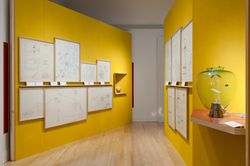
L’exposition Des pièces à ne manquer revendique l’importance de l’acte d’habiter et constitue, pour cette raison, une collection d’espaces domestiques (porches, cuisines, chambres, penderies, salles à manger, cours, jardins, vestibules, séjours, bureaux, coins de détente et salles d’eau) réinventés par deux architectes très différents, Umberto Riva à Milan et Bijoy Jain à(...)
L’exposition Des pièces à ne manquer revendique l’importance de l’acte d’habiter et constitue, pour cette raison, une collection d’espaces domestiques (porches, cuisines, chambres, penderies, salles à manger, cours, jardins, vestibules, séjours, bureaux, coins de détente et salles d’eau) réinventés par deux architectes très différents, Umberto Riva à Milan et Bijoy Jain à(...)
Localisation:
Salles principales
Salles principales
Date:
4 novembre 2014 au 19 avril 2015
4 novembre 2014 au 19 avril 2015
Titre:
Des pièces à ne pas manquer
Actions:
Description:
L’exposition Des pièces à ne manquer revendique l’importance de l’acte d’habiter et constitue, pour cette raison, une collection d’espaces domestiques (porches, cuisines, chambres, penderies, salles à manger, cours, jardins, vestibules, séjours, bureaux, coins de détente et salles d’eau) réinventés par deux architectes très différents, Umberto Riva à Milan et Bijoy Jain à(...)
Des pièces à ne pas manquer
Actions:
Description:
L’exposition Des pièces à ne manquer revendique l’importance de l’acte d’habiter et constitue, pour cette raison, une collection d’espaces domestiques (porches, cuisines, chambres, penderies, salles à manger, cours, jardins, vestibules, séjours, bureaux, coins de détente et salles d’eau) réinventés par deux architectes très différents, Umberto Riva à Milan et Bijoy Jain à(...)
Classification:
expositions
expositions
Date:
4 novembre 2014 au
19 avril 2015
4 novembre 2014 au
19 avril 2015
Localisation:
Salles principales
Salles principales
Classification:
expositions
expositions
Actions:
Description:
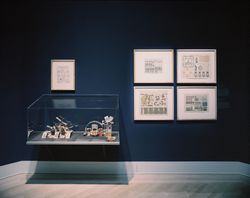
L’architecture, quoique soumise aux impératifs de la fonction et de la structure, sera toujours en définitive un acte d’imagination. L’exposition Architecture potentielle : jeux de construction de la collection du CCA réunit vingt et un jeux de construction fabriqués entre 1850 et 1950, qui ont été conçus pour éveiller la créativité chez l’enfant. Les jeux montrent(...)
L’architecture, quoique soumise aux impératifs de la fonction et de la structure, sera toujours en définitive un acte d’imagination. L’exposition Architecture potentielle : jeux de construction de la collection du CCA réunit vingt et un jeux de construction fabriqués entre 1850 et 1950, qui ont été conçus pour éveiller la créativité chez l’enfant. Les jeux montrent(...)
Localisation:
Salle octogonale
Salle octogonale
Date:
4 décembre 1991 au 8 mars 1992
4 décembre 1991 au 8 mars 1992
Titre:
Architecture potentielle : jeux de construction de la collection du CCA
Actions:
Description:
L’architecture, quoique soumise aux impératifs de la fonction et de la structure, sera toujours en définitive un acte d’imagination. L’exposition Architecture potentielle : jeux de construction de la collection du CCA réunit vingt et un jeux de construction fabriqués entre 1850 et 1950, qui ont été conçus pour éveiller la créativité chez l’enfant. Les jeux montrent(...)
Architecture potentielle : jeux de construction de la collection du CCA
Actions:
Description:
L’architecture, quoique soumise aux impératifs de la fonction et de la structure, sera toujours en définitive un acte d’imagination. L’exposition Architecture potentielle : jeux de construction de la collection du CCA réunit vingt et un jeux de construction fabriqués entre 1850 et 1950, qui ont été conçus pour éveiller la créativité chez l’enfant. Les jeux montrent(...)
Classification:
expositions
expositions
Date:
4 décembre 1991 au
8 mars 1992
4 décembre 1991 au
8 mars 1992
Localisation:
Salle octogonale
Salle octogonale
Classification:
livres, photographies
livres, photographies
Actions:
Numéro de référence:
PH1988:0451:001-005
Description:
- Contemporary binding consists of black cloth-covered boards and a black leather-covered spine. There is a gold gilt inscription on the cover. Endpapers and secondary supports are of thick grey cardboard with red ink edging. The book is comprised of 5 photographs.
PH1988:0451:001-005
Description:
- Contemporary binding consists of black cloth-covered boards and a black leather-covered spine. There is a gold gilt inscription on the cover. Endpapers and secondary supports are of thick grey cardboard with red ink edging. The book is comprised of 5 photographs.
Personnes et institutions:
Sujet:
architecture
architecture
Date:
early 20th century
early 20th century
Titre:
Décoration en Métal de l'Intérieur de la Chapelle du Séminaire de Québec
Actions:
PH1988:0451:001-005
Description:
- Contemporary binding consists of black cloth-covered boards and a black leather-covered spine. There is a gold gilt inscription on the cover. Endpapers and secondary supports are of thick grey cardboard with red ink edging. The book is comprised of 5 photographs.
Décoration en Métal de l'Intérieur de la Chapelle du Séminaire de Québec
Actions:
PH1988:0451:001-005
Description:
- Contemporary binding consists of black cloth-covered boards and a black leather-covered spine. There is a gold gilt inscription on the cover. Endpapers and secondary supports are of thick grey cardboard with red ink edging. The book is comprised of 5 photographs.
Classification:
livres, photographies
livres, photographies
Date:
early 20th century
early 20th century
Personnes et institutions:
Sujet:
architecture
architecture


