


364 Résultats
Classification:
audio
audio
Actions:
Description:
1 online resource.
Auteur:
Sujet:
Publication:
[Place of publication not identified] : Lateral Addition, 2018.
[Place of publication not identified] : Lateral Addition, 2018.
Classification:
audio
audio
Publication:
[Place of publication not identified] : Lateral Addition, 2018.
[Place of publication not identified] : Lateral Addition, 2018.
Auteur:
Sujet:
Classification:
livres
livres
Actions:
Prix:
$33.95
(disponible en magasin)
Résumé:
Today our world is under the watchful and tireless eye of computer vision, with cameras and monitors tracing our every move. Furthermore, generative AI is now able to render a synthetic world indistinguishable from reality for us to explore. Trevor Paglen goes in search of the ways and means of understanding this new visual universe. Instead of asking what these(...)
$33.95
(disponible en magasin)
Résumé:
Today our world is under the watchful and tireless eye of computer vision, with cameras and monitors tracing our every move. Furthermore, generative AI is now able to render a synthetic world indistinguishable from reality for us to explore. Trevor Paglen goes in search of the ways and means of understanding this new visual universe. Instead of asking what these(...)
Titre:
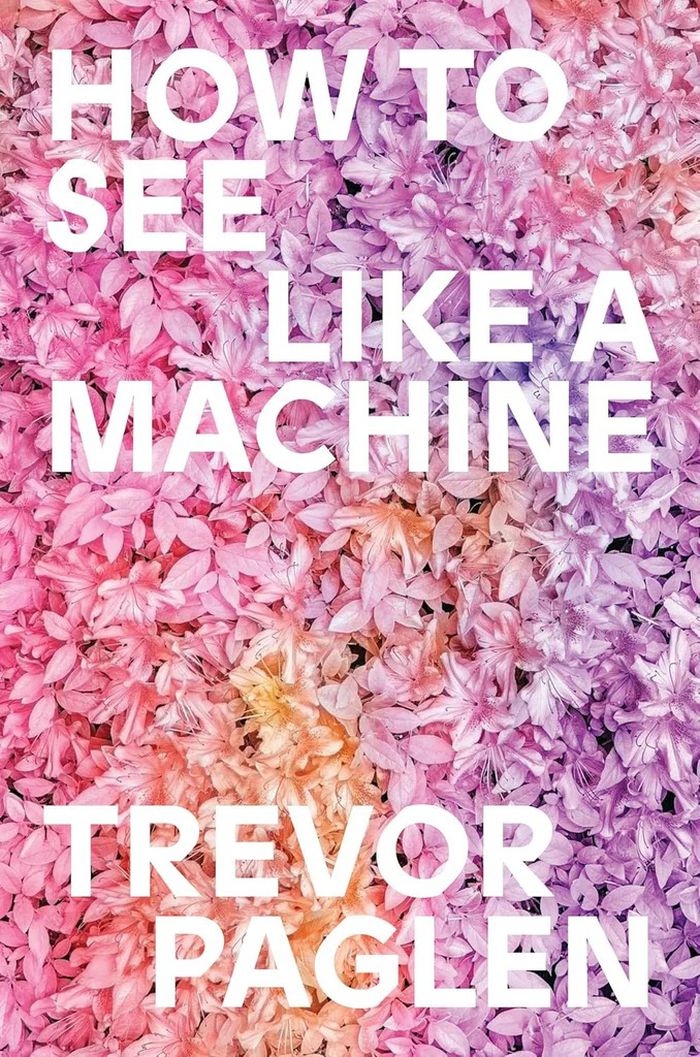
How to see like a machine: Images after AI
Actions:
Prix:
$33.95
(disponible en magasin)
Résumé:
Today our world is under the watchful and tireless eye of computer vision, with cameras and monitors tracing our every move. Furthermore, generative AI is now able to render a synthetic world indistinguishable from reality for us to explore. Trevor Paglen goes in search of the ways and means of understanding this new visual universe. Instead of asking what these technologies “say” about the world, he teaches us to ask what they “do” and where such images come from. Exploring the esoteric worlds of psyops, UFO imagery, magicians, and public relation gurus, Paglen shows that this apparently alien realm is more human, but much stranger, than we imagine.
How to see like a machine: Images after AI
Actions:
Prix:
$33.95
(disponible en magasin)
Résumé:
Today our world is under the watchful and tireless eye of computer vision, with cameras and monitors tracing our every move. Furthermore, generative AI is now able to render a synthetic world indistinguishable from reality for us to explore. Trevor Paglen goes in search of the ways and means of understanding this new visual universe. Instead of asking what these technologies “say” about the world, he teaches us to ask what they “do” and where such images come from. Exploring the esoteric worlds of psyops, UFO imagery, magicians, and public relation gurus, Paglen shows that this apparently alien realm is more human, but much stranger, than we imagine.
Classification:
livres
livres
Publication:
mai 2026
mai 2026
Classification:
livres
livres
Titre:
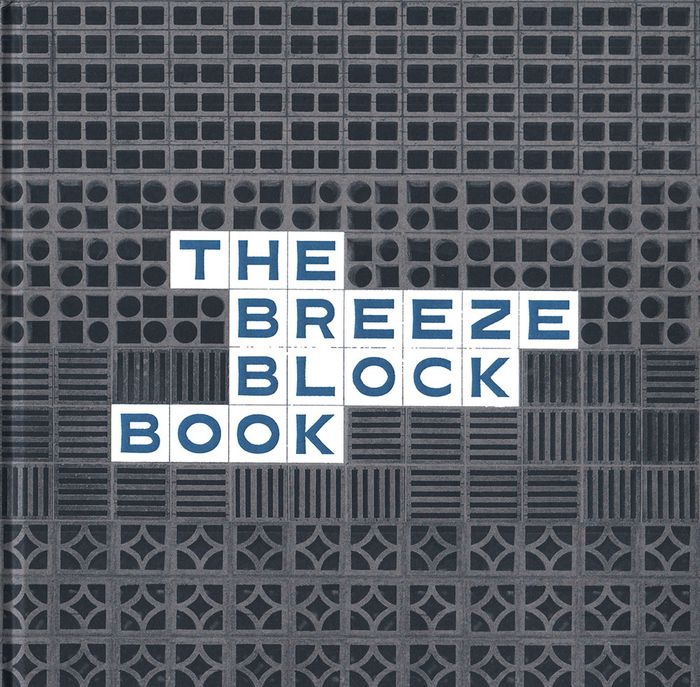
The breeze block book
The breeze block book
Actions:
Prix:
$89.95
(disponible en magasin)
Résumé:
The recent resurgence of interest in the breeze block seems to be more than a nostalgic yearning for modernism. Designers today are rediscovering the forgotten qualities that made it such an appealing material for mid-century architects, which also means finding new ways to enhance and exploit them. By deploying the techniques of 21st-century design, from digital tools to(...)
$89.95
(disponible en magasin)
Résumé:
The recent resurgence of interest in the breeze block seems to be more than a nostalgic yearning for modernism. Designers today are rediscovering the forgotten qualities that made it such an appealing material for mid-century architects, which also means finding new ways to enhance and exploit them. By deploying the techniques of 21st-century design, from digital tools to(...)
Titre:
The breeze block book
Actions:
Prix:
$89.95
(disponible en magasin)
Résumé:
The recent resurgence of interest in the breeze block seems to be more than a nostalgic yearning for modernism. Designers today are rediscovering the forgotten qualities that made it such an appealing material for mid-century architects, which also means finding new ways to enhance and exploit them. By deploying the techniques of 21st-century design, from digital tools to robotic fabrication, complex new forms and patterns are now possible. Not just visually appealing, these also temper internal and external environments in increasingly sensitive and climate-responsive ways. With editorial direction from architect Sam Marshall, the volume is both a survey and a celebration.
The breeze block book
Actions:
Prix:
$89.95
(disponible en magasin)
Résumé:
The recent resurgence of interest in the breeze block seems to be more than a nostalgic yearning for modernism. Designers today are rediscovering the forgotten qualities that made it such an appealing material for mid-century architects, which also means finding new ways to enhance and exploit them. By deploying the techniques of 21st-century design, from digital tools to robotic fabrication, complex new forms and patterns are now possible. Not just visually appealing, these also temper internal and external environments in increasingly sensitive and climate-responsive ways. With editorial direction from architect Sam Marshall, the volume is both a survey and a celebration.
Classification:
livres
livres
Publication:
juin 2019
juin 2019
Sujet:
Matériaux et éclairage
Matériaux et éclairage
Classification:
périodiques
périodiques
Prix:
$50.00
(disponible sur commande)
Résumé:
Architects are now taking advantage of the computer in new ways through experimentation with algorithmic and simulation-driven design. Computation Works focuses on this emerging theme in design practice, showcasing built and soon to be built projects and providing a state of the art in computational design. The use of algorithmic and simulation-driven design raises(...)
$50.00
(disponible sur commande)
Résumé:
Architects are now taking advantage of the computer in new ways through experimentation with algorithmic and simulation-driven design. Computation Works focuses on this emerging theme in design practice, showcasing built and soon to be built projects and providing a state of the art in computational design. The use of algorithmic and simulation-driven design raises(...)
Publication:
avril 2013
avril 2013
Titre:
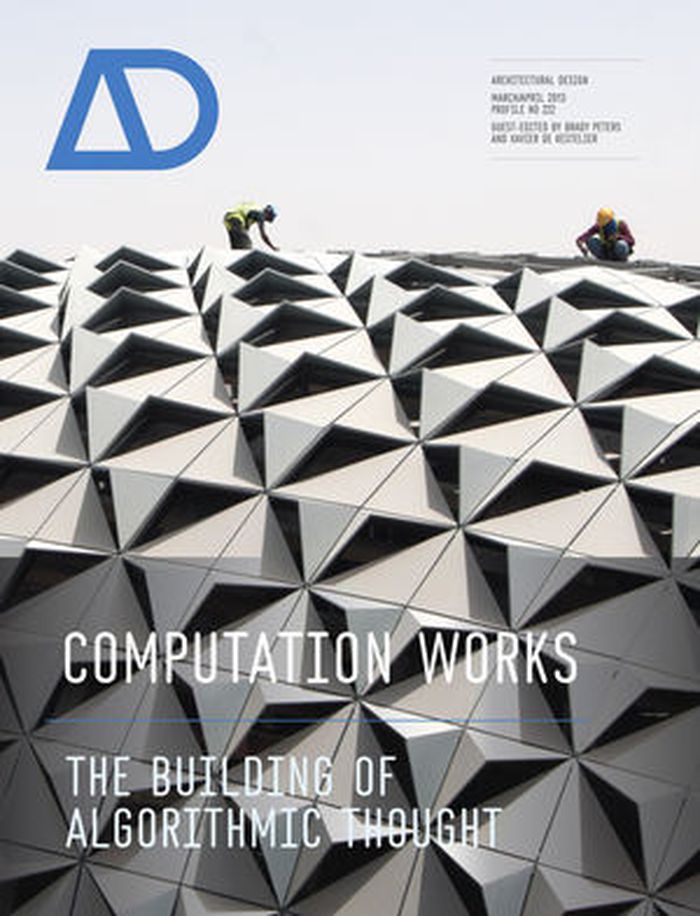
AD 83:2 Computation works: the building of algorithmic thought
Actions:
Prix:
$50.00
(disponible sur commande)
Résumé:
Architects are now taking advantage of the computer in new ways through experimentation with algorithmic and simulation-driven design. Computation Works focuses on this emerging theme in design practice, showcasing built and soon to be built projects and providing a state of the art in computational design. The use of algorithmic and simulation-driven design raises important new questions which the book examines including: how is computation changing the way architects design? How can computation create new forms of architecture? Is there an aesthetic to computational architecture? Are the design tools and methods related to the result?
AD 83:2 Computation works: the building of algorithmic thought
Actions:
Prix:
$50.00
(disponible sur commande)
Résumé:
Architects are now taking advantage of the computer in new ways through experimentation with algorithmic and simulation-driven design. Computation Works focuses on this emerging theme in design practice, showcasing built and soon to be built projects and providing a state of the art in computational design. The use of algorithmic and simulation-driven design raises important new questions which the book examines including: how is computation changing the way architects design? How can computation create new forms of architecture? Is there an aesthetic to computational architecture? Are the design tools and methods related to the result?
Classification:
périodiques
périodiques
Publication:
avril 2013
avril 2013
Classification:
livres
livres
Actions:
Prix:
$79.50
(disponible sur commande)
Résumé:
The cultural economy forms a leading trajectory of urban development, and has emerged as a key facet of globalizing cities. Cultural industries include new media, digital arts, music and film, and the design industries and professions, as well as allied consumption and spectacle in the city. The cultural economy now represents the third-largest sector in metropolitan(...)
$79.50
(disponible sur commande)
Résumé:
The cultural economy forms a leading trajectory of urban development, and has emerged as a key facet of globalizing cities. Cultural industries include new media, digital arts, music and film, and the design industries and professions, as well as allied consumption and spectacle in the city. The cultural economy now represents the third-largest sector in metropolitan(...)
Titre:
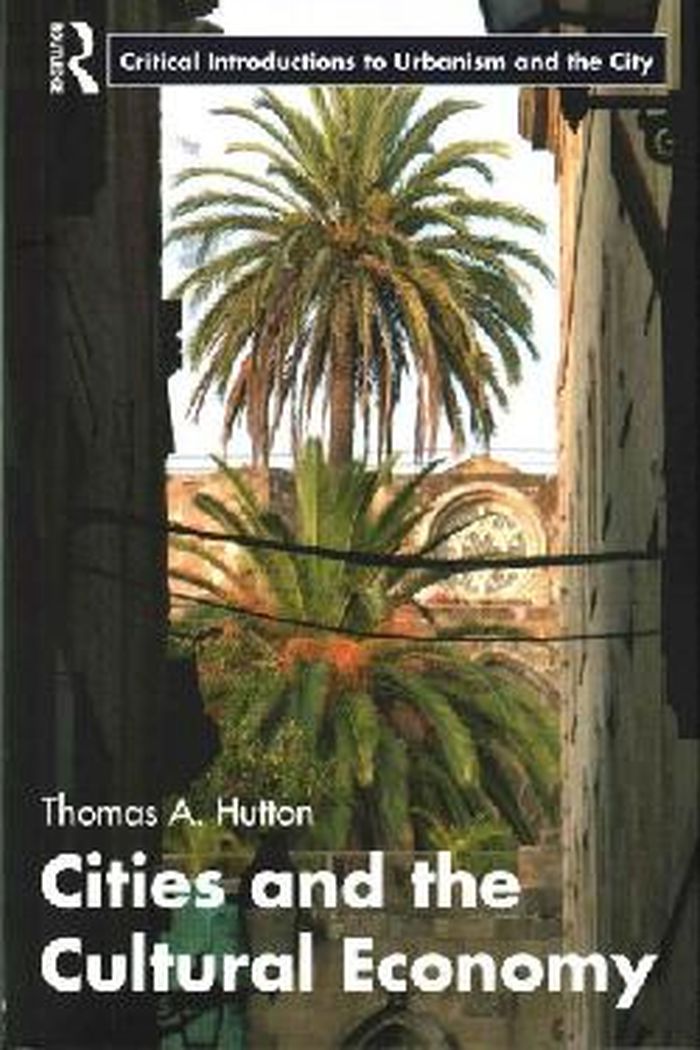
Cities and the cultural economy
Actions:
Prix:
$79.50
(disponible sur commande)
Résumé:
The cultural economy forms a leading trajectory of urban development, and has emerged as a key facet of globalizing cities. Cultural industries include new media, digital arts, music and film, and the design industries and professions, as well as allied consumption and spectacle in the city. The cultural economy now represents the third-largest sector in metropolitan cities of the West (for example London, Berlin, New York, San Francisco, and Melbourne), but is also influential in the development of East Asian cities (Tokyo, Shanghai, Hong Kong and Singapore), as well as the mega-cities of the Global South (e.g. Mumbai, Capetown, and São Paulo).
Cities and the cultural economy
Actions:
Prix:
$79.50
(disponible sur commande)
Résumé:
The cultural economy forms a leading trajectory of urban development, and has emerged as a key facet of globalizing cities. Cultural industries include new media, digital arts, music and film, and the design industries and professions, as well as allied consumption and spectacle in the city. The cultural economy now represents the third-largest sector in metropolitan cities of the West (for example London, Berlin, New York, San Francisco, and Melbourne), but is also influential in the development of East Asian cities (Tokyo, Shanghai, Hong Kong and Singapore), as well as the mega-cities of the Global South (e.g. Mumbai, Capetown, and São Paulo).
Classification:
livres
livres
Publication:
juillet 2015
juillet 2015
Sujet:
Théorie de l’urbanisme
Théorie de l’urbanisme
Classification:
livres
livres
Prix:
$19.95
(disponible sur commande)
Résumé:
Information technology has brought about a radical change in architectural design. The sketches and plans of yesterday have been transformed by CAD. In this book the authors cast a glance behind the scenes to provide a systematic overview of the tools and technical processes which are now an integral part of today´s design methods. The most important digital tools are(...)
$19.95
(disponible sur commande)
Résumé:
Information technology has brought about a radical change in architectural design. The sketches and plans of yesterday have been transformed by CAD. In this book the authors cast a glance behind the scenes to provide a systematic overview of the tools and technical processes which are now an integral part of today´s design methods. The most important digital tools are(...)
Titre:
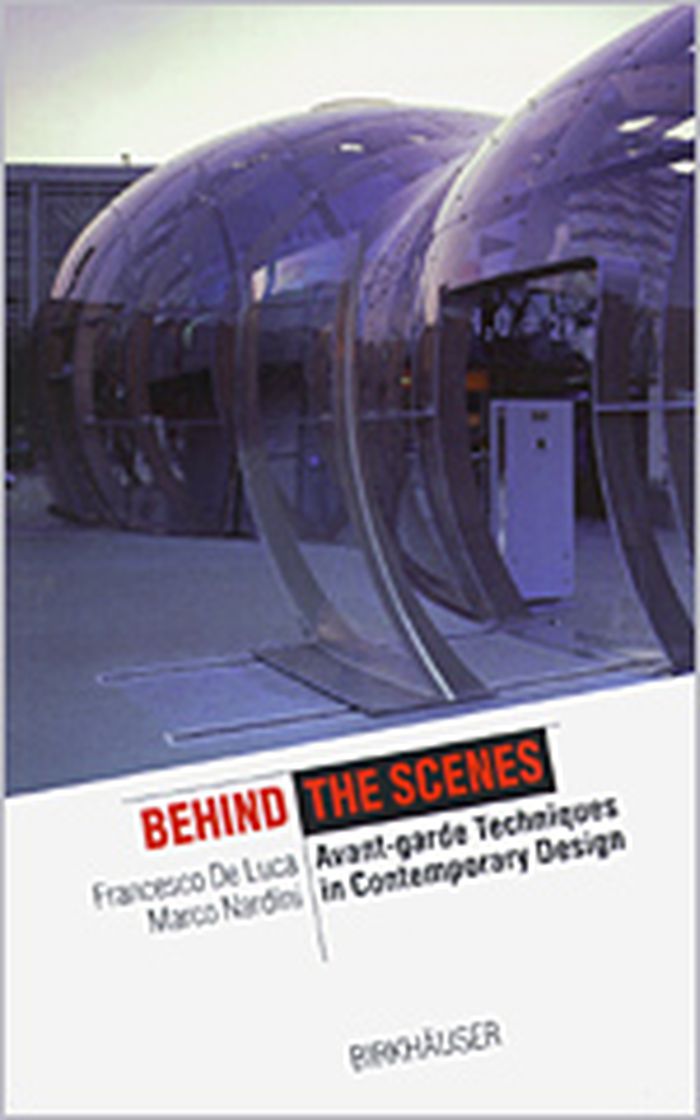
Behind the scene : avant-garde techniques in contemporary design
Actions:
Prix:
$19.95
(disponible sur commande)
Résumé:
Information technology has brought about a radical change in architectural design. The sketches and plans of yesterday have been transformed by CAD. In this book the authors cast a glance behind the scenes to provide a systematic overview of the tools and technical processes which are now an integral part of today´s design methods. The most important digital tools are presented, the principal steps are analysed, and the essential concepts are explained. The theoretical information is vividly illustrated by a selection of examples from the world of architecture. A concise and accessible introduction to electronic designing, this book makes the subject easily comprehensible to all who are new to the field, and for those who already involved in digital designing it is a useful recapitulation and orientation.
Behind the scene : avant-garde techniques in contemporary design
Actions:
Prix:
$19.95
(disponible sur commande)
Résumé:
Information technology has brought about a radical change in architectural design. The sketches and plans of yesterday have been transformed by CAD. In this book the authors cast a glance behind the scenes to provide a systematic overview of the tools and technical processes which are now an integral part of today´s design methods. The most important digital tools are presented, the principal steps are analysed, and the essential concepts are explained. The theoretical information is vividly illustrated by a selection of examples from the world of architecture. A concise and accessible introduction to electronic designing, this book makes the subject easily comprehensible to all who are new to the field, and for those who already involved in digital designing it is a useful recapitulation and orientation.
Classification:
livres
livres
Publication:
octobre 2002, Basel
octobre 2002, Basel
Sujet:
petits formats
petits formats
Classification:
livres
livres
Titre:
The Polaroid book
The Polaroid book
Actions:
Prix:
$51.95
(disponible sur commande)
Résumé:
In existence for over 50 years, the Polaroid Corporation's photography collection is the greatest collection of Polaroid images in the world. Begun by Polaroid founder Edwin Land and photographer Ansel Adams, the collection now includes images by hundreds of photographers throughout the world and contains important pieces by artists such as David Hockney, Helmut Newton,(...)
$51.95
(disponible sur commande)
Résumé:
In existence for over 50 years, the Polaroid Corporation's photography collection is the greatest collection of Polaroid images in the world. Begun by Polaroid founder Edwin Land and photographer Ansel Adams, the collection now includes images by hundreds of photographers throughout the world and contains important pieces by artists such as David Hockney, Helmut Newton,(...)
Sujet:
Théorie de la photographie
Théorie de la photographie
Publication:
avril 2005, Cologne
avril 2005, Cologne
Titre:
The Polaroid book
Actions:
Prix:
$51.95
(disponible sur commande)
Résumé:
In existence for over 50 years, the Polaroid Corporation's photography collection is the greatest collection of Polaroid images in the world. Begun by Polaroid founder Edwin Land and photographer Ansel Adams, the collection now includes images by hundreds of photographers throughout the world and contains important pieces by artists such as David Hockney, Helmut Newton, Jeanloup Sieff, and Robert Rauschenberg. "The Polaroid Book", a survey of this remarkable collection, pays tribute to a medium that defies the digital age and remains a favourite among artists for its quirky look and instantly gratifying, one-of-kind images. The book includes over 400 works from the Polaroid Collections, an essay by Barbara Hitchcock illuminating the beginnings and history of the collection, and a technical reference section featuring the various types of Polaroid cameras.
The Polaroid book
Actions:
Prix:
$51.95
(disponible sur commande)
Résumé:
In existence for over 50 years, the Polaroid Corporation's photography collection is the greatest collection of Polaroid images in the world. Begun by Polaroid founder Edwin Land and photographer Ansel Adams, the collection now includes images by hundreds of photographers throughout the world and contains important pieces by artists such as David Hockney, Helmut Newton, Jeanloup Sieff, and Robert Rauschenberg. "The Polaroid Book", a survey of this remarkable collection, pays tribute to a medium that defies the digital age and remains a favourite among artists for its quirky look and instantly gratifying, one-of-kind images. The book includes over 400 works from the Polaroid Collections, an essay by Barbara Hitchcock illuminating the beginnings and history of the collection, and a technical reference section featuring the various types of Polaroid cameras.
Classification:
livres
livres
Publication:
avril 2005, Cologne
avril 2005, Cologne
Sujet:
Théorie de la photographie
Théorie de la photographie
Classification:
livres
livres
Actions:
Prix:
$48.00
(disponible sur commande)
Résumé:
Is there a cultural logic of what we have come to call the information age? Have the technologies and techniques centered on the computer provided not only tools but also the metaphors through which we now understand the social and economic formation of our world? In Control, Seb Franklin addresses the conditions of knowledge that make the concept of the "information(...)
$48.00
(disponible sur commande)
Résumé:
Is there a cultural logic of what we have come to call the information age? Have the technologies and techniques centered on the computer provided not only tools but also the metaphors through which we now understand the social and economic formation of our world? In Control, Seb Franklin addresses the conditions of knowledge that make the concept of the "information(...)
Titre:
Control: digitality as cultural logic
Actions:
Prix:
$48.00
(disponible sur commande)
Résumé:
Is there a cultural logic of what we have come to call the information age? Have the technologies and techniques centered on the computer provided not only tools but also the metaphors through which we now understand the social and economic formation of our world? In Control, Seb Franklin addresses the conditions of knowledge that make the concept of the "information economy" possible while at the same time obscuring its effects on material social spaces. In so doing, Franklin traces three intertwined threads: the relationships among information, labor, and social management that emerged in the nineteenth century; the mid-twentieth-century diffusion of computational metaphors; and the appearance of informatic principles in certain contemporary socioeconomic and cultural practices. Drawing on critical theory, media theory, and the history of science, Franklin names control as the episteme grounding late capitalism. Beyond any specific device or set of technically mediated practices, digitality functions within this episteme as the logical basis for reshaped concepts of labor, subjectivity, and collectivity, as well as for the intensification of older modes of exclusion and dispossession. In tracking the pervasiveness of this logical mode into the present, Franklin locates the cultural traces of control across a diverse body of objects and practices, from cybernetics to economic theory and management styles, and from concepts of language and subjectivity to literary texts, films, and video games.
Control: digitality as cultural logic
Actions:
Prix:
$48.00
(disponible sur commande)
Résumé:
Is there a cultural logic of what we have come to call the information age? Have the technologies and techniques centered on the computer provided not only tools but also the metaphors through which we now understand the social and economic formation of our world? In Control, Seb Franklin addresses the conditions of knowledge that make the concept of the "information economy" possible while at the same time obscuring its effects on material social spaces. In so doing, Franklin traces three intertwined threads: the relationships among information, labor, and social management that emerged in the nineteenth century; the mid-twentieth-century diffusion of computational metaphors; and the appearance of informatic principles in certain contemporary socioeconomic and cultural practices. Drawing on critical theory, media theory, and the history of science, Franklin names control as the episteme grounding late capitalism. Beyond any specific device or set of technically mediated practices, digitality functions within this episteme as the logical basis for reshaped concepts of labor, subjectivity, and collectivity, as well as for the intensification of older modes of exclusion and dispossession. In tracking the pervasiveness of this logical mode into the present, Franklin locates the cultural traces of control across a diverse body of objects and practices, from cybernetics to economic theory and management styles, and from concepts of language and subjectivity to literary texts, films, and video games.
Classification:
livres
livres
Publication:
novembre 2015
novembre 2015
Classification:
livres
livres
Titre:
Atlas of the senseable city
Atlas of the senseable city
Actions:
Prix:
$48.00
(disponible en magasin)
Résumé:
What have smart technologies taught us about cities? What lessons can we learn from today’s urbanites to make better places to live? Antoine Picon and Carlo Ratti argue that the answers are in the maps we make. For centuries, we have relied on maps to navigate the enormity of the city. Now, as the physical world combines with the digital world, we need a new generation of(...)
$48.00
(disponible en magasin)
Résumé:
What have smart technologies taught us about cities? What lessons can we learn from today’s urbanites to make better places to live? Antoine Picon and Carlo Ratti argue that the answers are in the maps we make. For centuries, we have relied on maps to navigate the enormity of the city. Now, as the physical world combines with the digital world, we need a new generation of(...)
Titre:
Atlas of the senseable city
Actions:
Prix:
$48.00
(disponible en magasin)
Résumé:
What have smart technologies taught us about cities? What lessons can we learn from today’s urbanites to make better places to live? Antoine Picon and Carlo Ratti argue that the answers are in the maps we make. For centuries, we have relied on maps to navigate the enormity of the city. Now, as the physical world combines with the digital world, we need a new generation of maps to navigate the city of tomorrow. Pervasive sensors allow anyone to visualize cities in entirely new ways—ebbs and flows of pollution, traffic, and internet connectivity. This book explores how the growth of digital mapping, spurred by sensing technologies, is affecting cities and daily lives. It examines how new cartographic possibilities aid urban planners, technicians, politicians, and administrators; how digitally mapped cities could reveal ways to make cities smarter and more efficient; how monitoring urbanites has political and social repercussions; and how the proliferation of open-source maps and collaborative platforms can aid activists and vulnerable populations. With its beautiful, accessible presentation of cutting-edge research, this book makes it easy for readers to understand the stakes of the new information age—and appreciate the timeless power of the city.
Atlas of the senseable city
Actions:
Prix:
$48.00
(disponible en magasin)
Résumé:
What have smart technologies taught us about cities? What lessons can we learn from today’s urbanites to make better places to live? Antoine Picon and Carlo Ratti argue that the answers are in the maps we make. For centuries, we have relied on maps to navigate the enormity of the city. Now, as the physical world combines with the digital world, we need a new generation of maps to navigate the city of tomorrow. Pervasive sensors allow anyone to visualize cities in entirely new ways—ebbs and flows of pollution, traffic, and internet connectivity. This book explores how the growth of digital mapping, spurred by sensing technologies, is affecting cities and daily lives. It examines how new cartographic possibilities aid urban planners, technicians, politicians, and administrators; how digitally mapped cities could reveal ways to make cities smarter and more efficient; how monitoring urbanites has political and social repercussions; and how the proliferation of open-source maps and collaborative platforms can aid activists and vulnerable populations. With its beautiful, accessible presentation of cutting-edge research, this book makes it easy for readers to understand the stakes of the new information age—and appreciate the timeless power of the city.
Classification:
livres
livres
Publication:
juin 2023
juin 2023
Sujet:
Théorie de l’urbanisme
Théorie de l’urbanisme
Classification:
livres
livres
Titre:
In the flow
In the flow
Actions:
Prix:
$22.99
(disponible sur commande)
Résumé:
In the early twentieth century, art and its institutions came under critique from a new democratic and egalitarian spirit. The notion of works of art as sacred objects was decried and subsequently they would be understood merely as things. This meant an attack on realism, as well as on the traditional preservative mission of the museum. Art theorist Boris Groys argues(...)
$22.99
(disponible sur commande)
Résumé:
In the early twentieth century, art and its institutions came under critique from a new democratic and egalitarian spirit. The notion of works of art as sacred objects was decried and subsequently they would be understood merely as things. This meant an attack on realism, as well as on the traditional preservative mission of the museum. Art theorist Boris Groys argues(...)
Titre:
In the flow
Actions:
Prix:
$22.99
(disponible sur commande)
Résumé:
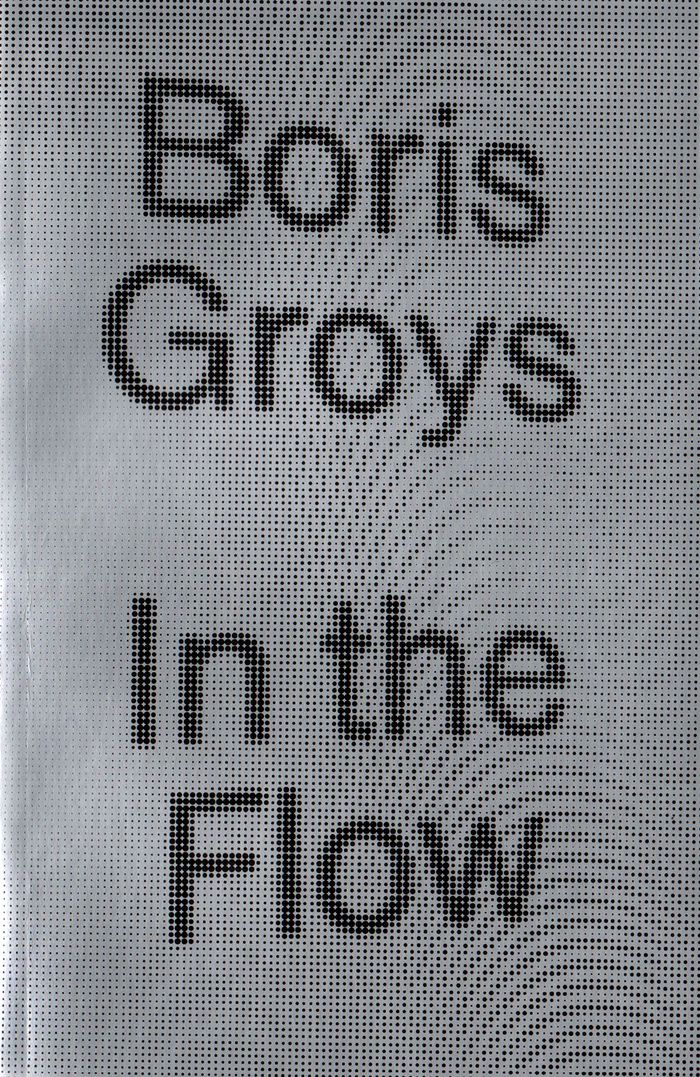
In the early twentieth century, art and its institutions came under critique from a new democratic and egalitarian spirit. The notion of works of art as sacred objects was decried and subsequently they would be understood merely as things. This meant an attack on realism, as well as on the traditional preservative mission of the museum. Art theorist Boris Groys argues this led to the development of “direct realism”: an art that would not produce objects, but practices that would not survive. But for more than a century now, every advance in this direction has been quickly followed by new means of preserving art’s distinction. In this new work, Groys explores art in the age of the thingless medium, the Internet. Groys claims that if the techniques of mechanical reproduction gave us objects without aura, digital production generates aura without objects, transforming all its materials into vanishing markers of the transitory present.
In the flow
Actions:
Prix:
$22.99
(disponible sur commande)
Résumé:
In the early twentieth century, art and its institutions came under critique from a new democratic and egalitarian spirit. The notion of works of art as sacred objects was decried and subsequently they would be understood merely as things. This meant an attack on realism, as well as on the traditional preservative mission of the museum. Art theorist Boris Groys argues this led to the development of “direct realism”: an art that would not produce objects, but practices that would not survive. But for more than a century now, every advance in this direction has been quickly followed by new means of preserving art’s distinction. In this new work, Groys explores art in the age of the thingless medium, the Internet. Groys claims that if the techniques of mechanical reproduction gave us objects without aura, digital production generates aura without objects, transforming all its materials into vanishing markers of the transitory present.
Classification:
livres
livres
Publication:
janvier 2018
janvier 2018
Sujet:
Théorie de l’art
Théorie de l’art


