


3028 Résultats
Classification:
livres
livres
Titre:
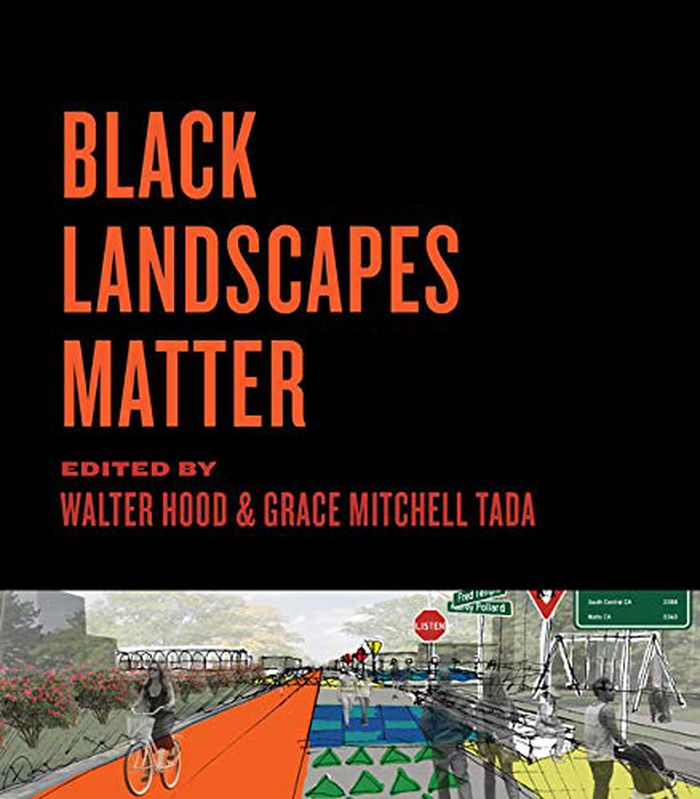
Black landscapes matter
Black landscapes matter
Actions:
Prix:
$47.95
(disponible sur commande)
Résumé:
The question "Do black landscapes matter?" cuts deep to the core of American history. From the plantations of slavery to contemporary segregated cities, from freedman villages to northern migrations for freedom, the nation’s landscape bears the detritus of diverse origins. Black landscapes matter because they tell the truth. In this vital new collection, acclaimed(...)
Titre:
Black landscapes matter
Actions:
Prix:
$47.95
(disponible sur commande)
Résumé:
The question "Do black landscapes matter?" cuts deep to the core of American history. From the plantations of slavery to contemporary segregated cities, from freedman villages to northern migrations for freedom, the nation’s landscape bears the detritus of diverse origins. Black landscapes matter because they tell the truth. In this vital new collection, acclaimed landscape designer and public artist Walter Hood assembles a group of notable landscape architecture and planning professionals and scholars to probe how race, memory, and meaning intersect in the American landscape. Essayists examine a variety of U.S. places— ranging from New Orleans and Charlotte to Milwaukee and Detroit— exposing racism endemic in the built environment and acknowledging the widespread erasure of black geographies and cultural landscapes. Through a combination of case studies, critiques, and calls to action, contributors reveal the deficient, normative portrayals of landscape that affect communities of color and question how public design and preservation efforts can support people in these places. In a culture in which historical omissions and specious narratives routinely provoke disinvestment in minority communities, creative solutions by designers, planners, artists, and residents are necessary to activate them in novel ways. Black people have built and shaped the American landscape in ways that can never be fully known. ''Black landscapes matter'' is a timely and necessary reminder that without recognizing and reconciling these histories and spaces, America’s past and future cannot be understood.
Classification:
livres
livres
Publication:
novembre 2020
novembre 2020
Sujet:
Théorie du paysage
Théorie du paysage
Classification:
livres
livres
Titre:
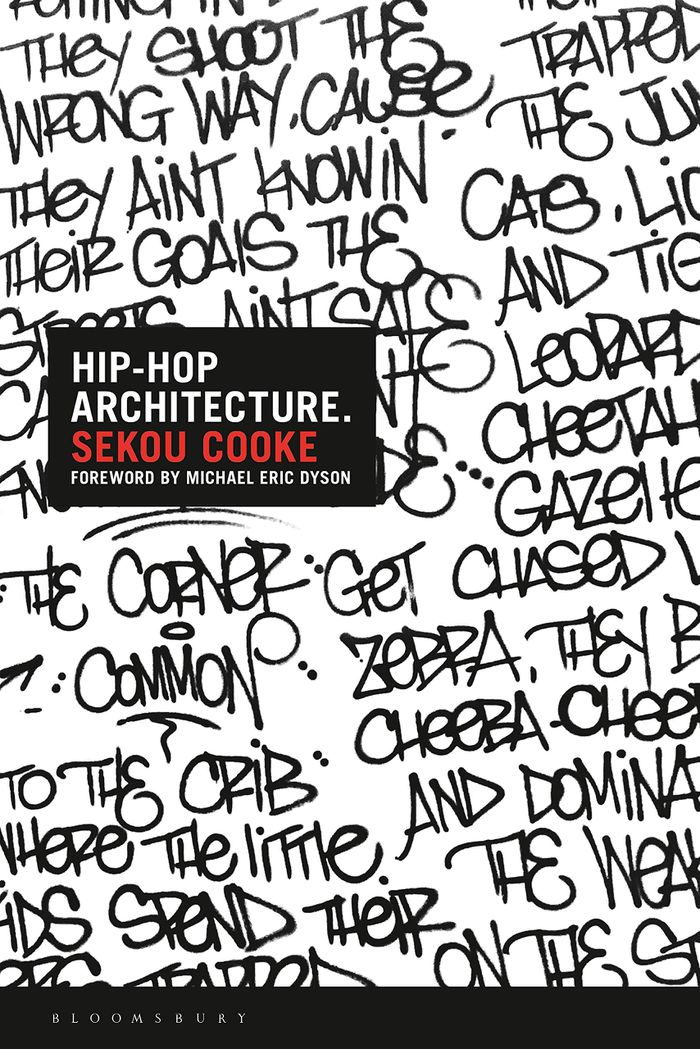
Hip-hop Architecture
Hip-hop Architecture
Actions:
Prix:
$52.50
(disponible en magasin)
Résumé:
"This book is not for you. It is not for architectural academic elites. It is not for those who have gentrified our neighborhoods, overly intellectualized the profession, and ignored all contemporary Black theory within the discipline. You have made architecture a symbol of exclusion, oppression, and domination rather than expression, aspiration, and inspiration. This(...)
Titre:
Hip-hop Architecture
Actions:
Prix:
$52.50
(disponible en magasin)
Résumé:
"This book is not for you. It is not for architectural academic elites. It is not for those who have gentrified our neighborhoods, overly intellectualized the profession, and ignored all contemporary Black theory within the discipline. You have made architecture a symbol of exclusion, oppression, and domination rather than expression, aspiration, and inspiration. This book is not for conformists-Black, White, or other." As architecture grapples with its own racist legacy, "Hip-Hop architecture" outlines a powerful new manifesto- the voice of the underrepresented, marginalized, and voiceless within the discipline. Exploring the production of spaces, buildings, and urban environments that embody the creative energies in hip-hop, it is a newly expanding design philosophy which sees architecture as a distinct part of hip-hop's cultural expression, and which uses hip-hop as a lens through which to provoke new architectural ideas. Examining the present and the future of "Hip-Hop architecture," the book also explores its historical antecedents and its theory, placing it in a wider context both within architecture and within Black and African American movements. Throughout, the work is illustrated with inspirational case studies of architectural projects and creative practices, and interspersed with interludes and interviews with key architects, designers, and academics in the field. This is a vital and provocative work that will appeal to architects, designers, students, theorists, and anyone interested in a fresh view of architecture, design, race and culture.
Classification:
livres
livres
Publication:
avril 2021
avril 2021
Sujet:
Théorie de l’architecture
Théorie de l’architecture
Classification:
livres
livres
Prix:
$29.95
(disponible sur commande)
Résumé:
What is a sustainable community? The pressing need to answer this simple question is what prompted John Pierce and Ann Dale to gather the essays in this volume. Communities, Development, and Sustainability across Canada is a timely synthesis of work on how Canadian communities can achieve sustainable development. It bridges the gap between theory and praxis and brings(...)
Sujet:
Architecture de Montréal
Architecture de Montréal
Publication:
janvier 1900, Vancouver
janvier 1900, Vancouver
Titre:
Communities, development, and sustainability across Canada
Actions:
Prix:
$29.95
(disponible sur commande)
Résumé:
What is a sustainable community? The pressing need to answer this simple question is what prompted John Pierce and Ann Dale to gather the essays in this volume. Communities, Development, and Sustainability across Canada is a timely synthesis of work on how Canadian communities can achieve sustainable development. It bridges the gap between theory and praxis and brings together academics, policy makers, and community activists, all of whom have argued for increased local participation in sustainable community development. Communities have become the weak link in efforts to refashion relations between the environment and the economy. The goal of this book is not simply to describe problems but also to suggest answers, not simply to offer theory but also to promote action, so that Canadian communities can better achieve sustain-able development. The twelve essays are organized into four sections: Vision, Connections, Action, and Assessing Progress. The first and last sections discuss local sustainable development within the context of increasing globalization. The second section approaches sustainable development from the perspective of social evolution and urban systems. The third section, the heart of the book, is comprised of three community case studies, an assessment of the Pacific salmon fishery, and four general discussions of sustainable development. The conclusion reiterates the need to make communities stronger links in sustainable development. The message of "Communities, development, and sustainability across Canada" is clear: it is time for communities themselves to act if they are to achieve sustainable development. This book will prove to be a valuable guide to taking the first steps.
Classification:
livres
livres
Publication:
janvier 1900, Vancouver
janvier 1900, Vancouver
Sujet:
Architecture de Montréal
Architecture de Montréal
Classification:
livres
livres
Titre:
Spaces of uncertainty
Spaces of uncertainty
Actions:
Prix:
$42.00
(disponible sur commande)
Résumé:
"Spaces of Uncertainty" is a publication on issues of contemporary urban space, from the particular view of two young architects, Kenny Cupers and Markus Miessen. Their photographic and theoretic research constitutes a double movement, which opens up the traditional architectural gaze towards the social spectrum of urban spaces, while simultaneously offering an original(...)
Sujet:
Théorie de l’urbanisme
Théorie de l’urbanisme
Publication:
janvier 2002, Wuppertal
janvier 2002, Wuppertal
Titre:
Spaces of uncertainty
Actions:
Prix:
$42.00
(disponible sur commande)
Résumé:
"Spaces of Uncertainty" is a publication on issues of contemporary urban space, from the particular view of two young architects, Kenny Cupers and Markus Miessen. Their photographic and theoretic research constitutes a double movement, which opens up the traditional architectural gaze towards the social spectrum of urban spaces, while simultaneously offering an original theory of contemporary cultural practice. The issue of public space is one that crosses interdisciplinary boundaries and attracts high interest in the fields of architecture, urbanism, sociology and cultural studies. With Berlin as a case study for a globalised urban condition, the publication aims at a wide international public by providing a broadly conceived theory that approaches the city at the same time as a material phenomenon and as a social and philosophical idea. Public space in its traditional interpretations is unable to follow the heartbeat of today's rapidly changing city. Instead of adding force to an ongoing rhetorical discourse of loss, this publication acknowledges the existence of places beyond traditional definition. With a photographic essay on Berlin, it opens an unexpectedly contemporary view upon this agitated debate. Left with enormous amounts of infill and fallow land, Berlin is a city in which residual space and public space lose their definitions. As playgrounds for micro-political activities, permanent hiding-places or areas for temporary occupation, its residual spaces prove their necessity. Shy and unassuming, these very spaces of uncertainty show their value for public life in the contemporary city. With contributions by Margaret Crawford, Hilde Heynen, Paul Davies, Paul Halliday and Jürgen Mayer H.
Classification:
livres
livres
Publication:
janvier 2002, Wuppertal
janvier 2002, Wuppertal
Sujet:
Théorie de l’urbanisme
Théorie de l’urbanisme
Classification:
livres
livres
Actions:
Prix:
$39.95
(disponible sur commande)
Résumé:
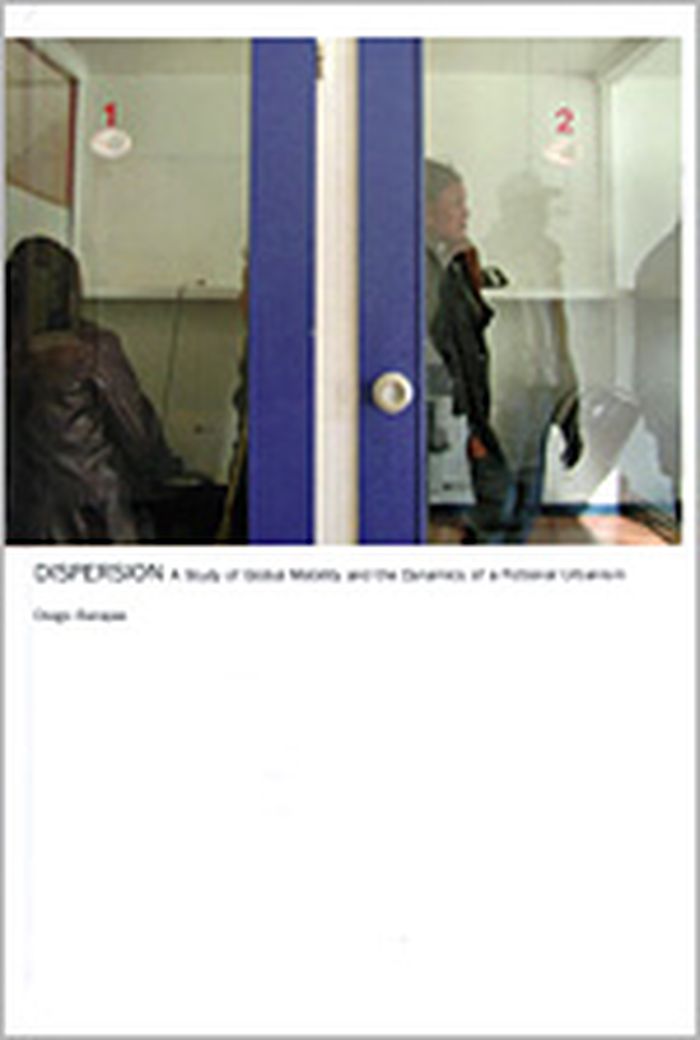
This publication is based on a thesis that studies global mobility and territories in dispersion. Based in Rotterdam, Diego Barajas concentrates his research on the urban dispersals shaped by migration, looking first at the Cape Verdean Diaspora and its territorial structure, and then focused on the case of the 'belhuis' - 'call-house'. By 'territories in dispersion',(...)
Titre:
Dispersion : a study of global mobility and the dynamics of a fictional urbanism
Actions:
Prix:
$39.95
(disponible sur commande)
Résumé:
This publication is based on a thesis that studies global mobility and territories in dispersion. Based in Rotterdam, Diego Barajas concentrates his research on the urban dispersals shaped by migration, looking first at the Cape Verdean Diaspora and its territorial structure, and then focused on the case of the 'belhuis' - 'call-house'. By 'territories in dispersion', Barajas refers to social habitats that are no longer physically contained in geographically continuous areas, but have been spread out and re-articulated by artificial means. The de-territorialized condition created by increased mobility - particularly by migration - had led to an urbanism of artificial re-territorializaton. This is a functional urbanism - as based on mental constructions but tangible - that is manifested in the city as fragments, micro environments of global circuits, each of which establishes its own identity, time, rules and aesthetics - its own atmospheres. These fragments are globally connected and articulated by abstract infrastructures like telecommunication systems, as much as by physical places - ethnic shops, religious centers, et cetera - and by the imaginary and idealized realms through which dispersed societies operate. This is an urbanism ruled by traditional values, by intuitive and emotional forces, as much by efficiency and functionality. This research argues that as patterns of dispersion intensify, they generate not just fragmented societies, but a new territorial cohesion - a realm in which 'the collective' has gained a new dimension. Cultural identity is no longer necessarily linked to geographical place, or to traditional territorial structures like the nation-state, but has become a particular concept attached to individual imaginations though subjected to and conditioned by the contradictory pressures of self-determination and commoditization. This research is an attempt to trace the patterns of urban dispersals shaped by migration to the city of Rotterdam. A city whose harbour has made it one of the most concentrated points of settlement for Cape Verdean emigrants.
Classification:
livres
livres
Publication:
mai 2003, Rotterdam
mai 2003, Rotterdam
Sujet:
Théorie de l’urbanisme
Théorie de l’urbanisme
Classification:
livres
livres
Actions:
Exemplaires:
Description:
144 pages : illustrations (chiefly color), charts, map ; 24 cm
Description:
144 pages : illustrations (chiefly color), charts, map ; 24 cm
Auteur:
Sujet:
Publication:
Berlin : Hatje Cantz Verlag GmbH ; Cambridge, Massachusetts : The MIT Press, [2022], ©2022
Berlin : Hatje Cantz Verlag GmbH ; Cambridge, Massachusetts : The MIT Press, [2022], ©2022
Titre:
Spatializing justice : building blocks / Teddy Cruz and Fonna Forman.
Actions:
Exemplaires:
Description:
144 pages : illustrations (chiefly color), charts, map ; 24 cm
Spatializing justice : building blocks / Teddy Cruz and Fonna Forman.
Actions:
Exemplaires:
Description:
144 pages : illustrations (chiefly color), charts, map ; 24 cm
Classification:
livres
livres
Publication:
Berlin : Hatje Cantz Verlag GmbH ; Cambridge, Massachusetts : The MIT Press, [2022], ©2022
Berlin : Hatje Cantz Verlag GmbH ; Cambridge, Massachusetts : The MIT Press, [2022], ©2022
Auteur:
Sujet:
Classification:
livres
livres
Actions:
Prix:
$37.50
(disponible sur commande)
Résumé:
Although the seemingly apocalyptic scale of the World Trade Center disaster continues to haunt people across the globe, it is only the most recent example of a city tragically wounded. Cities are, in fact, perpetually caught up in cycles of degeneration and renewal. As with the WTC, from time to time these cycles are severely ruptured by a sudden, unpredictable event.(...)
Titre:
Wounded cities : destruction and reconstruction in a globalized world
Actions:
Prix:
$37.50
(disponible sur commande)
Résumé:
Although the seemingly apocalyptic scale of the World Trade Center disaster continues to haunt people across the globe, it is only the most recent example of a city tragically wounded. Cities are, in fact, perpetually caught up in cycles of degeneration and renewal. As with the WTC, from time to time these cycles are severely ruptured by a sudden, unpredictable event. In the wake of recent terrorist activities, this timely book explores how urban populations are affected by "wounds" inflicted through violence, civil wars, overbuilding, drug trafficking, and the collapse of infrastructures, as well as "natural" disasters such as earthquakes. Mexico City, New York, Beirut, Belfast, Bangkok and Baghdad are just a few examples of cities riddled with problems that undermine, on a daily basis, the quality of urban life. What does it mean for urban dwellers when the infrastructure of a city collapses – transport, communication grids, heat, light, roads, water, and sanitation? What are the effects of foreign investment and huge construction projects on urban populations and how does this change the "look" and character of a city? How does drug trafficking intersect with class, race, and gender, and what impact does it have on vulnerable urban communities? How do political corruption and mafia networks distort the built environment? Drawing on in-depth case studies from across the globe, this book answers these intriguing questions through its rigorous consideration of changing global and national contexts, social movements, and corrosive urban events. Adopting a "grass roots up" approach, it places emphasis on people’s experiences of uneven development and inequality, their engagement with memory in the face of continual change, and the relevance of political activism to bettering their lives. It is especially attentive to the historical interaction of particular cities with wider political and economic forces, as these interactions have shaped local governance over time. Imagining each city as a "body politic", the authors consider its capacity both to mediate local conflict and to broach the healing of wounds.
Classification:
livres
livres
Publication:
août 2003, Oxford
août 2003, Oxford
Sujet:
Théorie de l’urbanisme
Théorie de l’urbanisme
Classification:
audio
audio
Actions:
Description:
1 online resource.
Auteur:
Sujet:
Publication:
[Place of publication not identified] : Lateral Addition, 2018.
[Place of publication not identified] : Lateral Addition, 2018.
Classification:
audio
audio
Publication:
[Place of publication not identified] : Lateral Addition, 2018.
[Place of publication not identified] : Lateral Addition, 2018.
Auteur:
Sujet:


