


3857 Résultats
Niveau de description archivistique:
Projet
Projet
Titre:
Atom
Atom
Numéro de référence:
AP144.S2.D71
Description:
File documents Cedric Price's participation in the design charette organized by the School of Architecture at Rice University, for Design Fete IV (4 June 1967 - 16 June 1967), in Houston, Texas. Six teams, each composed of one professional architect and six architecture students, were given a hypothetical location and program for a new town along with its educational needs and asked to create an 'educationally integrated' community. The results were published by Rice University in 'New Schools for New Towns'. File contains conceptual sketches showing plans for self-pace learning, intensive learning, large volume social activities, variable volume social activities, and commercial activities. Other drawings show links between diverse activity elements and illustrate a communications network with a central 'town brain'. Material in this group includes network analysis diagrams, diagrammatic plans showing activity nodes, and charts depicting design components ('kit of parts'). Some material in this file was published in: "Total Learning Environment with a Kit of Parts", 'Progressive Architecture' (April 1968), 208-210; 'Cedric Price-Works II' (London: Architectural Press, 1984), 18, 26-29; "Atom: Design for New Learning for a New Town", 'Architectural Design' (May 1968), 232-235. Material in this file was produced between 1967 and 1968. Charles Colbert, Paul Kennon, Niklaus Morganthaler, Robert Venturi and Thomas Vreeland appear as professional participants in the design charette. William Cannady appears as the director of Rice University's Design Fete IV. File contains conceptual drawings and textual records.
AP144.S2.D71
Description:
File documents Cedric Price's participation in the design charette organized by the School of Architecture at Rice University, for Design Fete IV (4 June 1967 - 16 June 1967), in Houston, Texas. Six teams, each composed of one professional architect and six architecture students, were given a hypothetical location and program for a new town along with its educational needs and asked to create an 'educationally integrated' community. The results were published by Rice University in 'New Schools for New Towns'. File contains conceptual sketches showing plans for self-pace learning, intensive learning, large volume social activities, variable volume social activities, and commercial activities. Other drawings show links between diverse activity elements and illustrate a communications network with a central 'town brain'. Material in this group includes network analysis diagrams, diagrammatic plans showing activity nodes, and charts depicting design components ('kit of parts'). Some material in this file was published in: "Total Learning Environment with a Kit of Parts", 'Progressive Architecture' (April 1968), 208-210; 'Cedric Price-Works II' (London: Architectural Press, 1984), 18, 26-29; "Atom: Design for New Learning for a New Town", 'Architectural Design' (May 1968), 232-235. Material in this file was produced between 1967 and 1968. Charles Colbert, Paul Kennon, Niklaus Morganthaler, Robert Venturi and Thomas Vreeland appear as professional participants in the design charette. William Cannady appears as the director of Rice University's Design Fete IV. File contains conceptual drawings and textual records.
Personnes et institutions:
Date:
1967-1968
1967-1968
Titre:
Atom
Actions:
AP144.S2.D71
Description:
File documents Cedric Price's participation in the design charette organized by the School of Architecture at Rice University, for Design Fete IV (4 June 1967 - 16 June 1967), in Houston, Texas. Six teams, each composed of one professional architect and six architecture students, were given a hypothetical location and program for a new town along with its educational needs and asked to create an 'educationally integrated' community. The results were published by Rice University in 'New Schools for New Towns'. File contains conceptual sketches showing plans for self-pace learning, intensive learning, large volume social activities, variable volume social activities, and commercial activities. Other drawings show links between diverse activity elements and illustrate a communications network with a central 'town brain'. Material in this group includes network analysis diagrams, diagrammatic plans showing activity nodes, and charts depicting design components ('kit of parts'). Some material in this file was published in: "Total Learning Environment with a Kit of Parts", 'Progressive Architecture' (April 1968), 208-210; 'Cedric Price-Works II' (London: Architectural Press, 1984), 18, 26-29; "Atom: Design for New Learning for a New Town", 'Architectural Design' (May 1968), 232-235. Material in this file was produced between 1967 and 1968. Charles Colbert, Paul Kennon, Niklaus Morganthaler, Robert Venturi and Thomas Vreeland appear as professional participants in the design charette. William Cannady appears as the director of Rice University's Design Fete IV. File contains conceptual drawings and textual records.
Atom
Actions:
AP144.S2.D71
Description:
File documents Cedric Price's participation in the design charette organized by the School of Architecture at Rice University, for Design Fete IV (4 June 1967 - 16 June 1967), in Houston, Texas. Six teams, each composed of one professional architect and six architecture students, were given a hypothetical location and program for a new town along with its educational needs and asked to create an 'educationally integrated' community. The results were published by Rice University in 'New Schools for New Towns'. File contains conceptual sketches showing plans for self-pace learning, intensive learning, large volume social activities, variable volume social activities, and commercial activities. Other drawings show links between diverse activity elements and illustrate a communications network with a central 'town brain'. Material in this group includes network analysis diagrams, diagrammatic plans showing activity nodes, and charts depicting design components ('kit of parts'). Some material in this file was published in: "Total Learning Environment with a Kit of Parts", 'Progressive Architecture' (April 1968), 208-210; 'Cedric Price-Works II' (London: Architectural Press, 1984), 18, 26-29; "Atom: Design for New Learning for a New Town", 'Architectural Design' (May 1968), 232-235. Material in this file was produced between 1967 and 1968. Charles Colbert, Paul Kennon, Niklaus Morganthaler, Robert Venturi and Thomas Vreeland appear as professional participants in the design charette. William Cannady appears as the director of Rice University's Design Fete IV. File contains conceptual drawings and textual records.
Niveau de description archivistique:
File 71
File 71
Date:
1967-1968
1967-1968
Personnes et institutions:
Classification:
événements
événements
Titre:
L’enseignement de… Toronto
L’enseignement de… Toronto
Actions:
Description:
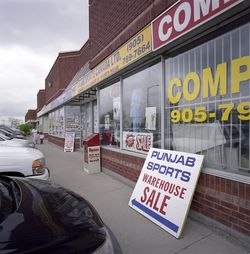
Ian Chodikoff, architecte, urbaniste et rédacteur en chef du magazine Canadian Architect, présente ses recherches sur la banlieue contemporaine, et sur les influences qu’exercent la diversité ethnique et le multiculturalisme sur l’architecture et l’esthétique urbaine dans les paysages suburbains de la région du Grand Toronto (RGT). Les banlieues d’aujourd’hui sont plus(...)
Ian Chodikoff, architecte, urbaniste et rédacteur en chef du magazine Canadian Architect, présente ses recherches sur la banlieue contemporaine, et sur les influences qu’exercent la diversité ethnique et le multiculturalisme sur l’architecture et l’esthétique urbaine dans les paysages suburbains de la région du Grand Toronto (RGT). Les banlieues d’aujourd’hui sont plus(...)
Localisation:
Théâtre Paul-Desmarais
Théâtre Paul-Desmarais
Date:
4 mars 2010 , 19h
4 mars 2010 , 19h
Titre:
L’enseignement de… Toronto
Actions:
Description:
Ian Chodikoff, architecte, urbaniste et rédacteur en chef du magazine Canadian Architect, présente ses recherches sur la banlieue contemporaine, et sur les influences qu’exercent la diversité ethnique et le multiculturalisme sur l’architecture et l’esthétique urbaine dans les paysages suburbains de la région du Grand Toronto (RGT). Les banlieues d’aujourd’hui sont plus(...)
L’enseignement de… Toronto
Actions:
Description:
Ian Chodikoff, architecte, urbaniste et rédacteur en chef du magazine Canadian Architect, présente ses recherches sur la banlieue contemporaine, et sur les influences qu’exercent la diversité ethnique et le multiculturalisme sur l’architecture et l’esthétique urbaine dans les paysages suburbains de la région du Grand Toronto (RGT). Les banlieues d’aujourd’hui sont plus(...)
Classification:
événements
événements
Date:
4 mars 2010
19h
4 mars 2010
19h
Localisation:
Théâtre Paul-Desmarais
Théâtre Paul-Desmarais
Classification:
documents textuels
documents textuels
Numéro de référence:
AP197.S1.SS9.014
Description:
The box contains drafts, final copies, notes and correspondence for various articles, interviews, keynote addresses, and lectures by Kenneth Frampton. The materials are organized in alphabetical order, from FR- I. The largest portion of this box consists of articles, correspondence and research files on Tony Fretton; a dossier on the 1994 Mies van der Rohe Pavilion Award in which Frampton was a nominator from 1994-1996; various articles, drafts and correspondence on Steven Holl; drafts of "Homage a Finlandia: Finnish Architecture and the Unfinished Modern Project," a Nils Wickberg lecture, Aalto University; and correspondence and drafts of a Michael Hopkins essay featured in "Hopkins: the work of Michael Hopkins and Partners." Other subjects and architects explored in these texts relate to: Tony Fretton; Hiromi Fuiji; futurism; on Galfetti's Aula; Antoni Gaudí; globalism and its discontents; Giorgio Grassi; Vittorio Gregotti; the Guggenheim; Dan S. Hanganu; the work of Hariri Hariri; Herman Hertzberger; homage to Iberia; industrialization; and an introduction to "Inside Architecture" by Vittorio Gregotti.
AP197.S1.SS9.014
Description:
The box contains drafts, final copies, notes and correspondence for various articles, interviews, keynote addresses, and lectures by Kenneth Frampton. The materials are organized in alphabetical order, from FR- I. The largest portion of this box consists of articles, correspondence and research files on Tony Fretton; a dossier on the 1994 Mies van der Rohe Pavilion Award in which Frampton was a nominator from 1994-1996; various articles, drafts and correspondence on Steven Holl; drafts of "Homage a Finlandia: Finnish Architecture and the Unfinished Modern Project," a Nils Wickberg lecture, Aalto University; and correspondence and drafts of a Michael Hopkins essay featured in "Hopkins: the work of Michael Hopkins and Partners." Other subjects and architects explored in these texts relate to: Tony Fretton; Hiromi Fuiji; futurism; on Galfetti's Aula; Antoni Gaudí; globalism and its discontents; Giorgio Grassi; Vittorio Gregotti; the Guggenheim; Dan S. Hanganu; the work of Hariri Hariri; Herman Hertzberger; homage to Iberia; industrialization; and an introduction to "Inside Architecture" by Vittorio Gregotti.
Personnes et institutions:
Date:
circa 1971-2015
circa 1971-2015
Titre:
Kenneth Frampton writings (FR-I)
Actions:
AP197.S1.SS9.014
Description:
The box contains drafts, final copies, notes and correspondence for various articles, interviews, keynote addresses, and lectures by Kenneth Frampton. The materials are organized in alphabetical order, from FR- I. The largest portion of this box consists of articles, correspondence and research files on Tony Fretton; a dossier on the 1994 Mies van der Rohe Pavilion Award in which Frampton was a nominator from 1994-1996; various articles, drafts and correspondence on Steven Holl; drafts of "Homage a Finlandia: Finnish Architecture and the Unfinished Modern Project," a Nils Wickberg lecture, Aalto University; and correspondence and drafts of a Michael Hopkins essay featured in "Hopkins: the work of Michael Hopkins and Partners." Other subjects and architects explored in these texts relate to: Tony Fretton; Hiromi Fuiji; futurism; on Galfetti's Aula; Antoni Gaudí; globalism and its discontents; Giorgio Grassi; Vittorio Gregotti; the Guggenheim; Dan S. Hanganu; the work of Hariri Hariri; Herman Hertzberger; homage to Iberia; industrialization; and an introduction to "Inside Architecture" by Vittorio Gregotti.
Kenneth Frampton writings (FR-I)
Actions:
AP197.S1.SS9.014
Description:
The box contains drafts, final copies, notes and correspondence for various articles, interviews, keynote addresses, and lectures by Kenneth Frampton. The materials are organized in alphabetical order, from FR- I. The largest portion of this box consists of articles, correspondence and research files on Tony Fretton; a dossier on the 1994 Mies van der Rohe Pavilion Award in which Frampton was a nominator from 1994-1996; various articles, drafts and correspondence on Steven Holl; drafts of "Homage a Finlandia: Finnish Architecture and the Unfinished Modern Project," a Nils Wickberg lecture, Aalto University; and correspondence and drafts of a Michael Hopkins essay featured in "Hopkins: the work of Michael Hopkins and Partners." Other subjects and architects explored in these texts relate to: Tony Fretton; Hiromi Fuiji; futurism; on Galfetti's Aula; Antoni Gaudí; globalism and its discontents; Giorgio Grassi; Vittorio Gregotti; the Guggenheim; Dan S. Hanganu; the work of Hariri Hariri; Herman Hertzberger; homage to Iberia; industrialization; and an introduction to "Inside Architecture" by Vittorio Gregotti.
Classification:
documents textuels
documents textuels
Date:
circa 1971-2015
circa 1971-2015
Personnes et institutions:
Niveau de description archivistique:
Projet
Projet
Numéro de référence:
AP018.S1.1960.PR02
Description:
This project series documents the Imperial Oil Ontario region office in North York, Ontario from 1960-1962. The office identified the project number as 6049. This project consisted of a three-storey, 110,000 square foot building located at the corner of Don Mills Road and Eglington Avenue. The front entrance was accessed from a circular driveway off Wynford Drive, with parking lots on either side that held 330 vehicles. The basement level had storage rooms, machine and boiler rooms, a telephone switch gear room and shipping areas. The first floor included food service areas, offices, locker rooms, and a doctor's office complete with x-ray rooms, treatment areas and a quiet room for female employees, among others. The second floor contained administrative areas for accounting, data control and banking, while the third floor contained more offices. The building's frame consisted of a rectangular steel skeleton faced with concrete panels. The ground level was recessed 20 feet to allow for sidewalks around the building. Concrete columns at this level supported the upper two storeys. The landscaped surroundings include long, fountain-spotted reflecting pools. This project won the silver Massey Medal for Architecture in 1964, as well as an honourable distinction at the International Exhibition of Architects VIII Biennial of São Paula in 1965. The project is recorded through drawings, textual records and a photograph dating from 1961-1970. The drawings are mostly reprographic copies that include plans, sections, elevations, details, schedules and electrical, mechanical and structural drawings. The textual records consist of specifications originally arranged with the drawings. The photograph shows the finished buillding.
AP018.S1.1960.PR02
Description:
This project series documents the Imperial Oil Ontario region office in North York, Ontario from 1960-1962. The office identified the project number as 6049. This project consisted of a three-storey, 110,000 square foot building located at the corner of Don Mills Road and Eglington Avenue. The front entrance was accessed from a circular driveway off Wynford Drive, with parking lots on either side that held 330 vehicles. The basement level had storage rooms, machine and boiler rooms, a telephone switch gear room and shipping areas. The first floor included food service areas, offices, locker rooms, and a doctor's office complete with x-ray rooms, treatment areas and a quiet room for female employees, among others. The second floor contained administrative areas for accounting, data control and banking, while the third floor contained more offices. The building's frame consisted of a rectangular steel skeleton faced with concrete panels. The ground level was recessed 20 feet to allow for sidewalks around the building. Concrete columns at this level supported the upper two storeys. The landscaped surroundings include long, fountain-spotted reflecting pools. This project won the silver Massey Medal for Architecture in 1964, as well as an honourable distinction at the International Exhibition of Architects VIII Biennial of São Paula in 1965. The project is recorded through drawings, textual records and a photograph dating from 1961-1970. The drawings are mostly reprographic copies that include plans, sections, elevations, details, schedules and electrical, mechanical and structural drawings. The textual records consist of specifications originally arranged with the drawings. The photograph shows the finished buillding.
Personnes et institutions:
Date:
1961 - 1970
1961 - 1970
Titre:
Imperial Oil Limited, Ontario Region Office Building, North York (1960-1962)
Actions:
AP018.S1.1960.PR02
Description:
This project series documents the Imperial Oil Ontario region office in North York, Ontario from 1960-1962. The office identified the project number as 6049. This project consisted of a three-storey, 110,000 square foot building located at the corner of Don Mills Road and Eglington Avenue. The front entrance was accessed from a circular driveway off Wynford Drive, with parking lots on either side that held 330 vehicles. The basement level had storage rooms, machine and boiler rooms, a telephone switch gear room and shipping areas. The first floor included food service areas, offices, locker rooms, and a doctor's office complete with x-ray rooms, treatment areas and a quiet room for female employees, among others. The second floor contained administrative areas for accounting, data control and banking, while the third floor contained more offices. The building's frame consisted of a rectangular steel skeleton faced with concrete panels. The ground level was recessed 20 feet to allow for sidewalks around the building. Concrete columns at this level supported the upper two storeys. The landscaped surroundings include long, fountain-spotted reflecting pools. This project won the silver Massey Medal for Architecture in 1964, as well as an honourable distinction at the International Exhibition of Architects VIII Biennial of São Paula in 1965. The project is recorded through drawings, textual records and a photograph dating from 1961-1970. The drawings are mostly reprographic copies that include plans, sections, elevations, details, schedules and electrical, mechanical and structural drawings. The textual records consist of specifications originally arranged with the drawings. The photograph shows the finished buillding.
Imperial Oil Limited, Ontario Region Office Building, North York (1960-1962)
Actions:
AP018.S1.1960.PR02
Description:
This project series documents the Imperial Oil Ontario region office in North York, Ontario from 1960-1962. The office identified the project number as 6049. This project consisted of a three-storey, 110,000 square foot building located at the corner of Don Mills Road and Eglington Avenue. The front entrance was accessed from a circular driveway off Wynford Drive, with parking lots on either side that held 330 vehicles. The basement level had storage rooms, machine and boiler rooms, a telephone switch gear room and shipping areas. The first floor included food service areas, offices, locker rooms, and a doctor's office complete with x-ray rooms, treatment areas and a quiet room for female employees, among others. The second floor contained administrative areas for accounting, data control and banking, while the third floor contained more offices. The building's frame consisted of a rectangular steel skeleton faced with concrete panels. The ground level was recessed 20 feet to allow for sidewalks around the building. Concrete columns at this level supported the upper two storeys. The landscaped surroundings include long, fountain-spotted reflecting pools. This project won the silver Massey Medal for Architecture in 1964, as well as an honourable distinction at the International Exhibition of Architects VIII Biennial of São Paula in 1965. The project is recorded through drawings, textual records and a photograph dating from 1961-1970. The drawings are mostly reprographic copies that include plans, sections, elevations, details, schedules and electrical, mechanical and structural drawings. The textual records consist of specifications originally arranged with the drawings. The photograph shows the finished buillding.
Niveau de description archivistique:
Project
Project
Date:
1961 - 1970
1961 - 1970
Personnes et institutions:
Niveau de description archivistique:
Projet
Projet
Numéro de référence:
AP018.S1.1969.PR01
Description:
This project series documents the expansion of the Art Gallery of Ontario (AGO) in Toronto from 1969-1974. The office identified the project as number 69006. This project consisted of the vast expansion of the AGO that began in 1969, which largely came about due to a multi-million dollar donation from English sculpture Henry Moore. Most prominent in this project was the design and construction of the Henry Moore Sculpture Centre, a new gallery to house the extensive artworks of Henry Moore in the AGO’s collection. This included $15 million’s worth of art that Moore donated at the start of the project. The project was made up of two phases. The first included construction of the Henry Moore Sculpture Centre, the Sam and Ayala Zacks Wing, a link to the pre-existing Grange mansion, and updates to the art gallery’s finishes. The second phase proposed additional updates to existing finishes. By the end of this project, the architects had also added a public lounge, dining room and cafeteria, a members’ lounge, lecture areas (including the Henry Moore Lecture Hall), classrooms, and spaces for the gallery’s special services. The work was further divided into 4 physical areas of the art gallery (A, B, C and D) and the drawings for this project reflect this division. Before this work had been completed, a “Stage II” to the expansion had already been approved by the owners (Stage II is also included in this fonds, see AP018.S1.1972.PR08). In the documentation, this project was originally called the Henry Moore Sculpture Centre, Art Gallery of Ontario, Expansion Phases 1 and 2. However, as multiple stages to the expansion developed later on, this project eventually became known as the Stage I Expansion. While the project contract was originally given to John B. Parkin Associates, John C. Parkin continued the project under his new firm, Parkin Architects Planners, after parting ways with partner John B. Parkin in 1971. The project is recorded through drawings, textual records, and mounted photographs dating from 1968-1986. There are numerous original drawings showing the design development of the new galleries. Two presentation boards show photographs of the project model. The textual records consist of correspondence with contractors and clients, inspection and other site reports, specifications, contract data, consultancy records, schedules, change orders, financial documentation, conference reports, area calculations, research materials, detail planning records, and project notebooks. Box AP018.S1.1969.PR01.007 contains an index to the textual records, which was created by the office. This project series also contains one box of textual documentation that spans across multiple project series related to the AGO expansion within this fonds (see AP018.S1.1969.PR01.044). This includes press releases, newspaper articles, project proposals and studies, correspondence with Henry Moore, meeting minutes and reports.
AP018.S1.1969.PR01
Description:
This project series documents the expansion of the Art Gallery of Ontario (AGO) in Toronto from 1969-1974. The office identified the project as number 69006. This project consisted of the vast expansion of the AGO that began in 1969, which largely came about due to a multi-million dollar donation from English sculpture Henry Moore. Most prominent in this project was the design and construction of the Henry Moore Sculpture Centre, a new gallery to house the extensive artworks of Henry Moore in the AGO’s collection. This included $15 million’s worth of art that Moore donated at the start of the project. The project was made up of two phases. The first included construction of the Henry Moore Sculpture Centre, the Sam and Ayala Zacks Wing, a link to the pre-existing Grange mansion, and updates to the art gallery’s finishes. The second phase proposed additional updates to existing finishes. By the end of this project, the architects had also added a public lounge, dining room and cafeteria, a members’ lounge, lecture areas (including the Henry Moore Lecture Hall), classrooms, and spaces for the gallery’s special services. The work was further divided into 4 physical areas of the art gallery (A, B, C and D) and the drawings for this project reflect this division. Before this work had been completed, a “Stage II” to the expansion had already been approved by the owners (Stage II is also included in this fonds, see AP018.S1.1972.PR08). In the documentation, this project was originally called the Henry Moore Sculpture Centre, Art Gallery of Ontario, Expansion Phases 1 and 2. However, as multiple stages to the expansion developed later on, this project eventually became known as the Stage I Expansion. While the project contract was originally given to John B. Parkin Associates, John C. Parkin continued the project under his new firm, Parkin Architects Planners, after parting ways with partner John B. Parkin in 1971. The project is recorded through drawings, textual records, and mounted photographs dating from 1968-1986. There are numerous original drawings showing the design development of the new galleries. Two presentation boards show photographs of the project model. The textual records consist of correspondence with contractors and clients, inspection and other site reports, specifications, contract data, consultancy records, schedules, change orders, financial documentation, conference reports, area calculations, research materials, detail planning records, and project notebooks. Box AP018.S1.1969.PR01.007 contains an index to the textual records, which was created by the office. This project series also contains one box of textual documentation that spans across multiple project series related to the AGO expansion within this fonds (see AP018.S1.1969.PR01.044). This includes press releases, newspaper articles, project proposals and studies, correspondence with Henry Moore, meeting minutes and reports.
Personnes et institutions:
Date:
1968-1986
1968-1986
Titre:
Henry Moore Sculpture Centre, Art Gallery of Ontario, Stage I Expansion, Toronto (1969-1974)
Actions:
AP018.S1.1969.PR01
Description:
This project series documents the expansion of the Art Gallery of Ontario (AGO) in Toronto from 1969-1974. The office identified the project as number 69006. This project consisted of the vast expansion of the AGO that began in 1969, which largely came about due to a multi-million dollar donation from English sculpture Henry Moore. Most prominent in this project was the design and construction of the Henry Moore Sculpture Centre, a new gallery to house the extensive artworks of Henry Moore in the AGO’s collection. This included $15 million’s worth of art that Moore donated at the start of the project. The project was made up of two phases. The first included construction of the Henry Moore Sculpture Centre, the Sam and Ayala Zacks Wing, a link to the pre-existing Grange mansion, and updates to the art gallery’s finishes. The second phase proposed additional updates to existing finishes. By the end of this project, the architects had also added a public lounge, dining room and cafeteria, a members’ lounge, lecture areas (including the Henry Moore Lecture Hall), classrooms, and spaces for the gallery’s special services. The work was further divided into 4 physical areas of the art gallery (A, B, C and D) and the drawings for this project reflect this division. Before this work had been completed, a “Stage II” to the expansion had already been approved by the owners (Stage II is also included in this fonds, see AP018.S1.1972.PR08). In the documentation, this project was originally called the Henry Moore Sculpture Centre, Art Gallery of Ontario, Expansion Phases 1 and 2. However, as multiple stages to the expansion developed later on, this project eventually became known as the Stage I Expansion. While the project contract was originally given to John B. Parkin Associates, John C. Parkin continued the project under his new firm, Parkin Architects Planners, after parting ways with partner John B. Parkin in 1971. The project is recorded through drawings, textual records, and mounted photographs dating from 1968-1986. There are numerous original drawings showing the design development of the new galleries. Two presentation boards show photographs of the project model. The textual records consist of correspondence with contractors and clients, inspection and other site reports, specifications, contract data, consultancy records, schedules, change orders, financial documentation, conference reports, area calculations, research materials, detail planning records, and project notebooks. Box AP018.S1.1969.PR01.007 contains an index to the textual records, which was created by the office. This project series also contains one box of textual documentation that spans across multiple project series related to the AGO expansion within this fonds (see AP018.S1.1969.PR01.044). This includes press releases, newspaper articles, project proposals and studies, correspondence with Henry Moore, meeting minutes and reports.
Henry Moore Sculpture Centre, Art Gallery of Ontario, Stage I Expansion, Toronto (1969-1974)
Actions:
AP018.S1.1969.PR01
Description:
This project series documents the expansion of the Art Gallery of Ontario (AGO) in Toronto from 1969-1974. The office identified the project as number 69006. This project consisted of the vast expansion of the AGO that began in 1969, which largely came about due to a multi-million dollar donation from English sculpture Henry Moore. Most prominent in this project was the design and construction of the Henry Moore Sculpture Centre, a new gallery to house the extensive artworks of Henry Moore in the AGO’s collection. This included $15 million’s worth of art that Moore donated at the start of the project. The project was made up of two phases. The first included construction of the Henry Moore Sculpture Centre, the Sam and Ayala Zacks Wing, a link to the pre-existing Grange mansion, and updates to the art gallery’s finishes. The second phase proposed additional updates to existing finishes. By the end of this project, the architects had also added a public lounge, dining room and cafeteria, a members’ lounge, lecture areas (including the Henry Moore Lecture Hall), classrooms, and spaces for the gallery’s special services. The work was further divided into 4 physical areas of the art gallery (A, B, C and D) and the drawings for this project reflect this division. Before this work had been completed, a “Stage II” to the expansion had already been approved by the owners (Stage II is also included in this fonds, see AP018.S1.1972.PR08). In the documentation, this project was originally called the Henry Moore Sculpture Centre, Art Gallery of Ontario, Expansion Phases 1 and 2. However, as multiple stages to the expansion developed later on, this project eventually became known as the Stage I Expansion. While the project contract was originally given to John B. Parkin Associates, John C. Parkin continued the project under his new firm, Parkin Architects Planners, after parting ways with partner John B. Parkin in 1971. The project is recorded through drawings, textual records, and mounted photographs dating from 1968-1986. There are numerous original drawings showing the design development of the new galleries. Two presentation boards show photographs of the project model. The textual records consist of correspondence with contractors and clients, inspection and other site reports, specifications, contract data, consultancy records, schedules, change orders, financial documentation, conference reports, area calculations, research materials, detail planning records, and project notebooks. Box AP018.S1.1969.PR01.007 contains an index to the textual records, which was created by the office. This project series also contains one box of textual documentation that spans across multiple project series related to the AGO expansion within this fonds (see AP018.S1.1969.PR01.044). This includes press releases, newspaper articles, project proposals and studies, correspondence with Henry Moore, meeting minutes and reports.
Niveau de description archivistique:
Project
Project
Date:
1968-1986
1968-1986
Personnes et institutions:
Niveau de description archivistique:
Projet
Projet
Numéro de référence:
AP178.S1.2002.PR06
Description:
This project series documents the Parque de Pedras Salgadas in Pedras Salgadas, Portugal. While the records were held in the office’s archives this project was assigned the number 50/00. The office assigned the date 2002 to this project. The project consisted of extensive work to the spa resort located in Pedras Salgadas Park for owner VMPS - Águas & Turismo, S.A, part of Unicer (now Super Bock Group). The work included the demolition of many buildings, the restauration and alterations of others and the construction of new buildings. Work on the Hotel Avelames, the thermal spa, the public pools and the Casa de Chá were the primary focus of the site for Siza. These four components of the project were divided by the office, with the Hotel Avelames, spa and Casa de Chá arranged together under AP178.S1.2002.PR06.SS1 and the public pools arranged under AP178.S1.2002.PR06.SS2. Architect Luís Rebelo de Andrade also constructed eco-houses and treehouses on the site later on. This project was realized in tandem with a similar project by Siza, the Parque de Vidago (AP178.S1.2002.PR05), also owned by Unicer. For this reason, the materials for both projects are mixed together. A large number of materials for this project can be found in project subseries AP178.S1.2002.PR05.SS1. These files have been identified at the file level in the Parque de Vidago project subseries.
AP178.S1.2002.PR06
Description:
This project series documents the Parque de Pedras Salgadas in Pedras Salgadas, Portugal. While the records were held in the office’s archives this project was assigned the number 50/00. The office assigned the date 2002 to this project. The project consisted of extensive work to the spa resort located in Pedras Salgadas Park for owner VMPS - Águas & Turismo, S.A, part of Unicer (now Super Bock Group). The work included the demolition of many buildings, the restauration and alterations of others and the construction of new buildings. Work on the Hotel Avelames, the thermal spa, the public pools and the Casa de Chá were the primary focus of the site for Siza. These four components of the project were divided by the office, with the Hotel Avelames, spa and Casa de Chá arranged together under AP178.S1.2002.PR06.SS1 and the public pools arranged under AP178.S1.2002.PR06.SS2. Architect Luís Rebelo de Andrade also constructed eco-houses and treehouses on the site later on. This project was realized in tandem with a similar project by Siza, the Parque de Vidago (AP178.S1.2002.PR05), also owned by Unicer. For this reason, the materials for both projects are mixed together. A large number of materials for this project can be found in project subseries AP178.S1.2002.PR05.SS1. These files have been identified at the file level in the Parque de Vidago project subseries.
Personnes et institutions:
Date:
2002-2010
2002-2010
Titre:
Parque de Pedras Salgadas, Pedras Salgadas, Portugal (2002-2010)
Actions:
AP178.S1.2002.PR06
Description:
This project series documents the Parque de Pedras Salgadas in Pedras Salgadas, Portugal. While the records were held in the office’s archives this project was assigned the number 50/00. The office assigned the date 2002 to this project. The project consisted of extensive work to the spa resort located in Pedras Salgadas Park for owner VMPS - Águas & Turismo, S.A, part of Unicer (now Super Bock Group). The work included the demolition of many buildings, the restauration and alterations of others and the construction of new buildings. Work on the Hotel Avelames, the thermal spa, the public pools and the Casa de Chá were the primary focus of the site for Siza. These four components of the project were divided by the office, with the Hotel Avelames, spa and Casa de Chá arranged together under AP178.S1.2002.PR06.SS1 and the public pools arranged under AP178.S1.2002.PR06.SS2. Architect Luís Rebelo de Andrade also constructed eco-houses and treehouses on the site later on. This project was realized in tandem with a similar project by Siza, the Parque de Vidago (AP178.S1.2002.PR05), also owned by Unicer. For this reason, the materials for both projects are mixed together. A large number of materials for this project can be found in project subseries AP178.S1.2002.PR05.SS1. These files have been identified at the file level in the Parque de Vidago project subseries.
Parque de Pedras Salgadas, Pedras Salgadas, Portugal (2002-2010)
Actions:
AP178.S1.2002.PR06
Description:
This project series documents the Parque de Pedras Salgadas in Pedras Salgadas, Portugal. While the records were held in the office’s archives this project was assigned the number 50/00. The office assigned the date 2002 to this project. The project consisted of extensive work to the spa resort located in Pedras Salgadas Park for owner VMPS - Águas & Turismo, S.A, part of Unicer (now Super Bock Group). The work included the demolition of many buildings, the restauration and alterations of others and the construction of new buildings. Work on the Hotel Avelames, the thermal spa, the public pools and the Casa de Chá were the primary focus of the site for Siza. These four components of the project were divided by the office, with the Hotel Avelames, spa and Casa de Chá arranged together under AP178.S1.2002.PR06.SS1 and the public pools arranged under AP178.S1.2002.PR06.SS2. Architect Luís Rebelo de Andrade also constructed eco-houses and treehouses on the site later on. This project was realized in tandem with a similar project by Siza, the Parque de Vidago (AP178.S1.2002.PR05), also owned by Unicer. For this reason, the materials for both projects are mixed together. A large number of materials for this project can be found in project subseries AP178.S1.2002.PR05.SS1. These files have been identified at the file level in the Parque de Vidago project subseries.
Niveau de description archivistique:
Project
Project
Date:
2002-2010
2002-2010
Personnes et institutions:
Niveau de description archivistique:
Projet
Projet
Numéro de référence:
AP018.S1.1974.PR25
Description:
This project series documents the design and construction of the Royal Ottawa Regional Rehabilitation Centre in Ottawa, Ontario from 1974-1981. The office identified the project number as 7432. The Ottawa Heath Sciences Complex, a vast hospital network encompassing institutions across the city, hired Parkin Architects Planners in 1971 to design and construct University of Ottawa buildings within the network. These campus buildings were located in the Alta Vista neighbourhood and referred to as the Health Sciences Centre. This project consists of one building in that complex, the Royal Ottawa Regional Rehabilitation Centre. The distinction between these names should be noted when viewing the materials. The two-storey rehabilitation centre was constructed directly beside the Ottawa Health Sciences Building, another hospital in the network built by Parkin (see project series AP018.S1.1974.PR01 in this fonds). The proposal conceived a 145,000 square foot hospital with 77 in-patient beds. The design included space for patient accommodation, teaching, research, administrative activities, patient care and treatment, and a concession area. Patients at the hospital would range from those with severe brain injuries, to amputees, to those with rheumatic diseases. The building was carefully designed to accommodate the specialized needs of the patients. The hospital design also included a swimming pool, sports areas, and spaces for other leisure activities thought to aid in the rehabilitation process. The project is recorded through construction photographs, drawings, and textual materials dating from 1971-1983. The textual records include correspondence, specifications, schedules, contract data, conference reports and minutes, inspection reports, predesign notes, consultancy records, financial documents, change orders, supplementary instructions, research, and deficiency lists. The majority of these textual records deal with the hospital's construction, rather than design. Most drawings are reprographic copies of detail drawings and can be found within the textual records. Box AP018.S1.1974.PR25.002 contains an index to the textual records, which was created by the office.
AP018.S1.1974.PR25
Description:
This project series documents the design and construction of the Royal Ottawa Regional Rehabilitation Centre in Ottawa, Ontario from 1974-1981. The office identified the project number as 7432. The Ottawa Heath Sciences Complex, a vast hospital network encompassing institutions across the city, hired Parkin Architects Planners in 1971 to design and construct University of Ottawa buildings within the network. These campus buildings were located in the Alta Vista neighbourhood and referred to as the Health Sciences Centre. This project consists of one building in that complex, the Royal Ottawa Regional Rehabilitation Centre. The distinction between these names should be noted when viewing the materials. The two-storey rehabilitation centre was constructed directly beside the Ottawa Health Sciences Building, another hospital in the network built by Parkin (see project series AP018.S1.1974.PR01 in this fonds). The proposal conceived a 145,000 square foot hospital with 77 in-patient beds. The design included space for patient accommodation, teaching, research, administrative activities, patient care and treatment, and a concession area. Patients at the hospital would range from those with severe brain injuries, to amputees, to those with rheumatic diseases. The building was carefully designed to accommodate the specialized needs of the patients. The hospital design also included a swimming pool, sports areas, and spaces for other leisure activities thought to aid in the rehabilitation process. The project is recorded through construction photographs, drawings, and textual materials dating from 1971-1983. The textual records include correspondence, specifications, schedules, contract data, conference reports and minutes, inspection reports, predesign notes, consultancy records, financial documents, change orders, supplementary instructions, research, and deficiency lists. The majority of these textual records deal with the hospital's construction, rather than design. Most drawings are reprographic copies of detail drawings and can be found within the textual records. Box AP018.S1.1974.PR25.002 contains an index to the textual records, which was created by the office.
Personnes et institutions:
Date:
1971-1983
1971-1983
Titre:
Royal Ottawa Regional Rehabilitation Centre, Ottawa Health Sciences Centre, Ottawa, Ontario (1974)
Actions:
AP018.S1.1974.PR25
Description:
This project series documents the design and construction of the Royal Ottawa Regional Rehabilitation Centre in Ottawa, Ontario from 1974-1981. The office identified the project number as 7432. The Ottawa Heath Sciences Complex, a vast hospital network encompassing institutions across the city, hired Parkin Architects Planners in 1971 to design and construct University of Ottawa buildings within the network. These campus buildings were located in the Alta Vista neighbourhood and referred to as the Health Sciences Centre. This project consists of one building in that complex, the Royal Ottawa Regional Rehabilitation Centre. The distinction between these names should be noted when viewing the materials. The two-storey rehabilitation centre was constructed directly beside the Ottawa Health Sciences Building, another hospital in the network built by Parkin (see project series AP018.S1.1974.PR01 in this fonds). The proposal conceived a 145,000 square foot hospital with 77 in-patient beds. The design included space for patient accommodation, teaching, research, administrative activities, patient care and treatment, and a concession area. Patients at the hospital would range from those with severe brain injuries, to amputees, to those with rheumatic diseases. The building was carefully designed to accommodate the specialized needs of the patients. The hospital design also included a swimming pool, sports areas, and spaces for other leisure activities thought to aid in the rehabilitation process. The project is recorded through construction photographs, drawings, and textual materials dating from 1971-1983. The textual records include correspondence, specifications, schedules, contract data, conference reports and minutes, inspection reports, predesign notes, consultancy records, financial documents, change orders, supplementary instructions, research, and deficiency lists. The majority of these textual records deal with the hospital's construction, rather than design. Most drawings are reprographic copies of detail drawings and can be found within the textual records. Box AP018.S1.1974.PR25.002 contains an index to the textual records, which was created by the office.
Royal Ottawa Regional Rehabilitation Centre, Ottawa Health Sciences Centre, Ottawa, Ontario (1974)
Actions:
AP018.S1.1974.PR25
Description:
This project series documents the design and construction of the Royal Ottawa Regional Rehabilitation Centre in Ottawa, Ontario from 1974-1981. The office identified the project number as 7432. The Ottawa Heath Sciences Complex, a vast hospital network encompassing institutions across the city, hired Parkin Architects Planners in 1971 to design and construct University of Ottawa buildings within the network. These campus buildings were located in the Alta Vista neighbourhood and referred to as the Health Sciences Centre. This project consists of one building in that complex, the Royal Ottawa Regional Rehabilitation Centre. The distinction between these names should be noted when viewing the materials. The two-storey rehabilitation centre was constructed directly beside the Ottawa Health Sciences Building, another hospital in the network built by Parkin (see project series AP018.S1.1974.PR01 in this fonds). The proposal conceived a 145,000 square foot hospital with 77 in-patient beds. The design included space for patient accommodation, teaching, research, administrative activities, patient care and treatment, and a concession area. Patients at the hospital would range from those with severe brain injuries, to amputees, to those with rheumatic diseases. The building was carefully designed to accommodate the specialized needs of the patients. The hospital design also included a swimming pool, sports areas, and spaces for other leisure activities thought to aid in the rehabilitation process. The project is recorded through construction photographs, drawings, and textual materials dating from 1971-1983. The textual records include correspondence, specifications, schedules, contract data, conference reports and minutes, inspection reports, predesign notes, consultancy records, financial documents, change orders, supplementary instructions, research, and deficiency lists. The majority of these textual records deal with the hospital's construction, rather than design. Most drawings are reprographic copies of detail drawings and can be found within the textual records. Box AP018.S1.1974.PR25.002 contains an index to the textual records, which was created by the office.
Niveau de description archivistique:
Project
Project
Date:
1971-1983
1971-1983
Personnes et institutions:
Classification:
archives
Niveau de description archivistique:
Fonds
archives
Niveau de description archivistique:
Fonds
Numéro de référence:
AP225
Résumé:
The Roderick Robbie Katimavik project records describe Robbie's collaboration with his architectural partners at the Toronto-based firm Ashworth Robbie Vaughan and Williams to create Katimavik, an entry for the competition for the design of the Canadian Government’s pavilion at Expo 67. The records in this fonds relate to the project's design process, the reception of the completed structure in Canadian and international architectural discourse, reporting on the project to the Canadian government, and Expo 67 memerobilia.
AP225
Résumé:
The Roderick Robbie Katimavik project records describe Robbie's collaboration with his architectural partners at the Toronto-based firm Ashworth Robbie Vaughan and Williams to create Katimavik, an entry for the competition for the design of the Canadian Government’s pavilion at Expo 67. The records in this fonds relate to the project's design process, the reception of the completed structure in Canadian and international architectural discourse, reporting on the project to the Canadian government, and Expo 67 memerobilia.
Personnes et institutions:
Date:
1966-2017
1966-2017
Titre:
Roderick Robbie Katimavik project records
Actions:
AP225
Résumé:
The Roderick Robbie Katimavik project records describe Robbie's collaboration with his architectural partners at the Toronto-based firm Ashworth Robbie Vaughan and Williams to create Katimavik, an entry for the competition for the design of the Canadian Government’s pavilion at Expo 67. The records in this fonds relate to the project's design process, the reception of the completed structure in Canadian and international architectural discourse, reporting on the project to the Canadian government, and Expo 67 memerobilia.
Roderick Robbie Katimavik project records
Actions:
AP225
Résumé:
The Roderick Robbie Katimavik project records describe Robbie's collaboration with his architectural partners at the Toronto-based firm Ashworth Robbie Vaughan and Williams to create Katimavik, an entry for the competition for the design of the Canadian Government’s pavilion at Expo 67. The records in this fonds relate to the project's design process, the reception of the completed structure in Canadian and international architectural discourse, reporting on the project to the Canadian government, and Expo 67 memerobilia.
Classification:
archives
Niveau de description archivistique:
Fonds
archives
Niveau de description archivistique:
Fonds
Date:
1966-2017
1966-2017
Personnes et institutions:
Classification:
dessins
dessins
Actions:
Numéro de référence:
DR1996:0002
Description:
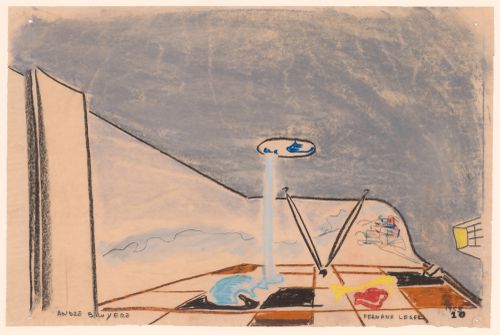
- Two groups of four pastel drawings were originally produced in connection with the Village Polychrome project. The architect André Bruyère had retained one group, while the other was given to the patron and client, Francisco de Assis Chateaubriand Bandeira de Melo, who then donated it to the Sao Paolo Museum of Modern Art. Bruyère subsequently gave one of the four drawings in his group to a friend. The three remaining drawings from Bruyère's group are in the CCA Prints and Drawings collection (DR1996:0001 - DR1996:0003) ("Projet de Village Polychrome, Biot, France"). - The sliding wall, shown on the left, can be used to partially enclose the terrace ("Village d'artistes sur la Côte d'Azur", p. 83).
DR1996:0002
Description:
- Two groups of four pastel drawings were originally produced in connection with the Village Polychrome project. The architect André Bruyère had retained one group, while the other was given to the patron and client, Francisco de Assis Chateaubriand Bandeira de Melo, who then donated it to the Sao Paolo Museum of Modern Art. Bruyère subsequently gave one of the four drawings in his group to a friend. The three remaining drawings from Bruyère's group are in the CCA Prints and Drawings collection (DR1996:0001 - DR1996:0003) ("Projet de Village Polychrome, Biot, France"). - The sliding wall, shown on the left, can be used to partially enclose the terrace ("Village d'artistes sur la Côte d'Azur", p. 83).
Personnes et institutions:
Sujet:
design d'intérieur
design d'intérieur
Date:
1953
1953
Titre:
Perspective for a guest villa showing the terrace, Village Polychrome, near Biot, France
Actions:
DR1996:0002
Description:
- Two groups of four pastel drawings were originally produced in connection with the Village Polychrome project. The architect André Bruyère had retained one group, while the other was given to the patron and client, Francisco de Assis Chateaubriand Bandeira de Melo, who then donated it to the Sao Paolo Museum of Modern Art. Bruyère subsequently gave one of the four drawings in his group to a friend. The three remaining drawings from Bruyère's group are in the CCA Prints and Drawings collection (DR1996:0001 - DR1996:0003) ("Projet de Village Polychrome, Biot, France"). - The sliding wall, shown on the left, can be used to partially enclose the terrace ("Village d'artistes sur la Côte d'Azur", p. 83).
Perspective for a guest villa showing the terrace, Village Polychrome, near Biot, France
Actions:
DR1996:0002
Description:
- Two groups of four pastel drawings were originally produced in connection with the Village Polychrome project. The architect André Bruyère had retained one group, while the other was given to the patron and client, Francisco de Assis Chateaubriand Bandeira de Melo, who then donated it to the Sao Paolo Museum of Modern Art. Bruyère subsequently gave one of the four drawings in his group to a friend. The three remaining drawings from Bruyère's group are in the CCA Prints and Drawings collection (DR1996:0001 - DR1996:0003) ("Projet de Village Polychrome, Biot, France"). - The sliding wall, shown on the left, can be used to partially enclose the terrace ("Village d'artistes sur la Côte d'Azur", p. 83).
Classification:
dessins
dessins
Date:
1953
1953
Personnes et institutions:
Sujet:
design d'intérieur
design d'intérieur
Classification:
dessins
dessins
Actions:
Numéro de référence:
DR1996:0011
Description:
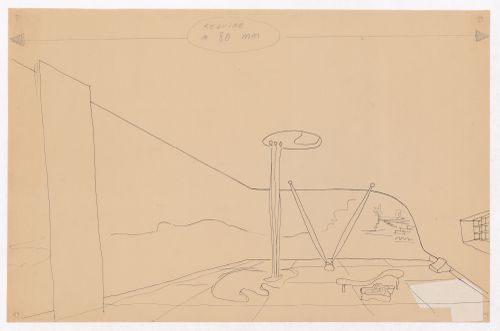
- Two groups of four pastel drawings were originally produced in connection with the Village Polychrome project. The architect André Bruyère had retained one group, while the other was given to the patron and client, Francisco de Assis Chateaubriand Bandeira de Melo, who then donated it to the Sao Paolo Museum of Modern Art. Bruyère subsequently gave one of the four drawings in his group to a friend. The three remaining drawings from Bruyère's group are in the CCA Prints and Drawings collection (DR1996:0001 - DR1996:0003) ("Projet de Village Polychrome, Biot, France"). - The sliding wall, shown on the left, can be used to partially enclose the terrace ("Village d'artistes sur la Côte d'Azur", p. 83).
DR1996:0011
Description:
- Two groups of four pastel drawings were originally produced in connection with the Village Polychrome project. The architect André Bruyère had retained one group, while the other was given to the patron and client, Francisco de Assis Chateaubriand Bandeira de Melo, who then donated it to the Sao Paolo Museum of Modern Art. Bruyère subsequently gave one of the four drawings in his group to a friend. The three remaining drawings from Bruyère's group are in the CCA Prints and Drawings collection (DR1996:0001 - DR1996:0003) ("Projet de Village Polychrome, Biot, France"). - The sliding wall, shown on the left, can be used to partially enclose the terrace ("Village d'artistes sur la Côte d'Azur", p. 83).
Personnes et institutions:
Sujet:
design d'intérieur
design d'intérieur
Date:
1952-1953
1952-1953
Titre:
Perspective for a guest villa showing the terrace, Village Polychrome, near Biot, France
Actions:
DR1996:0011
Description:
- Two groups of four pastel drawings were originally produced in connection with the Village Polychrome project. The architect André Bruyère had retained one group, while the other was given to the patron and client, Francisco de Assis Chateaubriand Bandeira de Melo, who then donated it to the Sao Paolo Museum of Modern Art. Bruyère subsequently gave one of the four drawings in his group to a friend. The three remaining drawings from Bruyère's group are in the CCA Prints and Drawings collection (DR1996:0001 - DR1996:0003) ("Projet de Village Polychrome, Biot, France"). - The sliding wall, shown on the left, can be used to partially enclose the terrace ("Village d'artistes sur la Côte d'Azur", p. 83).
Perspective for a guest villa showing the terrace, Village Polychrome, near Biot, France
Actions:
DR1996:0011
Description:
- Two groups of four pastel drawings were originally produced in connection with the Village Polychrome project. The architect André Bruyère had retained one group, while the other was given to the patron and client, Francisco de Assis Chateaubriand Bandeira de Melo, who then donated it to the Sao Paolo Museum of Modern Art. Bruyère subsequently gave one of the four drawings in his group to a friend. The three remaining drawings from Bruyère's group are in the CCA Prints and Drawings collection (DR1996:0001 - DR1996:0003) ("Projet de Village Polychrome, Biot, France"). - The sliding wall, shown on the left, can be used to partially enclose the terrace ("Village d'artistes sur la Côte d'Azur", p. 83).
Classification:
dessins
dessins
Date:
1952-1953
1952-1953
Personnes et institutions:
Sujet:
design d'intérieur
design d'intérieur


