


336 Résultats
Classification:
livres
livres

Titre:
Lake Verea: Modern Barragan
Lake Verea: Modern Barragan
Actions:
Prix:
$95.00
(disponible sur commande)
Résumé:
In this intimate archive, the contemporary Mexican photographer duo Lake Verea record their pilgrimages, made over the course of nearly two decades, to the house of Mexican architect Luis Barragán (1902–88). As devotees of the architect, the duo began photographing the modernist mecca in 2006, endeavoring to approach as closely as possible to Barragán's spirit. The(...)
$95.00
(disponible sur commande)
Résumé:
In this intimate archive, the contemporary Mexican photographer duo Lake Verea record their pilgrimages, made over the course of nearly two decades, to the house of Mexican architect Luis Barragán (1902–88). As devotees of the architect, the duo began photographing the modernist mecca in 2006, endeavoring to approach as closely as possible to Barragán's spirit. The(...)
Sujet:
Monographies photo
Monographies photo
Publication:
janvier 2026
janvier 2026
Titre:
Lake Verea: Modern Barragan
Actions:
Prix:
$95.00
(disponible sur commande)
Résumé:
In this intimate archive, the contemporary Mexican photographer duo Lake Verea record their pilgrimages, made over the course of nearly two decades, to the house of Mexican architect Luis Barragán (1902–88). As devotees of the architect, the duo began photographing the modernist mecca in 2006, endeavoring to approach as closely as possible to Barragán's spirit. The artists sat in his chairs, opened his closets, listened in silence and kissed in the house's enchanted garden. Modern Barragán compiles the fruits of their reverent labor. The photographs capture the house across a myriad of atmospheric conditions—in daylight, under the light of the full moon, by streetlight and against stormy skies. Flash photography lends the house a spectral quality; rubbed with aluminum sheets, the walls reveal their hidden textures, evoking the hidden memories contained within the home.
Lake Verea: Modern Barragan
Actions:
Prix:
$95.00
(disponible sur commande)
Résumé:
In this intimate archive, the contemporary Mexican photographer duo Lake Verea record their pilgrimages, made over the course of nearly two decades, to the house of Mexican architect Luis Barragán (1902–88). As devotees of the architect, the duo began photographing the modernist mecca in 2006, endeavoring to approach as closely as possible to Barragán's spirit. The artists sat in his chairs, opened his closets, listened in silence and kissed in the house's enchanted garden. Modern Barragán compiles the fruits of their reverent labor. The photographs capture the house across a myriad of atmospheric conditions—in daylight, under the light of the full moon, by streetlight and against stormy skies. Flash photography lends the house a spectral quality; rubbed with aluminum sheets, the walls reveal their hidden textures, evoking the hidden memories contained within the home.
Classification:
livres
livres
Publication:
janvier 2026
janvier 2026
Sujet:
Monographies photo
Monographies photo
Classification:
livres
livres
Titre:
Never use Futura (unless...)
Never use Futura (unless...)
Actions:
Prix:
$34.95
(disponible sur commande)
Résumé:
It's everywhere, including the moon (on the commemorative plaque left by Apollo 11 astronauts), Nike sneakers, the artworks of Barbara Kruger, Ed Ruscha, and Jenny Holzer, 2001: A Space Odyssey credits, Domino's Pizza boxes, Absolut Vodka bottles, and Red Bull cans. Futura and its typographic offspring have been the face of presidential campaigns from Richard Nixon to(...)
$34.95
(disponible sur commande)
Résumé:
It's everywhere, including the moon (on the commemorative plaque left by Apollo 11 astronauts), Nike sneakers, the artworks of Barbara Kruger, Ed Ruscha, and Jenny Holzer, 2001: A Space Odyssey credits, Domino's Pizza boxes, Absolut Vodka bottles, and Red Bull cans. Futura and its typographic offspring have been the face of presidential campaigns from Richard Nixon to(...)
Publication:
octobre 2017
octobre 2017
Titre:
Never use Futura (unless...)
Actions:
Prix:
$34.95
(disponible sur commande)
Résumé:
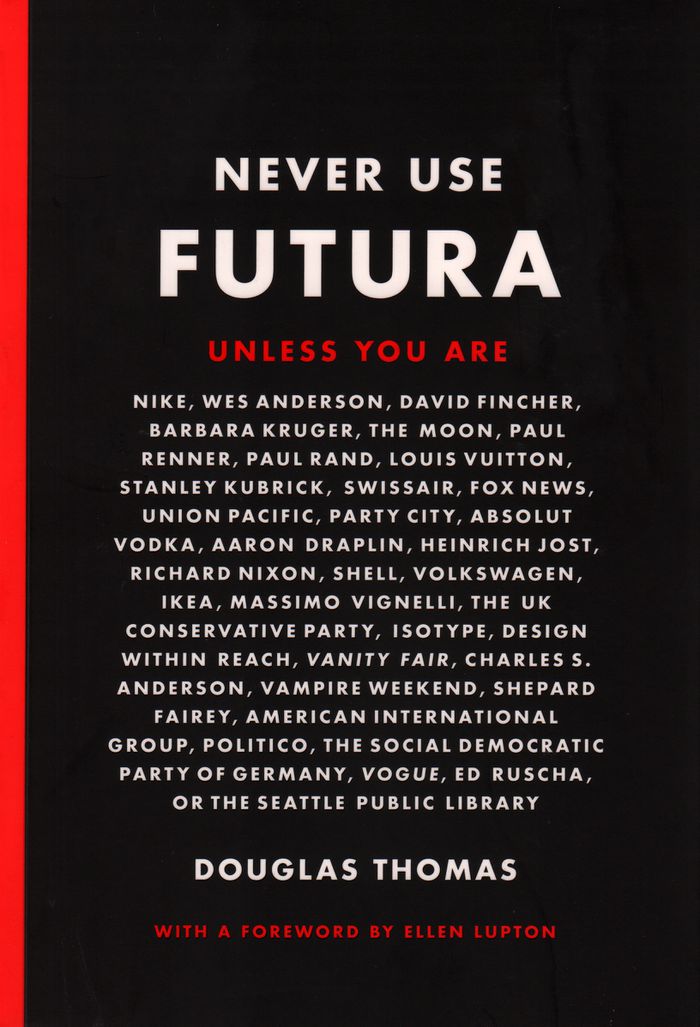
It's everywhere, including the moon (on the commemorative plaque left by Apollo 11 astronauts), Nike sneakers, the artworks of Barbara Kruger, Ed Ruscha, and Jenny Holzer, 2001: A Space Odyssey credits, Domino's Pizza boxes, Absolut Vodka bottles, and Red Bull cans. Futura and its typographic offspring have been the face of presidential campaigns from Richard Nixon to Hillary Clinton. Indeed, Futura is one of the most used fonts in the world today the typeface of modern design more so even than Helvetica. This fascinating book explores the cultural history and uses of a face that's so common you might not notice, until you start looking, and then you can't escape it. Douglas Thomas traces Futura from its Bauhaus-inspired origin in Paul Renner's 1924 design, to its current role as the go-to choice for corporate work, logos, motion pictures, and advertisements.
Never use Futura (unless...)
Actions:
Prix:
$34.95
(disponible sur commande)
Résumé:
It's everywhere, including the moon (on the commemorative plaque left by Apollo 11 astronauts), Nike sneakers, the artworks of Barbara Kruger, Ed Ruscha, and Jenny Holzer, 2001: A Space Odyssey credits, Domino's Pizza boxes, Absolut Vodka bottles, and Red Bull cans. Futura and its typographic offspring have been the face of presidential campaigns from Richard Nixon to Hillary Clinton. Indeed, Futura is one of the most used fonts in the world today the typeface of modern design more so even than Helvetica. This fascinating book explores the cultural history and uses of a face that's so common you might not notice, until you start looking, and then you can't escape it. Douglas Thomas traces Futura from its Bauhaus-inspired origin in Paul Renner's 1924 design, to its current role as the go-to choice for corporate work, logos, motion pictures, and advertisements.
Classification:
livres
livres
Publication:
octobre 2017
octobre 2017
Classification:
livres
livres

Actions:
Prix:
$65.00
(disponible en magasin)
Résumé:
Filled with drawings, collages, and models, this book examines how each firm’s utopian vision was shaped by the times in which it was conceived. The designs by Archigram, a Londonbased firm headed by Peter Cook, Ron Herron and Dennis Crompton, date back to the moon landing and an era filled with hope for new beginnings. By contrast, the latter project, the work of Future(...)
$65.00
(disponible en magasin)
Résumé:
Filled with drawings, collages, and models, this book examines how each firm’s utopian vision was shaped by the times in which it was conceived. The designs by Archigram, a Londonbased firm headed by Peter Cook, Ron Herron and Dennis Crompton, date back to the moon landing and an era filled with hope for new beginnings. By contrast, the latter project, the work of Future(...)
Titre:
Yesterday's future: visionary designs by Future Systems and Archigram
Actions:
Prix:
$65.00
(disponible en magasin)
Résumé:
Filled with drawings, collages, and models, this book examines how each firm’s utopian vision was shaped by the times in which it was conceived. The designs by Archigram, a Londonbased firm headed by Peter Cook, Ron Herron and Dennis Crompton, date back to the moon landing and an era filled with hope for new beginnings. By contrast, the latter project, the work of Future Systems, headed by Czech architect Jan Kaplický and David Nixon, was conceptualized at the height of the Cold War, when the future appeared gloomy. While Archigram conceived organic architectures to ensure survival in inhospitable environments, the technical looking designs by Future Systems are intended for use in more friendly climes. Although the majority of these utopian designs were never realized, their plans offer a fascinating look at how architects prepare for a world they can only imagine.
Yesterday's future: visionary designs by Future Systems and Archigram
Actions:
Prix:
$65.00
(disponible en magasin)
Résumé:
Filled with drawings, collages, and models, this book examines how each firm’s utopian vision was shaped by the times in which it was conceived. The designs by Archigram, a Londonbased firm headed by Peter Cook, Ron Herron and Dennis Crompton, date back to the moon landing and an era filled with hope for new beginnings. By contrast, the latter project, the work of Future Systems, headed by Czech architect Jan Kaplický and David Nixon, was conceptualized at the height of the Cold War, when the future appeared gloomy. While Archigram conceived organic architectures to ensure survival in inhospitable environments, the technical looking designs by Future Systems are intended for use in more friendly climes. Although the majority of these utopian designs were never realized, their plans offer a fascinating look at how architects prepare for a world they can only imagine.
Classification:
livres
livres
Publication:
juin 2016
juin 2016
Sujet:
Architecture, monographies
Architecture, monographies
Classification:
livres
livres
Actions:
Prix:
$60.00
(disponible sur commande)
Résumé:
Many people are not familiar with Kumbh Mela, and yet it is the largest celebration on earth: depending on the positions of Jupiter, the sun and the moon, Hindus travel to certain places along holy rivers, the Ganges for example, to bathe and cleanse themselves of sin. With a 2013 attendance of approximately 34 million, the triennial pilgrimage requires that the(...)
$60.00
(disponible sur commande)
Résumé:
Many people are not familiar with Kumbh Mela, and yet it is the largest celebration on earth: depending on the positions of Jupiter, the sun and the moon, Hindus travel to certain places along holy rivers, the Ganges for example, to bathe and cleanse themselves of sin. With a 2013 attendance of approximately 34 million, the triennial pilgrimage requires that the(...)
Titre:
Kumbh Mela: mapping the ephemeral Megacity
Actions:
Prix:
$60.00
(disponible sur commande)
Résumé:
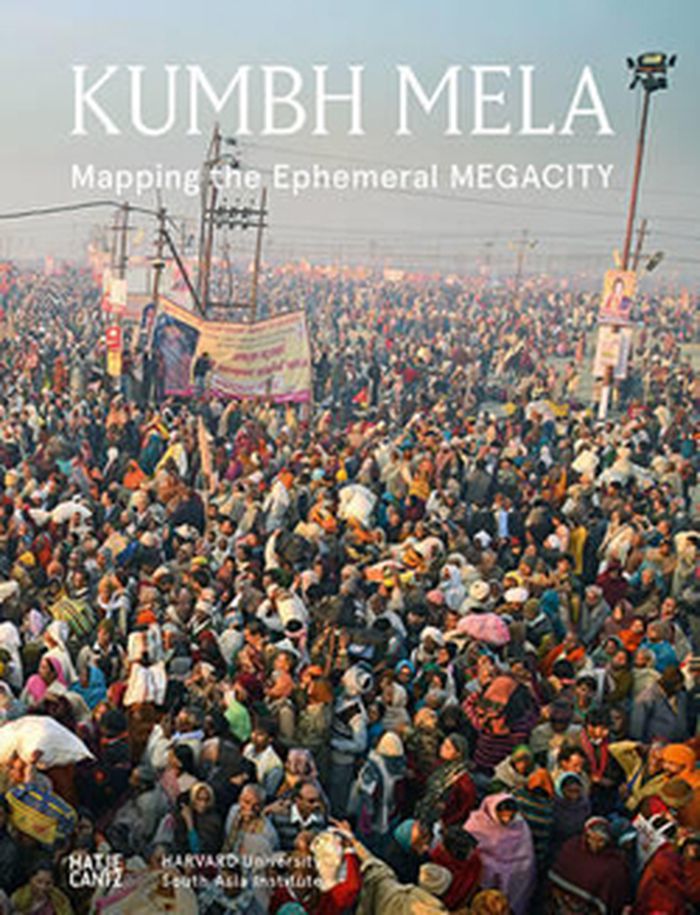
Many people are not familiar with Kumbh Mela, and yet it is the largest celebration on earth: depending on the positions of Jupiter, the sun and the moon, Hindus travel to certain places along holy rivers, the Ganges for example, to bathe and cleanse themselves of sin. With a 2013 attendance of approximately 34 million, the triennial pilgrimage requires that the communities hosting the gatherings create functioning temporary structures to transport, house and feed enormous crowds of people. In 2013, a team from Harvard University monitored the large-scale event from its preparation through to the actual celebration, investigating and documenting the prototypes for flexible urban planning and offering organizers advice on issues around environmental protection. This substantial hardcover presents their comprehensive research findings along with city maps, aerial images and photographs of this most fascinating feat of urban planning.
Kumbh Mela: mapping the ephemeral Megacity
Actions:
Prix:
$60.00
(disponible sur commande)
Résumé:
Many people are not familiar with Kumbh Mela, and yet it is the largest celebration on earth: depending on the positions of Jupiter, the sun and the moon, Hindus travel to certain places along holy rivers, the Ganges for example, to bathe and cleanse themselves of sin. With a 2013 attendance of approximately 34 million, the triennial pilgrimage requires that the communities hosting the gatherings create functioning temporary structures to transport, house and feed enormous crowds of people. In 2013, a team from Harvard University monitored the large-scale event from its preparation through to the actual celebration, investigating and documenting the prototypes for flexible urban planning and offering organizers advice on issues around environmental protection. This substantial hardcover presents their comprehensive research findings along with city maps, aerial images and photographs of this most fascinating feat of urban planning.
Classification:
livres
livres
Publication:
août 2015
août 2015
Sujet:
Théorie de l’architecture
Théorie de l’architecture
Classification:
livres
livres

Actions:
Prix:
$47.00
(disponible en magasin)
Résumé:
For seven thousand years concrete has periodically shaped the path of human progress. Reese Palley's fascinating history of this ubiquitous and versatile material chronicles the repeated and often centuries-long losses of the technology and its many reemergences and the cultural, scientific, and engineering accomplishments it has enabled. Palley takes us from concrete's(...)
$47.00
(disponible en magasin)
Résumé:
For seven thousand years concrete has periodically shaped the path of human progress. Reese Palley's fascinating history of this ubiquitous and versatile material chronicles the repeated and often centuries-long losses of the technology and its many reemergences and the cultural, scientific, and engineering accomplishments it has enabled. Palley takes us from concrete's(...)
Titre:
Concrete : a seven-thousand-year history
Actions:
Prix:
$47.00
(disponible en magasin)
Résumé:
For seven thousand years concrete has periodically shaped the path of human progress. Reese Palley's fascinating history of this ubiquitous and versatile material chronicles the repeated and often centuries-long losses of the technology and its many reemergences and the cultural, scientific, and engineering accomplishments it has enabled. Palley takes us from concrete's earliest beginnings, including the startling proof that at least one of the pyramids was partially poured, through the building of the Eddystone Light, to the dramatic building explosion in the use of concrete during the twentieth century and the start of the twenty-first century. He discusses the environmental impact of the production of concrete and attempts to find substitutes for the burning of lime. He ends by contemplating outer space, where almost all of the elements needed to build extraterrestrial communities already exist in the chemical makeup of the moon and Mars.
Concrete : a seven-thousand-year history
Actions:
Prix:
$47.00
(disponible en magasin)
Résumé:
For seven thousand years concrete has periodically shaped the path of human progress. Reese Palley's fascinating history of this ubiquitous and versatile material chronicles the repeated and often centuries-long losses of the technology and its many reemergences and the cultural, scientific, and engineering accomplishments it has enabled. Palley takes us from concrete's earliest beginnings, including the startling proof that at least one of the pyramids was partially poured, through the building of the Eddystone Light, to the dramatic building explosion in the use of concrete during the twentieth century and the start of the twenty-first century. He discusses the environmental impact of the production of concrete and attempts to find substitutes for the burning of lime. He ends by contemplating outer space, where almost all of the elements needed to build extraterrestrial communities already exist in the chemical makeup of the moon and Mars.
Classification:
livres
livres
Publication:
octobre 2010
octobre 2010
Sujet:
Matériaux et éclairage
Matériaux et éclairage
Classification:
livres
livres
Actions:
Prix:
$32.00
(disponible sur commande)
Résumé:
The goal of landing a man on the Moon and returning him safely to Earth required the development of three things: spacecraft, launch vehicles, and protective clothing. Spacesuits: Within the Collections of the Smithsonian National Air and Space Museum takes the reader through the development of the last category, the spacesuits used during this venture. Highlighting the(...)
$32.00
(disponible sur commande)
Résumé:
The goal of landing a man on the Moon and returning him safely to Earth required the development of three things: spacecraft, launch vehicles, and protective clothing. Spacesuits: Within the Collections of the Smithsonian National Air and Space Museum takes the reader through the development of the last category, the spacesuits used during this venture. Highlighting the(...)
Publication:
juin 2009
juin 2009
Titre:
Spacesuits: within the collection of the Smithsonian
Actions:
Prix:
$32.00
(disponible sur commande)
Résumé:
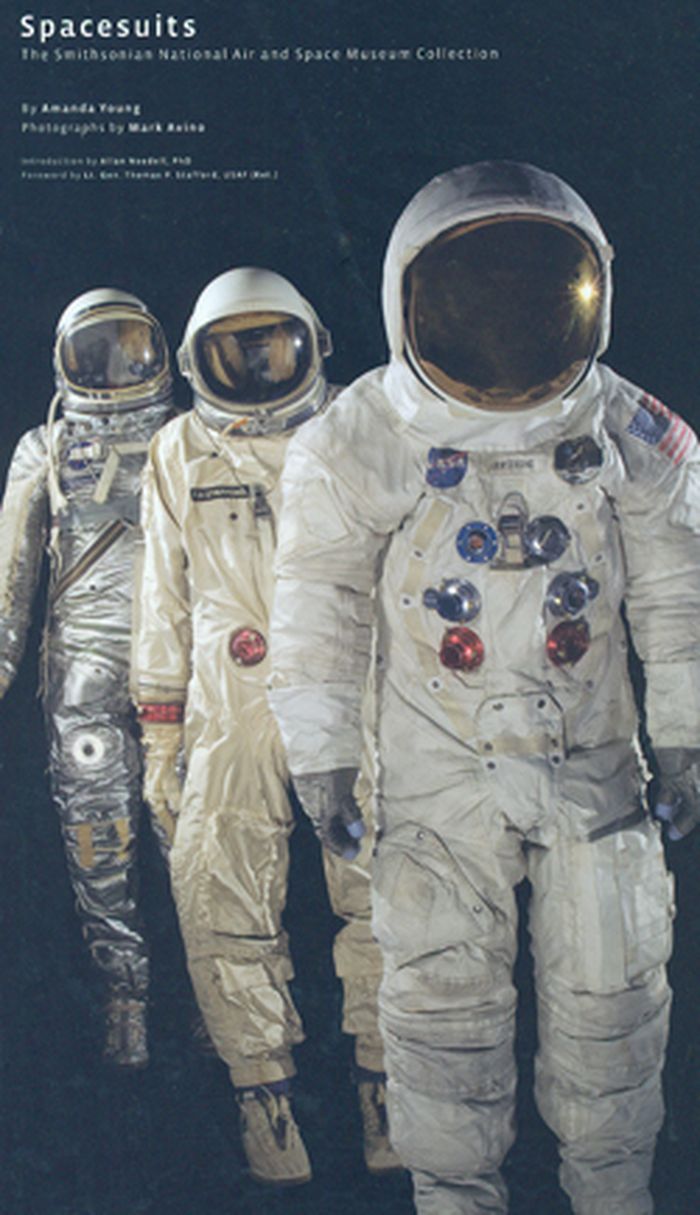
The goal of landing a man on the Moon and returning him safely to Earth required the development of three things: spacecraft, launch vehicles, and protective clothing. Spacesuits: Within the Collections of the Smithsonian National Air and Space Museum takes the reader through the development of the last category, the spacesuits used during this venture. Highlighting the pressure suits created during the years leading up to the lunar missions and beyond, this book features dramatic photographs of the Smithsonian’s collection, as well as never-before-published historical images of spacesuit development and testing—range-of-motion studies, for example, in which researchers wore spacesuits while playing baseball and football. The book also includes a group of advanced spacesuits, which, though never used on a mission, are in many respects the most exciting suits ever created. One suit glove has steel fingernails and sharkskin pads, in an attempt to harness the abilities of the human hand.
Spacesuits: within the collection of the Smithsonian
Actions:
Prix:
$32.00
(disponible sur commande)
Résumé:
The goal of landing a man on the Moon and returning him safely to Earth required the development of three things: spacecraft, launch vehicles, and protective clothing. Spacesuits: Within the Collections of the Smithsonian National Air and Space Museum takes the reader through the development of the last category, the spacesuits used during this venture. Highlighting the pressure suits created during the years leading up to the lunar missions and beyond, this book features dramatic photographs of the Smithsonian’s collection, as well as never-before-published historical images of spacesuit development and testing—range-of-motion studies, for example, in which researchers wore spacesuits while playing baseball and football. The book also includes a group of advanced spacesuits, which, though never used on a mission, are in many respects the most exciting suits ever created. One suit glove has steel fingernails and sharkskin pads, in an attempt to harness the abilities of the human hand.
Classification:
livres
livres
Publication:
juin 2009
juin 2009
Classification:
livres
livres
Actions:
Prix:
$34.00
(disponible sur commande)
Résumé:
From the creator of Paper Pilot and Paper Captain, Paper Astronaut is a beautifully illustrated voyage into deep space, combining stunning archival photographs and colorful technical drawings with expertly designed die-cut models that readers can actually cut out and assemble. Published for the fortieth anniversary of the moon landing in 1969—and introduced by Buzz(...)
$34.00
(disponible sur commande)
Résumé:
From the creator of Paper Pilot and Paper Captain, Paper Astronaut is a beautifully illustrated voyage into deep space, combining stunning archival photographs and colorful technical drawings with expertly designed die-cut models that readers can actually cut out and assemble. Published for the fortieth anniversary of the moon landing in 1969—and introduced by Buzz(...)
Titre:
Paper astronaut: paper spacecraft mission manual
Actions:
Prix:
$34.00
(disponible sur commande)
Résumé:
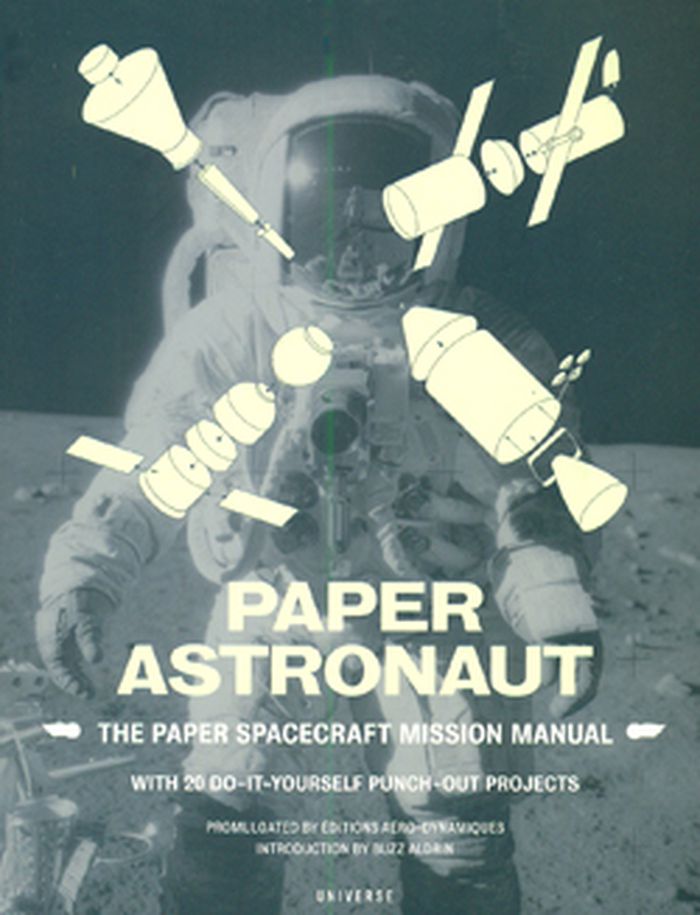
From the creator of Paper Pilot and Paper Captain, Paper Astronaut is a beautifully illustrated voyage into deep space, combining stunning archival photographs and colorful technical drawings with expertly designed die-cut models that readers can actually cut out and assemble. Published for the fortieth anniversary of the moon landing in 1969—and introduced by Buzz Aldrin—the book includes histories of twenty feats of aeronautic engineering drawn from half a century of space programs around the world, from Apollo 11 to the Soviet space station Mir and China’s Shenzou 7 capsule, and featuring the most iconic designs of fifty years of space exploration. Each spacecraft is accompanied by amazing stories, fascinating facts and statistics about the universe around them, and mesmerizing photographs of the vessels in space. Sixty-four pages of the book are devoted to finely crafted die-cut paper models of the featured rockets, presented with clear instructions for assembly and helpful advice for deploying your galactic fleet.
Paper astronaut: paper spacecraft mission manual
Actions:
Prix:
$34.00
(disponible sur commande)
Résumé:
From the creator of Paper Pilot and Paper Captain, Paper Astronaut is a beautifully illustrated voyage into deep space, combining stunning archival photographs and colorful technical drawings with expertly designed die-cut models that readers can actually cut out and assemble. Published for the fortieth anniversary of the moon landing in 1969—and introduced by Buzz Aldrin—the book includes histories of twenty feats of aeronautic engineering drawn from half a century of space programs around the world, from Apollo 11 to the Soviet space station Mir and China’s Shenzou 7 capsule, and featuring the most iconic designs of fifty years of space exploration. Each spacecraft is accompanied by amazing stories, fascinating facts and statistics about the universe around them, and mesmerizing photographs of the vessels in space. Sixty-four pages of the book are devoted to finely crafted die-cut paper models of the featured rockets, presented with clear instructions for assembly and helpful advice for deploying your galactic fleet.
Classification:
livres
livres
Publication:
juin 2009
juin 2009
Sujet:
cahiers d'activités
cahiers d'activités
Classification:
livres
livres

Prix:
$22.00
(disponible sur commande)
Résumé:
When the gates of the 1964–1965 New York World’s Fair swung open on April 24, 1964, the first of more than 51 million lucky visitors entered, ready to witness the cutting edge of worldwide technology and progress. Faced with a disappointing lack of foreign participants due to political contention, the fair instead showcased the best of American industry and science. While(...)
$22.00
(disponible sur commande)
Résumé:
When the gates of the 1964–1965 New York World’s Fair swung open on April 24, 1964, the first of more than 51 million lucky visitors entered, ready to witness the cutting edge of worldwide technology and progress. Faced with a disappointing lack of foreign participants due to political contention, the fair instead showcased the best of American industry and science. While(...)
Publication:
juillet 2008, Charleston, Chicago
juillet 2008, Charleston, Chicago
Titre:
The 1964-1965 New York World's fair: creation and legacy
Actions:
Prix:
$22.00
(disponible sur commande)
Résumé:
When the gates of the 1964–1965 New York World’s Fair swung open on April 24, 1964, the first of more than 51 million lucky visitors entered, ready to witness the cutting edge of worldwide technology and progress. Faced with a disappointing lack of foreign participants due to political contention, the fair instead showcased the best of American industry and science. While multimillion-dollar pavilions predicted colonies on the moon and hotels under the ocean, other forecasts, such as the promises of computer technology, have surpassed even the most optimistic predictions of the fair. The 1964–1965 New York World’s Fair: Creation and Legacy uses rare, previously unpublished photographs to examine the creation of the fair and the legacies left behind for future generations. Bill Cotter and Bill Young, authors of The 1964–1965 New York World’s Fair, they have contributed to numerous other books, magazine articles, and documentaries on the fair. They also host two popular Web sites devoted to the study and appreciation of this once-in-a-lifetime event.
The 1964-1965 New York World's fair: creation and legacy
Actions:
Prix:
$22.00
(disponible sur commande)
Résumé:
When the gates of the 1964–1965 New York World’s Fair swung open on April 24, 1964, the first of more than 51 million lucky visitors entered, ready to witness the cutting edge of worldwide technology and progress. Faced with a disappointing lack of foreign participants due to political contention, the fair instead showcased the best of American industry and science. While multimillion-dollar pavilions predicted colonies on the moon and hotels under the ocean, other forecasts, such as the promises of computer technology, have surpassed even the most optimistic predictions of the fair. The 1964–1965 New York World’s Fair: Creation and Legacy uses rare, previously unpublished photographs to examine the creation of the fair and the legacies left behind for future generations. Bill Cotter and Bill Young, authors of The 1964–1965 New York World’s Fair, they have contributed to numerous other books, magazine articles, and documentaries on the fair. They also host two popular Web sites devoted to the study and appreciation of this once-in-a-lifetime event.
Classification:
livres
livres
Publication:
juillet 2008, Charleston, Chicago
juillet 2008, Charleston, Chicago
Classification:
livres
livres

Titre:
Why the world does not exist
Why the world does not exist
Actions:
Prix:
$28.00
(disponible sur commande)
Résumé:
Where do we come from? Are we merely a cluster of elementary particles in a gigantic world receptacle? And what does it all mean? In this new book, the philosopher Markus Gabriel challenges our notion of what exists and what it means to exist. He questions the idea that there is a world that encompasses everything like a container life, the universe, and everything else.(...)
$28.00
(disponible sur commande)
Résumé:
Where do we come from? Are we merely a cluster of elementary particles in a gigantic world receptacle? And what does it all mean? In this new book, the philosopher Markus Gabriel challenges our notion of what exists and what it means to exist. He questions the idea that there is a world that encompasses everything like a container life, the universe, and everything else.(...)
Titre:
Why the world does not exist
Actions:
Prix:
$28.00
(disponible sur commande)
Résumé:
Where do we come from? Are we merely a cluster of elementary particles in a gigantic world receptacle? And what does it all mean? In this new book, the philosopher Markus Gabriel challenges our notion of what exists and what it means to exist. He questions the idea that there is a world that encompasses everything like a container life, the universe, and everything else. This all-inclusive being does not exist and cannot exist. For the world itself is not found in the world. And even when we think about the world, the world about which we think is obviously not identical with the world in which we think. For, as we are thinking about the world, this is only a very small event in the world. Besides this, there are still innumerable other objects and events: rain showers, toothaches and the World Cup. Drawing on the recent history of philosophy, Gabriel asserts that the world cannot exist at all, because it is not found in the world. Yet with the exception of the world, everything else exists; even unicorns on the far side of the moon wearing police uniforms.
Why the world does not exist
Actions:
Prix:
$28.00
(disponible sur commande)
Résumé:
Where do we come from? Are we merely a cluster of elementary particles in a gigantic world receptacle? And what does it all mean? In this new book, the philosopher Markus Gabriel challenges our notion of what exists and what it means to exist. He questions the idea that there is a world that encompasses everything like a container life, the universe, and everything else. This all-inclusive being does not exist and cannot exist. For the world itself is not found in the world. And even when we think about the world, the world about which we think is obviously not identical with the world in which we think. For, as we are thinking about the world, this is only a very small event in the world. Besides this, there are still innumerable other objects and events: rain showers, toothaches and the World Cup. Drawing on the recent history of philosophy, Gabriel asserts that the world cannot exist at all, because it is not found in the world. Yet with the exception of the world, everything else exists; even unicorns on the far side of the moon wearing police uniforms.
Classification:
livres
livres
Publication:
juin 2015
juin 2015
Sujet:
Théorie/ philosophie
Théorie/ philosophie
Classification:
livres
livres
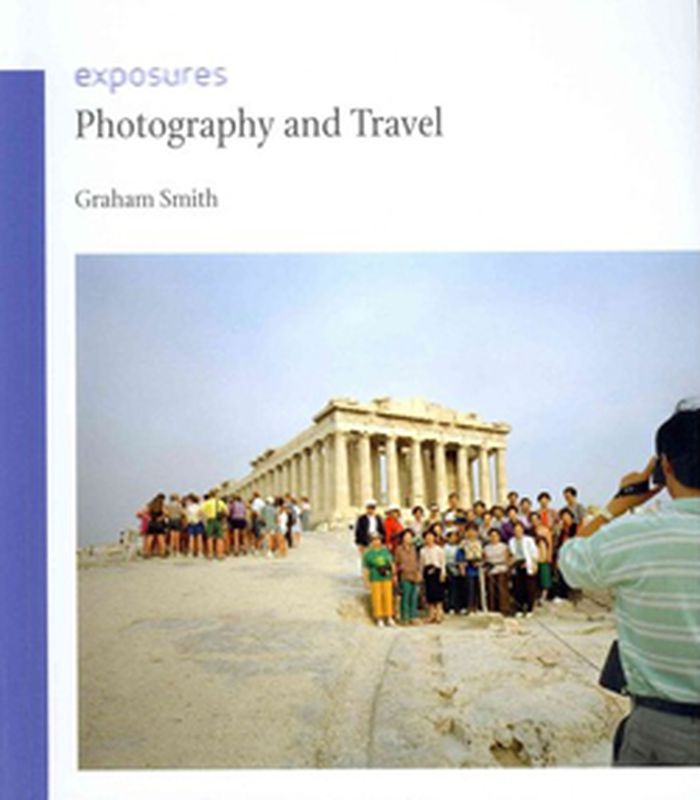
Titre:
Photography and travel
Photography and travel
Actions:
Prix:
$42.95
(disponible sur commande)
Résumé:
Photography and travel have been linked since 1839, when Daguerre and Talbot first made their inventions known to the public. The inventors and their advocates immediately recognised photography’s capability to vividly represent the spectacles of the world, and make them accessible to the general public in the comfort of their homes. The unquestionable connection between(...)
$42.95
(disponible sur commande)
Résumé:
Photography and travel have been linked since 1839, when Daguerre and Talbot first made their inventions known to the public. The inventors and their advocates immediately recognised photography’s capability to vividly represent the spectacles of the world, and make them accessible to the general public in the comfort of their homes. The unquestionable connection between(...)
Titre:
Photography and travel
Actions:
Prix:
$42.95
(disponible sur commande)
Résumé:
Photography and travel have been linked since 1839, when Daguerre and Talbot first made their inventions known to the public. The inventors and their advocates immediately recognised photography’s capability to vividly represent the spectacles of the world, and make them accessible to the general public in the comfort of their homes. The unquestionable connection between photography and travel remains vital today. In Photography and Travel, Graham Smith provides a lively account of this partnership, discussing the diverse applications of photography to travel during the nineteenth century, in destinations as exotic as France, Italy, Greece, Egypt, Japan and North America. He then moves to the twentieth century, ranging from seaside excursions to transcontinental travel by rail, road and air. As it has become more democratized, the methods and experiences of travel have developed in many unexpected directions, all of which have created their own new photographic narratives.Photography and Travel shows that photographers have often gone to great lengths – at considerable personal danger – to record exotic destinations, from the ice caves and crevasses of the Mer de Glace to the maw of Vesuvius, from the summit of Mount Everest to the pock-marked surface of the moon.
Photography and travel
Actions:
Prix:
$42.95
(disponible sur commande)
Résumé:
Photography and travel have been linked since 1839, when Daguerre and Talbot first made their inventions known to the public. The inventors and their advocates immediately recognised photography’s capability to vividly represent the spectacles of the world, and make them accessible to the general public in the comfort of their homes. The unquestionable connection between photography and travel remains vital today. In Photography and Travel, Graham Smith provides a lively account of this partnership, discussing the diverse applications of photography to travel during the nineteenth century, in destinations as exotic as France, Italy, Greece, Egypt, Japan and North America. He then moves to the twentieth century, ranging from seaside excursions to transcontinental travel by rail, road and air. As it has become more democratized, the methods and experiences of travel have developed in many unexpected directions, all of which have created their own new photographic narratives.Photography and Travel shows that photographers have often gone to great lengths – at considerable personal danger – to record exotic destinations, from the ice caves and crevasses of the Mer de Glace to the maw of Vesuvius, from the summit of Mount Everest to the pock-marked surface of the moon.
Classification:
livres
livres
Publication:
juin 2012
juin 2012
Sujet:
Théorie de la photographie
Théorie de la photographie


