


3320 Résultats
Classification:
livres
livres
Titre:
Fucked up & photocopied
Fucked up & photocopied
Actions:
Prix:
$31.95
(disponible sur commande)
Résumé:
Raw, brazen and totally intense, Fucked Up + Photocopied is a collection of frenetic flyers produced for the American punk scene between 1977 and 1985. Many were created by the musicians themselves and demonstrate the emphasis within the punk scene on individuality and the manic urge of its members to create things new. Images were compiled out of whatever material(...)
$31.95
(disponible sur commande)
Résumé:
Raw, brazen and totally intense, Fucked Up + Photocopied is a collection of frenetic flyers produced for the American punk scene between 1977 and 1985. Many were created by the musicians themselves and demonstrate the emphasis within the punk scene on individuality and the manic urge of its members to create things new. Images were compiled out of whatever material(...)
Titre:
Fucked up & photocopied
Actions:
Prix:
$31.95
(disponible sur commande)
Résumé:
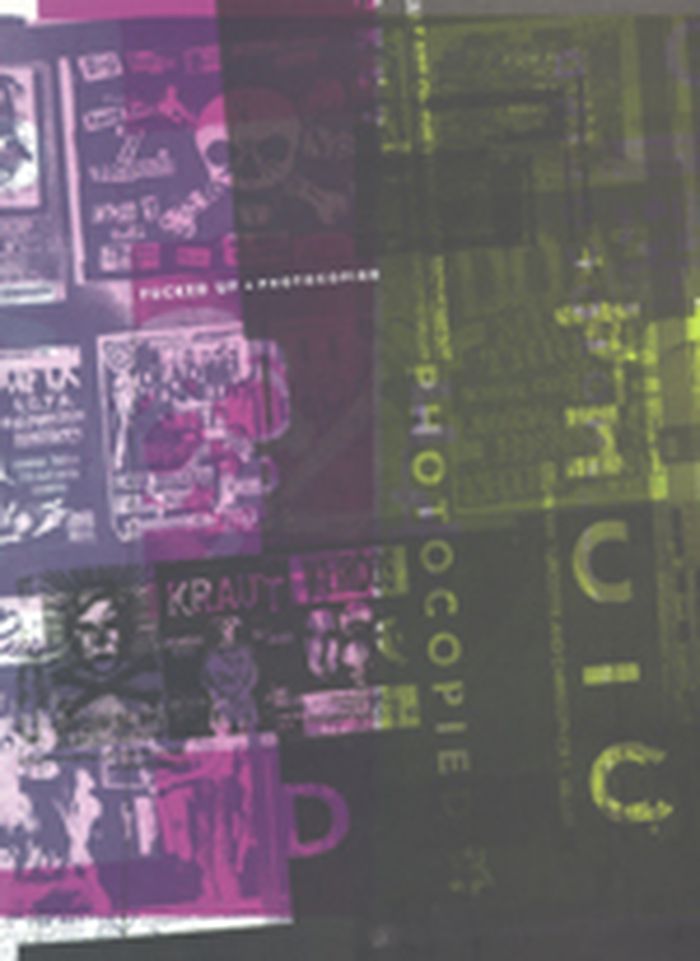
Raw, brazen and totally intense, Fucked Up + Photocopied is a collection of frenetic flyers produced for the American punk scene between 1977 and 1985. Many were created by the musicians themselves and demonstrate the emphasis within the punk scene on individuality and the manic urge of its members to create things new. Images were compiled out of whatever material could be found, often photocopied and, still warm, stapled to the nearest telephone pole to warn the world about next week's gig. One glance and you can sense the fury of live performances by bands such as Black Flag, the Dead Kennedys and The Minutemen, and, through the subtext the reader is exposed to the psyche of a generation of musicians stripped bare: The Germs, J.F.A, NOFX, The Circle Jerks, X, Devo, The Cramps, The Exploited, Screamers, The Avengers, The Dils and more. Fucked Up + Photocopied is the definitive reference book on the North American Punk scene and covers New York, Los Angeles, San Francisco, Boston, MA, San Jose, CA, Washington, DC, Houston, TX, and Canada's Toronto and Vancouver.
Fucked up & photocopied
Actions:
Prix:
$31.95
(disponible sur commande)
Résumé:
Raw, brazen and totally intense, Fucked Up + Photocopied is a collection of frenetic flyers produced for the American punk scene between 1977 and 1985. Many were created by the musicians themselves and demonstrate the emphasis within the punk scene on individuality and the manic urge of its members to create things new. Images were compiled out of whatever material could be found, often photocopied and, still warm, stapled to the nearest telephone pole to warn the world about next week's gig. One glance and you can sense the fury of live performances by bands such as Black Flag, the Dead Kennedys and The Minutemen, and, through the subtext the reader is exposed to the psyche of a generation of musicians stripped bare: The Germs, J.F.A, NOFX, The Circle Jerks, X, Devo, The Cramps, The Exploited, Screamers, The Avengers, The Dils and more. Fucked Up + Photocopied is the definitive reference book on the North American Punk scene and covers New York, Los Angeles, San Francisco, Boston, MA, San Jose, CA, Washington, DC, Houston, TX, and Canada's Toronto and Vancouver.
Classification:
livres
livres
Publication:
janvier 1900, Corte Madera
janvier 1900, Corte Madera
Sujet:
Arts graphiques imprimés
Arts graphiques imprimés
Classification:
livres
livres
Titre:
Art & Histories: Volume 1
Art & Histories: Volume 1
Actions:
Prix:
$45.00
(disponible en magasin)
Résumé:
Each essay in this groundbreaking volume—the first in an exciting new series from the ''Center for Advanced Study in the Visual Arts'' —engages aesthetic and cultural debates that situate research on the arts at the intersection of various disciplines, including architecture, film, literature, curatorial and museum studies, and the arts of performance. Reflecting the(...)
$45.00
(disponible en magasin)
Résumé:
Each essay in this groundbreaking volume—the first in an exciting new series from the ''Center for Advanced Study in the Visual Arts'' —engages aesthetic and cultural debates that situate research on the arts at the intersection of various disciplines, including architecture, film, literature, curatorial and museum studies, and the arts of performance. Reflecting the(...)
Titre:
Art & Histories: Volume 1
Actions:
Prix:
$45.00
(disponible en magasin)
Résumé:
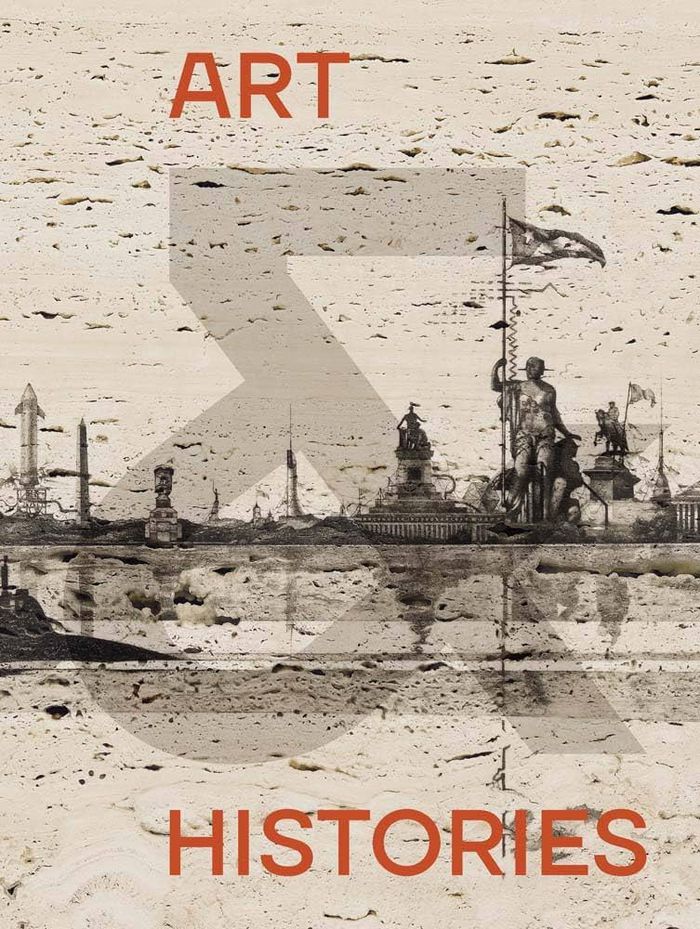
Each essay in this groundbreaking volume—the first in an exciting new series from the ''Center for Advanced Study in the Visual Arts'' —engages aesthetic and cultural debates that situate research on the arts at the intersection of various disciplines, including architecture, film, literature, curatorial and museum studies, and the arts of performance. Reflecting the series’ goal to engage with different cultural contexts and time periods, newly commissioned essays from emerging and established scholars address subjects ranging from medieval dance and ancient Assyrian reliefs to expressions of gender embodiment and the art of the Afro-Atlantic. First-person narratives ground theoretical considerations of the theme. Reflecting a commitment to embracing the book form as a space for art itself, ''Art & Histories'' includes a detachable accordion-fold insert with a work from Miami-based artist Glexis Novoa. One of his signature horizon lines unites Washington, DC, and the artist’s native Havana. Meticulous drawings executed on travertine marble entangle the two cities and their monuments, symbolizing both violent and triumphant histories and their ideological reversals.
Art & Histories: Volume 1
Actions:
Prix:
$45.00
(disponible en magasin)
Résumé:
Each essay in this groundbreaking volume—the first in an exciting new series from the ''Center for Advanced Study in the Visual Arts'' —engages aesthetic and cultural debates that situate research on the arts at the intersection of various disciplines, including architecture, film, literature, curatorial and museum studies, and the arts of performance. Reflecting the series’ goal to engage with different cultural contexts and time periods, newly commissioned essays from emerging and established scholars address subjects ranging from medieval dance and ancient Assyrian reliefs to expressions of gender embodiment and the art of the Afro-Atlantic. First-person narratives ground theoretical considerations of the theme. Reflecting a commitment to embracing the book form as a space for art itself, ''Art & Histories'' includes a detachable accordion-fold insert with a work from Miami-based artist Glexis Novoa. One of his signature horizon lines unites Washington, DC, and the artist’s native Havana. Meticulous drawings executed on travertine marble entangle the two cities and their monuments, symbolizing both violent and triumphant histories and their ideological reversals.
Classification:
livres
livres
Publication:
janvier 2026
janvier 2026
Sujet:
Théorie de l’art
Théorie de l’art
Classification:
livres
livres
Actions:
Prix:
$80.00
(disponible sur commande)
Résumé:
Designing Pan-America presents the first examination of the architectural expressions of Pan-Americanism. Concentrating on U.S. architects and their clients, Robert Alexander González demonstrates how they proposed designs reflecting U.S. presumptions and projections about the relationship between the United States and Latin America. This forgotten chapter of American(...)
$80.00
(disponible sur commande)
Résumé:
Designing Pan-America presents the first examination of the architectural expressions of Pan-Americanism. Concentrating on U.S. architects and their clients, Robert Alexander González demonstrates how they proposed designs reflecting U.S. presumptions and projections about the relationship between the United States and Latin America. This forgotten chapter of American(...)
Publication:
février 2011
février 2011
Titre:
Designing Pan-America: U.S. architectural visions for the western hemisphere
Actions:
Prix:
$80.00
(disponible sur commande)
Résumé:
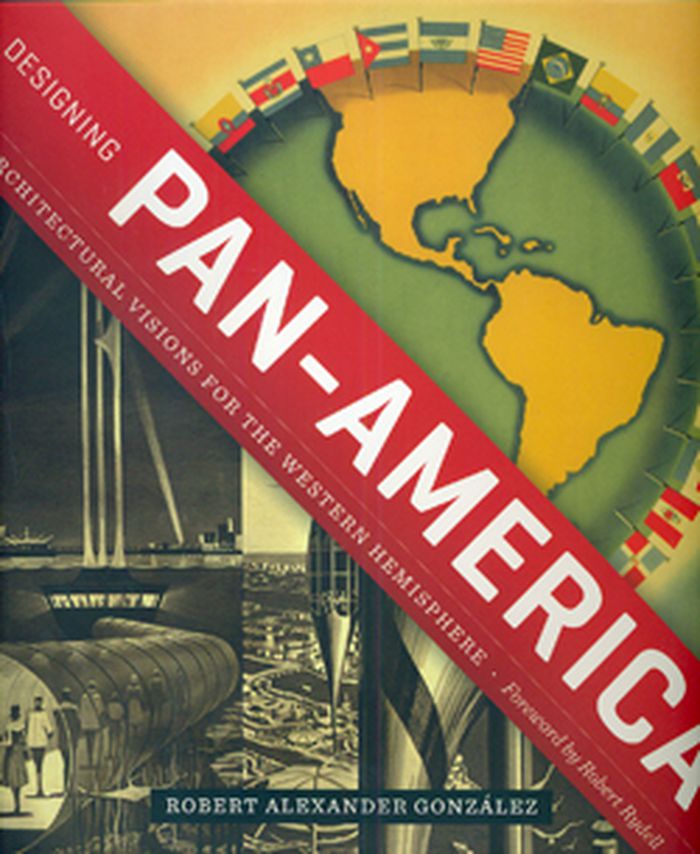
Designing Pan-America presents the first examination of the architectural expressions of Pan-Americanism. Concentrating on U.S. architects and their clients, Robert Alexander González demonstrates how they proposed designs reflecting U.S. presumptions and projections about the relationship between the United States and Latin America. This forgotten chapter of American architecture unfolds over the course of a number of international expositions, ranging from the North, Central, and South American Exposition of 1885-1886 in New Orleans to Miami's unrealized Interama fair and San Antonio's HemisFair '68 and encompassing the Pan American Union headquarters building in Washington, D.C. and the creation of the Columbus Memorial Lighthouse in the Dominican Republic.
Designing Pan-America: U.S. architectural visions for the western hemisphere
Actions:
Prix:
$80.00
(disponible sur commande)
Résumé:
Designing Pan-America presents the first examination of the architectural expressions of Pan-Americanism. Concentrating on U.S. architects and their clients, Robert Alexander González demonstrates how they proposed designs reflecting U.S. presumptions and projections about the relationship between the United States and Latin America. This forgotten chapter of American architecture unfolds over the course of a number of international expositions, ranging from the North, Central, and South American Exposition of 1885-1886 in New Orleans to Miami's unrealized Interama fair and San Antonio's HemisFair '68 and encompassing the Pan American Union headquarters building in Washington, D.C. and the creation of the Columbus Memorial Lighthouse in the Dominican Republic.
Classification:
livres
livres
Publication:
février 2011
février 2011
Classification:
livres
livres
Actions:
Prix:
$100.00
(disponible sur commande)
Résumé:
Wolfgang Sonne examines the relationship between city planning and politics. He analyzes a handful of exemplary cities: Washington, D.C., Berlin, Canberra, and New Delhi - each of which underwent major reconstruction during the years spanning the turn of the twentieth century and the advent of World War I. He also discusses the failed plans for the World Centre of(...)
$100.00
(disponible sur commande)
Résumé:
Wolfgang Sonne examines the relationship between city planning and politics. He analyzes a handful of exemplary cities: Washington, D.C., Berlin, Canberra, and New Delhi - each of which underwent major reconstruction during the years spanning the turn of the twentieth century and the advent of World War I. He also discusses the failed plans for the World Centre of(...)
Titre:
Representing the state : capital city planning in the early twentieth century
Actions:
Prix:
$100.00
(disponible sur commande)
Résumé:
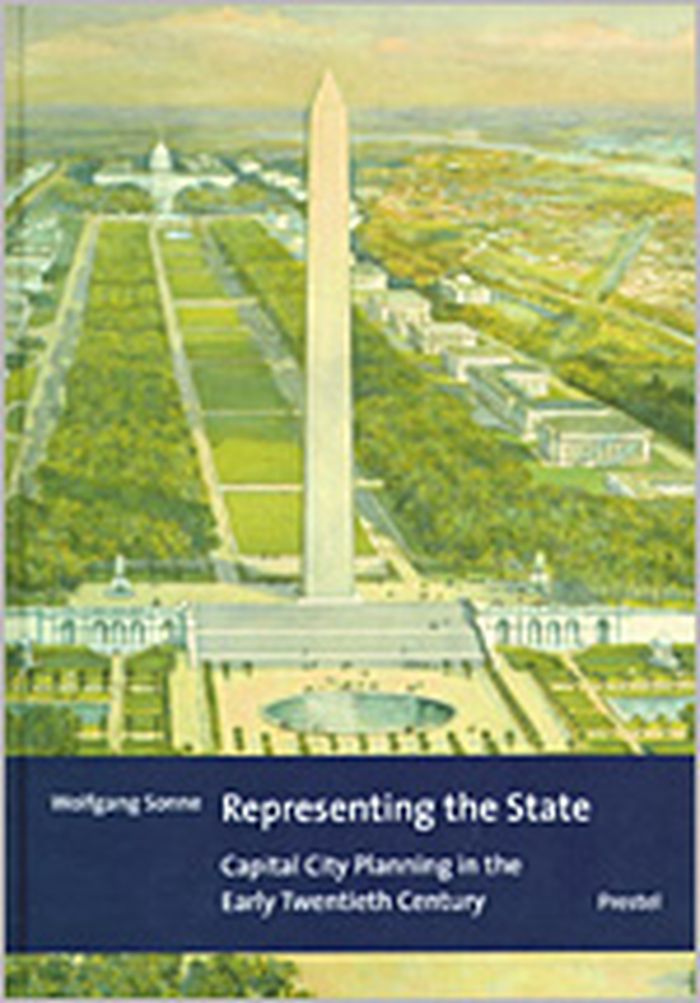
Wolfgang Sonne examines the relationship between city planning and politics. He analyzes a handful of exemplary cities: Washington, D.C., Berlin, Canberra, and New Delhi - each of which underwent major reconstruction during the years spanning the turn of the twentieth century and the advent of World War I. He also discusses the failed plans for the World Centre of Communication, an attempt at creating an international city of peace in 1913. Because this era was marked by the heyday of Imperialism and its related illusions of grandeur, the book evokes the clashing and melding of political and architectural ideals - a conundrum that continues to plague city planners today.
Representing the state : capital city planning in the early twentieth century
Actions:
Prix:
$100.00
(disponible sur commande)
Résumé:
Wolfgang Sonne examines the relationship between city planning and politics. He analyzes a handful of exemplary cities: Washington, D.C., Berlin, Canberra, and New Delhi - each of which underwent major reconstruction during the years spanning the turn of the twentieth century and the advent of World War I. He also discusses the failed plans for the World Centre of Communication, an attempt at creating an international city of peace in 1913. Because this era was marked by the heyday of Imperialism and its related illusions of grandeur, the book evokes the clashing and melding of political and architectural ideals - a conundrum that continues to plague city planners today.
Classification:
livres
livres
Publication:
novembre 2003, Munich / London
novembre 2003, Munich / London
Sujet:
Théorie de l’urbanisme
Théorie de l’urbanisme
Classification:
livres
livres
Actions:
Prix:
$65.00
(disponible sur commande)
Résumé:
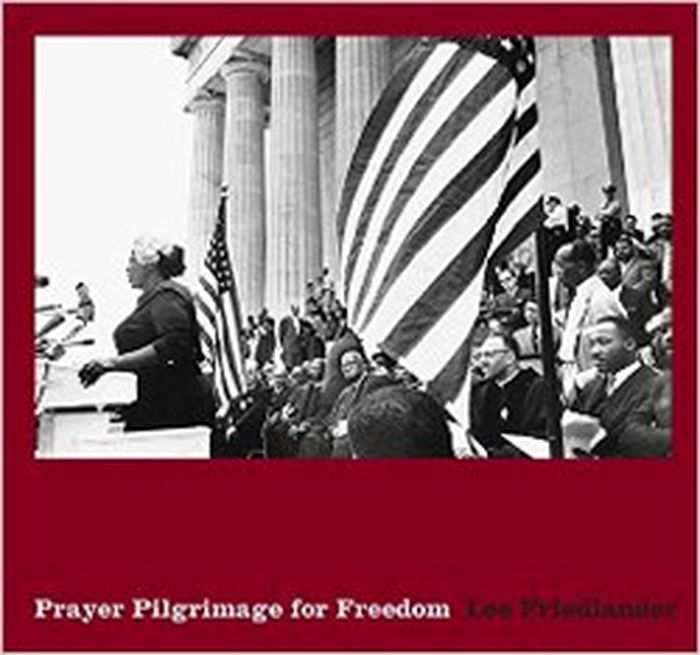
On May 17, 1957, Lee Friedlander was given full access to photograph the participants of the Prayer Pilgrimage for Freedom in Washington, D.C. This extraordinary event, organized by Mr. Rustin, as well as A. Philip Randolph, Roy Wilkins and Dr. Martin Luther King, Jr., brought together many of the great thinkers and leaders of the period, and was a pivotal moment in the(...)
$65.00
(disponible sur commande)
Résumé:
On May 17, 1957, Lee Friedlander was given full access to photograph the participants of the Prayer Pilgrimage for Freedom in Washington, D.C. This extraordinary event, organized by Mr. Rustin, as well as A. Philip Randolph, Roy Wilkins and Dr. Martin Luther King, Jr., brought together many of the great thinkers and leaders of the period, and was a pivotal moment in the(...)
Titre:
Lee Friedlander: prayer pilgrimage for freedom
Actions:
Prix:
$65.00
(disponible sur commande)
Résumé:
On May 17, 1957, Lee Friedlander was given full access to photograph the participants of the Prayer Pilgrimage for Freedom in Washington, D.C. This extraordinary event, organized by Mr. Rustin, as well as A. Philip Randolph, Roy Wilkins and Dr. Martin Luther King, Jr., brought together many of the great thinkers and leaders of the period, and was a pivotal moment in the Civil Rights Movement. Friedlander's photographs depict the famous individuals at the event—Mahalia Jackson, Ruby Dee, and Harry Belafonte among many other luminaries of the African-American community—but they also pay particular attention to the 25,000 men, women and children who gathered to give voice and energy to the ideas embattled by the movement.
Lee Friedlander: prayer pilgrimage for freedom
Actions:
Prix:
$65.00
(disponible sur commande)
Résumé:
On May 17, 1957, Lee Friedlander was given full access to photograph the participants of the Prayer Pilgrimage for Freedom in Washington, D.C. This extraordinary event, organized by Mr. Rustin, as well as A. Philip Randolph, Roy Wilkins and Dr. Martin Luther King, Jr., brought together many of the great thinkers and leaders of the period, and was a pivotal moment in the Civil Rights Movement. Friedlander's photographs depict the famous individuals at the event—Mahalia Jackson, Ruby Dee, and Harry Belafonte among many other luminaries of the African-American community—but they also pay particular attention to the 25,000 men, women and children who gathered to give voice and energy to the ideas embattled by the movement.
Classification:
livres
livres
Publication:
septembre 2015
septembre 2015
Sujet:
Monographies photo
Monographies photo
Classification:
livres
livres
Actions:
Prix:
$40.00
(disponible en magasin)
Résumé:
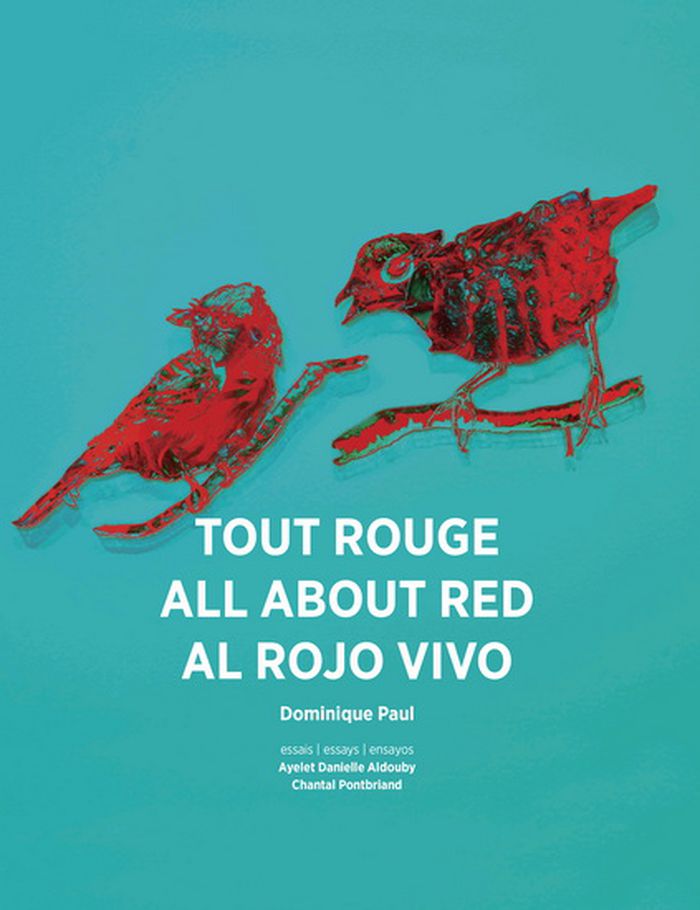
Ce livre documente et analyse la performance « Red/Rojo/Rouge/Vermelho » ainsi que l’exposition multimédia Silent Fall, qui a remporté un vif succès au Art Museum of the Americas de l’Organisation des États des Amériques, Washington D.C. (AMA|OAS). Dans ce cadre, l’artiste Dominique Paul a été invitée par l’Ambassade du Canada à présenter une performance aux ambassadeurs(...)
$40.00
(disponible en magasin)
Résumé:
Ce livre documente et analyse la performance « Red/Rojo/Rouge/Vermelho » ainsi que l’exposition multimédia Silent Fall, qui a remporté un vif succès au Art Museum of the Americas de l’Organisation des États des Amériques, Washington D.C. (AMA|OAS). Dans ce cadre, l’artiste Dominique Paul a été invitée par l’Ambassade du Canada à présenter une performance aux ambassadeurs(...)
Titre:
Tout rouge / All About Red / Al rojo vivo
Actions:
Prix:
$40.00
(disponible en magasin)
Résumé:
Ce livre documente et analyse la performance « Red/Rojo/Rouge/Vermelho » ainsi que l’exposition multimédia Silent Fall, qui a remporté un vif succès au Art Museum of the Americas de l’Organisation des États des Amériques, Washington D.C. (AMA|OAS). Dans ce cadre, l’artiste Dominique Paul a été invitée par l’Ambassade du Canada à présenter une performance aux ambassadeurs des États des Amériques lors d’une assemblée extraordinaire de cette organisation tenue le 8 mars, où « Red/Rojo/Rouge/Vermelho » fut incarnée par cinq chanteuses. Abordant les thèmes de la responsabilité collective envers l’environnement ces corpus nous invitent à réfléchir plus profondément aux conséquences des actions de l’humanité et à ce que nous pouvons encore accomplir ensemble.
Tout rouge / All About Red / Al rojo vivo
Actions:
Prix:
$40.00
(disponible en magasin)
Résumé:
Ce livre documente et analyse la performance « Red/Rojo/Rouge/Vermelho » ainsi que l’exposition multimédia Silent Fall, qui a remporté un vif succès au Art Museum of the Americas de l’Organisation des États des Amériques, Washington D.C. (AMA|OAS). Dans ce cadre, l’artiste Dominique Paul a été invitée par l’Ambassade du Canada à présenter une performance aux ambassadeurs des États des Amériques lors d’une assemblée extraordinaire de cette organisation tenue le 8 mars, où « Red/Rojo/Rouge/Vermelho » fut incarnée par cinq chanteuses. Abordant les thèmes de la responsabilité collective envers l’environnement ces corpus nous invitent à réfléchir plus profondément aux conséquences des actions de l’humanité et à ce que nous pouvons encore accomplir ensemble.
Classification:
livres
livres
Publication:
février 2026
février 2026
Sujet:
Art canadien
Art canadien
Classification:
livres
livres
Prix:
$49.00
(disponible sur commande)
Résumé:
"Constructed narratives" brings together essays and several recently completed buildings by David Adjaye, in the United States and elsewhere. In the essays, Adjaye shows how his approach to the design of temporary pavilions and furniture, private houses, and installations at the 2015 Venice Biennale feeds into his designs for public buildings. Other essays discuss his(...)
$49.00
(disponible sur commande)
Résumé:
"Constructed narratives" brings together essays and several recently completed buildings by David Adjaye, in the United States and elsewhere. In the essays, Adjaye shows how his approach to the design of temporary pavilions and furniture, private houses, and installations at the 2015 Venice Biennale feeds into his designs for public buildings. Other essays discuss his(...)
Titre:
David Adjaye, Constructed narratives: essays and projects
Actions:
Prix:
$49.00
(disponible sur commande)
Résumé:
"Constructed narratives" brings together essays and several recently completed buildings by David Adjaye, in the United States and elsewhere. In the essays, Adjaye shows how his approach to the design of temporary pavilions and furniture, private houses, and installations at the 2015 Venice Biennale feeds into his designs for public buildings. Other essays discuss his engagement with geography, the urban environment, his approach to materiality, and architectural types. The presented projects include two public libraries and the National Museum of African American History and Culture, all in Washington D.C., a residential mixed-use building in New York, and a hybrid art-retail building in Beirut. Two of Adjaye’s current projects are also included.
David Adjaye, Constructed narratives: essays and projects
Actions:
Prix:
$49.00
(disponible sur commande)
Résumé:
"Constructed narratives" brings together essays and several recently completed buildings by David Adjaye, in the United States and elsewhere. In the essays, Adjaye shows how his approach to the design of temporary pavilions and furniture, private houses, and installations at the 2015 Venice Biennale feeds into his designs for public buildings. Other essays discuss his engagement with geography, the urban environment, his approach to materiality, and architectural types. The presented projects include two public libraries and the National Museum of African American History and Culture, all in Washington D.C., a residential mixed-use building in New York, and a hybrid art-retail building in Beirut. Two of Adjaye’s current projects are also included.
Classification:
livres
livres
Publication:
novembre 2016
novembre 2016
Sujet:
Architecture, monographies
Architecture, monographies
Classification:
livres
livres
Actions:
Prix:
$34.95
(disponible sur commande)
Résumé:
With a foreword by Heiner Muehlmann and the project '5 codes: space of conflict (tempel of Janus revisited, Washington D.C., 2009' by Exit Ltd. 'First we shape things, then they shape us', was Churchill's view. What kind of architecture can be said to shape? And by what means does it shape? The author's answer to this question is a surprise: through war and proximity to(...)
$34.95
(disponible sur commande)
Résumé:
With a foreword by Heiner Muehlmann and the project '5 codes: space of conflict (tempel of Janus revisited, Washington D.C., 2009' by Exit Ltd. 'First we shape things, then they shape us', was Churchill's view. What kind of architecture can be said to shape? And by what means does it shape? The author's answer to this question is a surprise: through war and proximity to(...)
Publication:
janvier 1900, Wien/New York
janvier 1900, Wien/New York
Titre:
Exit-Architecture: design between war and peace
Actions:
Prix:
$34.95
(disponible sur commande)
Résumé:
With a foreword by Heiner Muehlmann and the project '5 codes: space of conflict (tempel of Janus revisited, Washington D.C., 2009' by Exit Ltd. 'First we shape things, then they shape us', was Churchill's view. What kind of architecture can be said to shape? And by what means does it shape? The author's answer to this question is a surprise: through war and proximity to stress. After a tour d'horizon through Roman temples, Washington's corridors of power and Mecca's anti-panic architecture it becomes clear that architecture is anything but in the background. Instead it is situated in the hot spot of transmission dynamics and is capable of altering cultures, empires and even religions.
Exit-Architecture: design between war and peace
Actions:
Prix:
$34.95
(disponible sur commande)
Résumé:
With a foreword by Heiner Muehlmann and the project '5 codes: space of conflict (tempel of Janus revisited, Washington D.C., 2009' by Exit Ltd. 'First we shape things, then they shape us', was Churchill's view. What kind of architecture can be said to shape? And by what means does it shape? The author's answer to this question is a surprise: through war and proximity to stress. After a tour d'horizon through Roman temples, Washington's corridors of power and Mecca's anti-panic architecture it becomes clear that architecture is anything but in the background. Instead it is situated in the hot spot of transmission dynamics and is capable of altering cultures, empires and even religions.
Classification:
livres
livres
Publication:
janvier 1900, Wien/New York
janvier 1900, Wien/New York
Classification:
livres
livres
Actions:
Prix:
$28.95
(disponible sur commande)
Résumé:
This detailed examination of I. M. Pei's new wing of the German Historical Museum in Berlin was published to coincide with the unveiling of the extension in 2003. The glass building, with its triangular footprint and seemingly weightless curved staircase, offers a striking departure from the museum's older structures, and plays an important role in Berlin's current(...)
$28.95
(disponible sur commande)
Résumé:
This detailed examination of I. M. Pei's new wing of the German Historical Museum in Berlin was published to coincide with the unveiling of the extension in 2003. The glass building, with its triangular footprint and seemingly weightless curved staircase, offers a striking departure from the museum's older structures, and plays an important role in Berlin's current(...)
Titre:
I.M. Pei : the exhibitions building of the German Historical Museum Berlin
Actions:
Prix:
$28.95
(disponible sur commande)
Résumé:
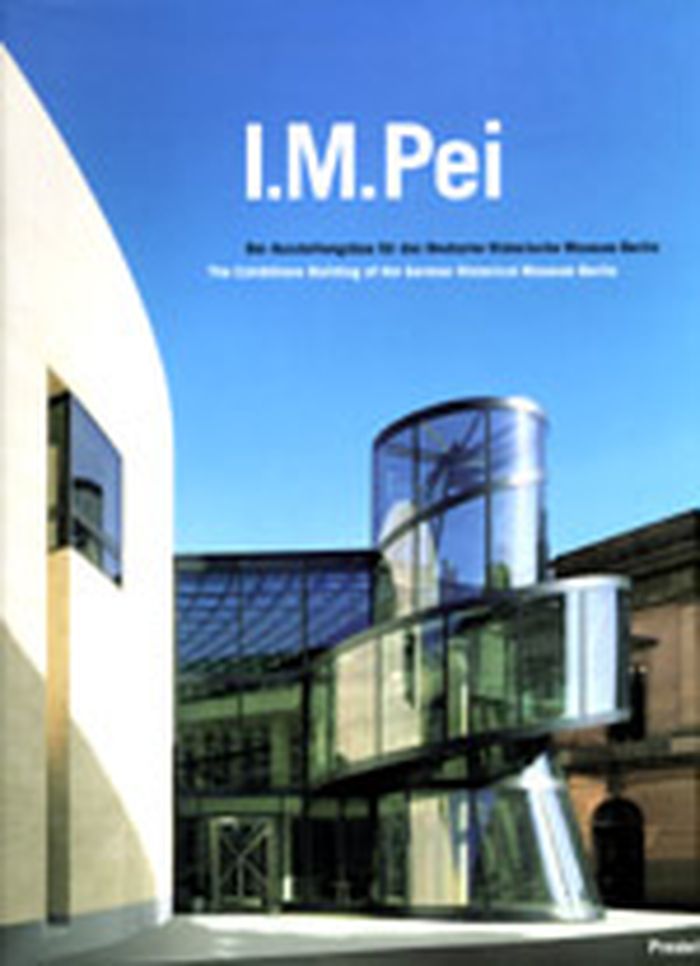
This detailed examination of I. M. Pei's new wing of the German Historical Museum in Berlin was published to coincide with the unveiling of the extension in 2003. The glass building, with its triangular footprint and seemingly weightless curved staircase, offers a striking departure from the museum's older structures, and plays an important role in Berlin's current architectural and cultural renaissance. Essays from architectural scholars comment on Pei's design, provide a history of the Arsenal building and site, and place the Show House in context with the architect's other important museum structures, including those built for the National Art Gallery in Washington, D.C., and the legendary Glass Pyramid in the courtyard of the Louvre.
I.M. Pei : the exhibitions building of the German Historical Museum Berlin
Actions:
Prix:
$28.95
(disponible sur commande)
Résumé:
This detailed examination of I. M. Pei's new wing of the German Historical Museum in Berlin was published to coincide with the unveiling of the extension in 2003. The glass building, with its triangular footprint and seemingly weightless curved staircase, offers a striking departure from the museum's older structures, and plays an important role in Berlin's current architectural and cultural renaissance. Essays from architectural scholars comment on Pei's design, provide a history of the Arsenal building and site, and place the Show House in context with the architect's other important museum structures, including those built for the National Art Gallery in Washington, D.C., and the legendary Glass Pyramid in the courtyard of the Louvre.
Classification:
livres
livres
Publication:
juillet 2003, Munich
juillet 2003, Munich
Sujet:
Architecture, monographies
Architecture, monographies
Classification:
livres
livres
Actions:
Prix:
$65.50
(disponible sur commande)
Résumé:
This book compiles Frank Day's multivalent series of photographs of Bangkok's battered public phone booths. Seen as if magnets for the detritus of daily life in a metropolis, Day's intimate yet subtly epic images register traces of the demands that govern our urban existence: postings for job adverts, signs of commercial pleasure, and listings for entertainment(...)
$65.50
(disponible sur commande)
Résumé:
This book compiles Frank Day's multivalent series of photographs of Bangkok's battered public phone booths. Seen as if magnets for the detritus of daily life in a metropolis, Day's intimate yet subtly epic images register traces of the demands that govern our urban existence: postings for job adverts, signs of commercial pleasure, and listings for entertainment(...)
Titre:
Frank Hallam Day, Call waiting: Bangkok phone booths
Actions:
Prix:
$65.50
(disponible sur commande)
Résumé:
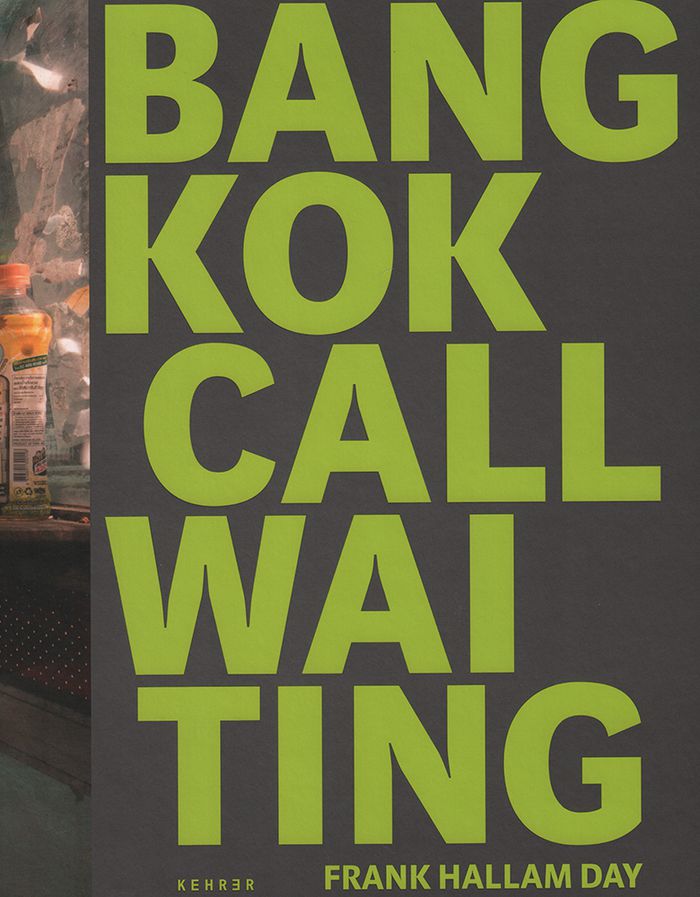
This book compiles Frank Day's multivalent series of photographs of Bangkok's battered public phone booths. Seen as if magnets for the detritus of daily life in a metropolis, Day's intimate yet subtly epic images register traces of the demands that govern our urban existence: postings for job adverts, signs of commercial pleasure, and listings for entertainment spectacles, or social advancement opportunities. Many of the markings in the booths are tags by graffiti artists and also messages left by street protestors during the recent years of Thailand's political meltdown. Call Waiting is not a sociological document of the type that maps the rich contrasts of a contemporary Asian city. Rather, Day's formalism cultivates intense moods and surprising resonances, touched by a noir sensibility of abandonment, neglect and mystery. (Brian Curtin) Frank Hallam Day lives in Washington DC. He won the 2012 Leica Oskar Barnack Prize for the series Nocturnal (published by Kehrer 2012), among other awards. His work has been widely exhibited and is in the collections of Berlinische Galerie und Landesmuseum Berlin, Baltimore Museum of Art, Portland Art Museum, Corcoran Gallery, San Diego Museum of Photographic Arts, and others.
Frank Hallam Day, Call waiting: Bangkok phone booths
Actions:
Prix:
$65.50
(disponible sur commande)
Résumé:
This book compiles Frank Day's multivalent series of photographs of Bangkok's battered public phone booths. Seen as if magnets for the detritus of daily life in a metropolis, Day's intimate yet subtly epic images register traces of the demands that govern our urban existence: postings for job adverts, signs of commercial pleasure, and listings for entertainment spectacles, or social advancement opportunities. Many of the markings in the booths are tags by graffiti artists and also messages left by street protestors during the recent years of Thailand's political meltdown. Call Waiting is not a sociological document of the type that maps the rich contrasts of a contemporary Asian city. Rather, Day's formalism cultivates intense moods and surprising resonances, touched by a noir sensibility of abandonment, neglect and mystery. (Brian Curtin) Frank Hallam Day lives in Washington DC. He won the 2012 Leica Oskar Barnack Prize for the series Nocturnal (published by Kehrer 2012), among other awards. His work has been widely exhibited and is in the collections of Berlinische Galerie und Landesmuseum Berlin, Baltimore Museum of Art, Portland Art Museum, Corcoran Gallery, San Diego Museum of Photographic Arts, and others.
Classification:
livres
livres
Publication:
avril 2017
avril 2017
Sujet:
Monographies photo
Monographies photo


