


6599 Résultats
Classification:
expositions
expositions
Actions:
Description:
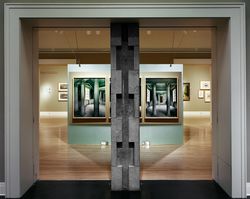
Tout comme la villa Rotonda d’Andrea Palladio a contribué à définir, pour les générations suivantes, l’architecture de la Renaissance en Italie, Chiswick est le locus classicus du renouveau palladien au XVIIIe siècle. L’exposition suit le déroulement de la pensée d’un grand architecte qui transforme successivement ses sources d’inspiration en projet architectural, puis(...)
Tout comme la villa Rotonda d’Andrea Palladio a contribué à définir, pour les générations suivantes, l’architecture de la Renaissance en Italie, Chiswick est le locus classicus du renouveau palladien au XVIIIe siècle. L’exposition suit le déroulement de la pensée d’un grand architecte qui transforme successivement ses sources d’inspiration en projet architectural, puis(...)
Localisation:
Salles principales
Salles principales
Date:
19 juillet 1994 au 25 septembre 1994
19 juillet 1994 au 25 septembre 1994
Titre:
Le renouveau palladien : la villa et les jardins de Lord Burlington à Chiswick
Actions:
Description:
Tout comme la villa Rotonda d’Andrea Palladio a contribué à définir, pour les générations suivantes, l’architecture de la Renaissance en Italie, Chiswick est le locus classicus du renouveau palladien au XVIIIe siècle. L’exposition suit le déroulement de la pensée d’un grand architecte qui transforme successivement ses sources d’inspiration en projet architectural, puis(...)
Le renouveau palladien : la villa et les jardins de Lord Burlington à Chiswick
Actions:
Description:
Tout comme la villa Rotonda d’Andrea Palladio a contribué à définir, pour les générations suivantes, l’architecture de la Renaissance en Italie, Chiswick est le locus classicus du renouveau palladien au XVIIIe siècle. L’exposition suit le déroulement de la pensée d’un grand architecte qui transforme successivement ses sources d’inspiration en projet architectural, puis(...)
Classification:
expositions
expositions
Date:
19 juillet 1994 au
25 septembre 1994
19 juillet 1994 au
25 septembre 1994
Localisation:
Salles principales
Salles principales
Classification:
événements
événements

Titre:
L’enseignement de… Chisasibi
L’enseignement de… Chisasibi
Actions:
Description:
Une échange entre l’artiste Thomas Kneubühler et le réalisateur Ernest Webb, qui explorent les questions liées à l’habitation et à la migration humaine dans une petite ville de la rive est de la baie James. L’échange est animé par Alessandra Ponte. À partir des installations hydroélectriques du Nord du Québec, Kneubühler montre comment la production d’électricité touche(...)
Une échange entre l’artiste Thomas Kneubühler et le réalisateur Ernest Webb, qui explorent les questions liées à l’habitation et à la migration humaine dans une petite ville de la rive est de la baie James. L’échange est animé par Alessandra Ponte. À partir des installations hydroélectriques du Nord du Québec, Kneubühler montre comment la production d’électricité touche(...)
Localisation:
Théâtre Paul-Desmarais
Théâtre Paul-Desmarais
Date:
25 octobre 2012 , 19h
25 octobre 2012 , 19h
Titre:
L’enseignement de… Chisasibi
Actions:
Description:
Une échange entre l’artiste Thomas Kneubühler et le réalisateur Ernest Webb, qui explorent les questions liées à l’habitation et à la migration humaine dans une petite ville de la rive est de la baie James. L’échange est animé par Alessandra Ponte. À partir des installations hydroélectriques du Nord du Québec, Kneubühler montre comment la production d’électricité touche(...)
L’enseignement de… Chisasibi
Actions:
Description:
Une échange entre l’artiste Thomas Kneubühler et le réalisateur Ernest Webb, qui explorent les questions liées à l’habitation et à la migration humaine dans une petite ville de la rive est de la baie James. L’échange est animé par Alessandra Ponte. À partir des installations hydroélectriques du Nord du Québec, Kneubühler montre comment la production d’électricité touche(...)
Classification:
événements
événements
Date:
25 octobre 2012
19h
25 octobre 2012
19h
Localisation:
Théâtre Paul-Desmarais
Théâtre Paul-Desmarais
Classification:
expositions
expositions
Actions:
Description:
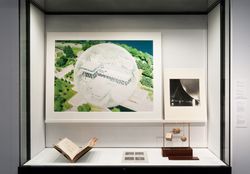
La bulle constitue une merveille de tension superficielle. Dans son interprétation architecturale, elle peut être comprise comme une prouesse d’ingénierie ou comme la métaphore d’un environnement hermétiquement clos. En ce sens, la bulle apparaît, selon l’architecte Cedric Price, « quelles qu’en soient la forme ou la taille », comme un puissant symbole du futur, ou(...)
La bulle constitue une merveille de tension superficielle. Dans son interprétation architecturale, elle peut être comprise comme une prouesse d’ingénierie ou comme la métaphore d’un environnement hermétiquement clos. En ce sens, la bulle apparaît, selon l’architecte Cedric Price, « quelles qu’en soient la forme ou la taille », comme un puissant symbole du futur, ou(...)
Localisation:
Vitrines
Vitrines
Date:
26 novembre 2009 au 17 janvier 2010
26 novembre 2009 au 17 janvier 2010
Titre:
Sur les traces de... la bulle
Actions:
Description:
La bulle constitue une merveille de tension superficielle. Dans son interprétation architecturale, elle peut être comprise comme une prouesse d’ingénierie ou comme la métaphore d’un environnement hermétiquement clos. En ce sens, la bulle apparaît, selon l’architecte Cedric Price, « quelles qu’en soient la forme ou la taille », comme un puissant symbole du futur, ou(...)
Sur les traces de... la bulle
Actions:
Description:
La bulle constitue une merveille de tension superficielle. Dans son interprétation architecturale, elle peut être comprise comme une prouesse d’ingénierie ou comme la métaphore d’un environnement hermétiquement clos. En ce sens, la bulle apparaît, selon l’architecte Cedric Price, « quelles qu’en soient la forme ou la taille », comme un puissant symbole du futur, ou(...)
Classification:
expositions
expositions
Date:
26 novembre 2009 au
17 janvier 2010
26 novembre 2009 au
17 janvier 2010
Localisation:
Vitrines
Vitrines
Classification:
événements
événements
Actions:
Description:
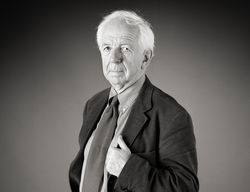
Hubert Damisch, chercheur principal et boursier Mellon au CCA en 2003-2004, examine la conséquence qu’aura, pour l’avenir de la pensée structurale, l’édifice-nuage Blur. Créé par la firme d’architectes new-yorkais Diller + Scofidio sur le lac de Neuchâtel en Suisse, cet édifice est la plus récente et radicale expression d’un désir de fluidité et d’évanescence en(...)
Hubert Damisch, chercheur principal et boursier Mellon au CCA en 2003-2004, examine la conséquence qu’aura, pour l’avenir de la pensée structurale, l’édifice-nuage Blur. Créé par la firme d’architectes new-yorkais Diller + Scofidio sur le lac de Neuchâtel en Suisse, cet édifice est la plus récente et radicale expression d’un désir de fluidité et d’évanescence en(...)
Localisation:
Théâtre Paul-Desmarais
Théâtre Paul-Desmarais
Date:
8 mai 2003
8 mai 2003
Titre:
Hubert Damisch : Effacer l’architecture?
Actions:
Description:
Hubert Damisch, chercheur principal et boursier Mellon au CCA en 2003-2004, examine la conséquence qu’aura, pour l’avenir de la pensée structurale, l’édifice-nuage Blur. Créé par la firme d’architectes new-yorkais Diller + Scofidio sur le lac de Neuchâtel en Suisse, cet édifice est la plus récente et radicale expression d’un désir de fluidité et d’évanescence en(...)
Hubert Damisch : Effacer l’architecture?
Actions:
Description:
Hubert Damisch, chercheur principal et boursier Mellon au CCA en 2003-2004, examine la conséquence qu’aura, pour l’avenir de la pensée structurale, l’édifice-nuage Blur. Créé par la firme d’architectes new-yorkais Diller + Scofidio sur le lac de Neuchâtel en Suisse, cet édifice est la plus récente et radicale expression d’un désir de fluidité et d’évanescence en(...)
Classification:
événements
événements
Date:
8 mai 2003
8 mai 2003
Localisation:
Théâtre Paul-Desmarais
Théâtre Paul-Desmarais
Classification:
événements
événements
Actions:
Description:
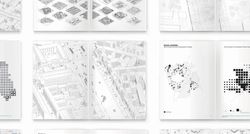
Deane Simpson présente l’Atlas of the Copenhagens, un projet de livre traitant d’un territoire urbain reconnu dans les médias et célébré par la municipalité même de Copenhague comme la ville la plus durable au monde et où la qualité de vie est la meilleure. De telles affirmations suggèrent que Copenhague est un site approprié pour une étude et un débat sur la durabilité(...)
Deane Simpson présente l’Atlas of the Copenhagens, un projet de livre traitant d’un territoire urbain reconnu dans les médias et célébré par la municipalité même de Copenhague comme la ville la plus durable au monde et où la qualité de vie est la meilleure. De telles affirmations suggèrent que Copenhague est un site approprié pour une étude et un débat sur la durabilité(...)
Localisation:
Théâtre Paul-Desmarais
Théâtre Paul-Desmarais
Date:
21 mai 2015 , 18h
21 mai 2015 , 18h
Titre:
L’enseignement de… Copenhague
Actions:
Description:
Deane Simpson présente l’Atlas of the Copenhagens, un projet de livre traitant d’un territoire urbain reconnu dans les médias et célébré par la municipalité même de Copenhague comme la ville la plus durable au monde et où la qualité de vie est la meilleure. De telles affirmations suggèrent que Copenhague est un site approprié pour une étude et un débat sur la durabilité(...)
L’enseignement de… Copenhague
Actions:
Description:
Deane Simpson présente l’Atlas of the Copenhagens, un projet de livre traitant d’un territoire urbain reconnu dans les médias et célébré par la municipalité même de Copenhague comme la ville la plus durable au monde et où la qualité de vie est la meilleure. De telles affirmations suggèrent que Copenhague est un site approprié pour une étude et un débat sur la durabilité(...)
Classification:
événements
événements
Date:
21 mai 2015
18h
21 mai 2015
18h
Localisation:
Théâtre Paul-Desmarais
Théâtre Paul-Desmarais
Niveau de description archivistique:
Série(s)
Série(s)
Titre:
Architectural projects
Architectural projects
Numéro de référence:
AP178.S1
Description:
Series AP178.S1 is the largest series of the Álvaro Siza fonds and documents over 200 of Siza’s built and unbuilt architectural projects. The series is divided into project series which are arranged chronologically by project year. Presently, materials in this series range from 1958-2012. The CCA will also receive materials documenting Siza’s more recent work in future additions. Documenting the projects are conceptual, design, presentation, and working drawings, as well as photographic materials, textual documentation, and models. Although the drawings for each project have been identified, Siza often sketches or doodles on textual documentation, such as minutes of meetings or notes. When possible, folders that include textual documents with sketches or doodles have been identified. Amounts and types of materials vary from project to project. Project documentation is usually in Portuguese, with some exceptions including French, English, German, and Dutch. Most project series include sketches, studies, and working drawings. Other drawings included are site plans, floor plans, topographic surveys, elevations, sections, as well as technical and mechanical details. Also documenting the projects are photographic materials and textual documentation, such as correspondence, building programs, contracts, notes, and other working details. Photographic materials found within this archive are slides, negatives, photomontages and photographs of project sites and models.The photomontages were often used to study the function of the project site. To fully understand Siza’s methodology, sketchbooks (Series AP178.S2) should be viewed alongside the project drawings, when possible. Each project series description highlights sketchbooks in series AP178.S2 which contain related sketches. It is important to note that not all projects are represented in the sketchbooks in Series AP178.S2. Moreover, project series descriptions only list related sketchbooks when sketches have been positively identified as related to the corresponding project. The Siza fonds will be processed in four phases. The materials processed in the first, second, and third phases are architectural projects from the 1950’s, 1960’s, and 1970’s; urban planning projects; Reconstrução do Chiado; Berlin projects submitted to the IBA competition; cultural institutions; individual houses; and the Plano de urbanização Deelgebied 5 Schilderswijk-West in The Hague. Among The Hague and the Berlin projects are the Punt en Komma social housing, Bonjour Tristesse, and the Residential settlement in Schilderswijk. This series is better understood in the context of how the records for architectural projects were arranged by Siza’s office. Earlier projects were initially numbered by Siza’s office and then received new project numbers by the office archivist, who joined the office in the 1990s. Project files have been kept in the order in which they were received by the CCA, which is how they were arranged by the office archivist. The project numbers and dates assigned by Siza’s office archivist are included in the descriptions for each project and form the basis for the arrangement of this series. The office archivist numbered projects consecutively by decade, for instance, 58/80 was the 58th project during the 1980s. Numbers which were included in square brackets, ex. [14]/75, show that the project was not a ‘full’ project and contains a small amount of documentation. When projects are followed by a letter (A, B, C) this signifies a project is connected to the first. When the project number is followed by a number (1, 2, 3) this signifies a separate building within a larger project. For the purposes of arrangement, project numbers that were assigned a letter or number are arranged as sub-series of the related project series. Exceptions to this numbering convention are projects 23/60, 25/60, 28/60, 33/60, 34/60 and 35/60. These projects were not in the office’s original project list and were not officially considered projects. The office archivist assembled documentation related to these projects and assigned them numbers. In the early 2000s a large number of photographic materials were gathered together by the office archivist from various correspondence files for a digitization project initiated by the office. These materials remained housed together as a photograph collection in the office. Not all of these materials were digitized by the office. Those that were digitized were assigned numbers which have been identified in the file descriptions. It is important to note that several photographic materials were left with the textual documentation or drawings. When this is the case they are identified in the file description. There are also several panoramic photomontages which were created by either gluing or taping several photographs together to make panoramas of project sites.
AP178.S1
Description:
Series AP178.S1 is the largest series of the Álvaro Siza fonds and documents over 200 of Siza’s built and unbuilt architectural projects. The series is divided into project series which are arranged chronologically by project year. Presently, materials in this series range from 1958-2012. The CCA will also receive materials documenting Siza’s more recent work in future additions. Documenting the projects are conceptual, design, presentation, and working drawings, as well as photographic materials, textual documentation, and models. Although the drawings for each project have been identified, Siza often sketches or doodles on textual documentation, such as minutes of meetings or notes. When possible, folders that include textual documents with sketches or doodles have been identified. Amounts and types of materials vary from project to project. Project documentation is usually in Portuguese, with some exceptions including French, English, German, and Dutch. Most project series include sketches, studies, and working drawings. Other drawings included are site plans, floor plans, topographic surveys, elevations, sections, as well as technical and mechanical details. Also documenting the projects are photographic materials and textual documentation, such as correspondence, building programs, contracts, notes, and other working details. Photographic materials found within this archive are slides, negatives, photomontages and photographs of project sites and models.The photomontages were often used to study the function of the project site. To fully understand Siza’s methodology, sketchbooks (Series AP178.S2) should be viewed alongside the project drawings, when possible. Each project series description highlights sketchbooks in series AP178.S2 which contain related sketches. It is important to note that not all projects are represented in the sketchbooks in Series AP178.S2. Moreover, project series descriptions only list related sketchbooks when sketches have been positively identified as related to the corresponding project. The Siza fonds will be processed in four phases. The materials processed in the first, second, and third phases are architectural projects from the 1950’s, 1960’s, and 1970’s; urban planning projects; Reconstrução do Chiado; Berlin projects submitted to the IBA competition; cultural institutions; individual houses; and the Plano de urbanização Deelgebied 5 Schilderswijk-West in The Hague. Among The Hague and the Berlin projects are the Punt en Komma social housing, Bonjour Tristesse, and the Residential settlement in Schilderswijk. This series is better understood in the context of how the records for architectural projects were arranged by Siza’s office. Earlier projects were initially numbered by Siza’s office and then received new project numbers by the office archivist, who joined the office in the 1990s. Project files have been kept in the order in which they were received by the CCA, which is how they were arranged by the office archivist. The project numbers and dates assigned by Siza’s office archivist are included in the descriptions for each project and form the basis for the arrangement of this series. The office archivist numbered projects consecutively by decade, for instance, 58/80 was the 58th project during the 1980s. Numbers which were included in square brackets, ex. [14]/75, show that the project was not a ‘full’ project and contains a small amount of documentation. When projects are followed by a letter (A, B, C) this signifies a project is connected to the first. When the project number is followed by a number (1, 2, 3) this signifies a separate building within a larger project. For the purposes of arrangement, project numbers that were assigned a letter or number are arranged as sub-series of the related project series. Exceptions to this numbering convention are projects 23/60, 25/60, 28/60, 33/60, 34/60 and 35/60. These projects were not in the office’s original project list and were not officially considered projects. The office archivist assembled documentation related to these projects and assigned them numbers. In the early 2000s a large number of photographic materials were gathered together by the office archivist from various correspondence files for a digitization project initiated by the office. These materials remained housed together as a photograph collection in the office. Not all of these materials were digitized by the office. Those that were digitized were assigned numbers which have been identified in the file descriptions. It is important to note that several photographic materials were left with the textual documentation or drawings. When this is the case they are identified in the file description. There are also several panoramic photomontages which were created by either gluing or taping several photographs together to make panoramas of project sites.
Personnes et institutions:
Date:
1948-2012
1948-2012
Titre:
Architectural projects
Actions:
AP178.S1
Description:
Series AP178.S1 is the largest series of the Álvaro Siza fonds and documents over 200 of Siza’s built and unbuilt architectural projects. The series is divided into project series which are arranged chronologically by project year. Presently, materials in this series range from 1958-2012. The CCA will also receive materials documenting Siza’s more recent work in future additions. Documenting the projects are conceptual, design, presentation, and working drawings, as well as photographic materials, textual documentation, and models. Although the drawings for each project have been identified, Siza often sketches or doodles on textual documentation, such as minutes of meetings or notes. When possible, folders that include textual documents with sketches or doodles have been identified. Amounts and types of materials vary from project to project. Project documentation is usually in Portuguese, with some exceptions including French, English, German, and Dutch. Most project series include sketches, studies, and working drawings. Other drawings included are site plans, floor plans, topographic surveys, elevations, sections, as well as technical and mechanical details. Also documenting the projects are photographic materials and textual documentation, such as correspondence, building programs, contracts, notes, and other working details. Photographic materials found within this archive are slides, negatives, photomontages and photographs of project sites and models.The photomontages were often used to study the function of the project site. To fully understand Siza’s methodology, sketchbooks (Series AP178.S2) should be viewed alongside the project drawings, when possible. Each project series description highlights sketchbooks in series AP178.S2 which contain related sketches. It is important to note that not all projects are represented in the sketchbooks in Series AP178.S2. Moreover, project series descriptions only list related sketchbooks when sketches have been positively identified as related to the corresponding project. The Siza fonds will be processed in four phases. The materials processed in the first, second, and third phases are architectural projects from the 1950’s, 1960’s, and 1970’s; urban planning projects; Reconstrução do Chiado; Berlin projects submitted to the IBA competition; cultural institutions; individual houses; and the Plano de urbanização Deelgebied 5 Schilderswijk-West in The Hague. Among The Hague and the Berlin projects are the Punt en Komma social housing, Bonjour Tristesse, and the Residential settlement in Schilderswijk. This series is better understood in the context of how the records for architectural projects were arranged by Siza’s office. Earlier projects were initially numbered by Siza’s office and then received new project numbers by the office archivist, who joined the office in the 1990s. Project files have been kept in the order in which they were received by the CCA, which is how they were arranged by the office archivist. The project numbers and dates assigned by Siza’s office archivist are included in the descriptions for each project and form the basis for the arrangement of this series. The office archivist numbered projects consecutively by decade, for instance, 58/80 was the 58th project during the 1980s. Numbers which were included in square brackets, ex. [14]/75, show that the project was not a ‘full’ project and contains a small amount of documentation. When projects are followed by a letter (A, B, C) this signifies a project is connected to the first. When the project number is followed by a number (1, 2, 3) this signifies a separate building within a larger project. For the purposes of arrangement, project numbers that were assigned a letter or number are arranged as sub-series of the related project series. Exceptions to this numbering convention are projects 23/60, 25/60, 28/60, 33/60, 34/60 and 35/60. These projects were not in the office’s original project list and were not officially considered projects. The office archivist assembled documentation related to these projects and assigned them numbers. In the early 2000s a large number of photographic materials were gathered together by the office archivist from various correspondence files for a digitization project initiated by the office. These materials remained housed together as a photograph collection in the office. Not all of these materials were digitized by the office. Those that were digitized were assigned numbers which have been identified in the file descriptions. It is important to note that several photographic materials were left with the textual documentation or drawings. When this is the case they are identified in the file description. There are also several panoramic photomontages which were created by either gluing or taping several photographs together to make panoramas of project sites.
Architectural projects
Actions:
AP178.S1
Description:
Series AP178.S1 is the largest series of the Álvaro Siza fonds and documents over 200 of Siza’s built and unbuilt architectural projects. The series is divided into project series which are arranged chronologically by project year. Presently, materials in this series range from 1958-2012. The CCA will also receive materials documenting Siza’s more recent work in future additions. Documenting the projects are conceptual, design, presentation, and working drawings, as well as photographic materials, textual documentation, and models. Although the drawings for each project have been identified, Siza often sketches or doodles on textual documentation, such as minutes of meetings or notes. When possible, folders that include textual documents with sketches or doodles have been identified. Amounts and types of materials vary from project to project. Project documentation is usually in Portuguese, with some exceptions including French, English, German, and Dutch. Most project series include sketches, studies, and working drawings. Other drawings included are site plans, floor plans, topographic surveys, elevations, sections, as well as technical and mechanical details. Also documenting the projects are photographic materials and textual documentation, such as correspondence, building programs, contracts, notes, and other working details. Photographic materials found within this archive are slides, negatives, photomontages and photographs of project sites and models.The photomontages were often used to study the function of the project site. To fully understand Siza’s methodology, sketchbooks (Series AP178.S2) should be viewed alongside the project drawings, when possible. Each project series description highlights sketchbooks in series AP178.S2 which contain related sketches. It is important to note that not all projects are represented in the sketchbooks in Series AP178.S2. Moreover, project series descriptions only list related sketchbooks when sketches have been positively identified as related to the corresponding project. The Siza fonds will be processed in four phases. The materials processed in the first, second, and third phases are architectural projects from the 1950’s, 1960’s, and 1970’s; urban planning projects; Reconstrução do Chiado; Berlin projects submitted to the IBA competition; cultural institutions; individual houses; and the Plano de urbanização Deelgebied 5 Schilderswijk-West in The Hague. Among The Hague and the Berlin projects are the Punt en Komma social housing, Bonjour Tristesse, and the Residential settlement in Schilderswijk. This series is better understood in the context of how the records for architectural projects were arranged by Siza’s office. Earlier projects were initially numbered by Siza’s office and then received new project numbers by the office archivist, who joined the office in the 1990s. Project files have been kept in the order in which they were received by the CCA, which is how they were arranged by the office archivist. The project numbers and dates assigned by Siza’s office archivist are included in the descriptions for each project and form the basis for the arrangement of this series. The office archivist numbered projects consecutively by decade, for instance, 58/80 was the 58th project during the 1980s. Numbers which were included in square brackets, ex. [14]/75, show that the project was not a ‘full’ project and contains a small amount of documentation. When projects are followed by a letter (A, B, C) this signifies a project is connected to the first. When the project number is followed by a number (1, 2, 3) this signifies a separate building within a larger project. For the purposes of arrangement, project numbers that were assigned a letter or number are arranged as sub-series of the related project series. Exceptions to this numbering convention are projects 23/60, 25/60, 28/60, 33/60, 34/60 and 35/60. These projects were not in the office’s original project list and were not officially considered projects. The office archivist assembled documentation related to these projects and assigned them numbers. In the early 2000s a large number of photographic materials were gathered together by the office archivist from various correspondence files for a digitization project initiated by the office. These materials remained housed together as a photograph collection in the office. Not all of these materials were digitized by the office. Those that were digitized were assigned numbers which have been identified in the file descriptions. It is important to note that several photographic materials were left with the textual documentation or drawings. When this is the case they are identified in the file description. There are also several panoramic photomontages which were created by either gluing or taping several photographs together to make panoramas of project sites.
Niveau de description archivistique:
Series
Series
Date:
1948-2012
1948-2012
Personnes et institutions:
Classification:
expositions
expositions
Titre:
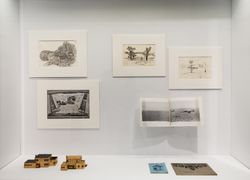
Sur les traces de... voyage
Sur les traces de... voyage
Actions:
Description:
Interprétant de la manière la plus large le thème des voyages lointains, l’exposition cartographie et élargit la notion de voyage qui s’étend aux expéditions imaginaires, aux sites étranges, aux points de fuite, aux maisons transportables et flottantes, aux caves sans fond, aux dômes de verre convolutés, aux tombeaux, aux cryptes et catacombes, aux aventures dans des(...)
Interprétant de la manière la plus large le thème des voyages lointains, l’exposition cartographie et élargit la notion de voyage qui s’étend aux expéditions imaginaires, aux sites étranges, aux points de fuite, aux maisons transportables et flottantes, aux caves sans fond, aux dômes de verre convolutés, aux tombeaux, aux cryptes et catacombes, aux aventures dans des(...)
Localisation:
Vitrines
Vitrines
Date:
3 décembre 2008 au 1 mai 2009
3 décembre 2008 au 1 mai 2009
Titre:
Sur les traces de... voyage
Actions:
Description:
Interprétant de la manière la plus large le thème des voyages lointains, l’exposition cartographie et élargit la notion de voyage qui s’étend aux expéditions imaginaires, aux sites étranges, aux points de fuite, aux maisons transportables et flottantes, aux caves sans fond, aux dômes de verre convolutés, aux tombeaux, aux cryptes et catacombes, aux aventures dans des(...)
Sur les traces de... voyage
Actions:
Description:
Interprétant de la manière la plus large le thème des voyages lointains, l’exposition cartographie et élargit la notion de voyage qui s’étend aux expéditions imaginaires, aux sites étranges, aux points de fuite, aux maisons transportables et flottantes, aux caves sans fond, aux dômes de verre convolutés, aux tombeaux, aux cryptes et catacombes, aux aventures dans des(...)
Classification:
expositions
expositions
Date:
3 décembre 2008 au
1 mai 2009
3 décembre 2008 au
1 mai 2009
Localisation:
Vitrines
Vitrines
Classification:
événements
événements

Titre:
L’enseignement… d’Ordos
L’enseignement… d’Ordos
Actions:
Description:
Dans le nord de la Chine, la ville d’Ordos, riche en ressources charbonnières et gazières, possède un nouveau quartier central dépourvu de résidants. On a dépensé plus de 161 milliards de dollars pour bâtir entièrement à neuf ce nouveau centre-ville sur l’aride steppe mongolienne, et on espère y accueillir plus d’un million d’habitants. Le gouvernement a déclaré qu’à(...)
Dans le nord de la Chine, la ville d’Ordos, riche en ressources charbonnières et gazières, possède un nouveau quartier central dépourvu de résidants. On a dépensé plus de 161 milliards de dollars pour bâtir entièrement à neuf ce nouveau centre-ville sur l’aride steppe mongolienne, et on espère y accueillir plus d’un million d’habitants. Le gouvernement a déclaré qu’à(...)
Localisation:
Théâtre Paul-Desmarais
Théâtre Paul-Desmarais
Date:
8 novembre 2012 , 19h
8 novembre 2012 , 19h
Titre:
L’enseignement… d’Ordos
Actions:
Description:
Dans le nord de la Chine, la ville d’Ordos, riche en ressources charbonnières et gazières, possède un nouveau quartier central dépourvu de résidants. On a dépensé plus de 161 milliards de dollars pour bâtir entièrement à neuf ce nouveau centre-ville sur l’aride steppe mongolienne, et on espère y accueillir plus d’un million d’habitants. Le gouvernement a déclaré qu’à(...)
L’enseignement… d’Ordos
Actions:
Description:
Dans le nord de la Chine, la ville d’Ordos, riche en ressources charbonnières et gazières, possède un nouveau quartier central dépourvu de résidants. On a dépensé plus de 161 milliards de dollars pour bâtir entièrement à neuf ce nouveau centre-ville sur l’aride steppe mongolienne, et on espère y accueillir plus d’un million d’habitants. Le gouvernement a déclaré qu’à(...)
Classification:
événements
événements
Date:
8 novembre 2012
19h
8 novembre 2012
19h
Localisation:
Théâtre Paul-Desmarais
Théâtre Paul-Desmarais
Classification:
événements
événements
Titre:
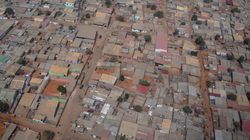
L'enseignement de... Luanda
L'enseignement de... Luanda
Actions:
Description:
Comptant plus de cinq millions d’habitants, la métropole Luanda est la troisième plus grande ville lusophone au monde, après São Paulo et Rio de Janeiro. L’architecte et chercheur Paulo Moreira propose des approches urbanistiques différentes fondées sur la recherche en cours effectuée à Chicala, un quartier informel de Luanda directement relié aux secteurs commerciaux et(...)
Comptant plus de cinq millions d’habitants, la métropole Luanda est la troisième plus grande ville lusophone au monde, après São Paulo et Rio de Janeiro. L’architecte et chercheur Paulo Moreira propose des approches urbanistiques différentes fondées sur la recherche en cours effectuée à Chicala, un quartier informel de Luanda directement relié aux secteurs commerciaux et(...)
Localisation:
Théâtre Paul-Desmarais
Théâtre Paul-Desmarais
Date:
1 novembre 2012 , 19h
1 novembre 2012 , 19h
Titre:
L'enseignement de... Luanda
Actions:
Description:
Comptant plus de cinq millions d’habitants, la métropole Luanda est la troisième plus grande ville lusophone au monde, après São Paulo et Rio de Janeiro. L’architecte et chercheur Paulo Moreira propose des approches urbanistiques différentes fondées sur la recherche en cours effectuée à Chicala, un quartier informel de Luanda directement relié aux secteurs commerciaux et(...)
L'enseignement de... Luanda
Actions:
Description:
Comptant plus de cinq millions d’habitants, la métropole Luanda est la troisième plus grande ville lusophone au monde, après São Paulo et Rio de Janeiro. L’architecte et chercheur Paulo Moreira propose des approches urbanistiques différentes fondées sur la recherche en cours effectuée à Chicala, un quartier informel de Luanda directement relié aux secteurs commerciaux et(...)
Classification:
événements
événements
Date:
1 novembre 2012
19h
1 novembre 2012
19h
Localisation:
Théâtre Paul-Desmarais
Théâtre Paul-Desmarais
Classification:
événements
événements

Titre:
L'enseignement de… São Paulo
L'enseignement de… São Paulo
Actions:
Description:
Angelo Bucci, architecte et professeur à l’Université de São Paulo au Brésil, aborde les questions de la violence et de l’environnement en évolution à São Paulo, en quête de nouvelles formes urbaines. À São Paulo, la violence peut être vue comme gâchant l’expérience de la ville et, par conséquent, sapant la raison d’être du travail de l’architecte. La conférence porte sur(...)
Angelo Bucci, architecte et professeur à l’Université de São Paulo au Brésil, aborde les questions de la violence et de l’environnement en évolution à São Paulo, en quête de nouvelles formes urbaines. À São Paulo, la violence peut être vue comme gâchant l’expérience de la ville et, par conséquent, sapant la raison d’être du travail de l’architecte. La conférence porte sur(...)
Date:
22 avril 2010
22 avril 2010
Titre:
L'enseignement de… São Paulo
Actions:
Description:
Angelo Bucci, architecte et professeur à l’Université de São Paulo au Brésil, aborde les questions de la violence et de l’environnement en évolution à São Paulo, en quête de nouvelles formes urbaines. À São Paulo, la violence peut être vue comme gâchant l’expérience de la ville et, par conséquent, sapant la raison d’être du travail de l’architecte. La conférence porte sur(...)
L'enseignement de… São Paulo
Actions:
Description:
Angelo Bucci, architecte et professeur à l’Université de São Paulo au Brésil, aborde les questions de la violence et de l’environnement en évolution à São Paulo, en quête de nouvelles formes urbaines. À São Paulo, la violence peut être vue comme gâchant l’expérience de la ville et, par conséquent, sapant la raison d’être du travail de l’architecte. La conférence porte sur(...)
Classification:
événements
événements
Date:
22 avril 2010
22 avril 2010


