


342 Résultats
Classification:
périodiques
périodiques
Actions:
Prix:
$16.95
(disponible en magasin)
Résumé:
Au cours de l’été 2025, neuf États occidentaux ont officiellement reconnu l’État de Palestine. Cette reconnaissance par les États et la résurrection de la « solution à deux États » moribonde, s’accompagnent d’une criminalisation des appels à la libération de la Palestine « du Jourdain à la Mer ». Ce numéro pose la question suivante : la libération peut-elle prendre la(...)
Titre:
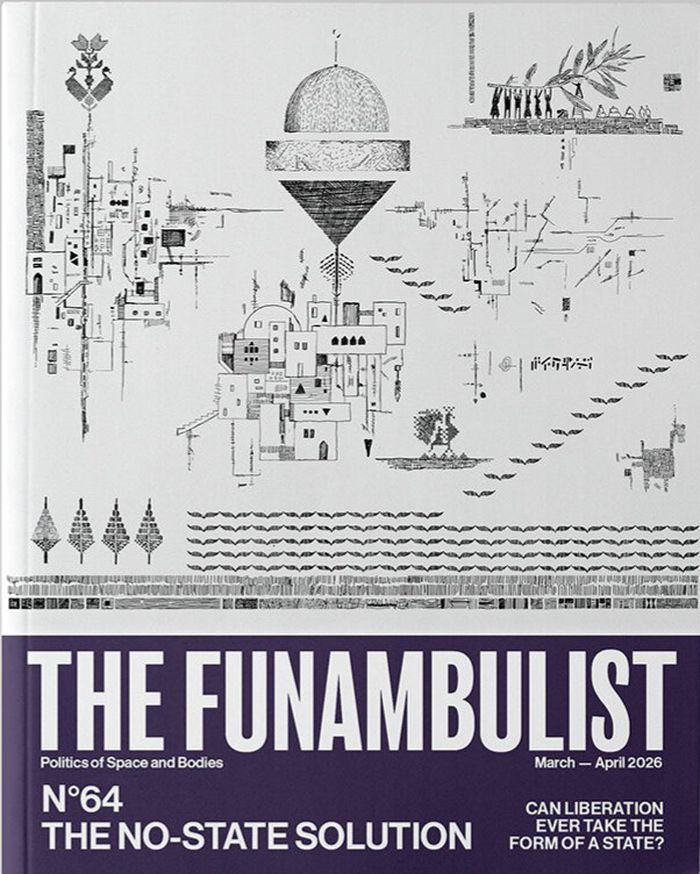
The Funambulist No. 64 FR : La solution sans état
Actions:
Prix:
$16.95
(disponible en magasin)
Résumé:
Au cours de l’été 2025, neuf États occidentaux ont officiellement reconnu l’État de Palestine. Cette reconnaissance par les États et la résurrection de la « solution à deux États » moribonde, s’accompagnent d’une criminalisation des appels à la libération de la Palestine « du Jourdain à la Mer ». Ce numéro pose la question suivante : la libération peut-elle prendre la forme d’un État ? Reprenant une expression que Sophia Azeb a utilisée à plusieurs reprises dans l’histoire du Funambulist (depuis notre première conversation en 2014), « La Solution Sans État » entend revisiter ce concept dans le contexte palestinien en remettant en question l’idée même de « solution » (Sophia Azeb & Rebecca Gross), mais aussi dans d’autres luttes de libération telles que celles des peuples kurdes (Havin Guneser) et des Zapatista (Linda Quiquivix). Il nous met en garde contre les rêves étatiques, tels que ceux mis en œuvre en Sierra Leone et au Liberia (ce que William C. Anderson appelle le « sionisme noir » dans sa contribution), et s’interroge sur les différences entre les formes de gouvernance étatiques et celles communautaires, en particulier en matière de santé, comme le montrent les exemples de Cuba et du Venezuela (Lisbeth Moya González). Enfin, il envisage ce à quoi pourrait ressembler des futurs sans frontières et sans États à Aotearoa-Nouvelle Zélande (Kai-rui Cheng) et en Kanaky (Florenda Nirikani). Quant à l’illustration de la couverture, il s’agit d’une création originale de Samir Harb.
Classification:
périodiques
périodiques
Publication:
février 2026
février 2026
Sujet:
Revues
Revues
Classification:
livres
livres
Actions:
Prix:
$36.95
(disponible sur commande)
Résumé:
In Miniature Messages, Jack Child analyzes Latin American postage stamps, revealing the messages about history, culture, and politics encoded in their design and disseminated throughout the world. While postage stamps are a sanctioned product of official government agencies, Child argues that they accumulate popular cultural value and take on new meanings as they(...)
Titre:
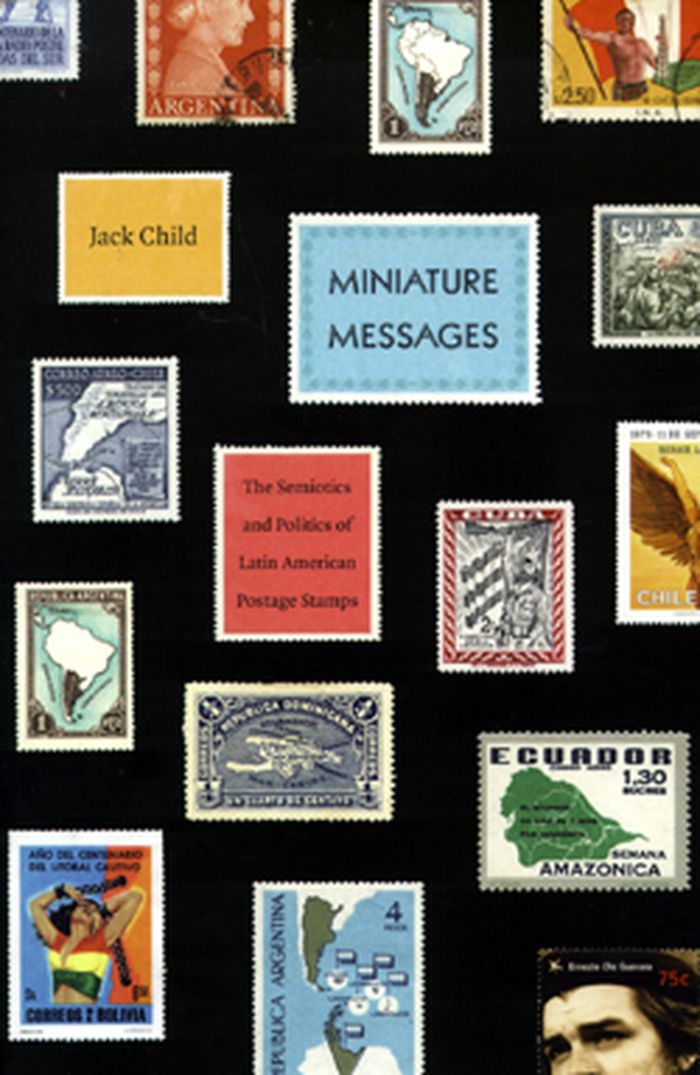
Miniature messages: the semiotics and politics of latin american postage stamps
Actions:
Prix:
$36.95
(disponible sur commande)
Résumé:
In Miniature Messages, Jack Child analyzes Latin American postage stamps, revealing the messages about history, culture, and politics encoded in their design and disseminated throughout the world. While postage stamps are a sanctioned product of official government agencies, Child argues that they accumulate popular cultural value and take on new meanings as they circulate in the public sphere. As he demonstrates in this richly illustrated study, the postage stamp conveys many of the contestations and triumphs of Latin American history. Child combines history and political science with philatelic research of nearly forty thousand Latin American stamps. He focuses on Argentina and the Southern Cone, highlighting stamps representing the consolidation of the Argentine republic and those produced under its Peronist regime. He compares Chilean stamps issued by the leftist government of Salvador Allende and by Augusto Pinochet’s dictatorship. Considering postage stamps produced under other dictatorial regimes, he examines stamps from the Dominican Republic, Guatemala, Nicaragua, and Paraguay. Child studies how international conflicts have been depicted on the stamps of Argentina, Chile, and Peru, and he pays particular attention to the role of South American and British stamps in establishing claims to the Malvinas/Falkland Islands and to Antarctica. He also covers the cultural and political history of stamps in Bolivia, Brazil, Colombia, Cuba, Grenada, Mexico, Uruguay, Venezuela and elsewhere. In Miniature Messages, Child finds the political history of modern Latin America in its “tiny posters.” Jack Child is a professor in the Department of Language and Foreign Studies at American University in Washington. He is the author of many books and articles on Latin American culture, translation, and geopolitics.
Classification:
livres
livres
Publication:
juin 2008, Durham
juin 2008, Durham
Sujet:
Arts graphiques imprimés
Arts graphiques imprimés


