


358 Résultats
Classification:
livres
livres

Actions:
Prix:
$176.95
(disponible sur commande)
Résumé:
This is the first book about the history, influences, and impact of the "Werkstatt für Photography" (Photography Workshop) founded by the Berlin photographer Michael Schmidt at the Volkshochschule Kreuzberg in 1976. In the midst of the Cold War, the Werkstatt initiated an artistic "airlift" to the United States, a democratic field of experimentation beyond the pale of(...)
$176.95
(disponible sur commande)
Résumé:
This is the first book about the history, influences, and impact of the "Werkstatt für Photography" (Photography Workshop) founded by the Berlin photographer Michael Schmidt at the Volkshochschule Kreuzberg in 1976. In the midst of the Cold War, the Werkstatt initiated an artistic "airlift" to the United States, a democratic field of experimentation beyond the pale of(...)
Sujet:
Photographie- collections
Photographie- collections
Publication:
juin 2017
juin 2017
Titre:
Werkstatt für photographie 1976-1986
Actions:
Prix:
$176.95
(disponible sur commande)
Résumé:
This is the first book about the history, influences, and impact of the "Werkstatt für Photography" (Photography Workshop) founded by the Berlin photographer Michael Schmidt at the Volkshochschule Kreuzberg in 1976. In the midst of the Cold War, the Werkstatt initiated an artistic "airlift" to the United States, a democratic field of experimentation beyond the pale of traditional vocational and political-institutional standards. Those same years witnessed the establishment of infrastructures in West Germany that paved the way for the emancipation of photography as an art form. These included documenta 6 (1977), the first photo galleries and photography journals, and a number of pathbreaking exhibitions. Berlin, Hanover, and Essen played important roles in that process. All in all, the picture of a medium in transition emerges, a medium that developed an autonomous form of artistic authorship in the field of documentary. This book presents the story of German photography in the 1970s and 1980s, its international ties, its protagonists, and its networks.
Werkstatt für photographie 1976-1986
Actions:
Prix:
$176.95
(disponible sur commande)
Résumé:
This is the first book about the history, influences, and impact of the "Werkstatt für Photography" (Photography Workshop) founded by the Berlin photographer Michael Schmidt at the Volkshochschule Kreuzberg in 1976. In the midst of the Cold War, the Werkstatt initiated an artistic "airlift" to the United States, a democratic field of experimentation beyond the pale of traditional vocational and political-institutional standards. Those same years witnessed the establishment of infrastructures in West Germany that paved the way for the emancipation of photography as an art form. These included documenta 6 (1977), the first photo galleries and photography journals, and a number of pathbreaking exhibitions. Berlin, Hanover, and Essen played important roles in that process. All in all, the picture of a medium in transition emerges, a medium that developed an autonomous form of artistic authorship in the field of documentary. This book presents the story of German photography in the 1970s and 1980s, its international ties, its protagonists, and its networks.
Classification:
livres
livres
Publication:
juin 2017
juin 2017
Sujet:
Photographie- collections
Photographie- collections
Classification:
livres
livres
Actions:
Prix:
$34.95
(disponible en magasin)
Résumé:
Studies of the radical environmental politics of the 1960s have tended to downplay the extent to which much of that countercultural intellectual and social ferment continued into the 1970s and 1980s. Canadian Countercultures and the Environment adds to our knowledge of this understudied period. This collection contributes a sustained analysis of the beginning of major(...)
$34.95
(disponible en magasin)
Résumé:
Studies of the radical environmental politics of the 1960s have tended to downplay the extent to which much of that countercultural intellectual and social ferment continued into the 1970s and 1980s. Canadian Countercultures and the Environment adds to our knowledge of this understudied period. This collection contributes a sustained analysis of the beginning of major(...)
Titre:
Canadian countercultures and the environment
Actions:
Prix:
$34.95
(disponible en magasin)
Résumé:
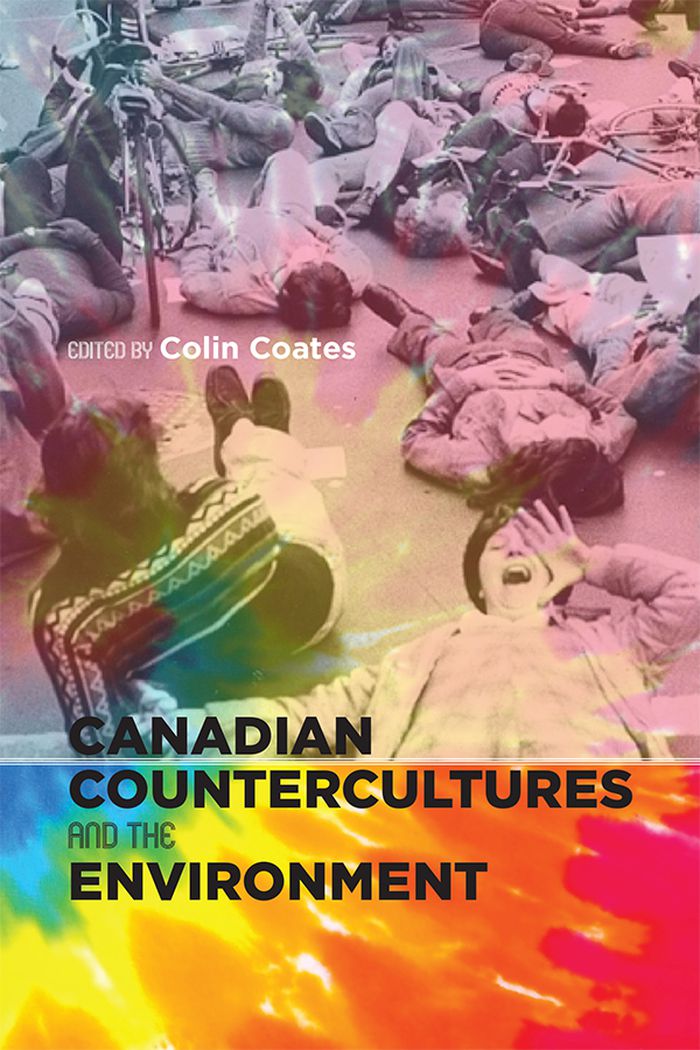
Studies of the radical environmental politics of the 1960s have tended to downplay the extent to which much of that countercultural intellectual and social ferment continued into the 1970s and 1980s. Canadian Countercultures and the Environment adds to our knowledge of this understudied period. This collection contributes a sustained analysis of the beginning of major environmental debates in this era and examines a range of issues related to broad environmental concerns, topics which emerged as key concerns in the context of Cold War military investments and experiments, the oil crisis of the 1970s, debates over gendered roles, and the increasing attention to urban pollution and pesticide use. No other publication dealing with this period covers the wide range of environmental topics (among others, activism, midwifery, organic farming, recycling, urban cycling, and communal living) or geographic locales, from Yukon to Atlantic Canada. Together, they demonstrate how this period influenced and informed environmental action and issues in ways that have had a long-term impact on Canadian society.
Canadian countercultures and the environment
Actions:
Prix:
$34.95
(disponible en magasin)
Résumé:
Studies of the radical environmental politics of the 1960s have tended to downplay the extent to which much of that countercultural intellectual and social ferment continued into the 1970s and 1980s. Canadian Countercultures and the Environment adds to our knowledge of this understudied period. This collection contributes a sustained analysis of the beginning of major environmental debates in this era and examines a range of issues related to broad environmental concerns, topics which emerged as key concerns in the context of Cold War military investments and experiments, the oil crisis of the 1970s, debates over gendered roles, and the increasing attention to urban pollution and pesticide use. No other publication dealing with this period covers the wide range of environmental topics (among others, activism, midwifery, organic farming, recycling, urban cycling, and communal living) or geographic locales, from Yukon to Atlantic Canada. Together, they demonstrate how this period influenced and informed environmental action and issues in ways that have had a long-term impact on Canadian society.
Classification:
livres
livres
Publication:
mars 2016
mars 2016
Sujet:
Architecture du Canada
Architecture du Canada
Classification:
livres
livres

Titre:
Shomei Tomatsu
Shomei Tomatsu
Actions:
Prix:
$92.50
(disponible sur commande)
Résumé:
Casting a cold eye on postwar Japan, the raw, grainy and impressionistic photography of Shomei Tomatsu practically defined Japanese photography in the second half of the 20th century, greatly influencing Daido Moriyama, Nobuyoshi Araki and Takuma Nakihara. His best-known images are his portraits of people and street scenes from the 1950s, when the country struggled to(...)
$92.50
(disponible sur commande)
Résumé:
Casting a cold eye on postwar Japan, the raw, grainy and impressionistic photography of Shomei Tomatsu practically defined Japanese photography in the second half of the 20th century, greatly influencing Daido Moriyama, Nobuyoshi Araki and Takuma Nakihara. His best-known images are his portraits of people and street scenes from the 1950s, when the country struggled to(...)
Titre:
Shomei Tomatsu
Actions:
Prix:
$92.50
(disponible sur commande)
Résumé:
Casting a cold eye on postwar Japan, the raw, grainy and impressionistic photography of Shomei Tomatsu practically defined Japanese photography in the second half of the 20th century, greatly influencing Daido Moriyama, Nobuyoshi Araki and Takuma Nakihara. His best-known images are his portraits of people and street scenes from the 1950s, when the country struggled to recover from World War II and US military presence was ubiquitous; his photographs of 1960s Japan; and throughout his career, his images of Okinawa, where he died in 2012. Tomatsu's most famous single photograph is probably Melted Bottle, Nagasaki, 1961, which depicts a beer bottle rendered grotesquely biomorphic by the nuclear blast that devastated Nagasaki on August 9, 1945. The American photographer and writer Leo Rubinfien described Tomatsu's Nagasaki images as "sad, haggard facts," noting that "beneath the surface there was a grief so great that any overt expression of sympathy would have been an insult."
Shomei Tomatsu
Actions:
Prix:
$92.50
(disponible sur commande)
Résumé:
Casting a cold eye on postwar Japan, the raw, grainy and impressionistic photography of Shomei Tomatsu practically defined Japanese photography in the second half of the 20th century, greatly influencing Daido Moriyama, Nobuyoshi Araki and Takuma Nakihara. His best-known images are his portraits of people and street scenes from the 1950s, when the country struggled to recover from World War II and US military presence was ubiquitous; his photographs of 1960s Japan; and throughout his career, his images of Okinawa, where he died in 2012. Tomatsu's most famous single photograph is probably Melted Bottle, Nagasaki, 1961, which depicts a beer bottle rendered grotesquely biomorphic by the nuclear blast that devastated Nagasaki on August 9, 1945. The American photographer and writer Leo Rubinfien described Tomatsu's Nagasaki images as "sad, haggard facts," noting that "beneath the surface there was a grief so great that any overt expression of sympathy would have been an insult."
Classification:
livres
livres
Publication:
septembre 2018
septembre 2018
Sujet:
Monographies photo
Monographies photo
Classification:
livres
livres

Titre:
Orwell's roses
Orwell's roses
Actions:
Prix:
$37.00
(disponible sur commande)
Résumé:
Sparked by her unexpected encounter with the surviving roses he planted in 1936, Solnit’s account of this understudied aspect of Orwell’s life explores his writing and his actions—from going deep into the coal mines of England, fighting in the Spanish Civil War, critiquing Stalin when much of the international left still supported him (and then critiquing that left), to(...)
$37.00
(disponible sur commande)
Résumé:
Sparked by her unexpected encounter with the surviving roses he planted in 1936, Solnit’s account of this understudied aspect of Orwell’s life explores his writing and his actions—from going deep into the coal mines of England, fighting in the Spanish Civil War, critiquing Stalin when much of the international left still supported him (and then critiquing that left), to(...)
Titre:
Orwell's roses
Actions:
Prix:
$37.00
(disponible sur commande)
Résumé:
Sparked by her unexpected encounter with the surviving roses he planted in 1936, Solnit’s account of this understudied aspect of Orwell’s life explores his writing and his actions—from going deep into the coal mines of England, fighting in the Spanish Civil War, critiquing Stalin when much of the international left still supported him (and then critiquing that left), to his analysis of the relationship between lies and authoritarianism. Through Solnit’s celebrated ability to draw unexpected connections, readers encounter the photographer Tina Modotti’s roses and her Stalinism, Stalin’s obsession with forcing lemons to grow in impossibly cold conditions, Orwell’s slave-owning ancestors in Jamaica, Jamaica Kincaid’s critique of colonialism and imperialism in the flower garden, and the brutal rose industry in Colombia that supplies the American market. The book draws to a close with a rereading of ''Nineteen Eighty-Four'' that completes her portrait of a more hopeful Orwell, as well as a reflection on pleasure, beauty, and joy as acts of resistance.
Orwell's roses
Actions:
Prix:
$37.00
(disponible sur commande)
Résumé:
Sparked by her unexpected encounter with the surviving roses he planted in 1936, Solnit’s account of this understudied aspect of Orwell’s life explores his writing and his actions—from going deep into the coal mines of England, fighting in the Spanish Civil War, critiquing Stalin when much of the international left still supported him (and then critiquing that left), to his analysis of the relationship between lies and authoritarianism. Through Solnit’s celebrated ability to draw unexpected connections, readers encounter the photographer Tina Modotti’s roses and her Stalinism, Stalin’s obsession with forcing lemons to grow in impossibly cold conditions, Orwell’s slave-owning ancestors in Jamaica, Jamaica Kincaid’s critique of colonialism and imperialism in the flower garden, and the brutal rose industry in Colombia that supplies the American market. The book draws to a close with a rereading of ''Nineteen Eighty-Four'' that completes her portrait of a more hopeful Orwell, as well as a reflection on pleasure, beauty, and joy as acts of resistance.
Classification:
livres
livres
Publication:
octobre 2021
octobre 2021
Sujet:
Littérature et poésie
Littérature et poésie
Classification:
livres
livres
Actions:
Prix:
$24.95
(disponible sur commande)
Résumé:
The old dream of social belonging and political sovereignty--the dream of nation--was fraught with anxiety and contradiction for many artists and intellectuals in the 1950s. On the one hand, memories of the Second World War remained vivid and the chauvinism that had enabled it threatened to return with the growing tensions of the Cold War. On the other hand, the need to(...)
$24.95
(disponible sur commande)
Résumé:
The old dream of social belonging and political sovereignty--the dream of nation--was fraught with anxiety and contradiction for many artists and intellectuals in the 1950s. On the one hand, memories of the Second World War remained vivid and the chauvinism that had enabled it threatened to return with the growing tensions of the Cold War. On the other hand, the need to(...)
Titre:
The pivot of the world : photography and its nation
Actions:
Prix:
$24.95
(disponible sur commande)
Résumé:
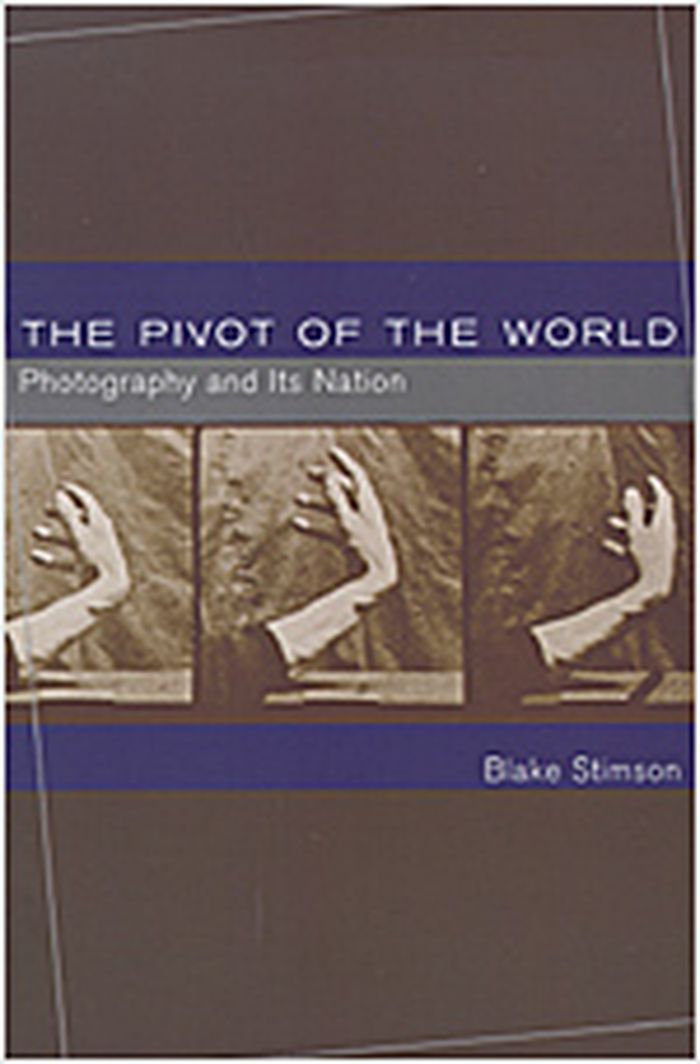
The old dream of social belonging and political sovereignty--the dream of nation--was fraught with anxiety and contradiction for many artists and intellectuals in the 1950s. On the one hand, memories of the Second World War remained vivid and the chauvinism that had enabled it threatened to return with the growing tensions of the Cold War. On the other hand, the need to bind together into a new global identity--into a world nation or "family of man"--seemed ever more pressing as a bulwark against the rapidly expanding threat of a nuclear World War III. The Pivot of the World looks at an exceptional effort to work out that geopolitical tension by cultural means as developed in three hugely ambitious photographic projects: The Family of Man exhibition that opened in 1955 and traveled the world for the next decade; Robert Frank's influential book The Americans, photographed in 1955-1956 and first published in 1958; and Bernd and Hilla Becher's typological record of industrial architecture, begun in 1957 and continuing today. Each of these projects worked to release the dream of nation--of belonging and sovereignty--from its old civic trappings through the medium of photography's serial form, in the experience of one photograph followed by another and another and another, so that all seem at once intimately connected and at the same time autonomous and distinct. Innovations in the serial composition of photographic form could open new possibilities for social form while the modern desire for political belonging could be made cosmopolitan, could be globalized--but in the most human of ways. This epic sense of purpose lasted only for a moment--it had already passed by the beginning of the 1960s--but it bears particular interest for any historical understanding of the contest over globalization that continues to hold such great consequence for us now.
The pivot of the world : photography and its nation
Actions:
Prix:
$24.95
(disponible sur commande)
Résumé:
The old dream of social belonging and political sovereignty--the dream of nation--was fraught with anxiety and contradiction for many artists and intellectuals in the 1950s. On the one hand, memories of the Second World War remained vivid and the chauvinism that had enabled it threatened to return with the growing tensions of the Cold War. On the other hand, the need to bind together into a new global identity--into a world nation or "family of man"--seemed ever more pressing as a bulwark against the rapidly expanding threat of a nuclear World War III. The Pivot of the World looks at an exceptional effort to work out that geopolitical tension by cultural means as developed in three hugely ambitious photographic projects: The Family of Man exhibition that opened in 1955 and traveled the world for the next decade; Robert Frank's influential book The Americans, photographed in 1955-1956 and first published in 1958; and Bernd and Hilla Becher's typological record of industrial architecture, begun in 1957 and continuing today. Each of these projects worked to release the dream of nation--of belonging and sovereignty--from its old civic trappings through the medium of photography's serial form, in the experience of one photograph followed by another and another and another, so that all seem at once intimately connected and at the same time autonomous and distinct. Innovations in the serial composition of photographic form could open new possibilities for social form while the modern desire for political belonging could be made cosmopolitan, could be globalized--but in the most human of ways. This epic sense of purpose lasted only for a moment--it had already passed by the beginning of the 1960s--but it bears particular interest for any historical understanding of the contest over globalization that continues to hold such great consequence for us now.
Classification:
livres
livres
Publication:
janvier 2006, Cambridge, Mass.
janvier 2006, Cambridge, Mass.
Sujet:
Théorie de la photographie
Théorie de la photographie
Classification:
livres
livres
Actions:
Prix:
$37.95
(disponible sur commande)
Résumé:
In The City after Property, Sara Safransky examines how postindustrial decline generates new forms of urban land politics. In the 2010s, Detroit government officials classified a staggering 150,000 lots—more than a third of the city—as “vacant” or “abandoned.” Analyzing subsequent efforts to shrink the Motor City’s footprint and budget, Safransky presents a new way of(...)
$37.95
(disponible sur commande)
Résumé:
In The City after Property, Sara Safransky examines how postindustrial decline generates new forms of urban land politics. In the 2010s, Detroit government officials classified a staggering 150,000 lots—more than a third of the city—as “vacant” or “abandoned.” Analyzing subsequent efforts to shrink the Motor City’s footprint and budget, Safransky presents a new way of(...)
Titre:
The city after property: Abandonment and repair in postindustrial Detroit
Actions:
Prix:
$37.95
(disponible sur commande)
Résumé:
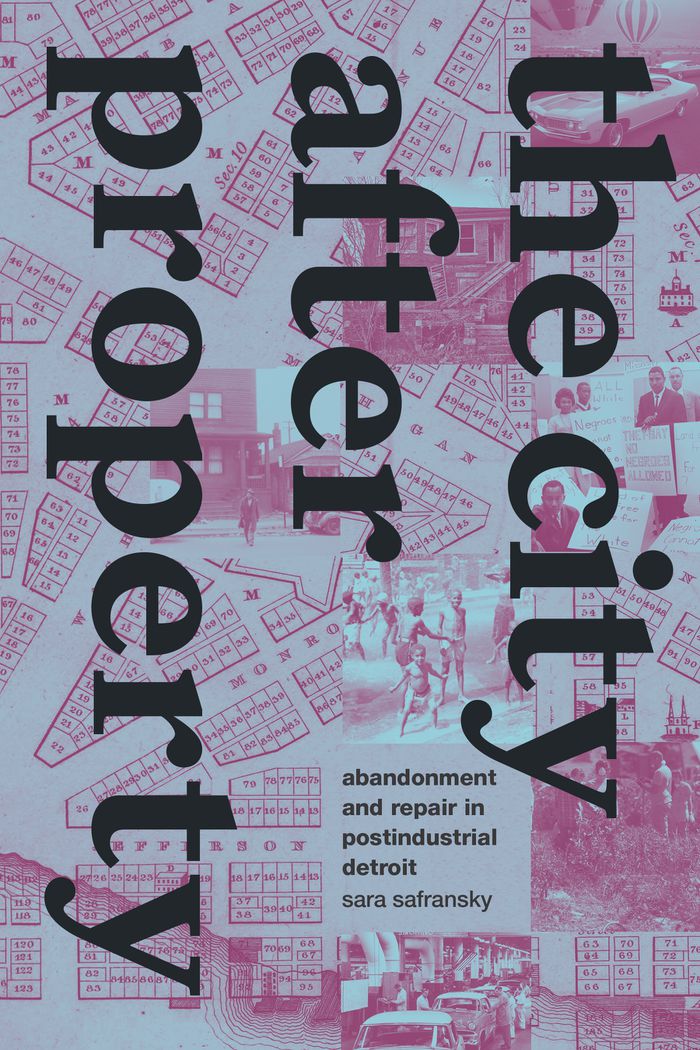
In The City after Property, Sara Safransky examines how postindustrial decline generates new forms of urban land politics. In the 2010s, Detroit government officials classified a staggering 150,000 lots—more than a third of the city—as “vacant” or “abandoned.” Analyzing subsequent efforts to shrink the Motor City’s footprint and budget, Safransky presents a new way of conceptualizing urban abandonment. She challenges popular myths that cast Detroit as empty along with narratives that reduce its historical decline to capital and white flight. In connecting contemporary debates over neoliberal urbanism to Cold War histories and the lasting political legacies of global movements for decolonization and Black liberation, she foregrounds how the making of—and challenges to—modern property regimes have shaped urban policy and politics. Drawing on critical geographical theory and community-based ethnography, Safransky shows how private property functions as a racialized construct, an ideology, and a moral force that shapes selves and worlds. By thinking the city “after property,” Safransky illuminates alternative ways of imagining and organizing urban life.
The city after property: Abandonment and repair in postindustrial Detroit
Actions:
Prix:
$37.95
(disponible sur commande)
Résumé:
In The City after Property, Sara Safransky examines how postindustrial decline generates new forms of urban land politics. In the 2010s, Detroit government officials classified a staggering 150,000 lots—more than a third of the city—as “vacant” or “abandoned.” Analyzing subsequent efforts to shrink the Motor City’s footprint and budget, Safransky presents a new way of conceptualizing urban abandonment. She challenges popular myths that cast Detroit as empty along with narratives that reduce its historical decline to capital and white flight. In connecting contemporary debates over neoliberal urbanism to Cold War histories and the lasting political legacies of global movements for decolonization and Black liberation, she foregrounds how the making of—and challenges to—modern property regimes have shaped urban policy and politics. Drawing on critical geographical theory and community-based ethnography, Safransky shows how private property functions as a racialized construct, an ideology, and a moral force that shapes selves and worlds. By thinking the city “after property,” Safransky illuminates alternative ways of imagining and organizing urban life.
Classification:
livres
livres
Publication:
août 2023
août 2023
Classification:
livres
livres

Prix:
$52.00
(disponible sur commande)
Résumé:
A photographic survey of Soviet-era playgrounds found in former members of the USSR, such as Ukraine, Lithuania, Latvia, Estonia, Russia, Belarus, Kazakhstan, Tajikistan, and Uzbekistan. Through five chapters containing more than 150 photographs, the book documents the mass-produced, yet diverse play equipment installed in the communal spaces of socialist-era housing(...)
$52.00
(disponible sur commande)
Résumé:
A photographic survey of Soviet-era playgrounds found in former members of the USSR, such as Ukraine, Lithuania, Latvia, Estonia, Russia, Belarus, Kazakhstan, Tajikistan, and Uzbekistan. Through five chapters containing more than 150 photographs, the book documents the mass-produced, yet diverse play equipment installed in the communal spaces of socialist-era housing(...)
Titre:
Soviet playgrounds: Playful landscapes of the former USSR
Actions:
Prix:
$52.00
(disponible sur commande)
Résumé:
A photographic survey of Soviet-era playgrounds found in former members of the USSR, such as Ukraine, Lithuania, Latvia, Estonia, Russia, Belarus, Kazakhstan, Tajikistan, and Uzbekistan. Through five chapters containing more than 150 photographs, the book documents the mass-produced, yet diverse play equipment installed in the communal spaces of socialist-era housing estates, such as rocket slides and earth-shaped climbers, spaceships and animal-themed ladders, cosmic roundabouts and bizarre objects that would probably raise safety concerns nowadays. From Riga to Dushanbe and all the way from Kyiv to Vladivostok, children dreamt of becoming cosmonauts, and enjoyed the many space-themed playscapes which had proliferated since the onset of the Cold War era. While some are still in use, others are slowly disappearing to make way for modern equipment, or, more recently, being destroyed during the Russian invasion of Ukraine, becoming only a faint memory of a Soviet childhood. Includes a foreword by the Ukrainian urban planner Mykola Gorokhov and informative maps of the playgrounds featured in every chapter. Pictures were taken by Zupagrafika, with contributions by local photographers.
Soviet playgrounds: Playful landscapes of the former USSR
Actions:
Prix:
$52.00
(disponible sur commande)
Résumé:
A photographic survey of Soviet-era playgrounds found in former members of the USSR, such as Ukraine, Lithuania, Latvia, Estonia, Russia, Belarus, Kazakhstan, Tajikistan, and Uzbekistan. Through five chapters containing more than 150 photographs, the book documents the mass-produced, yet diverse play equipment installed in the communal spaces of socialist-era housing estates, such as rocket slides and earth-shaped climbers, spaceships and animal-themed ladders, cosmic roundabouts and bizarre objects that would probably raise safety concerns nowadays. From Riga to Dushanbe and all the way from Kyiv to Vladivostok, children dreamt of becoming cosmonauts, and enjoyed the many space-themed playscapes which had proliferated since the onset of the Cold War era. While some are still in use, others are slowly disappearing to make way for modern equipment, or, more recently, being destroyed during the Russian invasion of Ukraine, becoming only a faint memory of a Soviet childhood. Includes a foreword by the Ukrainian urban planner Mykola Gorokhov and informative maps of the playgrounds featured in every chapter. Pictures were taken by Zupagrafika, with contributions by local photographers.
Classification:
livres
livres
Publication:
septembre 2022
septembre 2022
Sujet:
Modernisme
Modernisme
Classification:
livres
livres
Actions:
Prix:
$37.00
(disponible sur commande)
Résumé:
How did Los Angeles start the 20th century as a dusty frontier town and end up a century later as one of the globe's supercities - with unparalleled cultural, economic, and technological reach? Peter Lunenfeld constructs an urban portrait, layer by layer, from serendipitous affinities, historical anomalies, and uncanny correspondences. One of the book's innovations is(...)
$37.00
(disponible sur commande)
Résumé:
How did Los Angeles start the 20th century as a dusty frontier town and end up a century later as one of the globe's supercities - with unparalleled cultural, economic, and technological reach? Peter Lunenfeld constructs an urban portrait, layer by layer, from serendipitous affinities, historical anomalies, and uncanny correspondences. One of the book's innovations is(...)
Titre:
CIty at the edge of forever: Los Angeles reimagined
Actions:
Prix:
$37.00
(disponible sur commande)
Résumé:
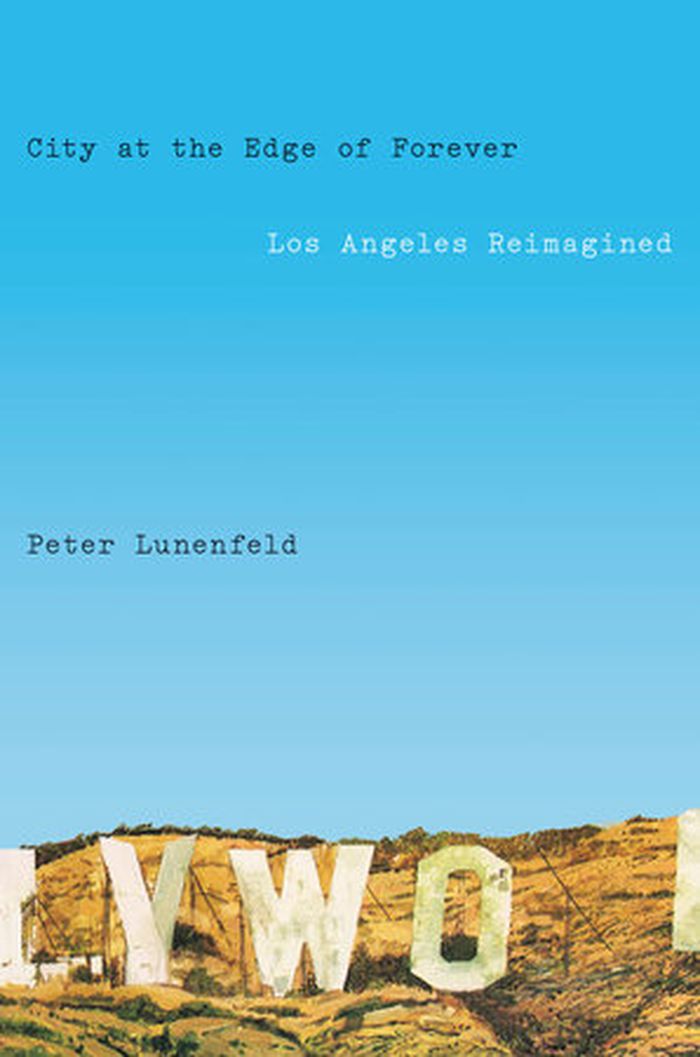
How did Los Angeles start the 20th century as a dusty frontier town and end up a century later as one of the globe's supercities - with unparalleled cultural, economic, and technological reach? Peter Lunenfeld constructs an urban portrait, layer by layer, from serendipitous affinities, historical anomalies, and uncanny correspondences. One of the book's innovations is to brand Los Angeles as the alchemical city. Earth became real estate when the Yankees took control in the nineteenth century. Fire fueled the city's early explosive growth as the Southland's oil fields supplied the inexhaustible demands of drivers and their cars. Air defined the area from WWII to the end of the Cold War, with aeronautics and aerospace dominating the region's industries. Water is now the key element, and Southern California's ports are the largest in the western hemisphere. What alchemists identify as the ethereal fifth element, or quintessence, this book positions as the glamour of Hollywood, a spell that sustains the city but also needs to be broken in order to understand Los Angeles now.
CIty at the edge of forever: Los Angeles reimagined
Actions:
Prix:
$37.00
(disponible sur commande)
Résumé:
How did Los Angeles start the 20th century as a dusty frontier town and end up a century later as one of the globe's supercities - with unparalleled cultural, economic, and technological reach? Peter Lunenfeld constructs an urban portrait, layer by layer, from serendipitous affinities, historical anomalies, and uncanny correspondences. One of the book's innovations is to brand Los Angeles as the alchemical city. Earth became real estate when the Yankees took control in the nineteenth century. Fire fueled the city's early explosive growth as the Southland's oil fields supplied the inexhaustible demands of drivers and their cars. Air defined the area from WWII to the end of the Cold War, with aeronautics and aerospace dominating the region's industries. Water is now the key element, and Southern California's ports are the largest in the western hemisphere. What alchemists identify as the ethereal fifth element, or quintessence, this book positions as the glamour of Hollywood, a spell that sustains the city but also needs to be broken in order to understand Los Angeles now.
Classification:
livres
livres
Publication:
juillet 2020
juillet 2020
Sujet:
Théorie de l’urbanisme
Théorie de l’urbanisme
Classification:
livres
livres

Actions:
Prix:
$36.95
(disponible sur commande)
Résumé:
The term 'geoengineering' refers to technologies that counteract the effects of anthropogenic climate change by deliberately intervening in Earth systems. In the midst of a climate crisis, and with disparate views on whether planetary-scale design is the appropriate response at all, 'The Planet After Geoengineering' employs a speculative fiction approach to think with and(...)
$36.95
(disponible sur commande)
Résumé:
The term 'geoengineering' refers to technologies that counteract the effects of anthropogenic climate change by deliberately intervening in Earth systems. In the midst of a climate crisis, and with disparate views on whether planetary-scale design is the appropriate response at all, 'The Planet After Geoengineering' employs a speculative fiction approach to think with and(...)
Publication:
juillet 2021
juillet 2021
Titre:
The planet after geoengineering
Actions:
Prix:
$36.95
(disponible sur commande)
Résumé:
The term 'geoengineering' refers to technologies that counteract the effects of anthropogenic climate change by deliberately intervening in Earth systems. In the midst of a climate crisis, and with disparate views on whether planetary-scale design is the appropriate response at all, 'The Planet After Geoengineering' employs a speculative fiction approach to think with and against geoengineering as a form of planetary management. The graphic novel makes climate engineering and its controversies visible in a series of five stories that are collectively assembled into a planetary section from the deep underground to outer space. Each geostory - Petrified Carbon, Arctic Albedo, Sky River, Sulfur Storm, and Dust Cloud - depicts possible future Earths that we come to inhabit on the heels of a geoengineering intervention all while situating such promisory visions within a genealogy of climate-control projects from nineteenth-century rainmaking machines and volcanic eruptions to Cold War military plans. Such fabrications of an engineerable earth open a space to forge a new geo-politics that includes the actual Earth - its dimensions, processes, and lifeforms - as constitutive of design and the planet.
The planet after geoengineering
Actions:
Prix:
$36.95
(disponible sur commande)
Résumé:
The term 'geoengineering' refers to technologies that counteract the effects of anthropogenic climate change by deliberately intervening in Earth systems. In the midst of a climate crisis, and with disparate views on whether planetary-scale design is the appropriate response at all, 'The Planet After Geoengineering' employs a speculative fiction approach to think with and against geoengineering as a form of planetary management. The graphic novel makes climate engineering and its controversies visible in a series of five stories that are collectively assembled into a planetary section from the deep underground to outer space. Each geostory - Petrified Carbon, Arctic Albedo, Sky River, Sulfur Storm, and Dust Cloud - depicts possible future Earths that we come to inhabit on the heels of a geoengineering intervention all while situating such promisory visions within a genealogy of climate-control projects from nineteenth-century rainmaking machines and volcanic eruptions to Cold War military plans. Such fabrications of an engineerable earth open a space to forge a new geo-politics that includes the actual Earth - its dimensions, processes, and lifeforms - as constitutive of design and the planet.
Classification:
livres
livres
Publication:
juillet 2021
juillet 2021
Classification:
périodiques
périodiques
Titre:
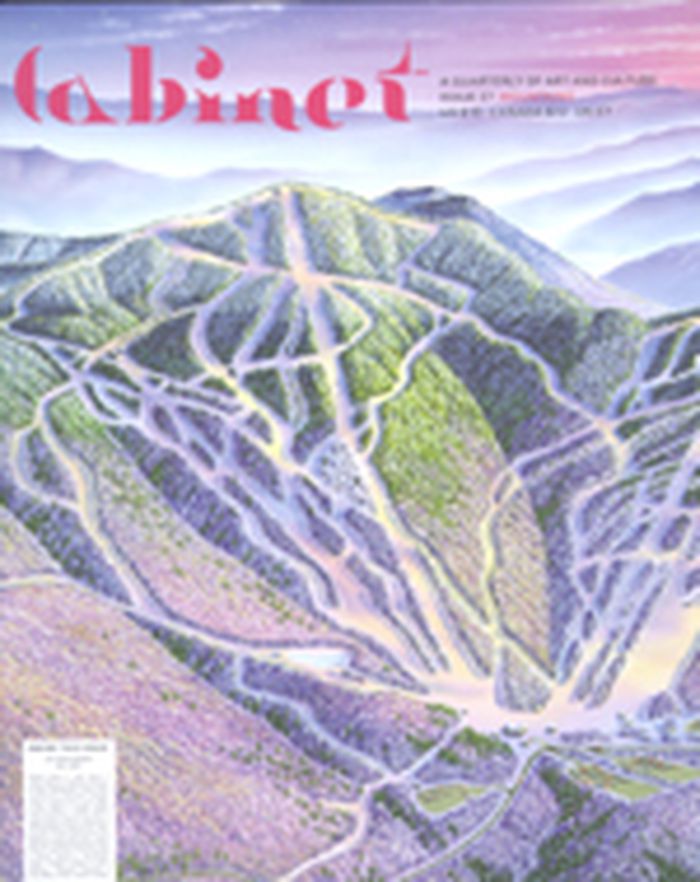
Cabinet 27 : mountains
Cabinet 27 : mountains
Actions:
Prix:
$12.00
(disponible sur commande)
Résumé:
Looming large in both geological fact and sociocultural significance, mountains promise grandeur, picturesque natural beauty, good health and the chance to literally rise above the everyday - yet they also menace our imaginations with their harsh conditions, dangerous terrain and deep sense of isolation. These multivalent moods have proved an enticement to sportsmen,(...)
$12.00
(disponible sur commande)
Résumé:
Looming large in both geological fact and sociocultural significance, mountains promise grandeur, picturesque natural beauty, good health and the chance to literally rise above the everyday - yet they also menace our imaginations with their harsh conditions, dangerous terrain and deep sense of isolation. These multivalent moods have proved an enticement to sportsmen,(...)
Titre:
Cabinet 27 : mountains
Actions:
Prix:
$12.00
(disponible sur commande)
Résumé:
Looming large in both geological fact and sociocultural significance, mountains promise grandeur, picturesque natural beauty, good health and the chance to literally rise above the everyday - yet they also menace our imaginations with their harsh conditions, dangerous terrain and deep sense of isolation. These multivalent moods have proved an enticement to sportsmen, scientists, poets and philosophers. Indeed, our modern notion of the "sublime" was born in the Alps - where, as the English critic John Dennis wrote in 1693, nature was revealed as not solely a "delight that is consistent with reason," but also an experience "mingled with Horrours, and sometimes almost with despair." Cabinet 27 features Brian Dillon on the Cold War fact and Faustian fiction of Germany's Brocken; Allen S. Weiss on Petrarch and the winds of Mount Ventoux; and Jeffrey Kastner on the eighteenth-century Alpine panoramas of Hans Conrad Escher von der Linth. It also features Christopher Turner on the "lunar photographs" of James Nasmyth; Viktoria Tkaczyk on scientist Robert Hooke; biologist J.S.B. Haldane on being the right size; artist projects by Casey Logan and Walead Beshty; and Peter Lamborn Wilson's examination of the alchemical properties of building materials.
Cabinet 27 : mountains
Actions:
Prix:
$12.00
(disponible sur commande)
Résumé:
Looming large in both geological fact and sociocultural significance, mountains promise grandeur, picturesque natural beauty, good health and the chance to literally rise above the everyday - yet they also menace our imaginations with their harsh conditions, dangerous terrain and deep sense of isolation. These multivalent moods have proved an enticement to sportsmen, scientists, poets and philosophers. Indeed, our modern notion of the "sublime" was born in the Alps - where, as the English critic John Dennis wrote in 1693, nature was revealed as not solely a "delight that is consistent with reason," but also an experience "mingled with Horrours, and sometimes almost with despair." Cabinet 27 features Brian Dillon on the Cold War fact and Faustian fiction of Germany's Brocken; Allen S. Weiss on Petrarch and the winds of Mount Ventoux; and Jeffrey Kastner on the eighteenth-century Alpine panoramas of Hans Conrad Escher von der Linth. It also features Christopher Turner on the "lunar photographs" of James Nasmyth; Viktoria Tkaczyk on scientist Robert Hooke; biologist J.S.B. Haldane on being the right size; artist projects by Casey Logan and Walead Beshty; and Peter Lamborn Wilson's examination of the alchemical properties of building materials.
Classification:
périodiques
périodiques
Publication:
octobre 2007, Brooklyn
octobre 2007, Brooklyn
Sujet:
Revues
Revues


