


373 Résultats
Classification:
livres
livres
Actions:
Exemplaires:
Description:
380 pages : illustrations (some color), plans ; 28 cm.
Description:
380 pages : illustrations (some color), plans ; 28 cm.
Auteur:
Sujet:
Publication:
München ; Hamburg : Dölling und Galitz Verlag, 2012.
München ; Hamburg : Dölling und Galitz Verlag, 2012.
Titre:
Konstanty Gutschow,1902-1978 : modernes Denken und volksgemeinschaftliche Utopie eines Architekten / Sylvia Necker.
Actions:
Exemplaires:
Description:
380 pages : illustrations (some color), plans ; 28 cm.
Konstanty Gutschow,1902-1978 : modernes Denken und volksgemeinschaftliche Utopie eines Architekten / Sylvia Necker.
Actions:
Exemplaires:
Description:
380 pages : illustrations (some color), plans ; 28 cm.
Classification:
livres
livres
Publication:
München ; Hamburg : Dölling und Galitz Verlag, 2012.
München ; Hamburg : Dölling und Galitz Verlag, 2012.
Auteur:
Sujet:
Classification:
livres
livres
Prix:
$28.00
(disponible en magasin)
Résumé:
Lamentation practices can empower the potentiality to defy patriarchal orders ruling everyday life. Always a collective process, lamentation inscribes loss and vulnerability by tending bridges towards the world of the dead and the more-than-human. Gestures such as singing or breathing, gathering, and performances that exceed rationality can inspire a renewed approach to(...)
$28.00
(disponible en magasin)
Résumé:
Lamentation practices can empower the potentiality to defy patriarchal orders ruling everyday life. Always a collective process, lamentation inscribes loss and vulnerability by tending bridges towards the world of the dead and the more-than-human. Gestures such as singing or breathing, gathering, and performances that exceed rationality can inspire a renewed approach to(...)
Sujet:
Théorie/ philosophie
Théorie/ philosophie
Publication:
octobre 2023
octobre 2023
Titre:
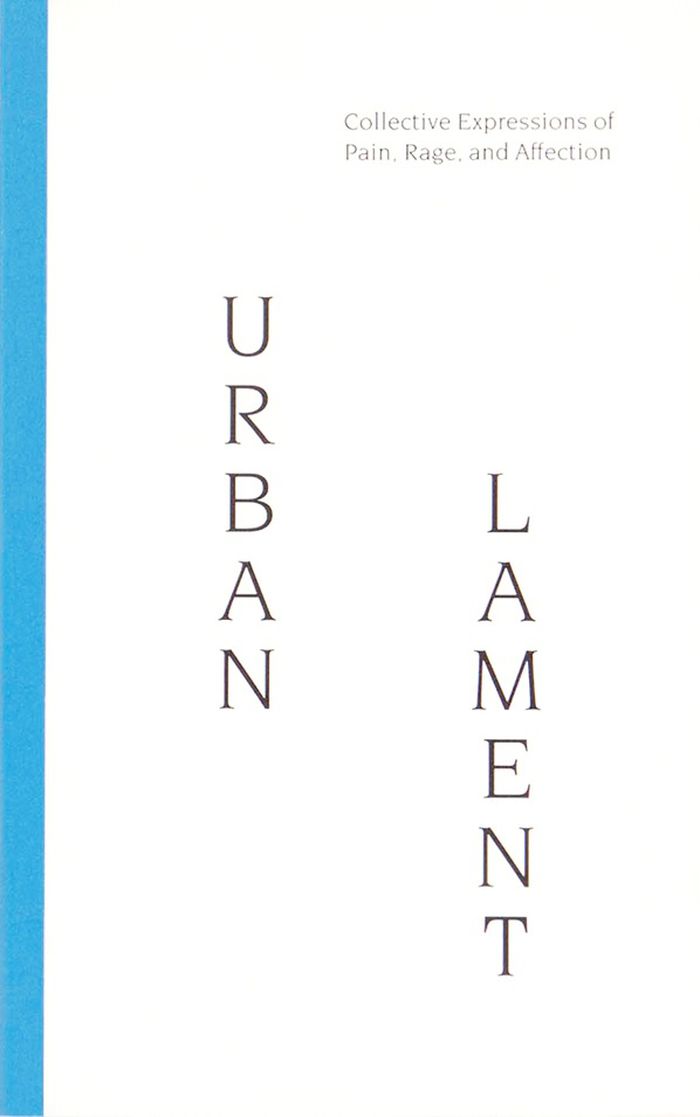
Urban lament: Collective expressions of pain, rage and affection
Actions:
Prix:
$28.00
(disponible en magasin)
Résumé:
Lamentation practices can empower the potentiality to defy patriarchal orders ruling everyday life. Always a collective process, lamentation inscribes loss and vulnerability by tending bridges towards the world of the dead and the more-than-human. Gestures such as singing or breathing, gathering, and performances that exceed rationality can inspire a renewed approach to life and death, rural and urban. After all, amidst ongoing processes of extinction, how to mourn a queer activist, a Roma father, a burnt forest, an exiled body, and a ship sunken in the Mediterranean? How to experience loss not as something individual, but within an expanded continuum of pain? How to explore emotions beyond the private sphere? Through case studies and narrations, in different times and geographies surrounding the Aegean Sea, this book amplifies the echoes of collective tears to invigorate contemporary mourning practices that claim public space by grief, rage, and affect.
Urban lament: Collective expressions of pain, rage and affection
Actions:
Prix:
$28.00
(disponible en magasin)
Résumé:
Lamentation practices can empower the potentiality to defy patriarchal orders ruling everyday life. Always a collective process, lamentation inscribes loss and vulnerability by tending bridges towards the world of the dead and the more-than-human. Gestures such as singing or breathing, gathering, and performances that exceed rationality can inspire a renewed approach to life and death, rural and urban. After all, amidst ongoing processes of extinction, how to mourn a queer activist, a Roma father, a burnt forest, an exiled body, and a ship sunken in the Mediterranean? How to experience loss not as something individual, but within an expanded continuum of pain? How to explore emotions beyond the private sphere? Through case studies and narrations, in different times and geographies surrounding the Aegean Sea, this book amplifies the echoes of collective tears to invigorate contemporary mourning practices that claim public space by grief, rage, and affect.
Classification:
livres
livres
Publication:
octobre 2023
octobre 2023
Sujet:
Théorie/ philosophie
Théorie/ philosophie
Classification:
livres
livres

Prix:
$64.95
(disponible sur commande)
Résumé:
A literary and cultural history of the intimate space of the eighteenth-century closet?and how it fired the imaginations of Pepys, Sterne, Swift, and so many other writers Long before it was a hidden storage space or a metaphor for queer and trans shame, the closet was one of the most charged settings in English architecture. This private room provided seclusion for(...)
$64.95
(disponible sur commande)
Résumé:
A literary and cultural history of the intimate space of the eighteenth-century closet?and how it fired the imaginations of Pepys, Sterne, Swift, and so many other writers Long before it was a hidden storage space or a metaphor for queer and trans shame, the closet was one of the most charged settings in English architecture. This private room provided seclusion for(...)
Titre:
The closet: the eighteenth-century architecture of intimacy
Actions:
Prix:
$64.95
(disponible sur commande)
Résumé:
A literary and cultural history of the intimate space of the eighteenth-century closet?and how it fired the imaginations of Pepys, Sterne, Swift, and so many other writers Long before it was a hidden storage space or a metaphor for queer and trans shame, the closet was one of the most charged settings in English architecture. This private room provided seclusion for reading, writing, praying, dressing, and collecting?and for talking in select company. In their closets, kings and duchesses shared secrets with favorites, midwives and apothecaries dispensed remedies, and newly wealthy men and women expanded their social networks. In 'The Closet', Danielle Bobker presents a literary and cultural history of these sites of extrafamilial intimacy, revealing how, as they proliferated both in buildings and in books, closets also became powerful symbols of the unstable virtual intimacy of the first mass-medium of print.
The closet: the eighteenth-century architecture of intimacy
Actions:
Prix:
$64.95
(disponible sur commande)
Résumé:
A literary and cultural history of the intimate space of the eighteenth-century closet?and how it fired the imaginations of Pepys, Sterne, Swift, and so many other writers Long before it was a hidden storage space or a metaphor for queer and trans shame, the closet was one of the most charged settings in English architecture. This private room provided seclusion for reading, writing, praying, dressing, and collecting?and for talking in select company. In their closets, kings and duchesses shared secrets with favorites, midwives and apothecaries dispensed remedies, and newly wealthy men and women expanded their social networks. In 'The Closet', Danielle Bobker presents a literary and cultural history of these sites of extrafamilial intimacy, revealing how, as they proliferated both in buildings and in books, closets also became powerful symbols of the unstable virtual intimacy of the first mass-medium of print.
Classification:
livres
livres
Publication:
mai 2020
mai 2020
Sujet:
Théorie de l’architecture
Théorie de l’architecture
Classification:
livres
livres

Prix:
$24.00
(disponible sur commande)
Résumé:
In the last decade, public discussions of transgender issues have increased exponentially. However, with this increased visibility has come not just power, but regulation, both in favor of and against trans people. What was once regarded as an unusual or even unfortunate disorder has become an accepted articulation of gendered embodiment as well as a new site for(...)
$24.00
(disponible sur commande)
Résumé:
In the last decade, public discussions of transgender issues have increased exponentially. However, with this increased visibility has come not just power, but regulation, both in favor of and against trans people. What was once regarded as an unusual or even unfortunate disorder has become an accepted articulation of gendered embodiment as well as a new site for(...)
Titre:
Trans*: A quick and quirky account of gender variability
Actions:
Prix:
$24.00
(disponible sur commande)
Résumé:
In the last decade, public discussions of transgender issues have increased exponentially. However, with this increased visibility has come not just power, but regulation, both in favor of and against trans people. What was once regarded as an unusual or even unfortunate disorder has become an accepted articulation of gendered embodiment as well as a new site for political activism and political recognition. What happened in the last few decades to prompt such an extensive rethinking of our understanding of gendered embodiment? How did a stigmatized identity become so central to U.S. and European articulations of self? And how have people responded to the new definitions and understanding of sex and the gendered body? In ''Trans*,'' Jack Halberstam explores these recent shifts in the meaning of the gendered body and representation, and explores the possibilities of a nongendered, gender-optional, or gender-queer future.
Trans*: A quick and quirky account of gender variability
Actions:
Prix:
$24.00
(disponible sur commande)
Résumé:
In the last decade, public discussions of transgender issues have increased exponentially. However, with this increased visibility has come not just power, but regulation, both in favor of and against trans people. What was once regarded as an unusual or even unfortunate disorder has become an accepted articulation of gendered embodiment as well as a new site for political activism and political recognition. What happened in the last few decades to prompt such an extensive rethinking of our understanding of gendered embodiment? How did a stigmatized identity become so central to U.S. and European articulations of self? And how have people responded to the new definitions and understanding of sex and the gendered body? In ''Trans*,'' Jack Halberstam explores these recent shifts in the meaning of the gendered body and representation, and explores the possibilities of a nongendered, gender-optional, or gender-queer future.
Classification:
livres
livres
Publication:
janvier 2018
janvier 2018
Sujet:
Social
Social
Classification:
livres
livres
Titre:
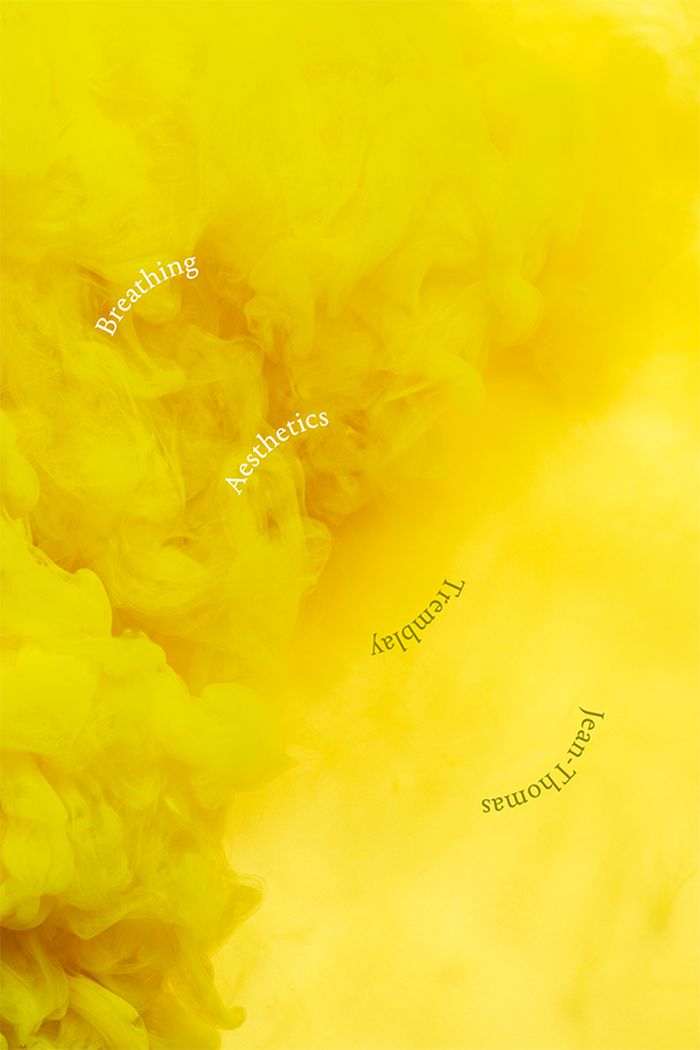
Breathing aesthetics
Breathing aesthetics
Actions:
Prix:
$33.95
(disponible sur commande)
Résumé:
In this book, Jean-Thomas Tremblay argues that difficult breathing indexes the uneven distribution of risk in a contemporary era marked by the increasing contamination, weaponization, and monetization of air. Tremblay shows how biopolitical and necropolitical forces tied to the continuation of extractive capitalism, imperialism, and structural racism are embodied and(...)
$33.95
(disponible sur commande)
Résumé:
In this book, Jean-Thomas Tremblay argues that difficult breathing indexes the uneven distribution of risk in a contemporary era marked by the increasing contamination, weaponization, and monetization of air. Tremblay shows how biopolitical and necropolitical forces tied to the continuation of extractive capitalism, imperialism, and structural racism are embodied and(...)
Titre:
Breathing aesthetics
Actions:
Prix:
$33.95
(disponible sur commande)
Résumé:
In this book, Jean-Thomas Tremblay argues that difficult breathing indexes the uneven distribution of risk in a contemporary era marked by the increasing contamination, weaponization, and monetization of air. Tremblay shows how biopolitical and necropolitical forces tied to the continuation of extractive capitalism, imperialism, and structural racism are embodied and experienced through respiration. They identify responses to the crisis in breathing in aesthetic practices ranging from the film work of Cuban American artist Ana Mendieta to the disability diaries of Bob Flanagan, to the Black queer speculative fiction of Renee Gladman. In readings of these and other minoritarian works of experimental film, endurance performance, ecopoetics, and cinema-vérité, Tremblay contends that articulations of survival now depend on the management and dispersal of respiratory hazards. In so doing, they reveal how an aesthetic attention to breathing generates historically, culturally, and environmentally situated tactics and strategies for living under precarity.
Breathing aesthetics
Actions:
Prix:
$33.95
(disponible sur commande)
Résumé:
In this book, Jean-Thomas Tremblay argues that difficult breathing indexes the uneven distribution of risk in a contemporary era marked by the increasing contamination, weaponization, and monetization of air. Tremblay shows how biopolitical and necropolitical forces tied to the continuation of extractive capitalism, imperialism, and structural racism are embodied and experienced through respiration. They identify responses to the crisis in breathing in aesthetic practices ranging from the film work of Cuban American artist Ana Mendieta to the disability diaries of Bob Flanagan, to the Black queer speculative fiction of Renee Gladman. In readings of these and other minoritarian works of experimental film, endurance performance, ecopoetics, and cinema-vérité, Tremblay contends that articulations of survival now depend on the management and dispersal of respiratory hazards. In so doing, they reveal how an aesthetic attention to breathing generates historically, culturally, and environmentally situated tactics and strategies for living under precarity.
Classification:
livres
livres
Publication:
octobre 2022
octobre 2022
Sujet:
Théorie/ philosophie
Théorie/ philosophie
Classification:
livres
livres

Actions:
Prix:
$25.00
(disponible sur commande)
Résumé:
Delving behind Canada’s veneer of multiculturalism and tolerance, ''Policing Black lives'' traces the violent realities of anti-blackness from the slave ships to prisons, classrooms and beyond. Robyn Maynard provides readers with the first comprehensive account of nearly four hundred years of state-sanctioned surveillance, criminalization and punishment of Black lives in(...)
$25.00
(disponible sur commande)
Résumé:
Delving behind Canada’s veneer of multiculturalism and tolerance, ''Policing Black lives'' traces the violent realities of anti-blackness from the slave ships to prisons, classrooms and beyond. Robyn Maynard provides readers with the first comprehensive account of nearly four hundred years of state-sanctioned surveillance, criminalization and punishment of Black lives in(...)
Titre:
Policing Black lives: state violence in Canada from slavery to the present
Actions:
Prix:
$25.00
(disponible sur commande)
Résumé:
Delving behind Canada’s veneer of multiculturalism and tolerance, ''Policing Black lives'' traces the violent realities of anti-blackness from the slave ships to prisons, classrooms and beyond. Robyn Maynard provides readers with the first comprehensive account of nearly four hundred years of state-sanctioned surveillance, criminalization and punishment of Black lives in Canada. While highlighting the ubiquity of Black resistance, ''Policing Black lives'' traces the still-living legacy of slavery across multiple institutions, shedding light on the state’s role in perpetuating contemporary Black poverty and unemployment, racial profiling, law enforcement violence, incarceration, immigration detention, deportation, exploitative migrant labour practices, disproportionate child removal and low graduation rates. Emerging from a critical race feminist framework that insists that all Black lives matter, Maynard’s intersectional approach to anti-Black racism addresses the unique and understudied impacts of state violence as it is experienced by Black women, Black people with disabilities, as well as queer, trans, and undocumented Black communities.
Policing Black lives: state violence in Canada from slavery to the present
Actions:
Prix:
$25.00
(disponible sur commande)
Résumé:
Delving behind Canada’s veneer of multiculturalism and tolerance, ''Policing Black lives'' traces the violent realities of anti-blackness from the slave ships to prisons, classrooms and beyond. Robyn Maynard provides readers with the first comprehensive account of nearly four hundred years of state-sanctioned surveillance, criminalization and punishment of Black lives in Canada. While highlighting the ubiquity of Black resistance, ''Policing Black lives'' traces the still-living legacy of slavery across multiple institutions, shedding light on the state’s role in perpetuating contemporary Black poverty and unemployment, racial profiling, law enforcement violence, incarceration, immigration detention, deportation, exploitative migrant labour practices, disproportionate child removal and low graduation rates. Emerging from a critical race feminist framework that insists that all Black lives matter, Maynard’s intersectional approach to anti-Black racism addresses the unique and understudied impacts of state violence as it is experienced by Black women, Black people with disabilities, as well as queer, trans, and undocumented Black communities.
Classification:
livres
livres
Publication:
octobre 2017
octobre 2017
Sujet:
Social
Social
Classification:
livres
livres
Prix:
$32.95
(disponible sur commande)
Résumé:
For some of us, the family is a source of love and support. But for many others, the family is a place of private horror, coercion, and personal domination. In a capitalist society, the private family carries the impossible demands of interpersonal care and social reproductive labor. Can we imagine a different future? In ''Family abolition'', author M.E. O'Brien uncovers(...)
$32.95
(disponible sur commande)
Résumé:
For some of us, the family is a source of love and support. But for many others, the family is a place of private horror, coercion, and personal domination. In a capitalist society, the private family carries the impossible demands of interpersonal care and social reproductive labor. Can we imagine a different future? In ''Family abolition'', author M.E. O'Brien uncovers(...)
Titre:
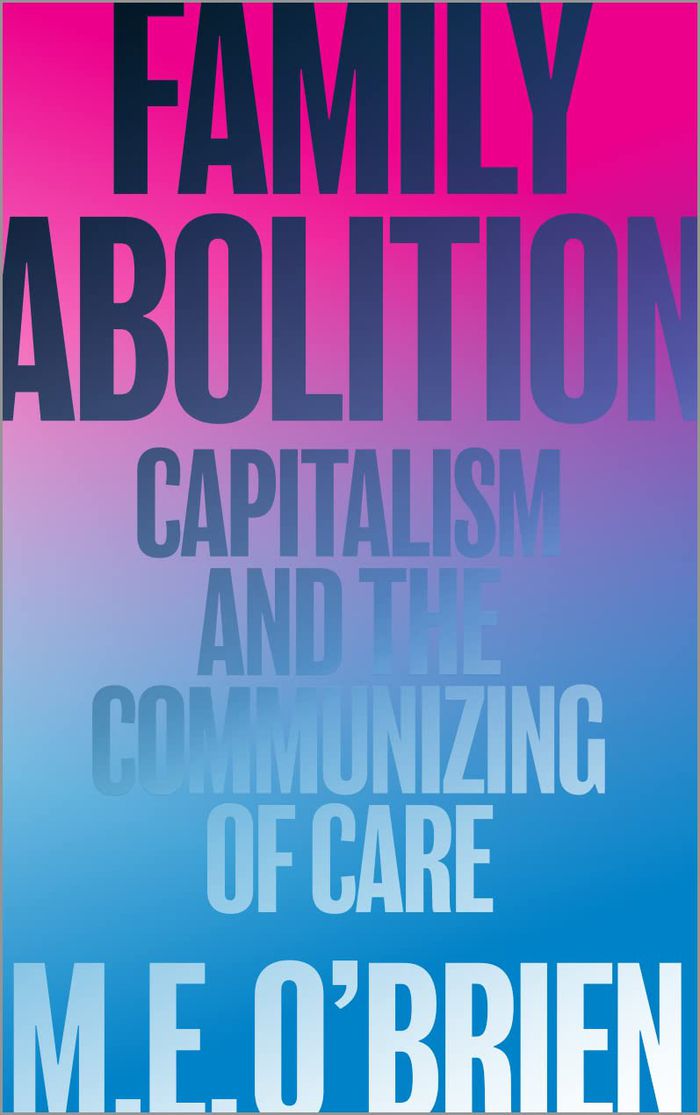
Family abolition: Capitalism and the communizing of care
Actions:
Prix:
$32.95
(disponible sur commande)
Résumé:
For some of us, the family is a source of love and support. But for many others, the family is a place of private horror, coercion, and personal domination. In a capitalist society, the private family carries the impossible demands of interpersonal care and social reproductive labor. Can we imagine a different future? In ''Family abolition'', author M.E. O'Brien uncovers the history of struggles to create radical alternatives to the private family. O'Brien traces the changing family politics of racial capitalism in the industrial cities of Europe and the slave plantations and settler frontier of North America, explaining the rise and fall of the housewife-based family form. From early Marxists to Black and queer insurrectionists to today's mass protest movements, O'Brien finds revolutionaries seeking better ways of loving, caring, and living. ''Family abolition'' takes us through the past and present of family politics into a speculative future of the commune, imagining how care could be organized in a free society.
Family abolition: Capitalism and the communizing of care
Actions:
Prix:
$32.95
(disponible sur commande)
Résumé:
For some of us, the family is a source of love and support. But for many others, the family is a place of private horror, coercion, and personal domination. In a capitalist society, the private family carries the impossible demands of interpersonal care and social reproductive labor. Can we imagine a different future? In ''Family abolition'', author M.E. O'Brien uncovers the history of struggles to create radical alternatives to the private family. O'Brien traces the changing family politics of racial capitalism in the industrial cities of Europe and the slave plantations and settler frontier of North America, explaining the rise and fall of the housewife-based family form. From early Marxists to Black and queer insurrectionists to today's mass protest movements, O'Brien finds revolutionaries seeking better ways of loving, caring, and living. ''Family abolition'' takes us through the past and present of family politics into a speculative future of the commune, imagining how care could be organized in a free society.
Classification:
livres
livres
Publication:
juin 2023
juin 2023
Sujet:
Social
Social
Classification:
livres
livres
Actions:
Prix:
$45.95
(disponible sur commande)
Résumé:
For centuries, monuments have telegraphed the values and origin myths of dominant culture in public space and on massive scale. They have signaled both who is part of a culture and who is not, often overlooking histories that complicate the stories they tell. Yet in the last 50 years in the United States, the role of monuments has changed significantly. Numerous(...)
$45.95
(disponible sur commande)
Résumé:
For centuries, monuments have telegraphed the values and origin myths of dominant culture in public space and on massive scale. They have signaled both who is part of a culture and who is not, often overlooking histories that complicate the stories they tell. Yet in the last 50 years in the United States, the role of monuments has changed significantly. Numerous(...)
Titre:
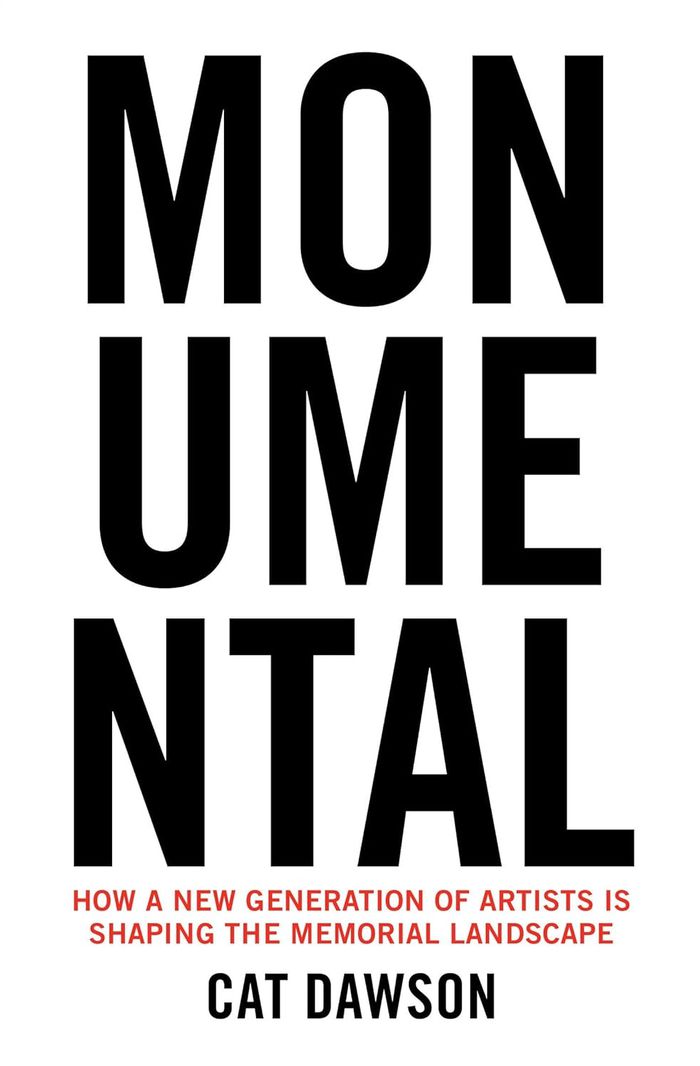
Monumental: How a new generation of artists is shaping the memorial landscape
Actions:
Prix:
$45.95
(disponible sur commande)
Résumé:
For centuries, monuments have telegraphed the values and origin myths of dominant culture in public space and on massive scale. They have signaled both who is part of a culture and who is not, often overlooking histories that complicate the stories they tell. Yet in the last 50 years in the United States, the role of monuments has changed significantly. Numerous historical monuments have been removed or toppled, bringing to the fore a long-repressed conversation about the relationship between the monumental landscape and national identity. In Monumental, Cat Dawson takes up the social, political, and art historical causes and ramifications of this important shift. Examining the conditions that have led to and define this new era, Dawson reveals that these interventions are as indebted to the monumental tradition as they are to representational strategies that grew out of twentieth-century social justice efforts, from the Civil Rights movement to queer organizing during the AIDS crisis.
Monumental: How a new generation of artists is shaping the memorial landscape
Actions:
Prix:
$45.95
(disponible sur commande)
Résumé:
For centuries, monuments have telegraphed the values and origin myths of dominant culture in public space and on massive scale. They have signaled both who is part of a culture and who is not, often overlooking histories that complicate the stories they tell. Yet in the last 50 years in the United States, the role of monuments has changed significantly. Numerous historical monuments have been removed or toppled, bringing to the fore a long-repressed conversation about the relationship between the monumental landscape and national identity. In Monumental, Cat Dawson takes up the social, political, and art historical causes and ramifications of this important shift. Examining the conditions that have led to and define this new era, Dawson reveals that these interventions are as indebted to the monumental tradition as they are to representational strategies that grew out of twentieth-century social justice efforts, from the Civil Rights movement to queer organizing during the AIDS crisis.
Classification:
livres
livres
Publication:
août 2025
août 2025
Sujet:
Théorie de l’art
Théorie de l’art
Classification:
périodiques
périodiques
Prix:
$32.95
(disponible en magasin)
Résumé:
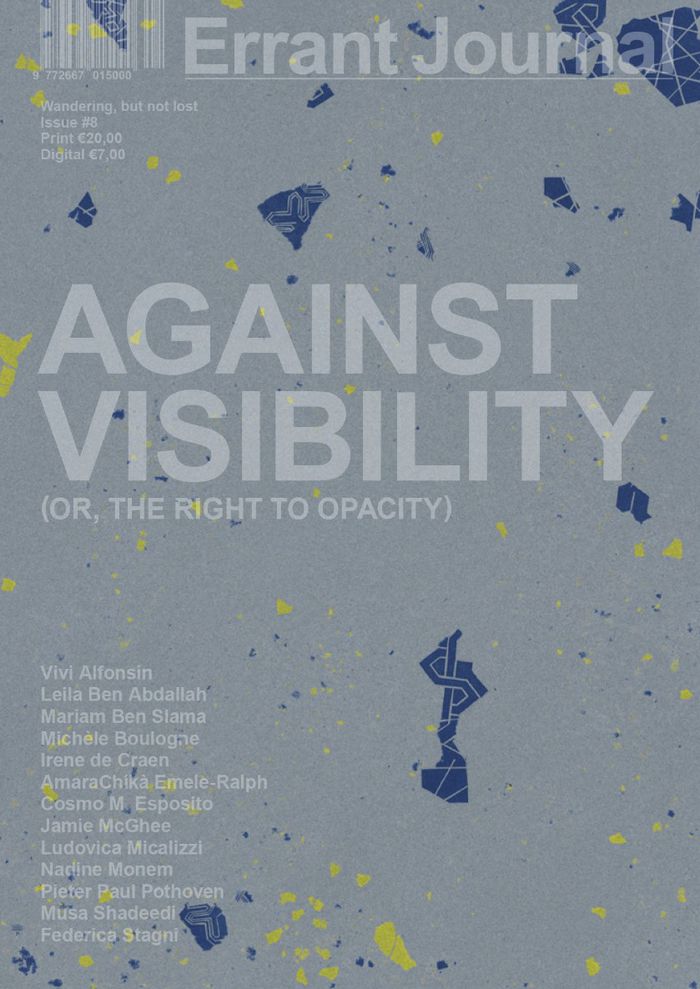
The eighth issue of Errant Journal questions the ways in which hegemonic culture and discourse tends to prioritize the ideal of openness, access, transparency, and visibility. Delving into topics such as face coverings, ‘'coming out'’ in queer discourses, the use of opacity in transformative justice, and different strategies of (visual) resistance, ‘'Against Visibility'’(...)
$32.95
(disponible en magasin)
Résumé:
The eighth issue of Errant Journal questions the ways in which hegemonic culture and discourse tends to prioritize the ideal of openness, access, transparency, and visibility. Delving into topics such as face coverings, ‘'coming out'’ in queer discourses, the use of opacity in transformative justice, and different strategies of (visual) resistance, ‘'Against Visibility'’(...)
Titre:
Errant Journal #8 : Against visibility (or, the right to opacity)
Actions:
Prix:
$32.95
(disponible en magasin)
Résumé:
The eighth issue of Errant Journal questions the ways in which hegemonic culture and discourse tends to prioritize the ideal of openness, access, transparency, and visibility. Delving into topics such as face coverings, ‘'coming out'’ in queer discourses, the use of opacity in transformative justice, and different strategies of (visual) resistance, ‘'Against Visibility'’ can be read as a proposition of refusal of the paradigm of visibility and access that permeates all areas of western thinking. At a moment in which representation and uncovering ‘'lost'’ histories are trending, Errant asks what is being erased in a world where everything must always be visible. When Édouard Glissant proclaimed the right to opacity, he sought not to be reduced or to be measured against an ideal scale in order to be understood and accepted. Expanding from this, ''Against Visibility'' looks into the ways in which unlearning imperialism also includes unlearning the ideal of visibility itself.
Errant Journal #8 : Against visibility (or, the right to opacity)
Actions:
Prix:
$32.95
(disponible en magasin)
Résumé:
The eighth issue of Errant Journal questions the ways in which hegemonic culture and discourse tends to prioritize the ideal of openness, access, transparency, and visibility. Delving into topics such as face coverings, ‘'coming out'’ in queer discourses, the use of opacity in transformative justice, and different strategies of (visual) resistance, ‘'Against Visibility'’ can be read as a proposition of refusal of the paradigm of visibility and access that permeates all areas of western thinking. At a moment in which representation and uncovering ‘'lost'’ histories are trending, Errant asks what is being erased in a world where everything must always be visible. When Édouard Glissant proclaimed the right to opacity, he sought not to be reduced or to be measured against an ideal scale in order to be understood and accepted. Expanding from this, ''Against Visibility'' looks into the ways in which unlearning imperialism also includes unlearning the ideal of visibility itself.
Classification:
périodiques
périodiques
Publication:
novembre 2025
novembre 2025
Sujet:
Revues
Revues
Classification:
livres
livres

Titre:
Hannah Höch: Interior garden
Hannah Höch: Interior garden
Actions:
Prix:
$65.00
(disponible sur commande)
Résumé:
At the onset of World War II, the visionary Dada artist Hannah Höch (1889–1978) retreated to a secluded house on the outskirts of Berlin, fleeing persecution for her radical collage work and her unflagging opposition to fascism. In the decades that followed, the surrounding garden became her artistic muse, but it was also a means of survival: its fruits and vegetables(...)
$65.00
(disponible sur commande)
Résumé:
At the onset of World War II, the visionary Dada artist Hannah Höch (1889–1978) retreated to a secluded house on the outskirts of Berlin, fleeing persecution for her radical collage work and her unflagging opposition to fascism. In the decades that followed, the surrounding garden became her artistic muse, but it was also a means of survival: its fruits and vegetables(...)
Titre:
Hannah Höch: Interior garden
Actions:
Prix:
$65.00
(disponible sur commande)
Résumé:
At the onset of World War II, the visionary Dada artist Hannah Höch (1889–1978) retreated to a secluded house on the outskirts of Berlin, fleeing persecution for her radical collage work and her unflagging opposition to fascism. In the decades that followed, the surrounding garden became her artistic muse, but it was also a means of survival: its fruits and vegetables were a vital source of sustenance during wartime, and its grounds served as the hiding place for her priceless collection of Dada artworks. Eighty years later, this richly illustrated and deeply researched book reimagines Höch’s garden from an artist’s perspective. It brings together Höch’s botanical collages and garden photographs with deep archival cuts exploring her queer history with Til Brugman; new art by the artists Scott Roben and Johanna Tiedtke, based on visits to Höch’s garden; and an essay by the writer Alhena Katsof. Together, these elements interweave past and present, private and public, personal and political, offering new views into Höch’s lush refuge.
Hannah Höch: Interior garden
Actions:
Prix:
$65.00
(disponible sur commande)
Résumé:
At the onset of World War II, the visionary Dada artist Hannah Höch (1889–1978) retreated to a secluded house on the outskirts of Berlin, fleeing persecution for her radical collage work and her unflagging opposition to fascism. In the decades that followed, the surrounding garden became her artistic muse, but it was also a means of survival: its fruits and vegetables were a vital source of sustenance during wartime, and its grounds served as the hiding place for her priceless collection of Dada artworks. Eighty years later, this richly illustrated and deeply researched book reimagines Höch’s garden from an artist’s perspective. It brings together Höch’s botanical collages and garden photographs with deep archival cuts exploring her queer history with Til Brugman; new art by the artists Scott Roben and Johanna Tiedtke, based on visits to Höch’s garden; and an essay by the writer Alhena Katsof. Together, these elements interweave past and present, private and public, personal and political, offering new views into Höch’s lush refuge.
Classification:
livres
livres
Publication:
janvier 2022
janvier 2022
Sujet:
Jardins
Jardins


