


4184 Résultats
Niveau de description archivistique:
Sous-série
Sous-série
Numéro de référence:
AP154.S1.1967.PR01.SS2
Description:
Subseries AP154.S1.1967.PR01.SS2, Twin Parks West. Sites R5-7, 10-12, 6, 8, Bronx, New York, N.Y. (1969) documents four executed buildings in the area sometimes referred to as Twin Parks Southwest. At Site 8, 167 small apartments for the elderly were built in buildings of 5 to 19 floors. The other three sites all include larger apartments for families. Site 6 contains 84 middle-income units, some of them split-level, in 11-storey buildings. Site 5-7 contains 99 appartments in10-storey buildings. Site 10-12 contains 136 apartments, a day care center and parking in 17-storey buildings.The project was developed by the New York State Urban Development Corporation. The series contains drawings that constitute a "design manual" submission and architectural and structural drawings.
AP154.S1.1967.PR01.SS2
Description:
Subseries AP154.S1.1967.PR01.SS2, Twin Parks West. Sites R5-7, 10-12, 6, 8, Bronx, New York, N.Y. (1969) documents four executed buildings in the area sometimes referred to as Twin Parks Southwest. At Site 8, 167 small apartments for the elderly were built in buildings of 5 to 19 floors. The other three sites all include larger apartments for families. Site 6 contains 84 middle-income units, some of them split-level, in 11-storey buildings. Site 5-7 contains 99 appartments in10-storey buildings. Site 10-12 contains 136 apartments, a day care center and parking in 17-storey buildings.The project was developed by the New York State Urban Development Corporation. The series contains drawings that constitute a "design manual" submission and architectural and structural drawings.
Personnes et institutions:
Date:
1969-1971
1969-1971
Titre:
Twin Parks West. Sites R5-7, 10-12, 6, 8, Bronx, New York, N.Y. (1969)
Actions:
AP154.S1.1967.PR01.SS2
Description:
Subseries AP154.S1.1967.PR01.SS2, Twin Parks West. Sites R5-7, 10-12, 6, 8, Bronx, New York, N.Y. (1969) documents four executed buildings in the area sometimes referred to as Twin Parks Southwest. At Site 8, 167 small apartments for the elderly were built in buildings of 5 to 19 floors. The other three sites all include larger apartments for families. Site 6 contains 84 middle-income units, some of them split-level, in 11-storey buildings. Site 5-7 contains 99 appartments in10-storey buildings. Site 10-12 contains 136 apartments, a day care center and parking in 17-storey buildings.The project was developed by the New York State Urban Development Corporation. The series contains drawings that constitute a "design manual" submission and architectural and structural drawings.
Twin Parks West. Sites R5-7, 10-12, 6, 8, Bronx, New York, N.Y. (1969)
Actions:
AP154.S1.1967.PR01.SS2
Description:
Subseries AP154.S1.1967.PR01.SS2, Twin Parks West. Sites R5-7, 10-12, 6, 8, Bronx, New York, N.Y. (1969) documents four executed buildings in the area sometimes referred to as Twin Parks Southwest. At Site 8, 167 small apartments for the elderly were built in buildings of 5 to 19 floors. The other three sites all include larger apartments for families. Site 6 contains 84 middle-income units, some of them split-level, in 11-storey buildings. Site 5-7 contains 99 appartments in10-storey buildings. Site 10-12 contains 136 apartments, a day care center and parking in 17-storey buildings.The project was developed by the New York State Urban Development Corporation. The series contains drawings that constitute a "design manual" submission and architectural and structural drawings.
Niveau de description archivistique:
Project
Project
Date:
1969-1971
1969-1971
Personnes et institutions:
Classification:
archives
Niveau de description archivistique:
Fonds
archives
Niveau de description archivistique:
Fonds
Titre:
Bernard Cache fonds
Bernard Cache fonds
Numéro de référence:
AP169
Résumé:
Bernard Cache, fonds, 1991-2011, document the development and design process for the Objectile firm and its decorative panels and furniture. The records focus mostly on daily activities of the firm, the collaboration of principal Bernard Cache with TopSolid software, and his parallel academic work. The records consist solely of original born-digital material.
AP169
Résumé:
Bernard Cache, fonds, 1991-2011, document the development and design process for the Objectile firm and its decorative panels and furniture. The records focus mostly on daily activities of the firm, the collaboration of principal Bernard Cache with TopSolid software, and his parallel academic work. The records consist solely of original born-digital material.
Personnes et institutions:
Date:
1992-2011
1992-2011
Titre:
Bernard Cache fonds
Actions:
AP169
Résumé:
Bernard Cache, fonds, 1991-2011, document the development and design process for the Objectile firm and its decorative panels and furniture. The records focus mostly on daily activities of the firm, the collaboration of principal Bernard Cache with TopSolid software, and his parallel academic work. The records consist solely of original born-digital material.
Bernard Cache fonds
Actions:
AP169
Résumé:
Bernard Cache, fonds, 1991-2011, document the development and design process for the Objectile firm and its decorative panels and furniture. The records focus mostly on daily activities of the firm, the collaboration of principal Bernard Cache with TopSolid software, and his parallel academic work. The records consist solely of original born-digital material.
Classification:
archives
Niveau de description archivistique:
Fonds
archives
Niveau de description archivistique:
Fonds
Date:
1992-2011
1992-2011
Personnes et institutions:
Classification:
photographies
photographies
Actions:
Numéro de référence:
PH1982:0347:001-101
Description:
- Album PH1982:0347:001-101 shows portraits and views of the built and natural environments of Canada, the United Kingdom and Gibraltar. The photographs of Canada constitute military portraits of the Frontier Force, the 78th Highlanders and their family members (?), general views of cities in Québec, New Brunswick and Nova Scotia and the military, religious and public buildings within these cities as well as their surrounding natural environments. The photographs of the United Kingdom constitute military portraits of the 72nd and 78th Highlanders Regiment as well as a portrait of an unknown couple, general views of cities in Scotland, Northern Ireland and England and both the military and religious buildings within these cities as well as views of the natural environment of Scotland and Northern Ireland. There is one photograph depicting a placard, calling soldiers to service and one photograph of awards for the 78th Highlanders. Finally, the photographs of Gibraltar constitute military buildings.
PH1982:0347:001-101
Description:
- Album PH1982:0347:001-101 shows portraits and views of the built and natural environments of Canada, the United Kingdom and Gibraltar. The photographs of Canada constitute military portraits of the Frontier Force, the 78th Highlanders and their family members (?), general views of cities in Québec, New Brunswick and Nova Scotia and the military, religious and public buildings within these cities as well as their surrounding natural environments. The photographs of the United Kingdom constitute military portraits of the 72nd and 78th Highlanders Regiment as well as a portrait of an unknown couple, general views of cities in Scotland, Northern Ireland and England and both the military and religious buildings within these cities as well as views of the natural environment of Scotland and Northern Ireland. There is one photograph depicting a placard, calling soldiers to service and one photograph of awards for the 78th Highlanders. Finally, the photographs of Gibraltar constitute military buildings.
Personnes et institutions:
Sujet:
architecture, architecture de paysage, design d'intérieur, ingénierie, militaire, ornement, portrait, sculpture, topographique
architecture, architecture de paysage, design d'intérieur, ingénierie, militaire, ornement, portrait, sculpture, topographique
Date:
ca. 1870s
ca. 1870s
Titre:
Album of portraits and views of military, religious and public buildings and the natural environments of Canada, the United Kingdom and Gibraltar
Actions:
PH1982:0347:001-101
Description:
- Album PH1982:0347:001-101 shows portraits and views of the built and natural environments of Canada, the United Kingdom and Gibraltar. The photographs of Canada constitute military portraits of the Frontier Force, the 78th Highlanders and their family members (?), general views of cities in Québec, New Brunswick and Nova Scotia and the military, religious and public buildings within these cities as well as their surrounding natural environments. The photographs of the United Kingdom constitute military portraits of the 72nd and 78th Highlanders Regiment as well as a portrait of an unknown couple, general views of cities in Scotland, Northern Ireland and England and both the military and religious buildings within these cities as well as views of the natural environment of Scotland and Northern Ireland. There is one photograph depicting a placard, calling soldiers to service and one photograph of awards for the 78th Highlanders. Finally, the photographs of Gibraltar constitute military buildings.
Album of portraits and views of military, religious and public buildings and the natural environments of Canada, the United Kingdom and Gibraltar
Actions:
PH1982:0347:001-101
Description:
- Album PH1982:0347:001-101 shows portraits and views of the built and natural environments of Canada, the United Kingdom and Gibraltar. The photographs of Canada constitute military portraits of the Frontier Force, the 78th Highlanders and their family members (?), general views of cities in Québec, New Brunswick and Nova Scotia and the military, religious and public buildings within these cities as well as their surrounding natural environments. The photographs of the United Kingdom constitute military portraits of the 72nd and 78th Highlanders Regiment as well as a portrait of an unknown couple, general views of cities in Scotland, Northern Ireland and England and both the military and religious buildings within these cities as well as views of the natural environment of Scotland and Northern Ireland. There is one photograph depicting a placard, calling soldiers to service and one photograph of awards for the 78th Highlanders. Finally, the photographs of Gibraltar constitute military buildings.
Classification:
photographies
photographies
Date:
ca. 1870s
ca. 1870s
Personnes et institutions:
Sujet:
architecture, architecture de paysage, design d'intérieur, ingénierie, militaire, ornement, portrait, sculpture, topographique
architecture, architecture de paysage, design d'intérieur, ingénierie, militaire, ornement, portrait, sculpture, topographique
Classification:
archives
Niveau de description archivistique:
Fonds
archives
Niveau de description archivistique:
Fonds
Titre:
Fonds Álvaro Siza
Fonds Álvaro Siza
Numéro de référence:
AP178
Description:
The Álvaro Siza fonds documents the architectural work of Portuguese architect Álvaro Siza. Records in this fonds document Siza’s projects from 1958-2012, including built and unbuilt designs. A collaborative project was established between the Canadian Centre for Architecture (CCA), Fundação de Serralves, and Fundação Calouste Gulbenkian to allow for international research and access to the archive. The archive is shared by the three institutions with each institution holding different projects while collaborating on the descriptive work and increasing the visibility of the archive. The holdings at both the Fundação de Serralves and Fundação Calouste Gulbenkian focus on Siza’s Portuguese projects, while the portion of the archive held by the CCA mainly includes Siza’s projects abroad. All three institutions are committed to describing the archive and making it accessible for scholarly research. The processing of the Siza archive held by the CCA has been divided into four phases to allow for access to parts of the archive while still in process. For the first, second, and third phases, the processing archivist has described the projects from the fifties, sixties, and seventies, as well as projects for the IBA competition in Berlin, urban renewal projects in The Hague from the eighties, urban plans, museums, and individual houses between 1980 and 2000. The processing archivist has also described approximately 203 sketchbooks. Many of these sketchbooks include sketches related to architectural projects which were processed. The complete list of projects processed by the CCA to date can be found in series AP178.S1. The bulk of the Álvaro Siza fonds is arranged in Series AP178.S1, which contains documentation for over 200 of Siza’s architectural projects. Records in this archive are predominantly from 1970 to 2000. Series AP178.S1 mainly contains conceptual, design development, presentation, and working drawings. Also included are photographic materials, models, born digital records, and textual documentation, which include correspondence, project proposals, and notes. The architect’s creative process is captured in 282 sketchbooks arranged in Series AP178.S2. In all there are approximately 60 000 drawings, 3000 folders of textual documentation, 9.46 linear meters of photographs and negatives, 6,545 slides, 250 CD-ROMS, 101 floppy disks, and 371 models that document the architectural activities of Siza and his office. Among the drawings are sketches by Siza on various items, such as napkins, receipts, envelopes, or on the back of working drawings. The fonds contains several types of architectural projects including residential buildings, museums, universities, urban plans, offices, and city restorations. Of particular significance are the sketchbooks, comprised of sketches for architectural projects, Siza’s travels, people, and animals as well as notes and draft letters. The sketchbooks are organized in chronological order, starting in the late 1970’s to the beginning of the 2000’s. Locations, notes, and dates have also been identified on the front of each sketchbook along with the sketchbook number. The sketchbooks provide a unique perspective of Siza’s use of drawing as part of his work process.
AP178
Description:
The Álvaro Siza fonds documents the architectural work of Portuguese architect Álvaro Siza. Records in this fonds document Siza’s projects from 1958-2012, including built and unbuilt designs. A collaborative project was established between the Canadian Centre for Architecture (CCA), Fundação de Serralves, and Fundação Calouste Gulbenkian to allow for international research and access to the archive. The archive is shared by the three institutions with each institution holding different projects while collaborating on the descriptive work and increasing the visibility of the archive. The holdings at both the Fundação de Serralves and Fundação Calouste Gulbenkian focus on Siza’s Portuguese projects, while the portion of the archive held by the CCA mainly includes Siza’s projects abroad. All three institutions are committed to describing the archive and making it accessible for scholarly research. The processing of the Siza archive held by the CCA has been divided into four phases to allow for access to parts of the archive while still in process. For the first, second, and third phases, the processing archivist has described the projects from the fifties, sixties, and seventies, as well as projects for the IBA competition in Berlin, urban renewal projects in The Hague from the eighties, urban plans, museums, and individual houses between 1980 and 2000. The processing archivist has also described approximately 203 sketchbooks. Many of these sketchbooks include sketches related to architectural projects which were processed. The complete list of projects processed by the CCA to date can be found in series AP178.S1. The bulk of the Álvaro Siza fonds is arranged in Series AP178.S1, which contains documentation for over 200 of Siza’s architectural projects. Records in this archive are predominantly from 1970 to 2000. Series AP178.S1 mainly contains conceptual, design development, presentation, and working drawings. Also included are photographic materials, models, born digital records, and textual documentation, which include correspondence, project proposals, and notes. The architect’s creative process is captured in 282 sketchbooks arranged in Series AP178.S2. In all there are approximately 60 000 drawings, 3000 folders of textual documentation, 9.46 linear meters of photographs and negatives, 6,545 slides, 250 CD-ROMS, 101 floppy disks, and 371 models that document the architectural activities of Siza and his office. Among the drawings are sketches by Siza on various items, such as napkins, receipts, envelopes, or on the back of working drawings. The fonds contains several types of architectural projects including residential buildings, museums, universities, urban plans, offices, and city restorations. Of particular significance are the sketchbooks, comprised of sketches for architectural projects, Siza’s travels, people, and animals as well as notes and draft letters. The sketchbooks are organized in chronological order, starting in the late 1970’s to the beginning of the 2000’s. Locations, notes, and dates have also been identified on the front of each sketchbook along with the sketchbook number. The sketchbooks provide a unique perspective of Siza’s use of drawing as part of his work process.
Personnes et institutions:
Date:
1958-2002
1958-2002
Titre:
Fonds Álvaro Siza
Actions:
AP178
Description:
The Álvaro Siza fonds documents the architectural work of Portuguese architect Álvaro Siza. Records in this fonds document Siza’s projects from 1958-2012, including built and unbuilt designs. A collaborative project was established between the Canadian Centre for Architecture (CCA), Fundação de Serralves, and Fundação Calouste Gulbenkian to allow for international research and access to the archive. The archive is shared by the three institutions with each institution holding different projects while collaborating on the descriptive work and increasing the visibility of the archive. The holdings at both the Fundação de Serralves and Fundação Calouste Gulbenkian focus on Siza’s Portuguese projects, while the portion of the archive held by the CCA mainly includes Siza’s projects abroad. All three institutions are committed to describing the archive and making it accessible for scholarly research. The processing of the Siza archive held by the CCA has been divided into four phases to allow for access to parts of the archive while still in process. For the first, second, and third phases, the processing archivist has described the projects from the fifties, sixties, and seventies, as well as projects for the IBA competition in Berlin, urban renewal projects in The Hague from the eighties, urban plans, museums, and individual houses between 1980 and 2000. The processing archivist has also described approximately 203 sketchbooks. Many of these sketchbooks include sketches related to architectural projects which were processed. The complete list of projects processed by the CCA to date can be found in series AP178.S1. The bulk of the Álvaro Siza fonds is arranged in Series AP178.S1, which contains documentation for over 200 of Siza’s architectural projects. Records in this archive are predominantly from 1970 to 2000. Series AP178.S1 mainly contains conceptual, design development, presentation, and working drawings. Also included are photographic materials, models, born digital records, and textual documentation, which include correspondence, project proposals, and notes. The architect’s creative process is captured in 282 sketchbooks arranged in Series AP178.S2. In all there are approximately 60 000 drawings, 3000 folders of textual documentation, 9.46 linear meters of photographs and negatives, 6,545 slides, 250 CD-ROMS, 101 floppy disks, and 371 models that document the architectural activities of Siza and his office. Among the drawings are sketches by Siza on various items, such as napkins, receipts, envelopes, or on the back of working drawings. The fonds contains several types of architectural projects including residential buildings, museums, universities, urban plans, offices, and city restorations. Of particular significance are the sketchbooks, comprised of sketches for architectural projects, Siza’s travels, people, and animals as well as notes and draft letters. The sketchbooks are organized in chronological order, starting in the late 1970’s to the beginning of the 2000’s. Locations, notes, and dates have also been identified on the front of each sketchbook along with the sketchbook number. The sketchbooks provide a unique perspective of Siza’s use of drawing as part of his work process.
Fonds Álvaro Siza
Actions:
AP178
Description:
The Álvaro Siza fonds documents the architectural work of Portuguese architect Álvaro Siza. Records in this fonds document Siza’s projects from 1958-2012, including built and unbuilt designs. A collaborative project was established between the Canadian Centre for Architecture (CCA), Fundação de Serralves, and Fundação Calouste Gulbenkian to allow for international research and access to the archive. The archive is shared by the three institutions with each institution holding different projects while collaborating on the descriptive work and increasing the visibility of the archive. The holdings at both the Fundação de Serralves and Fundação Calouste Gulbenkian focus on Siza’s Portuguese projects, while the portion of the archive held by the CCA mainly includes Siza’s projects abroad. All three institutions are committed to describing the archive and making it accessible for scholarly research. The processing of the Siza archive held by the CCA has been divided into four phases to allow for access to parts of the archive while still in process. For the first, second, and third phases, the processing archivist has described the projects from the fifties, sixties, and seventies, as well as projects for the IBA competition in Berlin, urban renewal projects in The Hague from the eighties, urban plans, museums, and individual houses between 1980 and 2000. The processing archivist has also described approximately 203 sketchbooks. Many of these sketchbooks include sketches related to architectural projects which were processed. The complete list of projects processed by the CCA to date can be found in series AP178.S1. The bulk of the Álvaro Siza fonds is arranged in Series AP178.S1, which contains documentation for over 200 of Siza’s architectural projects. Records in this archive are predominantly from 1970 to 2000. Series AP178.S1 mainly contains conceptual, design development, presentation, and working drawings. Also included are photographic materials, models, born digital records, and textual documentation, which include correspondence, project proposals, and notes. The architect’s creative process is captured in 282 sketchbooks arranged in Series AP178.S2. In all there are approximately 60 000 drawings, 3000 folders of textual documentation, 9.46 linear meters of photographs and negatives, 6,545 slides, 250 CD-ROMS, 101 floppy disks, and 371 models that document the architectural activities of Siza and his office. Among the drawings are sketches by Siza on various items, such as napkins, receipts, envelopes, or on the back of working drawings. The fonds contains several types of architectural projects including residential buildings, museums, universities, urban plans, offices, and city restorations. Of particular significance are the sketchbooks, comprised of sketches for architectural projects, Siza’s travels, people, and animals as well as notes and draft letters. The sketchbooks are organized in chronological order, starting in the late 1970’s to the beginning of the 2000’s. Locations, notes, and dates have also been identified on the front of each sketchbook along with the sketchbook number. The sketchbooks provide a unique perspective of Siza’s use of drawing as part of his work process.
Classification:
archives
Niveau de description archivistique:
Fonds
archives
Niveau de description archivistique:
Fonds
Date:
1958-2002
1958-2002
Personnes et institutions:
Niveau de description archivistique:
Projet
Projet
Numéro de référence:
AP206.S1.1975.PR01
Description:
This project series documents Aditya Prakash's proposal for an alternative plan for Chandigarh, India, which came to be known as the Linear City. Prakash began developing and advocating for this idea around the early 1970s. The Linear City had two fundamental ideas at its core. The first was to raise the roadways in Chandigarh (or any future city) 10-12 feet from ground level. This, he proposed, would separate vehicular traffic from pedestrians, eliminating all the hazardous impacts of traffic on daily life. The large part of the drawings for this project show sector plans and city blocks with evenly dispersed roundabout roadways as major transit hubs, wrapping around but high above centres of pedestrian activity that included shops, markets and green spaces. The sale of the land below the roadways would pay for the upheaval. He also recommended building this city only a few sectors deep, but endlessly expanding it length-wise, with a raised canal along one side to provide an additional transportation network and irrigation. The second fundamental idea of this city was the creation of self-sustaining sectors in the city plan, advocating that each neighbourhood should have the infrastructure to provide food and recycling for its residents. He fervently argued for the reimagination of modernist Chandigarh by incorporating sustainable, local traditions - the rural should exist in harmony with the urban. In opposition to Le Corbusier and Pierre Jeanneret, he believed areas for recycling, animal husbandry, and growing food should be incorporated into the fabric of the city.[1] This project is recorded largely through original drawings of city plans, perspectives and axonometric views detailing Prakash's new vision for the city. It seems that many of the perspectives were drawn by family friend Sandeep Virmani, after listening to Prakash's ideas.[2] The project is also recorded through photographs, negatives and slides showing plans and the project model. A small amount of notes and an article on the project are also included. [1]Vikramaditya Prakash, One Continuous Line: Art, Architecture and Urbanism of Aditya Prakash (Ahmedabad, India: Mapin Publishing Pvt. Ltd., 2019), 164-181. [2]Prakash, One Continuous Line, 169.
AP206.S1.1975.PR01
Description:
This project series documents Aditya Prakash's proposal for an alternative plan for Chandigarh, India, which came to be known as the Linear City. Prakash began developing and advocating for this idea around the early 1970s. The Linear City had two fundamental ideas at its core. The first was to raise the roadways in Chandigarh (or any future city) 10-12 feet from ground level. This, he proposed, would separate vehicular traffic from pedestrians, eliminating all the hazardous impacts of traffic on daily life. The large part of the drawings for this project show sector plans and city blocks with evenly dispersed roundabout roadways as major transit hubs, wrapping around but high above centres of pedestrian activity that included shops, markets and green spaces. The sale of the land below the roadways would pay for the upheaval. He also recommended building this city only a few sectors deep, but endlessly expanding it length-wise, with a raised canal along one side to provide an additional transportation network and irrigation. The second fundamental idea of this city was the creation of self-sustaining sectors in the city plan, advocating that each neighbourhood should have the infrastructure to provide food and recycling for its residents. He fervently argued for the reimagination of modernist Chandigarh by incorporating sustainable, local traditions - the rural should exist in harmony with the urban. In opposition to Le Corbusier and Pierre Jeanneret, he believed areas for recycling, animal husbandry, and growing food should be incorporated into the fabric of the city.[1] This project is recorded largely through original drawings of city plans, perspectives and axonometric views detailing Prakash's new vision for the city. It seems that many of the perspectives were drawn by family friend Sandeep Virmani, after listening to Prakash's ideas.[2] The project is also recorded through photographs, negatives and slides showing plans and the project model. A small amount of notes and an article on the project are also included. [1]Vikramaditya Prakash, One Continuous Line: Art, Architecture and Urbanism of Aditya Prakash (Ahmedabad, India: Mapin Publishing Pvt. Ltd., 2019), 164-181. [2]Prakash, One Continuous Line, 169.
Personnes et institutions:
Date:
circa 1975-2003
circa 1975-2003
Titre:
Linear city, Chandigarh, India (circa 1975-1987)
Actions:
AP206.S1.1975.PR01
Description:
This project series documents Aditya Prakash's proposal for an alternative plan for Chandigarh, India, which came to be known as the Linear City. Prakash began developing and advocating for this idea around the early 1970s. The Linear City had two fundamental ideas at its core. The first was to raise the roadways in Chandigarh (or any future city) 10-12 feet from ground level. This, he proposed, would separate vehicular traffic from pedestrians, eliminating all the hazardous impacts of traffic on daily life. The large part of the drawings for this project show sector plans and city blocks with evenly dispersed roundabout roadways as major transit hubs, wrapping around but high above centres of pedestrian activity that included shops, markets and green spaces. The sale of the land below the roadways would pay for the upheaval. He also recommended building this city only a few sectors deep, but endlessly expanding it length-wise, with a raised canal along one side to provide an additional transportation network and irrigation. The second fundamental idea of this city was the creation of self-sustaining sectors in the city plan, advocating that each neighbourhood should have the infrastructure to provide food and recycling for its residents. He fervently argued for the reimagination of modernist Chandigarh by incorporating sustainable, local traditions - the rural should exist in harmony with the urban. In opposition to Le Corbusier and Pierre Jeanneret, he believed areas for recycling, animal husbandry, and growing food should be incorporated into the fabric of the city.[1] This project is recorded largely through original drawings of city plans, perspectives and axonometric views detailing Prakash's new vision for the city. It seems that many of the perspectives were drawn by family friend Sandeep Virmani, after listening to Prakash's ideas.[2] The project is also recorded through photographs, negatives and slides showing plans and the project model. A small amount of notes and an article on the project are also included. [1]Vikramaditya Prakash, One Continuous Line: Art, Architecture and Urbanism of Aditya Prakash (Ahmedabad, India: Mapin Publishing Pvt. Ltd., 2019), 164-181. [2]Prakash, One Continuous Line, 169.
Linear city, Chandigarh, India (circa 1975-1987)
Actions:
AP206.S1.1975.PR01
Description:
This project series documents Aditya Prakash's proposal for an alternative plan for Chandigarh, India, which came to be known as the Linear City. Prakash began developing and advocating for this idea around the early 1970s. The Linear City had two fundamental ideas at its core. The first was to raise the roadways in Chandigarh (or any future city) 10-12 feet from ground level. This, he proposed, would separate vehicular traffic from pedestrians, eliminating all the hazardous impacts of traffic on daily life. The large part of the drawings for this project show sector plans and city blocks with evenly dispersed roundabout roadways as major transit hubs, wrapping around but high above centres of pedestrian activity that included shops, markets and green spaces. The sale of the land below the roadways would pay for the upheaval. He also recommended building this city only a few sectors deep, but endlessly expanding it length-wise, with a raised canal along one side to provide an additional transportation network and irrigation. The second fundamental idea of this city was the creation of self-sustaining sectors in the city plan, advocating that each neighbourhood should have the infrastructure to provide food and recycling for its residents. He fervently argued for the reimagination of modernist Chandigarh by incorporating sustainable, local traditions - the rural should exist in harmony with the urban. In opposition to Le Corbusier and Pierre Jeanneret, he believed areas for recycling, animal husbandry, and growing food should be incorporated into the fabric of the city.[1] This project is recorded largely through original drawings of city plans, perspectives and axonometric views detailing Prakash's new vision for the city. It seems that many of the perspectives were drawn by family friend Sandeep Virmani, after listening to Prakash's ideas.[2] The project is also recorded through photographs, negatives and slides showing plans and the project model. A small amount of notes and an article on the project are also included. [1]Vikramaditya Prakash, One Continuous Line: Art, Architecture and Urbanism of Aditya Prakash (Ahmedabad, India: Mapin Publishing Pvt. Ltd., 2019), 164-181. [2]Prakash, One Continuous Line, 169.
Niveau de description archivistique:
Project
Project
Date:
circa 1975-2003
circa 1975-2003
Personnes et institutions:
Classification:
archives
Niveau de description archivistique:
Fonds
archives
Niveau de description archivistique:
Fonds
Numéro de référence:
AP226
Résumé:
The Toyo Ito & Associates, Architects fonds, 1970 – 2011, documents the studio’s architectural work and involvement in selected exhibitions in the 1970s and 1980s. The records in this fonds represent 34 architectural projects, including built, unbuilt, and conceptual projects. The majority of the projects are located in Japan and are mostly documented through drawings as well as a limited number of videos, models, panels, textual records, and photographs. The fonds also contains records related to Toyo Ito & Associates, Architects’ participation in three exhibitions in the USA and the UK in 1978 and 1986.
AP226
Résumé:
The Toyo Ito & Associates, Architects fonds, 1970 – 2011, documents the studio’s architectural work and involvement in selected exhibitions in the 1970s and 1980s. The records in this fonds represent 34 architectural projects, including built, unbuilt, and conceptual projects. The majority of the projects are located in Japan and are mostly documented through drawings as well as a limited number of videos, models, panels, textual records, and photographs. The fonds also contains records related to Toyo Ito & Associates, Architects’ participation in three exhibitions in the USA and the UK in 1978 and 1986.
Personnes et institutions:
Date:
1970 - 2011
1970 - 2011
Titre:
Toyo Ito & Associates, Architects fonds
Actions:
AP226
Résumé:
The Toyo Ito & Associates, Architects fonds, 1970 – 2011, documents the studio’s architectural work and involvement in selected exhibitions in the 1970s and 1980s. The records in this fonds represent 34 architectural projects, including built, unbuilt, and conceptual projects. The majority of the projects are located in Japan and are mostly documented through drawings as well as a limited number of videos, models, panels, textual records, and photographs. The fonds also contains records related to Toyo Ito & Associates, Architects’ participation in three exhibitions in the USA and the UK in 1978 and 1986.
Toyo Ito & Associates, Architects fonds
Actions:
AP226
Résumé:
The Toyo Ito & Associates, Architects fonds, 1970 – 2011, documents the studio’s architectural work and involvement in selected exhibitions in the 1970s and 1980s. The records in this fonds represent 34 architectural projects, including built, unbuilt, and conceptual projects. The majority of the projects are located in Japan and are mostly documented through drawings as well as a limited number of videos, models, panels, textual records, and photographs. The fonds also contains records related to Toyo Ito & Associates, Architects’ participation in three exhibitions in the USA and the UK in 1978 and 1986.
Classification:
archives
Niveau de description archivistique:
Fonds
archives
Niveau de description archivistique:
Fonds
Date:
1970 - 2011
1970 - 2011
Personnes et institutions:
Classification:
événements
événements

Titre:
À bas les parcs?
À bas les parcs?
Actions:
Description:
Les parcs sont-ils néfastes ? Ces bouts de terrain et maigres plans d’eau que nous séquestrons répondent à un besoin confus de « nature ». Ils contribuent sans doute à notre bonne santé, mais ne servent-ils pas aussi à excuser nos mauvaises habitudes? Les parcs ne sont pas anodins. Dans les villes, les parcs sont des actifs immobiliers et des « commodités » urbaines(...)
Les parcs sont-ils néfastes ? Ces bouts de terrain et maigres plans d’eau que nous séquestrons répondent à un besoin confus de « nature ». Ils contribuent sans doute à notre bonne santé, mais ne servent-ils pas aussi à excuser nos mauvaises habitudes? Les parcs ne sont pas anodins. Dans les villes, les parcs sont des actifs immobiliers et des « commodités » urbaines(...)
Date:
25 mai 2017
25 mai 2017
Titre:
À bas les parcs?
Actions:
Description:
Les parcs sont-ils néfastes ? Ces bouts de terrain et maigres plans d’eau que nous séquestrons répondent à un besoin confus de « nature ». Ils contribuent sans doute à notre bonne santé, mais ne servent-ils pas aussi à excuser nos mauvaises habitudes? Les parcs ne sont pas anodins. Dans les villes, les parcs sont des actifs immobiliers et des « commodités » urbaines(...)
À bas les parcs?
Actions:
Description:
Les parcs sont-ils néfastes ? Ces bouts de terrain et maigres plans d’eau que nous séquestrons répondent à un besoin confus de « nature ». Ils contribuent sans doute à notre bonne santé, mais ne servent-ils pas aussi à excuser nos mauvaises habitudes? Les parcs ne sont pas anodins. Dans les villes, les parcs sont des actifs immobiliers et des « commodités » urbaines(...)
Classification:
événements
événements
Date:
25 mai 2017
25 mai 2017
Niveau de description archivistique:
Projet
Projet
Titre:
House X
House X
Numéro de référence:
AP143.S4.D20
Description:
File documents an unexecuted project for House X, designed for Mr. and Mrs. Arnold Aronoff for a 40-acre site on Lahser Road, Bloomfield Hills, Michigan. The ground floor consists of a kitchen, dining room, breakfast room, laundry room, two powder rooms and two garages. The second floor consists of a master suite with study, two bedrooms, bathroom, family and living rooms, bar, bathhouse and deck. The third floor consists of a solarium, terrace, bedroom and maid's room with bathroom. A swimming pool, tennis court and gatehouse are situated on the grounds. Thirteen schemes were developed for this project: A, A1, B, C, C1, C2, D, E, E1, E2, F, G, H. Only schemes G and H were developed into detailed floor plans. The drawings have been organized by drawing type, because of the subtle variations which characterize each scheme. Eisenman manipulates the four "els" (fragmentary forms - the three-sided portion of a hollow cube - that he introduced in House X to replace the cube, the preferred generating volume of his first five houses) in over 200 conceptual drawings (DR1994:0138:001-0219). There are numerous design development and complete sets of working drawings (design development drawings: DR1994:0138:239-541; working drawings: DR1994:0138:1182-1457). The project was extensively published, and the file includes a number of drawings and models created for exhibition and publication, including photographs of models (DR1994:0138:1481-1501), pieces of the "axonometric model" constructed after the project had been abandoned (DR1994:0138:1458-1476), and coloured paper cut-outs for collages (cut-outs, DR1994:0138:0929-0933 and DR1994:0138:1477-1480; collage: DR1994:0138:0928). The file also includes drawings and reprographic copies for the following projects: a residence for Mr. and Mrs. Aronoff,designed by Irving E. Palmquist, (DR1994:0138:1512-1521); Bernstein House, Mamaroneck, New York, designed by John Hejduk (DR1994:0138:1524-1531); Maison Domino by Le Corbusier (DR1994:0138:0944-0965); and land subdivision and houses for Arnold Aronoff, designed by Eisenman (DR1994:0138:0434-0441). Material in this file was produced between 1960 and 1977. File contains conceptual drawings, design development drawings, photographic materials, presentation drawings, presentation panels, publication drawings, record drawings, schematic drawings, a study model, textual records, and working drawings.
AP143.S4.D20
Description:
File documents an unexecuted project for House X, designed for Mr. and Mrs. Arnold Aronoff for a 40-acre site on Lahser Road, Bloomfield Hills, Michigan. The ground floor consists of a kitchen, dining room, breakfast room, laundry room, two powder rooms and two garages. The second floor consists of a master suite with study, two bedrooms, bathroom, family and living rooms, bar, bathhouse and deck. The third floor consists of a solarium, terrace, bedroom and maid's room with bathroom. A swimming pool, tennis court and gatehouse are situated on the grounds. Thirteen schemes were developed for this project: A, A1, B, C, C1, C2, D, E, E1, E2, F, G, H. Only schemes G and H were developed into detailed floor plans. The drawings have been organized by drawing type, because of the subtle variations which characterize each scheme. Eisenman manipulates the four "els" (fragmentary forms - the three-sided portion of a hollow cube - that he introduced in House X to replace the cube, the preferred generating volume of his first five houses) in over 200 conceptual drawings (DR1994:0138:001-0219). There are numerous design development and complete sets of working drawings (design development drawings: DR1994:0138:239-541; working drawings: DR1994:0138:1182-1457). The project was extensively published, and the file includes a number of drawings and models created for exhibition and publication, including photographs of models (DR1994:0138:1481-1501), pieces of the "axonometric model" constructed after the project had been abandoned (DR1994:0138:1458-1476), and coloured paper cut-outs for collages (cut-outs, DR1994:0138:0929-0933 and DR1994:0138:1477-1480; collage: DR1994:0138:0928). The file also includes drawings and reprographic copies for the following projects: a residence for Mr. and Mrs. Aronoff,designed by Irving E. Palmquist, (DR1994:0138:1512-1521); Bernstein House, Mamaroneck, New York, designed by John Hejduk (DR1994:0138:1524-1531); Maison Domino by Le Corbusier (DR1994:0138:0944-0965); and land subdivision and houses for Arnold Aronoff, designed by Eisenman (DR1994:0138:0434-0441). Material in this file was produced between 1960 and 1977. File contains conceptual drawings, design development drawings, photographic materials, presentation drawings, presentation panels, publication drawings, record drawings, schematic drawings, a study model, textual records, and working drawings.
Personnes et institutions:
Date:
1960-1977
1960-1977
Titre:
House X
Actions:
AP143.S4.D20
Description:
File documents an unexecuted project for House X, designed for Mr. and Mrs. Arnold Aronoff for a 40-acre site on Lahser Road, Bloomfield Hills, Michigan. The ground floor consists of a kitchen, dining room, breakfast room, laundry room, two powder rooms and two garages. The second floor consists of a master suite with study, two bedrooms, bathroom, family and living rooms, bar, bathhouse and deck. The third floor consists of a solarium, terrace, bedroom and maid's room with bathroom. A swimming pool, tennis court and gatehouse are situated on the grounds. Thirteen schemes were developed for this project: A, A1, B, C, C1, C2, D, E, E1, E2, F, G, H. Only schemes G and H were developed into detailed floor plans. The drawings have been organized by drawing type, because of the subtle variations which characterize each scheme. Eisenman manipulates the four "els" (fragmentary forms - the three-sided portion of a hollow cube - that he introduced in House X to replace the cube, the preferred generating volume of his first five houses) in over 200 conceptual drawings (DR1994:0138:001-0219). There are numerous design development and complete sets of working drawings (design development drawings: DR1994:0138:239-541; working drawings: DR1994:0138:1182-1457). The project was extensively published, and the file includes a number of drawings and models created for exhibition and publication, including photographs of models (DR1994:0138:1481-1501), pieces of the "axonometric model" constructed after the project had been abandoned (DR1994:0138:1458-1476), and coloured paper cut-outs for collages (cut-outs, DR1994:0138:0929-0933 and DR1994:0138:1477-1480; collage: DR1994:0138:0928). The file also includes drawings and reprographic copies for the following projects: a residence for Mr. and Mrs. Aronoff,designed by Irving E. Palmquist, (DR1994:0138:1512-1521); Bernstein House, Mamaroneck, New York, designed by John Hejduk (DR1994:0138:1524-1531); Maison Domino by Le Corbusier (DR1994:0138:0944-0965); and land subdivision and houses for Arnold Aronoff, designed by Eisenman (DR1994:0138:0434-0441). Material in this file was produced between 1960 and 1977. File contains conceptual drawings, design development drawings, photographic materials, presentation drawings, presentation panels, publication drawings, record drawings, schematic drawings, a study model, textual records, and working drawings.
House X
Actions:
AP143.S4.D20
Description:
File documents an unexecuted project for House X, designed for Mr. and Mrs. Arnold Aronoff for a 40-acre site on Lahser Road, Bloomfield Hills, Michigan. The ground floor consists of a kitchen, dining room, breakfast room, laundry room, two powder rooms and two garages. The second floor consists of a master suite with study, two bedrooms, bathroom, family and living rooms, bar, bathhouse and deck. The third floor consists of a solarium, terrace, bedroom and maid's room with bathroom. A swimming pool, tennis court and gatehouse are situated on the grounds. Thirteen schemes were developed for this project: A, A1, B, C, C1, C2, D, E, E1, E2, F, G, H. Only schemes G and H were developed into detailed floor plans. The drawings have been organized by drawing type, because of the subtle variations which characterize each scheme. Eisenman manipulates the four "els" (fragmentary forms - the three-sided portion of a hollow cube - that he introduced in House X to replace the cube, the preferred generating volume of his first five houses) in over 200 conceptual drawings (DR1994:0138:001-0219). There are numerous design development and complete sets of working drawings (design development drawings: DR1994:0138:239-541; working drawings: DR1994:0138:1182-1457). The project was extensively published, and the file includes a number of drawings and models created for exhibition and publication, including photographs of models (DR1994:0138:1481-1501), pieces of the "axonometric model" constructed after the project had been abandoned (DR1994:0138:1458-1476), and coloured paper cut-outs for collages (cut-outs, DR1994:0138:0929-0933 and DR1994:0138:1477-1480; collage: DR1994:0138:0928). The file also includes drawings and reprographic copies for the following projects: a residence for Mr. and Mrs. Aronoff,designed by Irving E. Palmquist, (DR1994:0138:1512-1521); Bernstein House, Mamaroneck, New York, designed by John Hejduk (DR1994:0138:1524-1531); Maison Domino by Le Corbusier (DR1994:0138:0944-0965); and land subdivision and houses for Arnold Aronoff, designed by Eisenman (DR1994:0138:0434-0441). Material in this file was produced between 1960 and 1977. File contains conceptual drawings, design development drawings, photographic materials, presentation drawings, presentation panels, publication drawings, record drawings, schematic drawings, a study model, textual records, and working drawings.
Niveau de description archivistique:
File 20
File 20
Date:
1960-1977
1960-1977
Personnes et institutions:
Niveau de description archivistique:
Projet
Projet
Numéro de référence:
AP075.S1.2000.PR01
Description:
Project series documents Cornelia Hahn Oberlander's landscape project for the Jim Everett Memorial Park, a neighbourhood park situated between Dalhousie Road, Allison Road and University Boulevard, in the University Endowment Lands (UEL) community land, in Vancouver. Oberlander worked on this project from 2000-2001. The UEL is a unincorporated community located between the City of Vancouver and the University of British Columbia. The park was planned as a recreation space for young families and children living in the University Village, a new village complex of UEL. The plants were also selected to provide interest through out the seasons with varying vegetation and flowers, and ensures low maintenance. The project series includes design development drawings and working drawings, including landscape and planting plans, presentation panels, and a presentation model. The series includes also photographs of the park during construction and once completed. The project is also documented through correspondence with clients and consultants, a project proposal by Oberlander, specifications and a contractor tender, concept notes, documentation for research, meetings notes, inspection reports and financial documents. Source: Herrington, Susan. Cornelia Hahn Oberlander: Making the Modern Landscape, University of Virginia Press, 2014, 304 pages.
AP075.S1.2000.PR01
Description:
Project series documents Cornelia Hahn Oberlander's landscape project for the Jim Everett Memorial Park, a neighbourhood park situated between Dalhousie Road, Allison Road and University Boulevard, in the University Endowment Lands (UEL) community land, in Vancouver. Oberlander worked on this project from 2000-2001. The UEL is a unincorporated community located between the City of Vancouver and the University of British Columbia. The park was planned as a recreation space for young families and children living in the University Village, a new village complex of UEL. The plants were also selected to provide interest through out the seasons with varying vegetation and flowers, and ensures low maintenance. The project series includes design development drawings and working drawings, including landscape and planting plans, presentation panels, and a presentation model. The series includes also photographs of the park during construction and once completed. The project is also documented through correspondence with clients and consultants, a project proposal by Oberlander, specifications and a contractor tender, concept notes, documentation for research, meetings notes, inspection reports and financial documents. Source: Herrington, Susan. Cornelia Hahn Oberlander: Making the Modern Landscape, University of Virginia Press, 2014, 304 pages.
Personnes et institutions:
Date:
2000-2013
2000-2013
Titre:
Jim Everett Memorial Park, Vancouver, British Columbia (2000-2001)
Actions:
AP075.S1.2000.PR01
Description:
Project series documents Cornelia Hahn Oberlander's landscape project for the Jim Everett Memorial Park, a neighbourhood park situated between Dalhousie Road, Allison Road and University Boulevard, in the University Endowment Lands (UEL) community land, in Vancouver. Oberlander worked on this project from 2000-2001. The UEL is a unincorporated community located between the City of Vancouver and the University of British Columbia. The park was planned as a recreation space for young families and children living in the University Village, a new village complex of UEL. The plants were also selected to provide interest through out the seasons with varying vegetation and flowers, and ensures low maintenance. The project series includes design development drawings and working drawings, including landscape and planting plans, presentation panels, and a presentation model. The series includes also photographs of the park during construction and once completed. The project is also documented through correspondence with clients and consultants, a project proposal by Oberlander, specifications and a contractor tender, concept notes, documentation for research, meetings notes, inspection reports and financial documents. Source: Herrington, Susan. Cornelia Hahn Oberlander: Making the Modern Landscape, University of Virginia Press, 2014, 304 pages.
Jim Everett Memorial Park, Vancouver, British Columbia (2000-2001)
Actions:
AP075.S1.2000.PR01
Description:
Project series documents Cornelia Hahn Oberlander's landscape project for the Jim Everett Memorial Park, a neighbourhood park situated between Dalhousie Road, Allison Road and University Boulevard, in the University Endowment Lands (UEL) community land, in Vancouver. Oberlander worked on this project from 2000-2001. The UEL is a unincorporated community located between the City of Vancouver and the University of British Columbia. The park was planned as a recreation space for young families and children living in the University Village, a new village complex of UEL. The plants were also selected to provide interest through out the seasons with varying vegetation and flowers, and ensures low maintenance. The project series includes design development drawings and working drawings, including landscape and planting plans, presentation panels, and a presentation model. The series includes also photographs of the park during construction and once completed. The project is also documented through correspondence with clients and consultants, a project proposal by Oberlander, specifications and a contractor tender, concept notes, documentation for research, meetings notes, inspection reports and financial documents. Source: Herrington, Susan. Cornelia Hahn Oberlander: Making the Modern Landscape, University of Virginia Press, 2014, 304 pages.
Niveau de description archivistique:
Project
Project
Date:
2000-2013
2000-2013
Personnes et institutions:
Classification:
événements
événements
Titre:
Inter / Faces
Inter / Faces
Actions:
Description:
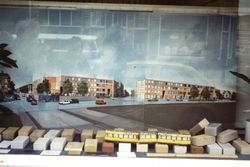
Comment l’architecture répond-elle à un contexte urbain spécifique? Comment la diversité des typologies et les besoins culturels de ses habitants variés peuvent-ils influencer le design? Comment saisir l’essence d’une ville à travers ses bâtiments? Les projets de logement social « Bonjour Tristesse » et « Punt en Komma » de l’architecte portugais Álvaro Siza, conçus pour(...)
Comment l’architecture répond-elle à un contexte urbain spécifique? Comment la diversité des typologies et les besoins culturels de ses habitants variés peuvent-ils influencer le design? Comment saisir l’essence d’une ville à travers ses bâtiments? Les projets de logement social « Bonjour Tristesse » et « Punt en Komma » de l’architecte portugais Álvaro Siza, conçus pour(...)
Date:
29 novembre 2015, 14h30 - 16h30
29 novembre 2015, 14h30 - 16h30
Titre:
Inter / Faces
Actions:
Description:
Comment l’architecture répond-elle à un contexte urbain spécifique? Comment la diversité des typologies et les besoins culturels de ses habitants variés peuvent-ils influencer le design? Comment saisir l’essence d’une ville à travers ses bâtiments? Les projets de logement social « Bonjour Tristesse » et « Punt en Komma » de l’architecte portugais Álvaro Siza, conçus pour(...)
Inter / Faces
Actions:
Description:
Comment l’architecture répond-elle à un contexte urbain spécifique? Comment la diversité des typologies et les besoins culturels de ses habitants variés peuvent-ils influencer le design? Comment saisir l’essence d’une ville à travers ses bâtiments? Les projets de logement social « Bonjour Tristesse » et « Punt en Komma » de l’architecte portugais Álvaro Siza, conçus pour(...)
Classification:
événements
événements
Date:
29 novembre 2015
14h30 - 16h30
29 novembre 2015
14h30 - 16h30


