


11284 Résultats
Niveau de description archivistique:
Projet
Projet
Numéro de référence:
AP178.S1.1995.PR05
Description:
This project series documents the Reitoria da Universidade de Alicante in Alicante, Spain. While the records were held in the office’s archives this project was assigned the number 59/90. The office assigned the date 1995-1998 to this project The rectory was located on the former military aerodrome of Rabasa. The H-shaped, two-storey building had two inner courtyards and was often compared to a fortress. The ground floor included classrooms, an auditorium, a hall, as well as spaces for the Law and Linguistics department and the office of International Relations. The second floor was used as office space. The project was realized. Documenting this project are sketches, working drawings, structural drawings, technical drawings and mechanical drawings. Textual materials included project documentation, correspondence and catalogues. Photographic materials document the model, site, construction work and the built project.
AP178.S1.1995.PR05
Description:
This project series documents the Reitoria da Universidade de Alicante in Alicante, Spain. While the records were held in the office’s archives this project was assigned the number 59/90. The office assigned the date 1995-1998 to this project The rectory was located on the former military aerodrome of Rabasa. The H-shaped, two-storey building had two inner courtyards and was often compared to a fortress. The ground floor included classrooms, an auditorium, a hall, as well as spaces for the Law and Linguistics department and the office of International Relations. The second floor was used as office space. The project was realized. Documenting this project are sketches, working drawings, structural drawings, technical drawings and mechanical drawings. Textual materials included project documentation, correspondence and catalogues. Photographic materials document the model, site, construction work and the built project.
Personnes et institutions:
Date:
1995-2003
1995-2003
Titre:
Reitoria da Universidade de Alicante [Rectory, University of Alicante], Alicante, Spain (1995-1998)
Actions:
AP178.S1.1995.PR05
Description:
This project series documents the Reitoria da Universidade de Alicante in Alicante, Spain. While the records were held in the office’s archives this project was assigned the number 59/90. The office assigned the date 1995-1998 to this project The rectory was located on the former military aerodrome of Rabasa. The H-shaped, two-storey building had two inner courtyards and was often compared to a fortress. The ground floor included classrooms, an auditorium, a hall, as well as spaces for the Law and Linguistics department and the office of International Relations. The second floor was used as office space. The project was realized. Documenting this project are sketches, working drawings, structural drawings, technical drawings and mechanical drawings. Textual materials included project documentation, correspondence and catalogues. Photographic materials document the model, site, construction work and the built project.
Reitoria da Universidade de Alicante [Rectory, University of Alicante], Alicante, Spain (1995-1998)
Actions:
AP178.S1.1995.PR05
Description:
This project series documents the Reitoria da Universidade de Alicante in Alicante, Spain. While the records were held in the office’s archives this project was assigned the number 59/90. The office assigned the date 1995-1998 to this project The rectory was located on the former military aerodrome of Rabasa. The H-shaped, two-storey building had two inner courtyards and was often compared to a fortress. The ground floor included classrooms, an auditorium, a hall, as well as spaces for the Law and Linguistics department and the office of International Relations. The second floor was used as office space. The project was realized. Documenting this project are sketches, working drawings, structural drawings, technical drawings and mechanical drawings. Textual materials included project documentation, correspondence and catalogues. Photographic materials document the model, site, construction work and the built project.
Niveau de description archivistique:
Project
Project
Date:
1995-2003
1995-2003
Personnes et institutions:
Classification:
événements
événements
Titre:
L’enseignement de… Rome
L’enseignement de… Rome
Actions:
Description:
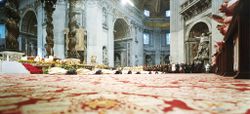
Le cinéaste et photographe Armin Linke fait le point sur les changements sociétaux, la complexité culturelle et la beauté de la Rome contemporaine à travers deux courts métrages et des photographies d’architecture tirées de ses propres archives. Le premier film capture l’envol de 100 000 étourneaux qui se révèle une véritable chorégraphie avec Rome en toile de fond. Linke(...)
Le cinéaste et photographe Armin Linke fait le point sur les changements sociétaux, la complexité culturelle et la beauté de la Rome contemporaine à travers deux courts métrages et des photographies d’architecture tirées de ses propres archives. Le premier film capture l’envol de 100 000 étourneaux qui se révèle une véritable chorégraphie avec Rome en toile de fond. Linke(...)
Localisation:
Théâtre Paul-Desmarais
Théâtre Paul-Desmarais
Date:
5 mars 2009
5 mars 2009
Titre:
L’enseignement de… Rome
Actions:
Description:
Le cinéaste et photographe Armin Linke fait le point sur les changements sociétaux, la complexité culturelle et la beauté de la Rome contemporaine à travers deux courts métrages et des photographies d’architecture tirées de ses propres archives. Le premier film capture l’envol de 100 000 étourneaux qui se révèle une véritable chorégraphie avec Rome en toile de fond. Linke(...)
L’enseignement de… Rome
Actions:
Description:
Le cinéaste et photographe Armin Linke fait le point sur les changements sociétaux, la complexité culturelle et la beauté de la Rome contemporaine à travers deux courts métrages et des photographies d’architecture tirées de ses propres archives. Le premier film capture l’envol de 100 000 étourneaux qui se révèle une véritable chorégraphie avec Rome en toile de fond. Linke(...)
Classification:
événements
événements
Date:
5 mars 2009
5 mars 2009
Localisation:
Théâtre Paul-Desmarais
Théâtre Paul-Desmarais
Niveau de description archivistique:
Sous-série
Sous-série
Numéro de référence:
AP178.S1.1988.PR07.SS4
Description:
This project series documents the restoration of the Castro & Melo building in Lisbon, Portugal. While the records were held in the office’s archives this project was assigned the number 58/80 N 8/9. The office assigned the date 1988-1998 for this project. The Edificio Castro e Melo was part of Bloco A and identified as building 8/9 in the reconstruction plan of Siza. The structure of the building, originally built in the18th century in order to resist earthquakes, was rebuilt in concrete. Archival research was done in order to reproduce as much as possible the original style of the building. The interior of the building was reorganized to introduce dwellings. The first and second floors were kept as they were originally for stores and storerooms. The third and fourth floors were built for offices. The fifth, sixth and seventh floors were rearranged to introduce apartments to the building. The eighth floor was used for the technical equipment of the building. In 1996, Siza received the Secil prize for this building. Drawings include studies, working drawings, mechanical drawings, and details of finishes. Textual material includes project documentation, studies, and correspondence. Photographic material include images of studies, details of the interior and exterior, as well as construction work. It is important to mention that documentation can also be found in subseries Master plans and exterior spaces (AP178.S1.1988.PR07.SS1) and Bloco A (AP178.S1.1988.PR07.SS2).
AP178.S1.1988.PR07.SS4
Description:
This project series documents the restoration of the Castro & Melo building in Lisbon, Portugal. While the records were held in the office’s archives this project was assigned the number 58/80 N 8/9. The office assigned the date 1988-1998 for this project. The Edificio Castro e Melo was part of Bloco A and identified as building 8/9 in the reconstruction plan of Siza. The structure of the building, originally built in the18th century in order to resist earthquakes, was rebuilt in concrete. Archival research was done in order to reproduce as much as possible the original style of the building. The interior of the building was reorganized to introduce dwellings. The first and second floors were kept as they were originally for stores and storerooms. The third and fourth floors were built for offices. The fifth, sixth and seventh floors were rearranged to introduce apartments to the building. The eighth floor was used for the technical equipment of the building. In 1996, Siza received the Secil prize for this building. Drawings include studies, working drawings, mechanical drawings, and details of finishes. Textual material includes project documentation, studies, and correspondence. Photographic material include images of studies, details of the interior and exterior, as well as construction work. It is important to mention that documentation can also be found in subseries Master plans and exterior spaces (AP178.S1.1988.PR07.SS1) and Bloco A (AP178.S1.1988.PR07.SS2).
Personnes et institutions:
Date:
1988-1998
1988-1998
Titre:
Edifício Castro e Melo, Bloco A, Reconstrução do Chiado [Castro & Melo building, Block A, Reconstruction of the Chiado] Lisbon, Portugal, 1988-1998
Actions:
AP178.S1.1988.PR07.SS4
Description:
This project series documents the restoration of the Castro & Melo building in Lisbon, Portugal. While the records were held in the office’s archives this project was assigned the number 58/80 N 8/9. The office assigned the date 1988-1998 for this project. The Edificio Castro e Melo was part of Bloco A and identified as building 8/9 in the reconstruction plan of Siza. The structure of the building, originally built in the18th century in order to resist earthquakes, was rebuilt in concrete. Archival research was done in order to reproduce as much as possible the original style of the building. The interior of the building was reorganized to introduce dwellings. The first and second floors were kept as they were originally for stores and storerooms. The third and fourth floors were built for offices. The fifth, sixth and seventh floors were rearranged to introduce apartments to the building. The eighth floor was used for the technical equipment of the building. In 1996, Siza received the Secil prize for this building. Drawings include studies, working drawings, mechanical drawings, and details of finishes. Textual material includes project documentation, studies, and correspondence. Photographic material include images of studies, details of the interior and exterior, as well as construction work. It is important to mention that documentation can also be found in subseries Master plans and exterior spaces (AP178.S1.1988.PR07.SS1) and Bloco A (AP178.S1.1988.PR07.SS2).
Edifício Castro e Melo, Bloco A, Reconstrução do Chiado [Castro & Melo building, Block A, Reconstruction of the Chiado] Lisbon, Portugal, 1988-1998
Actions:
AP178.S1.1988.PR07.SS4
Description:
This project series documents the restoration of the Castro & Melo building in Lisbon, Portugal. While the records were held in the office’s archives this project was assigned the number 58/80 N 8/9. The office assigned the date 1988-1998 for this project. The Edificio Castro e Melo was part of Bloco A and identified as building 8/9 in the reconstruction plan of Siza. The structure of the building, originally built in the18th century in order to resist earthquakes, was rebuilt in concrete. Archival research was done in order to reproduce as much as possible the original style of the building. The interior of the building was reorganized to introduce dwellings. The first and second floors were kept as they were originally for stores and storerooms. The third and fourth floors were built for offices. The fifth, sixth and seventh floors were rearranged to introduce apartments to the building. The eighth floor was used for the technical equipment of the building. In 1996, Siza received the Secil prize for this building. Drawings include studies, working drawings, mechanical drawings, and details of finishes. Textual material includes project documentation, studies, and correspondence. Photographic material include images of studies, details of the interior and exterior, as well as construction work. It is important to mention that documentation can also be found in subseries Master plans and exterior spaces (AP178.S1.1988.PR07.SS1) and Bloco A (AP178.S1.1988.PR07.SS2).
Niveau de description archivistique:
Project
Project
Date:
1988-1998
1988-1998
Personnes et institutions:
Niveau de description archivistique:
Projet
Projet
Numéro de référence:
AP178.S1.1998.PR10
Description:
This project series documents the Pavilhão de Portugal na Expo Hannover 2000 in Hannover, Germany. While the records were held in the office’s archives this project was assigned the number 112/90. The office assigned the date 1999 for this project The project, a collaboration with Eduardo Souto de Moura, was for the Portuguese pavilion at Expo 2000 in Hannover. The exterior of the pavillion was made of natural materials including cork, limestone, and tiles. The use of expanded cork was symbolic, as Portugal is the principal producer worldwide. The building could be dismantled and was moved from Hannover and rebuilt in Coimbra in 2002. It was renamed Pavilhão Centro de Portugal and served as a venue for concerts, exhibitions and other cultural events. Documenting this project are sketches and elevations. Textual materials include documentation about the reconstruction in Coimbra. Photographic material documents the built project.
AP178.S1.1998.PR10
Description:
This project series documents the Pavilhão de Portugal na Expo Hannover 2000 in Hannover, Germany. While the records were held in the office’s archives this project was assigned the number 112/90. The office assigned the date 1999 for this project The project, a collaboration with Eduardo Souto de Moura, was for the Portuguese pavilion at Expo 2000 in Hannover. The exterior of the pavillion was made of natural materials including cork, limestone, and tiles. The use of expanded cork was symbolic, as Portugal is the principal producer worldwide. The building could be dismantled and was moved from Hannover and rebuilt in Coimbra in 2002. It was renamed Pavilhão Centro de Portugal and served as a venue for concerts, exhibitions and other cultural events. Documenting this project are sketches and elevations. Textual materials include documentation about the reconstruction in Coimbra. Photographic material documents the built project.
Personnes et institutions:
Date:
1998-2001
1998-2001
Titre:
Pavilhão de Portugal na Expo Hannover 2000 [Portugal pavillon, Expo Hannover 2000], Hannover, Germany (1998)
Actions:
AP178.S1.1998.PR10
Description:
This project series documents the Pavilhão de Portugal na Expo Hannover 2000 in Hannover, Germany. While the records were held in the office’s archives this project was assigned the number 112/90. The office assigned the date 1999 for this project The project, a collaboration with Eduardo Souto de Moura, was for the Portuguese pavilion at Expo 2000 in Hannover. The exterior of the pavillion was made of natural materials including cork, limestone, and tiles. The use of expanded cork was symbolic, as Portugal is the principal producer worldwide. The building could be dismantled and was moved from Hannover and rebuilt in Coimbra in 2002. It was renamed Pavilhão Centro de Portugal and served as a venue for concerts, exhibitions and other cultural events. Documenting this project are sketches and elevations. Textual materials include documentation about the reconstruction in Coimbra. Photographic material documents the built project.
Pavilhão de Portugal na Expo Hannover 2000 [Portugal pavillon, Expo Hannover 2000], Hannover, Germany (1998)
Actions:
AP178.S1.1998.PR10
Description:
This project series documents the Pavilhão de Portugal na Expo Hannover 2000 in Hannover, Germany. While the records were held in the office’s archives this project was assigned the number 112/90. The office assigned the date 1999 for this project The project, a collaboration with Eduardo Souto de Moura, was for the Portuguese pavilion at Expo 2000 in Hannover. The exterior of the pavillion was made of natural materials including cork, limestone, and tiles. The use of expanded cork was symbolic, as Portugal is the principal producer worldwide. The building could be dismantled and was moved from Hannover and rebuilt in Coimbra in 2002. It was renamed Pavilhão Centro de Portugal and served as a venue for concerts, exhibitions and other cultural events. Documenting this project are sketches and elevations. Textual materials include documentation about the reconstruction in Coimbra. Photographic material documents the built project.
Niveau de description archivistique:
Project
Project
Date:
1998-2001
1998-2001
Personnes et institutions:
Classification:
expositions
expositions
Actions:
Description:
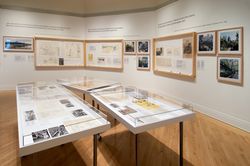
Cette exposition illustre la vision originale de Cornelia Hahn Oberlander, qui conçoit son art avec une conscience sociale et un souci de développement écologique durable au Canada. L’exposition met en lumière une sélection de projets de Cornelia Hahn Oberlander, qui ont été réalisés à Ottawa, à Toronto, à Vancouver, à Yellowknife et à Berlin, au cours d’une période(...)
Cette exposition illustre la vision originale de Cornelia Hahn Oberlander, qui conçoit son art avec une conscience sociale et un souci de développement écologique durable au Canada. L’exposition met en lumière une sélection de projets de Cornelia Hahn Oberlander, qui ont été réalisés à Ottawa, à Toronto, à Vancouver, à Yellowknife et à Berlin, au cours d’une période(...)
Localisation:
Salle octogonale
Salle octogonale
Date:
11 mai 2006 au 30 juillet 2006
11 mai 2006 au 30 juillet 2006
Titre:
Cornelia Hahn Oberlander : paysages écologiques
Actions:
Description:
Cette exposition illustre la vision originale de Cornelia Hahn Oberlander, qui conçoit son art avec une conscience sociale et un souci de développement écologique durable au Canada. L’exposition met en lumière une sélection de projets de Cornelia Hahn Oberlander, qui ont été réalisés à Ottawa, à Toronto, à Vancouver, à Yellowknife et à Berlin, au cours d’une période(...)
Cornelia Hahn Oberlander : paysages écologiques
Actions:
Description:
Cette exposition illustre la vision originale de Cornelia Hahn Oberlander, qui conçoit son art avec une conscience sociale et un souci de développement écologique durable au Canada. L’exposition met en lumière une sélection de projets de Cornelia Hahn Oberlander, qui ont été réalisés à Ottawa, à Toronto, à Vancouver, à Yellowknife et à Berlin, au cours d’une période(...)
Classification:
expositions
expositions
Date:
11 mai 2006 au
30 juillet 2006
11 mai 2006 au
30 juillet 2006
Localisation:
Salle octogonale
Salle octogonale
Classification:
archives
Niveau de description archivistique:
Fonds
archives
Niveau de description archivistique:
Fonds
Titre:
Bernard Cache fonds
Bernard Cache fonds
Numéro de référence:
AP169
Résumé:
Bernard Cache, fonds, 1991-2011, document the development and design process for the Objectile firm and its decorative panels and furniture. The records focus mostly on daily activities of the firm, the collaboration of principal Bernard Cache with TopSolid software, and his parallel academic work. The records consist solely of original born-digital material.
AP169
Résumé:
Bernard Cache, fonds, 1991-2011, document the development and design process for the Objectile firm and its decorative panels and furniture. The records focus mostly on daily activities of the firm, the collaboration of principal Bernard Cache with TopSolid software, and his parallel academic work. The records consist solely of original born-digital material.
Personnes et institutions:
Date:
1992-2011
1992-2011
Titre:
Bernard Cache fonds
Actions:
AP169
Résumé:
Bernard Cache, fonds, 1991-2011, document the development and design process for the Objectile firm and its decorative panels and furniture. The records focus mostly on daily activities of the firm, the collaboration of principal Bernard Cache with TopSolid software, and his parallel academic work. The records consist solely of original born-digital material.
Bernard Cache fonds
Actions:
AP169
Résumé:
Bernard Cache, fonds, 1991-2011, document the development and design process for the Objectile firm and its decorative panels and furniture. The records focus mostly on daily activities of the firm, the collaboration of principal Bernard Cache with TopSolid software, and his parallel academic work. The records consist solely of original born-digital material.
Classification:
archives
Niveau de description archivistique:
Fonds
archives
Niveau de description archivistique:
Fonds
Date:
1992-2011
1992-2011
Personnes et institutions:
Niveau de description archivistique:
Sous-série
Sous-série
Numéro de référence:
AP178.S1.1980.PR02.SS2
Description:
This project subseries documents the residential complex Bonjour Tristesse after Siza won the competition for Block 121. While the records were held in the office’s archives this project was assigned the number 2/80 A. Drawings in this subseries show changes between the competition entry for Bonjour Tristesse and the built project. For instance, drawings depict the decision to reduce the number of floors, as well as Siza’s proposal to preserve the ground floor shops that remained from the previous building. Other changes documented include changes in the number of staircases as well the omission of an entrance ramp. Documenting this project subseries are sketches, studies, plans, elevations, and details. There are photographs, negatives, and slides that show the construction site and the building during and after construction. There are also photographs and negatives of the model for Bonjour Tristesse. For correspondence and project documentation see the project series.
AP178.S1.1980.PR02.SS2
Description:
This project subseries documents the residential complex Bonjour Tristesse after Siza won the competition for Block 121. While the records were held in the office’s archives this project was assigned the number 2/80 A. Drawings in this subseries show changes between the competition entry for Bonjour Tristesse and the built project. For instance, drawings depict the decision to reduce the number of floors, as well as Siza’s proposal to preserve the ground floor shops that remained from the previous building. Other changes documented include changes in the number of staircases as well the omission of an entrance ramp. Documenting this project subseries are sketches, studies, plans, elevations, and details. There are photographs, negatives, and slides that show the construction site and the building during and after construction. There are also photographs and negatives of the model for Bonjour Tristesse. For correspondence and project documentation see the project series.
Personnes et institutions:
Date:
circa 1981-2005
circa 1981-2005
Titre:
Edificio de Apartamentos Bonjour Tristesse [Bonjour Tristesse residential complex], Berlin, Germany (1980-1984)
Actions:
AP178.S1.1980.PR02.SS2
Description:
This project subseries documents the residential complex Bonjour Tristesse after Siza won the competition for Block 121. While the records were held in the office’s archives this project was assigned the number 2/80 A. Drawings in this subseries show changes between the competition entry for Bonjour Tristesse and the built project. For instance, drawings depict the decision to reduce the number of floors, as well as Siza’s proposal to preserve the ground floor shops that remained from the previous building. Other changes documented include changes in the number of staircases as well the omission of an entrance ramp. Documenting this project subseries are sketches, studies, plans, elevations, and details. There are photographs, negatives, and slides that show the construction site and the building during and after construction. There are also photographs and negatives of the model for Bonjour Tristesse. For correspondence and project documentation see the project series.
Edificio de Apartamentos Bonjour Tristesse [Bonjour Tristesse residential complex], Berlin, Germany (1980-1984)
Actions:
AP178.S1.1980.PR02.SS2
Description:
This project subseries documents the residential complex Bonjour Tristesse after Siza won the competition for Block 121. While the records were held in the office’s archives this project was assigned the number 2/80 A. Drawings in this subseries show changes between the competition entry for Bonjour Tristesse and the built project. For instance, drawings depict the decision to reduce the number of floors, as well as Siza’s proposal to preserve the ground floor shops that remained from the previous building. Other changes documented include changes in the number of staircases as well the omission of an entrance ramp. Documenting this project subseries are sketches, studies, plans, elevations, and details. There are photographs, negatives, and slides that show the construction site and the building during and after construction. There are also photographs and negatives of the model for Bonjour Tristesse. For correspondence and project documentation see the project series.
Niveau de description archivistique:
Project
Project
Date:
circa 1981-2005
circa 1981-2005
Personnes et institutions:
Niveau de description archivistique:
Projet
Projet
Numéro de référence:
AP178.S1.1967.PR04
Description:
This project series documents the Casa Manuel Magalhães in Porto, Portugal. While the records were held in the office’s archives this project was assigned the number 29/60; in the past the office identified the project as number 119. The office assigned the dates 1967-1971 for this project. The project consisted of a concrete house located on Avenida dos Combatentes in Porto. There was no direct opening to the street and the building was surrounded by a cement wall. Client Manuel Magalhães commissioned the house as a rental home, but became personally involved during the construction and decided to move in with his family. In 2001, Siza designed an intercom for the house. Documenting this project are sketches, studies, plans, elevations, and details. Photographs, negatives, and slides document the site and building work. Textual documentation includes correspondence with the city of Porto, Manuel Magalhães and Fernando Teixeira Rodrigues.
AP178.S1.1967.PR04
Description:
This project series documents the Casa Manuel Magalhães in Porto, Portugal. While the records were held in the office’s archives this project was assigned the number 29/60; in the past the office identified the project as number 119. The office assigned the dates 1967-1971 for this project. The project consisted of a concrete house located on Avenida dos Combatentes in Porto. There was no direct opening to the street and the building was surrounded by a cement wall. Client Manuel Magalhães commissioned the house as a rental home, but became personally involved during the construction and decided to move in with his family. In 2001, Siza designed an intercom for the house. Documenting this project are sketches, studies, plans, elevations, and details. Photographs, negatives, and slides document the site and building work. Textual documentation includes correspondence with the city of Porto, Manuel Magalhães and Fernando Teixeira Rodrigues.
Personnes et institutions:
Date:
1967-2001
1967-2001
Titre:
Casa Manuel Magalhães [Manuel Magalhães house], Porto, Portugal (1967-1971)
Actions:
AP178.S1.1967.PR04
Description:
This project series documents the Casa Manuel Magalhães in Porto, Portugal. While the records were held in the office’s archives this project was assigned the number 29/60; in the past the office identified the project as number 119. The office assigned the dates 1967-1971 for this project. The project consisted of a concrete house located on Avenida dos Combatentes in Porto. There was no direct opening to the street and the building was surrounded by a cement wall. Client Manuel Magalhães commissioned the house as a rental home, but became personally involved during the construction and decided to move in with his family. In 2001, Siza designed an intercom for the house. Documenting this project are sketches, studies, plans, elevations, and details. Photographs, negatives, and slides document the site and building work. Textual documentation includes correspondence with the city of Porto, Manuel Magalhães and Fernando Teixeira Rodrigues.
Casa Manuel Magalhães [Manuel Magalhães house], Porto, Portugal (1967-1971)
Actions:
AP178.S1.1967.PR04
Description:
This project series documents the Casa Manuel Magalhães in Porto, Portugal. While the records were held in the office’s archives this project was assigned the number 29/60; in the past the office identified the project as number 119. The office assigned the dates 1967-1971 for this project. The project consisted of a concrete house located on Avenida dos Combatentes in Porto. There was no direct opening to the street and the building was surrounded by a cement wall. Client Manuel Magalhães commissioned the house as a rental home, but became personally involved during the construction and decided to move in with his family. In 2001, Siza designed an intercom for the house. Documenting this project are sketches, studies, plans, elevations, and details. Photographs, negatives, and slides document the site and building work. Textual documentation includes correspondence with the city of Porto, Manuel Magalhães and Fernando Teixeira Rodrigues.
Niveau de description archivistique:
Project
Project
Date:
1967-2001
1967-2001
Personnes et institutions:
Niveau de description archivistique:
Projet
Projet
Numéro de référence:
AP178.S1.1982.PR01
Description:
This project series documents the Plano Urbanístico e Central de Camionagem in Guimarães, Portugal. While the records were held in the office’s archives this project was assigned the numbe 12/80. The office assigned the date 1982 to this project. The project was part of an urban plan for Guimarães designed by Fernando Távora. Siza's project consisted of a study for a bus station that was linked to the EN 206 road. The program included parking for short and long term use, a system for the arrival and departure of buses, and a covered pathway. The program also included a building with spaces for the public and for administrative activities, as well as a circuit for the maintenance of the buses without creating traffic. Documenting this project are studies and site plans. Textual materials include project documentation and correspondence. Photographs and negatives document the project site.
AP178.S1.1982.PR01
Description:
This project series documents the Plano Urbanístico e Central de Camionagem in Guimarães, Portugal. While the records were held in the office’s archives this project was assigned the numbe 12/80. The office assigned the date 1982 to this project. The project was part of an urban plan for Guimarães designed by Fernando Távora. Siza's project consisted of a study for a bus station that was linked to the EN 206 road. The program included parking for short and long term use, a system for the arrival and departure of buses, and a covered pathway. The program also included a building with spaces for the public and for administrative activities, as well as a circuit for the maintenance of the buses without creating traffic. Documenting this project are studies and site plans. Textual materials include project documentation and correspondence. Photographs and negatives document the project site.
Personnes et institutions:
Date:
1981-1985
1981-1985
Titre:
Plano Urbanístico e Central de Camionagem [Urban plan and bus station], Guimarães, Portugal (1982)
Actions:
AP178.S1.1982.PR01
Description:
This project series documents the Plano Urbanístico e Central de Camionagem in Guimarães, Portugal. While the records were held in the office’s archives this project was assigned the numbe 12/80. The office assigned the date 1982 to this project. The project was part of an urban plan for Guimarães designed by Fernando Távora. Siza's project consisted of a study for a bus station that was linked to the EN 206 road. The program included parking for short and long term use, a system for the arrival and departure of buses, and a covered pathway. The program also included a building with spaces for the public and for administrative activities, as well as a circuit for the maintenance of the buses without creating traffic. Documenting this project are studies and site plans. Textual materials include project documentation and correspondence. Photographs and negatives document the project site.
Plano Urbanístico e Central de Camionagem [Urban plan and bus station], Guimarães, Portugal (1982)
Actions:
AP178.S1.1982.PR01
Description:
This project series documents the Plano Urbanístico e Central de Camionagem in Guimarães, Portugal. While the records were held in the office’s archives this project was assigned the numbe 12/80. The office assigned the date 1982 to this project. The project was part of an urban plan for Guimarães designed by Fernando Távora. Siza's project consisted of a study for a bus station that was linked to the EN 206 road. The program included parking for short and long term use, a system for the arrival and departure of buses, and a covered pathway. The program also included a building with spaces for the public and for administrative activities, as well as a circuit for the maintenance of the buses without creating traffic. Documenting this project are studies and site plans. Textual materials include project documentation and correspondence. Photographs and negatives document the project site.
Niveau de description archivistique:
Project
Project
Date:
1981-1985
1981-1985
Personnes et institutions:
Niveau de description archivistique:
Projet
Projet
Numéro de référence:
AP178.S1.1989.PR04
Description:
This project series documents the Centro Meteorológico da Villa Olimpica in Barcelona, Spain. While the records were held in the office’s archives this project was assigned the number 65/80. The office assigned the date 1989-1992 for this project. The project was located on the Paseo Maritimo in the center of the Olympic village of Barcelona. It was built for the meteorologists for the Olympic games. It was also used by the reporters of the Barcelona summer Olympic games of 1992. The six-story building was 33 metres in diameter and 4,000 square meters. The building had a cylindrical shape made of reinforced concrete. The project was built and was a collaboration with Joan Falgueras. Documenting this project are sketches, studies, working drawings, structural drawings, and photographs. Textual materials include project documentation, correspondence, and technical specifications. Photographic materials document the models, aerial views and construction progress.
AP178.S1.1989.PR04
Description:
This project series documents the Centro Meteorológico da Villa Olimpica in Barcelona, Spain. While the records were held in the office’s archives this project was assigned the number 65/80. The office assigned the date 1989-1992 for this project. The project was located on the Paseo Maritimo in the center of the Olympic village of Barcelona. It was built for the meteorologists for the Olympic games. It was also used by the reporters of the Barcelona summer Olympic games of 1992. The six-story building was 33 metres in diameter and 4,000 square meters. The building had a cylindrical shape made of reinforced concrete. The project was built and was a collaboration with Joan Falgueras. Documenting this project are sketches, studies, working drawings, structural drawings, and photographs. Textual materials include project documentation, correspondence, and technical specifications. Photographic materials document the models, aerial views and construction progress.
Personnes et institutions:
Date:
1983-2012
1983-2012
Titre:
Centro Meteorológico da Villa Olimpica [Olympic Village Meteorological Centre and MOPU delegation headquarters], Barcelona, Spain (1989-1992)
Actions:
AP178.S1.1989.PR04
Description:
This project series documents the Centro Meteorológico da Villa Olimpica in Barcelona, Spain. While the records were held in the office’s archives this project was assigned the number 65/80. The office assigned the date 1989-1992 for this project. The project was located on the Paseo Maritimo in the center of the Olympic village of Barcelona. It was built for the meteorologists for the Olympic games. It was also used by the reporters of the Barcelona summer Olympic games of 1992. The six-story building was 33 metres in diameter and 4,000 square meters. The building had a cylindrical shape made of reinforced concrete. The project was built and was a collaboration with Joan Falgueras. Documenting this project are sketches, studies, working drawings, structural drawings, and photographs. Textual materials include project documentation, correspondence, and technical specifications. Photographic materials document the models, aerial views and construction progress.
Centro Meteorológico da Villa Olimpica [Olympic Village Meteorological Centre and MOPU delegation headquarters], Barcelona, Spain (1989-1992)
Actions:
AP178.S1.1989.PR04
Description:
This project series documents the Centro Meteorológico da Villa Olimpica in Barcelona, Spain. While the records were held in the office’s archives this project was assigned the number 65/80. The office assigned the date 1989-1992 for this project. The project was located on the Paseo Maritimo in the center of the Olympic village of Barcelona. It was built for the meteorologists for the Olympic games. It was also used by the reporters of the Barcelona summer Olympic games of 1992. The six-story building was 33 metres in diameter and 4,000 square meters. The building had a cylindrical shape made of reinforced concrete. The project was built and was a collaboration with Joan Falgueras. Documenting this project are sketches, studies, working drawings, structural drawings, and photographs. Textual materials include project documentation, correspondence, and technical specifications. Photographic materials document the models, aerial views and construction progress.
Niveau de description archivistique:
Project
Project
Date:
1983-2012
1983-2012
Personnes et institutions:


