


3790 Résultats
Classification:
livres
livres
Actions:
Prix:
$19.95
(disponible sur commande)
Résumé:
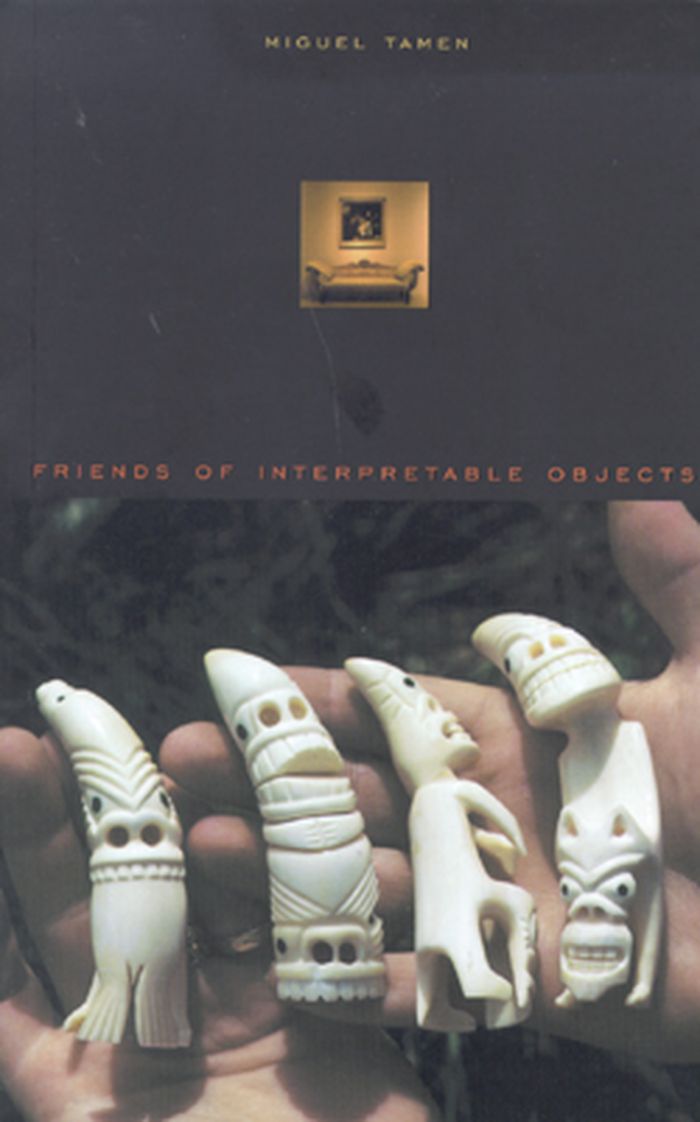
Miguel Tamen's concern is to show how inanimate objects take on life through their interpretation-notably, in our own culture, as they are collected and housed in museums. It is his claim that an object becomes interpretable only in the context of a "society of friends." Thus, Tamen suggests, our inveterate tendency as human beings to interpret the phenomenal world gives(...)
Titre:
Friends of interpretable objects
Actions:
Prix:
$19.95
(disponible sur commande)
Résumé:
Miguel Tamen's concern is to show how inanimate objects take on life through their interpretation-notably, in our own culture, as they are collected and housed in museums. It is his claim that an object becomes interpretable only in the context of a "society of friends." Thus, Tamen suggests, our inveterate tendency as human beings to interpret the phenomenal world gives objects not only a life but also a society. As his work unfolds, "friends" also takes on a legal sense, as advocates, introduced to advance the argument that the social life of interpreted and interpretable objects engenders a related web of social obligations. Focusing on those who, through interpretation, make objects "speak" in settings as different as churches, museums, forests, and distant galaxies-those who know the best interests of corporations, endangered species, and works of art--Tamen exposes the common ground shared by art criticism, political science, tort law, and science. Learned and witty, with much to teach art historians, environmentalists, anthropologists, curators, and literary critics, his book utterly reorients our understanding of how we make sense of our world.
Classification:
livres
livres
Publication:
mars 2004, Cambridge, London
mars 2004, Cambridge, London
Sujet:
Théorie de l’art
Théorie de l’art
Classification:
livres
livres
Actions:
Prix:
$29.95
(disponible sur commande)
Résumé:
John Soane (17531837) was one of the most influential and original of all English architects. In this lavishly illustrated biography, Gillian Darley places Soane's life and buildings side by side, examining both. Born the son of a bricklayer, Soane was a self-made man, egotistic, irascible, with encyclopedic interests. He built himself a remarkable town house that he(...)
Titre:
John Soane : an accidental romantic
Actions:
Prix:
$29.95
(disponible sur commande)
Résumé:
John Soane (17531837) was one of the most influential and original of all English architects. In this lavishly illustrated biography, Gillian Darley places Soane's life and buildings side by side, examining both. Born the son of a bricklayer, Soane was a self-made man, egotistic, irascible, with encyclopedic interests. He built himself a remarkable town house that he filled with treasures and left in trust to the nation. By 1800 he was rich and successful, designing both private houses for powerful clients and public works. Consummate at securing patronage, he was the personal architect to two prime ministers. He was architect to the Bank of England, to Chelsea Hospital, and to the United Grand Lodge of Freemasons. He designed the Dulwich Art Gallery, the first purpose-built art gallery in Britain. Possessed throughout his life by a dream to rebuild the Houses of Parliament, he developed many visionary schemes. Late in life, he built the new Law Courts at Westminster and many of the premises for the growing departments of state.
Classification:
livres
livres
Publication:
octobre 1999, New Haven
octobre 1999, New Haven
Sujet:
Architecture, monographies
Architecture, monographies
Classification:
livres
livres
Actions:
Prix:
$25.00
(disponible sur commande)
Résumé:
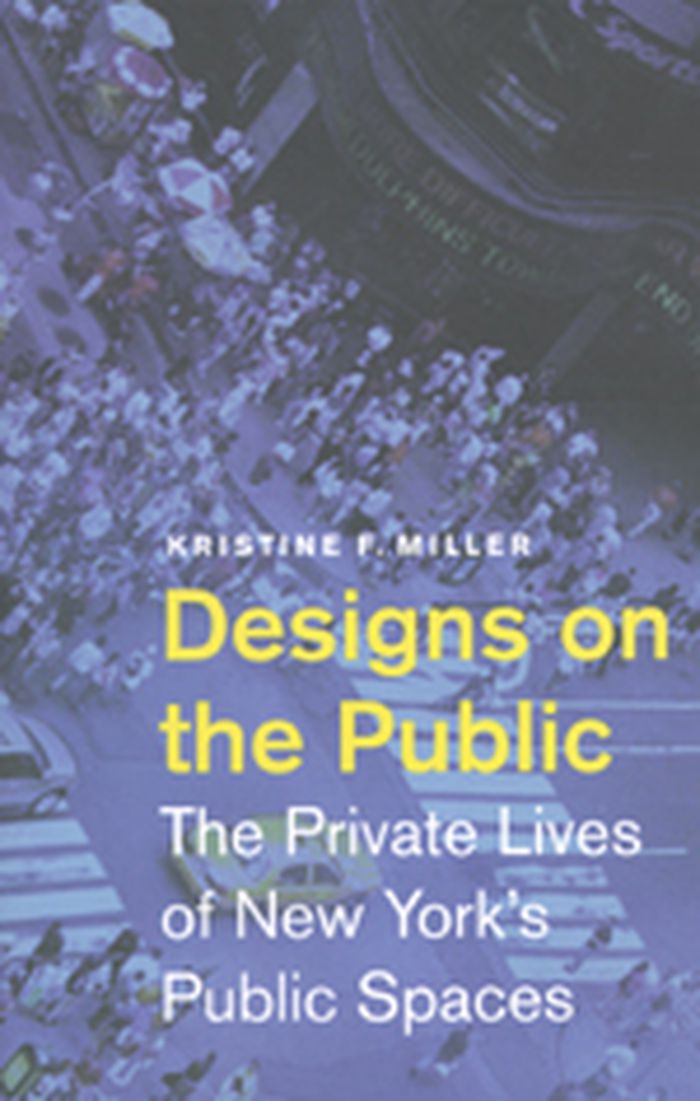
New York City is home to some of the most recognizable places in the world. As familiar as the sight of New Year’s Eve in Times Square or a protest in front of City Hall may be to us, do we understand who controls what happens there? Kristine Miller delves into six of New York’s most important public spaces to trace how design influences their complicated lives. Miller(...)
Titre:
Designs on the Public : The private lives of New York's public spaces
Actions:
Prix:
$25.00
(disponible sur commande)
Résumé:
New York City is home to some of the most recognizable places in the world. As familiar as the sight of New Year’s Eve in Times Square or a protest in front of City Hall may be to us, do we understand who controls what happens there? Kristine Miller delves into six of New York’s most important public spaces to trace how design influences their complicated lives. Miller chronicles controversies in the histories of New York locations including Times Square, Trump Tower, the IBM Atrium, and Sony Plaza. The story of each location reveals that public space is not a concrete or fixed reality, but rather a constantly changing situation open to the forces of law, corporations, bureaucracy, and government. The qualities of public spaces we consider essential, including accessibility, public ownership, and ties to democratic life, are, at best, temporary conditions and often completely absent. Design is, in Miller’s view, complicit in regulation of public spaces in New York City to exclude undesirables, restrict activities, and privilege commercial interests, and in this work she shows how design can reactivate public space and public life.
Classification:
livres
livres
Publication:
décembre 2007, Minneapolis
décembre 2007, Minneapolis
Sujet:
Théorie de l’urbanisme
Théorie de l’urbanisme
Classification:
audio
audio
Titre:
Falsetto.
Falsetto.
Actions:
Description:
1 online resource.
Auteur:
Sujet:
Publication:
[Place of publication not identified] : Lateral Addition, 2017.
[Place of publication not identified] : Lateral Addition, 2017.
Classification:
audio
audio
Publication:
[Place of publication not identified] : Lateral Addition, 2017.
[Place of publication not identified] : Lateral Addition, 2017.
Auteur:
Sujet:
Classification:
livres
livres
Actions:
Prix:
$27.95
(disponible sur commande)
Résumé:
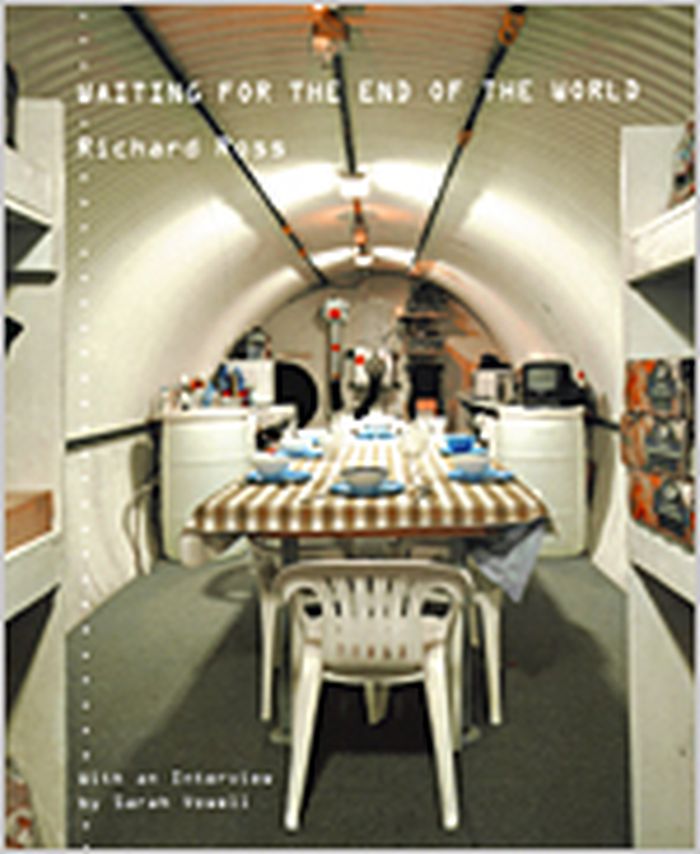
Where will you go when the trouble starts? For countless people around the world, the answer is that bomb shelter down in the basement. In fact, people from around the world have been building shelters to protect themselves from catastrophe—natural disaster, war, nuclear events—for centuries. "Waiting for the End of the World" is photographer Richard Ross's journey into(...)
Titre:
Waiting for the end of the world
Actions:
Prix:
$27.95
(disponible sur commande)
Résumé:
Where will you go when the trouble starts? For countless people around the world, the answer is that bomb shelter down in the basement. In fact, people from around the world have been building shelters to protect themselves from catastrophe—natural disaster, war, nuclear events—for centuries. "Waiting for the End of the World" is photographer Richard Ross's journey into this quirky, somewhat paranoid, and occasionally beautiful underground world. Ross has documented not only the bomb shelters of the United States, but also examples from Vietnam, Russia, England, Turkey, and even Switzerland, where citizens are required by law to have a bomb shelter. Ross's subjects include the Greenbrier Hotel in West Virginia, where a shelter was built to house the entire U.S. Congress, shelters in Beijing, where the Chinese built a complete city underground, and Hittite shelters in Eastern Turkey built some 4,000 years ago. His ethereal images show spaces that at once provide only the barest necessities for survival but maintain a level of idiosyncratic personality that testify to the endurance—and wackiness—of the human spirit. "Waiting for the End of the World" features an interview by author and social commentator Sarah Vowell.
Classification:
livres
livres
Publication:
juin 2004, New York
juin 2004, New York
Sujet:
Monographies photo
Monographies photo
Classification:
livres
livres
Prix:
$75.99
(disponible sur commande)
Résumé:
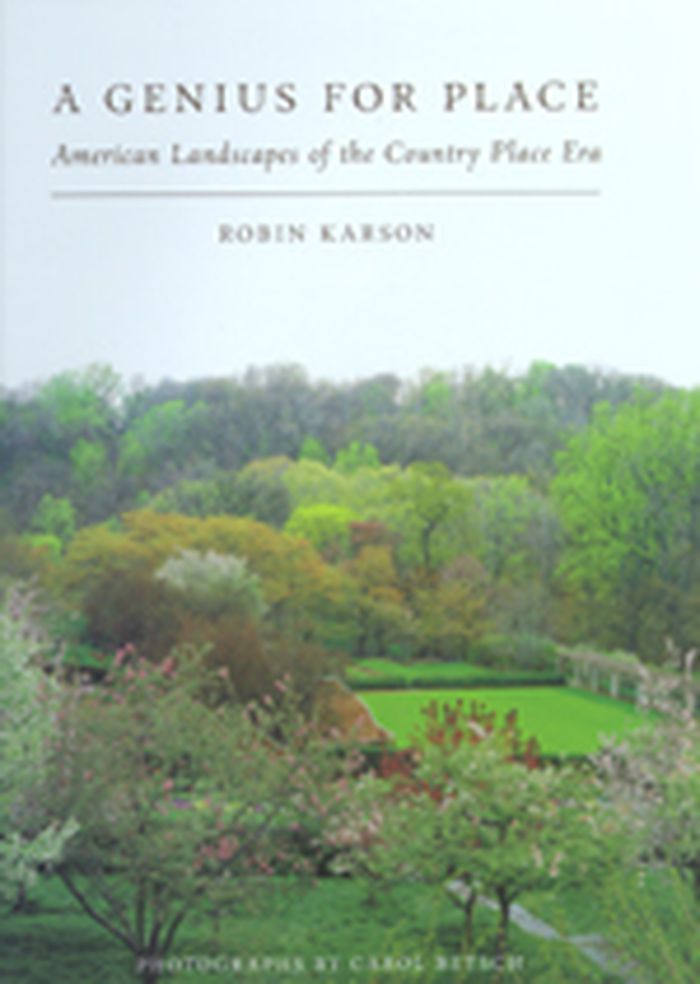
In this lavishly illustrated volume, Robin Karson traces the development of a distinctly American style of landscape design through an analysis of seven country places created by some of the nation's most talented landscape practitioners. In the mid-nineteenth century Frederick Law Olmsted, the designer of New York's Central Park, developed an approach to landscape(...)
Titre:
A genius for place: American landscapes of the country place era
Actions:
Prix:
$75.99
(disponible sur commande)
Résumé:
In this lavishly illustrated volume, Robin Karson traces the development of a distinctly American style of landscape design through an analysis of seven country places created by some of the nation's most talented landscape practitioners. In the mid-nineteenth century Frederick Law Olmsted, the designer of New York's Central Park, developed an approach to landscape design based on the principles of the English Picturesque which also emphasized a specifically American experience of nature and scenery. After Olmsted's retirement in 1897, these precepts continued to ground a new generation of American landscape architects through the next four decades, a period known as the “country place era,” a time of rapid economic, social, and cultural change. The chapters in this book trace a progression in the period from the naturalistic wild gardens of Warren Manning to the mysterious “Prairie style” landscapes of Jens Jensen to the proto-modernist gardens of Fletcher Steele. Other practitioners cov ered are Charles Platt, Ellen Biddle Shipman, Beatrix Farrand, Marian Coffin, and Lockwood de Forest Jr. The projects profiled follow a broad geographic arc, from Stockbridge, Massachusetts, to Santa Barbara, California. All seven landscapes are now open to visitors.
Classification:
livres
livres
Publication:
novembre 2007, Amherst
novembre 2007, Amherst
Sujet:
Jardins
Jardins
Classification:
livres
livres
Prix:
$35.00
(disponible sur commande)
Résumé:
Over the past century, American demographics and social norms have shifted dramatically. More people are living alone, marrying later in life, and having smaller families. At the same time, their lifestyles are changing, whether by choice or by force, to become more virtual, more mobile, and less stable. But despite the ways that today's America is different and more(...)
Titre:
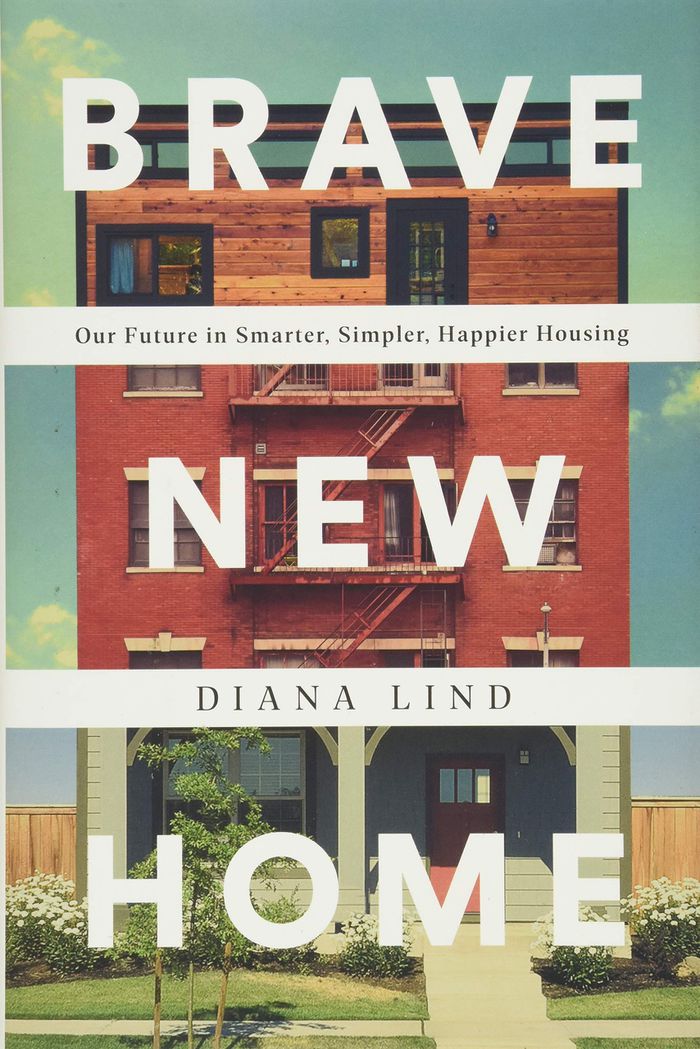
Brave New Home: Our future in smarter, simpler, happier housing
Actions:
Prix:
$35.00
(disponible sur commande)
Résumé:
Over the past century, American demographics and social norms have shifted dramatically. More people are living alone, marrying later in life, and having smaller families. At the same time, their lifestyles are changing, whether by choice or by force, to become more virtual, more mobile, and less stable. But despite the ways that today's America is different and more diverse, housing still looks stuck in the 1950s. In ''Brave new home,'' Diana Lind shows why a country full of single-family houses is bad for us and our planet, and details the new efforts underway that better reflect the way we live now, to ensure that the way we live next is both less lonely and more affordable. Lind takes readers into the homes and communities that are seeking alternatives to the American norm, from multi-generational living, in-law suites, and co-living to microapartments, tiny houses, and new rural communities. Drawing on Lind's expertise and the stories of Americans caught in or forging their own paths outside of our cookie-cutter housing trap, ''Brave new home'' offers a diagnosis of the current American housing crisis and a radical re-imagining of future possibilities.
Classification:
livres
livres
Publication:
octobre 2020
octobre 2020
Sujet:
Théorie de l’architecture
Théorie de l’architecture
Classification:
livres
livres
Actions:
Prix:
$30.00
(disponible sur commande)
Résumé:
Parks are importantly fertile places to talk about land. Whether its big national parks, provincial campgrounds, isolated conservation areas, destination parks, or humble urban patches of grass, we tend to speak of parks as unqualified goods. People think of parks as public or common land, and it is a common belief that parks are the best uses of land and are good for(...)
Titre:
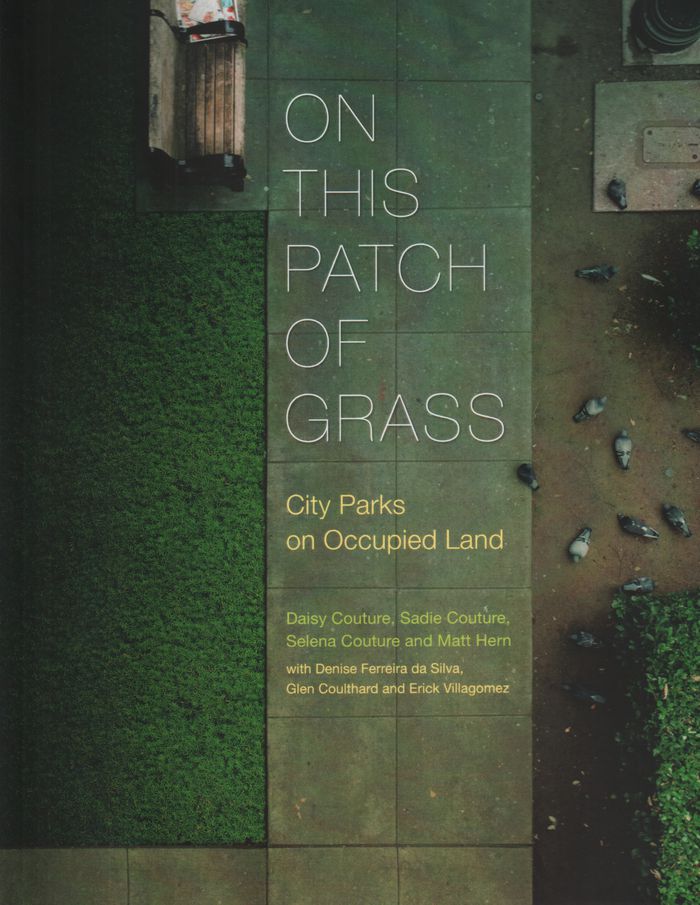
On this patch of grass: city parks and the politics of occupied land
Actions:
Prix:
$30.00
(disponible sur commande)
Résumé:
Parks are importantly fertile places to talk about land. Whether its big national parks, provincial campgrounds, isolated conservation areas, destination parks, or humble urban patches of grass, we tend to speak of parks as unqualified goods. People think of parks as public or common land, and it is a common belief that parks are the best uses of land and are good for everyone. But no park is innocent. Parks are lionized as "natural oases," and urban parks as "pure nature" in the midst of the city -- but that's absurd. Parks are as "natural" as the roads or buildings around them, and just as political. Every park in North America is performing modernity and settler colonialism everyday. Furthermore, parks are not private property, but while they are called ''public'', they are highly regulated spaces that normatively demand and closely control behaviours. Parks are a certain kind of property, and thus creations of law, and they are subject to all kinds of presumptions about what parks are for, and what kinds of people should be doing what kinds of things in them. Parks- as they are currently constituted- are colonial enterprises.
Classification:
livres
livres
Publication:
novembre 2018
novembre 2018
Sujet:
Théorie du paysage
Théorie du paysage
Classification:
livres
livres
Actions:
Exemplaires:
Description:
vi, 215 pages : illustrations, maps ; 26 cm.
Description:
vi, 215 pages : illustrations, maps ; 26 cm.
Auteur:
Sujet:
Publication:
Turnhout, Belgium : Brepols, [2013], ©2013
Turnhout, Belgium : Brepols, [2013], ©2013
Titre:
The power of space in late medieval and early modern Europe : the cities of Italy, northern France and the Low Countries / edited by Marc Boone & Martha Howell.
Actions:
Exemplaires:
Description:
vi, 215 pages : illustrations, maps ; 26 cm.
The power of space in late medieval and early modern Europe : the cities of Italy, northern France and the Low Countries / edited by Marc Boone & Martha Howell.
Actions:
Exemplaires:
Description:
vi, 215 pages : illustrations, maps ; 26 cm.
Classification:
livres
livres
Publication:
Turnhout, Belgium : Brepols, [2013], ©2013
Turnhout, Belgium : Brepols, [2013], ©2013
Auteur:
Sujet:
Classification:
livres
livres
Actions:
Prix:
$98.00
(disponible sur commande)
Résumé:
Gilmore D. Clarke and Michael Rapuano were the foremost spatial designers of the American century. Their vast portfolio of public landscapes propelled the legacy of Frederick Law Olmsted and Calvert Vaux into the motor age, touching the lives of millions and changing the face of the nation. This book recovers the forgotten legacy of Clarke and Rapuano, whose parks and(...)
Titre:
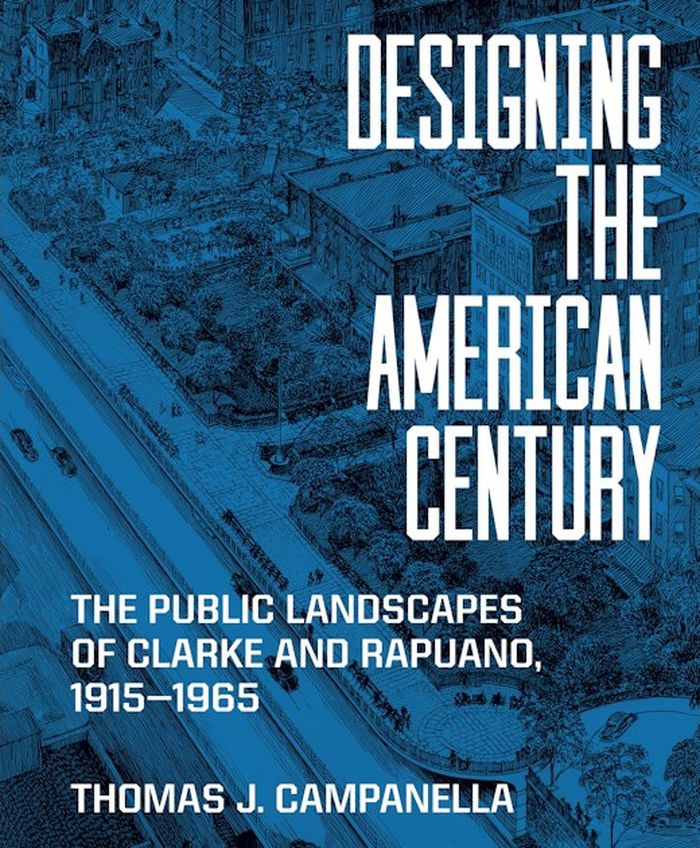
Designing the American century: The public landscapes of Clarke and Rapuano, 1915-1965
Actions:
Prix:
$98.00
(disponible sur commande)
Résumé:
Gilmore D. Clarke and Michael Rapuano were the foremost spatial designers of the American century. Their vast portfolio of public landscapes propelled the legacy of Frederick Law Olmsted and Calvert Vaux into the motor age, touching the lives of millions and changing the face of the nation. This book recovers the forgotten legacy of Clarke and Rapuano, whose parks and parkways, highways and housing estates helped modernize—for better or worse—the American metropolis. With the patronage of public-works titan Robert Moses, Clarke and Rapuano transformed New York over a span of fifty years, revitalizing the city’s immense park system but also planning expressways, public housing, and urban renewal projects that laid waste to entire sections of the city. In this work, Thomas J. Campanella describes how Clarke and Rapuano helped create some of the metropolitan region’s most iconic landscapes, from the Central Park Zoo and Conservatory Garden to the Henry Hudson Parkway and Riverside Park, Jones Beach, the Palisades and Taconic State Parkways, and the Brooklyn Heights Promenade. He shows how they left their mark far beyond Gotham as well, with projects as diverse as Yellowstone’s Mammoth Hot Springs, the Mount Vernon Memorial Highway, site plans for the Pentagon and CIA headquarters, and Montreal’s Olympic Park.
Classification:
livres
livres
Publication:
juillet 2025
juillet 2025


