


3790 Résultats
Classification:
livres
livres

Actions:
Prix:
$22.95
(disponible sur commande)
Résumé:
Why do walls marking national boundaries proliferate amid widespread proclamations of global connectedness and despite anticipation of a world without borders? Why are barricades built of concrete, steel, and barbed wire when threats to the nation today are so often miniaturized, vaporous, clandestine, dispersed, or networked? In "Walled states, waning sovereignty", Wendy(...)
Titre:
Walled states, waning sovereignty, New edition
Actions:
Prix:
$22.95
(disponible sur commande)
Résumé:
Why do walls marking national boundaries proliferate amid widespread proclamations of global connectedness and despite anticipation of a world without borders? Why are barricades built of concrete, steel, and barbed wire when threats to the nation today are so often miniaturized, vaporous, clandestine, dispersed, or networked? In "Walled states, waning sovereignty", Wendy Brown considers the recent spate of wall building in contrast to the erosion of nation-state sovereignty. Drawing on classical and contemporary political theories of state sovereignty in order to understand how state power and national identity persist amid its decline, Brown considers both the need of the state for legitimacy and the popular desires that incite the contemporary building of walls. The new walls—dividing Texas from Mexico, Israel from Palestine, South Africa from Zimbabwe—consecrate the broken boundaries they would seem to contest and signify the ungovernability of a range of forces unleashed by globalization. Yet these same walls often amount to little more than theatrical props, frequently breached, and blur the distinction between law and lawlessness that they are intended to represent. But if today’s walls fail to resolve the conflicts between globalization and national identity, they nonetheless project a stark image of sovereign power. Walls, Brown argues, address human desires for containment and protection in a world increasingly without these provisions. Walls respond to the wish for horizons even as horizons are vanquished.
Classification:
livres
livres
Publication:
avril 2017
avril 2017
Sujet:
Théorie de l’architecture
Théorie de l’architecture
Classification:
livres
livres
Actions:
Prix:
$35.95
(disponible en magasin)
Résumé:
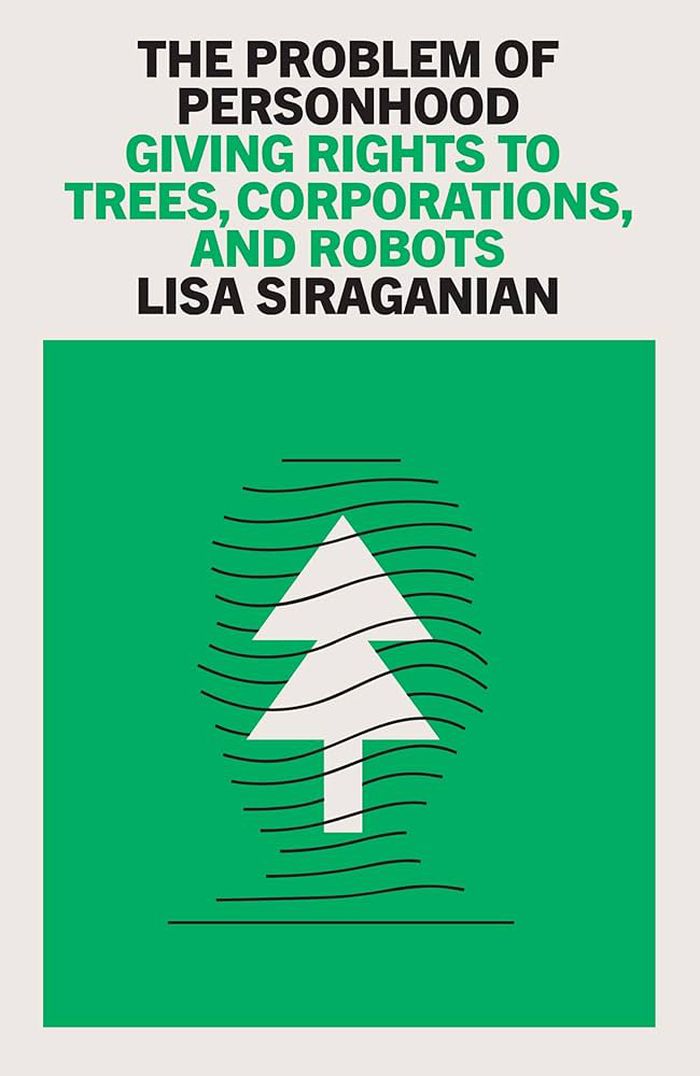
Over the last twenty-five years, the concept of personhood has become central to many contentious debates. Corporations have won free speech protections, as if they were individuals. The right to life or freedom has been claimed on behalf of fetuses, trees, and elephants. The fund of human rights is spilling over into the nonhuman. ''The Problem of Personhood'' reveals(...)
Titre:
The problem of personhood: Giving rights to trees, corporations and robots
Actions:
Prix:
$35.95
(disponible en magasin)
Résumé:
Over the last twenty-five years, the concept of personhood has become central to many contentious debates. Corporations have won free speech protections, as if they were individuals. The right to life or freedom has been claimed on behalf of fetuses, trees, and elephants. The fund of human rights is spilling over into the nonhuman. ''The Problem of Personhood'' reveals the unsettling consequences of granting rights to imagined persons, such as Sophia the robot citizen or New Zealand’s Whanganui River. Synthesizing the political and philosophical debates on personhood and drawing on a varied cast of thinkers that includes Simone Weil, Hannah Arendt, and Dr. Seuss, Lisa Siraganian uncovers the disturbing impact of this contemporary development. Awarding rights to robots and rivers all too easily becomes a legal tool to turn people into capital. When robot Sophia is made a citizen, “she” is transformed into a subject in the law without the corresponding legal duties that protect us from her. At the root of this trend is the US Supreme Court’s Citizens United ruling that grants First Amendment rights to corporations as if they were individuals. The result has not been the transformation of things into humans so much as humans into things, when animals and the environment would be better protected with reference to our humanity rather than to theirs.
Classification:
livres
livres
Publication:
avril 2026
avril 2026
Sujet:
Social
Social
Classification:
livres
livres
Titre:
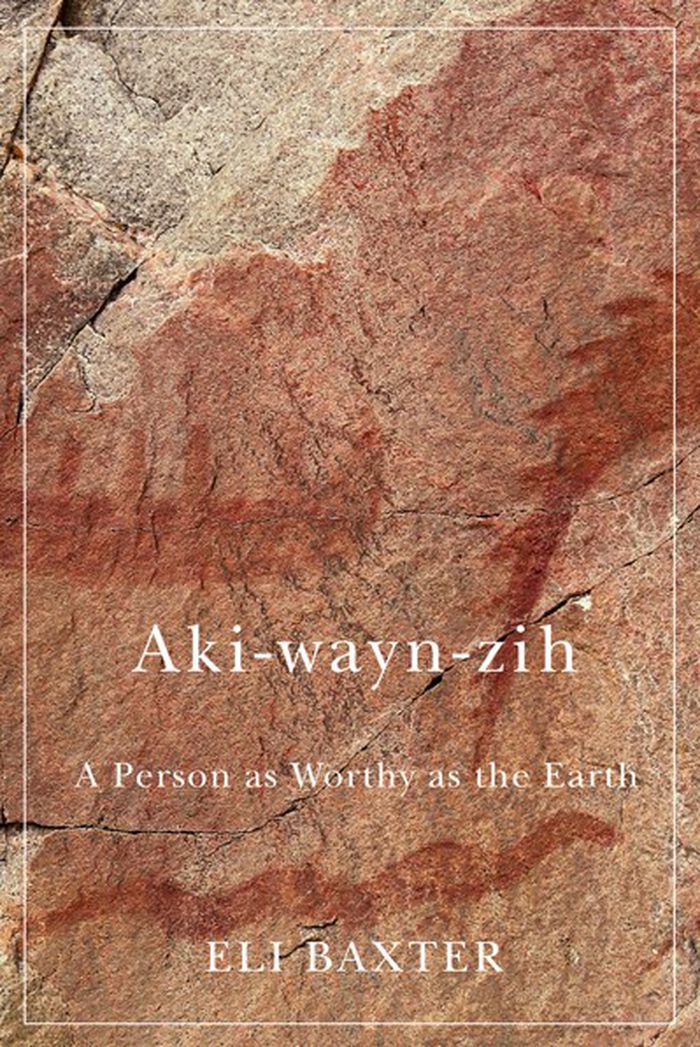
Aki-wayn-zih
Aki-wayn-zih
Actions:
Prix:
$27.95
(disponible sur commande)
Résumé:
Members of Eli Baxter’s generation are the last of the hunting and gathering societies living on Turtle Island. They are also among the last fluent speakers of the Anishinaabay language known as Anishinaabaymowin. 'Aki-wayn-zih' is a story about the land and its spiritual relationship with the Anishinaabayg, from the beginning of their life on Miss-koh-tay-sih Minis(...)
Titre:
Aki-wayn-zih
Actions:
Prix:
$27.95
(disponible sur commande)
Résumé:
Members of Eli Baxter’s generation are the last of the hunting and gathering societies living on Turtle Island. They are also among the last fluent speakers of the Anishinaabay language known as Anishinaabaymowin. 'Aki-wayn-zih' is a story about the land and its spiritual relationship with the Anishinaabayg, from the beginning of their life on Miss-koh-tay-sih Minis (Turtle Island) to the present day. Baxter writes about Anishinaabay life before European contact, his childhood memories of trapping, hunting, and fishing with his family on traditional lands in Treaty 9 territory, and his personal experience surviving the residential school system. Examining how Anishinaabay Kih-kayn-daa-soh-win (knowledge) is an elemental concept embedded in the Anishinaabay language, 'Aki-wayn-zih' explores history, science, math, education, philosophy, law, and spiritual teachings, outlining the cultural significance of language to Anishinaabay identity. Recounting traditional Ojibway legends in their original language, fables in which moral virtues double as survival techniques, and detailed guidelines for expertly trapping or ensnaring animals, Baxter reveals how the residential school system shaped him as an individual, transformed his family, and forever disrupted his reserve community and those like it. Through spiritual teachings, historical accounts, and autobiographical anecdotes, 'Aki-wayn-zih' offers a new form of storytelling from the Anishinaabay point of view.
Classification:
livres
livres
Publication:
septembre 2021
septembre 2021
Classification:
livres
livres

Prix:
$36.00
(disponible sur commande)
Résumé:
Riverside, Illinois, was designed in 1869 by landscape architect Frederick Law Olmsted and his architect partner Calvert Vaux. Their unique design, which followed the contours of the landscape and emphasized open spaces, inspired the greatest architects of the time to undertake projects in Riverside. Among those projects was the Avery Coonley Estate, a rare joint effort(...)
Titre:
The gardener's cottage in Riverside, Illinois: Living in a
Actions:
Prix:
$36.00
(disponible sur commande)
Résumé:
Riverside, Illinois, was designed in 1869 by landscape architect Frederick Law Olmsted and his architect partner Calvert Vaux. Their unique design, which followed the contours of the landscape and emphasized open spaces, inspired the greatest architects of the time to undertake projects in Riverside. Among those projects was the Avery Coonley Estate, a rare joint effort by Frank Lloyd Wright and landscape architect Jens Jensen. At the center of the estate, itself a National Historic Landmark, sits the Gardener’s Cottage, a small but unassuming masterpiece built for the estate’s gardener and his wife. The cottage matches the architectural aesthetic of the estate, and its naturalistic, stunning gardens reflect the overall emphasis on landscape and nature in Riverside. But what is it truly like to live within a historic work of architectural art? Current owner and gardening writer Cathy Jean Maloney here records her discoveries and personal reflections on living in the Gardener’s Cottage with her family. In The Gardener’s Cottage in Riverside, Illinois, Maloney describes the cottage’s beginnings, providing biographical background and design insight into the house itself and Riverside’s key creators. She also highlights the often overlooked beauty of the cottage and illustrates how it is emblematic of Wright and Jensen’s holistic Prairie Style approach to building and landscape architecture. The size of the Gardener’s Cottage allows us to witness Wright’s aesthetic concerns in small detail and to understand his ideas on a more accessible and livable scale.
Classification:
livres
livres
Publication:
février 2009
février 2009
Sujet:
Architecture, monographies
Architecture, monographies
Classification:
livres
livres
Titre:
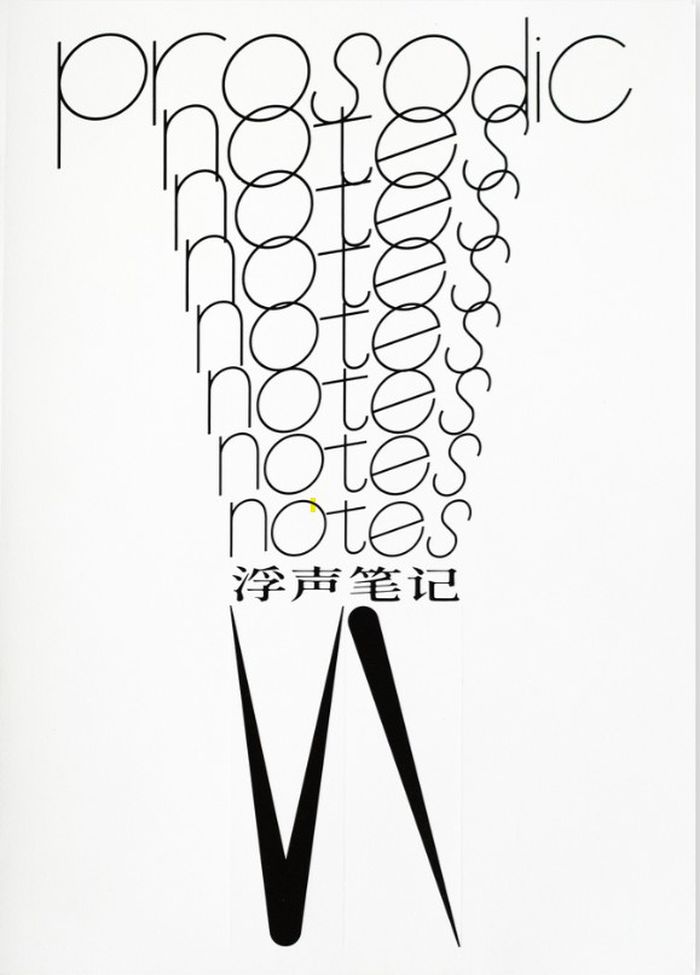
Prosodic notes
Prosodic notes
Actions:
Prix:
$62.00
(disponible en magasin)
Résumé:
The exhibition Prosodic Grains at ''BY ART MATTERS'' (??????) draws inspiration from Chinese literature's pursuit of natural law and balanced beauty in phonology. It features works from over a dozen artists across different countries and regions, exploring the origins, elasticity, and limitations of human communication. For individuals, language and music carry fleeting(...)
Titre:
Prosodic notes
Actions:
Prix:
$62.00
(disponible en magasin)
Résumé:
The exhibition Prosodic Grains at ''BY ART MATTERS'' (??????) draws inspiration from Chinese literature's pursuit of natural law and balanced beauty in phonology. It features works from over a dozen artists across different countries and regions, exploring the origins, elasticity, and limitations of human communication. For individuals, language and music carry fleeting emotions and thoughts; for human communities, they embody living histories and shared memories that reside in our collective consciousness. Embracing this holistic vision, the exhibition weaves individual breaths into the tapestry of global currents, embarking on a journey that awakens synesthetic sensations and delves into the realms of listening, perception, and resonance. In this information age, where attention fragments amidst discord and conflict, perhaps by experiencing and conveying the ineffable rhythmic beauty that transcends time and space, we can guide people back to their primal yearning for connection and mutual understanding. The publication ''Prosodic Notes'' emerges from the exhibition but isn't strictly bound by its concepts—it can be viewed as an alternative aspect of the exhibition. As we shaped this publication, we maintained an open dialogue with artists around the question: "How can works that pulse with sound and language find new life within the bounds of pages?" Some content consists of the original creations by artists. Another thread weaves in the artists' journeys toward their final works, including sketches, notes, archives, and interviews. These elements serve as passageways connecting living memories and experiences of the exhibition.
Classification:
livres
livres
Publication:
octobre 2025
octobre 2025
Classification:
livres
livres
Titre:
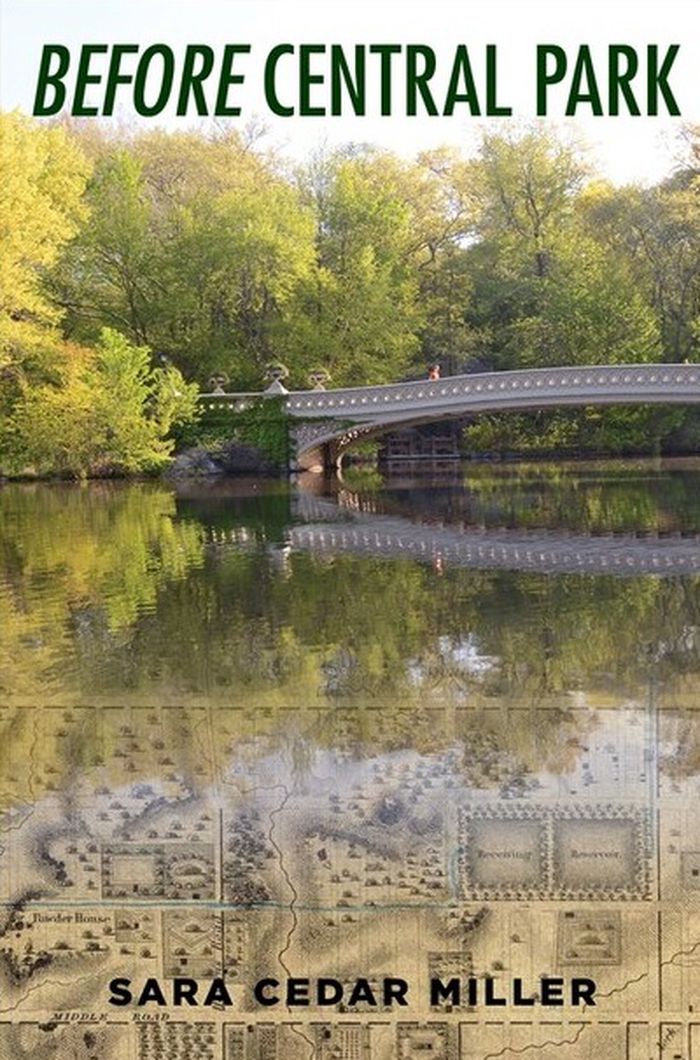
Before Central Park
Before Central Park
Actions:
Prix:
$40.00
(disponible sur commande)
Résumé:
With more than eight hundred sprawling green acres in the middle of one of the world's densest cities, Central Park is an urban masterpiece. Designed in the middle of the nineteenth century by the landscape architects Frederick Law Olmsted and Calvert Vaux, it is a model for city parks worldwide. But before it became Central Park, the land was the site of farms,(...)
Titre:
Before Central Park
Actions:
Prix:
$40.00
(disponible sur commande)
Résumé:
With more than eight hundred sprawling green acres in the middle of one of the world's densest cities, Central Park is an urban masterpiece. Designed in the middle of the nineteenth century by the landscape architects Frederick Law Olmsted and Calvert Vaux, it is a model for city parks worldwide. But before it became Central Park, the land was the site of farms, businesses, churches, wars, and burial grounds--and home to many different kinds of New Yorkers. This book is the authoritative account of the place that would become Central Park. From the first Dutch family to settle on the land through the political crusade to create America's first major urban park, Sara Cedar Miller chronicles two and a half centuries of history. She tells the stories of Indigenous hunters, enslaved people and enslavers, American patriots and British loyalists, the Black landowners of Seneca Village, Irish pig farmers, tavern owners, Catholic sisters, Jewish protesters, and more. Miller unveils a British fortification and camp during the Revolutionary War, a suburban retreat from the yellow fever epidemics at the turn of the nineteenth century, and the properties that a group of free Black Americans used to secure their right to vote. Tales of political chicanery, real estate speculation, cons, and scams stand alongside democratic idealism, the striving of immigrants, and powerfully human lives. ''Before Central Park'' shows how much of the history of early America is still etched upon the landscapes of Central Park today.
Classification:
livres
livres
Publication:
mai 2022
mai 2022
Sujet:
Théorie du paysage
Théorie du paysage
Classification:
livres
livres
Titre:
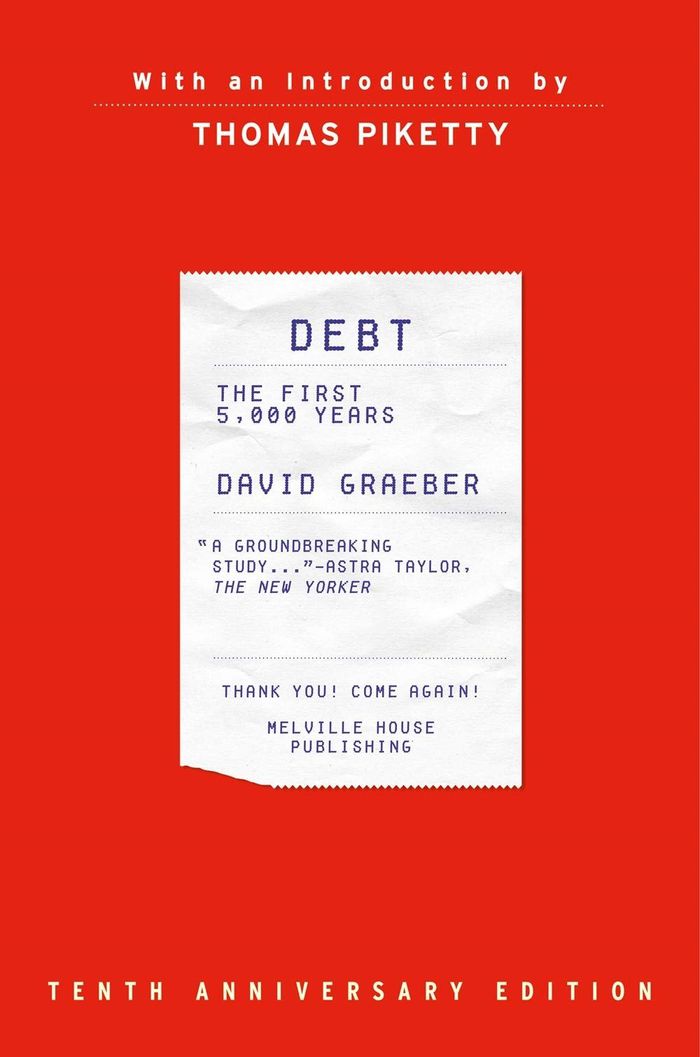
Debt: The first 5,000 years
Debt: The first 5,000 years
Actions:
Prix:
$29.99
(disponible sur commande)
Résumé:
Before there was money, there was debt. Every economics textbook says the same thing: Money was invented to replace onerous and complicated barter systems—to relieve ancient people from having to haul their goods to market. The problem with this version of history? There’s not a shred of evidence to support it. Here anthropologist David Graeber presents a stunning(...)
Titre:
Debt: The first 5,000 years
Actions:
Prix:
$29.99
(disponible sur commande)
Résumé:
Before there was money, there was debt. Every economics textbook says the same thing: Money was invented to replace onerous and complicated barter systems—to relieve ancient people from having to haul their goods to market. The problem with this version of history? There’s not a shred of evidence to support it. Here anthropologist David Graeber presents a stunning reversal of conventional wisdom. He shows that for more than 5,000 years, since the beginnings of the first agrarian empires, humans have used elaborate credit systems to buy and sell goods—that is, long before the invention of coins or cash. It is in this era, Graeber argues, that we also first encounter a society divided into debtors and creditors. Graeber shows that arguments about debt and debt forgiveness have been at the center of political debates from Italy to China, as well as sparking innumerable insurrections. He also brilliantly demonstrates that the language of the ancient works of law and religion (words like ''guilt,'' ''sin,'' and ''redemption'') derive in large part from ancient debates about debt, and shape even our most basic ideas of right and wrong. We are still fighting these battles today without knowing it. ''Debt: The first 5,000 years'' is a fascinating chronicle of this little known history—as well as how it has defined human history. It shows how debt has defined our human past, and what that means for our economic future.
Classification:
livres
livres
Publication:
octobre 2014
octobre 2014
Sujet:
Théorie/ philosophie
Théorie/ philosophie
Classification:
livres
livres
Actions:
Prix:
$41.00
(disponible sur commande)
Résumé:
Before there was money, there was debt. Every economics textbook says the same thing: Money was invented to replace onerous and complicated barter systems—to relieve ancient people from having to haul their goods to market. The problem with this version of history? There’s not a shred of evidence to support it. Here anthropologist David Graeber presents a stunning(...)
Titre:
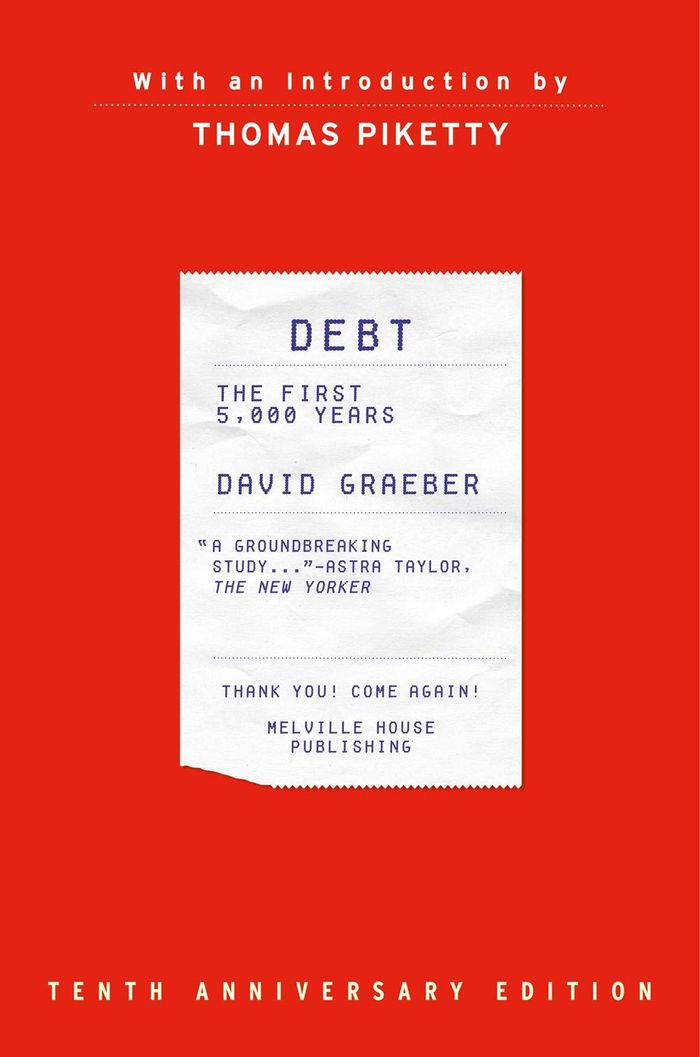
Debt: The first 5,000 years, updated and expanded
Actions:
Prix:
$41.00
(disponible sur commande)
Résumé:
Before there was money, there was debt. Every economics textbook says the same thing: Money was invented to replace onerous and complicated barter systems—to relieve ancient people from having to haul their goods to market. The problem with this version of history? There’s not a shred of evidence to support it. Here anthropologist David Graeber presents a stunning reversal of conventional wisdom. He shows that for more than 5,000 years, since the beginnings of the first agrarian empires, humans have used elaborate credit systems to buy and sell goods—that is, long before the invention of coins or cash. It is in this era, Graeber argues, that we also first encounter a society divided into debtors and creditors. Graeber shows that arguments about debt and debt forgiveness have been at the center of political debates from Italy to China, as well as sparking innumerable insurrections. He also brilliantly demonstrates that the language of the ancient works of law and religion (words like ''guilt,'' ''sin,'' and ''redemption'') derive in large part from ancient debates about debt, and shape even our most basic ideas of right and wrong. We are still fighting these battles today without knowing it. ''Debt: The first 5,000 years'' is a fascinating chronicle of this little known history—as well as how it has defined human history. It shows how debt has defined our human past, and what that means for our economic future.
Classification:
livres
livres
Publication:
juin 2021
juin 2021
Sujet:
Théorie/ philosophie
Théorie/ philosophie
Classification:
livres
livres
Actions:
Prix:
$32.95
(disponible sur commande)
Résumé:
Bay by the turn of the century. But in 1912, backed by some of the country’s leading financiers and industrialists, MIT officials purchased an undeveloped tract of land in Cambridge, launching a long and complex review of proposals for a new quadrangle. Based largely on the recommendation of John D. Rockefeller Jr., the commission was awarded to MIT and the École des(...)
Titre:
Designing MIT: Bosworth's new tech
Actions:
Prix:
$32.95
(disponible sur commande)
Résumé:
Bay by the turn of the century. But in 1912, backed by some of the country’s leading financiers and industrialists, MIT officials purchased an undeveloped tract of land in Cambridge, launching a long and complex review of proposals for a new quadrangle. Based largely on the recommendation of John D. Rockefeller Jr., the commission was awarded to MIT and the École des Beaux-Arts-trained architect William Welles Bosworth, known for his AT Building in Manhattan, and Kykuit, the Rockefeller mansion in Tarrytown, New York. Designing MIT is the first book to detail Bosworth’s challenges in the planning and construction of the Institute’s unique Cambridge campus. Beginning with an examination of the competing project proposals—from Steven Child, an emerging landscape designer and student of Frederick Law Olmstead; Desiré Despradelle, Chairman of the Department of Architecture at MIT and a leading Beaux-Arts stylist; Ralph Adams Cram, noted for his gothic West Point campus; and John Freeman, one of the country’s leading civil engineers—Mark M. Jarzombek provides a captivating cross-section of the architectural debates of the time. Though Bosworth’s considerable social and political finesse enabled him to land the commission and balance varied competing interests, he found his classically oriented vision challenged by engineer John Freeman, proponent of Frederick W. Taylor’s new principle of Scientific Management. However strained, the conflict ultimately resulted in a far more innovative design than either individual approach, employing new European concepts of industrialism, efficiency, and aesthetics in academic structures.
Classification:
livres
livres
Publication:
novembre 2004
novembre 2004
Classification:
livres
livres
Actions:
Exemplaires:
Description:
304 pages : illustrations (some color), plans ; 23 cm
Description:
304 pages : illustrations (some color), plans ; 23 cm
Auteur:
Sujet:
Publication:
Berlin : Wasmuth & Zohlen Verlag, [2022], ©2022
Berlin : Wasmuth & Zohlen Verlag, [2022], ©2022
Titre:
Verborgene Räume, verschwiegene Biografien : Schwule Architekten vom 18. bis zum 20.Jahrhundert = Hidden spaces, silent biographies : Gay Architects from the 18th to the 20th century / Wolfgang Voigt, Uwe Bresan, Hg./Ed.
Actions:
Exemplaires:
Description:
304 pages : illustrations (some color), plans ; 23 cm
Classification:
livres
livres
Publication:
Berlin : Wasmuth & Zohlen Verlag, [2022], ©2022
Berlin : Wasmuth & Zohlen Verlag, [2022], ©2022
Auteur:
Sujet:


