


11284 Résultats
Niveau de description archivistique:
Projet
Projet
Numéro de référence:
AP178.S1.1967.PR02
Description:
This project series documents the Monumento ao poeta António Nobre in Leça de Palmeira, Portugal. While the records were held in the office’s archives this project was assigned the number 27/60; in the past the office identified the project as number 117. The office assigned the date 1967 to this project. The project consisted of a sculpture located near the Boa Nova Tea house. The monument was a collaboration between Álvaro Siza and sculptor Barata Feyo. The bronze sculpture included feminine figures and poet António Nobre. It is important to note that another monument for António Nobre was built by Siza in 1980 (see project series AP178.S1.1980.PR04 in this fonds). Documenting this project are sketches, studies, topographic surveys, plans, drawings of lettering and details. Photographs, negatives, and slides document the site, model, inauguration and sculpture. Textual documentation includes a building program, notes and correspondence with the city of Matosinhos.
AP178.S1.1967.PR02
Description:
This project series documents the Monumento ao poeta António Nobre in Leça de Palmeira, Portugal. While the records were held in the office’s archives this project was assigned the number 27/60; in the past the office identified the project as number 117. The office assigned the date 1967 to this project. The project consisted of a sculpture located near the Boa Nova Tea house. The monument was a collaboration between Álvaro Siza and sculptor Barata Feyo. The bronze sculpture included feminine figures and poet António Nobre. It is important to note that another monument for António Nobre was built by Siza in 1980 (see project series AP178.S1.1980.PR04 in this fonds). Documenting this project are sketches, studies, topographic surveys, plans, drawings of lettering and details. Photographs, negatives, and slides document the site, model, inauguration and sculpture. Textual documentation includes a building program, notes and correspondence with the city of Matosinhos.
Personnes et institutions:
Date:
1967-1980
1967-1980
Titre:
Monumento ao poeta António Nobre [Monument to the poet António Nobre], Leça da Palmeira, Matosinhos, Portugal (1967)
Actions:
AP178.S1.1967.PR02
Description:
This project series documents the Monumento ao poeta António Nobre in Leça de Palmeira, Portugal. While the records were held in the office’s archives this project was assigned the number 27/60; in the past the office identified the project as number 117. The office assigned the date 1967 to this project. The project consisted of a sculpture located near the Boa Nova Tea house. The monument was a collaboration between Álvaro Siza and sculptor Barata Feyo. The bronze sculpture included feminine figures and poet António Nobre. It is important to note that another monument for António Nobre was built by Siza in 1980 (see project series AP178.S1.1980.PR04 in this fonds). Documenting this project are sketches, studies, topographic surveys, plans, drawings of lettering and details. Photographs, negatives, and slides document the site, model, inauguration and sculpture. Textual documentation includes a building program, notes and correspondence with the city of Matosinhos.
Monumento ao poeta António Nobre [Monument to the poet António Nobre], Leça da Palmeira, Matosinhos, Portugal (1967)
Actions:
AP178.S1.1967.PR02
Description:
This project series documents the Monumento ao poeta António Nobre in Leça de Palmeira, Portugal. While the records were held in the office’s archives this project was assigned the number 27/60; in the past the office identified the project as number 117. The office assigned the date 1967 to this project. The project consisted of a sculpture located near the Boa Nova Tea house. The monument was a collaboration between Álvaro Siza and sculptor Barata Feyo. The bronze sculpture included feminine figures and poet António Nobre. It is important to note that another monument for António Nobre was built by Siza in 1980 (see project series AP178.S1.1980.PR04 in this fonds). Documenting this project are sketches, studies, topographic surveys, plans, drawings of lettering and details. Photographs, negatives, and slides document the site, model, inauguration and sculpture. Textual documentation includes a building program, notes and correspondence with the city of Matosinhos.
Niveau de description archivistique:
Project
Project
Date:
1967-1980
1967-1980
Personnes et institutions:
Niveau de description archivistique:
Projet
Projet
Numéro de référence:
AP178.S1.1990.PR03
Description:
This project series documents the Urban design for Boulevard Brune, Cité de Jeunesse in Paris, France. While the records were held in the office’s archives this project was assigned the number 5/90. The office assigned the date 1990 to this project. This project consisted of a competition entry for the fourth and last phase of a social housing program for the young postmen of Paris. The competition was organized by the Ministère des Postes et des Télécommunications. The proposal for the Boulevard Brune building included four units; a school for mailmen (Edificio A), two housing buildings (Edificio B and C), and a community center (Edificio D). The program also mentioned a parking lot. Alvaro Siza was one of the three finalists selected but was not chosen for the project. Documenting this project are sketches, studies and site plans. Textual material includes project documentation, competition documentation, and correspondence. Photographs, photomontages and negatives document the project site.
AP178.S1.1990.PR03
Description:
This project series documents the Urban design for Boulevard Brune, Cité de Jeunesse in Paris, France. While the records were held in the office’s archives this project was assigned the number 5/90. The office assigned the date 1990 to this project. This project consisted of a competition entry for the fourth and last phase of a social housing program for the young postmen of Paris. The competition was organized by the Ministère des Postes et des Télécommunications. The proposal for the Boulevard Brune building included four units; a school for mailmen (Edificio A), two housing buildings (Edificio B and C), and a community center (Edificio D). The program also mentioned a parking lot. Alvaro Siza was one of the three finalists selected but was not chosen for the project. Documenting this project are sketches, studies and site plans. Textual material includes project documentation, competition documentation, and correspondence. Photographs, photomontages and negatives document the project site.
Personnes et institutions:
Date:
1983-1991
1983-1991
Titre:
Plano Urbanístico Boulevard Brune [Urban design for Boulevard Brune, Cité de Jeunesse], Paris, France (1990)
Actions:
AP178.S1.1990.PR03
Description:
This project series documents the Urban design for Boulevard Brune, Cité de Jeunesse in Paris, France. While the records were held in the office’s archives this project was assigned the number 5/90. The office assigned the date 1990 to this project. This project consisted of a competition entry for the fourth and last phase of a social housing program for the young postmen of Paris. The competition was organized by the Ministère des Postes et des Télécommunications. The proposal for the Boulevard Brune building included four units; a school for mailmen (Edificio A), two housing buildings (Edificio B and C), and a community center (Edificio D). The program also mentioned a parking lot. Alvaro Siza was one of the three finalists selected but was not chosen for the project. Documenting this project are sketches, studies and site plans. Textual material includes project documentation, competition documentation, and correspondence. Photographs, photomontages and negatives document the project site.
Plano Urbanístico Boulevard Brune [Urban design for Boulevard Brune, Cité de Jeunesse], Paris, France (1990)
Actions:
AP178.S1.1990.PR03
Description:
This project series documents the Urban design for Boulevard Brune, Cité de Jeunesse in Paris, France. While the records were held in the office’s archives this project was assigned the number 5/90. The office assigned the date 1990 to this project. This project consisted of a competition entry for the fourth and last phase of a social housing program for the young postmen of Paris. The competition was organized by the Ministère des Postes et des Télécommunications. The proposal for the Boulevard Brune building included four units; a school for mailmen (Edificio A), two housing buildings (Edificio B and C), and a community center (Edificio D). The program also mentioned a parking lot. Alvaro Siza was one of the three finalists selected but was not chosen for the project. Documenting this project are sketches, studies and site plans. Textual material includes project documentation, competition documentation, and correspondence. Photographs, photomontages and negatives document the project site.
Niveau de description archivistique:
Project
Project
Date:
1983-1991
1983-1991
Personnes et institutions:
Niveau de description archivistique:
Projet
Projet
Numéro de référence:
AP178.S1.2002.PR03
Description:
This project series documents the Centro José Saramago in Granada, Spain, which in the end, was not built by Álvaro Siza. While the records were held in the office's archives, this project was assigned the number 46/00. The office assigned the date 2002 to this project. This project was assigned to Siza by the Board of Fundação José Saramago, which was formed by the Ayuntamiento de Castril [City Council], Diputacion Provincial de Granada [Provincial Council] and the University of Granada. The documentation informs us that the location of the building was subject to several changes. According to the documentation the City Council commissioned another architect associated with the Diputacion Provincial de Granada. Documenting this project are studies, plans and a model. Photographic material includes photographs of the project sites. Textual material includes project documentation, contracts, information about the Fundação José Saramago, and correpondence with Fundação José Saramago and Ayuntamiento de Castril.
AP178.S1.2002.PR03
Description:
This project series documents the Centro José Saramago in Granada, Spain, which in the end, was not built by Álvaro Siza. While the records were held in the office's archives, this project was assigned the number 46/00. The office assigned the date 2002 to this project. This project was assigned to Siza by the Board of Fundação José Saramago, which was formed by the Ayuntamiento de Castril [City Council], Diputacion Provincial de Granada [Provincial Council] and the University of Granada. The documentation informs us that the location of the building was subject to several changes. According to the documentation the City Council commissioned another architect associated with the Diputacion Provincial de Granada. Documenting this project are studies, plans and a model. Photographic material includes photographs of the project sites. Textual material includes project documentation, contracts, information about the Fundação José Saramago, and correpondence with Fundação José Saramago and Ayuntamiento de Castril.
Personnes et institutions:
Date:
circa 2002-2006
circa 2002-2006
Titre:
Centro José Saramago [José Saramago Centre], Granada, Spain (2002)
Actions:
AP178.S1.2002.PR03
Description:
This project series documents the Centro José Saramago in Granada, Spain, which in the end, was not built by Álvaro Siza. While the records were held in the office's archives, this project was assigned the number 46/00. The office assigned the date 2002 to this project. This project was assigned to Siza by the Board of Fundação José Saramago, which was formed by the Ayuntamiento de Castril [City Council], Diputacion Provincial de Granada [Provincial Council] and the University of Granada. The documentation informs us that the location of the building was subject to several changes. According to the documentation the City Council commissioned another architect associated with the Diputacion Provincial de Granada. Documenting this project are studies, plans and a model. Photographic material includes photographs of the project sites. Textual material includes project documentation, contracts, information about the Fundação José Saramago, and correpondence with Fundação José Saramago and Ayuntamiento de Castril.
Centro José Saramago [José Saramago Centre], Granada, Spain (2002)
Actions:
AP178.S1.2002.PR03
Description:
This project series documents the Centro José Saramago in Granada, Spain, which in the end, was not built by Álvaro Siza. While the records were held in the office's archives, this project was assigned the number 46/00. The office assigned the date 2002 to this project. This project was assigned to Siza by the Board of Fundação José Saramago, which was formed by the Ayuntamiento de Castril [City Council], Diputacion Provincial de Granada [Provincial Council] and the University of Granada. The documentation informs us that the location of the building was subject to several changes. According to the documentation the City Council commissioned another architect associated with the Diputacion Provincial de Granada. Documenting this project are studies, plans and a model. Photographic material includes photographs of the project sites. Textual material includes project documentation, contracts, information about the Fundação José Saramago, and correpondence with Fundação José Saramago and Ayuntamiento de Castril.
Niveau de description archivistique:
Project
Project
Date:
circa 2002-2006
circa 2002-2006
Personnes et institutions:
Classification:
expositions
expositions
Actions:
Description:
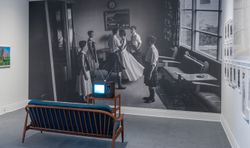
À une époque où l’empreinte de l’homme sur la planète atteint un niveau inégalé, certains pays se distinguent par leur situation enviable et la complexité de leur relation au territoire. Les histoires entourant le Canada sont intimement liées à la découverte et à l’appropriation de ressources naturelles à la fois importantes et diversifiées, ainsi qu’à des points de vue(...)
À une époque où l’empreinte de l’homme sur la planète atteint un niveau inégalé, certains pays se distinguent par leur situation enviable et la complexité de leur relation au territoire. Les histoires entourant le Canada sont intimement liées à la découverte et à l’appropriation de ressources naturelles à la fois importantes et diversifiées, ainsi qu’à des points de vue(...)
Date:
16 novembre 2016 au 9 avril 2017
16 novembre 2016 au 9 avril 2017
Titre:
Le temps presse
Actions:
Description:
À une époque où l’empreinte de l’homme sur la planète atteint un niveau inégalé, certains pays se distinguent par leur situation enviable et la complexité de leur relation au territoire. Les histoires entourant le Canada sont intimement liées à la découverte et à l’appropriation de ressources naturelles à la fois importantes et diversifiées, ainsi qu’à des points de vue(...)
Le temps presse
Actions:
Description:
À une époque où l’empreinte de l’homme sur la planète atteint un niveau inégalé, certains pays se distinguent par leur situation enviable et la complexité de leur relation au territoire. Les histoires entourant le Canada sont intimement liées à la découverte et à l’appropriation de ressources naturelles à la fois importantes et diversifiées, ainsi qu’à des points de vue(...)
Classification:
expositions
expositions
Date:
16 novembre 2016 au
9 avril 2017
16 novembre 2016 au
9 avril 2017
Niveau de description archivistique:
Série(s)
Série(s)
Titre:
Gordon Matta-Clark's Artwork
Gordon Matta-Clark's Artwork
Numéro de référence:
CP138.S5
Description:
Series consists of original drawings, sculpture, and photographs, both preliminary studies for realized and unrealized projects and finished works of art as well as later archival copies of photographs made from the original negatives. Works date from 1959 to 1978.
CP138.S5
Description:
Series consists of original drawings, sculpture, and photographs, both preliminary studies for realized and unrealized projects and finished works of art as well as later archival copies of photographs made from the original negatives. Works date from 1959 to 1978.
Personnes et institutions:
Date:
[between 1959 and 1978, predominant 1970-1978]
[between 1959 and 1978, predominant 1970-1978]
Titre:
Gordon Matta-Clark's Artwork
Actions:
CP138.S5
Description:
Series consists of original drawings, sculpture, and photographs, both preliminary studies for realized and unrealized projects and finished works of art as well as later archival copies of photographs made from the original negatives. Works date from 1959 to 1978.
Gordon Matta-Clark's Artwork
Actions:
CP138.S5
Description:
Series consists of original drawings, sculpture, and photographs, both preliminary studies for realized and unrealized projects and finished works of art as well as later archival copies of photographs made from the original negatives. Works date from 1959 to 1978.
Niveau de description archivistique:
Series 5
Series 5
Date:
[between 1959 and 1978, predominant 1970-1978]
[between 1959 and 1978, predominant 1970-1978]
Personnes et institutions:
Niveau de description archivistique:
Projet
Projet
Numéro de référence:
AP178.S1.1983.PR01
Description:
This project series documents the Reconstrução da Igreja Madre de Salemi, the Piazza Alicia and the Recuperação do Plano Cascio in Salemi, Italy. While the records were held in the office’s archives this project was assigned the number [7]/80. The office assigned the dates 1983-1999 for this project. The reconstruction of the mother Church of Salemi, the construction of the Piazza Alicia, and the rehabilitation of Plano Cascio was part of an urban renewal for Salemi. In 1968, an earthquake destroyed the Igreja Madre de Salemi and damaged the area. The church was never rebuilt. In 1982, Roberto Collovà and Siza we're chosen by the Curia of Mazara del Vallo for the reconstruction of the church. Instead of rebuilding it, the architects decided to use the ruins to create something new that would represent the spirit of the church and the memory of the earthquake. Documenting this project are plans, project documentation, and correspondence. Photographic materials document construction work and the model.
AP178.S1.1983.PR01
Description:
This project series documents the Reconstrução da Igreja Madre de Salemi, the Piazza Alicia and the Recuperação do Plano Cascio in Salemi, Italy. While the records were held in the office’s archives this project was assigned the number [7]/80. The office assigned the dates 1983-1999 for this project. The reconstruction of the mother Church of Salemi, the construction of the Piazza Alicia, and the rehabilitation of Plano Cascio was part of an urban renewal for Salemi. In 1968, an earthquake destroyed the Igreja Madre de Salemi and damaged the area. The church was never rebuilt. In 1982, Roberto Collovà and Siza we're chosen by the Curia of Mazara del Vallo for the reconstruction of the church. Instead of rebuilding it, the architects decided to use the ruins to create something new that would represent the spirit of the church and the memory of the earthquake. Documenting this project are plans, project documentation, and correspondence. Photographic materials document construction work and the model.
Personnes et institutions:
Date:
1984-1992
1984-1992
Titre:
Reconstrução da Igreja Madre de Salemi [Reconstruction of the Mother Church of Salemi], Salemi, Italy (1983-1999)
Actions:
AP178.S1.1983.PR01
Description:
This project series documents the Reconstrução da Igreja Madre de Salemi, the Piazza Alicia and the Recuperação do Plano Cascio in Salemi, Italy. While the records were held in the office’s archives this project was assigned the number [7]/80. The office assigned the dates 1983-1999 for this project. The reconstruction of the mother Church of Salemi, the construction of the Piazza Alicia, and the rehabilitation of Plano Cascio was part of an urban renewal for Salemi. In 1968, an earthquake destroyed the Igreja Madre de Salemi and damaged the area. The church was never rebuilt. In 1982, Roberto Collovà and Siza we're chosen by the Curia of Mazara del Vallo for the reconstruction of the church. Instead of rebuilding it, the architects decided to use the ruins to create something new that would represent the spirit of the church and the memory of the earthquake. Documenting this project are plans, project documentation, and correspondence. Photographic materials document construction work and the model.
Reconstrução da Igreja Madre de Salemi [Reconstruction of the Mother Church of Salemi], Salemi, Italy (1983-1999)
Actions:
AP178.S1.1983.PR01
Description:
This project series documents the Reconstrução da Igreja Madre de Salemi, the Piazza Alicia and the Recuperação do Plano Cascio in Salemi, Italy. While the records were held in the office’s archives this project was assigned the number [7]/80. The office assigned the dates 1983-1999 for this project. The reconstruction of the mother Church of Salemi, the construction of the Piazza Alicia, and the rehabilitation of Plano Cascio was part of an urban renewal for Salemi. In 1968, an earthquake destroyed the Igreja Madre de Salemi and damaged the area. The church was never rebuilt. In 1982, Roberto Collovà and Siza we're chosen by the Curia of Mazara del Vallo for the reconstruction of the church. Instead of rebuilding it, the architects decided to use the ruins to create something new that would represent the spirit of the church and the memory of the earthquake. Documenting this project are plans, project documentation, and correspondence. Photographic materials document construction work and the model.
Niveau de description archivistique:
Project
Project
Date:
1984-1992
1984-1992
Personnes et institutions:
Niveau de description archivistique:
Projet
Projet
Numéro de référence:
AP178.S1.1995.PR06
Description:
This project series documents the Casa Pinto Sousa in Oeiras, Portugal. While the records were held in the office’s archives this project was assigned the number 62/90. The office assigned the date 1995 to this project. The project files document a proposed three-storey house in Alto Lagoal commissioned by Júlio Silva. The third floor included a garage, hall, guest room, staircase, and elevator. The second floor was surrounded by a patio and included a dressing room, living room, dining room, library, kitchen, pantry, and a service staircase as well as a swimming pool and an outdoor garden. The first floor included four bedrooms, a bathroom, and a laundry room. The exterior was supposed to be made of brick and calcareous stone, azuielo, and plaster. The house was not built. Documenting this project are sketches, studies, plans, and working drawings. Textual materials include project documentation, correspondence, and catalogues. Photographic materials document the model.
AP178.S1.1995.PR06
Description:
This project series documents the Casa Pinto Sousa in Oeiras, Portugal. While the records were held in the office’s archives this project was assigned the number 62/90. The office assigned the date 1995 to this project. The project files document a proposed three-storey house in Alto Lagoal commissioned by Júlio Silva. The third floor included a garage, hall, guest room, staircase, and elevator. The second floor was surrounded by a patio and included a dressing room, living room, dining room, library, kitchen, pantry, and a service staircase as well as a swimming pool and an outdoor garden. The first floor included four bedrooms, a bathroom, and a laundry room. The exterior was supposed to be made of brick and calcareous stone, azuielo, and plaster. The house was not built. Documenting this project are sketches, studies, plans, and working drawings. Textual materials include project documentation, correspondence, and catalogues. Photographic materials document the model.
Personnes et institutions:
Date:
circa 1993-2012
circa 1993-2012
Titre:
Casa Pinto Sousa [Pinto Sousa house], Oeiras, Portugal (1995)
Actions:
AP178.S1.1995.PR06
Description:
This project series documents the Casa Pinto Sousa in Oeiras, Portugal. While the records were held in the office’s archives this project was assigned the number 62/90. The office assigned the date 1995 to this project. The project files document a proposed three-storey house in Alto Lagoal commissioned by Júlio Silva. The third floor included a garage, hall, guest room, staircase, and elevator. The second floor was surrounded by a patio and included a dressing room, living room, dining room, library, kitchen, pantry, and a service staircase as well as a swimming pool and an outdoor garden. The first floor included four bedrooms, a bathroom, and a laundry room. The exterior was supposed to be made of brick and calcareous stone, azuielo, and plaster. The house was not built. Documenting this project are sketches, studies, plans, and working drawings. Textual materials include project documentation, correspondence, and catalogues. Photographic materials document the model.
Casa Pinto Sousa [Pinto Sousa house], Oeiras, Portugal (1995)
Actions:
AP178.S1.1995.PR06
Description:
This project series documents the Casa Pinto Sousa in Oeiras, Portugal. While the records were held in the office’s archives this project was assigned the number 62/90. The office assigned the date 1995 to this project. The project files document a proposed three-storey house in Alto Lagoal commissioned by Júlio Silva. The third floor included a garage, hall, guest room, staircase, and elevator. The second floor was surrounded by a patio and included a dressing room, living room, dining room, library, kitchen, pantry, and a service staircase as well as a swimming pool and an outdoor garden. The first floor included four bedrooms, a bathroom, and a laundry room. The exterior was supposed to be made of brick and calcareous stone, azuielo, and plaster. The house was not built. Documenting this project are sketches, studies, plans, and working drawings. Textual materials include project documentation, correspondence, and catalogues. Photographic materials document the model.
Niveau de description archivistique:
Project
Project
Date:
circa 1993-2012
circa 1993-2012
Personnes et institutions:
Classification:
expositions
expositions
Titre:
Nouvelles entrées
Nouvelles entrées
Actions:
Description:
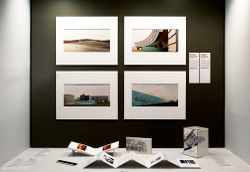
Une exposition de dons à la collection reçus à l’occasion du 80e anniversaire de son directeur fondateur, Phyllis Lambert, Nouvelles entrées comprend des oeuvres originales de photographes et artistes réputés, maniant le langage de la photographie, tels Dieter Appelt, Robert Burley, Edward Burtynsky, Giovanni Chiaramonte, Thomas Florschuetz, John Gossage, Gordon(...)
Une exposition de dons à la collection reçus à l’occasion du 80e anniversaire de son directeur fondateur, Phyllis Lambert, Nouvelles entrées comprend des oeuvres originales de photographes et artistes réputés, maniant le langage de la photographie, tels Dieter Appelt, Robert Burley, Edward Burtynsky, Giovanni Chiaramonte, Thomas Florschuetz, John Gossage, Gordon(...)
Localisation:
Vitrines
Vitrines
Date:
24 janvier 2008 au 23 mars 2008
24 janvier 2008 au 23 mars 2008
Titre:
Nouvelles entrées
Actions:
Description:
Une exposition de dons à la collection reçus à l’occasion du 80e anniversaire de son directeur fondateur, Phyllis Lambert, Nouvelles entrées comprend des oeuvres originales de photographes et artistes réputés, maniant le langage de la photographie, tels Dieter Appelt, Robert Burley, Edward Burtynsky, Giovanni Chiaramonte, Thomas Florschuetz, John Gossage, Gordon(...)
Nouvelles entrées
Actions:
Description:
Une exposition de dons à la collection reçus à l’occasion du 80e anniversaire de son directeur fondateur, Phyllis Lambert, Nouvelles entrées comprend des oeuvres originales de photographes et artistes réputés, maniant le langage de la photographie, tels Dieter Appelt, Robert Burley, Edward Burtynsky, Giovanni Chiaramonte, Thomas Florschuetz, John Gossage, Gordon(...)
Classification:
expositions
expositions
Date:
24 janvier 2008 au
23 mars 2008
24 janvier 2008 au
23 mars 2008
Localisation:
Vitrines
Vitrines
Niveau de description archivistique:
Projet
Projet
Numéro de référence:
AP178.S1.1963.PR01
Description:
This project series documents the Casa Rui Feijó house in Caminha, Portugal. While the records were held in the office’s archives this project was assigned the number 11/60. In the past the office identified the project as number 108. The office assigned the date 1963 to this project. Drawings suggest an L-shaped, single-storey building. This project was a vacation house with three bedrooms, a bathroom, kitchen, living-room, service bedroom, exterior annex, garage, lounge and terrace. The project was developed for the client Rui Feijó, however work on the project was halted in its prelimary phase. Siza used this prelimiary work to develop his submission for his CODA (Concurso para a Obtenção do Diploma de Arquitecto), which is also documented in this fonds (see project series AP178.S1.1965.PR01). Documenting this project are sketches, plans, elevations and details, as well as correspondence with the city of Caminha and competition documentation.
AP178.S1.1963.PR01
Description:
This project series documents the Casa Rui Feijó house in Caminha, Portugal. While the records were held in the office’s archives this project was assigned the number 11/60. In the past the office identified the project as number 108. The office assigned the date 1963 to this project. Drawings suggest an L-shaped, single-storey building. This project was a vacation house with three bedrooms, a bathroom, kitchen, living-room, service bedroom, exterior annex, garage, lounge and terrace. The project was developed for the client Rui Feijó, however work on the project was halted in its prelimary phase. Siza used this prelimiary work to develop his submission for his CODA (Concurso para a Obtenção do Diploma de Arquitecto), which is also documented in this fonds (see project series AP178.S1.1965.PR01). Documenting this project are sketches, plans, elevations and details, as well as correspondence with the city of Caminha and competition documentation.
Personnes et institutions:
Date:
1963-1965
1963-1965
Titre:
Casa Rui Feijó [Rui Feijó house], Moledo do Minho, Caminha, Portugal (1963)
Actions:
AP178.S1.1963.PR01
Description:
This project series documents the Casa Rui Feijó house in Caminha, Portugal. While the records were held in the office’s archives this project was assigned the number 11/60. In the past the office identified the project as number 108. The office assigned the date 1963 to this project. Drawings suggest an L-shaped, single-storey building. This project was a vacation house with three bedrooms, a bathroom, kitchen, living-room, service bedroom, exterior annex, garage, lounge and terrace. The project was developed for the client Rui Feijó, however work on the project was halted in its prelimary phase. Siza used this prelimiary work to develop his submission for his CODA (Concurso para a Obtenção do Diploma de Arquitecto), which is also documented in this fonds (see project series AP178.S1.1965.PR01). Documenting this project are sketches, plans, elevations and details, as well as correspondence with the city of Caminha and competition documentation.
Casa Rui Feijó [Rui Feijó house], Moledo do Minho, Caminha, Portugal (1963)
Actions:
AP178.S1.1963.PR01
Description:
This project series documents the Casa Rui Feijó house in Caminha, Portugal. While the records were held in the office’s archives this project was assigned the number 11/60. In the past the office identified the project as number 108. The office assigned the date 1963 to this project. Drawings suggest an L-shaped, single-storey building. This project was a vacation house with three bedrooms, a bathroom, kitchen, living-room, service bedroom, exterior annex, garage, lounge and terrace. The project was developed for the client Rui Feijó, however work on the project was halted in its prelimary phase. Siza used this prelimiary work to develop his submission for his CODA (Concurso para a Obtenção do Diploma de Arquitecto), which is also documented in this fonds (see project series AP178.S1.1965.PR01). Documenting this project are sketches, plans, elevations and details, as well as correspondence with the city of Caminha and competition documentation.
Niveau de description archivistique:
Project
Project
Date:
1963-1965
1963-1965
Personnes et institutions:
Niveau de description archivistique:
Projet
Projet
Numéro de référence:
AP178.S1.1993.PR07
Description:
This project series documents the Faculdade de Ciências da Informação in Santiago de Compostela, Spain. While the records were held in the office’s archives this project was assigned the number 41/90. The office assigned the date 1993 to this project. The Faculty is located on the north campus of the University of Santiago de Compostela, on the Burgo das Nacións Avenue. The building is divided in two sections, one with three stories and the other with two stories. The upper floor is for nine amphitheater classrooms and the lower floors are for the media laboratories and studios. The building also includes an atrium, a library, studios, and media laboratories. The project was realized and is now named the Facultad de Ciencias de la Comunicación. Documenting this project are sketches, studies, working drawings, structural drawings, technical drawings, and mechanical drawings. Textual material includes project documentation and correspondence. Photographic material documents the models, construction work, the built project, and furniture.
AP178.S1.1993.PR07
Description:
This project series documents the Faculdade de Ciências da Informação in Santiago de Compostela, Spain. While the records were held in the office’s archives this project was assigned the number 41/90. The office assigned the date 1993 to this project. The Faculty is located on the north campus of the University of Santiago de Compostela, on the Burgo das Nacións Avenue. The building is divided in two sections, one with three stories and the other with two stories. The upper floor is for nine amphitheater classrooms and the lower floors are for the media laboratories and studios. The building also includes an atrium, a library, studios, and media laboratories. The project was realized and is now named the Facultad de Ciencias de la Comunicación. Documenting this project are sketches, studies, working drawings, structural drawings, technical drawings, and mechanical drawings. Textual material includes project documentation and correspondence. Photographic material documents the models, construction work, the built project, and furniture.
Personnes et institutions:
Date:
1993-2000
1993-2000
Titre:
Faculdade de Ciências da Informação [Faculty of Communication Sciences], Santiago de Compostela, Spain (1993)
Actions:
AP178.S1.1993.PR07
Description:
This project series documents the Faculdade de Ciências da Informação in Santiago de Compostela, Spain. While the records were held in the office’s archives this project was assigned the number 41/90. The office assigned the date 1993 to this project. The Faculty is located on the north campus of the University of Santiago de Compostela, on the Burgo das Nacións Avenue. The building is divided in two sections, one with three stories and the other with two stories. The upper floor is for nine amphitheater classrooms and the lower floors are for the media laboratories and studios. The building also includes an atrium, a library, studios, and media laboratories. The project was realized and is now named the Facultad de Ciencias de la Comunicación. Documenting this project are sketches, studies, working drawings, structural drawings, technical drawings, and mechanical drawings. Textual material includes project documentation and correspondence. Photographic material documents the models, construction work, the built project, and furniture.
Faculdade de Ciências da Informação [Faculty of Communication Sciences], Santiago de Compostela, Spain (1993)
Actions:
AP178.S1.1993.PR07
Description:
This project series documents the Faculdade de Ciências da Informação in Santiago de Compostela, Spain. While the records were held in the office’s archives this project was assigned the number 41/90. The office assigned the date 1993 to this project. The Faculty is located on the north campus of the University of Santiago de Compostela, on the Burgo das Nacións Avenue. The building is divided in two sections, one with three stories and the other with two stories. The upper floor is for nine amphitheater classrooms and the lower floors are for the media laboratories and studios. The building also includes an atrium, a library, studios, and media laboratories. The project was realized and is now named the Facultad de Ciencias de la Comunicación. Documenting this project are sketches, studies, working drawings, structural drawings, technical drawings, and mechanical drawings. Textual material includes project documentation and correspondence. Photographic material documents the models, construction work, the built project, and furniture.
Niveau de description archivistique:
Project
Project
Date:
1993-2000
1993-2000
Personnes et institutions:


