


5707 Résultats
Classification:
événements
événements
Titre:
L'enseignement de... Nairobi
L'enseignement de... Nairobi
Actions:
Description:
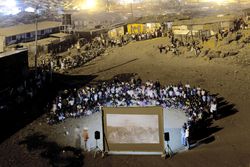
Le photographe documentaire et d’architecture Filippo Romano présente son étude en cours de l’explosion actuelle des bidonvilles de Nairobi. La ville est représentée par les nombreux portraits de résidents, d’ouvriers ou de communautés qu’il a capturés, démontrant comment l’environnement bâti façonne les cultures urbaines locales. La série L’enseignement de… s’inspire(...)
Le photographe documentaire et d’architecture Filippo Romano présente son étude en cours de l’explosion actuelle des bidonvilles de Nairobi. La ville est représentée par les nombreux portraits de résidents, d’ouvriers ou de communautés qu’il a capturés, démontrant comment l’environnement bâti façonne les cultures urbaines locales. La série L’enseignement de… s’inspire(...)
Localisation:
Théâtre Paul-Desmarais
Théâtre Paul-Desmarais
Date:
9 octobre 2014 , 18h
9 octobre 2014 , 18h
Titre:
L'enseignement de... Nairobi
Actions:
Description:
Le photographe documentaire et d’architecture Filippo Romano présente son étude en cours de l’explosion actuelle des bidonvilles de Nairobi. La ville est représentée par les nombreux portraits de résidents, d’ouvriers ou de communautés qu’il a capturés, démontrant comment l’environnement bâti façonne les cultures urbaines locales. La série L’enseignement de… s’inspire(...)
L'enseignement de... Nairobi
Actions:
Description:
Le photographe documentaire et d’architecture Filippo Romano présente son étude en cours de l’explosion actuelle des bidonvilles de Nairobi. La ville est représentée par les nombreux portraits de résidents, d’ouvriers ou de communautés qu’il a capturés, démontrant comment l’environnement bâti façonne les cultures urbaines locales. La série L’enseignement de… s’inspire(...)
Classification:
événements
événements
Date:
9 octobre 2014
18h
9 octobre 2014
18h
Localisation:
Théâtre Paul-Desmarais
Théâtre Paul-Desmarais
Classification:
événements
événements
Titre:
Renouveler notre perspective
Catalyser les savoirs basés sur le lieu pour un avenir holistique
Renouveler notre perspective
Catalyser les savoirs basés sur le lieu pour un avenir holistique
Actions:
Localisation:
Maison Shaughnessy, CCA Mot(s)-clé(s):
Design autochtone, pratiques basées sur le lieu, connaissances basées sur le lieu, pédagogie, environnement, crise climatique, apprentissage sur le terrain
Maison Shaughnessy, CCA Mot(s)-clé(s):
Design autochtone, pratiques basées sur le lieu, connaissances basées sur le lieu, pédagogie, environnement, crise climatique, apprentissage sur le terrain
Date:
24 février 2024, 14h à 15h30
24 février 2024, 14h à 15h30
Classification:
événements
événements
Date:
24 février 2024
14h à 15h30
24 février 2024
14h à 15h30
Localisation:
Maison Shaughnessy, CCA Mot(s)-clé(s):
Design autochtone, pratiques basées sur le lieu, connaissances basées sur le lieu, pédagogie, environnement, crise climatique, apprentissage sur le terrain
Maison Shaughnessy, CCA Mot(s)-clé(s):
Design autochtone, pratiques basées sur le lieu, connaissances basées sur le lieu, pédagogie, environnement, crise climatique, apprentissage sur le terrain
Niveau de description archivistique:
Série(s)
Série(s)
Titre:
Professional papers
Professional papers
Numéro de référence:
AP206.S3
Description:
The Professional papers series, circa 1950-2008, records the professional activities of Aditya Prakash throughout his career up until his death in 2008. His work in architecture, art, photography, academia and theatre are documented through textual records, drawings, photographic materials, ephemera, books, serials and sound recordings. The earliest materials in this series show Prakash’s interest in architectural photography early in his career through photographs, slides, and negatives taken by him. These materials, dating from before 1970, show most prominently his projects, people, villages and cityscapes. Materials dating from after 1968 show Prakash’s move into academia and his solo architectural career. During this time, the records document Prakash’s research interests on subjects such as urbanization, Chandigarh, the Modular and the environment, through drawings, newspaper articles, government and committee reports, correspondence and presentation materials. Likewise, his teaching is recorded through overhead transparencies, drawings and notes. The series also shows Prakash’s involvement in the professional community, including event photographs, correspondence and records documenting conferences, events and his discussion group Our Get Togethers. Correspondence with architect Charles Correa and frequent letters between Prakash and writer Mulk Raj Anand are of note here. Apart from his architectural career, Prakash’s work as a modern artist is well recorded through drawings, sketchbooks, and photographic reproductions of his art, mostly dating from after 1980. His interest in art as well as his community involvement are documented through exhibition ephemera, correspondence, and exhibition reviews and writings on his artwork. His role as the president of the Lalit Kala Akademi is also documented through publications, event photographs and correspondence. Finally, Prakash’s involvement in theatre, specifically with his amateur theatre troop Abhinet, is captured through scripts, photographs of performances and play reviews.
AP206.S3
Description:
The Professional papers series, circa 1950-2008, records the professional activities of Aditya Prakash throughout his career up until his death in 2008. His work in architecture, art, photography, academia and theatre are documented through textual records, drawings, photographic materials, ephemera, books, serials and sound recordings. The earliest materials in this series show Prakash’s interest in architectural photography early in his career through photographs, slides, and negatives taken by him. These materials, dating from before 1970, show most prominently his projects, people, villages and cityscapes. Materials dating from after 1968 show Prakash’s move into academia and his solo architectural career. During this time, the records document Prakash’s research interests on subjects such as urbanization, Chandigarh, the Modular and the environment, through drawings, newspaper articles, government and committee reports, correspondence and presentation materials. Likewise, his teaching is recorded through overhead transparencies, drawings and notes. The series also shows Prakash’s involvement in the professional community, including event photographs, correspondence and records documenting conferences, events and his discussion group Our Get Togethers. Correspondence with architect Charles Correa and frequent letters between Prakash and writer Mulk Raj Anand are of note here. Apart from his architectural career, Prakash’s work as a modern artist is well recorded through drawings, sketchbooks, and photographic reproductions of his art, mostly dating from after 1980. His interest in art as well as his community involvement are documented through exhibition ephemera, correspondence, and exhibition reviews and writings on his artwork. His role as the president of the Lalit Kala Akademi is also documented through publications, event photographs and correspondence. Finally, Prakash’s involvement in theatre, specifically with his amateur theatre troop Abhinet, is captured through scripts, photographs of performances and play reviews.
Personnes et institutions:
Date:
circa 1950-2008
circa 1950-2008
Titre:
Professional papers
Actions:
AP206.S3
Description:
The Professional papers series, circa 1950-2008, records the professional activities of Aditya Prakash throughout his career up until his death in 2008. His work in architecture, art, photography, academia and theatre are documented through textual records, drawings, photographic materials, ephemera, books, serials and sound recordings. The earliest materials in this series show Prakash’s interest in architectural photography early in his career through photographs, slides, and negatives taken by him. These materials, dating from before 1970, show most prominently his projects, people, villages and cityscapes. Materials dating from after 1968 show Prakash’s move into academia and his solo architectural career. During this time, the records document Prakash’s research interests on subjects such as urbanization, Chandigarh, the Modular and the environment, through drawings, newspaper articles, government and committee reports, correspondence and presentation materials. Likewise, his teaching is recorded through overhead transparencies, drawings and notes. The series also shows Prakash’s involvement in the professional community, including event photographs, correspondence and records documenting conferences, events and his discussion group Our Get Togethers. Correspondence with architect Charles Correa and frequent letters between Prakash and writer Mulk Raj Anand are of note here. Apart from his architectural career, Prakash’s work as a modern artist is well recorded through drawings, sketchbooks, and photographic reproductions of his art, mostly dating from after 1980. His interest in art as well as his community involvement are documented through exhibition ephemera, correspondence, and exhibition reviews and writings on his artwork. His role as the president of the Lalit Kala Akademi is also documented through publications, event photographs and correspondence. Finally, Prakash’s involvement in theatre, specifically with his amateur theatre troop Abhinet, is captured through scripts, photographs of performances and play reviews.
Professional papers
Actions:
AP206.S3
Description:
The Professional papers series, circa 1950-2008, records the professional activities of Aditya Prakash throughout his career up until his death in 2008. His work in architecture, art, photography, academia and theatre are documented through textual records, drawings, photographic materials, ephemera, books, serials and sound recordings. The earliest materials in this series show Prakash’s interest in architectural photography early in his career through photographs, slides, and negatives taken by him. These materials, dating from before 1970, show most prominently his projects, people, villages and cityscapes. Materials dating from after 1968 show Prakash’s move into academia and his solo architectural career. During this time, the records document Prakash’s research interests on subjects such as urbanization, Chandigarh, the Modular and the environment, through drawings, newspaper articles, government and committee reports, correspondence and presentation materials. Likewise, his teaching is recorded through overhead transparencies, drawings and notes. The series also shows Prakash’s involvement in the professional community, including event photographs, correspondence and records documenting conferences, events and his discussion group Our Get Togethers. Correspondence with architect Charles Correa and frequent letters between Prakash and writer Mulk Raj Anand are of note here. Apart from his architectural career, Prakash’s work as a modern artist is well recorded through drawings, sketchbooks, and photographic reproductions of his art, mostly dating from after 1980. His interest in art as well as his community involvement are documented through exhibition ephemera, correspondence, and exhibition reviews and writings on his artwork. His role as the president of the Lalit Kala Akademi is also documented through publications, event photographs and correspondence. Finally, Prakash’s involvement in theatre, specifically with his amateur theatre troop Abhinet, is captured through scripts, photographs of performances and play reviews.
Niveau de description archivistique:
Series
Series
Date:
circa 1950-2008
circa 1950-2008
Personnes et institutions:
Classification:
expositions
expositions
Actions:
Description:
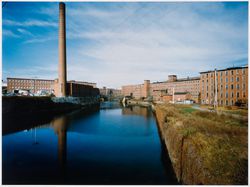
Pendant trois ans, Serge Hambourg a pris plus de 400 photographies de manufactures historiques de la Nouvelle-Angleterre commandées par le CCA. Ces formes architecturales, représentées dans leur environnement, mettent en valeur la beauté austère des intérieurs et des extérieurs. Les photos tracent l’évolution de ce type de bâtiment. Ces images montrent des structures de(...)
Pendant trois ans, Serge Hambourg a pris plus de 400 photographies de manufactures historiques de la Nouvelle-Angleterre commandées par le CCA. Ces formes architecturales, représentées dans leur environnement, mettent en valeur la beauté austère des intérieurs et des extérieurs. Les photos tracent l’évolution de ce type de bâtiment. Ces images montrent des structures de(...)
Localisation:
Antichambre de la salle octogonale
Antichambre de la salle octogonale
Date:
6 décembre 1989 au 11 février 1990
6 décembre 1989 au 11 février 1990
Titre:
Manufactures de la Nouvelle-Angleterre : photographies de Serge Hambourg
Actions:
Description:
Pendant trois ans, Serge Hambourg a pris plus de 400 photographies de manufactures historiques de la Nouvelle-Angleterre commandées par le CCA. Ces formes architecturales, représentées dans leur environnement, mettent en valeur la beauté austère des intérieurs et des extérieurs. Les photos tracent l’évolution de ce type de bâtiment. Ces images montrent des structures de(...)
Manufactures de la Nouvelle-Angleterre : photographies de Serge Hambourg
Actions:
Description:
Pendant trois ans, Serge Hambourg a pris plus de 400 photographies de manufactures historiques de la Nouvelle-Angleterre commandées par le CCA. Ces formes architecturales, représentées dans leur environnement, mettent en valeur la beauté austère des intérieurs et des extérieurs. Les photos tracent l’évolution de ce type de bâtiment. Ces images montrent des structures de(...)
Classification:
expositions
expositions
Date:
6 décembre 1989 au
11 février 1990
6 décembre 1989 au
11 février 1990
Localisation:
Antichambre de la salle octogonale
Antichambre de la salle octogonale
Niveau de description archivistique:
Série(s)
Série(s)
Titre:
Architectural projects
Architectural projects
Numéro de référence:
AP166.S1
Description:
Series 1, Architectural Projects (1990-2012, predominant 1990-1996) contains files for seven projects developed by Shoei Yoh and the firm Shoei Yoh + Architects. Six of these projects were developed during the period 1990-1996 in Japan. The Galaxy Toyama Gymnasium in Imizu, Toyama Prefecture, Japan, is the most voluminous project file and is related to two other projects in the series—the Odawara Municipal Sports Complex and the Prospecta Toyama ’92 Observatory Tower. The Odawara Municipal Sports Complex and the Galaxy Toyama Gymnasium were developed at approximately the same time, and, for both projects, digital technology was used to calculate the dimensions of elements in a space frame roof structure. The Galaxy Toyama Gymnasium and the Prospecta Toyama ’92 Observatory Tower were both designed by Shoei Yoh for the 1st Japan Expo Toyama ’92 (JET ‘92) and each of the two project files contains some material related to the other. The Galaxy Toyama Gymnasium project contains CAD files related to the roof design, printouts from computer simulations of the roof, design drawings, presentation material, architectural and structural working drawings, models and textual records. The project file for the Odawara Municipal Sports Complex contains some design drawings--including printouts from computer simulations of the roof, proposal documents and some photographs of the site. The other built projects—the Prospecta Toyama ’92 Observatory Tower, the Glass Station, the Naiju Community Center and Nursery School, and the Uchino Community Center for Seniors and Children—are documented through drawings, models, and photographic material. The final project file in the series--a project for a tower in Taichung, Taiwan—is composed of a few presentation documents. Drawings in the series include hand drawings and printouts or photocopies of images created using digital design software. Apart from the CAD files related to the roof design for the Galaxy Toyama Gymnasium, digital material in the series is composed of still images in .jpg format related to the projects for the Odawara Municipal Sports Complex and the Galaxy Toyama Gymnasium. Some of the documents in .jpg format are duplicates of paper documents in the series.
AP166.S1
Description:
Series 1, Architectural Projects (1990-2012, predominant 1990-1996) contains files for seven projects developed by Shoei Yoh and the firm Shoei Yoh + Architects. Six of these projects were developed during the period 1990-1996 in Japan. The Galaxy Toyama Gymnasium in Imizu, Toyama Prefecture, Japan, is the most voluminous project file and is related to two other projects in the series—the Odawara Municipal Sports Complex and the Prospecta Toyama ’92 Observatory Tower. The Odawara Municipal Sports Complex and the Galaxy Toyama Gymnasium were developed at approximately the same time, and, for both projects, digital technology was used to calculate the dimensions of elements in a space frame roof structure. The Galaxy Toyama Gymnasium and the Prospecta Toyama ’92 Observatory Tower were both designed by Shoei Yoh for the 1st Japan Expo Toyama ’92 (JET ‘92) and each of the two project files contains some material related to the other. The Galaxy Toyama Gymnasium project contains CAD files related to the roof design, printouts from computer simulations of the roof, design drawings, presentation material, architectural and structural working drawings, models and textual records. The project file for the Odawara Municipal Sports Complex contains some design drawings--including printouts from computer simulations of the roof, proposal documents and some photographs of the site. The other built projects—the Prospecta Toyama ’92 Observatory Tower, the Glass Station, the Naiju Community Center and Nursery School, and the Uchino Community Center for Seniors and Children—are documented through drawings, models, and photographic material. The final project file in the series--a project for a tower in Taichung, Taiwan—is composed of a few presentation documents. Drawings in the series include hand drawings and printouts or photocopies of images created using digital design software. Apart from the CAD files related to the roof design for the Galaxy Toyama Gymnasium, digital material in the series is composed of still images in .jpg format related to the projects for the Odawara Municipal Sports Complex and the Galaxy Toyama Gymnasium. Some of the documents in .jpg format are duplicates of paper documents in the series.
Personnes et institutions:
Date:
1990-2012, predominant 1990-1996
1990-2012, predominant 1990-1996
Titre:
Architectural projects
Actions:
AP166.S1
Description:
Series 1, Architectural Projects (1990-2012, predominant 1990-1996) contains files for seven projects developed by Shoei Yoh and the firm Shoei Yoh + Architects. Six of these projects were developed during the period 1990-1996 in Japan. The Galaxy Toyama Gymnasium in Imizu, Toyama Prefecture, Japan, is the most voluminous project file and is related to two other projects in the series—the Odawara Municipal Sports Complex and the Prospecta Toyama ’92 Observatory Tower. The Odawara Municipal Sports Complex and the Galaxy Toyama Gymnasium were developed at approximately the same time, and, for both projects, digital technology was used to calculate the dimensions of elements in a space frame roof structure. The Galaxy Toyama Gymnasium and the Prospecta Toyama ’92 Observatory Tower were both designed by Shoei Yoh for the 1st Japan Expo Toyama ’92 (JET ‘92) and each of the two project files contains some material related to the other. The Galaxy Toyama Gymnasium project contains CAD files related to the roof design, printouts from computer simulations of the roof, design drawings, presentation material, architectural and structural working drawings, models and textual records. The project file for the Odawara Municipal Sports Complex contains some design drawings--including printouts from computer simulations of the roof, proposal documents and some photographs of the site. The other built projects—the Prospecta Toyama ’92 Observatory Tower, the Glass Station, the Naiju Community Center and Nursery School, and the Uchino Community Center for Seniors and Children—are documented through drawings, models, and photographic material. The final project file in the series--a project for a tower in Taichung, Taiwan—is composed of a few presentation documents. Drawings in the series include hand drawings and printouts or photocopies of images created using digital design software. Apart from the CAD files related to the roof design for the Galaxy Toyama Gymnasium, digital material in the series is composed of still images in .jpg format related to the projects for the Odawara Municipal Sports Complex and the Galaxy Toyama Gymnasium. Some of the documents in .jpg format are duplicates of paper documents in the series.
Architectural projects
Actions:
AP166.S1
Description:
Series 1, Architectural Projects (1990-2012, predominant 1990-1996) contains files for seven projects developed by Shoei Yoh and the firm Shoei Yoh + Architects. Six of these projects were developed during the period 1990-1996 in Japan. The Galaxy Toyama Gymnasium in Imizu, Toyama Prefecture, Japan, is the most voluminous project file and is related to two other projects in the series—the Odawara Municipal Sports Complex and the Prospecta Toyama ’92 Observatory Tower. The Odawara Municipal Sports Complex and the Galaxy Toyama Gymnasium were developed at approximately the same time, and, for both projects, digital technology was used to calculate the dimensions of elements in a space frame roof structure. The Galaxy Toyama Gymnasium and the Prospecta Toyama ’92 Observatory Tower were both designed by Shoei Yoh for the 1st Japan Expo Toyama ’92 (JET ‘92) and each of the two project files contains some material related to the other. The Galaxy Toyama Gymnasium project contains CAD files related to the roof design, printouts from computer simulations of the roof, design drawings, presentation material, architectural and structural working drawings, models and textual records. The project file for the Odawara Municipal Sports Complex contains some design drawings--including printouts from computer simulations of the roof, proposal documents and some photographs of the site. The other built projects—the Prospecta Toyama ’92 Observatory Tower, the Glass Station, the Naiju Community Center and Nursery School, and the Uchino Community Center for Seniors and Children—are documented through drawings, models, and photographic material. The final project file in the series--a project for a tower in Taichung, Taiwan—is composed of a few presentation documents. Drawings in the series include hand drawings and printouts or photocopies of images created using digital design software. Apart from the CAD files related to the roof design for the Galaxy Toyama Gymnasium, digital material in the series is composed of still images in .jpg format related to the projects for the Odawara Municipal Sports Complex and the Galaxy Toyama Gymnasium. Some of the documents in .jpg format are duplicates of paper documents in the series.
Niveau de description archivistique:
series
series
Date:
1990-2012, predominant 1990-1996
1990-2012, predominant 1990-1996
Personnes et institutions:
Classification:
articles
articles
Actions:
Publié:
3 novembre 2025
3 novembre 2025
Classification:
articles
articles
Publié:
3 novembre 2025
3 novembre 2025
Classification:
pages web
pages web
Titre:
Réseau de recherche du CCA
Réseau de recherche du CCA
Actions:
Résumé:
Les membres du Réseau font partie d’une communauté qui se réunira pour écouter, apprendre et échanger autour des questions de recherche qui leur sont importantes.
Titre:
Réseau de recherche du CCA
Actions:
Résumé:
Réseau de recherche du CCA
Actions:
Résumé:
Les membres du Réseau font partie d’une communauté qui se réunira pour écouter, apprendre et échanger autour des questions de recherche qui leur sont importantes.
Classification:
pages web
pages web
Classification:
articles
articles
Titre:
Narration en images
Narration en images
Actions:
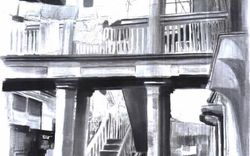
Warebi Gabriel Brisibe et Ramota Obagah-Stephen proposent d’« autre » méthodes de recherche sur l’habitat colonial
Titre:
Narration en images
Warebi Gabriel Brisibe et Ramota Obagah-Stephen proposent d’« autre » méthodes de recherche sur l’habitat colonial
Actions:
Narration en images
Warebi Gabriel Brisibe et Ramota Obagah-Stephen proposent d’« autre » méthodes de recherche sur l’habitat colonial
Actions:
Classification:
événements
événements
Titre:
Inter / Faces
Inter / Faces
Actions:
Description:
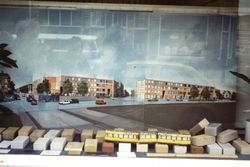
Comment l’architecture répond-elle à un contexte urbain spécifique? Comment la diversité des typologies et les besoins culturels de ses habitants variés peuvent-ils influencer le design? Comment saisir l’essence d’une ville à travers ses bâtiments? Les projets de logement social « Bonjour Tristesse » et « Punt en Komma » de l’architecte portugais Álvaro Siza, conçus pour(...)
Comment l’architecture répond-elle à un contexte urbain spécifique? Comment la diversité des typologies et les besoins culturels de ses habitants variés peuvent-ils influencer le design? Comment saisir l’essence d’une ville à travers ses bâtiments? Les projets de logement social « Bonjour Tristesse » et « Punt en Komma » de l’architecte portugais Álvaro Siza, conçus pour(...)
Date:
29 novembre 2015, 14h30 - 16h30
29 novembre 2015, 14h30 - 16h30
Titre:
Inter / Faces
Actions:
Description:
Comment l’architecture répond-elle à un contexte urbain spécifique? Comment la diversité des typologies et les besoins culturels de ses habitants variés peuvent-ils influencer le design? Comment saisir l’essence d’une ville à travers ses bâtiments? Les projets de logement social « Bonjour Tristesse » et « Punt en Komma » de l’architecte portugais Álvaro Siza, conçus pour(...)
Inter / Faces
Actions:
Description:
Comment l’architecture répond-elle à un contexte urbain spécifique? Comment la diversité des typologies et les besoins culturels de ses habitants variés peuvent-ils influencer le design? Comment saisir l’essence d’une ville à travers ses bâtiments? Les projets de logement social « Bonjour Tristesse » et « Punt en Komma » de l’architecte portugais Álvaro Siza, conçus pour(...)
Classification:
événements
événements
Date:
29 novembre 2015
14h30 - 16h30
29 novembre 2015
14h30 - 16h30
Classification:
événements
événements
Description:
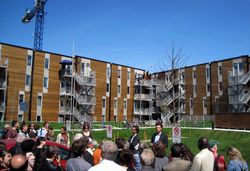
L’ŒUF (Daniel Pearl, Bernard Olivier et Sudhir Suri) est une firme d’architecture montréalaise fondée en 1992. L’architecte torontois Joe Lobko et Florence Portes, chef des services aux femmes à la Mission Old Brewery à Montréal, se joindront aux membres de L’ŒUF pour discuter de leur livre intitulé Community Inspired Housing in Canada. Codirigé par Daniel Wentz et publié(...)
L’ŒUF (Daniel Pearl, Bernard Olivier et Sudhir Suri) est une firme d’architecture montréalaise fondée en 1992. L’architecte torontois Joe Lobko et Florence Portes, chef des services aux femmes à la Mission Old Brewery à Montréal, se joindront aux membres de L’ŒUF pour discuter de leur livre intitulé Community Inspired Housing in Canada. Codirigé par Daniel Wentz et publié(...)
Date:
29 janvier 2015 , 18h
29 janvier 2015 , 18h
Titre:
L’ŒUF, Joe Lobko et Florence Portes veulent vous parler
Actions:
Description:
L’ŒUF (Daniel Pearl, Bernard Olivier et Sudhir Suri) est une firme d’architecture montréalaise fondée en 1992. L’architecte torontois Joe Lobko et Florence Portes, chef des services aux femmes à la Mission Old Brewery à Montréal, se joindront aux membres de L’ŒUF pour discuter de leur livre intitulé Community Inspired Housing in Canada. Codirigé par Daniel Wentz et publié(...)
L’ŒUF, Joe Lobko et Florence Portes veulent vous parler
Actions:
Description:
L’ŒUF (Daniel Pearl, Bernard Olivier et Sudhir Suri) est une firme d’architecture montréalaise fondée en 1992. L’architecte torontois Joe Lobko et Florence Portes, chef des services aux femmes à la Mission Old Brewery à Montréal, se joindront aux membres de L’ŒUF pour discuter de leur livre intitulé Community Inspired Housing in Canada. Codirigé par Daniel Wentz et publié(...)
Classification:
événements
événements
Date:
29 janvier 2015
18h
29 janvier 2015
18h


