


395 Résultats
Classification:
livres
livres

Actions:
Prix:
$42.00
(disponible sur commande)
Résumé:
''Escapology: modern cabins, cottages and retreats'' is a book of modern-day retreats - bucolic weekend escapes by the sea, remote getaways in the woods, and rustic mountain hideouts - to inspire peaceful and quiet living. The authors genuinely believe that cabin time has a remarkably positive impact on our health, wellbeing and our happiness. Whether it's a rustic(...)
Titre:
Escapology: modern cabins, cottages and retreats
Actions:
Prix:
$42.00
(disponible sur commande)
Résumé:
''Escapology: modern cabins, cottages and retreats'' is a book of modern-day retreats - bucolic weekend escapes by the sea, remote getaways in the woods, and rustic mountain hideouts - to inspire peaceful and quiet living. The authors genuinely believe that cabin time has a remarkably positive impact on our health, wellbeing and our happiness. Whether it's a rustic cottage nestled deep within a Nordic forest, a robust mountain lodge in Montana, a breathtaking treehouse in Canada, or a steel-walled, one-room "hotel" in Denmark, these retreats share one vital aspect in common: they proffer the chance to escape and to and live in harmony with nature, far from the madding crowd. Part style bible and lifestyle manual, the book features a collection of classic and contemporary cottages and cabins, each accompanied by an informative design profile and photographed images. You'll find relevant information about different types of dwelling styles, builds, sustainability/off-grid living, tiny homes, renovation on a budget, room zonings, decor and everything in between.
Classification:
livres
livres
Publication:
octobre 2020
octobre 2020
Sujet:
Architecture résidentielle
Architecture résidentielle
Classification:
livres
livres
Actions:
Prix:
$40.00
(disponible sur commande)
Résumé:
EUROPAN, founded in 1989, and supported by thirteen countries in the European Union, runs a competition every two years and invites young architects to submit innovative and experimental models in urban development. The 2019 EUROPAN competition focused on the topic productive cities and involved more than nine hundred planning teams from all over Europe, who prepared(...)
Titre:
Europan 15: Austria, productive cities 2. Resources, mobility, equity
Actions:
Prix:
$40.00
(disponible sur commande)
Résumé:
EUROPAN, founded in 1989, and supported by thirteen countries in the European Union, runs a competition every two years and invites young architects to submit innovative and experimental models in urban development. The 2019 EUROPAN competition focused on the topic productive cities and involved more than nine hundred planning teams from all over Europe, who prepared proposals for forty-seven towns. This book features the twelve winning submissions to the 2019 edition for the Austrian cities Graz, Innsbruck, Villach, Weiz, and Vienna. They are presented in impeccable detail through photos, drawings, and visualizations, along textual commentary. The projects focus on architectural and urban planning interventions and processes. They offer innovative concepts for the use of public space, models for cross-functional use of space, and holistic solutions for sustainable construction. Taken as a whole, the book is a rich source of trendsetting ideas about our future cities and the development of a new urban lifestyle.
Classification:
livres
livres
Publication:
février 2021
février 2021
Sujet:
Théorie de l’urbanisme
Théorie de l’urbanisme
Classification:
livres
livres
Actions:
Exemplaires:
Description:
479 pages : color illustrations ; 32 cm
Description:
479 pages : color illustrations ; 32 cm
Auteur:
Sujet:
Publication:
New Haven, Connecticut : Yale University Press, [2018], ©2018
New Haven, Connecticut : Yale University Press, [2018], ©2018
Titre:
Essential modernism : design between the world wars / Dominic Bradbury.
Actions:
Exemplaires:
Description:
479 pages : color illustrations ; 32 cm
Essential modernism : design between the world wars / Dominic Bradbury.
Actions:
Exemplaires:
Description:
479 pages : color illustrations ; 32 cm
Classification:
livres
livres
Publication:
New Haven, Connecticut : Yale University Press, [2018], ©2018
New Haven, Connecticut : Yale University Press, [2018], ©2018
Auteur:
Sujet:
Classification:
livres
livres
Prix:
$79.00
(disponible sur commande)
Résumé:
Of the architects who made Palm Springs a crucible of midcentury American modernism, William F. Cody (1916-1978) was one of the most prolific, diverse, and iconic. Directing a practice ranging from residences to commercial centers and industrial complexes to master plans, Cody's designs are so recognizable that they provide visual shorthand for what is widely hailed as(...)
Sujet:
Architecture, monographies
Architecture, monographies
Publication:
septembre 2021
septembre 2021
Titre:
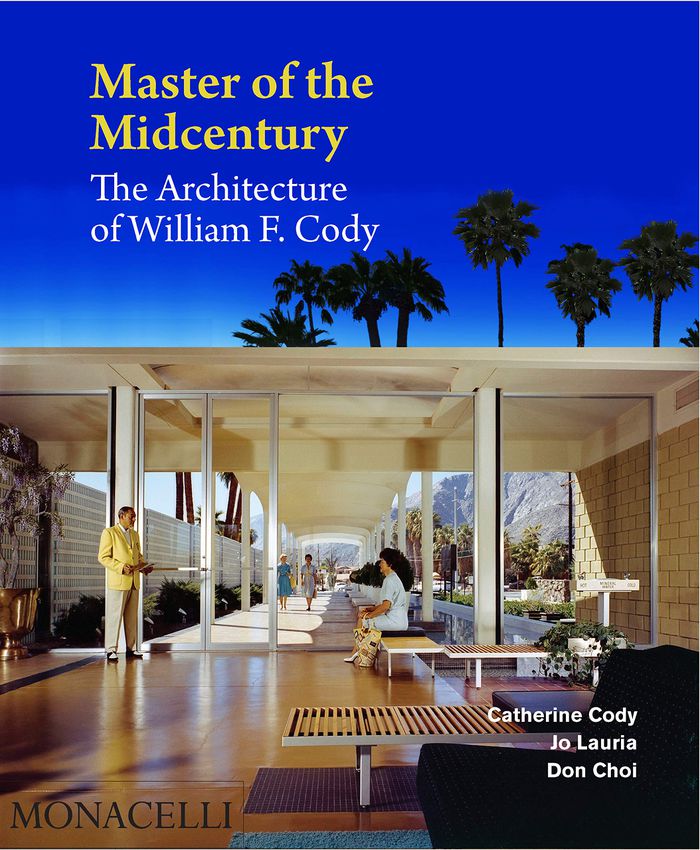
Master of the midcentury: the architecture of Williiam F. Cody
Actions:
Prix:
$79.00
(disponible sur commande)
Résumé:
Of the architects who made Palm Springs a crucible of midcentury American modernism, William F. Cody (1916-1978) was one of the most prolific, diverse, and iconic. Directing a practice ranging from residences to commercial centers and industrial complexes to master plans, Cody's designs are so recognizable that they provide visual shorthand for what is widely hailed as "Desert Modern." While his architecture was disciplined and technically innovative, Cody did not practice an austere modernism; he imbued in his projects a love for social spaces, rich with patterns, texture, color, and art. Though the majority of Cody's built work was concentrated in California and Arizona, he had commissions in other western states, Hawaii, Mexico, Honduras, and Cuba. From icons like the Del Marcos Hotel (1946), to inventive country clubs like the Eldorado (1957), to houses for celebrities (Frank Sinatra, Bing Crosby, Walt Disney), Cody's projects defined the emerging West Coast lifestyle that combined luxury, leisure, and experimental design. Cody also pushed the boundaries of engineering, with beams and roof slabs so thin that his buildings seemed to defy gravity.
Classification:
livres
livres
Publication:
septembre 2021
septembre 2021
Sujet:
Architecture, monographies
Architecture, monographies
Classification:
livres
livres
Titre:
Perverse cities
Perverse cities
Actions:
Prix:
$39.95
(disponible sur commande)
Résumé:
Urban sprawl -- low-density subdivisions and business parks, big box stores and mega-malls -- has increasingly come to define city growth despite decades of planning and policy. Urban planning has focused on curbing sprawl by treating its symptoms -- aiming to regulate more compact, livable urban forms into being. Most urbanists view sprawl as an expensive and(...)
Titre:
Perverse cities
Actions:
Prix:
$39.95
(disponible sur commande)
Résumé:
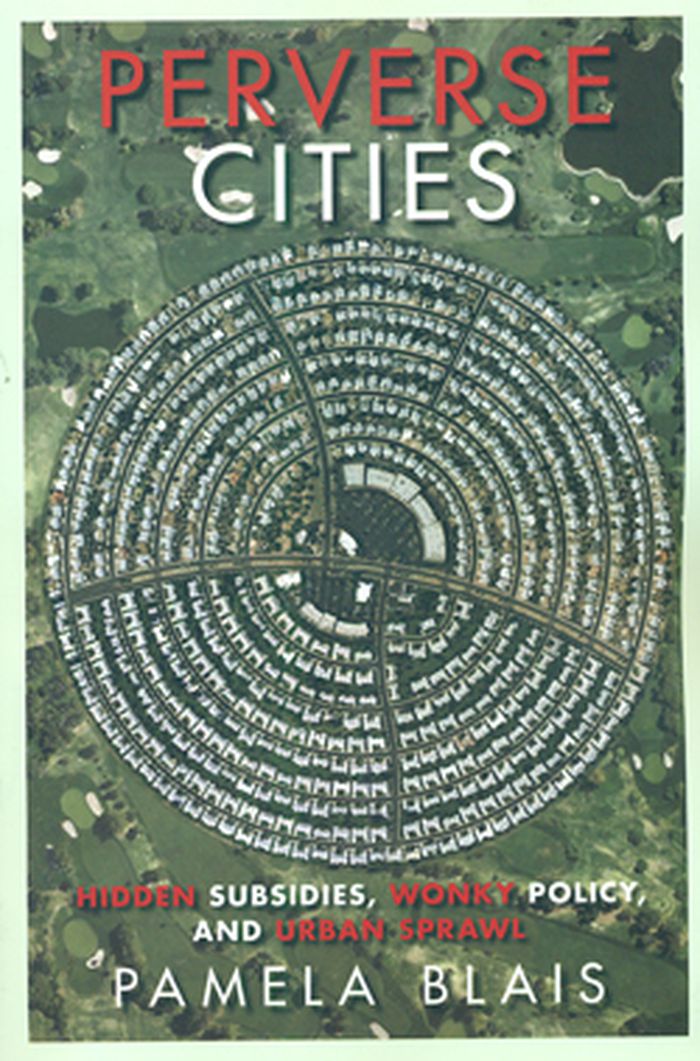
Urban sprawl -- low-density subdivisions and business parks, big box stores and mega-malls -- has increasingly come to define city growth despite decades of planning and policy. Urban planning has focused on curbing sprawl by treating its symptoms -- aiming to regulate more compact, livable urban forms into being. Most urbanists view sprawl as an expensive and unsustainable pattern of development. Yet a few defend it as the natural expression of the market neutrally responding to consumer demand and as a reflection of consumers’ lifestyle preferences. In Perverse Cities, Pamela Blais argues that both views fail to recognize market distortions and flawed policy that drive sprawl. She shows that, as a result of crude public policies, a wide range of urban goods and services are subject to inaccurate price signals, including housing, non-residential properties, transportation and utilities. Mis-pricing creates hidden, "perverse" subsidies and incentives that promote sprawl while discouraging more efficient and sustainable urban forms -- clearly not what most planners and environmentalists have in mind. Perverse Cities makes the case that accurate pricing and better policy are fundamental to curbing sprawl and shows how this can be achieved in practice through a range of market-oriented tools that promote efficient, sustainable cities.
Classification:
livres
livres
Publication:
avril 2011
avril 2011
Sujet:
Théorie de l’urbanisme
Théorie de l’urbanisme
Classification:
livres
livres

Prix:
$63.50
(disponible sur commande)
Résumé:
From its invention in Europe at the end of the nineteenth century, the automobile crisscrossed the world, completely took over the cities, and became a feature of daily life. Considered basic to the American lifestyle, the car reflected individualism, pragmatism, comfort, and above all modernity. In Latin America, it served as a symbol of distinction, similar to jewelry(...)
Titre:
The cultural life of the automobile: roads to modernity
Actions:
Prix:
$63.50
(disponible sur commande)
Résumé:
From its invention in Europe at the end of the nineteenth century, the automobile crisscrossed the world, completely took over the cities, and became a feature of daily life. Considered basic to the American lifestyle, the car reflected individualism, pragmatism, comfort, and above all modernity. In Latin America, it served as a symbol of distinction, similar to jewelry or fine clothing. In The Cultural Life of the Automobile, Guillermo Giucci focuses on the automobile as an instrument of social change through its "kinetic modernity" and as an embodiment of the tremendous social impact of technology on cultural life. Material culture--how certain objects generate a wide array of cultural responses--has been the focus of much scholarly discussion in recent years. The automobile wrought major changes and inspired images in language, literature, and popular culture. Focusing primarily on Latin America but also covering the United States, Europe, Asia, and Africa, Giucci examines how the automobile was variously adapted by different cultures and how its use shaped and changed social and economic relationships within them. At the same time, he shows how the "automobilization" of society became an essential support for the development of modern individualism, and the automobile its clearest material manifestation.
Classification:
livres
livres
Publication:
août 2012
août 2012
Classification:
livres
livres
Actions:
Prix:
$28.95
(disponible sur commande)
Résumé:
In this volume of the Critical Spatial Practice series, Dennis Pohl locates the origin of Europe's dependency on carbon and nuclear power in the postwar architectural designs and energy policies of the European Community. Since the 1950s, architects have proposed territorial, regional, and urban development plans that served the European political project. They(...)
Titre:
Building carbon europe: Coal, steel and nuclear power. Critical spatial practice
Actions:
Prix:
$28.95
(disponible sur commande)
Résumé:
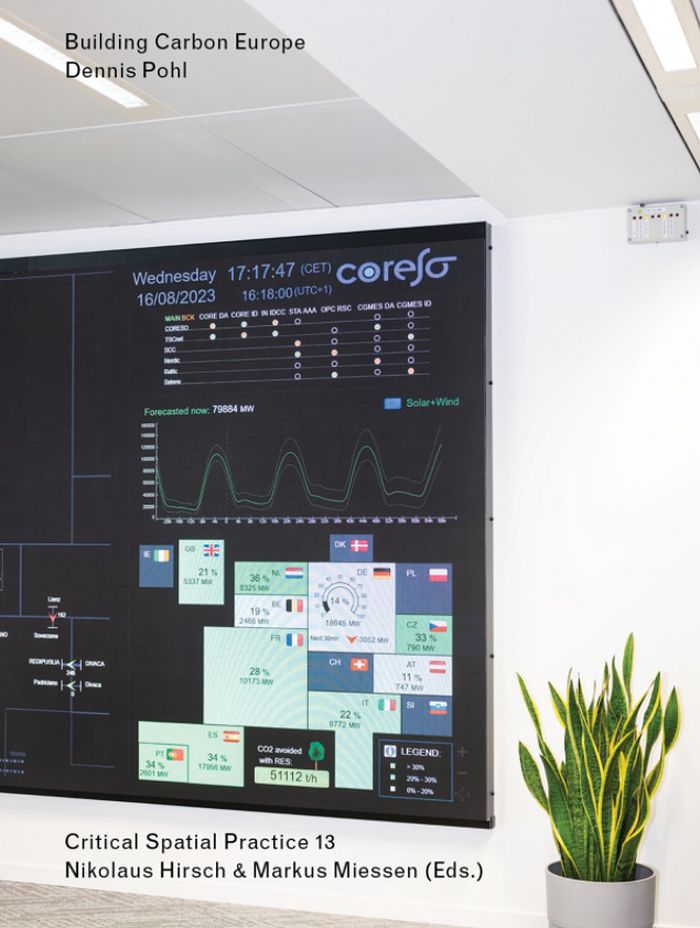
In this volume of the Critical Spatial Practice series, Dennis Pohl locates the origin of Europe's dependency on carbon and nuclear power in the postwar architectural designs and energy policies of the European Community. Since the 1950s, architects have proposed territorial, regional, and urban development plans that served the European political project. They collaborated with the European Coal and Steel Community in an effort to render the steel building industry as efficient as the car industry; they incorporated the ideas of infinite nuclear energy, as promoted by the European Atomic Energy Community, into their designs. This book demonstrates how architecture served the political economy of postwar Europe as a means of turning coal, steel, and radioactivity into tools of European governance. Architectural design enabled EU institutions to support social policies and worker housing within the coal and steel industry as well as to promote a new pan-European lifestyle based on nuclear energy. In other words, architecture powered Europe's larger infrastructural, economic, and cultural network. Pohl's work not only sheds light on how architecture has contributed to the carbonization of Europe, it also highlights the environmental issue, which challenges both architectural criticism and historiography in the era of the Anthropocene.
Classification:
livres
livres
Publication:
avril 2024
avril 2024
Sujet:
Théorie de l’architecture
Théorie de l’architecture
Classification:
livres
livres
Titre:
Atelier Van Lieshout
Atelier Van Lieshout
Actions:
Prix:
$58.00
(disponible sur commande)
Résumé:
When Joep van Lieshout (b. 1963) founded the art and architecture studio that bears his name, he set in motion what has been described as "a new Dutch architectural style dirty, delicious and direct." Now Atelier Van Lieshout is 10, and the first major monograph devoted to it, A Manual (1997), has been sold out for years. This new overview brings readers into AVL's(...)
Titre:
Atelier Van Lieshout
Actions:
Prix:
$58.00
(disponible sur commande)
Résumé:
When Joep van Lieshout (b. 1963) founded the art and architecture studio that bears his name, he set in motion what has been described as "a new Dutch architectural style dirty, delicious and direct." Now Atelier Van Lieshout is 10, and the first major monograph devoted to it, A Manual (1997), has been sold out for years. This new overview brings readers into AVL's contrarian applied art via luxuriously appointed "mobile homes," autonomous communes and surreal art projects, with equal time given to AVL-Ville (2001), a "free state" in Rotterdam's port, complete with its own flag, its own constitution and its own currency, and the revealing minutia of AVL's portfolio, from furniture to the "Bar Rectum," a perverse take on the Oscar-Meyer Weiner Mobile. The idea of art that can be used for a self-sufficient and independent lifestyle hits a uniquely high point in AVL-Ville, a culmination of all the work AVL has done before. And it lives on: After a successful and tumultuous year of work, AVL has recently located its first AVL-Ville export product in Park Middelheim in Antwerp: the AVL Franchise Unit. This richly illustrated survey tracks AVL's serious and often provocative portfolio through a crucial period in its growth and development.
Classification:
livres
livres
Publication:
octobre 2007, Rotterdam
octobre 2007, Rotterdam
Classification:
livres
livres
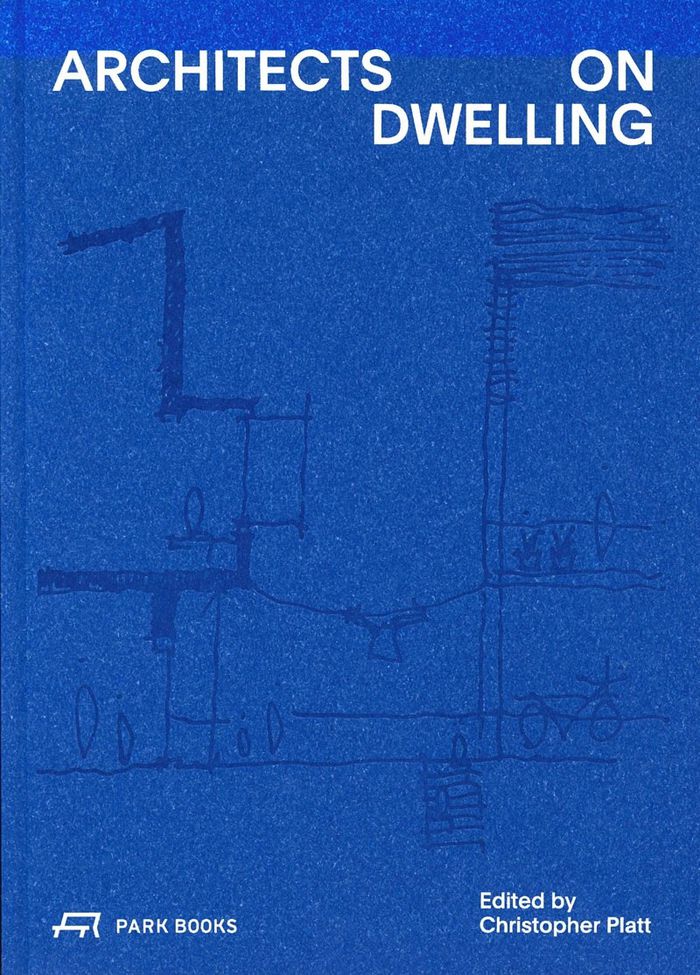
Titre:
Architects on dwelling
Architects on dwelling
Actions:
Prix:
$50.00
(disponible sur commande)
Résumé:
While most books on architecture focus on the architectural outcome itself, ''Architects on dwelling'' takes a close look at how that outcome is created. To design any kind of dwelling, architects draw on both their reservoir of ideas as well as their own experiences as fellow inhabitants of such structures. This book explores how architects design the places we inhabit(...)
Titre:
Architects on dwelling
Actions:
Prix:
$50.00
(disponible sur commande)
Résumé:
While most books on architecture focus on the architectural outcome itself, ''Architects on dwelling'' takes a close look at how that outcome is created. To design any kind of dwelling, architects draw on both their reservoir of ideas as well as their own experiences as fellow inhabitants of such structures. This book explores how architects design the places we inhabit and how those places in turn inform the manner in which we live, in ways beyond lifestyle and personal taste. Through contributions by Stephen Hoey, Henry McKeown & Ian Alexander, James Mitchell, Stacey Philips, Christopher Platt, Adrian Stewart, and Miranda Webster—most of whom are Scotland-based practitioners as well as teachers in The Glasgow School of Art—it reveals the unique values and qualities that inform their design processes. In their essays, they focus mostly on one exemplary building, explaining how and why they design the way they do. Dick van Gameren, Simon Henley, and Graeme Hutton, distinguished experts and themselves architect-educators, place this work within an international context and provide insightful comment about what these design approaches inform us about contemporary design in Scotland. Complemented with a wide range of images, these essays both illuminate the architects’ motivations and inspirations and celebrate their featured works.
Classification:
livres
livres
Publication:
juillet 2022
juillet 2022
Sujet:
Théorie de l’architecture
Théorie de l’architecture
Classification:
livres
livres
Titre:
When America became suburban
When America became suburban
Actions:
Prix:
$23.95
(disponible sur commande)
Résumé:
In the decades after World War II, the United States became the most prosperous nation in the world and a superpower whose dominance was symbolized by the American suburbs. Spurred by the decline of its industrial cities and by mass suburbanization, people imagined a new national identity—one that emphasized consumerism, social mobility, and a suburban lifestyle. The(...)
Titre:
When America became suburban
Actions:
Prix:
$23.95
(disponible sur commande)
Résumé:
In the decades after World War II, the United States became the most prosperous nation in the world and a superpower whose dominance was symbolized by the American suburbs. Spurred by the decline of its industrial cities and by mass suburbanization, people imagined a new national identity—one that emphasized consumerism, social mobility, and a suburban lifestyle. The urbanity of the city was lost. In "When America became suburban", Robert A. Beauregard examines this historic intersection of urban decline, mass suburbanization, domestic prosperity, and U.S. global aspirations as it unfolded from 1945 to the mid-1970s. Suburban expansion and the subsequent emergence of sprawling Sunbelt cities transformed every aspect of American society. Assessing the global implications of America’s suburban way of life as evidence of the superiority of capitalist democracy, Beauregard traces how the suburban ideology enabled America to distinguish itself from both the Communist bloc and Western Europe, thereby deepening its claim of exceptionalism on the world-historical stage. Placing the decline of America’s industrial cities and the rise of vast suburban housing and retail spaces into a cultural, political, and global context, Beauregard illuminates how these phenomena contributed to a changing notion of America’s identity at home and abroad. "When America became suburban" brings to light the profound implications of de-urbanization: from the siphoning of investments from the cities and the effect on the quality of life for those left behind to a profound shift in national identity.
Classification:
livres
livres
Publication:
septembre 2006, Minneapolis, London
septembre 2006, Minneapolis, London
Sujet:
Banlieues
Banlieues


