


12071 Résultats
Classification:
livres
livres
Actions:
Prix:
$54.95
(disponible en magasin)
Résumé:
The catalogue for an exhibition at MAXXI curated by Pippo Ciorra and Jean-Louis Cohen, this book is an homage to Bruno Zevi, the notable architect, historian, lecturer, critic, politician, and designer. Moreover, it is a reflection on the contemporary Italian architectures that Zevi supported and promoted during his 50-year career through his extensive writing and(...)
$54.95
(disponible en magasin)
Résumé:
The catalogue for an exhibition at MAXXI curated by Pippo Ciorra and Jean-Louis Cohen, this book is an homage to Bruno Zevi, the notable architect, historian, lecturer, critic, politician, and designer. Moreover, it is a reflection on the contemporary Italian architectures that Zevi supported and promoted during his 50-year career through his extensive writing and(...)
Titre:
Zevi's architects: history and counter-history of Italian architecture
Actions:
Prix:
$54.95
(disponible en magasin)
Résumé:
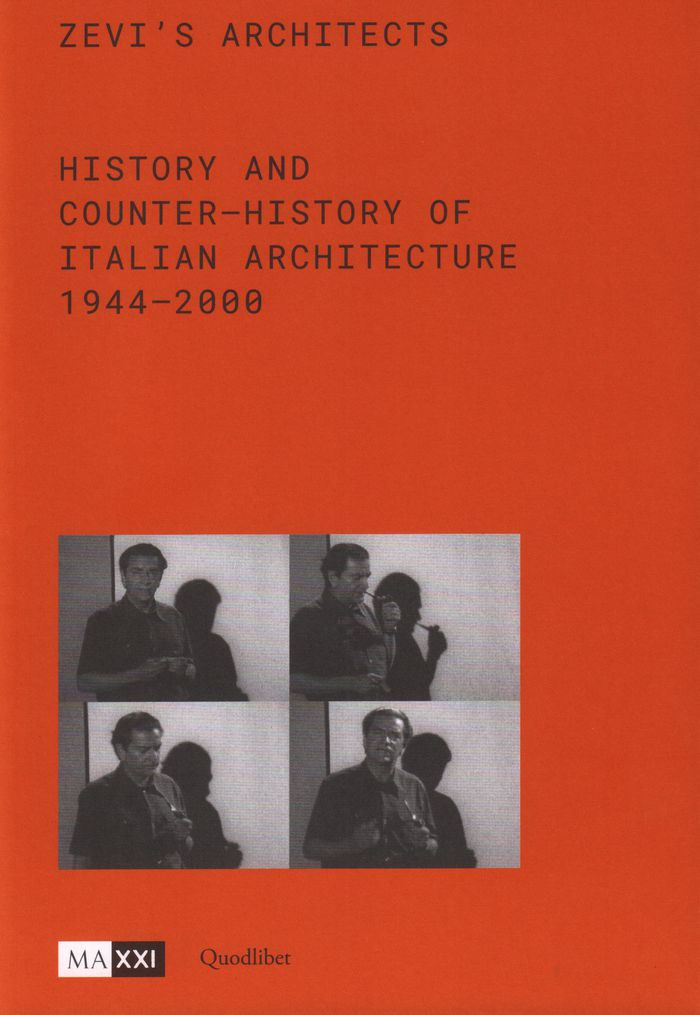
The catalogue for an exhibition at MAXXI curated by Pippo Ciorra and Jean-Louis Cohen, this book is an homage to Bruno Zevi, the notable architect, historian, lecturer, critic, politician, and designer. Moreover, it is a reflection on the contemporary Italian architectures that Zevi supported and promoted during his 50-year career through his extensive writing and criticism. Featuring 35 architects, the book’s drawings, models, and other visual materials clarify the key role Zevi played in the post-war architectural debate in Italy, highlighting the importance of the relationship between architecture and politics and his social passion and presence in the nation’s civic history.
Zevi's architects: history and counter-history of Italian architecture
Actions:
Prix:
$54.95
(disponible en magasin)
Résumé:
The catalogue for an exhibition at MAXXI curated by Pippo Ciorra and Jean-Louis Cohen, this book is an homage to Bruno Zevi, the notable architect, historian, lecturer, critic, politician, and designer. Moreover, it is a reflection on the contemporary Italian architectures that Zevi supported and promoted during his 50-year career through his extensive writing and criticism. Featuring 35 architects, the book’s drawings, models, and other visual materials clarify the key role Zevi played in the post-war architectural debate in Italy, highlighting the importance of the relationship between architecture and politics and his social passion and presence in the nation’s civic history.
Classification:
livres
livres
Publication:
mai 2018
mai 2018
Sujet:
Théorie de l’architecture
Théorie de l’architecture
Classification:
livres
livres
Prix:
$49.95
(disponible sur commande)
Résumé:
For almost ten years, Samuel Mockbee, a recent McArthur "genius grant" recipient, and his architecture students at Auburn University have been designing and building striking houses and community buildings for impoverished residents of Alabama's Hale County. Using salvaged lumber and bricks, discarded tires, hay and waste cardboard bales, concrete rubble, coloured(...)
$49.95
(disponible sur commande)
Résumé:
For almost ten years, Samuel Mockbee, a recent McArthur "genius grant" recipient, and his architecture students at Auburn University have been designing and building striking houses and community buildings for impoverished residents of Alabama's Hale County. Using salvaged lumber and bricks, discarded tires, hay and waste cardboard bales, concrete rubble, coloured(...)
Sujet:
Architecture, monographies
Architecture, monographies
Publication:
février 2002, New York
février 2002, New York
Titre:
Rural Studio : Samuel Mockbee and an architecture of decency
Actions:
Prix:
$49.95
(disponible sur commande)
Résumé:
For almost ten years, Samuel Mockbee, a recent McArthur "genius grant" recipient, and his architecture students at Auburn University have been designing and building striking houses and community buildings for impoverished residents of Alabama's Hale County. Using salvaged lumber and bricks, discarded tires, hay and waste cardboard bales, concrete rubble, coloured bottles, and old license plates, they create inexpensive buildings in a style Mockbee describes as "contemporary modernism grounded in Southern culture." In a time when architectural attention focuses on large, glossy urban projects and palatial homes, the Rural Studio provides an alternative of substance. In addition to being a social welfare venture, the Rural Studio is also and educational experiment and a prod to the architectural profession to act on its best instincts. By giving students hands-on experience in designing and building something real, it extends their education beyond paper architecture. And in scavenging and reusing a variety of unusual materials, it is a model of sustainable architecture. The work of the Rural Studio has struck such a chord--both architecturally and socially--that it has been featured on "Oprah," "Nightline," and "CBS News," as well as "Time" and "People" magazines.
Rural Studio : Samuel Mockbee and an architecture of decency
Actions:
Prix:
$49.95
(disponible sur commande)
Résumé:
For almost ten years, Samuel Mockbee, a recent McArthur "genius grant" recipient, and his architecture students at Auburn University have been designing and building striking houses and community buildings for impoverished residents of Alabama's Hale County. Using salvaged lumber and bricks, discarded tires, hay and waste cardboard bales, concrete rubble, coloured bottles, and old license plates, they create inexpensive buildings in a style Mockbee describes as "contemporary modernism grounded in Southern culture." In a time when architectural attention focuses on large, glossy urban projects and palatial homes, the Rural Studio provides an alternative of substance. In addition to being a social welfare venture, the Rural Studio is also and educational experiment and a prod to the architectural profession to act on its best instincts. By giving students hands-on experience in designing and building something real, it extends their education beyond paper architecture. And in scavenging and reusing a variety of unusual materials, it is a model of sustainable architecture. The work of the Rural Studio has struck such a chord--both architecturally and socially--that it has been featured on "Oprah," "Nightline," and "CBS News," as well as "Time" and "People" magazines.
Classification:
livres
livres
Publication:
février 2002, New York
février 2002, New York
Sujet:
Architecture, monographies
Architecture, monographies
Classification:
livres
livres
Actions:
Prix:
$73.95
(disponible sur commande)
Résumé:
Architecture manifests as a space of concealment and unconcealment, lethe and alêtheia, enclosure and disclosure, where its making and agency are both hidden and revealed. With an urgency to amplify narratives that are overlooked, silenced and unacknowledged in and by architectural spaces, histories and theories, this book contends the need for a critical study of hiding(...)
$73.95
(disponible sur commande)
Résumé:
Architecture manifests as a space of concealment and unconcealment, lethe and alêtheia, enclosure and disclosure, where its making and agency are both hidden and revealed. With an urgency to amplify narratives that are overlooked, silenced and unacknowledged in and by architectural spaces, histories and theories, this book contends the need for a critical study of hiding(...)
Sujet:
Théorie de l’architecture
Théorie de l’architecture
Publication:
janvier 2024
janvier 2024
Titre:
Architectures of hiding: Crafting concealment, omission, deception, erasure, silence
Actions:
Prix:
$73.95
(disponible sur commande)
Résumé:
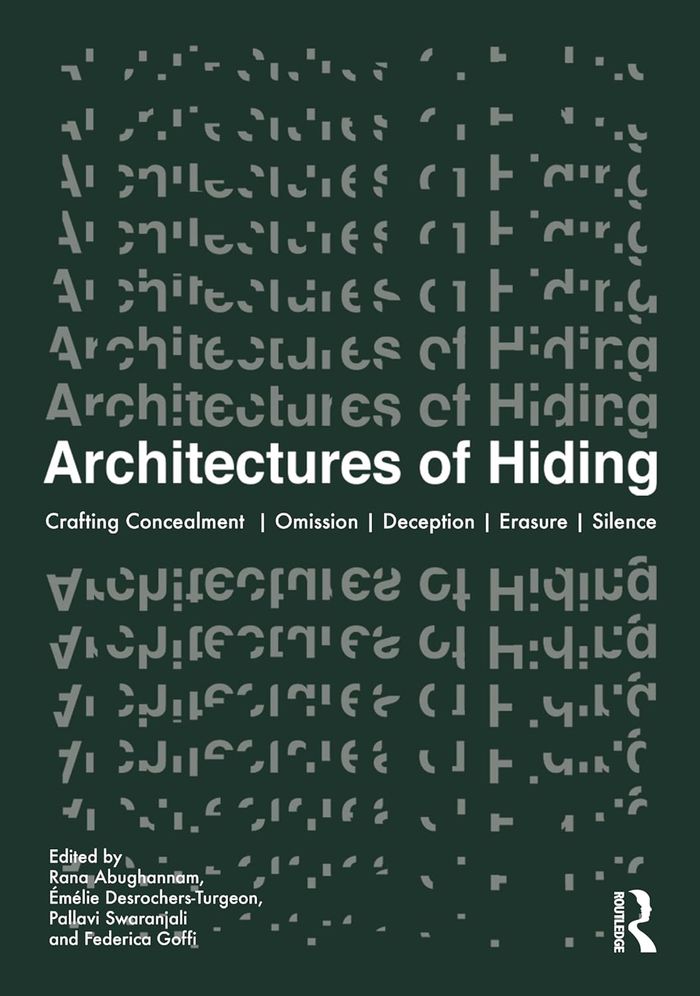
Architecture manifests as a space of concealment and unconcealment, lethe and alêtheia, enclosure and disclosure, where its making and agency are both hidden and revealed. With an urgency to amplify narratives that are overlooked, silenced and unacknowledged in and by architectural spaces, histories and theories, this book contends the need for a critical study of hiding in the context of architectural processes. It urges the understanding of inherent opportunities, power structures and covert strategies, whether socio-cultural, geo-political, environmental or economic, as they are related to their hidescapes – the constructed landscapes of our built environments participating in the architectures of hiding.
Architectures of hiding: Crafting concealment, omission, deception, erasure, silence
Actions:
Prix:
$73.95
(disponible sur commande)
Résumé:
Architecture manifests as a space of concealment and unconcealment, lethe and alêtheia, enclosure and disclosure, where its making and agency are both hidden and revealed. With an urgency to amplify narratives that are overlooked, silenced and unacknowledged in and by architectural spaces, histories and theories, this book contends the need for a critical study of hiding in the context of architectural processes. It urges the understanding of inherent opportunities, power structures and covert strategies, whether socio-cultural, geo-political, environmental or economic, as they are related to their hidescapes – the constructed landscapes of our built environments participating in the architectures of hiding.
Classification:
livres
livres
Publication:
janvier 2024
janvier 2024
Sujet:
Théorie de l’architecture
Théorie de l’architecture
Classification:
livres
livres
Actions:
Prix:
$80.00
(disponible en magasin)
Résumé:
Founded by Fredric Benesch and Katarina Lundeberg in 2009, Stockholm-based firm In Praise of Shadows Architecture engages in a wide range of projects of varied scales and typologies. This first monograph on their work features some forty buildings and projects from the years 2009 to 2024. The selection includes small boathouses and garden pavilions, private homes, and(...)
$80.00
(disponible en magasin)
Résumé:
Founded by Fredric Benesch and Katarina Lundeberg in 2009, Stockholm-based firm In Praise of Shadows Architecture engages in a wide range of projects of varied scales and typologies. This first monograph on their work features some forty buildings and projects from the years 2009 to 2024. The selection includes small boathouses and garden pavilions, private homes, and(...)
Sujet:
Architecture, monographies
Architecture, monographies
Publication:
février 2025
février 2025
Titre:
In Praise of Shadows Architecture: A line of thought
Actions:
Prix:
$80.00
(disponible en magasin)
Résumé:
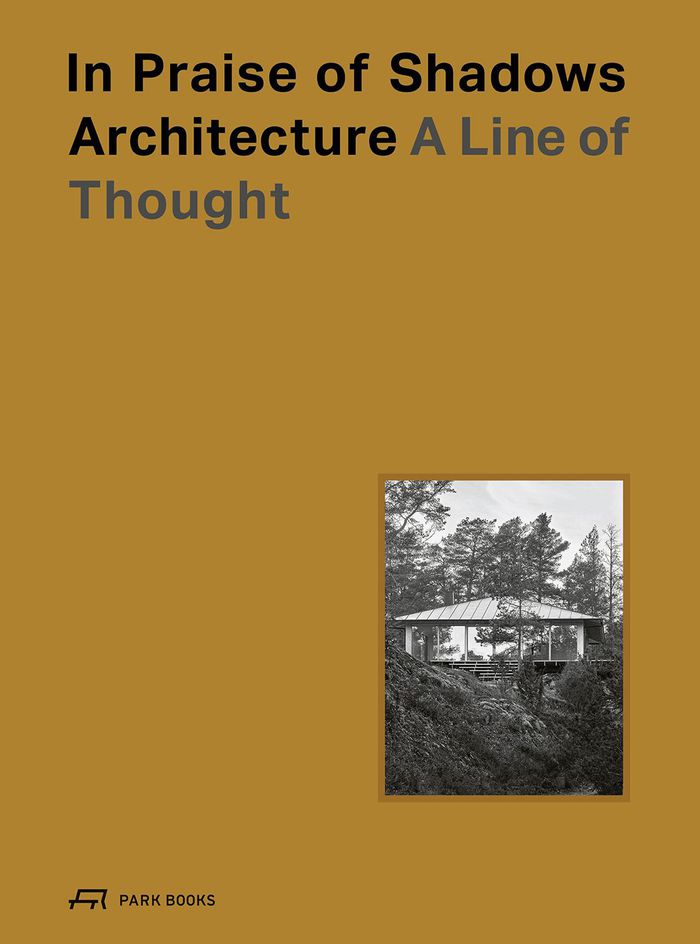
Founded by Fredric Benesch and Katarina Lundeberg in 2009, Stockholm-based firm In Praise of Shadows Architecture engages in a wide range of projects of varied scales and typologies. This first monograph on their work features some forty buildings and projects from the years 2009 to 2024. The selection includes small boathouses and garden pavilions, private homes, and housing developments, as well as retail spaces, schools, and library buildings. The ideas and designs of In Praise of Shadows Architecture are remarkable, revealed in buildings that share an elegant signature that manifests itself in the choice and shaping of materials and a focus on the spatial experience. Many of them are timber constructions, as sustainability is a core part of their philosophy, as well as a special interest in Swedish modernist heritage and the famous architectural culture of the Swiss canton of Grisons.
In Praise of Shadows Architecture: A line of thought
Actions:
Prix:
$80.00
(disponible en magasin)
Résumé:
Founded by Fredric Benesch and Katarina Lundeberg in 2009, Stockholm-based firm In Praise of Shadows Architecture engages in a wide range of projects of varied scales and typologies. This first monograph on their work features some forty buildings and projects from the years 2009 to 2024. The selection includes small boathouses and garden pavilions, private homes, and housing developments, as well as retail spaces, schools, and library buildings. The ideas and designs of In Praise of Shadows Architecture are remarkable, revealed in buildings that share an elegant signature that manifests itself in the choice and shaping of materials and a focus on the spatial experience. Many of them are timber constructions, as sustainability is a core part of their philosophy, as well as a special interest in Swedish modernist heritage and the famous architectural culture of the Swiss canton of Grisons.
Classification:
livres
livres
Publication:
février 2025
février 2025
Sujet:
Architecture, monographies
Architecture, monographies
Classification:
livres
livres
Prix:
$45.95
(disponible sur commande)
Résumé:
Robert Venturi exploded onto the architectural scene in 1966 with a radical call to arms in "Complexity and Contradiction". Further accolades and outrage ensued in 1972 when Venturi and Denise Scott Brown (along with Steven Izenour) analyzed the Las Vegas strip as an archetype in "Learning from Las Vegas". Now, for the first time, these two observer-designer-theorists(...)
$45.95
(disponible sur commande)
Résumé:
Robert Venturi exploded onto the architectural scene in 1966 with a radical call to arms in "Complexity and Contradiction". Further accolades and outrage ensued in 1972 when Venturi and Denise Scott Brown (along with Steven Izenour) analyzed the Las Vegas strip as an archetype in "Learning from Las Vegas". Now, for the first time, these two observer-designer-theorists(...)
Sujet:
Théorie de l’architecture
Théorie de l’architecture
Publication:
octobre 2004, Cambridge, Mass.
octobre 2004, Cambridge, Mass.
Titre:
Architecture as signs and systems for a mannerist time
Actions:
Prix:
$45.95
(disponible sur commande)
Résumé:
Robert Venturi exploded onto the architectural scene in 1966 with a radical call to arms in "Complexity and Contradiction". Further accolades and outrage ensued in 1972 when Venturi and Denise Scott Brown (along with Steven Izenour) analyzed the Las Vegas strip as an archetype in "Learning from Las Vegas". Now, for the first time, these two observer-designer-theorists turn their iconoclastic vision onto their own remarkable partnership and the rule-breaking architecture it has informed. The views of Venturi and Scott Brown have influenced architects worldwide for nearly half a century. Pluralism and multiculturalism; symbolism and iconography; popular culture and the everyday landscape; generic building and electronic communication are among the many ideas they have championed. Here, they present both a fascinating retrospective of their life work and a definitive statement of its theoretical underpinnings. Accessible, informative, and beautifully illustrated, Architecture as Signs and Systems is a must for students of architecture and urban planning, as well as anyone intrigued by these seminal cultural figures. Venturi and Scott Brown have devoted their professional lives to broadening our view of the built world and enlarging the purview of practitioners within it. By looking backward over their own life work, they discover signs and systems that point forward, toward a humane Mannerist architecture for a complex, multicultural society.
Architecture as signs and systems for a mannerist time
Actions:
Prix:
$45.95
(disponible sur commande)
Résumé:
Robert Venturi exploded onto the architectural scene in 1966 with a radical call to arms in "Complexity and Contradiction". Further accolades and outrage ensued in 1972 when Venturi and Denise Scott Brown (along with Steven Izenour) analyzed the Las Vegas strip as an archetype in "Learning from Las Vegas". Now, for the first time, these two observer-designer-theorists turn their iconoclastic vision onto their own remarkable partnership and the rule-breaking architecture it has informed. The views of Venturi and Scott Brown have influenced architects worldwide for nearly half a century. Pluralism and multiculturalism; symbolism and iconography; popular culture and the everyday landscape; generic building and electronic communication are among the many ideas they have championed. Here, they present both a fascinating retrospective of their life work and a definitive statement of its theoretical underpinnings. Accessible, informative, and beautifully illustrated, Architecture as Signs and Systems is a must for students of architecture and urban planning, as well as anyone intrigued by these seminal cultural figures. Venturi and Scott Brown have devoted their professional lives to broadening our view of the built world and enlarging the purview of practitioners within it. By looking backward over their own life work, they discover signs and systems that point forward, toward a humane Mannerist architecture for a complex, multicultural society.
Classification:
livres
livres
Publication:
octobre 2004, Cambridge, Mass.
octobre 2004, Cambridge, Mass.
Sujet:
Théorie de l’architecture
Théorie de l’architecture
Classification:
livres
livres
Prix:
$60.00
(disponible sur commande)
Résumé:
Since its formation in 1975, Diamond and Schmitt Architects has been at the vanguard of socially responsible architecture and urban planning, and Jack Diamond and Donald Schmitt have long been vocal advocates for environmental sustainability. Part manifesto, part architectural monograph, this book features the most important projects in Diamond & Schmitt's oeuvre,(...)
$60.00
(disponible sur commande)
Résumé:
Since its formation in 1975, Diamond and Schmitt Architects has been at the vanguard of socially responsible architecture and urban planning, and Jack Diamond and Donald Schmitt have long been vocal advocates for environmental sustainability. Part manifesto, part architectural monograph, this book features the most important projects in Diamond & Schmitt's oeuvre,(...)
Sujet:
Architecture du Canada
Architecture du Canada
Publication:
septembre 2008, Vancouver, Toronto
septembre 2008, Vancouver, Toronto
Titre:
Insight and on site: the architecture of Diamond and Schmitt
Actions:
Prix:
$60.00
(disponible sur commande)
Résumé:
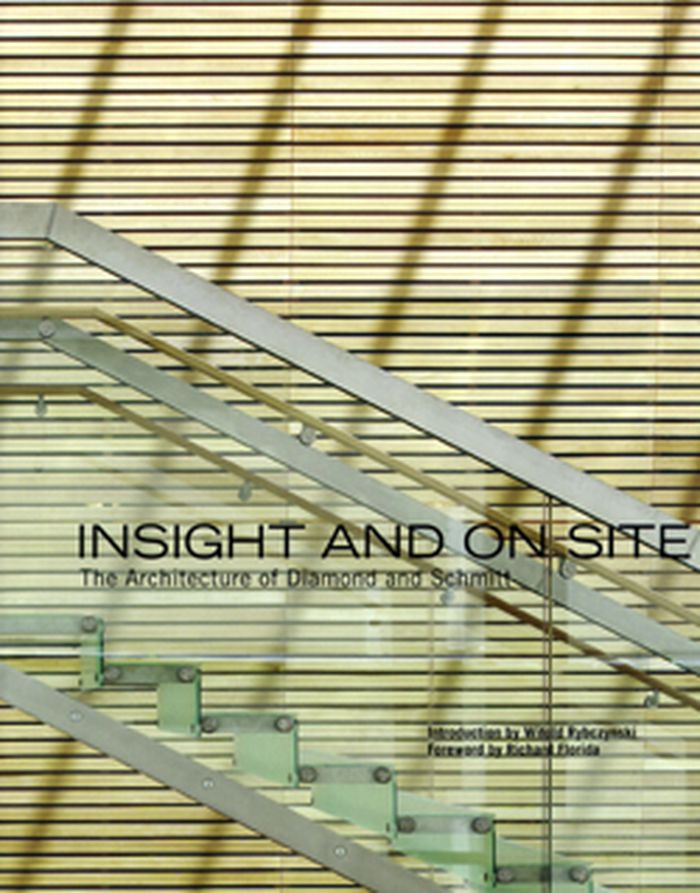
Since its formation in 1975, Diamond and Schmitt Architects has been at the vanguard of socially responsible architecture and urban planning, and Jack Diamond and Donald Schmitt have long been vocal advocates for environmental sustainability. Part manifesto, part architectural monograph, this book features the most important projects in Diamond & Schmitt's oeuvre, interspersed with 11 essays, including one by Witold Rybczynski.
Insight and on site: the architecture of Diamond and Schmitt
Actions:
Prix:
$60.00
(disponible sur commande)
Résumé:
Since its formation in 1975, Diamond and Schmitt Architects has been at the vanguard of socially responsible architecture and urban planning, and Jack Diamond and Donald Schmitt have long been vocal advocates for environmental sustainability. Part manifesto, part architectural monograph, this book features the most important projects in Diamond & Schmitt's oeuvre, interspersed with 11 essays, including one by Witold Rybczynski.
Classification:
livres
livres
Publication:
septembre 2008, Vancouver, Toronto
septembre 2008, Vancouver, Toronto
Sujet:
Architecture du Canada
Architecture du Canada
Classification:
livres
livres
Actions:
Prix:
$48.95
(disponible sur commande)
Résumé:
Reprint of the 1939 edition.
$48.95
(disponible sur commande)
Résumé:
Reprint of the 1939 edition.
Sujet:
Architecture résidentielle
Architecture résidentielle
Publication:
janvier 1998, Santa Monica
janvier 1998, Santa Monica
Titre:
Residential architecture in Southern California, 1939: Mediterranean to Modern
Actions:
Prix:
$48.95
(disponible sur commande)
Résumé:
Reprint of the 1939 edition.
Residential architecture in Southern California, 1939: Mediterranean to Modern
Actions:
Prix:
$48.95
(disponible sur commande)
Résumé:
Reprint of the 1939 edition.
Classification:
livres
livres
Publication:
janvier 1998, Santa Monica
janvier 1998, Santa Monica
Sujet:
Architecture résidentielle
Architecture résidentielle
Classification:
livres
livres
Actions:
Prix:
$39.95
(disponible en magasin)
Résumé:
Adelfo Scaranello vit et travaille à Besançon. Sa démarche architecturale développe des aspects particuliers liés aux spécificités locales tout en étant ouverte à un contexte d'idées auxquelles l'architecture est sensible notamment l'art contemporain. Souvent, ses projets sont des « architectures mesurées » quant à leur appartenance à un lieu. Le dénominateur commun de(...)
$39.95
(disponible en magasin)
Résumé:
Adelfo Scaranello vit et travaille à Besançon. Sa démarche architecturale développe des aspects particuliers liés aux spécificités locales tout en étant ouverte à un contexte d'idées auxquelles l'architecture est sensible notamment l'art contemporain. Souvent, ses projets sont des « architectures mesurées » quant à leur appartenance à un lieu. Le dénominateur commun de(...)
Sujet:
Architecture, monographies
Architecture, monographies
Publication:
mars 2020
mars 2020
Titre:
Architectures Adelfo Scaranello : Musée des beaux-arts et d'archéologie de Besançon 2
Actions:
Prix:
$39.95
(disponible en magasin)
Résumé:
Adelfo Scaranello vit et travaille à Besançon. Sa démarche architecturale développe des aspects particuliers liés aux spécificités locales tout en étant ouverte à un contexte d'idées auxquelles l'architecture est sensible notamment l'art contemporain. Souvent, ses projets sont des « architectures mesurées » quant à leur appartenance à un lieu. Le dénominateur commun de ses constructions est marqué par le soin apporté aux études fonctionnelles des bâtiments et la réalisation rigoureuse des détails qui garantissent le vieillissement des réalisations.
Architectures Adelfo Scaranello : Musée des beaux-arts et d'archéologie de Besançon 2
Actions:
Prix:
$39.95
(disponible en magasin)
Résumé:
Adelfo Scaranello vit et travaille à Besançon. Sa démarche architecturale développe des aspects particuliers liés aux spécificités locales tout en étant ouverte à un contexte d'idées auxquelles l'architecture est sensible notamment l'art contemporain. Souvent, ses projets sont des « architectures mesurées » quant à leur appartenance à un lieu. Le dénominateur commun de ses constructions est marqué par le soin apporté aux études fonctionnelles des bâtiments et la réalisation rigoureuse des détails qui garantissent le vieillissement des réalisations.
Classification:
livres
livres
Publication:
mars 2020
mars 2020
Sujet:
Architecture, monographies
Architecture, monographies
Classification:
livres
livres
Actions:
Prix:
$59.00
(disponible sur commande)
Résumé:
Between 1950 and 1980 Danish architects Knud Friis and Elmar Moltke realized hundreds of projects. Most of their work can be found in Jutland, and within this region the majority is built in and near Aarhus. Roughly ten percent of the firm’s built work is presented here, in a cross section of their schools, town halls, sports complexes, housing, private houses and(...)
$59.00
(disponible sur commande)
Résumé:
Between 1950 and 1980 Danish architects Knud Friis and Elmar Moltke realized hundreds of projects. Most of their work can be found in Jutland, and within this region the majority is built in and near Aarhus. Roughly ten percent of the firm’s built work is presented here, in a cross section of their schools, town halls, sports complexes, housing, private houses and(...)
Titre:
Provocations against perfectionism : The architecture of Friis & Moltke
Actions:
Prix:
$59.00
(disponible sur commande)
Résumé:
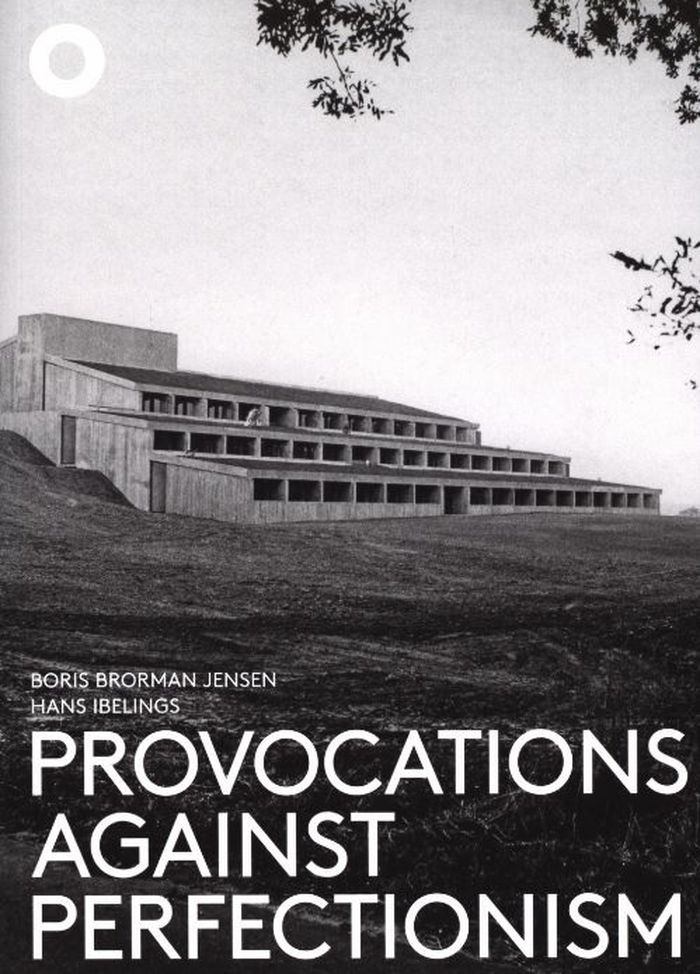
Between 1950 and 1980 Danish architects Knud Friis and Elmar Moltke realized hundreds of projects. Most of their work can be found in Jutland, and within this region the majority is built in and near Aarhus. Roughly ten percent of the firm’s built work is presented here, in a cross section of their schools, town halls, sports complexes, housing, private houses and summerhouses, hotels, offices, factories, churches, and conference centres. The book traces the development of Friis and Moltke’s unique and friendly brutalism, which is always comfortable, casual, and, in the words of Knud Friis, a ‘provocation against perfectionism’.
Provocations against perfectionism : The architecture of Friis & Moltke
Actions:
Prix:
$59.00
(disponible sur commande)
Résumé:
Between 1950 and 1980 Danish architects Knud Friis and Elmar Moltke realized hundreds of projects. Most of their work can be found in Jutland, and within this region the majority is built in and near Aarhus. Roughly ten percent of the firm’s built work is presented here, in a cross section of their schools, town halls, sports complexes, housing, private houses and summerhouses, hotels, offices, factories, churches, and conference centres. The book traces the development of Friis and Moltke’s unique and friendly brutalism, which is always comfortable, casual, and, in the words of Knud Friis, a ‘provocation against perfectionism’.
Classification:
livres
livres
Publication:
juin 2022
juin 2022
Sujet:
Architecture, monographies
Architecture, monographies
Classification:
livres
livres
Prix:
$44.95
(disponible sur commande)
Résumé:
Part architectural history, part cultural history, and part travelogue, Sex and Buildings explores how progressive sexual attitudes manifest themselves in architecture, asking what progressive sexuality might look like architecturally and exploring the successes and failures of buildings' attempts to reflect it. In search of structures that reflect the sexual mores of(...)
$44.95
(disponible sur commande)
Résumé:
Part architectural history, part cultural history, and part travelogue, Sex and Buildings explores how progressive sexual attitudes manifest themselves in architecture, asking what progressive sexuality might look like architecturally and exploring the successes and failures of buildings' attempts to reflect it. In search of structures that reflect the sexual mores of(...)
Titre:
Sex and buildings: modern architecture and the sexual revolution
Actions:
Prix:
$44.95
(disponible sur commande)
Résumé:
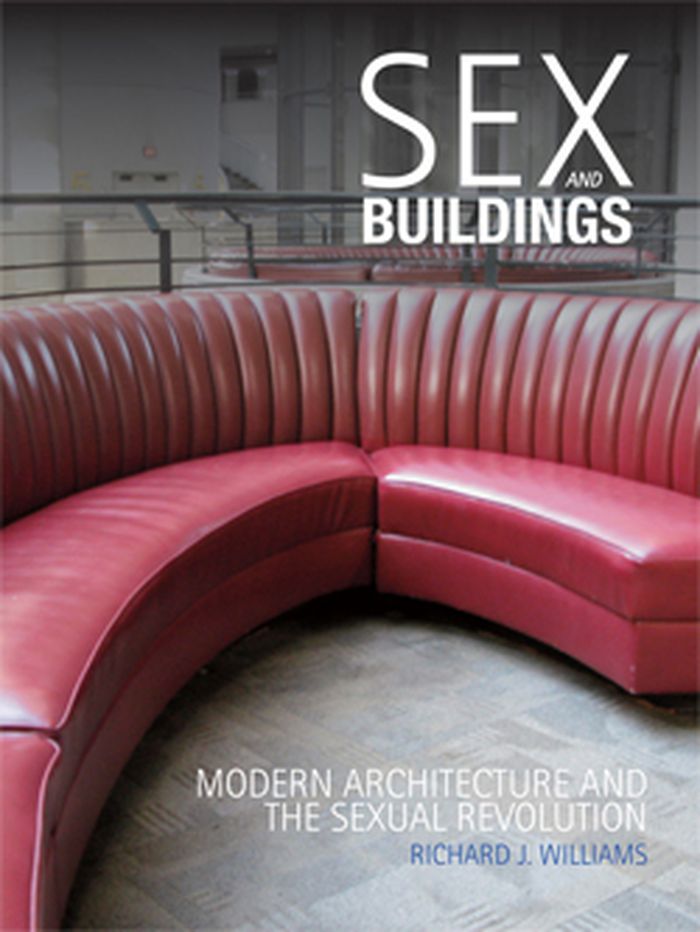
Part architectural history, part cultural history, and part travelogue, Sex and Buildings explores how progressive sexual attitudes manifest themselves in architecture, asking what progressive sexuality might look like architecturally and exploring the successes and failures of buildings' attempts to reflect it. In search of structures that reflect the sexual mores of their inhabitants, Richard J. Williams visits modernist buildings in Southern California, the Westin Bonaventure Hotel, the Playboy Mansion in Chicago, the Seagram in New York, communes from the 1960s, and more.
Sex and buildings: modern architecture and the sexual revolution
Actions:
Prix:
$44.95
(disponible sur commande)
Résumé:
Part architectural history, part cultural history, and part travelogue, Sex and Buildings explores how progressive sexual attitudes manifest themselves in architecture, asking what progressive sexuality might look like architecturally and exploring the successes and failures of buildings' attempts to reflect it. In search of structures that reflect the sexual mores of their inhabitants, Richard J. Williams visits modernist buildings in Southern California, the Westin Bonaventure Hotel, the Playboy Mansion in Chicago, the Seagram in New York, communes from the 1960s, and more.
Classification:
livres
livres
Publication:
février 2013
février 2013


