


394 Résultats
Classification:
livres
livres
Titre:
Living as nature?
Living as nature?
Actions:
Prix:
$17.00
(disponible sur commande)
Résumé:
In a world where artificial intelligence has and increasingly important place in our daily lives, and more and more of our time is spent on screens, what does "Living as Nature" mean anymore? We wanted to answer this question in a two eyed seeing approach, a term coined by Mi’kmaw elder Albert Marshall referring to seeing from one eye with strengths of Indigenous ways of(...)
$17.00
(disponible sur commande)
Résumé:
In a world where artificial intelligence has and increasingly important place in our daily lives, and more and more of our time is spent on screens, what does "Living as Nature" mean anymore? We wanted to answer this question in a two eyed seeing approach, a term coined by Mi’kmaw elder Albert Marshall referring to seeing from one eye with strengths of Indigenous ways of(...)
Publication:
septembre 2025
septembre 2025
Titre:
Living as nature?
Actions:
Prix:
$17.00
(disponible sur commande)
Résumé:
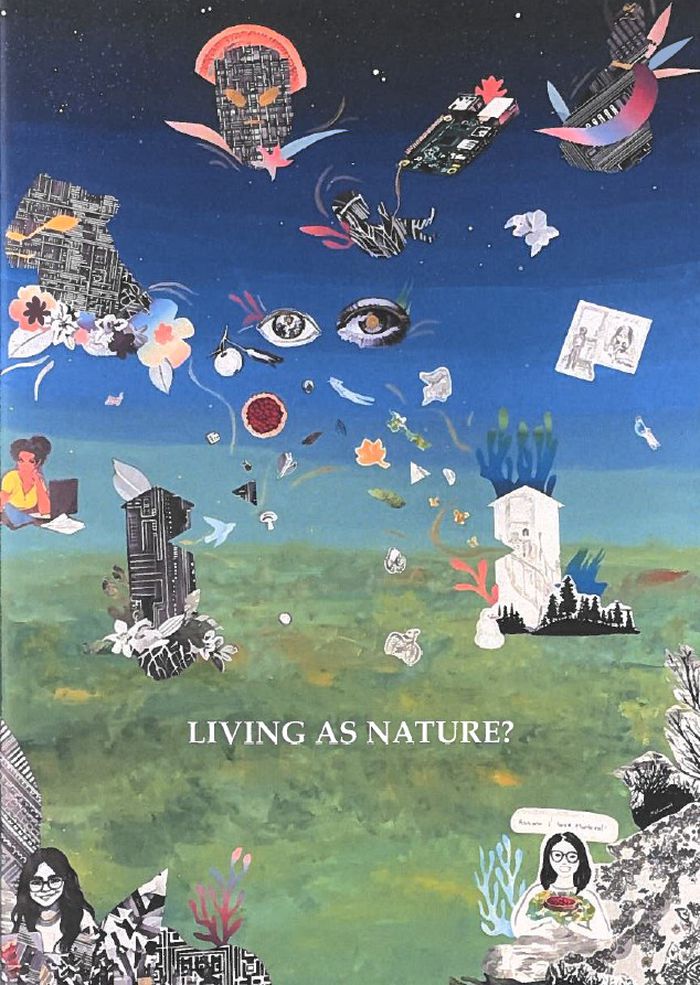
In a world where artificial intelligence has and increasingly important place in our daily lives, and more and more of our time is spent on screens, what does "Living as Nature" mean anymore? We wanted to answer this question in a two eyed seeing approach, a term coined by Mi’kmaw elder Albert Marshall referring to seeing from one eye with strengths of Indigenous ways of knowing, and from the other eye with the strengths of Western ways of knowing, and to use both of these eyes together to move forward. This can be seen through the pairing of Wendat values and the principles of the Montréal Declaration for a Responsible Development of Artificial Intelligence. We offer a mirrored reflection on this topic, from the perspectives of a researcher in AI for biodiversity conservation (Mélisande) and an Indigenous landscape architect (Carling): How can AI researchers working on applications in biodiversity reconcile Western science with Indigenous knowledge and ways of knowing of "Living as Nature?"
Living as nature?
Actions:
Prix:
$17.00
(disponible sur commande)
Résumé:
In a world where artificial intelligence has and increasingly important place in our daily lives, and more and more of our time is spent on screens, what does "Living as Nature" mean anymore? We wanted to answer this question in a two eyed seeing approach, a term coined by Mi’kmaw elder Albert Marshall referring to seeing from one eye with strengths of Indigenous ways of knowing, and from the other eye with the strengths of Western ways of knowing, and to use both of these eyes together to move forward. This can be seen through the pairing of Wendat values and the principles of the Montréal Declaration for a Responsible Development of Artificial Intelligence. We offer a mirrored reflection on this topic, from the perspectives of a researcher in AI for biodiversity conservation (Mélisande) and an Indigenous landscape architect (Carling): How can AI researchers working on applications in biodiversity reconcile Western science with Indigenous knowledge and ways of knowing of "Living as Nature?"
Classification:
livres
livres
Publication:
septembre 2025
septembre 2025
Classification:
livres
livres
Titre:
Book of ruins
Book of ruins
Actions:
Prix:
$80.99
(disponible sur commande)
Résumé:
''Book of ruins'' offers a survey – not encyclopedic, but substantial – of leading moments when the fact and idea of ruins were taken up by writers, travellers and artists: painters, film makers, landscape architects, and architects. Gathering together short texts and extracts that describe and reflect on ruins, dating from remote antiquity (Scipio shedding tears when(...)
$80.99
(disponible sur commande)
Résumé:
''Book of ruins'' offers a survey – not encyclopedic, but substantial – of leading moments when the fact and idea of ruins were taken up by writers, travellers and artists: painters, film makers, landscape architects, and architects. Gathering together short texts and extracts that describe and reflect on ruins, dating from remote antiquity (Scipio shedding tears when(...)
Sujet:
Théorie de l’architecture
Théorie de l’architecture
Publication:
septembre 2022
septembre 2022
Titre:
Book of ruins
Actions:
Prix:
$80.99
(disponible sur commande)
Résumé:
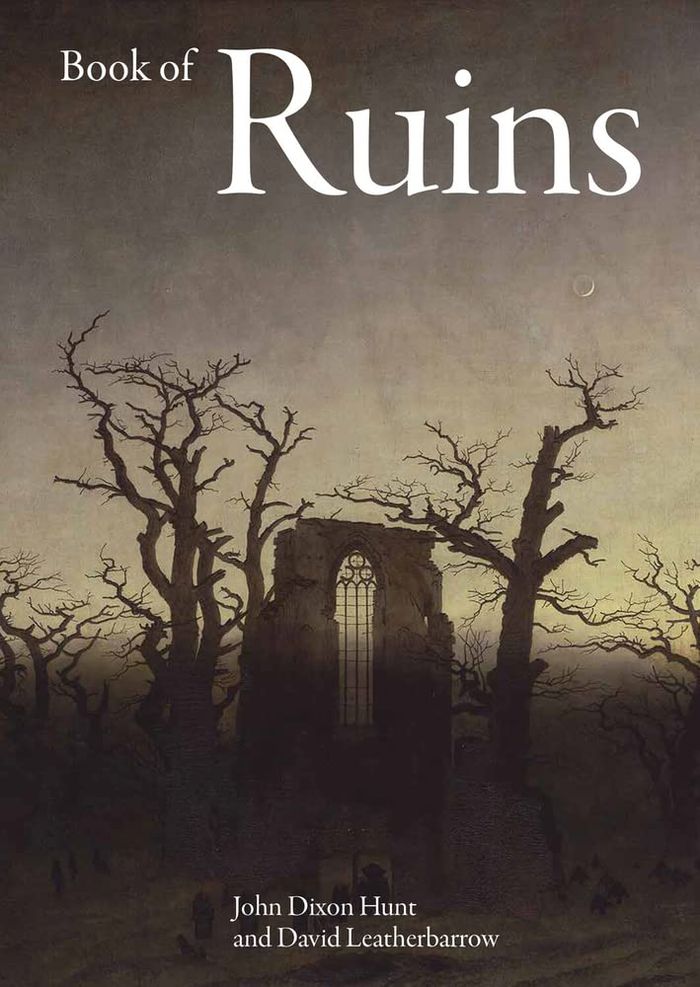
''Book of ruins'' offers a survey – not encyclopedic, but substantial – of leading moments when the fact and idea of ruins were taken up by writers, travellers and artists: painters, film makers, landscape architects, and architects. Gathering together short texts and extracts that describe and reflect on ruins, dating from remote antiquity (Scipio shedding tears when viewing the destruction of Carthage) to present times (the ruins of a modern city, portrayed in the film ''Requiem for Detroit''), it provides a perspective upon what the past has meant to different cultures at different times. Following an introductory essay, the book includes 70 entries, chronologically ordered, each including an indicative image (or two), an introductory commentary by the authors, and the text itself. The texts come from designers (from Bernini through Piranesi to David Chipperfield) as well as other artists (John Piper), and from literary figures (Goethe, Wordsworth, Byron and Shelley, Hugo, and Hardy). It concludes by discussing what we do with ruins by way of preservation, conservation, adaptive reuse and appropriation, and contemporary loss and ruin, as illustrated by 9/11 and the Neues Museum and highlighting the continuing relevance of the ruin.
Book of ruins
Actions:
Prix:
$80.99
(disponible sur commande)
Résumé:
''Book of ruins'' offers a survey – not encyclopedic, but substantial – of leading moments when the fact and idea of ruins were taken up by writers, travellers and artists: painters, film makers, landscape architects, and architects. Gathering together short texts and extracts that describe and reflect on ruins, dating from remote antiquity (Scipio shedding tears when viewing the destruction of Carthage) to present times (the ruins of a modern city, portrayed in the film ''Requiem for Detroit''), it provides a perspective upon what the past has meant to different cultures at different times. Following an introductory essay, the book includes 70 entries, chronologically ordered, each including an indicative image (or two), an introductory commentary by the authors, and the text itself. The texts come from designers (from Bernini through Piranesi to David Chipperfield) as well as other artists (John Piper), and from literary figures (Goethe, Wordsworth, Byron and Shelley, Hugo, and Hardy). It concludes by discussing what we do with ruins by way of preservation, conservation, adaptive reuse and appropriation, and contemporary loss and ruin, as illustrated by 9/11 and the Neues Museum and highlighting the continuing relevance of the ruin.
Classification:
livres
livres
Publication:
septembre 2022
septembre 2022
Sujet:
Théorie de l’architecture
Théorie de l’architecture
Classification:
livres
livres
Prix:
$120.00
(disponible sur commande)
Résumé:
From 1845 to 1862, the Boston partnership of Albert Sands Southworth and Josiah Johnson Hawes maintained the most celebrated photography studio in the United States. Taking as their subjects both the greatest personalities of the day and the natural spectacles of the American landscape, such as Niagara Falls, Southworth & Hawes elevated the new medium of daguerreotype(...)
$120.00
(disponible sur commande)
Résumé:
From 1845 to 1862, the Boston partnership of Albert Sands Southworth and Josiah Johnson Hawes maintained the most celebrated photography studio in the United States. Taking as their subjects both the greatest personalities of the day and the natural spectacles of the American landscape, such as Niagara Falls, Southworth & Hawes elevated the new medium of daguerreotype(...)
Titre:
Young America : the daguerrotypes of Southworth & Hawes
Actions:
Prix:
$120.00
(disponible sur commande)
Résumé:
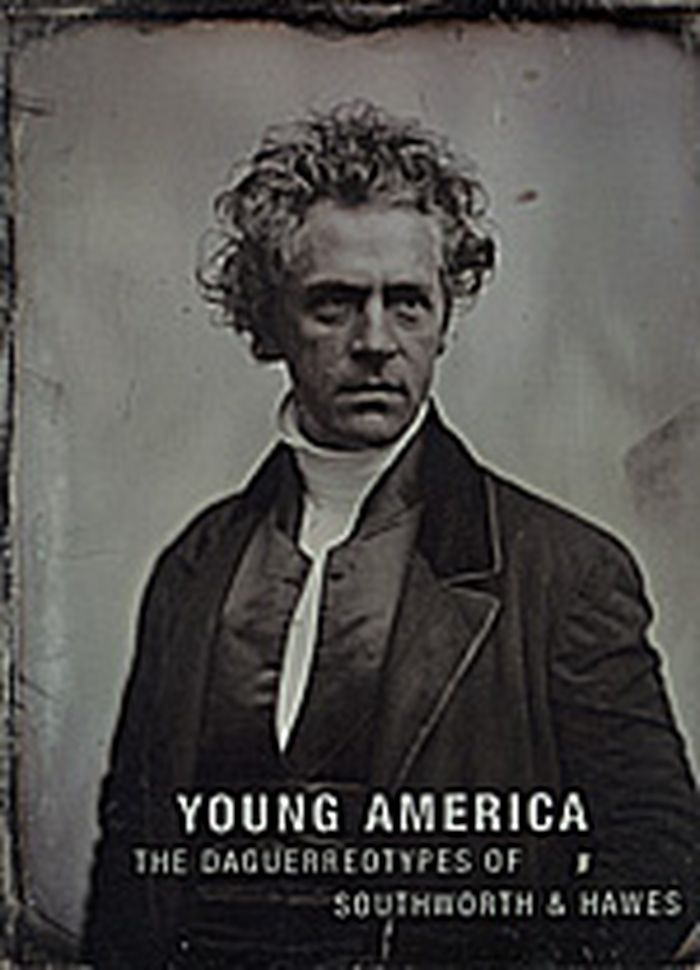
From 1845 to 1862, the Boston partnership of Albert Sands Southworth and Josiah Johnson Hawes maintained the most celebrated photography studio in the United States. Taking as their subjects both the greatest personalities of the day and the natural spectacles of the American landscape, such as Niagara Falls, Southworth & Hawes elevated the new medium of daguerreotype photography to the level of art. Transcending the mere recording of factual detail, their daguerreotypes reflect a quintessentially American aesthetic and embody an emerging national culture and spirit. "Young America" features full-scale color reproductions of all plates in the exhibition as well as 2,000 additional black-and-white illustrations. It includes a critical analysis of the historical and cultural importance of the work of Southworth & Hawes, with original texts by Brian Wallis, ICP Director of Exhibitions and Chief Curator, and Grant Romer, Director of the Advanced Program in Photography Conservation at George Eastman House, among other scholars. Appendices include a chronology, an annotated bibliography, an exploration of the daguerreotype process, brief biographies of the sitters, and a Southworth & Hawes family genealogy, making the catalogue an invaluable resource for researchers as well as general readers. The book includes an annotated bibliography, exhibition checklist and chronology.
Young America : the daguerrotypes of Southworth & Hawes
Actions:
Prix:
$120.00
(disponible sur commande)
Résumé:
From 1845 to 1862, the Boston partnership of Albert Sands Southworth and Josiah Johnson Hawes maintained the most celebrated photography studio in the United States. Taking as their subjects both the greatest personalities of the day and the natural spectacles of the American landscape, such as Niagara Falls, Southworth & Hawes elevated the new medium of daguerreotype photography to the level of art. Transcending the mere recording of factual detail, their daguerreotypes reflect a quintessentially American aesthetic and embody an emerging national culture and spirit. "Young America" features full-scale color reproductions of all plates in the exhibition as well as 2,000 additional black-and-white illustrations. It includes a critical analysis of the historical and cultural importance of the work of Southworth & Hawes, with original texts by Brian Wallis, ICP Director of Exhibitions and Chief Curator, and Grant Romer, Director of the Advanced Program in Photography Conservation at George Eastman House, among other scholars. Appendices include a chronology, an annotated bibliography, an exploration of the daguerreotype process, brief biographies of the sitters, and a Southworth & Hawes family genealogy, making the catalogue an invaluable resource for researchers as well as general readers. The book includes an annotated bibliography, exhibition checklist and chronology.
Classification:
livres
livres
Publication:
janvier 1900, Göttingen
janvier 1900, Göttingen
Sujet:
Monographies photo
Monographies photo
Classification:
livres
livres
Prix:
$51.95
(disponible sur commande)
Résumé:
Trees capture our imagination because they are rooted solidly in the earth but point ethereally toward the sky. They occupy a dimension that has as much to do with time and patience as with place and landscape. They are vertical beings to whom we attribute qualities both divine and human. Since 1991, photographer Barbara Bosworth has been on a quest to photograph(...)
$51.95
(disponible sur commande)
Résumé:
Trees capture our imagination because they are rooted solidly in the earth but point ethereally toward the sky. They occupy a dimension that has as much to do with time and patience as with place and landscape. They are vertical beings to whom we attribute qualities both divine and human. Since 1991, photographer Barbara Bosworth has been on a quest to photograph(...)
Sujet:
Monographies photo
Monographies photo
Publication:
septembre 2005, Cambridge
septembre 2005, Cambridge
Titre:
Trees : national champions / photographs by Barbara Bosworth
Actions:
Prix:
$51.95
(disponible sur commande)
Résumé:
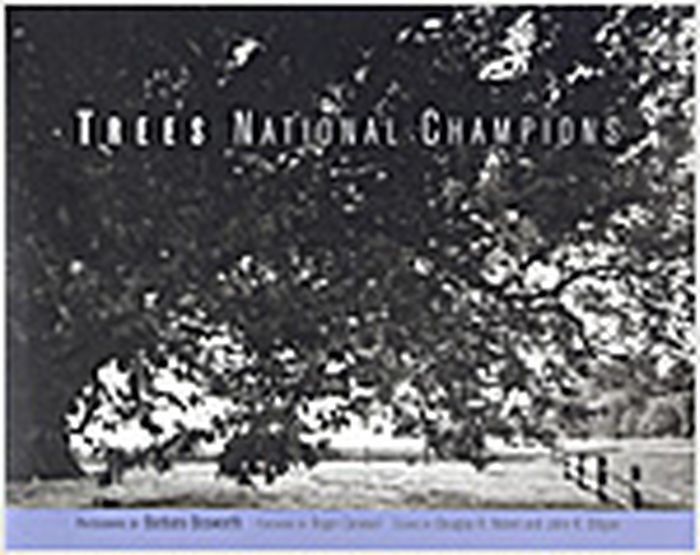
Trees capture our imagination because they are rooted solidly in the earth but point ethereally toward the sky. They occupy a dimension that has as much to do with time and patience as with place and landscape. They are vertical beings to whom we attribute qualities both divine and human. Since 1991, photographer Barbara Bosworth has been on a quest to photograph America's "champion" trees - trees that are the biggest of their species, as recorded in the National Register of Big Trees, a list established and maintained by the nonprofit conservation organization American Forests. She has traveled down highways and up back roads, walked through forests and across clear-cut land, sometimes led by local tree enthusiasts, sometimes alone, to photograph trees that are remarkable not only for their size but for their endurance. Bosworth finds champion trees in backyards, fields, and forests, near roadways, power lines, and sidewalks. Her photographs document the trees' magnificence but also show how they are markers of a changing landscape. The yellow poplar, for example, stands on the fringes of a suburban housing development, in the center of a park for the enjoyment and relaxation of residents. The western red cedar stands alone in the middle of a clear-cut, saved from logging only because it is recorded in the Register as the biggest of its kind. The trees and their surroundings tell us about our relationship with nature and the land. Bosworth captures the ineffable grace and dignity of trees with clarity and directness: the green ash that shades a midwestern crossroads, the common pear that blooms in a Washington field, and the Florida strangler fig with its mass of entwining aerial roots. Her photographs, panoramic views taken with an 8 x 10 camera, show the immensity of the largest species and the hidden triumphs of the smallest. Some trees are dethroned each year because of sickness or destruction, but more often simpy because a new and bigger specimen is discovered; only three trees from the original Register in 1940 are still living today. Bosworth's 70 photographs of champion trees are not only a collection of tree portraits but the story of an American adventure as well. With a foreword by Roger Conover and essays by Douglas R. Nickel and John R. Stilgoe.
Trees : national champions / photographs by Barbara Bosworth
Actions:
Prix:
$51.95
(disponible sur commande)
Résumé:
Trees capture our imagination because they are rooted solidly in the earth but point ethereally toward the sky. They occupy a dimension that has as much to do with time and patience as with place and landscape. They are vertical beings to whom we attribute qualities both divine and human. Since 1991, photographer Barbara Bosworth has been on a quest to photograph America's "champion" trees - trees that are the biggest of their species, as recorded in the National Register of Big Trees, a list established and maintained by the nonprofit conservation organization American Forests. She has traveled down highways and up back roads, walked through forests and across clear-cut land, sometimes led by local tree enthusiasts, sometimes alone, to photograph trees that are remarkable not only for their size but for their endurance. Bosworth finds champion trees in backyards, fields, and forests, near roadways, power lines, and sidewalks. Her photographs document the trees' magnificence but also show how they are markers of a changing landscape. The yellow poplar, for example, stands on the fringes of a suburban housing development, in the center of a park for the enjoyment and relaxation of residents. The western red cedar stands alone in the middle of a clear-cut, saved from logging only because it is recorded in the Register as the biggest of its kind. The trees and their surroundings tell us about our relationship with nature and the land. Bosworth captures the ineffable grace and dignity of trees with clarity and directness: the green ash that shades a midwestern crossroads, the common pear that blooms in a Washington field, and the Florida strangler fig with its mass of entwining aerial roots. Her photographs, panoramic views taken with an 8 x 10 camera, show the immensity of the largest species and the hidden triumphs of the smallest. Some trees are dethroned each year because of sickness or destruction, but more often simpy because a new and bigger specimen is discovered; only three trees from the original Register in 1940 are still living today. Bosworth's 70 photographs of champion trees are not only a collection of tree portraits but the story of an American adventure as well. With a foreword by Roger Conover and essays by Douglas R. Nickel and John R. Stilgoe.
Classification:
livres
livres
Publication:
septembre 2005, Cambridge
septembre 2005, Cambridge
Sujet:
Monographies photo
Monographies photo


