


434 Résultats
Classification:
livres
livres
Actions:
Prix:
$50.50
(disponible en magasin)
Résumé:
For decades, the call for equality and equal opportunity has been heard within the hierarchical world of architecture. The number of those actively working for change is growing. Their goal is to turn architecture into an ethically responsible and socially and ecologically sustainable practice. The publication proceeds from the question of how forms of social injustice(...)
$50.50
(disponible en magasin)
Résumé:
For decades, the call for equality and equal opportunity has been heard within the hierarchical world of architecture. The number of those actively working for change is growing. Their goal is to turn architecture into an ethically responsible and socially and ecologically sustainable practice. The publication proceeds from the question of how forms of social injustice(...)
Titre:
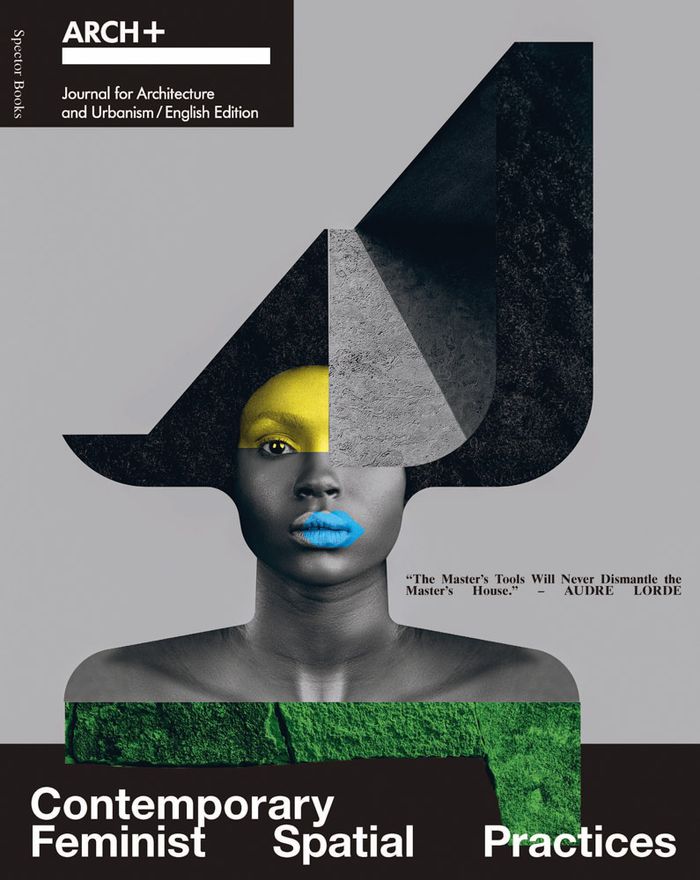
ARCH+ : Contemporary feminist spatial practices
Actions:
Prix:
$50.50
(disponible en magasin)
Résumé:
For decades, the call for equality and equal opportunity has been heard within the hierarchical world of architecture. The number of those actively working for change is growing. Their goal is to turn architecture into an ethically responsible and socially and ecologically sustainable practice. The publication proceeds from the question of how forms of social injustice are entwined on different spatial levels. As its enquiry unfolds, it becomes clear that the fight for gender equality in the built environment must now be linked to other forms of campaigning for social justice (anti-racism, anti-colonialism, the fight against transphobia and homophobia, etc.). As a political medium, architecture can help honour a new pledge of freedom based on a transformative idea of fairness. ARCH+ is Germany’s leading magazine for discourse in the fields of architecture and urbanism.
ARCH+ : Contemporary feminist spatial practices
Actions:
Prix:
$50.50
(disponible en magasin)
Résumé:
For decades, the call for equality and equal opportunity has been heard within the hierarchical world of architecture. The number of those actively working for change is growing. Their goal is to turn architecture into an ethically responsible and socially and ecologically sustainable practice. The publication proceeds from the question of how forms of social injustice are entwined on different spatial levels. As its enquiry unfolds, it becomes clear that the fight for gender equality in the built environment must now be linked to other forms of campaigning for social justice (anti-racism, anti-colonialism, the fight against transphobia and homophobia, etc.). As a political medium, architecture can help honour a new pledge of freedom based on a transformative idea of fairness. ARCH+ is Germany’s leading magazine for discourse in the fields of architecture and urbanism.
Classification:
livres
livres
Publication:
octobre 2023
octobre 2023
Sujet:
Revues
Revues
Classification:
livres
livres

Actions:
Prix:
$48.00
(disponible sur commande)
Résumé:
Grimoires, textbooks of magic and occult knowledge, have existed through the ages alongside other magic and religious texts in part because of the need to create a physical record of magical phenomena, but also to enact magic through spells and rituals. To understand the history of these texts is to understand the influence of the major religions, the development of early(...)
$48.00
(disponible sur commande)
Résumé:
Grimoires, textbooks of magic and occult knowledge, have existed through the ages alongside other magic and religious texts in part because of the need to create a physical record of magical phenomena, but also to enact magic through spells and rituals. To understand the history of these texts is to understand the influence of the major religions, the development of early(...)
Titre:
Art of the Grimoire: An illustrated history of magic books and spells
Actions:
Prix:
$48.00
(disponible sur commande)
Résumé:
Grimoires, textbooks of magic and occult knowledge, have existed through the ages alongside other magic and religious texts in part because of the need to create a physical record of magical phenomena, but also to enact magic through spells and rituals. To understand the history of these texts is to understand the influence of the major religions, the development of early science, the cultural influence of print, the growth of literacy, the social impact of colonialism, and the expansion of esoteric cultures across the oceans. In more than two hundred color illustrations from ancient times to the present, renowned scholar Owen Davies examines little-studied artistic qualities of grimoires, revealing a unique world of design and imagination. The book takes a global approach, considering Egyptian and Greek papyri, ancient Chinese bamboo scripts, South American pulp prints, and Japanese demon encyclopedias, among other examples.
Art of the Grimoire: An illustrated history of magic books and spells
Actions:
Prix:
$48.00
(disponible sur commande)
Résumé:
Grimoires, textbooks of magic and occult knowledge, have existed through the ages alongside other magic and religious texts in part because of the need to create a physical record of magical phenomena, but also to enact magic through spells and rituals. To understand the history of these texts is to understand the influence of the major religions, the development of early science, the cultural influence of print, the growth of literacy, the social impact of colonialism, and the expansion of esoteric cultures across the oceans. In more than two hundred color illustrations from ancient times to the present, renowned scholar Owen Davies examines little-studied artistic qualities of grimoires, revealing a unique world of design and imagination. The book takes a global approach, considering Egyptian and Greek papyri, ancient Chinese bamboo scripts, South American pulp prints, and Japanese demon encyclopedias, among other examples.
Classification:
livres
livres
Publication:
octobre 2023
octobre 2023
Sujet:
Illustration
Illustration
Classification:
livres
livres

Actions:
Prix:
$37.99
(disponible en magasin)
Résumé:
''Checkpoint 300'', the highly securitized border facility between occupied Bethlehem and Jerusalem, is a central feature of Israeli control of Palestinian land and life. An apparatus of turnstiles, overcrowded corridors, and invasive inspections, the checkpoint regulates the movement of hundreds of thousands of Palestinians, granting access to some while excluding most.(...)
$37.99
(disponible en magasin)
Résumé:
''Checkpoint 300'', the highly securitized border facility between occupied Bethlehem and Jerusalem, is a central feature of Israeli control of Palestinian land and life. An apparatus of turnstiles, overcrowded corridors, and invasive inspections, the checkpoint regulates the movement of hundreds of thousands of Palestinians, granting access to some while excluding most.(...)
Titre:
Checkpoint 3000: Colonial space in Palestine
Actions:
Prix:
$37.99
(disponible en magasin)
Résumé:
''Checkpoint 300'', the highly securitized border facility between occupied Bethlehem and Jerusalem, is a central feature of Israeli control of Palestinian land and life. An apparatus of turnstiles, overcrowded corridors, and invasive inspections, the checkpoint regulates the movement of hundreds of thousands of Palestinians, granting access to some while excluding most. Offering a nuanced exploration of space, Mark Griffiths reveals ''Checkpoint 300'' as a stark symbol of Israeli colonialism that embodies larger systems of control and violence. Drawing on nearly a decade of fieldwork, Griffiths examines how colonial power infiltrates family dynamics, enforces gendered mobility restrictions, shapes local economies, and extends into the global exchange of capital and security technologies. He also underscores how Palestinians endure and resist under oppressive conditions and how indigenous forms of life and living are sustained, illuminating how colonial space is contested and countered, unmade and remade.
Checkpoint 3000: Colonial space in Palestine
Actions:
Prix:
$37.99
(disponible en magasin)
Résumé:
''Checkpoint 300'', the highly securitized border facility between occupied Bethlehem and Jerusalem, is a central feature of Israeli control of Palestinian land and life. An apparatus of turnstiles, overcrowded corridors, and invasive inspections, the checkpoint regulates the movement of hundreds of thousands of Palestinians, granting access to some while excluding most. Offering a nuanced exploration of space, Mark Griffiths reveals ''Checkpoint 300'' as a stark symbol of Israeli colonialism that embodies larger systems of control and violence. Drawing on nearly a decade of fieldwork, Griffiths examines how colonial power infiltrates family dynamics, enforces gendered mobility restrictions, shapes local economies, and extends into the global exchange of capital and security technologies. He also underscores how Palestinians endure and resist under oppressive conditions and how indigenous forms of life and living are sustained, illuminating how colonial space is contested and countered, unmade and remade.
Classification:
livres
livres
Publication:
août 2025
août 2025
Sujet:
Arch Moyen-Orient
Arch Moyen-Orient
Classification:
livres
livres

Titre:
Dana Claxton
Dana Claxton
Actions:
Prix:
$91.00
(disponible sur commande)
Résumé:
Dana Claxton (born 1959) is a critically acclaimed, award-winning artist and filmmaker working across film, video, photography, single and multichannel video installation and performance art. Her practice investigates the body, the socio-political and the spiritual within realms of indigenous beauty. This book consolidates our understanding of Dana Claxton’s dominant(...)
$91.00
(disponible sur commande)
Résumé:
Dana Claxton (born 1959) is a critically acclaimed, award-winning artist and filmmaker working across film, video, photography, single and multichannel video installation and performance art. Her practice investigates the body, the socio-political and the spiritual within realms of indigenous beauty. This book consolidates our understanding of Dana Claxton’s dominant(...)
Publication:
septembre 2021
septembre 2021
Titre:
Dana Claxton
Actions:
Prix:
$91.00
(disponible sur commande)
Résumé:
Dana Claxton (born 1959) is a critically acclaimed, award-winning artist and filmmaker working across film, video, photography, single and multichannel video installation and performance art. Her practice investigates the body, the socio-political and the spiritual within realms of indigenous beauty. This book consolidates our understanding of Dana Claxton’s dominant and recurring themes—indigenous history, culture, beauty and spirituality. While Claxton’s art often alludes to the destructive legacy of colonialism, it also celebrates the resurgence of First Nations’ presence and contemporary identity. What emerges is an artist delivering works of ever greater power and conviction. With her expansive and genre-defying practice—photography, videos, mixed-media installations, text works, performances and curatorial work—she continues to critically reimagine the space of the gallery to be accessible for wider Indigenous audiences and to uphold new understandings of beauty.
Dana Claxton
Actions:
Prix:
$91.00
(disponible sur commande)
Résumé:
Dana Claxton (born 1959) is a critically acclaimed, award-winning artist and filmmaker working across film, video, photography, single and multichannel video installation and performance art. Her practice investigates the body, the socio-political and the spiritual within realms of indigenous beauty. This book consolidates our understanding of Dana Claxton’s dominant and recurring themes—indigenous history, culture, beauty and spirituality. While Claxton’s art often alludes to the destructive legacy of colonialism, it also celebrates the resurgence of First Nations’ presence and contemporary identity. What emerges is an artist delivering works of ever greater power and conviction. With her expansive and genre-defying practice—photography, videos, mixed-media installations, text works, performances and curatorial work—she continues to critically reimagine the space of the gallery to be accessible for wider Indigenous audiences and to uphold new understandings of beauty.
Classification:
livres
livres
Publication:
septembre 2021
septembre 2021
Classification:
livres
livres
Actions:
Prix:
$55.00
(disponible sur commande)
Résumé:
Bringing together fifteen scholars of art and culture, ''Unsettling Canadian art history'' addresses the visual and material culture of settler colonialism, enslavement, and racialized diasporas in the contested white settler state of Canada. This collection offers new avenues for scholarship on art, archives, and creative practice by rethinking histories of Canadian(...)
$55.00
(disponible sur commande)
Résumé:
Bringing together fifteen scholars of art and culture, ''Unsettling Canadian art history'' addresses the visual and material culture of settler colonialism, enslavement, and racialized diasporas in the contested white settler state of Canada. This collection offers new avenues for scholarship on art, archives, and creative practice by rethinking histories of Canadian(...)
Titre:
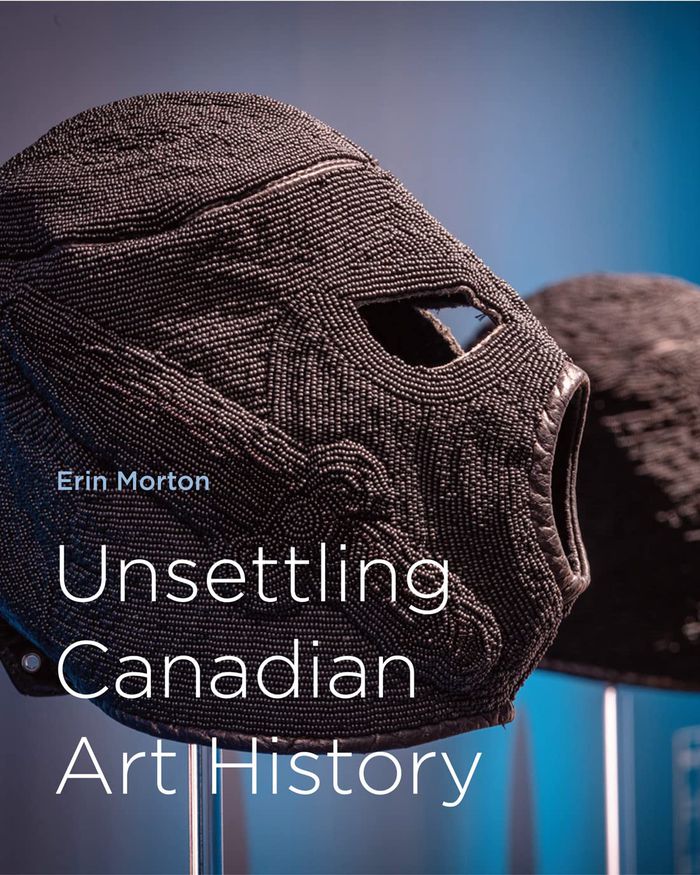
Unsettling Canadian Art History
Actions:
Prix:
$55.00
(disponible sur commande)
Résumé:
Bringing together fifteen scholars of art and culture, ''Unsettling Canadian art history'' addresses the visual and material culture of settler colonialism, enslavement, and racialized diasporas in the contested white settler state of Canada. This collection offers new avenues for scholarship on art, archives, and creative practice by rethinking histories of Canadian colonialisms from Black, Indigenous, racialized, feminist, queer, trans, and Two-Spirit perspectives. Writing across many positionalities, contributors offer chapters that disrupt colonial archives of art and culture, excavating and reconstructing radical Black, Indigenous, and racialized diasporic creation and experience. Exploring the racist frameworks that continue to erase histories of violence and resistance, this book imagines the expansive possibilities of a decolonial future. ''Unsettling Canadian art history'' affirms the importance of collaborative conversations and work in the effort to unsettle scholarship in Canadian art and culture.
Unsettling Canadian Art History
Actions:
Prix:
$55.00
(disponible sur commande)
Résumé:
Bringing together fifteen scholars of art and culture, ''Unsettling Canadian art history'' addresses the visual and material culture of settler colonialism, enslavement, and racialized diasporas in the contested white settler state of Canada. This collection offers new avenues for scholarship on art, archives, and creative practice by rethinking histories of Canadian colonialisms from Black, Indigenous, racialized, feminist, queer, trans, and Two-Spirit perspectives. Writing across many positionalities, contributors offer chapters that disrupt colonial archives of art and culture, excavating and reconstructing radical Black, Indigenous, and racialized diasporic creation and experience. Exploring the racist frameworks that continue to erase histories of violence and resistance, this book imagines the expansive possibilities of a decolonial future. ''Unsettling Canadian art history'' affirms the importance of collaborative conversations and work in the effort to unsettle scholarship in Canadian art and culture.
Classification:
livres
livres
Publication:
juin 2022
juin 2022
Classification:
livres
livres

Actions:
Prix:
$70.00
(disponible sur commande)
Résumé:
Angola cinemas honors the unique, fantastic and unknown architecture of movie theaters in Angola, built in the decades before the end of Portuguese colonial rule in 1975. Initially designed as traditional closed spaces, open-air cinemas with terrace bars became the order of the day, better suited as they were to a tropical climate. The arrival of these cinemas in the(...)
$70.00
(disponible sur commande)
Résumé:
Angola cinemas honors the unique, fantastic and unknown architecture of movie theaters in Angola, built in the decades before the end of Portuguese colonial rule in 1975. Initially designed as traditional closed spaces, open-air cinemas with terrace bars became the order of the day, better suited as they were to a tropical climate. The arrival of these cinemas in the(...)
Titre:
Angola cinemas: a fiction of freedom
Actions:
Prix:
$70.00
(disponible sur commande)
Résumé:
Angola cinemas honors the unique, fantastic and unknown architecture of movie theaters in Angola, built in the decades before the end of Portuguese colonial rule in 1975. Initially designed as traditional closed spaces, open-air cinemas with terrace bars became the order of the day, better suited as they were to a tropical climate. The arrival of these cinemas in the 1960s brought atmosphere and elegance to the experience of going to the movies; but these urban cathedrals were also, importantly, a place where social barriers dissolved and where liberation from colonialism was possible. Walter Fernandes' (born 1979) photographs offer not only an examination of the architectural history of these buildings, but also an important document of urban organization in the twentieth century, as well as the changing mentalities of a society living with the prospect of its independence.
Angola cinemas: a fiction of freedom
Actions:
Prix:
$70.00
(disponible sur commande)
Résumé:
Angola cinemas honors the unique, fantastic and unknown architecture of movie theaters in Angola, built in the decades before the end of Portuguese colonial rule in 1975. Initially designed as traditional closed spaces, open-air cinemas with terrace bars became the order of the day, better suited as they were to a tropical climate. The arrival of these cinemas in the 1960s brought atmosphere and elegance to the experience of going to the movies; but these urban cathedrals were also, importantly, a place where social barriers dissolved and where liberation from colonialism was possible. Walter Fernandes' (born 1979) photographs offer not only an examination of the architectural history of these buildings, but also an important document of urban organization in the twentieth century, as well as the changing mentalities of a society living with the prospect of its independence.
Classification:
livres
livres
Publication:
février 2015
février 2015
Sujet:
Monographies photo
Monographies photo
Classification:
livres
livres

Actions:
Prix:
$124.00
(disponible sur commande)
Résumé:
Featuring photographs and video stills made over more than a decade, "The distance within" reflects on Nicola Brandt’s German and Namibian inheritance and deconstructs certain established ways of seeing Namibia. Brandt traveled the country extensively, documenting landscapes and people, structures and encounters, to reveal ensnared histories of German colonialism,(...)
$124.00
(disponible sur commande)
Résumé:
Featuring photographs and video stills made over more than a decade, "The distance within" reflects on Nicola Brandt’s German and Namibian inheritance and deconstructs certain established ways of seeing Namibia. Brandt traveled the country extensively, documenting landscapes and people, structures and encounters, to reveal ensnared histories of German colonialism,(...)
Titre:
Nicola Brandt: The distance within
Actions:
Prix:
$124.00
(disponible sur commande)
Résumé:
Featuring photographs and video stills made over more than a decade, "The distance within" reflects on Nicola Brandt’s German and Namibian inheritance and deconstructs certain established ways of seeing Namibia. Brandt traveled the country extensively, documenting landscapes and people, structures and encounters, to reveal ensnared histories of German colonialism, National Socialism and apartheid. Markers of these histories range from the ephemeral and private, such as a dilapidated mound of stones as a roadside memorial, to official sites of remembrance and resistance, particularly for colonial atrocities. Alongside her images, Brandt assembles texts by thought leaders in photography, postcolonial cultures, memory and genocide studies, as well as material from private and public archives, to understand enduring blind spots. The result is an intersectional argument in favor of reclaiming suppressed indigenous stories and identities, undoing romantic notions of whiteness, and, ultimately, illuminating what has not been visible.
Nicola Brandt: The distance within
Actions:
Prix:
$124.00
(disponible sur commande)
Résumé:
Featuring photographs and video stills made over more than a decade, "The distance within" reflects on Nicola Brandt’s German and Namibian inheritance and deconstructs certain established ways of seeing Namibia. Brandt traveled the country extensively, documenting landscapes and people, structures and encounters, to reveal ensnared histories of German colonialism, National Socialism and apartheid. Markers of these histories range from the ephemeral and private, such as a dilapidated mound of stones as a roadside memorial, to official sites of remembrance and resistance, particularly for colonial atrocities. Alongside her images, Brandt assembles texts by thought leaders in photography, postcolonial cultures, memory and genocide studies, as well as material from private and public archives, to understand enduring blind spots. The result is an intersectional argument in favor of reclaiming suppressed indigenous stories and identities, undoing romantic notions of whiteness, and, ultimately, illuminating what has not been visible.
Classification:
livres
livres
Publication:
mai 2024
mai 2024
Sujet:
Monographies photo
Monographies photo
Classification:
livres
livres

Actions:
Prix:
$41.99
(disponible en magasin)
Résumé:
As global rates of plant and animal extinctions mount, anxieties about the future of the earth’s ecosystems are fueling ever more ambitious efforts at conservation, which draw on Western scientific principles to manage species and biodiversity. In "Revenant ecologies," Audra Mitchell argues that these responses not only ignore but also magnify powerful forms of structural(...)
$41.99
(disponible en magasin)
Résumé:
As global rates of plant and animal extinctions mount, anxieties about the future of the earth’s ecosystems are fueling ever more ambitious efforts at conservation, which draw on Western scientific principles to manage species and biodiversity. In "Revenant ecologies," Audra Mitchell argues that these responses not only ignore but also magnify powerful forms of structural(...)
Titre:
Revenant ecologies: Defying the violence of extinction and conservation
Actions:
Prix:
$41.99
(disponible en magasin)
Résumé:
As global rates of plant and animal extinctions mount, anxieties about the future of the earth’s ecosystems are fueling ever more ambitious efforts at conservation, which draw on Western scientific principles to manage species and biodiversity. In "Revenant ecologies," Audra Mitchell argues that these responses not only ignore but also magnify powerful forms of structural violence like colonialism, racism, genocide, extractivism, ableism, and heteronormativity, ultimately contributing to the destruction of unique life forms and ecosystems. Critiquing the Western discourse of global extinction and biodiversity through the lens of diverse Indigenous philosophies and other marginalized knowledge systems, "Revenant ecologies," promotes new ways of articulating the ethical enormity of global extinction. Mitchell offers an ambitious framework—(bio)plurality—that focuses on nurturing unique, irreplaceable worlds, relations, and ecosystems, aiming to transform global ecological–political relations, including through processes of land return and critically confronting discourses on "human extinction."
Revenant ecologies: Defying the violence of extinction and conservation
Actions:
Prix:
$41.99
(disponible en magasin)
Résumé:
As global rates of plant and animal extinctions mount, anxieties about the future of the earth’s ecosystems are fueling ever more ambitious efforts at conservation, which draw on Western scientific principles to manage species and biodiversity. In "Revenant ecologies," Audra Mitchell argues that these responses not only ignore but also magnify powerful forms of structural violence like colonialism, racism, genocide, extractivism, ableism, and heteronormativity, ultimately contributing to the destruction of unique life forms and ecosystems. Critiquing the Western discourse of global extinction and biodiversity through the lens of diverse Indigenous philosophies and other marginalized knowledge systems, "Revenant ecologies," promotes new ways of articulating the ethical enormity of global extinction. Mitchell offers an ambitious framework—(bio)plurality—that focuses on nurturing unique, irreplaceable worlds, relations, and ecosystems, aiming to transform global ecological–political relations, including through processes of land return and critically confronting discourses on "human extinction."
Classification:
livres
livres
Publication:
janvier 2024
janvier 2024
Classification:
livres
livres
Titre:
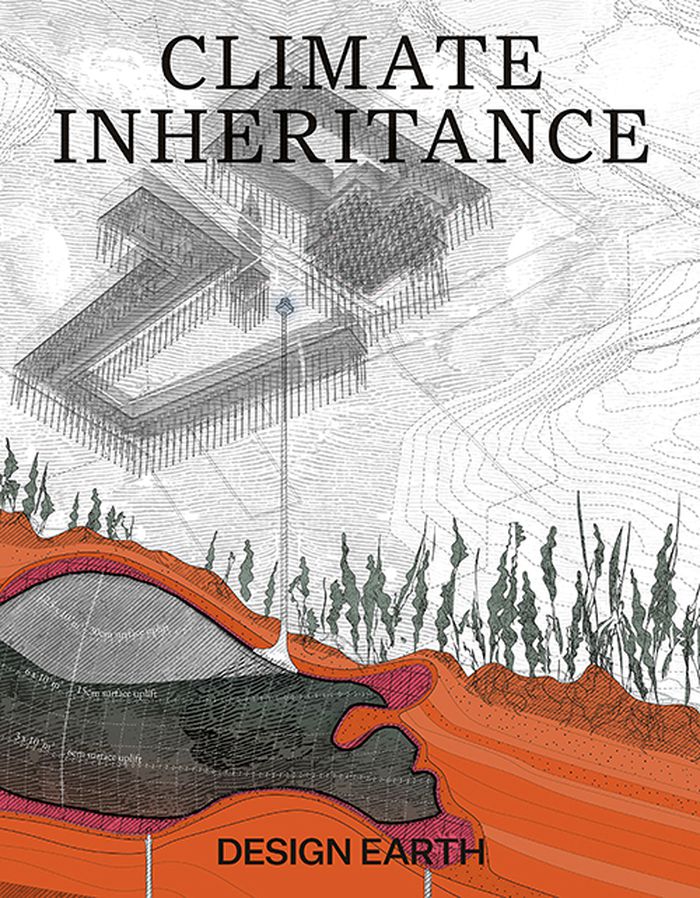
Climate inheritance
Climate inheritance
Actions:
Prix:
$45.00
(disponible sur commande)
Résumé:
Climate Inheritance is a speculative design research publication that reckons with the complexity of world and heritage in the Anthropocene. The impacts of climate change on heritage sites—from Venice flooding to extinction in the Galápagos Islands—have garnered empathetic media attention in a landscape that has otherwise failed to communicate the urgency of the climate(...)
$45.00
(disponible sur commande)
Résumé:
Climate Inheritance is a speculative design research publication that reckons with the complexity of world and heritage in the Anthropocene. The impacts of climate change on heritage sites—from Venice flooding to extinction in the Galápagos Islands—have garnered empathetic media attention in a landscape that has otherwise failed to communicate the urgency of the climate(...)
Sujet:
L'écologie de l'architecure
L'écologie de l'architecure
Publication:
septembre 2023
septembre 2023
Titre:
Climate inheritance
Actions:
Prix:
$45.00
(disponible sur commande)
Résumé:
Climate Inheritance is a speculative design research publication that reckons with the complexity of world and heritage in the Anthropocene. The impacts of climate change on heritage sites—from Venice flooding to extinction in the Galápagos Islands—have garnered empathetic media attention in a landscape that has otherwise failed to communicate the urgency of the climate crisis. In a strategic subversion of the media aura of heritage, DESIGN EARTH casts ten World Heritage sites as narrative figures to visualize pervasive climate risks—rising sea levels, extinction, droughts, air pollution, melting glaciers, material vulnerability, unchecked tourism, and the massive displacement of communities and cultural artifacts—all while situating the present emergency within the wreckages of other ends of world, replete with the salvages of extractivism, racism, and settler colonialism. The possibilities of such climate inheritances are narrated in drawing triptychs and mythologies that bequeath other worlds and values.
Climate inheritance
Actions:
Prix:
$45.00
(disponible sur commande)
Résumé:
Climate Inheritance is a speculative design research publication that reckons with the complexity of world and heritage in the Anthropocene. The impacts of climate change on heritage sites—from Venice flooding to extinction in the Galápagos Islands—have garnered empathetic media attention in a landscape that has otherwise failed to communicate the urgency of the climate crisis. In a strategic subversion of the media aura of heritage, DESIGN EARTH casts ten World Heritage sites as narrative figures to visualize pervasive climate risks—rising sea levels, extinction, droughts, air pollution, melting glaciers, material vulnerability, unchecked tourism, and the massive displacement of communities and cultural artifacts—all while situating the present emergency within the wreckages of other ends of world, replete with the salvages of extractivism, racism, and settler colonialism. The possibilities of such climate inheritances are narrated in drawing triptychs and mythologies that bequeath other worlds and values.
Classification:
livres
livres
Publication:
septembre 2023
septembre 2023
Sujet:
L'écologie de l'architecure
L'écologie de l'architecure
Classification:
livres
livres
Actions:
Prix:
$66.99
(disponible en magasin)
Résumé:
Nina Mö ntmann's timely book extends the decolonisation debate to the institutions of contemporary art. In a thoughtfully articulated text, illustrated with pertinent examples of best practice, she argues that museums and galleries of contemporary art have a responsibility to "decenter" their institutions, removing from their collections, exhibition policies and(...)
$66.99
(disponible en magasin)
Résumé:
Nina Mö ntmann's timely book extends the decolonisation debate to the institutions of contemporary art. In a thoughtfully articulated text, illustrated with pertinent examples of best practice, she argues that museums and galleries of contemporary art have a responsibility to "decenter" their institutions, removing from their collections, exhibition policies and(...)
Titre:
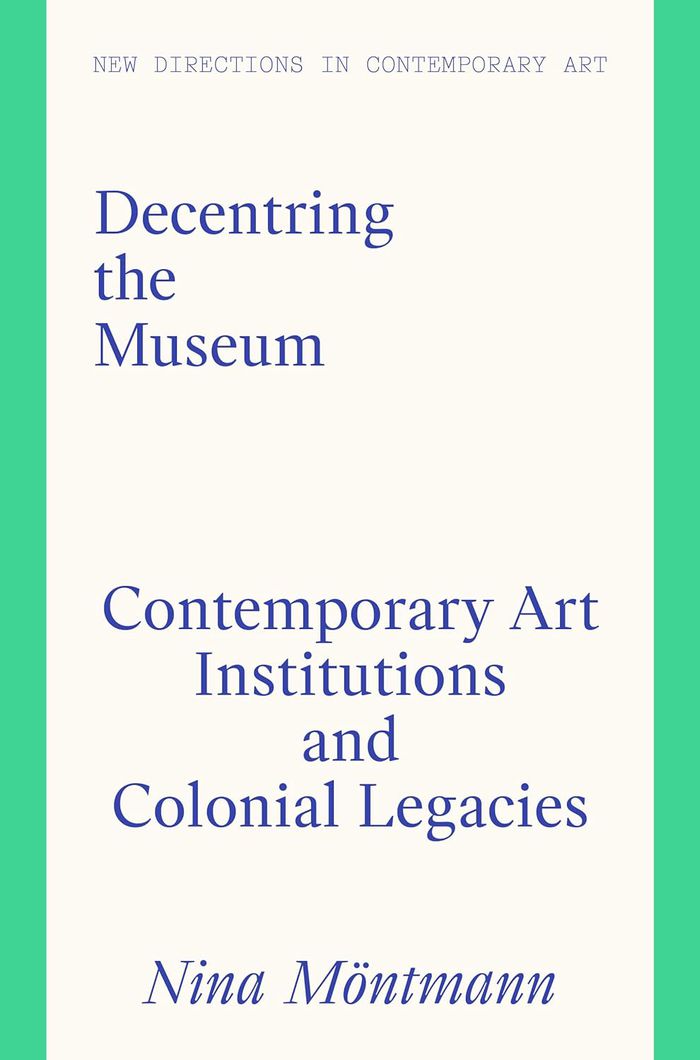
Decentring the museum: Contemporary art institutions and colonial legacies
Actions:
Prix:
$66.99
(disponible en magasin)
Résumé:
Nina Mö ntmann's timely book extends the decolonisation debate to the institutions of contemporary art. In a thoughtfully articulated text, illustrated with pertinent examples of best practice, she argues that museums and galleries of contemporary art have a responsibility to "decenter" their institutions, removing from their collections, exhibition policies and infrastructures a deeply embedded Euro-centric cultural focus with roots in the history of colonialism. In this, she argues, they can learn from the example both of anthropological museums (such as the Humboldt Forum in Berlin and the British Museum), which are engaged in debates about the colonial histories of their collections, and of small-scale art spaces (such as La Colonie in Paris or Savvy Contemporary in Berlin), which have the flexibility to initiate different kinds of conversation – for example, by programming exhibitions and events in collaboration with local diasporic communities from the global south.
Decentring the museum: Contemporary art institutions and colonial legacies
Actions:
Prix:
$66.99
(disponible en magasin)
Résumé:
Nina Mö ntmann's timely book extends the decolonisation debate to the institutions of contemporary art. In a thoughtfully articulated text, illustrated with pertinent examples of best practice, she argues that museums and galleries of contemporary art have a responsibility to "decenter" their institutions, removing from their collections, exhibition policies and infrastructures a deeply embedded Euro-centric cultural focus with roots in the history of colonialism. In this, she argues, they can learn from the example both of anthropological museums (such as the Humboldt Forum in Berlin and the British Museum), which are engaged in debates about the colonial histories of their collections, and of small-scale art spaces (such as La Colonie in Paris or Savvy Contemporary in Berlin), which have the flexibility to initiate different kinds of conversation – for example, by programming exhibitions and events in collaboration with local diasporic communities from the global south.
Classification:
livres
livres
Publication:
décembre 2023
décembre 2023
Sujet:
Muséologie
Muséologie


