


435 Résultats
Classification:
livres
livres
Actions:
Prix:
$98.00
(disponible sur commande)
Résumé:
If you enter an institutional mineralogical collection, you typically encounter glass cabinets organized by classification systems according to material properties. Yet, each mineral carries with it a history of extraction, destruction, (dis)possession, and global relations. "Transpositional geologies" localizes such collections as indices of the afterlife of colonialism(...)
$98.00
(disponible sur commande)
Résumé:
If you enter an institutional mineralogical collection, you typically encounter glass cabinets organized by classification systems according to material properties. Yet, each mineral carries with it a history of extraction, destruction, (dis)possession, and global relations. "Transpositional geologies" localizes such collections as indices of the afterlife of colonialism(...)
Titre:
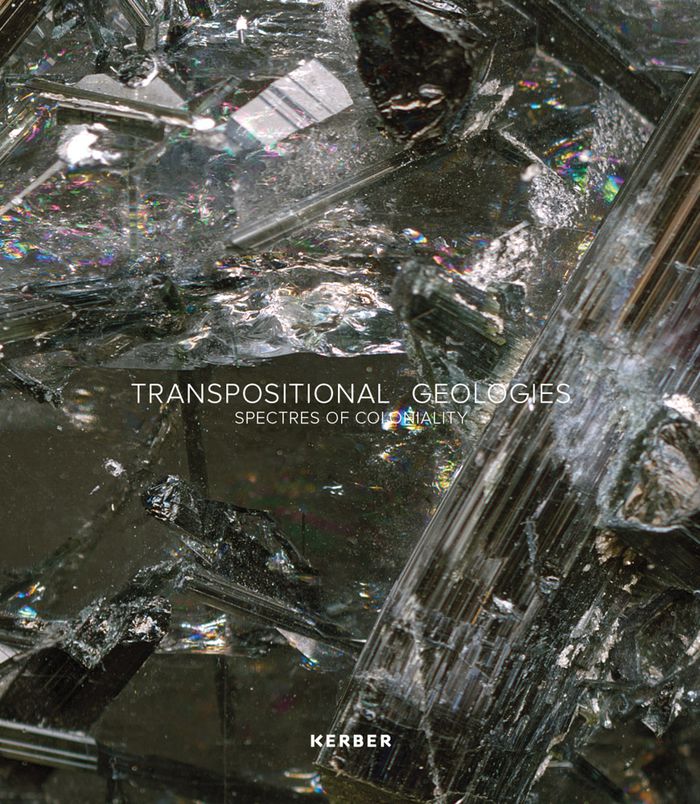
Transpositional geologies: Spectres of coloniality
Actions:
Prix:
$98.00
(disponible sur commande)
Résumé:
If you enter an institutional mineralogical collection, you typically encounter glass cabinets organized by classification systems according to material properties. Yet, each mineral carries with it a history of extraction, destruction, (dis)possession, and global relations. "Transpositional geologies" localizes such collections as indices of the afterlife of colonialism and proposes an evolving political geology, reading mineral specimens as objects of "culture" rather than of "nature." Capturing his five-year artistic engagement and cultural collaboration in Namibia and Germany, Sascha Mikloweit brings together international voices from fields including anthropology, critical theory, geology, history, museum studies, philosophy, poetry, public administration—and the perspectives of boltwoodite, cerussite, or smithsonite. Rock by rock, this exquisitely designed volume invites us to engage with a progressively nuanced reading of geology’s history: its epistemic violence, omissions and racial regimes, and how the lasting residues of its colonial legacies continue to shape our present-day extractive realities.
Transpositional geologies: Spectres of coloniality
Actions:
Prix:
$98.00
(disponible sur commande)
Résumé:
If you enter an institutional mineralogical collection, you typically encounter glass cabinets organized by classification systems according to material properties. Yet, each mineral carries with it a history of extraction, destruction, (dis)possession, and global relations. "Transpositional geologies" localizes such collections as indices of the afterlife of colonialism and proposes an evolving political geology, reading mineral specimens as objects of "culture" rather than of "nature." Capturing his five-year artistic engagement and cultural collaboration in Namibia and Germany, Sascha Mikloweit brings together international voices from fields including anthropology, critical theory, geology, history, museum studies, philosophy, poetry, public administration—and the perspectives of boltwoodite, cerussite, or smithsonite. Rock by rock, this exquisitely designed volume invites us to engage with a progressively nuanced reading of geology’s history: its epistemic violence, omissions and racial regimes, and how the lasting residues of its colonial legacies continue to shape our present-day extractive realities.
Classification:
livres
livres
Publication:
août 2025
août 2025
Sujet:
Théorie de l’art
Théorie de l’art
Classification:
livres
livres

Actions:
Prix:
$124.00
(disponible sur commande)
Résumé:
Featuring photographs and video stills made over more than a decade, "The distance within" reflects on Nicola Brandt’s German and Namibian inheritance and deconstructs certain established ways of seeing Namibia. Brandt traveled the country extensively, documenting landscapes and people, structures and encounters, to reveal ensnared histories of German colonialism,(...)
$124.00
(disponible sur commande)
Résumé:
Featuring photographs and video stills made over more than a decade, "The distance within" reflects on Nicola Brandt’s German and Namibian inheritance and deconstructs certain established ways of seeing Namibia. Brandt traveled the country extensively, documenting landscapes and people, structures and encounters, to reveal ensnared histories of German colonialism,(...)
Titre:
Nicola Brandt: The distance within
Actions:
Prix:
$124.00
(disponible sur commande)
Résumé:
Featuring photographs and video stills made over more than a decade, "The distance within" reflects on Nicola Brandt’s German and Namibian inheritance and deconstructs certain established ways of seeing Namibia. Brandt traveled the country extensively, documenting landscapes and people, structures and encounters, to reveal ensnared histories of German colonialism, National Socialism and apartheid. Markers of these histories range from the ephemeral and private, such as a dilapidated mound of stones as a roadside memorial, to official sites of remembrance and resistance, particularly for colonial atrocities. Alongside her images, Brandt assembles texts by thought leaders in photography, postcolonial cultures, memory and genocide studies, as well as material from private and public archives, to understand enduring blind spots. The result is an intersectional argument in favor of reclaiming suppressed indigenous stories and identities, undoing romantic notions of whiteness, and, ultimately, illuminating what has not been visible.
Nicola Brandt: The distance within
Actions:
Prix:
$124.00
(disponible sur commande)
Résumé:
Featuring photographs and video stills made over more than a decade, "The distance within" reflects on Nicola Brandt’s German and Namibian inheritance and deconstructs certain established ways of seeing Namibia. Brandt traveled the country extensively, documenting landscapes and people, structures and encounters, to reveal ensnared histories of German colonialism, National Socialism and apartheid. Markers of these histories range from the ephemeral and private, such as a dilapidated mound of stones as a roadside memorial, to official sites of remembrance and resistance, particularly for colonial atrocities. Alongside her images, Brandt assembles texts by thought leaders in photography, postcolonial cultures, memory and genocide studies, as well as material from private and public archives, to understand enduring blind spots. The result is an intersectional argument in favor of reclaiming suppressed indigenous stories and identities, undoing romantic notions of whiteness, and, ultimately, illuminating what has not been visible.
Classification:
livres
livres
Publication:
mai 2024
mai 2024
Sujet:
Monographies photo
Monographies photo
Classification:
livres
livres

Prix:
$84.00
(disponible sur commande)
Résumé:
This groundbreaking project summarizes how contemporary Indigenous photographers have taken over the conversation about how their cultures and lives are depicted through their dynamic embrace of three interwoven themes: Survivance, Nation and Indigenous Visuality. These photographers enact a key shift away from privileging settler-colonialism, foregrounding instead an(...)
$84.00
(disponible sur commande)
Résumé:
This groundbreaking project summarizes how contemporary Indigenous photographers have taken over the conversation about how their cultures and lives are depicted through their dynamic embrace of three interwoven themes: Survivance, Nation and Indigenous Visuality. These photographers enact a key shift away from privileging settler-colonialism, foregrounding instead an(...)
Titre:
Speaking with light: contemporary indigenous photography
Actions:
Prix:
$84.00
(disponible sur commande)
Résumé:
This groundbreaking project summarizes how contemporary Indigenous photographers have taken over the conversation about how their cultures and lives are depicted through their dynamic embrace of three interwoven themes: Survivance, Nation and Indigenous Visuality. These photographers enact a key shift away from privileging settler-colonialism, foregrounding instead an Indigenous sense of community and visuality. ''Speaking with Light'' reveals and examines these Indigenous artists’ explorations of themes such as identity, the contribution of customary practice to contemporary life, belonging and the assistance that Indigenous worldviews can provide to building healthier relationships with each other and the earth. The book comprises four sections bridged by transitions and ending with a globalization of the discussion. Texts by key Indigenous scholars are followed by a series of plates illustrating many of the exhibition works. ''Speaking with Light'' is a summary statement about the preoccupations and dynamism of Indigenous photography today.
Speaking with light: contemporary indigenous photography
Actions:
Prix:
$84.00
(disponible sur commande)
Résumé:
This groundbreaking project summarizes how contemporary Indigenous photographers have taken over the conversation about how their cultures and lives are depicted through their dynamic embrace of three interwoven themes: Survivance, Nation and Indigenous Visuality. These photographers enact a key shift away from privileging settler-colonialism, foregrounding instead an Indigenous sense of community and visuality. ''Speaking with Light'' reveals and examines these Indigenous artists’ explorations of themes such as identity, the contribution of customary practice to contemporary life, belonging and the assistance that Indigenous worldviews can provide to building healthier relationships with each other and the earth. The book comprises four sections bridged by transitions and ending with a globalization of the discussion. Texts by key Indigenous scholars are followed by a series of plates illustrating many of the exhibition works. ''Speaking with Light'' is a summary statement about the preoccupations and dynamism of Indigenous photography today.
Classification:
livres
livres
Publication:
novembre 2023
novembre 2023
Sujet:
Photographie- collections
Photographie- collections
Classification:
livres
livres
Actions:
Prix:
$48.95
(disponible sur commande)
Résumé:
From its foundation in 1957 to its self-dissolution in 1972, the Situationist International established itself as one of the most radical revolutionary organisations of the twentieth century. This book brings together leading researchers on the SI to provide a comprehensive critical analysis of the group's key concepts and contexts, from its relationship to earlier(...)
$48.95
(disponible sur commande)
Résumé:
From its foundation in 1957 to its self-dissolution in 1972, the Situationist International established itself as one of the most radical revolutionary organisations of the twentieth century. This book brings together leading researchers on the SI to provide a comprehensive critical analysis of the group's key concepts and contexts, from its relationship to earlier(...)
Titre:
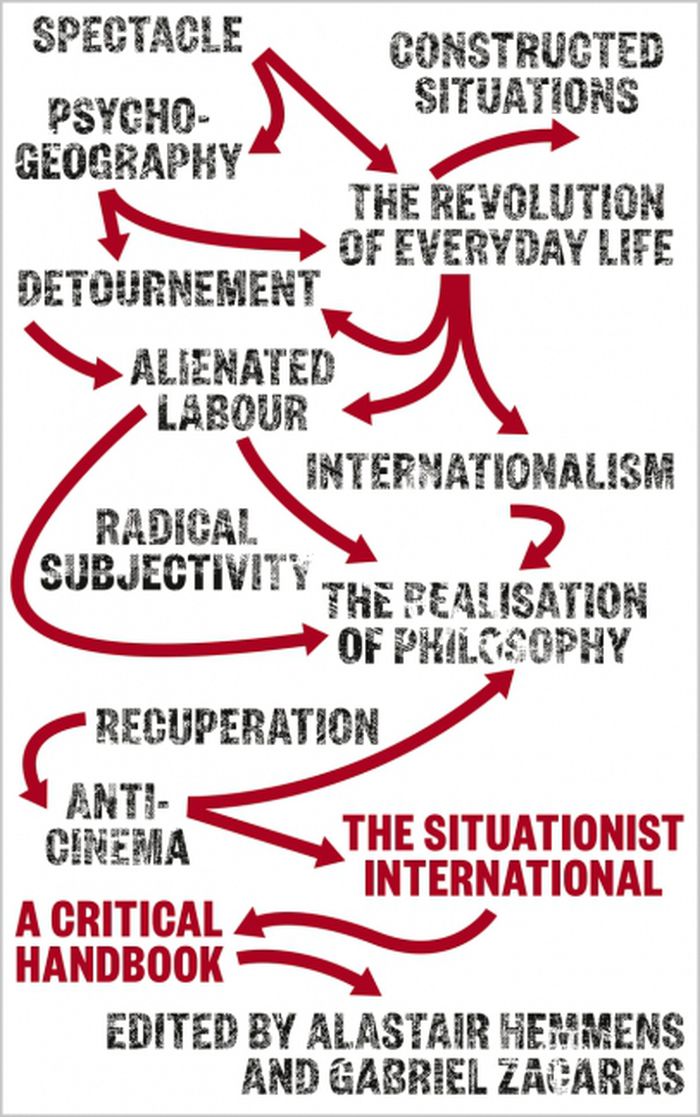
The Situationist International: A critical handbook
Actions:
Prix:
$48.95
(disponible sur commande)
Résumé:
From its foundation in 1957 to its self-dissolution in 1972, the Situationist International established itself as one of the most radical revolutionary organisations of the twentieth century. This book brings together leading researchers on the SI to provide a comprehensive critical analysis of the group's key concepts and contexts, from its relationship to earlier artistic avant-gardes, romanticism, Hegelianism, the history of the workers' movement and May '68 to the concepts and practices of 'spectacle', 'constructed situations', 'everyday life' and 'detournement'. The volume also considers historically underexamined areas of the SI, including the situation of women in the group and its opposition to colonialism and racism. With contributions from a broad range of thinkers including Anselm Jappe and Michael Loewy, this account takes a fresh look at the complex workings of a group that has come to define radical politics and culture in the post-war period.
The Situationist International: A critical handbook
Actions:
Prix:
$48.95
(disponible sur commande)
Résumé:
From its foundation in 1957 to its self-dissolution in 1972, the Situationist International established itself as one of the most radical revolutionary organisations of the twentieth century. This book brings together leading researchers on the SI to provide a comprehensive critical analysis of the group's key concepts and contexts, from its relationship to earlier artistic avant-gardes, romanticism, Hegelianism, the history of the workers' movement and May '68 to the concepts and practices of 'spectacle', 'constructed situations', 'everyday life' and 'detournement'. The volume also considers historically underexamined areas of the SI, including the situation of women in the group and its opposition to colonialism and racism. With contributions from a broad range of thinkers including Anselm Jappe and Michael Loewy, this account takes a fresh look at the complex workings of a group that has come to define radical politics and culture in the post-war period.
Classification:
livres
livres
Publication:
avril 2020
avril 2020
Sujet:
Théorie/ philosophie
Théorie/ philosophie
Classification:
livres
livres
Titre:
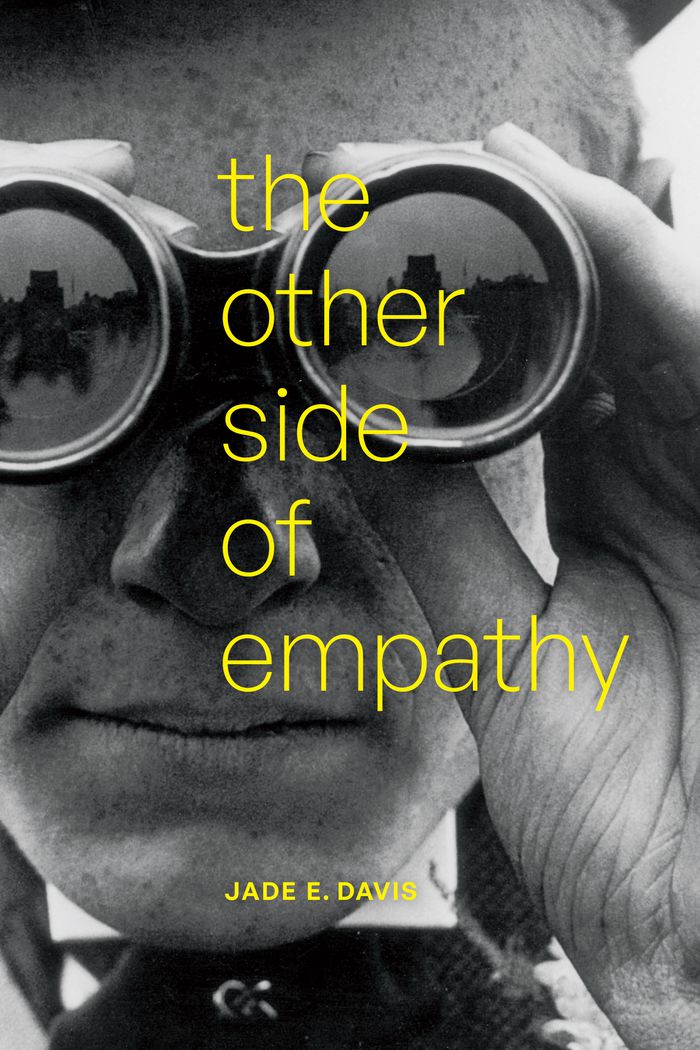
The other side of empathy
The other side of empathy
Actions:
Prix:
$31.95
(disponible sur commande)
Résumé:
In The Other Side of Empathy, Jade E. Davis contests the value of empathy as an affective or critical tool. Whether focusing on technology, colonialism, or racism, she shows how empathy can obscure relationships of dominance, control, submission, and victimization, arguing that these histories taint the whole concept of empathy. Drawing on digital archives of photographs,(...)
$31.95
(disponible sur commande)
Résumé:
In The Other Side of Empathy, Jade E. Davis contests the value of empathy as an affective or critical tool. Whether focusing on technology, colonialism, or racism, she shows how empathy can obscure relationships of dominance, control, submission, and victimization, arguing that these histories taint the whole concept of empathy. Drawing on digital archives of photographs,(...)
Titre:
The other side of empathy
Actions:
Prix:
$31.95
(disponible sur commande)
Résumé:
In The Other Side of Empathy, Jade E. Davis contests the value of empathy as an affective or critical tool. Whether focusing on technology, colonialism, or racism, she shows how empathy can obscure relationships of dominance, control, submission, and victimization, arguing that these histories taint the whole concept of empathy. Drawing on digital archives of photographs, memoirs, newspapers, interviews, and advertisements regarding nineteenth-century ethnographic museums and human zoos, Davis shows how empathetic responses erase culpabilities from those institutions that commodify difference. She also contends that empathy’s mediation through digital technology cannot lead to more ethical actions, as technology only connects representations of people rather than the people themselves. In empathy’s place, Davis proposes mutual recognition as a way to see and experience others beyond colonial modes of empathy. Davis illustrates that moving beyond empathy allows for a more nuanced understanding of the colonial past and its ongoing impact while providing for a more meaningful affective engagement with the world.
The other side of empathy
Actions:
Prix:
$31.95
(disponible sur commande)
Résumé:
In The Other Side of Empathy, Jade E. Davis contests the value of empathy as an affective or critical tool. Whether focusing on technology, colonialism, or racism, she shows how empathy can obscure relationships of dominance, control, submission, and victimization, arguing that these histories taint the whole concept of empathy. Drawing on digital archives of photographs, memoirs, newspapers, interviews, and advertisements regarding nineteenth-century ethnographic museums and human zoos, Davis shows how empathetic responses erase culpabilities from those institutions that commodify difference. She also contends that empathy’s mediation through digital technology cannot lead to more ethical actions, as technology only connects representations of people rather than the people themselves. In empathy’s place, Davis proposes mutual recognition as a way to see and experience others beyond colonial modes of empathy. Davis illustrates that moving beyond empathy allows for a more nuanced understanding of the colonial past and its ongoing impact while providing for a more meaningful affective engagement with the world.
Classification:
livres
livres
Publication:
août 2023
août 2023
Sujet:
Théorie/ philosophie
Théorie/ philosophie
Classification:
livres
livres
Actions:
Prix:
$28.95
(disponible sur commande)
Résumé:
''Framing borders'' addresses a fundamental disjuncture between scholastic portrayals of settler colonialism and what actually takes place in Akwesasne Territory, the largest Indigenous cross-border community in Canada. Whereas most existing portrayals of Indigenous nationalism emphasize border crossing as a site of conflict between officers and Indigenous nationalists,(...)
$28.95
(disponible sur commande)
Résumé:
''Framing borders'' addresses a fundamental disjuncture between scholastic portrayals of settler colonialism and what actually takes place in Akwesasne Territory, the largest Indigenous cross-border community in Canada. Whereas most existing portrayals of Indigenous nationalism emphasize border crossing as a site of conflict between officers and Indigenous nationalists,(...)
Titre:
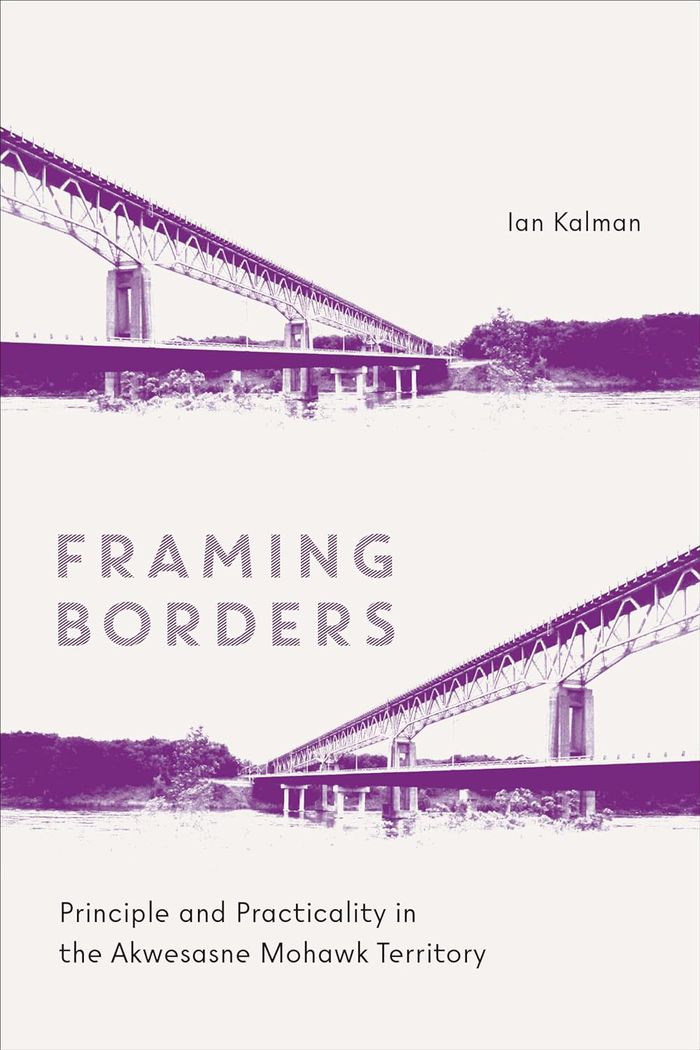
Framing borders: principle and practicality in the Akwesasne Mohawk territory
Actions:
Prix:
$28.95
(disponible sur commande)
Résumé:
''Framing borders'' addresses a fundamental disjuncture between scholastic portrayals of settler colonialism and what actually takes place in Akwesasne Territory, the largest Indigenous cross-border community in Canada. Whereas most existing portrayals of Indigenous nationalism emphasize border crossing as a site of conflict between officers and Indigenous nationalists, in this book Ian Kalman observes a much more diverse range of interactions, from conflict to banality to joking and camaraderie. ''Framing Borders'' explores how border crossing represents a conversation where different actors "frame" themselves, the law, and the space that they occupy in diverse ways. Written in accessible, lively prose, Kalman addresses what goes on when border officers and Akwesasne residents meet, and what these exchanges tell us about the relationship between Indigenous actors and public servants in Canada. This book provides an ethnographic examination of the experiences of the border by Mohawk community members, the history of local border enforcement, and the paradoxes, self-contradictions, and confusions that underlie the border and its enforcement.
Framing borders: principle and practicality in the Akwesasne Mohawk territory
Actions:
Prix:
$28.95
(disponible sur commande)
Résumé:
''Framing borders'' addresses a fundamental disjuncture between scholastic portrayals of settler colonialism and what actually takes place in Akwesasne Territory, the largest Indigenous cross-border community in Canada. Whereas most existing portrayals of Indigenous nationalism emphasize border crossing as a site of conflict between officers and Indigenous nationalists, in this book Ian Kalman observes a much more diverse range of interactions, from conflict to banality to joking and camaraderie. ''Framing Borders'' explores how border crossing represents a conversation where different actors "frame" themselves, the law, and the space that they occupy in diverse ways. Written in accessible, lively prose, Kalman addresses what goes on when border officers and Akwesasne residents meet, and what these exchanges tell us about the relationship between Indigenous actors and public servants in Canada. This book provides an ethnographic examination of the experiences of the border by Mohawk community members, the history of local border enforcement, and the paradoxes, self-contradictions, and confusions that underlie the border and its enforcement.
Classification:
livres
livres
Publication:
mai 2021
mai 2021
Sujet:
Autochtone
Autochtone
Classification:
livres
livres
Prix:
$59.95
(disponible sur commande)
Résumé:
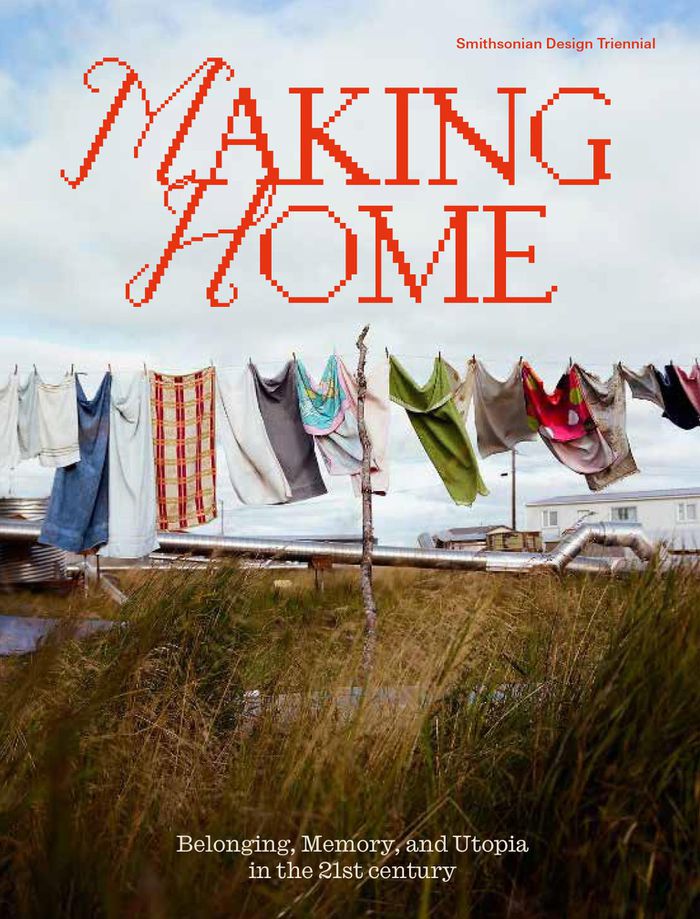
Home is shaped by many factors: culture, region, environment, citizenship, economics, state of mind, and more. Edited by Alexandra Cunningham Cameron, Christina De León, and Michelle Joan Wilkinson, ''Making Home'' explores the diverse perspectives on home across the United States, US Territories, and Tribal Nations to reveal how design impacts this country, its value(...)
$59.95
(disponible sur commande)
Résumé:
Home is shaped by many factors: culture, region, environment, citizenship, economics, state of mind, and more. Edited by Alexandra Cunningham Cameron, Christina De León, and Michelle Joan Wilkinson, ''Making Home'' explores the diverse perspectives on home across the United States, US Territories, and Tribal Nations to reveal how design impacts this country, its value(...)
Sujet:
Théorie de l’architecture
Théorie de l’architecture
Publication:
avril 2025
avril 2025
Titre:
Making home: Belonging, memory, and utopia in the 21st century
Actions:
Prix:
$59.95
(disponible sur commande)
Résumé:
Home is shaped by many factors: culture, region, environment, citizenship, economics, state of mind, and more. Edited by Alexandra Cunningham Cameron, Christina De León, and Michelle Joan Wilkinson, ''Making Home'' explores the diverse perspectives on home across the United States, US Territories, and Tribal Nations to reveal how design impacts this country, its value systems, and the people who inhabit its landscapes. Positioning home not only as a place of dwelling but also as a complex and highly subjective ecosystem, contributors show h Probing urgent topics related to home such as colonialism, technological innovation, landscapes and the environment, and aesthetics and culture, ''Making Home'' uses the framework of design to pair investigative and practical analyses with imaginative and speculative ones. Contributors include designers, scholars, writers, artists, and critical thinkers across disciplines whose work and lived experiences illustrate specific circumstances that shape the contemporary home.ow notions of home resonate through private and public consciousness to inform the shared or conflicting histories that impact our country.
Making home: Belonging, memory, and utopia in the 21st century
Actions:
Prix:
$59.95
(disponible sur commande)
Résumé:
Home is shaped by many factors: culture, region, environment, citizenship, economics, state of mind, and more. Edited by Alexandra Cunningham Cameron, Christina De León, and Michelle Joan Wilkinson, ''Making Home'' explores the diverse perspectives on home across the United States, US Territories, and Tribal Nations to reveal how design impacts this country, its value systems, and the people who inhabit its landscapes. Positioning home not only as a place of dwelling but also as a complex and highly subjective ecosystem, contributors show h Probing urgent topics related to home such as colonialism, technological innovation, landscapes and the environment, and aesthetics and culture, ''Making Home'' uses the framework of design to pair investigative and practical analyses with imaginative and speculative ones. Contributors include designers, scholars, writers, artists, and critical thinkers across disciplines whose work and lived experiences illustrate specific circumstances that shape the contemporary home.ow notions of home resonate through private and public consciousness to inform the shared or conflicting histories that impact our country.
Classification:
livres
livres
Publication:
avril 2025
avril 2025
Sujet:
Théorie de l’architecture
Théorie de l’architecture
Classification:
livres
livres
Actions:
Prix:
$65.95
(disponible sur commande)
Résumé:
The book uses saturation as an organizing concept, in part to suggest that current paradigms cannot encompass the complex realities of race. Saturation provides avenues to situate race as it relates to perception, science, aesthetics, the corporeal, and the sonic. In color theory, saturation is understood in terms of the degree to which a color differs from whiteness. In(...)
$65.95
(disponible sur commande)
Résumé:
The book uses saturation as an organizing concept, in part to suggest that current paradigms cannot encompass the complex realities of race. Saturation provides avenues to situate race as it relates to perception, science, aesthetics, the corporeal, and the sonic. In color theory, saturation is understood in terms of the degree to which a color differs from whiteness. In(...)
Titre:
Saturation: Race, art, and the circulation of value
Actions:
Prix:
$65.95
(disponible sur commande)
Résumé:
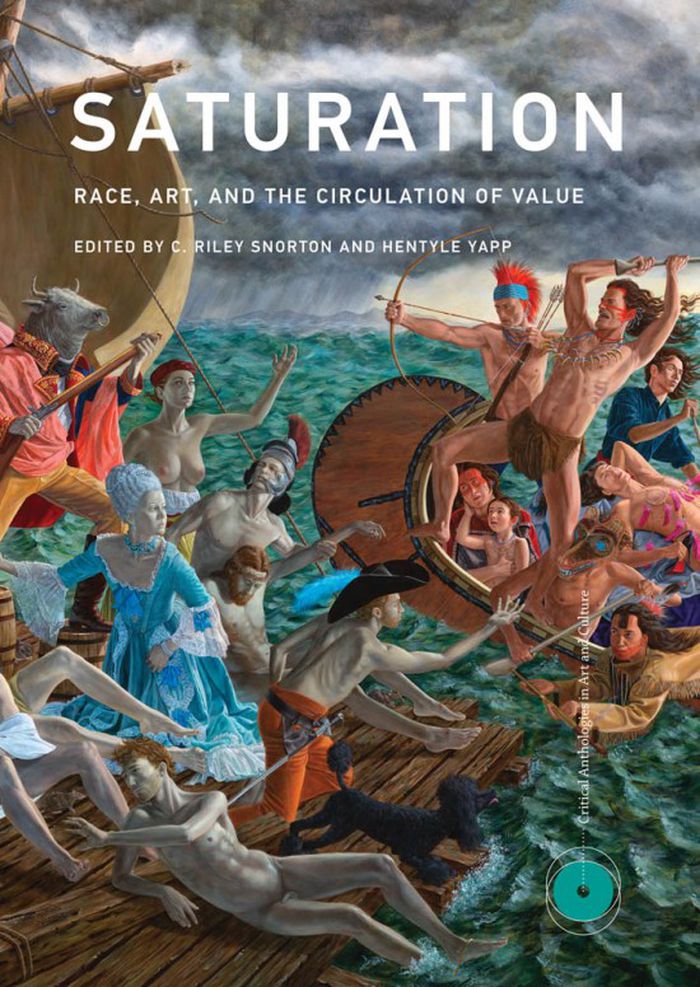
The book uses saturation as an organizing concept, in part to suggest that current paradigms cannot encompass the complex realities of race. Saturation provides avenues to situate race as it relates to perception, science, aesthetics, the corporeal, and the sonic. In color theory, saturation is understood in terms of the degree to which a color differs from whiteness. In science, saturation points describe not only the moment in which race exceeds legibility, but also how diversity operates for institutions. Contributors consider how racialization, globalization, and the production and consumption of art converge in the art market, engaging such topics as racial capitalism, the aesthetics of colonialism, and disability cultures. They examine methods for theorizing race and representation, including “aboutness,” which interprets artworks by racialized subjects as being “about” race; modes of unruly, decolonized, and queer visual practices that resist disciplinary boundaries; and a model by which to think with and alongside blackness and indigeneity.
Saturation: Race, art, and the circulation of value
Actions:
Prix:
$65.95
(disponible sur commande)
Résumé:
The book uses saturation as an organizing concept, in part to suggest that current paradigms cannot encompass the complex realities of race. Saturation provides avenues to situate race as it relates to perception, science, aesthetics, the corporeal, and the sonic. In color theory, saturation is understood in terms of the degree to which a color differs from whiteness. In science, saturation points describe not only the moment in which race exceeds legibility, but also how diversity operates for institutions. Contributors consider how racialization, globalization, and the production and consumption of art converge in the art market, engaging such topics as racial capitalism, the aesthetics of colonialism, and disability cultures. They examine methods for theorizing race and representation, including “aboutness,” which interprets artworks by racialized subjects as being “about” race; modes of unruly, decolonized, and queer visual practices that resist disciplinary boundaries; and a model by which to think with and alongside blackness and indigeneity.
Classification:
livres
livres
Publication:
décembre 2021
décembre 2021
Sujet:
Théorie de l’art
Théorie de l’art
Classification:
livres
livres

Actions:
Prix:
$70.00
(disponible sur commande)
Résumé:
Three hundred years ago, intellectuals of the European Enlightenment constructed a mythology of technology. Influenced by a confluence of humanism, colonialism, and racism, this mythology ignored local wisdom and indigenous innovation, deeming it primitive. Today, we have slowly come to realize that the legacy of this mythology is haunting us. Designers understand the(...)
$70.00
(disponible sur commande)
Résumé:
Three hundred years ago, intellectuals of the European Enlightenment constructed a mythology of technology. Influenced by a confluence of humanism, colonialism, and racism, this mythology ignored local wisdom and indigenous innovation, deeming it primitive. Today, we have slowly come to realize that the legacy of this mythology is haunting us. Designers understand the(...)
Titre:
Lo-Tek. Design by radical indigenism
Actions:
Prix:
$70.00
(disponible sur commande)
Résumé:
Three hundred years ago, intellectuals of the European Enlightenment constructed a mythology of technology. Influenced by a confluence of humanism, colonialism, and racism, this mythology ignored local wisdom and indigenous innovation, deeming it primitive. Today, we have slowly come to realize that the legacy of this mythology is haunting us. Designers understand the urgency of reducing humanity’s negative environmental impact, yet perpetuate the same mythology of technology that relies on exploiting nature. Responding to climate change by building hard infrastructures and favoring high-tech homogenous design, we are ignoring millennia-old knowledge of how to live in symbiosis with nature. Without implementing soft systems that use biodiversity as a building block, designs remain inherently unsustainable. Lo-TEK, derived from Traditional Ecological Knowledge, is a cumulative body of multigenerational knowledge, practices, and beliefs, countering the idea that indigenous innovation is primitive and exists isolated from technology. It is sophisticated and designed to sustainably work with complex ecosystems.
Lo-Tek. Design by radical indigenism
Actions:
Prix:
$70.00
(disponible sur commande)
Résumé:
Three hundred years ago, intellectuals of the European Enlightenment constructed a mythology of technology. Influenced by a confluence of humanism, colonialism, and racism, this mythology ignored local wisdom and indigenous innovation, deeming it primitive. Today, we have slowly come to realize that the legacy of this mythology is haunting us. Designers understand the urgency of reducing humanity’s negative environmental impact, yet perpetuate the same mythology of technology that relies on exploiting nature. Responding to climate change by building hard infrastructures and favoring high-tech homogenous design, we are ignoring millennia-old knowledge of how to live in symbiosis with nature. Without implementing soft systems that use biodiversity as a building block, designs remain inherently unsustainable. Lo-TEK, derived from Traditional Ecological Knowledge, is a cumulative body of multigenerational knowledge, practices, and beliefs, countering the idea that indigenous innovation is primitive and exists isolated from technology. It is sophisticated and designed to sustainably work with complex ecosystems.
Classification:
livres
livres
Publication:
janvier 2020
janvier 2020
Sujet:
Architecture écologique
Architecture écologique
Classification:
livres
livres
Prix:
$64.00
(disponible sur commande)
Résumé:
The growth of the number and scale of Chinese museums in the 21st century, from about 1,400 at the turn of the century to over 5,000 to date, reflects the government’s Museum Development Plan for 2011-2020 to open one museum per 250,000 inhabitants, with the goal of attracting one billion visitors at the end of the decade. What are the motivations for the rapid(...)
$64.00
(disponible sur commande)
Résumé:
The growth of the number and scale of Chinese museums in the 21st century, from about 1,400 at the turn of the century to over 5,000 to date, reflects the government’s Museum Development Plan for 2011-2020 to open one museum per 250,000 inhabitants, with the goal of attracting one billion visitors at the end of the decade. What are the motivations for the rapid(...)
Titre:
Museum development in China: understanding the building boom
Actions:
Prix:
$64.00
(disponible sur commande)
Résumé:
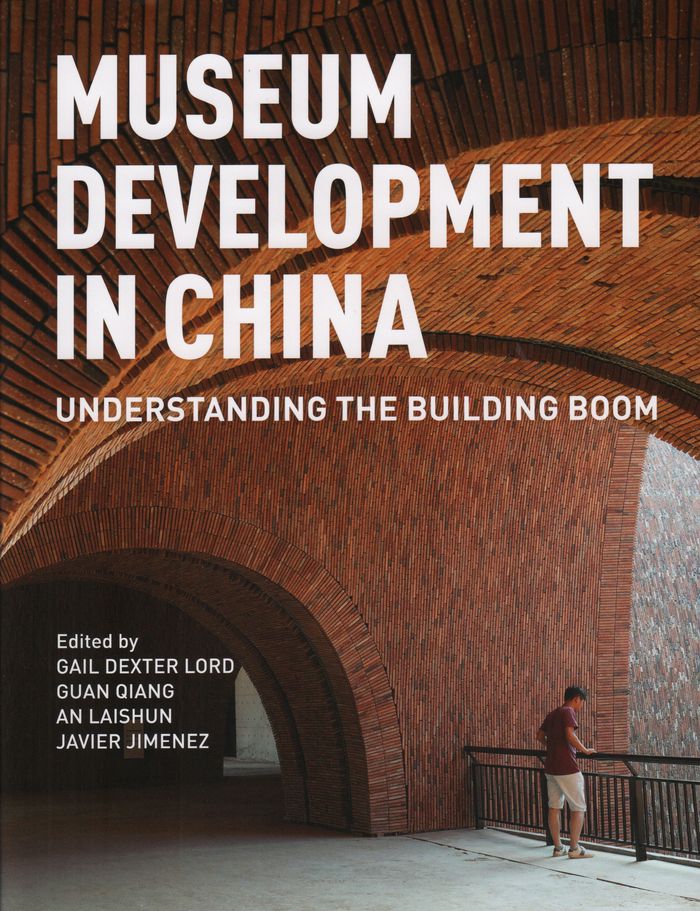
The growth of the number and scale of Chinese museums in the 21st century, from about 1,400 at the turn of the century to over 5,000 to date, reflects the government’s Museum Development Plan for 2011-2020 to open one museum per 250,000 inhabitants, with the goal of attracting one billion visitors at the end of the decade. What are the motivations for the rapid development of museums in China? How is the public responding? Who pays for these museums and how? What has been the impact of china’s urbanization? How do Chinese museums balance education, scientific research, social cohesion, cultural diplomacy and tourism both internal and external? These are issues that continue to be discussed and debated among western museum professionals in the context of our 200 - year history of modern museology. How are these debates evolving in China, which has its own history of museology over that same period from colonialism to communism and from isolation to opening up to the world?
Museum development in China: understanding the building boom
Actions:
Prix:
$64.00
(disponible sur commande)
Résumé:
The growth of the number and scale of Chinese museums in the 21st century, from about 1,400 at the turn of the century to over 5,000 to date, reflects the government’s Museum Development Plan for 2011-2020 to open one museum per 250,000 inhabitants, with the goal of attracting one billion visitors at the end of the decade. What are the motivations for the rapid development of museums in China? How is the public responding? Who pays for these museums and how? What has been the impact of china’s urbanization? How do Chinese museums balance education, scientific research, social cohesion, cultural diplomacy and tourism both internal and external? These are issues that continue to be discussed and debated among western museum professionals in the context of our 200 - year history of modern museology. How are these debates evolving in China, which has its own history of museology over that same period from colonialism to communism and from isolation to opening up to the world?
Classification:
livres
livres
Publication:
juin 2019
juin 2019
Sujet:
Muséologie
Muséologie


