


3141 Résultats
Classification:
documents textuels
documents textuels
Numéro de référence:
PHCON2002:0016:004:072
Description:
Letter is in French.
PHCON2002:0016:004:072
Description:
Letter is in French.
Personnes et institutions:
Date:
7 October 1976
7 October 1976
Titre:
Letter from Gordon Matta-Clark to Monsieur Diamy
Actions:
PHCON2002:0016:004:072
Description:
Letter is in French.
Letter from Gordon Matta-Clark to Monsieur Diamy
Actions:
PHCON2002:0016:004:072
Description:
Letter is in French.
Classification:
documents textuels
documents textuels
Date:
7 October 1976
7 October 1976
Personnes et institutions:
Classification:
dessins
dessins
Numéro de référence:
AP154.S1.1973.PR01.SS2.027.5
Description:
Includes letter of transmittal.
AP154.S1.1973.PR01.SS2.027.5
Description:
Includes letter of transmittal.
Personnes et institutions:
Date:
1983-1988
1983-1988
Titre:
Black furniture (Seagram Building, 375 Park Avenue, New York, N.Y.) (folder 5 of 7)
Actions:
AP154.S1.1973.PR01.SS2.027.5
Description:
Includes letter of transmittal.
Black furniture (Seagram Building, 375 Park Avenue, New York, N.Y.) (folder 5 of 7)
Actions:
AP154.S1.1973.PR01.SS2.027.5
Description:
Includes letter of transmittal.
Classification:
dessins
dessins
Date:
1983-1988
1983-1988
Personnes et institutions:
Classification:
documents textuels
documents textuels
Numéro de référence:
DR1995:0235:014-014
Description:
a letter on Archigram letterhead
DR1995:0235:014-014
Description:
a letter on Archigram letterhead
Personnes et institutions:
Date:
ca. 1971
ca. 1971
Titre:
X15 Letter from Peter Cook inviting Cedric Price to contribute to Archigram Ten
Actions:
DR1995:0235:014-014
Description:
a letter on Archigram letterhead
X15 Letter from Peter Cook inviting Cedric Price to contribute to Archigram Ten
Actions:
DR1995:0235:014-014
Description:
a letter on Archigram letterhead
Classification:
documents textuels
documents textuels
Date:
ca. 1971
ca. 1971
Personnes et institutions:
Classification:
documents textuels
documents textuels
Numéro de référence:
AP140.S2.SS4.D1.P4
Description:
mostly sketches for book layout and some correspondence from publisher Gerd Hatje, dated between 1972 and 1974, including: folder 1 - letter from Gerd Hatje to James Stilring, dated 18 February 1972, passing on reader's comments ("I have the feeling these comments are made by Robert (sic) Middleton, but I'm not sure."), annotated in red ink by James Stirling with preliminary responses - letter from James Stirling to gerd Hatje, dated 29 Feb 1972, responding to comments - mock-up of cover and inside page, "Presentation by Leon Krier," "Buildings & Projects / 1950 - 1973" - photocopy of illustrations and labels to accompany John Jacobus introduction - stapled and bound set of photocopies of Leon krier drawings for Derby - alternate versions for cover of book, photocopies, some annotated in green ink, inscribed: "Presentation by Leon Krier" and then annotated "layout by Leon Krier or design by Leon Krier" folder 2 - page layouts, mostly photocopies with at least one original layout (black ink), some pages annotated or check-marked in red marker - page layouts for book, chronology of projects, captions, numbers of words for each project, mostly photocopy, some ink, some annotated folder 3 (labelled "Book Preparation" - three alternate designs for cover, originals, black and red ink on tracing paper - complete original book layout, mostly black ink, some red ink and brown marker on tracing paper folder 4 - "Chronological List of Works by James Stirling 1950 - 1972," photocopy from A+U Feb 1975, annotated - book layout, annotated with letters keyed to captions in red marker, annotated in red ink throughout - letter from James Stirling to gerd Hatje, 24 Jan 1975, doesn't like typeface chosen by Gerd Hatje ("returned marked 'nein'"), notes other specific preferences regarding dust jacket (Bembo 270 typeface, red "JS" as previously decided, axonometric will be half-size, cover should be glossy black) - letter from Ruth Wurster (Verlag Gerd Hatje) to James Stirling, 4 Feb 1975, enclosing proofs of title pages - letter from James Stirling to Gerd Hatje, responding to letter from Ruth Wurster folder 5 - book layout, photocopy, a few corrections in red marker
AP140.S2.SS4.D1.P4
Description:
mostly sketches for book layout and some correspondence from publisher Gerd Hatje, dated between 1972 and 1974, including: folder 1 - letter from Gerd Hatje to James Stilring, dated 18 February 1972, passing on reader's comments ("I have the feeling these comments are made by Robert (sic) Middleton, but I'm not sure."), annotated in red ink by James Stirling with preliminary responses - letter from James Stirling to gerd Hatje, dated 29 Feb 1972, responding to comments - mock-up of cover and inside page, "Presentation by Leon Krier," "Buildings & Projects / 1950 - 1973" - photocopy of illustrations and labels to accompany John Jacobus introduction - stapled and bound set of photocopies of Leon krier drawings for Derby - alternate versions for cover of book, photocopies, some annotated in green ink, inscribed: "Presentation by Leon Krier" and then annotated "layout by Leon Krier or design by Leon Krier" folder 2 - page layouts, mostly photocopies with at least one original layout (black ink), some pages annotated or check-marked in red marker - page layouts for book, chronology of projects, captions, numbers of words for each project, mostly photocopy, some ink, some annotated folder 3 (labelled "Book Preparation" - three alternate designs for cover, originals, black and red ink on tracing paper - complete original book layout, mostly black ink, some red ink and brown marker on tracing paper folder 4 - "Chronological List of Works by James Stirling 1950 - 1972," photocopy from A+U Feb 1975, annotated - book layout, annotated with letters keyed to captions in red marker, annotated in red ink throughout - letter from James Stirling to gerd Hatje, 24 Jan 1975, doesn't like typeface chosen by Gerd Hatje ("returned marked 'nein'"), notes other specific preferences regarding dust jacket (Bembo 270 typeface, red "JS" as previously decided, axonometric will be half-size, cover should be glossy black) - letter from Ruth Wurster (Verlag Gerd Hatje) to James Stirling, 4 Feb 1975, enclosing proofs of title pages - letter from James Stirling to Gerd Hatje, responding to letter from Ruth Wurster folder 5 - book layout, photocopy, a few corrections in red marker
Personnes et institutions:
Date:
1972 -1974
1972 -1974
Titre:
Mostly sketches for book layout and some correspondence
Actions:
AP140.S2.SS4.D1.P4
Description:
mostly sketches for book layout and some correspondence from publisher Gerd Hatje, dated between 1972 and 1974, including: folder 1 - letter from Gerd Hatje to James Stilring, dated 18 February 1972, passing on reader's comments ("I have the feeling these comments are made by Robert (sic) Middleton, but I'm not sure."), annotated in red ink by James Stirling with preliminary responses - letter from James Stirling to gerd Hatje, dated 29 Feb 1972, responding to comments - mock-up of cover and inside page, "Presentation by Leon Krier," "Buildings & Projects / 1950 - 1973" - photocopy of illustrations and labels to accompany John Jacobus introduction - stapled and bound set of photocopies of Leon krier drawings for Derby - alternate versions for cover of book, photocopies, some annotated in green ink, inscribed: "Presentation by Leon Krier" and then annotated "layout by Leon Krier or design by Leon Krier" folder 2 - page layouts, mostly photocopies with at least one original layout (black ink), some pages annotated or check-marked in red marker - page layouts for book, chronology of projects, captions, numbers of words for each project, mostly photocopy, some ink, some annotated folder 3 (labelled "Book Preparation" - three alternate designs for cover, originals, black and red ink on tracing paper - complete original book layout, mostly black ink, some red ink and brown marker on tracing paper folder 4 - "Chronological List of Works by James Stirling 1950 - 1972," photocopy from A+U Feb 1975, annotated - book layout, annotated with letters keyed to captions in red marker, annotated in red ink throughout - letter from James Stirling to gerd Hatje, 24 Jan 1975, doesn't like typeface chosen by Gerd Hatje ("returned marked 'nein'"), notes other specific preferences regarding dust jacket (Bembo 270 typeface, red "JS" as previously decided, axonometric will be half-size, cover should be glossy black) - letter from Ruth Wurster (Verlag Gerd Hatje) to James Stirling, 4 Feb 1975, enclosing proofs of title pages - letter from James Stirling to Gerd Hatje, responding to letter from Ruth Wurster folder 5 - book layout, photocopy, a few corrections in red marker
Mostly sketches for book layout and some correspondence
Actions:
AP140.S2.SS4.D1.P4
Description:
mostly sketches for book layout and some correspondence from publisher Gerd Hatje, dated between 1972 and 1974, including: folder 1 - letter from Gerd Hatje to James Stilring, dated 18 February 1972, passing on reader's comments ("I have the feeling these comments are made by Robert (sic) Middleton, but I'm not sure."), annotated in red ink by James Stirling with preliminary responses - letter from James Stirling to gerd Hatje, dated 29 Feb 1972, responding to comments - mock-up of cover and inside page, "Presentation by Leon Krier," "Buildings & Projects / 1950 - 1973" - photocopy of illustrations and labels to accompany John Jacobus introduction - stapled and bound set of photocopies of Leon krier drawings for Derby - alternate versions for cover of book, photocopies, some annotated in green ink, inscribed: "Presentation by Leon Krier" and then annotated "layout by Leon Krier or design by Leon Krier" folder 2 - page layouts, mostly photocopies with at least one original layout (black ink), some pages annotated or check-marked in red marker - page layouts for book, chronology of projects, captions, numbers of words for each project, mostly photocopy, some ink, some annotated folder 3 (labelled "Book Preparation" - three alternate designs for cover, originals, black and red ink on tracing paper - complete original book layout, mostly black ink, some red ink and brown marker on tracing paper folder 4 - "Chronological List of Works by James Stirling 1950 - 1972," photocopy from A+U Feb 1975, annotated - book layout, annotated with letters keyed to captions in red marker, annotated in red ink throughout - letter from James Stirling to gerd Hatje, 24 Jan 1975, doesn't like typeface chosen by Gerd Hatje ("returned marked 'nein'"), notes other specific preferences regarding dust jacket (Bembo 270 typeface, red "JS" as previously decided, axonometric will be half-size, cover should be glossy black) - letter from Ruth Wurster (Verlag Gerd Hatje) to James Stirling, 4 Feb 1975, enclosing proofs of title pages - letter from James Stirling to Gerd Hatje, responding to letter from Ruth Wurster folder 5 - book layout, photocopy, a few corrections in red marker
Classification:
documents textuels
documents textuels
Date:
1972 -1974
1972 -1974
Personnes et institutions:
Niveau de description archivistique:
Sous-série
Sous-série
Titre:
Domestic Commissions
Domestic Commissions
Numéro de référence:
CI001.S2.D2
Description:
Hubert and Charles Rohault de Fleury received domestic commissions for both urban housing -hôtel particuliers and apartment houses- and rural dwellings -châteaux, country houses and estates. Hubert also executed designs for furniture and garden pavilions. Hubert' work is characterized by restrained classical exteriors and luxurious Empire style interiors; both Charles' exteriors and interiors, especially those for Hôtels Sauvage and Soltykoff, reflect the exuberance of the Second Empire. The CCA albums include drawings from all stages of the design process but with an emphasis on design development drawings. Hubert's albums contain cost calculations and estimates, notes and letters. In general, the drawings by Charles are from a more developed phase of design than Hubert's; Hubert's commissions are more varied than Charles'. Charles' Hôtel Soltykoff (1854)(DR1974:0002:003:001-105) is exemplary of the Second Empire not only in its architectural language, programme and interior decoration, but also its use of mixed stone and iron construction. The album for Hôtel Soltykoff is one of the most comprehensive in the CCA collection. The drawings incorporate several phases of the design process from conceptual ideas to post-construction revisions. Numerous drawings for the structure and exterior ornamentation are included as well as drawings for the embellishment of the interior spaces. The interior drawings are especially interesting for evidence they provide of the palette of colours and ornamental motifs utilized in the Second Empire. Several prints (plates XIX - XXIII) in 'Oeuvre de C. Rohault de Fleury, architecte', which include general plans and elevations (few of which are included in the Hôtel Solytkoff album), are a useful complement to more specific drawings in the album. The Hôtel Sauvage (ca. 1862) album (DR1974:0002:006:001-024) - a set of 24 contract drawings- consists exclusively general plans, sections and elevations. This group of drawings give a good overall sense of both the interior and exterior. Hôtel Sauvage, like Hôtel Soltykoff is also typical of the Second Empire in style and programme. Château de Marcoussis (ca. 1861), for which a group of drawings were acquired in 1986, diverges somewhat in character from the other examples of Charles' domestic works represented in the CCA collection (DR1986:0379 - DR1986:0413). While most of the other houses are strictly classical in planning and design, for Château de Marcoussis, Charles adopted a more romantic asymmetrical château style design. The domestic commissions (1838-1856) in album, DR1974:0002:002:001-094, roughly fall into two categories. The first category consists of single residences - both town and country. The regimentation of plans and façades in the hôtel particular and country houses manifests the continued influence of Durand, yet Charles was also clearly affected by the Second Empire propensity for elaborate façade treatments with decoratively-shaped windows, complex mouldings and extensive rustication. The second category consists of urban apartment building with stores or occasionally offices on the ground floor, apartments, generally two per floor, above and often servants' rooms in the attic. These buildings are articulated in a restrained manner with mouldings, decorative ironwork and some stone ornament.
CI001.S2.D2
Description:
Hubert and Charles Rohault de Fleury received domestic commissions for both urban housing -hôtel particuliers and apartment houses- and rural dwellings -châteaux, country houses and estates. Hubert also executed designs for furniture and garden pavilions. Hubert' work is characterized by restrained classical exteriors and luxurious Empire style interiors; both Charles' exteriors and interiors, especially those for Hôtels Sauvage and Soltykoff, reflect the exuberance of the Second Empire. The CCA albums include drawings from all stages of the design process but with an emphasis on design development drawings. Hubert's albums contain cost calculations and estimates, notes and letters. In general, the drawings by Charles are from a more developed phase of design than Hubert's; Hubert's commissions are more varied than Charles'. Charles' Hôtel Soltykoff (1854)(DR1974:0002:003:001-105) is exemplary of the Second Empire not only in its architectural language, programme and interior decoration, but also its use of mixed stone and iron construction. The album for Hôtel Soltykoff is one of the most comprehensive in the CCA collection. The drawings incorporate several phases of the design process from conceptual ideas to post-construction revisions. Numerous drawings for the structure and exterior ornamentation are included as well as drawings for the embellishment of the interior spaces. The interior drawings are especially interesting for evidence they provide of the palette of colours and ornamental motifs utilized in the Second Empire. Several prints (plates XIX - XXIII) in 'Oeuvre de C. Rohault de Fleury, architecte', which include general plans and elevations (few of which are included in the Hôtel Solytkoff album), are a useful complement to more specific drawings in the album. The Hôtel Sauvage (ca. 1862) album (DR1974:0002:006:001-024) - a set of 24 contract drawings- consists exclusively general plans, sections and elevations. This group of drawings give a good overall sense of both the interior and exterior. Hôtel Sauvage, like Hôtel Soltykoff is also typical of the Second Empire in style and programme. Château de Marcoussis (ca. 1861), for which a group of drawings were acquired in 1986, diverges somewhat in character from the other examples of Charles' domestic works represented in the CCA collection (DR1986:0379 - DR1986:0413). While most of the other houses are strictly classical in planning and design, for Château de Marcoussis, Charles adopted a more romantic asymmetrical château style design. The domestic commissions (1838-1856) in album, DR1974:0002:002:001-094, roughly fall into two categories. The first category consists of single residences - both town and country. The regimentation of plans and façades in the hôtel particular and country houses manifests the continued influence of Durand, yet Charles was also clearly affected by the Second Empire propensity for elaborate façade treatments with decoratively-shaped windows, complex mouldings and extensive rustication. The second category consists of urban apartment building with stores or occasionally offices on the ground floor, apartments, generally two per floor, above and often servants' rooms in the attic. These buildings are articulated in a restrained manner with mouldings, decorative ironwork and some stone ornament.
Personnes et institutions:
Date:
[between 1838 and 1861]
[between 1838 and 1861]
Titre:
Domestic Commissions
CI001.S2.D2
Description:
Hubert and Charles Rohault de Fleury received domestic commissions for both urban housing -hôtel particuliers and apartment houses- and rural dwellings -châteaux, country houses and estates. Hubert also executed designs for furniture and garden pavilions. Hubert' work is characterized by restrained classical exteriors and luxurious Empire style interiors; both Charles' exteriors and interiors, especially those for Hôtels Sauvage and Soltykoff, reflect the exuberance of the Second Empire. The CCA albums include drawings from all stages of the design process but with an emphasis on design development drawings. Hubert's albums contain cost calculations and estimates, notes and letters. In general, the drawings by Charles are from a more developed phase of design than Hubert's; Hubert's commissions are more varied than Charles'. Charles' Hôtel Soltykoff (1854)(DR1974:0002:003:001-105) is exemplary of the Second Empire not only in its architectural language, programme and interior decoration, but also its use of mixed stone and iron construction. The album for Hôtel Soltykoff is one of the most comprehensive in the CCA collection. The drawings incorporate several phases of the design process from conceptual ideas to post-construction revisions. Numerous drawings for the structure and exterior ornamentation are included as well as drawings for the embellishment of the interior spaces. The interior drawings are especially interesting for evidence they provide of the palette of colours and ornamental motifs utilized in the Second Empire. Several prints (plates XIX - XXIII) in 'Oeuvre de C. Rohault de Fleury, architecte', which include general plans and elevations (few of which are included in the Hôtel Solytkoff album), are a useful complement to more specific drawings in the album. The Hôtel Sauvage (ca. 1862) album (DR1974:0002:006:001-024) - a set of 24 contract drawings- consists exclusively general plans, sections and elevations. This group of drawings give a good overall sense of both the interior and exterior. Hôtel Sauvage, like Hôtel Soltykoff is also typical of the Second Empire in style and programme. Château de Marcoussis (ca. 1861), for which a group of drawings were acquired in 1986, diverges somewhat in character from the other examples of Charles' domestic works represented in the CCA collection (DR1986:0379 - DR1986:0413). While most of the other houses are strictly classical in planning and design, for Château de Marcoussis, Charles adopted a more romantic asymmetrical château style design. The domestic commissions (1838-1856) in album, DR1974:0002:002:001-094, roughly fall into two categories. The first category consists of single residences - both town and country. The regimentation of plans and façades in the hôtel particular and country houses manifests the continued influence of Durand, yet Charles was also clearly affected by the Second Empire propensity for elaborate façade treatments with decoratively-shaped windows, complex mouldings and extensive rustication. The second category consists of urban apartment building with stores or occasionally offices on the ground floor, apartments, generally two per floor, above and often servants' rooms in the attic. These buildings are articulated in a restrained manner with mouldings, decorative ironwork and some stone ornament.
Domestic Commissions
CI001.S2.D2
Description:
Hubert and Charles Rohault de Fleury received domestic commissions for both urban housing -hôtel particuliers and apartment houses- and rural dwellings -châteaux, country houses and estates. Hubert also executed designs for furniture and garden pavilions. Hubert' work is characterized by restrained classical exteriors and luxurious Empire style interiors; both Charles' exteriors and interiors, especially those for Hôtels Sauvage and Soltykoff, reflect the exuberance of the Second Empire. The CCA albums include drawings from all stages of the design process but with an emphasis on design development drawings. Hubert's albums contain cost calculations and estimates, notes and letters. In general, the drawings by Charles are from a more developed phase of design than Hubert's; Hubert's commissions are more varied than Charles'. Charles' Hôtel Soltykoff (1854)(DR1974:0002:003:001-105) is exemplary of the Second Empire not only in its architectural language, programme and interior decoration, but also its use of mixed stone and iron construction. The album for Hôtel Soltykoff is one of the most comprehensive in the CCA collection. The drawings incorporate several phases of the design process from conceptual ideas to post-construction revisions. Numerous drawings for the structure and exterior ornamentation are included as well as drawings for the embellishment of the interior spaces. The interior drawings are especially interesting for evidence they provide of the palette of colours and ornamental motifs utilized in the Second Empire. Several prints (plates XIX - XXIII) in 'Oeuvre de C. Rohault de Fleury, architecte', which include general plans and elevations (few of which are included in the Hôtel Solytkoff album), are a useful complement to more specific drawings in the album. The Hôtel Sauvage (ca. 1862) album (DR1974:0002:006:001-024) - a set of 24 contract drawings- consists exclusively general plans, sections and elevations. This group of drawings give a good overall sense of both the interior and exterior. Hôtel Sauvage, like Hôtel Soltykoff is also typical of the Second Empire in style and programme. Château de Marcoussis (ca. 1861), for which a group of drawings were acquired in 1986, diverges somewhat in character from the other examples of Charles' domestic works represented in the CCA collection (DR1986:0379 - DR1986:0413). While most of the other houses are strictly classical in planning and design, for Château de Marcoussis, Charles adopted a more romantic asymmetrical château style design. The domestic commissions (1838-1856) in album, DR1974:0002:002:001-094, roughly fall into two categories. The first category consists of single residences - both town and country. The regimentation of plans and façades in the hôtel particular and country houses manifests the continued influence of Durand, yet Charles was also clearly affected by the Second Empire propensity for elaborate façade treatments with decoratively-shaped windows, complex mouldings and extensive rustication. The second category consists of urban apartment building with stores or occasionally offices on the ground floor, apartments, generally two per floor, above and often servants' rooms in the attic. These buildings are articulated in a restrained manner with mouldings, decorative ironwork and some stone ornament.
Niveau de description archivistique:
File 2
File 2
Date:
[between 1838 and 1861]
[between 1838 and 1861]
Personnes et institutions:
Classification:
documents textuels
documents textuels
Numéro de référence:
AP197.S3.009
Description:
The box is comprised of correspondence for the years of 1999-2000, organized in chronological order. The box documents Frampton’s career as Ware professor at the Graduate School of Architecture, Planning and Preservation, Columbia University and his related professional activities. Correspondence in this box includes: offers of teaching positions; requests to write articles, reviews, books and recommendation letters; invitations to teach, present, or attend at lectures/symposiums/conferences; and requests to serve on juries. Throughout this period, Frampton corresponded with various universities, architects, professors, publishers, and editors of various publications such as: Tadao Ando; Alvaro Siza; Norman Foster; the Architectural Society of China; and the Università della Svizzera italiana. Correspondence relates to his participation/involvement in: the Centennial Conference; the International Committee for Documentation and Conservation of Buildings, Sites and Neighbourhoods of the Modern Movement’s (do.co,mo.mo) conference in Brasilia; the Le Corbusier Seminar in France; the Aga Khan Award for Architecture; the Le Corbusier publication; Journal of Architectural Education (JAE)’s "Technology and Place;" and the English version of his essay in the publication Alvaro Siza: Complete works.
AP197.S3.009
Description:
The box is comprised of correspondence for the years of 1999-2000, organized in chronological order. The box documents Frampton’s career as Ware professor at the Graduate School of Architecture, Planning and Preservation, Columbia University and his related professional activities. Correspondence in this box includes: offers of teaching positions; requests to write articles, reviews, books and recommendation letters; invitations to teach, present, or attend at lectures/symposiums/conferences; and requests to serve on juries. Throughout this period, Frampton corresponded with various universities, architects, professors, publishers, and editors of various publications such as: Tadao Ando; Alvaro Siza; Norman Foster; the Architectural Society of China; and the Università della Svizzera italiana. Correspondence relates to his participation/involvement in: the Centennial Conference; the International Committee for Documentation and Conservation of Buildings, Sites and Neighbourhoods of the Modern Movement’s (do.co,mo.mo) conference in Brasilia; the Le Corbusier Seminar in France; the Aga Khan Award for Architecture; the Le Corbusier publication; Journal of Architectural Education (JAE)’s "Technology and Place;" and the English version of his essay in the publication Alvaro Siza: Complete works.
Personnes et institutions:
Date:
1999-2000
1999-2000
Titre:
Personal and professional correspondence from 1999-2000
Actions:
AP197.S3.009
Description:
The box is comprised of correspondence for the years of 1999-2000, organized in chronological order. The box documents Frampton’s career as Ware professor at the Graduate School of Architecture, Planning and Preservation, Columbia University and his related professional activities. Correspondence in this box includes: offers of teaching positions; requests to write articles, reviews, books and recommendation letters; invitations to teach, present, or attend at lectures/symposiums/conferences; and requests to serve on juries. Throughout this period, Frampton corresponded with various universities, architects, professors, publishers, and editors of various publications such as: Tadao Ando; Alvaro Siza; Norman Foster; the Architectural Society of China; and the Università della Svizzera italiana. Correspondence relates to his participation/involvement in: the Centennial Conference; the International Committee for Documentation and Conservation of Buildings, Sites and Neighbourhoods of the Modern Movement’s (do.co,mo.mo) conference in Brasilia; the Le Corbusier Seminar in France; the Aga Khan Award for Architecture; the Le Corbusier publication; Journal of Architectural Education (JAE)’s "Technology and Place;" and the English version of his essay in the publication Alvaro Siza: Complete works.
Personal and professional correspondence from 1999-2000
Actions:
AP197.S3.009
Description:
The box is comprised of correspondence for the years of 1999-2000, organized in chronological order. The box documents Frampton’s career as Ware professor at the Graduate School of Architecture, Planning and Preservation, Columbia University and his related professional activities. Correspondence in this box includes: offers of teaching positions; requests to write articles, reviews, books and recommendation letters; invitations to teach, present, or attend at lectures/symposiums/conferences; and requests to serve on juries. Throughout this period, Frampton corresponded with various universities, architects, professors, publishers, and editors of various publications such as: Tadao Ando; Alvaro Siza; Norman Foster; the Architectural Society of China; and the Università della Svizzera italiana. Correspondence relates to his participation/involvement in: the Centennial Conference; the International Committee for Documentation and Conservation of Buildings, Sites and Neighbourhoods of the Modern Movement’s (do.co,mo.mo) conference in Brasilia; the Le Corbusier Seminar in France; the Aga Khan Award for Architecture; the Le Corbusier publication; Journal of Architectural Education (JAE)’s "Technology and Place;" and the English version of his essay in the publication Alvaro Siza: Complete works.
Classification:
documents textuels
documents textuels
Date:
1999-2000
1999-2000
Personnes et institutions:
Classification:
documents textuels
documents textuels
Numéro de référence:
DR1995:0188:718
Description:
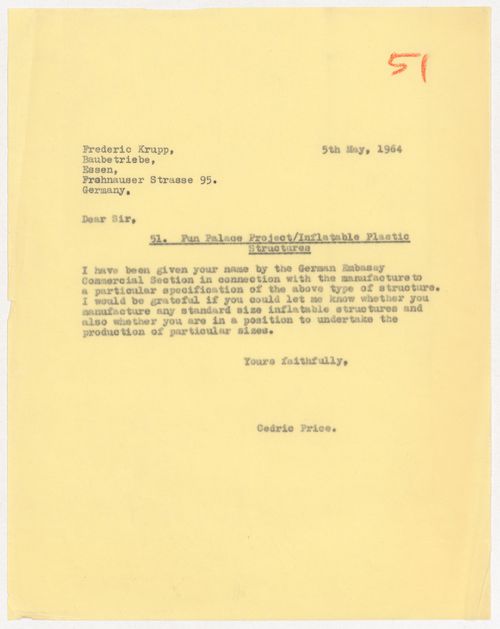
Letter refers to inflatable plastic structures.
DR1995:0188:718
Description:
Letter refers to inflatable plastic structures.
Personnes et institutions:
Date:
5 May 1964
5 May 1964
Titre:
Letter from Cedric Price to Frederic Krupp about Fun Palace Project
Actions:
DR1995:0188:718
Description:
Letter refers to inflatable plastic structures.
Letter from Cedric Price to Frederic Krupp about Fun Palace Project
Actions:
DR1995:0188:718
Description:
Letter refers to inflatable plastic structures.
Classification:
documents textuels
documents textuels
Date:
5 May 1964
5 May 1964
Personnes et institutions:
Classification:
documents textuels
documents textuels
Numéro de référence:
PHCON2002:0016:001:001
Description:
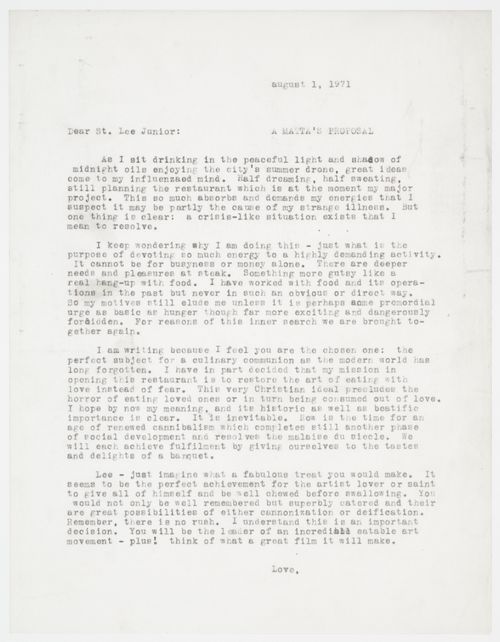
carbon copy of a typescript letter
PHCON2002:0016:001:001
Description:
carbon copy of a typescript letter
Personnes et institutions:
Date:
1 August 1971
1 August 1971
Titre:
A Matta's Proposal
Actions:
PHCON2002:0016:001:001
Description:
carbon copy of a typescript letter
A Matta's Proposal
Actions:
PHCON2002:0016:001:001
Description:
carbon copy of a typescript letter
Classification:
documents textuels
documents textuels
Date:
1 August 1971
1 August 1971
Personnes et institutions:
Classification:
documents textuels
documents textuels
Actions:
Numéro de référence:
DR1984:1654
Description:
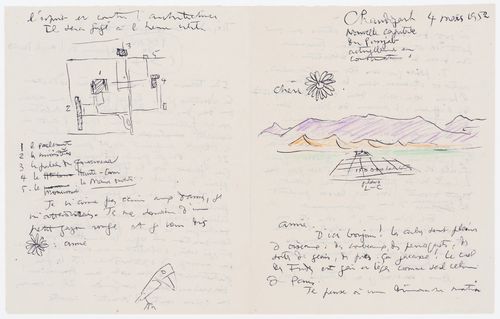
letter including two plans for Chandijarh
DR1984:1654
Description:
letter including two plans for Chandijarh
Personnes et institutions:
Date:
4 March 1952
4 March 1952
Titre:
Letter from Le Corbusier to Marguerite Tjader Harris with sketch plans of Chandigarh, India
Actions:
DR1984:1654
Description:
letter including two plans for Chandijarh
Letter from Le Corbusier to Marguerite Tjader Harris with sketch plans of Chandigarh, India
Actions:
DR1984:1654
Description:
letter including two plans for Chandijarh
Classification:
documents textuels
documents textuels
Date:
4 March 1952
4 March 1952
Personnes et institutions:
Classification:
documents textuels
documents textuels
Numéro de référence:
PHCON2002:0016:004:120
Description:
Letter acknowledges receipt of objects.
PHCON2002:0016:004:120
Description:
Letter acknowledges receipt of objects.
Personnes et institutions:
Date:
7 October 1977
7 October 1977
Titre:
Letter from Lieve [De Deyne] and A. [Alfred ?] Schmela to Gordon Matta-Clark and Jane Crawford
Actions:
PHCON2002:0016:004:120
Description:
Letter acknowledges receipt of objects.
Letter from Lieve [De Deyne] and A. [Alfred ?] Schmela to Gordon Matta-Clark and Jane Crawford
Actions:
PHCON2002:0016:004:120
Description:
Letter acknowledges receipt of objects.
Classification:
documents textuels
documents textuels
Date:
7 October 1977
7 October 1977
Personnes et institutions:


