


414 Résultats
Classification:
livres
livres
Actions:
(disponible sur commande)
Résumé:
Frank Lloyd Wright’s wife, Olgivanna, is famously quoted as saying that "My husband seemed to thrive on hardships." From the years 1920 to 1932 Wright’s fortunes were at a low ebb; he was plagued by financial, personal, and professional setbacks, but saw the time as one of challenges instead of one of defeat. Unable to find patrons, his imagination led to visionary, often(...)
Titre:
Frank Lloyd Wright: the heroic years: 1920-1932
Actions:
(disponible sur commande)
Résumé:
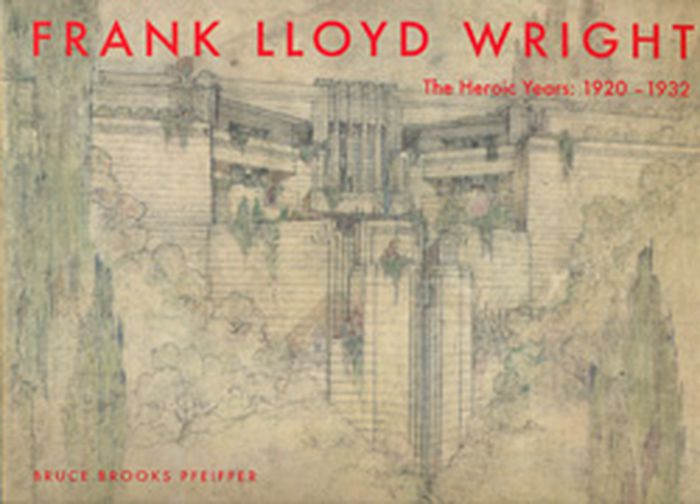
Frank Lloyd Wright’s wife, Olgivanna, is famously quoted as saying that "My husband seemed to thrive on hardships." From the years 1920 to 1932 Wright’s fortunes were at a low ebb; he was plagued by financial, personal, and professional setbacks, but saw the time as one of challenges instead of one of defeat. Unable to find patrons, his imagination led to visionary, often splendid, architectural conceptions that laid the groundwork for the revolutionary architecture he would build in the decades to follow. During this period he designed almost fifty projects, of which only a few were realized, but those few are seen today as among his most important creations. They include the majestic Imperial Hotel in Tokyo, four exquisite textured concrete block houses in Los Angeles, renovations and additions to his beloved home, Taliesin, in Wisconsin, the Octillo Desert Camp in Chandler, Arizona, and his work as design consultant for the lavish Arizona Biltmore Hotel and Cottages in the desert in Phoenix. Rare and unseen photos as well as little-known drawings from this period are on lavish display in this important work on the master architect.
Frank Lloyd Wright: the heroic years: 1920-1932
Actions:
(disponible sur commande)
Résumé:
Frank Lloyd Wright’s wife, Olgivanna, is famously quoted as saying that "My husband seemed to thrive on hardships." From the years 1920 to 1932 Wright’s fortunes were at a low ebb; he was plagued by financial, personal, and professional setbacks, but saw the time as one of challenges instead of one of defeat. Unable to find patrons, his imagination led to visionary, often splendid, architectural conceptions that laid the groundwork for the revolutionary architecture he would build in the decades to follow. During this period he designed almost fifty projects, of which only a few were realized, but those few are seen today as among his most important creations. They include the majestic Imperial Hotel in Tokyo, four exquisite textured concrete block houses in Los Angeles, renovations and additions to his beloved home, Taliesin, in Wisconsin, the Octillo Desert Camp in Chandler, Arizona, and his work as design consultant for the lavish Arizona Biltmore Hotel and Cottages in the desert in Phoenix. Rare and unseen photos as well as little-known drawings from this period are on lavish display in this important work on the master architect.
Classification:
livres
livres
Publication:
avril 2009
avril 2009
Sujet:
Architecture, monographies
Architecture, monographies
Classification:
livres
livres
Prix:
$31.50
(disponible sur commande)
Résumé:
Despite a modest revival in city living, Americans are spreading out more than ever—into "exurbs" and "boomburbs" miles from anywhere, in big houses in big subdivisions. We cling to the notion of safer neighborhoods and better schools, but what we get, argues Anthony Flint, is long commutes, crushing gas prices and higher taxes—and a landscape of strip malls and office(...)
$31.50
(disponible sur commande)
Résumé:
Despite a modest revival in city living, Americans are spreading out more than ever—into "exurbs" and "boomburbs" miles from anywhere, in big houses in big subdivisions. We cling to the notion of safer neighborhoods and better schools, but what we get, argues Anthony Flint, is long commutes, crushing gas prices and higher taxes—and a landscape of strip malls and office(...)
Titre:
This land : the battle over sprawl and the future of America
Actions:
Prix:
$31.50
(disponible sur commande)
Résumé:
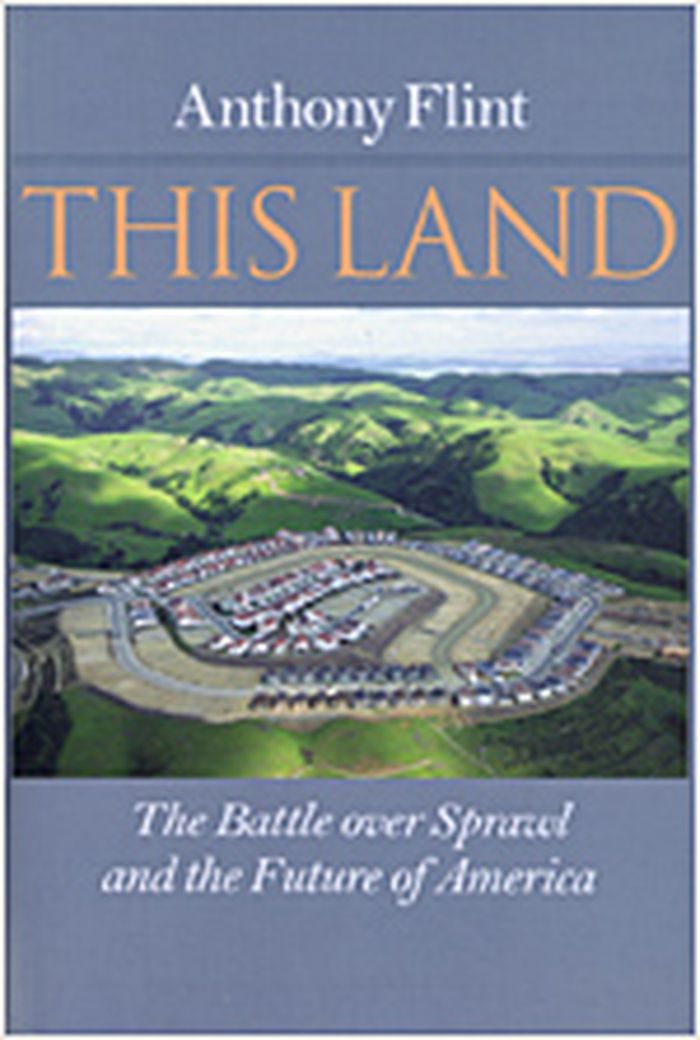
Despite a modest revival in city living, Americans are spreading out more than ever—into "exurbs" and "boomburbs" miles from anywhere, in big houses in big subdivisions. We cling to the notion of safer neighborhoods and better schools, but what we get, argues Anthony Flint, is long commutes, crushing gas prices and higher taxes—and a landscape of strip malls and office parks badly in need of a makeover. "This land" tells the untold story of development in America—how the landscape is shaped by a furious clash of political, economic and cultural forces. It is the story of burgeoning anti-sprawl movement, a 1960s-style revolution of New Urbanism, smart growth, and green building. And it is the story of landowners fighting back on the basis of property rights, with free-market libertarians, homebuilders, road pavers, financial institutions, and even the lawn-care industry right alongside them. The subdivisions and extra-wide roadways are encroaching into the wetlands of Florida, ranchlands in Texas, and the desert outside Phoenix and Las Vegas. But with up to 120 million more people in the country by 2050, will the spread-out pattern cave in on itself? Could Americans embrace a new approach to development if it made sense for them?
This land : the battle over sprawl and the future of America
Actions:
Prix:
$31.50
(disponible sur commande)
Résumé:
Despite a modest revival in city living, Americans are spreading out more than ever—into "exurbs" and "boomburbs" miles from anywhere, in big houses in big subdivisions. We cling to the notion of safer neighborhoods and better schools, but what we get, argues Anthony Flint, is long commutes, crushing gas prices and higher taxes—and a landscape of strip malls and office parks badly in need of a makeover. "This land" tells the untold story of development in America—how the landscape is shaped by a furious clash of political, economic and cultural forces. It is the story of burgeoning anti-sprawl movement, a 1960s-style revolution of New Urbanism, smart growth, and green building. And it is the story of landowners fighting back on the basis of property rights, with free-market libertarians, homebuilders, road pavers, financial institutions, and even the lawn-care industry right alongside them. The subdivisions and extra-wide roadways are encroaching into the wetlands of Florida, ranchlands in Texas, and the desert outside Phoenix and Las Vegas. But with up to 120 million more people in the country by 2050, will the spread-out pattern cave in on itself? Could Americans embrace a new approach to development if it made sense for them?
Classification:
livres
livres
Publication:
juin 2006, Baltimore
juin 2006, Baltimore
Sujet:
Théorie de l’urbanisme
Théorie de l’urbanisme
Classification:
livres
livres
Titre:
The new downtown library
The new downtown library
Actions:
Prix:
$45.00
(disponible sur commande)
Résumé:
The past twenty years have seen a building boom for downtown public libraries. From Brooklyn to Seattle, architects, civic leaders, and citizens in major U.S. cities have worked to reassert the relevance of the central library. While the libraries’ primary functions—as public spaces where information is gathered, organized, preserved, and made available for use—have not(...)
$45.00
(disponible sur commande)
Résumé:
The past twenty years have seen a building boom for downtown public libraries. From Brooklyn to Seattle, architects, civic leaders, and citizens in major U.S. cities have worked to reassert the relevance of the central library. While the libraries’ primary functions—as public spaces where information is gathered, organized, preserved, and made available for use—have not(...)
Publication:
janvier 2007, Minneapolis / London
janvier 2007, Minneapolis / London
Titre:
The new downtown library
Actions:
Prix:
$45.00
(disponible sur commande)
Résumé:
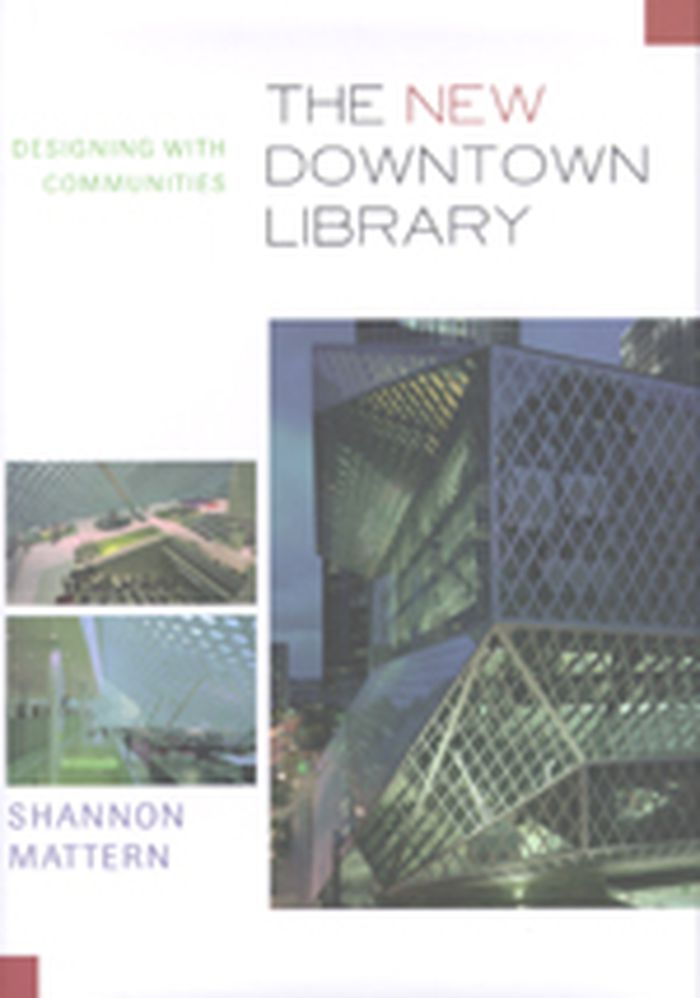
The past twenty years have seen a building boom for downtown public libraries. From Brooklyn to Seattle, architects, civic leaders, and citizens in major U.S. cities have worked to reassert the relevance of the central library. While the libraries’ primary functions—as public spaces where information is gathered, organized, preserved, and made available for use—have not changed over the years, the processes by which they accomplish these goals have. These new processes, and the public debates surrounding them, have radically influenced the utility and design of new library buildings. In The New Downtown Library, Shannon Mattern draws on a diverse range of sources to investigate how libraries serve as multiuse public spaces, anchors in urban redevelopment, civic icons, and showcases of renowned architects like Rem Koolhaas, Cesar Pelli, and Enrique Norton. Mattern’s clear and careful analysis reveals the complexity of contemporary dialogues in library design, highlighting the roles that staff, the public, and other special interest groups play. Mattern also describes how the libraries manifest changing demographics, new ways of organizing collections and delivering media, and current philosophies of librarianship. By identifying unifying themes as well as examining the differences among various design projects, Mattern brings to light the social forces, as well as their architectural expressions, that form the essence of new libraries and their vital place in public life. Featured libraries are located in Brooklyn, Cincinnati, Cleveland, Chicago, Denver, Los Angeles, Minneapolis, Nashville, New York, Phoenix, Salt Lake City, San Antonio, San Francisco, Seattle, and Toledo.
The new downtown library
Actions:
Prix:
$45.00
(disponible sur commande)
Résumé:
The past twenty years have seen a building boom for downtown public libraries. From Brooklyn to Seattle, architects, civic leaders, and citizens in major U.S. cities have worked to reassert the relevance of the central library. While the libraries’ primary functions—as public spaces where information is gathered, organized, preserved, and made available for use—have not changed over the years, the processes by which they accomplish these goals have. These new processes, and the public debates surrounding them, have radically influenced the utility and design of new library buildings. In The New Downtown Library, Shannon Mattern draws on a diverse range of sources to investigate how libraries serve as multiuse public spaces, anchors in urban redevelopment, civic icons, and showcases of renowned architects like Rem Koolhaas, Cesar Pelli, and Enrique Norton. Mattern’s clear and careful analysis reveals the complexity of contemporary dialogues in library design, highlighting the roles that staff, the public, and other special interest groups play. Mattern also describes how the libraries manifest changing demographics, new ways of organizing collections and delivering media, and current philosophies of librarianship. By identifying unifying themes as well as examining the differences among various design projects, Mattern brings to light the social forces, as well as their architectural expressions, that form the essence of new libraries and their vital place in public life. Featured libraries are located in Brooklyn, Cincinnati, Cleveland, Chicago, Denver, Los Angeles, Minneapolis, Nashville, New York, Phoenix, Salt Lake City, San Antonio, San Francisco, Seattle, and Toledo.
Classification:
livres
livres
Publication:
janvier 2007, Minneapolis / London
janvier 2007, Minneapolis / London
Classification:
livres
livres
Actions:
Prix:
$28.95
(disponible sur commande)
Résumé:
The shift in the ideological winds toward a "free-market" economy has brought profound effects in urban areas. "The neoliberal city" presents an overview of the effect of these changes on today's cities. The term "neoliberalism" was originally used in reference to a set of practices that first-world institutions like the IMF and World Bank impose on third-world countries(...)
$28.95
(disponible sur commande)
Résumé:
The shift in the ideological winds toward a "free-market" economy has brought profound effects in urban areas. "The neoliberal city" presents an overview of the effect of these changes on today's cities. The term "neoliberalism" was originally used in reference to a set of practices that first-world institutions like the IMF and World Bank impose on third-world countries(...)
Titre:
The neoliberal city : governance, ideology, and development in american urbanism
Actions:
Prix:
$28.95
(disponible sur commande)
Résumé:
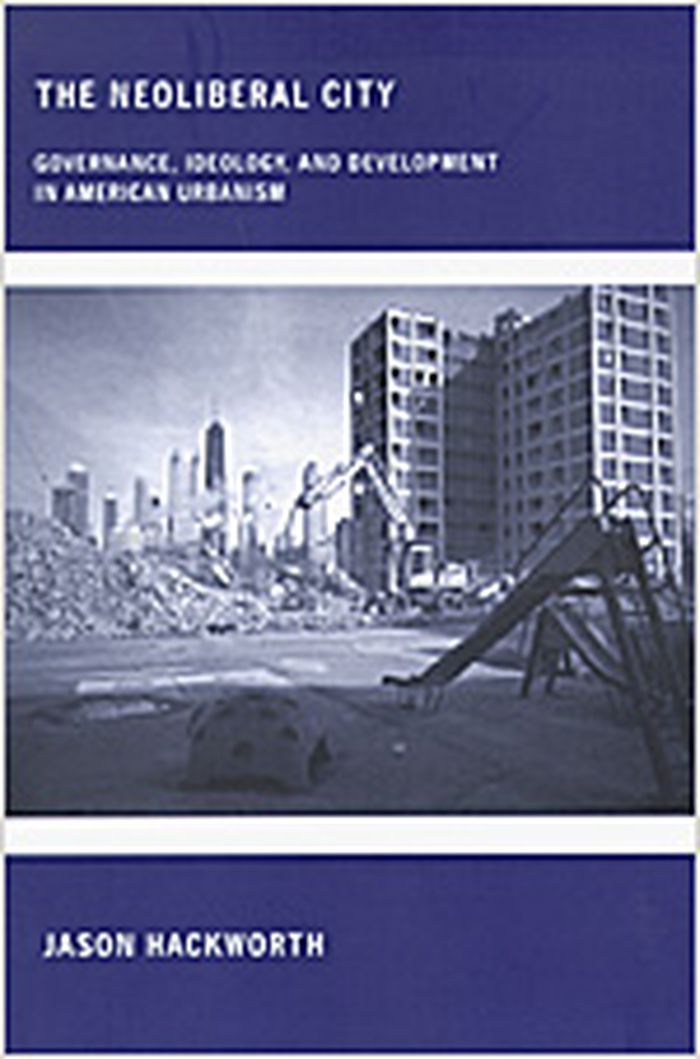
The shift in the ideological winds toward a "free-market" economy has brought profound effects in urban areas. "The neoliberal city" presents an overview of the effect of these changes on today's cities. The term "neoliberalism" was originally used in reference to a set of practices that first-world institutions like the IMF and World Bank impose on third-world countries and cities. The support of unimpeded trade and individual freedoms and the discouragement of state regulation and social spending are the putative centerpieces of this vision. More and more, though, people have come to recognize that first-world cities are undergoing the same processes. In "The neoliberal city", Jason Hackworth argues that neoliberal policies are in fact having a profound effect on the nature and direction of urbanization in the United States and other wealthy countries, and that much can be learned from studying its effect. He explores the impact that neoliberalism has had on three aspects of urbanization in the United States: governance, urban form, and social movements. The American inner city is seen as a crucial battle zone for the wider neoliberal transition primarily because it embodies neoliberalism's antithesis, Keynesian egalitarian liberalism. Focusing on issues such as gentrification in New York City; public-housing policy in New York, Chicago, and Seattle; downtown redevelopment in Phoenix; and urban-landscape change in New Brunswick, N.J., Hackworth shows us how material and symbolic changes to institutions, neighborhoods, and entire urban regions can be traced in part to the rise of neoliberalism.
The neoliberal city : governance, ideology, and development in american urbanism
Actions:
Prix:
$28.95
(disponible sur commande)
Résumé:
The shift in the ideological winds toward a "free-market" economy has brought profound effects in urban areas. "The neoliberal city" presents an overview of the effect of these changes on today's cities. The term "neoliberalism" was originally used in reference to a set of practices that first-world institutions like the IMF and World Bank impose on third-world countries and cities. The support of unimpeded trade and individual freedoms and the discouragement of state regulation and social spending are the putative centerpieces of this vision. More and more, though, people have come to recognize that first-world cities are undergoing the same processes. In "The neoliberal city", Jason Hackworth argues that neoliberal policies are in fact having a profound effect on the nature and direction of urbanization in the United States and other wealthy countries, and that much can be learned from studying its effect. He explores the impact that neoliberalism has had on three aspects of urbanization in the United States: governance, urban form, and social movements. The American inner city is seen as a crucial battle zone for the wider neoliberal transition primarily because it embodies neoliberalism's antithesis, Keynesian egalitarian liberalism. Focusing on issues such as gentrification in New York City; public-housing policy in New York, Chicago, and Seattle; downtown redevelopment in Phoenix; and urban-landscape change in New Brunswick, N.J., Hackworth shows us how material and symbolic changes to institutions, neighborhoods, and entire urban regions can be traced in part to the rise of neoliberalism.
Classification:
livres
livres
Publication:
décembre 2006, Ithaca, London
décembre 2006, Ithaca, London
Sujet:
Théorie de l’urbanisme
Théorie de l’urbanisme


