


expositions
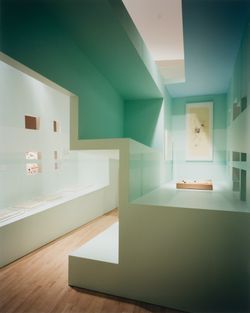
*Cités de l’archéologie fictive : oeuvres de Peter Eisenman, 1978-1988* examine la façon dont Eisenman a remis en question le concept de « site » et montre l’importance du dessin et de la fabrication de maquettes dans la genèse de ses idées. L’exposition révèle la richesse et la complexité des procédés de conception mis en œuvre par Einsenman en examinant attentivement(...)
Salles principales
2 mars 1994 au 19 juin 1994
Cités de l’archéologie fictive : oeuvres de Peter Eisenman, 1978-1988
Actions:
Description:
*Cités de l’archéologie fictive : oeuvres de Peter Eisenman, 1978-1988* examine la façon dont Eisenman a remis en question le concept de « site » et montre l’importance du dessin et de la fabrication de maquettes dans la genèse de ses idées. L’exposition révèle la richesse et la complexité des procédés de conception mis en œuvre par Einsenman en examinant attentivement(...)
expositions
2 mars 1994 au
19 juin 1994
Salles principales
Projet
AP207.S1.2017.PR01
Description:
The project series documents the installation "Levitazione" designed by Pettena and presented at the Fattoria Montellori in Fucecchio near Florence, in 2017. The installation used the existing wooden roof structure of the exhibition space to hang wood beams from it giving the impression of tree trunks with roots. For Pettena, the installation is "a story telling about the wish for a synthesis in the relationship between nature and artifice as well as between emotion and reason, between project strategies and laws of nature." [1] The project series contains sketches, drawings and two photographs of the installation. Source: [1] Gianni Pettena website, https://www.giannipettena.it/italiano/opere-1/nat-levitation-2017/ (last accessed 28 January 2020)
circa 2017
Levitazione [Levitation] (2017)
Actions:
AP207.S1.2017.PR01
Description:
The project series documents the installation "Levitazione" designed by Pettena and presented at the Fattoria Montellori in Fucecchio near Florence, in 2017. The installation used the existing wooden roof structure of the exhibition space to hang wood beams from it giving the impression of tree trunks with roots. For Pettena, the installation is "a story telling about the wish for a synthesis in the relationship between nature and artifice as well as between emotion and reason, between project strategies and laws of nature." [1] The project series contains sketches, drawings and two photographs of the installation. Source: [1] Gianni Pettena website, https://www.giannipettena.it/italiano/opere-1/nat-levitation-2017/ (last accessed 28 January 2020)
Project
circa 2017
Projet
AP178.S1.1983.PR02
Description:
The project series documents the 1983 design entry for the competition of the Prinz-Albrecht-Palais Monument to Gestapo victims. While the records were held in the office’s archives this project was assigned the number 18/80. The office assigned the date 1983 for this project. This project was submitted to the International Architectural Exhibition Berlin competition (International Bauaustellung, IBA, circa 1979-1987), an urban renewal strategy for West Berlin, Germany. Siza had previously submitted four other projects to this competition: the Görtlitzer Bad swimming pool, Block 70 and 89 (Fränkelufer residential complex), Bonjour Tristesse (Block 121), and Block 11-12. He would also submit a design proposal to the IBA competition for the Kulturforum. According to the documentation from the IBA competition, entries for the memorial were to include a pedestrian walkway that cut through the memorial parallel to Schöneberger strasse leading to Kochstrasse. Entries were also to include a playground and along Stresemann strasse there was to be the addition of a two storey building and a corner building. Other requested components included a parking lot and a partial reconstruction of the Fine Arts School. Documenting the design proposal are conceptual and design development drawings, including studies, a site axonometric drawing, ground plan, site plan and north, south, and east elevations. Also included is textual documentation on the competition as well as correspondence from IBA officials such as Marion Wilbert. Photographic materials consist of slides of plans, sections and elevations.
1983-1984
Monumento às vítimas da Gestapo [Monument to Gestapo victims], Prinz-Albrecht-Palais, Berlin, Germany (1983)
Actions:
AP178.S1.1983.PR02
Description:
The project series documents the 1983 design entry for the competition of the Prinz-Albrecht-Palais Monument to Gestapo victims. While the records were held in the office’s archives this project was assigned the number 18/80. The office assigned the date 1983 for this project. This project was submitted to the International Architectural Exhibition Berlin competition (International Bauaustellung, IBA, circa 1979-1987), an urban renewal strategy for West Berlin, Germany. Siza had previously submitted four other projects to this competition: the Görtlitzer Bad swimming pool, Block 70 and 89 (Fränkelufer residential complex), Bonjour Tristesse (Block 121), and Block 11-12. He would also submit a design proposal to the IBA competition for the Kulturforum. According to the documentation from the IBA competition, entries for the memorial were to include a pedestrian walkway that cut through the memorial parallel to Schöneberger strasse leading to Kochstrasse. Entries were also to include a playground and along Stresemann strasse there was to be the addition of a two storey building and a corner building. Other requested components included a parking lot and a partial reconstruction of the Fine Arts School. Documenting the design proposal are conceptual and design development drawings, including studies, a site axonometric drawing, ground plan, site plan and north, south, and east elevations. Also included is textual documentation on the competition as well as correspondence from IBA officials such as Marion Wilbert. Photographic materials consist of slides of plans, sections and elevations.
Project
1983-1984
Projet
AP140.S2.SS1.D70
Description:
File documents an unexecuted project for the Abando Passenger Interchange, in Bilbao, Spain. The office of James Stirling, Michael Wilford and Associates was appointed in 1985 to design the Passenger Interchange, including a dance and music school. The building programme was revised and enlarged in 1991 and design work began in 1992. This second project was developed after the death of James Stirling in 1992 by the firm of Michael Wilford and Partners. Material in this file was produced between 1974 and 2000. File contains reference drawings, presentation drawings and a large number of design development and working drawings. Photographic materials include views of the site by photographers Millar and Harris, aerial views of existing railway stations by photographers FOAT S.L., and views of models by photographer Chris Edgcombe, John Donat Photography and by Kandor Modelmakers. Textual records include photographs, a study model and model parts. Drawings, photographic materials and textual records also relate to several Abando Passenger Interchange exhibitions. File also contains a presentation model.
1974-1999
Abando Passenger Interchange, Bilbao, Spain
Actions:
AP140.S2.SS1.D70
Description:
File documents an unexecuted project for the Abando Passenger Interchange, in Bilbao, Spain. The office of James Stirling, Michael Wilford and Associates was appointed in 1985 to design the Passenger Interchange, including a dance and music school. The building programme was revised and enlarged in 1991 and design work began in 1992. This second project was developed after the death of James Stirling in 1992 by the firm of Michael Wilford and Partners. Material in this file was produced between 1974 and 2000. File contains reference drawings, presentation drawings and a large number of design development and working drawings. Photographic materials include views of the site by photographers Millar and Harris, aerial views of existing railway stations by photographers FOAT S.L., and views of models by photographer Chris Edgcombe, John Donat Photography and by Kandor Modelmakers. Textual records include photographs, a study model and model parts. Drawings, photographic materials and textual records also relate to several Abando Passenger Interchange exhibitions. File also contains a presentation model.
File 70
1974-1999
événements
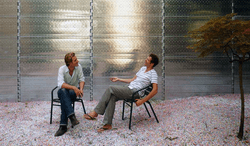
OFFICE veut vous parler
L’agence d’architectes OFFICE a été fondée en Belgique en 2002 par Kersten Geers et David Van Severen. L’agence a contribué à certaines expositions passées du CCA, dont La médicalisation de l’architecture (2011). Dans le cadre de la série Ils veulent vous parler, des professionnels du design et de l’architecture sont invités à parler de leurs plus récents projets.
13 novembre 2014 , 18h
OFFICE veut vous parler
Actions:
Description:
L’agence d’architectes OFFICE a été fondée en Belgique en 2002 par Kersten Geers et David Van Severen. L’agence a contribué à certaines expositions passées du CCA, dont La médicalisation de l’architecture (2011). Dans le cadre de la série Ils veulent vous parler, des professionnels du design et de l’architecture sont invités à parler de leurs plus récents projets.
événements
13 novembre 2014
18h
archives
Niveau de description archivistique:
Fonds
AP113
Résumé:
The Illinois Institute of Technology (IIT) - New Campus Center Competition fonds documents the projects of 4 of the 5 finalists (Eisenman, Hadid, Jahn/Sobek and Sejima/Nishizawa) of the international competition Richard H. Driehaus Foundation Design Competition for the University’s New Campus Center held by the Illinois Institute of Technology (IIT) of Chicago in November 1996. The fonds contains 20 presentation panels and 7 models. _____________________ Le Illinois Institute of Technology (IIT) - New Campus Center Competition fonds documentent les projets soumis par 4 des 5 finalistes (Eisenman, Hadid, Jahn/Sobek et Sejima/Nishizawa) au concours international Richard H. Driehaus Foundation Design Competition for the University’s New Campus Center lancé par l’Illinois Institute of Technology (IIT) de Chicago en novembre 1996. Le fonds contient 20 panneaux de présentation et 7 maquettes.
[1997]-1998
Fonds IIT - New Campus Center Competition
Actions:
AP113
Résumé:
The Illinois Institute of Technology (IIT) - New Campus Center Competition fonds documents the projects of 4 of the 5 finalists (Eisenman, Hadid, Jahn/Sobek and Sejima/Nishizawa) of the international competition Richard H. Driehaus Foundation Design Competition for the University’s New Campus Center held by the Illinois Institute of Technology (IIT) of Chicago in November 1996. The fonds contains 20 presentation panels and 7 models. _____________________ Le Illinois Institute of Technology (IIT) - New Campus Center Competition fonds documentent les projets soumis par 4 des 5 finalistes (Eisenman, Hadid, Jahn/Sobek et Sejima/Nishizawa) au concours international Richard H. Driehaus Foundation Design Competition for the University’s New Campus Center lancé par l’Illinois Institute of Technology (IIT) de Chicago en novembre 1996. Le fonds contient 20 panneaux de présentation et 7 maquettes.
archives
Niveau de description archivistique:
Fonds
[1997]-1998
Projet
AP207.S1.1985.PR02
Description:
The project series documents "Poltramaca", an installation that consists of half an armchair carved into a tree trunk and half a hammock hanging from a tree. The installation was presented at the Salone del Mobile, Galleria Megapoli in Milan in 1985. "[...] the trunk, cut down and abandoned, is thereby reconquered by its context, “caught” by a net that connects it to a still living tree." [1] Two other editions of the installation were presented at the "Gianni Pettena one-man show" exhibition at the Museo Piaggio, in Pontedera, in 2003, and at the Galleria Enrico Fornello in Prato, in 2009. The project series contains sketches, three drawings showing the variations of the armchair-hammock design, notes, and photographs of the installation in 1985, 2003 and 2009, and a digital video of the 2009 installation. Source: [1] Gianni Pettena website, https://www.giannipettena.it/italiano/opere-1/inst-armchair-hammock-1985/ (last accessed 11 December 2019).
circa 1985-2015
Poltramaca [Armchair-Hammock] (1985)
Actions:
AP207.S1.1985.PR02
Description:
The project series documents "Poltramaca", an installation that consists of half an armchair carved into a tree trunk and half a hammock hanging from a tree. The installation was presented at the Salone del Mobile, Galleria Megapoli in Milan in 1985. "[...] the trunk, cut down and abandoned, is thereby reconquered by its context, “caught” by a net that connects it to a still living tree." [1] Two other editions of the installation were presented at the "Gianni Pettena one-man show" exhibition at the Museo Piaggio, in Pontedera, in 2003, and at the Galleria Enrico Fornello in Prato, in 2009. The project series contains sketches, three drawings showing the variations of the armchair-hammock design, notes, and photographs of the installation in 1985, 2003 and 2009, and a digital video of the 2009 installation. Source: [1] Gianni Pettena website, https://www.giannipettena.it/italiano/opere-1/inst-armchair-hammock-1985/ (last accessed 11 December 2019).
Project
circa 1985-2015
expositions
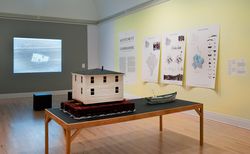
Si l’immigration est un thème dominant de la culture contemporaine, les discussions à son sujet sont souvent limitées à l’expérience humaine, telles que la traversée de frontières et les problématiques d’identité nationale. L’exposition Trajets adopte une perspective autre, celle de l’impact des mouvements sur l’environnement. Les exemples vont de la noix de coco qui(...)
Salles principales
20 octobre 2010 au 13 mars 2011
Trajets: comment la mobilité des fruits, des idées et des architectures recompose notre environnement
Actions:
Description:
Si l’immigration est un thème dominant de la culture contemporaine, les discussions à son sujet sont souvent limitées à l’expérience humaine, telles que la traversée de frontières et les problématiques d’identité nationale. L’exposition Trajets adopte une perspective autre, celle de l’impact des mouvements sur l’environnement. Les exemples vont de la noix de coco qui(...)
expositions
20 octobre 2010 au
13 mars 2011
Salles principales
pages web
Avec le programme de stages curatoriaux, le Centre Canadien d’Architecture souhaite partager son expertise avec des étudiants ou des jeunes diplômés dans les domaines de l’architecture, du design, des arts et des sciences humaines intéressés à explorer les aspects éditoriaux et curatoriaux de l’architecture. Les candidats sélectionnés seront invités à se familiariser avec l’approche curatoriale du CCA - en particulier ses activités liées à sa Collection, ses expositions, ses projets éditoriaux et ses programmes de recherche - au cours d’un stage de neuf mois à Montréal.
Programme de stages curatoriaux
Actions:
Résumé:
Avec le programme de stages curatoriaux, le Centre Canadien d’Architecture souhaite partager son expertise avec des étudiants ou des jeunes diplômés dans les domaines de l’architecture, du design, des arts et des sciences humaines intéressés à explorer les aspects éditoriaux et curatoriaux de l’architecture. Les candidats sélectionnés seront invités à se familiariser avec l’approche curatoriale du CCA - en particulier ses activités liées à sa Collection, ses expositions, ses projets éditoriaux et ses programmes de recherche - au cours d’un stage de neuf mois à Montréal.
pages web
Projet
AP178.S1.1980.PR03
Description:
The project series documents the 1980 design entry for Block 11-12 (Kottbusser Damm). While the records were held in the office’s archives this project was assigned the number 3/80. The office assigned the date 1980 for this project. This project was submitted to the International Architectural Exhibition Berlin competition (International Bauaustellung, IBA, circa 1979-1987), an urban renewal strategy for West Berlin, Germany. Siza had previously submitted three other projects to this competition: the Görtlitzer Bad swimming pool, Block 70 and 89 (Fränkelufer residential complex), and Block 121 (Bonjour Tristesse), which was his first built international project. He would later submit design proposals for two other projects: Monument to Gestapo victims Prinz-Albrecht-Palais and the Kulturforum. The design proposal for Block 11-12 was for a residential building on Kottbusserstrasse in Kreuzberg. Documenting the design proposal are drawings, photographs, negatives, slides, and textual documentation. Among the drawings are sketches, studies, elevations, floor plans, and site plans. Photographs and negatives depict the project site and surrounding area; additionally there are slides of drawings and the model. Also included is a work contract from the IBA signed by Siza and IBA official Hardt-Waltherr Hämer, as well as several notes and calculations. Note that textual documentation in this project series includes materials on Block 70 and 89, see AP178.S1.1980.PR03.008. Sketches in this project series may also include sketches related to other Berlin projects, such as Block 70 and 89.
circa 1979-1981
Block 11 e 12, Kottbusser Damm [11-12 Kottbusser Damm], Berlin, Germany (1979-1981)
Actions:
AP178.S1.1980.PR03
Description:
The project series documents the 1980 design entry for Block 11-12 (Kottbusser Damm). While the records were held in the office’s archives this project was assigned the number 3/80. The office assigned the date 1980 for this project. This project was submitted to the International Architectural Exhibition Berlin competition (International Bauaustellung, IBA, circa 1979-1987), an urban renewal strategy for West Berlin, Germany. Siza had previously submitted three other projects to this competition: the Görtlitzer Bad swimming pool, Block 70 and 89 (Fränkelufer residential complex), and Block 121 (Bonjour Tristesse), which was his first built international project. He would later submit design proposals for two other projects: Monument to Gestapo victims Prinz-Albrecht-Palais and the Kulturforum. The design proposal for Block 11-12 was for a residential building on Kottbusserstrasse in Kreuzberg. Documenting the design proposal are drawings, photographs, negatives, slides, and textual documentation. Among the drawings are sketches, studies, elevations, floor plans, and site plans. Photographs and negatives depict the project site and surrounding area; additionally there are slides of drawings and the model. Also included is a work contract from the IBA signed by Siza and IBA official Hardt-Waltherr Hämer, as well as several notes and calculations. Note that textual documentation in this project series includes materials on Block 70 and 89, see AP178.S1.1980.PR03.008. Sketches in this project series may also include sketches related to other Berlin projects, such as Block 70 and 89.
Project
circa 1979-1981


