


440 Résultats
Classification:
livres
livres

Actions:
Prix:
$70.00
(disponible sur commande)
Résumé:
Three hundred years ago, intellectuals of the European Enlightenment constructed a mythology of technology. Influenced by a confluence of humanism, colonialism, and racism, this mythology ignored local wisdom and indigenous innovation, deeming it primitive. Today, we have slowly come to realize that the legacy of this mythology is haunting us. Designers understand the(...)
Titre:
Lo-Tek. Design by radical indigenism
Actions:
Prix:
$70.00
(disponible sur commande)
Résumé:
Three hundred years ago, intellectuals of the European Enlightenment constructed a mythology of technology. Influenced by a confluence of humanism, colonialism, and racism, this mythology ignored local wisdom and indigenous innovation, deeming it primitive. Today, we have slowly come to realize that the legacy of this mythology is haunting us. Designers understand the urgency of reducing humanity’s negative environmental impact, yet perpetuate the same mythology of technology that relies on exploiting nature. Responding to climate change by building hard infrastructures and favoring high-tech homogenous design, we are ignoring millennia-old knowledge of how to live in symbiosis with nature. Without implementing soft systems that use biodiversity as a building block, designs remain inherently unsustainable. Lo-TEK, derived from Traditional Ecological Knowledge, is a cumulative body of multigenerational knowledge, practices, and beliefs, countering the idea that indigenous innovation is primitive and exists isolated from technology. It is sophisticated and designed to sustainably work with complex ecosystems.
Classification:
livres
livres
Publication:
janvier 2020
janvier 2020
Sujet:
Architecture écologique
Architecture écologique
Classification:
livres
livres
Prix:
$64.00
(disponible sur commande)
Résumé:
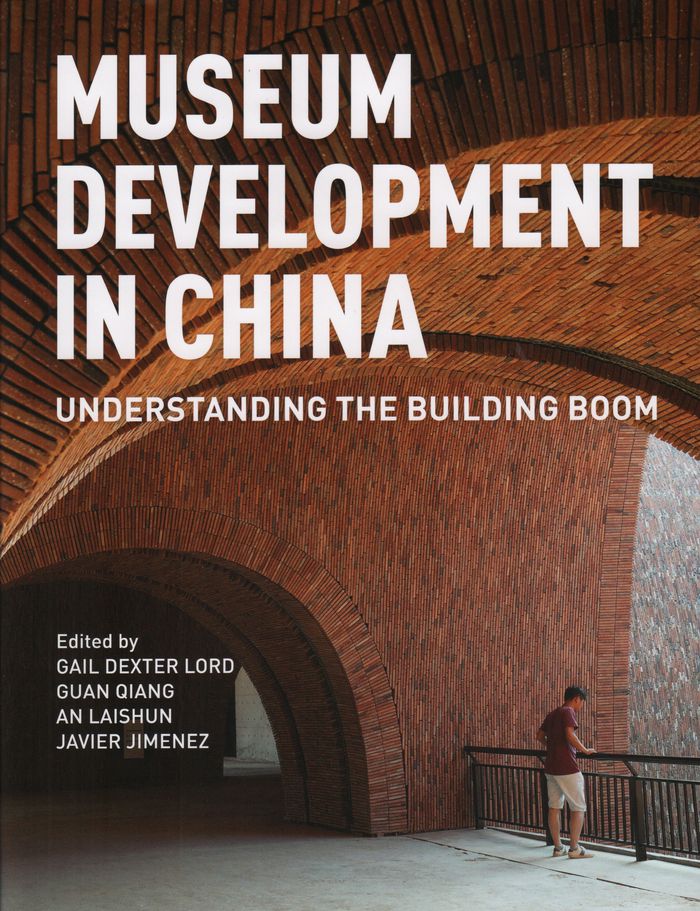
The growth of the number and scale of Chinese museums in the 21st century, from about 1,400 at the turn of the century to over 5,000 to date, reflects the government’s Museum Development Plan for 2011-2020 to open one museum per 250,000 inhabitants, with the goal of attracting one billion visitors at the end of the decade. What are the motivations for the rapid(...)
Titre:
Museum development in China: understanding the building boom
Actions:
Prix:
$64.00
(disponible sur commande)
Résumé:
The growth of the number and scale of Chinese museums in the 21st century, from about 1,400 at the turn of the century to over 5,000 to date, reflects the government’s Museum Development Plan for 2011-2020 to open one museum per 250,000 inhabitants, with the goal of attracting one billion visitors at the end of the decade. What are the motivations for the rapid development of museums in China? How is the public responding? Who pays for these museums and how? What has been the impact of china’s urbanization? How do Chinese museums balance education, scientific research, social cohesion, cultural diplomacy and tourism both internal and external? These are issues that continue to be discussed and debated among western museum professionals in the context of our 200 - year history of modern museology. How are these debates evolving in China, which has its own history of museology over that same period from colonialism to communism and from isolation to opening up to the world?
Classification:
livres
livres
Publication:
juin 2019
juin 2019
Sujet:
Muséologie
Muséologie
Classification:
livres
livres
Actions:
Prix:
$37.95
(disponible sur commande)
Résumé:
Bringing together media studies and environmental humanities, the contributors to ''Saturation'' develop saturation as a heuristic to analyze phenomena in which the elements involved are difficult or impossible to separate. In ordinary language, saturation describes the condition of being thoroughly soaked, while in chemistry it is the threshold at which something can be(...)
Publication:
novembre 2021
novembre 2021
Titre:
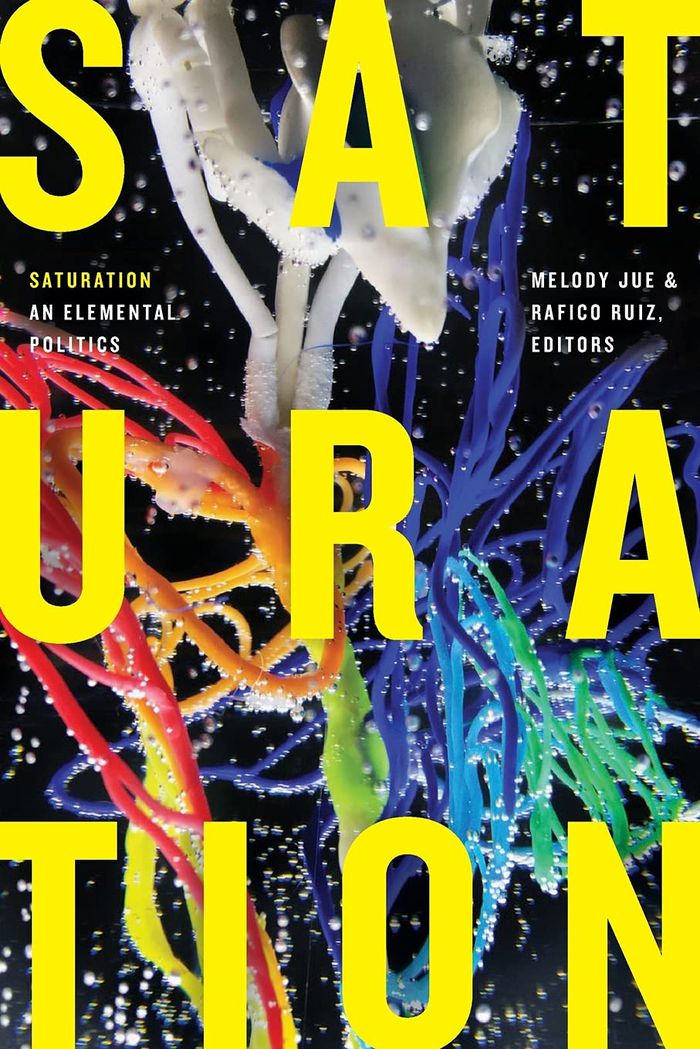
Saturation: an elemental politics
Actions:
Prix:
$37.95
(disponible sur commande)
Résumé:
Bringing together media studies and environmental humanities, the contributors to ''Saturation'' develop saturation as a heuristic to analyze phenomena in which the elements involved are difficult or impossible to separate. In ordinary language, saturation describes the condition of being thoroughly soaked, while in chemistry it is the threshold at which something can be maximally dissolved or absorbed in a solution. Contributors to this collection expand notions of saturation beyond water to consider saturation in sound, infrastructure, media, Big Data, capitalism, and visual culture. Essays include analyses of the thresholds of HIV detectability in bloodwork, militarism's saturation of oceans, and the deleterious effects of the saturation of cellphone and wi-fi signals into the human body. By channeling saturation to explore the relationship between media, the environment, technology, capital, and the legacies of settler colonialism, ''Saturation'' illuminates how elements, the natural world, and anthropogenic infrastructures, politics, and processes exist in and through each other.
Classification:
livres
livres
Publication:
novembre 2021
novembre 2021
Classification:
livres
livres

Titre:
Orwell's roses
Orwell's roses
Actions:
Prix:
$37.00
(disponible sur commande)
Résumé:
Sparked by her unexpected encounter with the surviving roses he planted in 1936, Solnit’s account of this understudied aspect of Orwell’s life explores his writing and his actions—from going deep into the coal mines of England, fighting in the Spanish Civil War, critiquing Stalin when much of the international left still supported him (and then critiquing that left), to(...)
Titre:
Orwell's roses
Actions:
Prix:
$37.00
(disponible sur commande)
Résumé:
Sparked by her unexpected encounter with the surviving roses he planted in 1936, Solnit’s account of this understudied aspect of Orwell’s life explores his writing and his actions—from going deep into the coal mines of England, fighting in the Spanish Civil War, critiquing Stalin when much of the international left still supported him (and then critiquing that left), to his analysis of the relationship between lies and authoritarianism. Through Solnit’s celebrated ability to draw unexpected connections, readers encounter the photographer Tina Modotti’s roses and her Stalinism, Stalin’s obsession with forcing lemons to grow in impossibly cold conditions, Orwell’s slave-owning ancestors in Jamaica, Jamaica Kincaid’s critique of colonialism and imperialism in the flower garden, and the brutal rose industry in Colombia that supplies the American market. The book draws to a close with a rereading of ''Nineteen Eighty-Four'' that completes her portrait of a more hopeful Orwell, as well as a reflection on pleasure, beauty, and joy as acts of resistance.
Classification:
livres
livres
Publication:
octobre 2021
octobre 2021
Sujet:
Littérature et poésie
Littérature et poésie
Classification:
livres
livres
Actions:
Prix:
$65.95
(disponible sur commande)
Résumé:
The book uses saturation as an organizing concept, in part to suggest that current paradigms cannot encompass the complex realities of race. Saturation provides avenues to situate race as it relates to perception, science, aesthetics, the corporeal, and the sonic. In color theory, saturation is understood in terms of the degree to which a color differs from whiteness. In(...)
Titre:
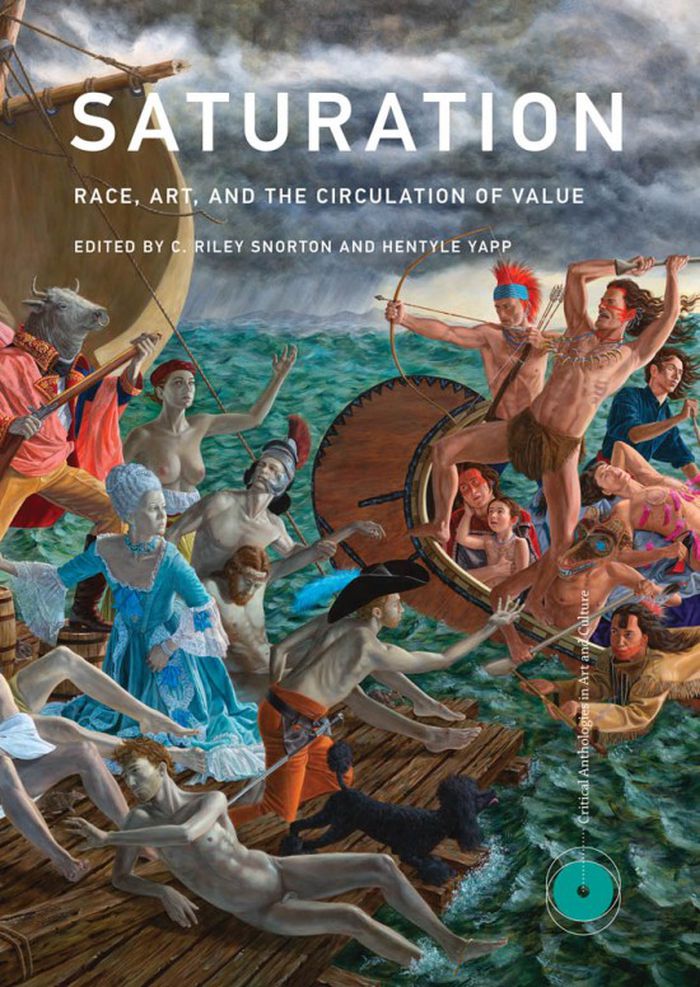
Saturation: Race, art, and the circulation of value
Actions:
Prix:
$65.95
(disponible sur commande)
Résumé:
The book uses saturation as an organizing concept, in part to suggest that current paradigms cannot encompass the complex realities of race. Saturation provides avenues to situate race as it relates to perception, science, aesthetics, the corporeal, and the sonic. In color theory, saturation is understood in terms of the degree to which a color differs from whiteness. In science, saturation points describe not only the moment in which race exceeds legibility, but also how diversity operates for institutions. Contributors consider how racialization, globalization, and the production and consumption of art converge in the art market, engaging such topics as racial capitalism, the aesthetics of colonialism, and disability cultures. They examine methods for theorizing race and representation, including “aboutness,” which interprets artworks by racialized subjects as being “about” race; modes of unruly, decolonized, and queer visual practices that resist disciplinary boundaries; and a model by which to think with and alongside blackness and indigeneity.
Classification:
livres
livres
Publication:
décembre 2021
décembre 2021
Sujet:
Théorie de l’art
Théorie de l’art
Classification:
livres
livres
Actions:
Prix:
$37.95
(disponible sur commande)
Résumé:
In "The politics of collecting," Eunsong Kim traces how racial capitalism and colonialism situated the rise of US museum collections and conceptual art forms. Investigating historical legal and property claims, she argues that regimes of expropriation--rather than merit or good taste--are responsible for popular ideas of formal innovation and artistic genius. In doing so,(...)
Titre:
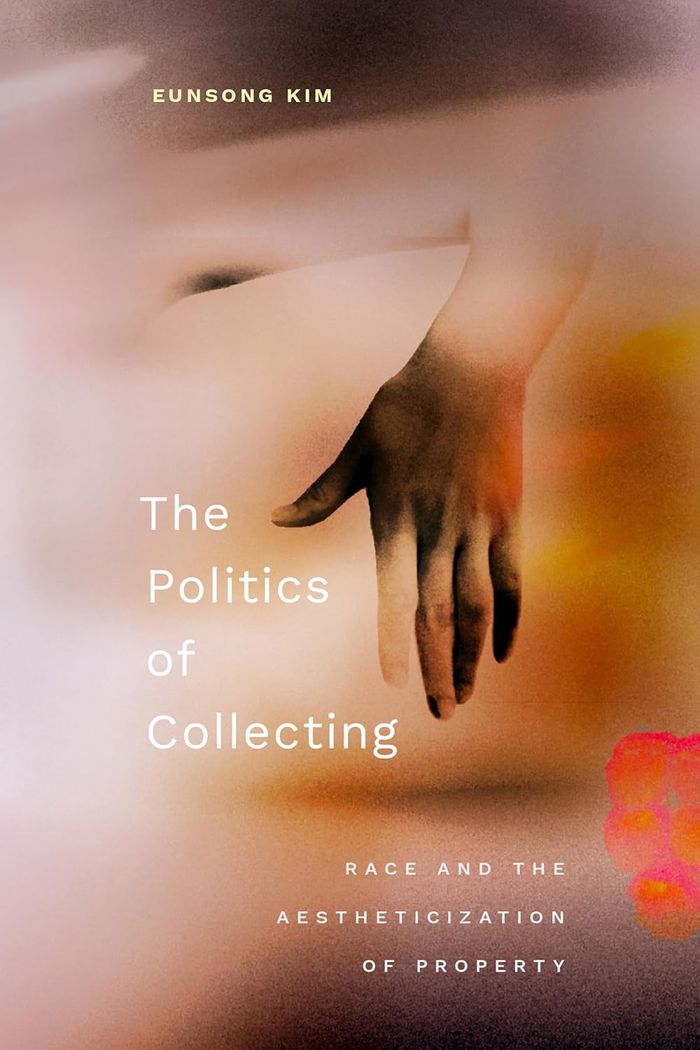
The politics of collecting: Race and the aestheticization of property
Actions:
Prix:
$37.95
(disponible sur commande)
Résumé:
In "The politics of collecting," Eunsong Kim traces how racial capitalism and colonialism situated the rise of US museum collections and conceptual art forms. Investigating historical legal and property claims, she argues that regimes of expropriation--rather than merit or good taste--are responsible for popular ideas of formal innovation and artistic genius. In doing so, she details how Marcel Duchamp's canonization has more to do with his patron's donations to museums than it does the quality of Duchamp's work, and she uncovers the racialized and financialized logic behind the Archive of New Poetry's collecting practices. Ranging from the conception of philanthropy devised by the robber barons of the late nineteenth century to ongoing digitization projects, Kim provides a new history of contemporary art that accounts for the complicated entanglement of race, capital, and labor behind storied art institutions and artists. Drawing on history, theory, and economics, Kim challenges received notions of artistic success and talent and calls for a new vision of art beyond the cultural institution.
Classification:
livres
livres
Publication:
août 2024
août 2024
Classification:
livres
livres

Prix:
$32.95
(disponible en magasin)
Résumé:
There have been many things written about Canada’s violent siege of Kanehsatà:ke and Kahnawà:ke in the summer of 1990, but "When the pine needles fall: Indigenous acts of resistance" is the first book from the perspective of Katsi’tsakwas Ellen Gabriel, who was the Kanien’kehá:ka (Mohawk) spokesperson during the siege. "When the pine needles fall," written in a(...)
Titre:
When the pine needles fall: Indigenous acts of resistance
Actions:
Prix:
$32.95
(disponible en magasin)
Résumé:
There have been many things written about Canada’s violent siege of Kanehsatà:ke and Kahnawà:ke in the summer of 1990, but "When the pine needles fall: Indigenous acts of resistance" is the first book from the perspective of Katsi’tsakwas Ellen Gabriel, who was the Kanien’kehá:ka (Mohawk) spokesperson during the siege. "When the pine needles fall," written in a conversational style by Gabriel with historian Sean Carleton, offers an intimate look at Gabriel’s life leading up to the 1990 siege, her experiences as spokesperson for her community, and her work since then as an Indigenous land defender, human rights activist, and feminist leader. More than just the memoir of an extraordinary individual, "When the pine needles fall" offers insight into Indigenous language, history, and philosophy, reflections on our relationship with the land, and calls to action against both colonialism and capitalism as we face the climate crisis. Gabriel’s hopes for a decolonial future make clear why protecting Indigenous homelands is vital not only for the survival of Indigenous peoples, but for all who live on this planet.
Classification:
livres
livres
Publication:
septembre 2024
septembre 2024
Sujet:
Autochtone
Autochtone
Classification:
livres
livres
Actions:
Prix:
$39.95
(disponible sur commande)
Résumé:
Photography is one of the principal filters through which we engage the world. The contributors to this volume focus on Walter Benjamin's concept of the optical unconscious to investigate how photography has shaped history, modernity, perception, lived experience, politics, race, and human agency. In essays that range from examinations of Benjamin's and Sigmund Freud's(...)
Sujet:
Théorie de la photographie
Théorie de la photographie
Publication:
mai 2017
mai 2017
Titre:
Photography and the optical unconscious
Actions:
Prix:
$39.95
(disponible sur commande)
Résumé:
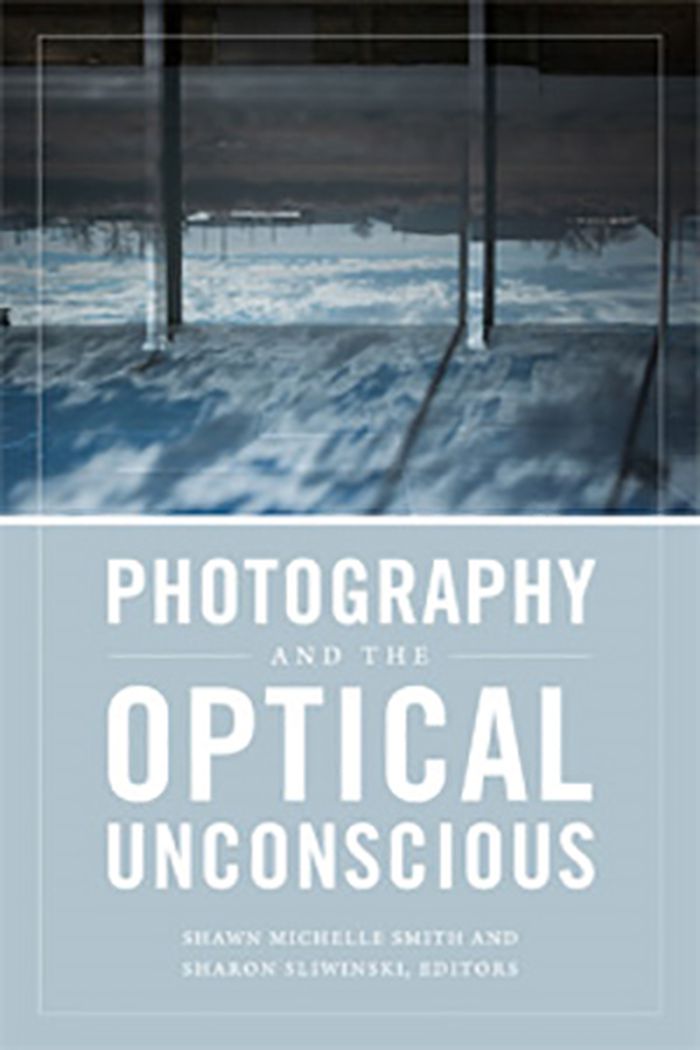
Photography is one of the principal filters through which we engage the world. The contributors to this volume focus on Walter Benjamin's concept of the optical unconscious to investigate how photography has shaped history, modernity, perception, lived experience, politics, race, and human agency. In essays that range from examinations of Benjamin's and Sigmund Freud's writings to the work of Kara Walker and Roland Barthes's famous Winter Garden photograph, the contributors explore what photography can teach us about the nature of the unconscious. They attend to side perceptions, develop latent images, discover things hidden in plain sight, focus on the disavowed, and perceive the slow. Of particular note are the ways race and colonialism have informed photography from its beginning. The volume also contains photographic portfolios by Zoe Leonard, Kelly Wood, and Kristan Horton, whose work speaks to the optical unconscious while demonstrating how photographs communicate on their own terms. The essays and portfolios in Photography and the Optical Unconscious create a collective and sustained assessment of Benjamin's influential concept, opening up new avenues for thinking about photography and the human psyche.
Classification:
livres
livres
Publication:
mai 2017
mai 2017
Sujet:
Théorie de la photographie
Théorie de la photographie
Classification:
livres
livres
Prix:
$31.50
(disponible sur commande)
Résumé:
For hundreds of years, Ireland has been a testing ground for colonizing techniques. Postcolonial Dublin shows how perpetrators of colonialism have made use of urban planning and architecture to underscore and legitimate ideologies. From suburban development to building facades, the conflict between nationalists and colonialists has inscribed itself on Dublin’s landscape.(...)
Titre:
Postcolonial Dublin : imperial legacies and the built environment
Actions:
Prix:
$31.50
(disponible sur commande)
Résumé:
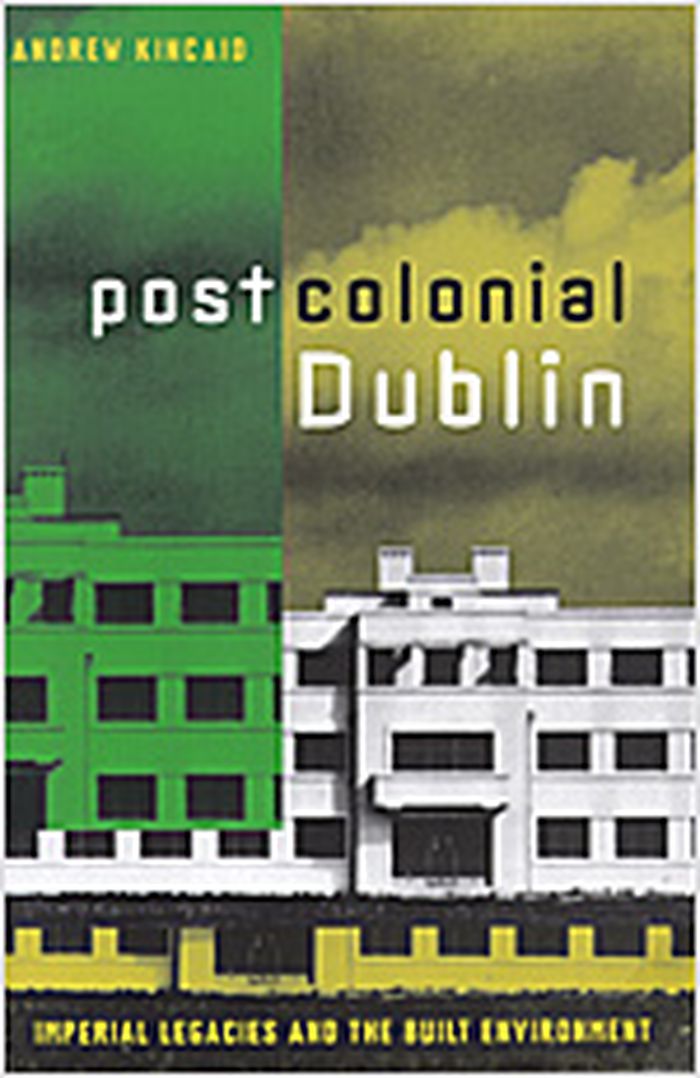
For hundreds of years, Ireland has been a testing ground for colonizing techniques. Postcolonial Dublin shows how perpetrators of colonialism have made use of urban planning and architecture to underscore and legitimate ideologies. From suburban development to building facades, the conflict between nationalists and colonialists has inscribed itself on Dublin’s landscape. Andrew Kincaid illustrates how the architecture and urban planning of Dublin have been integral to debates about nationalism, modernism, and Ireland’s relationship to the rest of the world. Looking at objects such as Londonderry’s Market House, Patrick Abercrombie’s Dublin of the Future, and the urban renewal project of today’s Temple Bar, Kincaid highlights Ireland’s colonial history and the significance of architecture in the evolution of national identity. In doing so, he demonstrates how ideology “spatializes” itself. Postcolonial Dublin engages the prevailing historical representations of Irish nationalism, arguing that the evolving city reflected a debate over who would hold the reins of power. Bringing the tools of literary criticism and postcolonial theory to bear on the field of urban studies, Kincaid places Dublin at the forefront of debates over modernism, modernity, and globalization.
Classification:
livres
livres
Publication:
mai 2006, Minneapolis
mai 2006, Minneapolis
Classification:
livres
livres
Actions:
Prix:
$41.99
(disponible sur commande)
Résumé:
Examining the histories of Vancouver’s infrastructures, including railways, ports, the freeway system, fossil-fuel pipelines, and property, Michael Simpson details the various spatial manifestations of settler colonialism and racial capitalism that constitute the city’s urban environment—using it as a case study to reveal such tendencies around the world. Simpson exposes(...)
Titre:
Terminal city: Infrastructures of racial colonial capitalism in Vancouver
Actions:
Prix:
$41.99
(disponible sur commande)
Résumé:
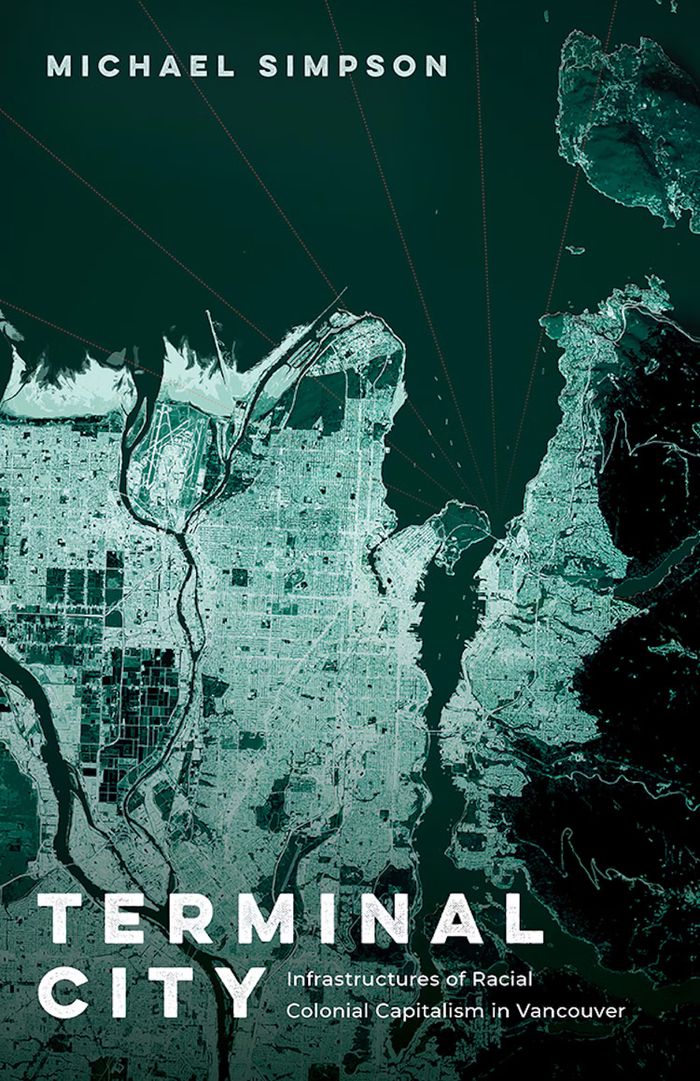
Examining the histories of Vancouver’s infrastructures, including railways, ports, the freeway system, fossil-fuel pipelines, and property, Michael Simpson details the various spatial manifestations of settler colonialism and racial capitalism that constitute the city’s urban environment—using it as a case study to reveal such tendencies around the world. Simpson exposes how the seizure of Indigenous lands and the destruction of Black communities has been foundational to the development of the city, and he highlights its structural dependency on these violent legacies, as well as the ongoing struggles to dismantle them. Bringing together theoretical insights from the fields of urban geography, political ecology, and Indigenous studies, Simpson provides a distinctive intervention into contemporary debates around the material basis of logistics and circulation. At a time when massive upheavals to urban infrastructure are taking place in the hopes of establishing greater sustainability, ''Terminal City'' raises important questions about how this moment of transition might be harnessed to bring about decolonial abolitionist futures that redefine what a city can become.
Classification:
livres
livres
Publication:
novembre 2026
novembre 2026
Sujet:
Architecture du Canada
Architecture du Canada


