


4209 Résultats
Classification:
livres
livres
Actions:
Exemplaires:
Description:
100 pages : color illustrations, color maps ; 29 cm.
Description:
100 pages : color illustrations, color maps ; 29 cm.
Auteur:
Sujet:
Publication:
Washington, D.C. : Arthur M. Sackler Gallery, Smithsonian Institution and the University of Washington Press, Seattle and London, ©2000.
Washington, D.C. : Arthur M. Sackler Gallery, Smithsonian Institution and the University of Washington Press, Seattle and London, ©2000.
Titre:
The moonlight garden : new discoveries at the Taj Mahal / edited by Elizabeth B. Moynihan.
Actions:
Exemplaires:
Description:
100 pages : color illustrations, color maps ; 29 cm.
The moonlight garden : new discoveries at the Taj Mahal / edited by Elizabeth B. Moynihan.
Actions:
Exemplaires:
Description:
100 pages : color illustrations, color maps ; 29 cm.
Classification:
livres
livres
Publication:
Washington, D.C. : Arthur M. Sackler Gallery, Smithsonian Institution and the University of Washington Press, Seattle and London, ©2000.
Washington, D.C. : Arthur M. Sackler Gallery, Smithsonian Institution and the University of Washington Press, Seattle and London, ©2000.
Auteur:
Sujet:
Classification:
livres
livres
Actions:
Prix:
$86.00
(disponible en magasin)
Résumé:
In recent years, philosophy and art have testified to how anthropocentrism has culturally impoverished our world, leading to the wide destruction of habitats and ecosystems. In this book, Giovanni Aloi and Michael Marder show that the field of critical plant studies can make an important contribution, offering a slew of possibilities for scientific research, local(...)
$86.00
(disponible en magasin)
Résumé:
In recent years, philosophy and art have testified to how anthropocentrism has culturally impoverished our world, leading to the wide destruction of habitats and ecosystems. In this book, Giovanni Aloi and Michael Marder show that the field of critical plant studies can make an important contribution, offering a slew of possibilities for scientific research, local(...)
Publication:
juillet 2023
juillet 2023
Titre:
Vegetal entwinements in philosophy and art
Actions:
Prix:
$86.00
(disponible en magasin)
Résumé:
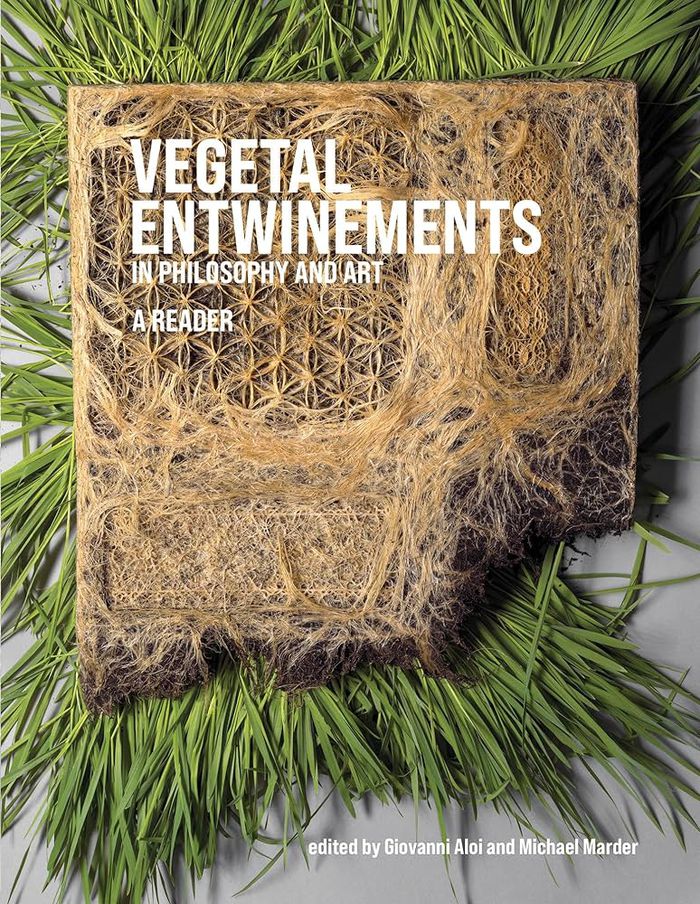
In recent years, philosophy and art have testified to how anthropocentrism has culturally impoverished our world, leading to the wide destruction of habitats and ecosystems. In this book, Giovanni Aloi and Michael Marder show that the field of critical plant studies can make an important contribution, offering a slew of possibilities for scientific research, local traditions, Indigenous knowledge, history, geography, anthropology, philosophy, and aesthetics to intersect, inform one another, and lead interdisciplinary and transcultural dialogues. "Vegetal entwinements in philosophy and art" considers such topics as the presence of plants in the history of philosophy, the shifting status of plants in various traditions, what it means to make art with growing life-forms, and whether or not plants have moral standing. In an experimental vegetal arrangement, the reader presents some of the most influential writing on plants, philosophy, and the arts, together with provocative new contributions, as well as interviews with groundbreaking contemporary artists whose work has greatly enhanced our appreciation of vegetal being.
Vegetal entwinements in philosophy and art
Actions:
Prix:
$86.00
(disponible en magasin)
Résumé:
In recent years, philosophy and art have testified to how anthropocentrism has culturally impoverished our world, leading to the wide destruction of habitats and ecosystems. In this book, Giovanni Aloi and Michael Marder show that the field of critical plant studies can make an important contribution, offering a slew of possibilities for scientific research, local traditions, Indigenous knowledge, history, geography, anthropology, philosophy, and aesthetics to intersect, inform one another, and lead interdisciplinary and transcultural dialogues. "Vegetal entwinements in philosophy and art" considers such topics as the presence of plants in the history of philosophy, the shifting status of plants in various traditions, what it means to make art with growing life-forms, and whether or not plants have moral standing. In an experimental vegetal arrangement, the reader presents some of the most influential writing on plants, philosophy, and the arts, together with provocative new contributions, as well as interviews with groundbreaking contemporary artists whose work has greatly enhanced our appreciation of vegetal being.
Classification:
livres
livres
Publication:
juillet 2023
juillet 2023
Classification:
livres
livres
Actions:
Prix:
$23.95
(disponible sur commande)
Résumé:
The term "guerrilla" may bring to mind a small band of armed soldiers, moving in the dead of night on a stealth mission. In the case of guerrilla gardening, the soldiers are planters, the weapons are shovels, and the mission is to transform an abandoned lot into a thing of beauty. Once an environmentalist's nonviolent direct action for inner-city renewal, this approach to(...)
$23.95
(disponible sur commande)
Résumé:
The term "guerrilla" may bring to mind a small band of armed soldiers, moving in the dead of night on a stealth mission. In the case of guerrilla gardening, the soldiers are planters, the weapons are shovels, and the mission is to transform an abandoned lot into a thing of beauty. Once an environmentalist's nonviolent direct action for inner-city renewal, this approach to(...)
Titre:
Guerrilla gardening : a manualfesto
Actions:
Prix:
$23.95
(disponible sur commande)
Résumé:
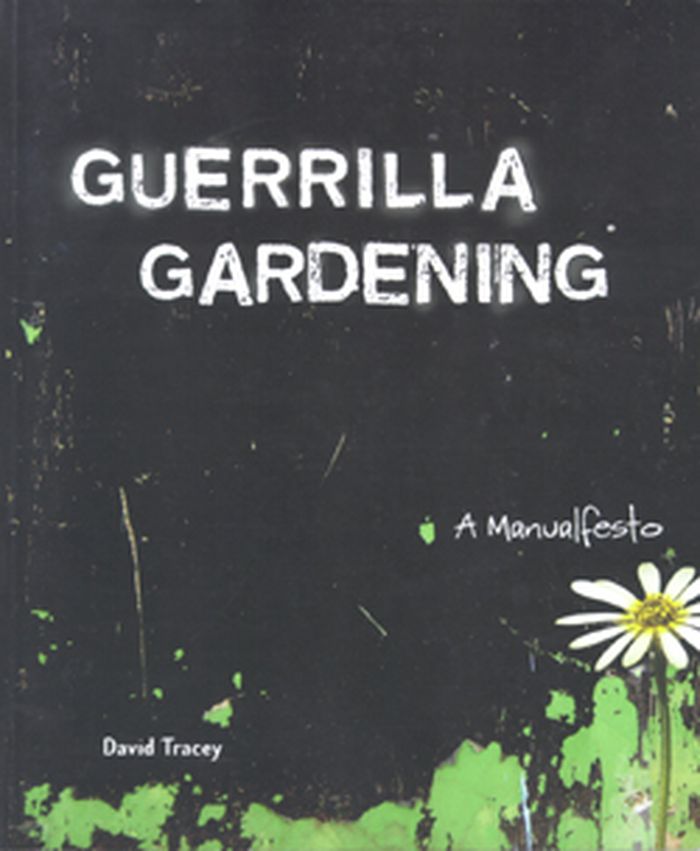
The term "guerrilla" may bring to mind a small band of armed soldiers, moving in the dead of night on a stealth mission. In the case of guerrilla gardening, the soldiers are planters, the weapons are shovels, and the mission is to transform an abandoned lot into a thing of beauty. Once an environmentalist's nonviolent direct action for inner-city renewal, this approach to urban beautification is spreading to all types of people in cities around the world. These modern-day Johnny Appleseeds perform random acts of gardening, often without the property owner's prior knowledge or permission. Typical targets are vacant lots, railway land, underused public squares, and back alleys. The concept is simple, whimsical and has the cheeky appeal of being a not-quite-legal call to action. Dig in some soil, plant a few seeds, or mend a sagging fence - one good deed inspiring another, with win-win results all around.
Guerrilla gardening : a manualfesto
Actions:
Prix:
$23.95
(disponible sur commande)
Résumé:
The term "guerrilla" may bring to mind a small band of armed soldiers, moving in the dead of night on a stealth mission. In the case of guerrilla gardening, the soldiers are planters, the weapons are shovels, and the mission is to transform an abandoned lot into a thing of beauty. Once an environmentalist's nonviolent direct action for inner-city renewal, this approach to urban beautification is spreading to all types of people in cities around the world. These modern-day Johnny Appleseeds perform random acts of gardening, often without the property owner's prior knowledge or permission. Typical targets are vacant lots, railway land, underused public squares, and back alleys. The concept is simple, whimsical and has the cheeky appeal of being a not-quite-legal call to action. Dig in some soil, plant a few seeds, or mend a sagging fence - one good deed inspiring another, with win-win results all around.
Classification:
livres
livres
Publication:
avril 2007, Gabriola Island
avril 2007, Gabriola Island
Sujet:
Paysages urbains
Paysages urbains
Classification:
livres
livres

Titre:
Drawings by Marcel Dzama
Drawings by Marcel Dzama
Actions:
Prix:
$30.00
(disponible sur commande)
Résumé:
Over the past few years Marcel Dzama's drawings have been attracting considerable attention. His odd mutant figures, with their ambiguous relationship to other figures, objects and situations, are infused with a radiant innocence and an idiosyncratic sense of humour far removed from other strategies that have fueled artmaking over the past decade. In this most(...)
$30.00
(disponible sur commande)
Résumé:
Over the past few years Marcel Dzama's drawings have been attracting considerable attention. His odd mutant figures, with their ambiguous relationship to other figures, objects and situations, are infused with a radiant innocence and an idiosyncratic sense of humour far removed from other strategies that have fueled artmaking over the past decade. In this most(...)
Publication:
janvier 2005, Windsor
janvier 2005, Windsor
Titre:
Drawings by Marcel Dzama
Actions:
Prix:
$30.00
(disponible sur commande)
Résumé:
Over the past few years Marcel Dzama's drawings have been attracting considerable attention. His odd mutant figures, with their ambiguous relationship to other figures, objects and situations, are infused with a radiant innocence and an idiosyncratic sense of humour far removed from other strategies that have fueled artmaking over the past decade. In this most comprehensive publication on Dzama's work to date, Patten examines the seminal evolution of Dzama's idiosyncratic approach to drawing between 1996 and 2001. Referring to Mikhail Bakhtin's concept of grotesque humour and the carnivalesque, he demonstrates how each drawing is an amalgam of allusions to 20th century popular culture. With an introduction by Wayne Baerwaldt, director of the Power Plant. Originally from Winnipeg, Marcel Dzama has had numerous solo exhibitions, notably at the Los Angeles Invitational Biennial, Richard Heller Gallery of Santa Monica and Sies + Hoke of Dusseldorf. He has also exhibited widely as a member of the Royal Art Lodge, most recently at New York's Drawing Room.
Drawings by Marcel Dzama
Actions:
Prix:
$30.00
(disponible sur commande)
Résumé:
Over the past few years Marcel Dzama's drawings have been attracting considerable attention. His odd mutant figures, with their ambiguous relationship to other figures, objects and situations, are infused with a radiant innocence and an idiosyncratic sense of humour far removed from other strategies that have fueled artmaking over the past decade. In this most comprehensive publication on Dzama's work to date, Patten examines the seminal evolution of Dzama's idiosyncratic approach to drawing between 1996 and 2001. Referring to Mikhail Bakhtin's concept of grotesque humour and the carnivalesque, he demonstrates how each drawing is an amalgam of allusions to 20th century popular culture. With an introduction by Wayne Baerwaldt, director of the Power Plant. Originally from Winnipeg, Marcel Dzama has had numerous solo exhibitions, notably at the Los Angeles Invitational Biennial, Richard Heller Gallery of Santa Monica and Sies + Hoke of Dusseldorf. He has also exhibited widely as a member of the Royal Art Lodge, most recently at New York's Drawing Room.
Classification:
livres
livres
Publication:
janvier 2005, Windsor
janvier 2005, Windsor
Classification:
livres
livres
Titre:
A forest in the city
A forest in the city
Actions:
Prix:
$19.95
(disponible sur commande)
Résumé:
''A forest in the city'' looks at the urban forest, starting with a bird’s-eye view of the tree canopy, then swooping down to street level, digging deep into the ground, then moving up through a tree’s trunk, back into the leaves and branches. Trees make our cities more beautiful and provide shade but they also fight climate change and pollution, benefit our health and(...)
$19.95
(disponible sur commande)
Résumé:
''A forest in the city'' looks at the urban forest, starting with a bird’s-eye view of the tree canopy, then swooping down to street level, digging deep into the ground, then moving up through a tree’s trunk, back into the leaves and branches. Trees make our cities more beautiful and provide shade but they also fight climate change and pollution, benefit our health and(...)
Titre:
A forest in the city
Actions:
Prix:
$19.95
(disponible sur commande)
Résumé:
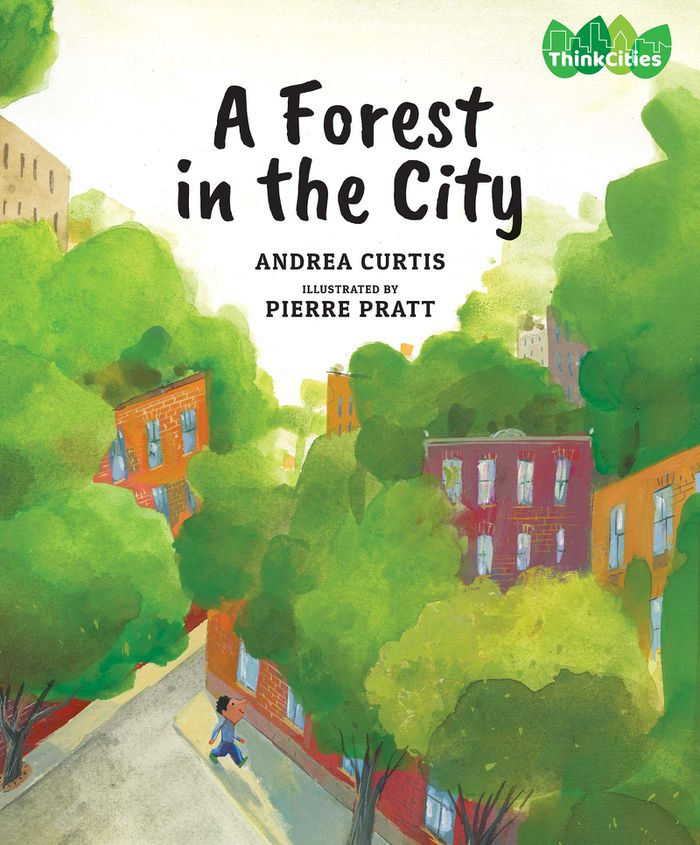
''A forest in the city'' looks at the urban forest, starting with a bird’s-eye view of the tree canopy, then swooping down to street level, digging deep into the ground, then moving up through a tree’s trunk, back into the leaves and branches. Trees make our cities more beautiful and provide shade but they also fight climate change and pollution, benefit our health and connections to one another, provide food and shelter for wildlife, and much more. Yet city trees face an abundance of problems, such as the abundance of concrete, poor soil and challenging light conditions. So how can we create a healthy environment for city trees? Urban foresters are trying to create better growing conditions, plant diverse species, and maintain trees as they age. These strategies, and more, reveal that the urban forest is a complex system—''A forest in the city'' shows readers we are a part of it. Includes a list of activities to help the urban forest and a glossary.
A forest in the city
Actions:
Prix:
$19.95
(disponible sur commande)
Résumé:
''A forest in the city'' looks at the urban forest, starting with a bird’s-eye view of the tree canopy, then swooping down to street level, digging deep into the ground, then moving up through a tree’s trunk, back into the leaves and branches. Trees make our cities more beautiful and provide shade but they also fight climate change and pollution, benefit our health and connections to one another, provide food and shelter for wildlife, and much more. Yet city trees face an abundance of problems, such as the abundance of concrete, poor soil and challenging light conditions. So how can we create a healthy environment for city trees? Urban foresters are trying to create better growing conditions, plant diverse species, and maintain trees as they age. These strategies, and more, reveal that the urban forest is a complex system—''A forest in the city'' shows readers we are a part of it. Includes a list of activities to help the urban forest and a glossary.
Classification:
livres
livres
Publication:
avril 2020
avril 2020
Sujet:
Littérature jeunesse
Littérature jeunesse
Classification:
livres
livres

Actions:
Prix:
$49.95
(disponible sur commande)
Résumé:
In World’s Fair Gardens, Cathy Jean Maloney offers an exploration of the gardens and grounds of America’s nineteenth- and early-twentieth-century world’s fairs. Maloney describes the landscapes of nine of America’s great fairs from the 1876 Centennial Exhibition in Philadelphia to the 1940 World’s Fair of Tomorrow in New York, many of whose legacies are still evident. (...)
$49.95
(disponible sur commande)
Résumé:
In World’s Fair Gardens, Cathy Jean Maloney offers an exploration of the gardens and grounds of America’s nineteenth- and early-twentieth-century world’s fairs. Maloney describes the landscapes of nine of America’s great fairs from the 1876 Centennial Exhibition in Philadelphia to the 1940 World’s Fair of Tomorrow in New York, many of whose legacies are still evident. (...)
Titre:
World's Fair gardens: shaping American landscapes
Actions:
Prix:
$49.95
(disponible sur commande)
Résumé:
In World’s Fair Gardens, Cathy Jean Maloney offers an exploration of the gardens and grounds of America’s nineteenth- and early-twentieth-century world’s fairs. Maloney describes the landscapes of nine of America’s great fairs from the 1876 Centennial Exhibition in Philadelphia to the 1940 World’s Fair of Tomorrow in New York, many of whose legacies are still evident. The fairs also created an arena for intense competition among nations. Foreign plant introductions included English rhododendrons in Philadelphia, Mexican cacti in New Orleans, and Japanese gardens at nearly all the fairs, a feat considering the formidable challenge of shipping live plants great distances in those times. Maloney also explores innovations from the "glazeless putty system" greenhouse in 1884 and cold storage systems in 1904 to modernistic glass fences in 1940. Complete with more than 50 color and 70 black-and-white illustrations, World’s Fair Gardens will appeal to historians, gardeners, urban planners, landscape architects, public park advocates, preservationists, and anyone interested in the history of these global festivals.
World's Fair gardens: shaping American landscapes
Actions:
Prix:
$49.95
(disponible sur commande)
Résumé:
In World’s Fair Gardens, Cathy Jean Maloney offers an exploration of the gardens and grounds of America’s nineteenth- and early-twentieth-century world’s fairs. Maloney describes the landscapes of nine of America’s great fairs from the 1876 Centennial Exhibition in Philadelphia to the 1940 World’s Fair of Tomorrow in New York, many of whose legacies are still evident. The fairs also created an arena for intense competition among nations. Foreign plant introductions included English rhododendrons in Philadelphia, Mexican cacti in New Orleans, and Japanese gardens at nearly all the fairs, a feat considering the formidable challenge of shipping live plants great distances in those times. Maloney also explores innovations from the "glazeless putty system" greenhouse in 1884 and cold storage systems in 1904 to modernistic glass fences in 1940. Complete with more than 50 color and 70 black-and-white illustrations, World’s Fair Gardens will appeal to historians, gardeners, urban planners, landscape architects, public park advocates, preservationists, and anyone interested in the history of these global festivals.
Classification:
livres
livres
Publication:
octobre 2012
octobre 2012
Sujet:
Jardins
Jardins
Classification:
livres
livres

Actions:
Prix:
$33.95
(disponible sur commande)
Résumé:
Margaret Willes introduces a plethora of garden enthusiasts, from the renowned to the legions of anonymous workers who created and tended the great estates. Packed with illustrations from the herbals, design treatises, and practical manuals that inspired these men — and occasionally women — Willes's book charts how England's garden grew.
$33.95
(disponible sur commande)
Résumé:
Margaret Willes introduces a plethora of garden enthusiasts, from the renowned to the legions of anonymous workers who created and tended the great estates. Packed with illustrations from the herbals, design treatises, and practical manuals that inspired these men — and occasionally women — Willes's book charts how England's garden grew.
Titre:
The making of the English gardener : plants, books and inspiration, 1560-1660
Actions:
Prix:
$33.95
(disponible sur commande)
Résumé:
Margaret Willes introduces a plethora of garden enthusiasts, from the renowned to the legions of anonymous workers who created and tended the great estates. Packed with illustrations from the herbals, design treatises, and practical manuals that inspired these men — and occasionally women — Willes's book charts how England's garden grew.
The making of the English gardener : plants, books and inspiration, 1560-1660
Actions:
Prix:
$33.95
(disponible sur commande)
Résumé:
Margaret Willes introduces a plethora of garden enthusiasts, from the renowned to the legions of anonymous workers who created and tended the great estates. Packed with illustrations from the herbals, design treatises, and practical manuals that inspired these men — and occasionally women — Willes's book charts how England's garden grew.
Classification:
livres
livres
Publication:
août 2013
août 2013
Sujet:
Théorie du paysage
Théorie du paysage
Classification:
livres
livres
Titre:
Qu'est-ce qu'une biorégion? / Mathias Rollot et Marin Schaffner ; dessins, Emmanuel Constant.
Qu'est-ce qu'une biorégion? / Mathias Rollot et Marin Schaffner ; dessins, Emmanuel Constant.
Actions:
Exemplaires:
Description:
210 pages : illustrations ; 17 cm.
Description:
210 pages : illustrations ; 17 cm.
Auteur:
Sujet:
Publication:
[Marseille] : Wildproject, [2024], ©2024
[Marseille] : Wildproject, [2024], ©2024
Titre:
Qu'est-ce qu'une biorégion? / Mathias Rollot et Marin Schaffner ; dessins, Emmanuel Constant.
Actions:
Exemplaires:
Description:
210 pages : illustrations ; 17 cm.
Qu'est-ce qu'une biorégion? / Mathias Rollot et Marin Schaffner ; dessins, Emmanuel Constant.
Actions:
Exemplaires:
Description:
210 pages : illustrations ; 17 cm.
Classification:
livres
livres
Publication:
[Marseille] : Wildproject, [2024], ©2024
[Marseille] : Wildproject, [2024], ©2024
Auteur:
Sujet:
Classification:
livres
livres
Actions:
Exemplaires:
Description:
xv, 275 pages ; 22 cm
Description:
xv, 275 pages ; 22 cm
Auteur:
Sujet:
Publication:
London : Printed for G. Nicol, G.G. and J. Robinson, and J. Debrett, 1795.
London : Printed for G. Nicol, G.G. and J. Robinson, and J. Debrett, 1795.
Titre:
A review of the Landscape, a didactic poem : also of an Essay on the picturesque, together with practical remarks on rural ornament / by the author of "Planting and ornamental gardening ; a practical treatise."
Actions:
Exemplaires:
Description:
xv, 275 pages ; 22 cm
A review of the Landscape, a didactic poem : also of an Essay on the picturesque, together with practical remarks on rural ornament / by the author of "Planting and ornamental gardening ; a practical treatise."
Actions:
Exemplaires:
Description:
xv, 275 pages ; 22 cm
Classification:
livres
livres
Publication:
London : Printed for G. Nicol, G.G. and J. Robinson, and J. Debrett, 1795.
London : Printed for G. Nicol, G.G. and J. Robinson, and J. Debrett, 1795.
Auteur:
Sujet:
Classification:
livres
livres
Actions:
Exemplaires:
Description:
xii, 484 pages, 16 unnumbered pages of plates : illustrations (some color) ; 25 cm
Description:
xii, 484 pages, 16 unnumbered pages of plates : illustrations (some color) ; 25 cm
Auteur:
Sujet:
Publication:
London : Chatto & Windus, 2002.
London : Chatto & Windus, 2002.
Titre:
The architect and his wife : a life of Edwin Lutyens / Jane Ridley.
Actions:
Exemplaires:
Description:
xii, 484 pages, 16 unnumbered pages of plates : illustrations (some color) ; 25 cm
The architect and his wife : a life of Edwin Lutyens / Jane Ridley.
Actions:
Exemplaires:
Description:
xii, 484 pages, 16 unnumbered pages of plates : illustrations (some color) ; 25 cm
Classification:
livres
livres
Publication:
London : Chatto & Windus, 2002.
London : Chatto & Windus, 2002.
Auteur:
Sujet:


