


4288 Résultats
Classification:
livres
livres
Actions:
Exemplaires:
Description:
100 pages : color illustrations, color maps ; 29 cm.
Description:
100 pages : color illustrations, color maps ; 29 cm.
Auteur:
Sujet:
Publication:
Washington, D.C. : Arthur M. Sackler Gallery, Smithsonian Institution and the University of Washington Press, Seattle and London, ©2000.
Washington, D.C. : Arthur M. Sackler Gallery, Smithsonian Institution and the University of Washington Press, Seattle and London, ©2000.
Titre:
The moonlight garden : new discoveries at the Taj Mahal / edited by Elizabeth B. Moynihan.
Actions:
Exemplaires:
Description:
100 pages : color illustrations, color maps ; 29 cm.
The moonlight garden : new discoveries at the Taj Mahal / edited by Elizabeth B. Moynihan.
Actions:
Exemplaires:
Description:
100 pages : color illustrations, color maps ; 29 cm.
Classification:
livres
livres
Publication:
Washington, D.C. : Arthur M. Sackler Gallery, Smithsonian Institution and the University of Washington Press, Seattle and London, ©2000.
Washington, D.C. : Arthur M. Sackler Gallery, Smithsonian Institution and the University of Washington Press, Seattle and London, ©2000.
Auteur:
Sujet:
Classification:
livres
livres
Actions:
Prix:
$28.00
(disponible en magasin)
Résumé:
Over the past several decades, globalization has homogenized what we eat, and done so ruthlessly. The numbers are stark: Of the roughly six thousand different plants once consumed by human beings, only nine remain major staples today. Just three of these—rice, wheat, and corn—now provide fifty percent of all our calories.The source of much of the world’s food—seeds—is(...)
Titre:
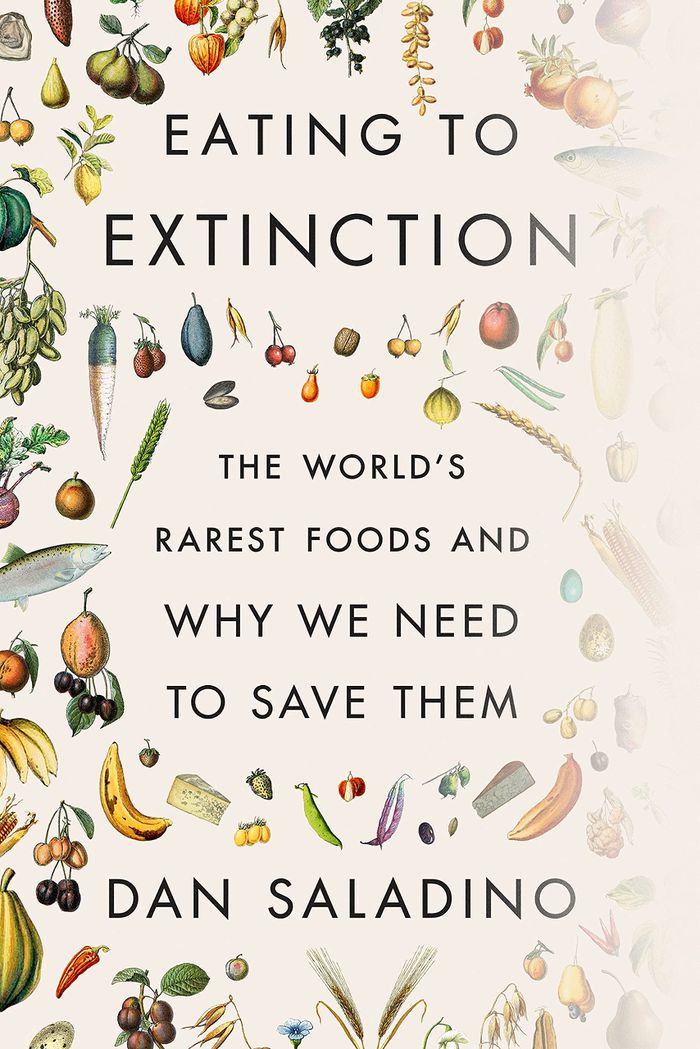
Eating to extinction: the world's rarest foods and why we need to save them
Actions:
Prix:
$28.00
(disponible en magasin)
Résumé:
Over the past several decades, globalization has homogenized what we eat, and done so ruthlessly. The numbers are stark: Of the roughly six thousand different plants once consumed by human beings, only nine remain major staples today. Just three of these—rice, wheat, and corn—now provide fifty percent of all our calories.The source of much of the world’s food—seeds—is mostly in the control of just four corporations. Ninety-five percent of milk consumed in the United States comes from a single breed of cow. Half of all the world’s cheese is made with bacteria or enzymes made by one company. And one in four beers drunk around the world is the product of one brewer. When we lose diversity and foods become endangered, we not only risk the loss of traditional foodways, but also of flavors, smells, and textures that may never be experienced again. And the consolidation of our food has other steep costs, including a lack of resilience in the face of climate change, pests, and parasites. Our food monoculture is a threat to our health—and to the planet. In ''Eating to Extinction'', the BBC food journalist Dan Saladino travels the world to experience and document our most at-risk foods before it’s too late. He tells the fascinating stories of the people who continue to cultivate, forage, hunt, cook, and consume what the rest of us have forgotten or didn’t even know existed. Take honey—not the familiar product sold in plastic bottles, but the wild honey gathered by the Hadza people of East Africa, whose diet consists of eight hundred different plants and animals and who communicate with birds in order to locate bees’ nests. Or consider murnong—once the staple food of Aboriginal Australians, this small root vegetable with the sweet taste of coconut is undergoing a revival after nearly being driven to extinction. And in Sierra Leone, there are just a few surviving stenophylla trees, a plant species now considered crucial to the future of coffee.
Classification:
livres
livres
Publication:
janvier 2023
janvier 2023
Sujet:
Bouffe
Bouffe
Classification:
livres
livres
Titre:
Qu'est-ce qu'une biorégion? / Mathias Rollot et Marin Schaffner ; dessins, Emmanuel Constant.
Qu'est-ce qu'une biorégion? / Mathias Rollot et Marin Schaffner ; dessins, Emmanuel Constant.
Actions:
Exemplaires:
Description:
210 pages : illustrations ; 17 cm.
Description:
210 pages : illustrations ; 17 cm.
Auteur:
Sujet:
Publication:
[Marseille] : Wildproject, [2024], ©2024
[Marseille] : Wildproject, [2024], ©2024
Titre:
Qu'est-ce qu'une biorégion? / Mathias Rollot et Marin Schaffner ; dessins, Emmanuel Constant.
Actions:
Exemplaires:
Description:
210 pages : illustrations ; 17 cm.
Qu'est-ce qu'une biorégion? / Mathias Rollot et Marin Schaffner ; dessins, Emmanuel Constant.
Actions:
Exemplaires:
Description:
210 pages : illustrations ; 17 cm.
Classification:
livres
livres
Publication:
[Marseille] : Wildproject, [2024], ©2024
[Marseille] : Wildproject, [2024], ©2024
Auteur:
Sujet:
Classification:
livres
livres
Actions:
Exemplaires:
Description:
xii, 484 pages, 16 unnumbered pages of plates : illustrations (some color) ; 25 cm
Description:
xii, 484 pages, 16 unnumbered pages of plates : illustrations (some color) ; 25 cm
Auteur:
Sujet:
Publication:
London : Chatto & Windus, 2002.
London : Chatto & Windus, 2002.
Titre:
The architect and his wife : a life of Edwin Lutyens / Jane Ridley.
Actions:
Exemplaires:
Description:
xii, 484 pages, 16 unnumbered pages of plates : illustrations (some color) ; 25 cm
The architect and his wife : a life of Edwin Lutyens / Jane Ridley.
Actions:
Exemplaires:
Description:
xii, 484 pages, 16 unnumbered pages of plates : illustrations (some color) ; 25 cm
Classification:
livres
livres
Publication:
London : Chatto & Windus, 2002.
London : Chatto & Windus, 2002.
Auteur:
Sujet:
Classification:
livres
livres
Titre:
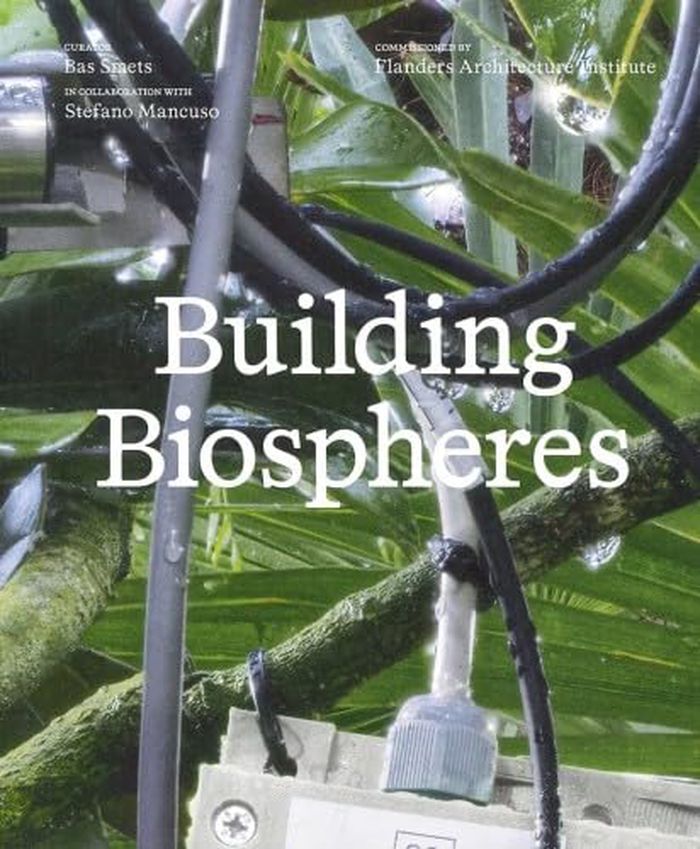
Building Biospheres
Building Biospheres
Actions:
Prix:
$60.00
(disponible en magasin)
Résumé:
The Belgian pavilion at the Biennale Architettura 2025 presented a radical experiment that challenges the relationship between nature, technology and architecture. Curated by landscape architect Bas Smets in collaboration with neurobiologist Stefano Mancuso, Building Biospheres explored how plant intelligence can shape the built environment, creating self-regulating(...)
Titre:
Building Biospheres
Actions:
Prix:
$60.00
(disponible en magasin)
Résumé:
The Belgian pavilion at the Biennale Architettura 2025 presented a radical experiment that challenges the relationship between nature, technology and architecture. Curated by landscape architect Bas Smets in collaboration with neurobiologist Stefano Mancuso, Building Biospheres explored how plant intelligence can shape the built environment, creating self-regulating microclimates that redefine our human notions of comfort and control. For centuries, architecture has sought to control and isolate us from the natural world, engineering environments that prioritize human comfort over ecological collaboration. "Building Biospheres" proposed a new paradigm: rather than resisting nature, can we design with it? This book expands on the questions raised by the exhibition, bringing together perspectives from architecture, neurobiology, artificial intelligence, botany and philosophy. Through essays, interviews and visuals, it hints at the possibility of an architecture of natural intelligence – one where plants, humans and buildings enter into new forms of co-existence.
Classification:
livres
livres
Publication:
septembre 2026
septembre 2026
Sujet:
Biennale
Biennale
Classification:
livres
livres
Titre:
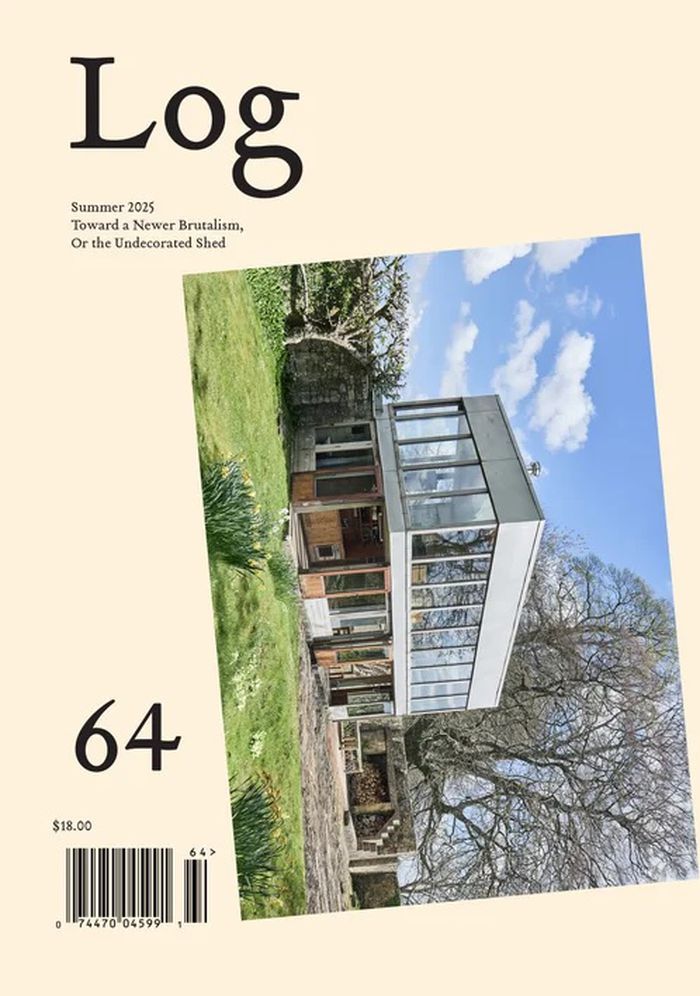
Log 64: summer 2025
Log 64: summer 2025
Actions:
Prix:
$25.00
(disponible en magasin)
Résumé:
As guest editor Emmett Zeifman wrote in his prompt for Toward a Newer Brutalism, or the Undecorated Shed, “Log 64 appropriates New Brutalism as a found theory of architecture that looks like exactly what it is made of.” To wit, Matthew Au, David Eskenazi, Mira Henry, Mireia Luzárraga and Débora Mesa discuss the assembly of materials, while material flammability is the(...)
Titre:
Log 64: summer 2025
Actions:
Prix:
$25.00
(disponible en magasin)
Résumé:
As guest editor Emmett Zeifman wrote in his prompt for Toward a Newer Brutalism, or the Undecorated Shed, “Log 64 appropriates New Brutalism as a found theory of architecture that looks like exactly what it is made of.” To wit, Matthew Au, David Eskenazi, Mira Henry, Mireia Luzárraga and Débora Mesa discuss the assembly of materials, while material flammability is the concern of Dan Spiegel and Megumi Aihara. Clark Thenhaus manipulates 3D printed concrete, Zak Garone Leazer and Fernando Garrido Carreras interrogate stone, Salmaan Craig addresses the properties of heat, and Andrea Machado Romero and Eric Kyle Cheung pose maintenance as a design question. The envelopes of heating and cooling plants are analyzed by Daniel Jacobs and Brittany Utting; Mohamed Sharif heralds SO – IL’s rejection of the double-loaded apartment building corridor; and Anna Neimark celebrates Gehry Associates return to a Brutalist architecture in homes for veterans in West Los Angeles.
Classification:
livres
livres
Publication:
juillet 2025
juillet 2025
Sujet:
Revues
Revues
Classification:
livres
livres

Actions:
Prix:
$45.95
(disponible en magasin)
Résumé:
A cat wanders, perches, and lounges in various spaces around a humble Tokyo apartment. It is perfectly tranquil in its surroundings, simply going about its daily life. In one image, the cat lays serenely amidst pot plants on the balcony, squinting in morning sunlight; in others, it balances precariously on the edge of the bath, snuggles beneath a sleeping bag, plays in a(...)
Titre:
Takashi Homma: This is not my cat
Actions:
Prix:
$45.95
(disponible en magasin)
Résumé:
A cat wanders, perches, and lounges in various spaces around a humble Tokyo apartment. It is perfectly tranquil in its surroundings, simply going about its daily life. In one image, the cat lays serenely amidst pot plants on the balcony, squinting in morning sunlight; in others, it balances precariously on the edge of the bath, snuggles beneath a sleeping bag, plays in a cardboard box, hides beneath an open umbrella. Here and there, evidence of the cat's fellow inhabitant in the apartment—a man, who also happens to be the internationally renowned photographer Takashi Homma—creeps into the frame. A knee, a foot, a shock of blonde hair, half of a face. There are artefacts of his life and practice too. Framed photographic prints draped in bubblewrap lean against a wall; a tangle of musical effects pedals make for colourful constellation against the cool blue of the carpet.
Classification:
livres
livres
Publication:
décembre 2025
décembre 2025
Sujet:
Monographies photo
Monographies photo
Classification:
livres
livres
Actions:
Prix:
$35.95
(disponible sur commande)
Résumé:
In this book, Nicholas P. Money tells the utterly fascinating story of mushrooms and the ways we have interacted with these fungi throughout history. Whether they have populated the landscapes of fairytales, lent splendid umami to our dishes, or steered us into deep hallucinations, mushrooms have affected humanity from the earliest beginnings of our species. As Money(...)
Titre:
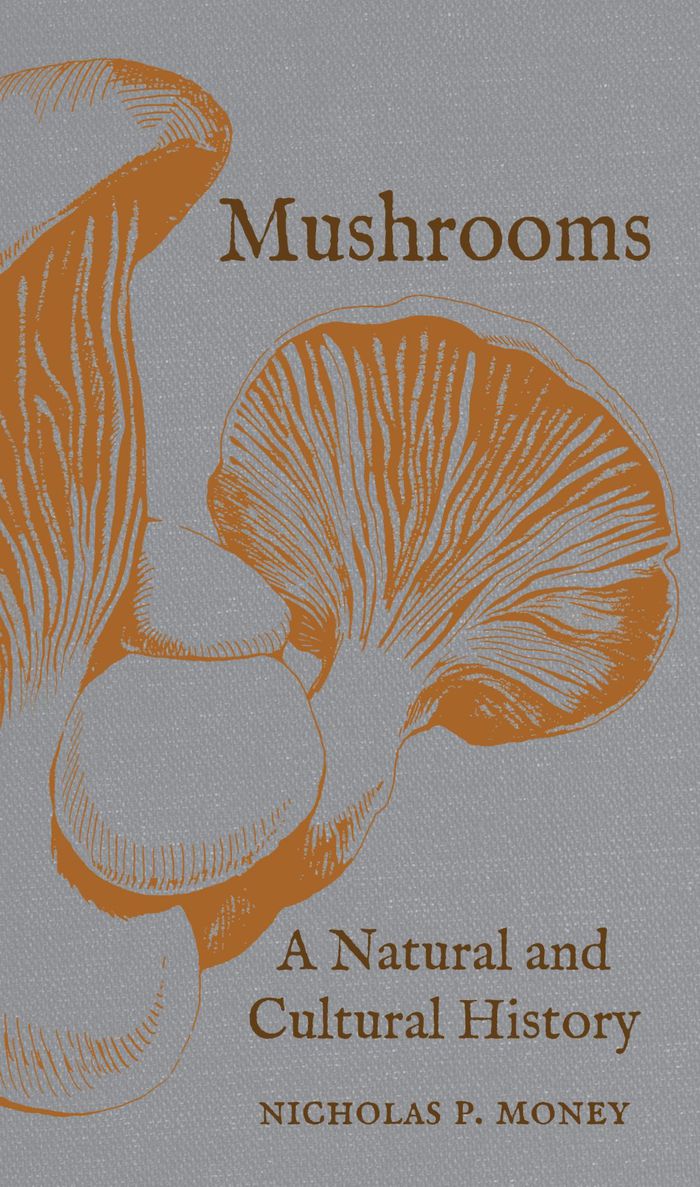
Mushrooms: a natural and cultural history
Actions:
Prix:
$35.95
(disponible sur commande)
Résumé:
In this book, Nicholas P. Money tells the utterly fascinating story of mushrooms and the ways we have interacted with these fungi throughout history. Whether they have populated the landscapes of fairytales, lent splendid umami to our dishes, or steered us into deep hallucinations, mushrooms have affected humanity from the earliest beginnings of our species. As Money explains, mushrooms are not self-contained organisms like animals and plants. Rather, they are the fruiting bodies of large—sometimes extremely large—colonies of mycelial threads that spread underground and permeate rotting vegetation. Because these colonies decompose organic matter, they are of extraordinary ecological value and have a huge effect on the health of the environment. This book takes us on a tour of the cultural and scientific importance of mushrooms, from the enchanted forests of folklore to the role of these fungi in sustaining life on earth.
Classification:
livres
livres
Publication:
octobre 2022
octobre 2022
Sujet:
Bouffe
Bouffe
Classification:
livres
livres

Titre:
Constructing shadows
Constructing shadows
Actions:
Prix:
$92.00
(disponible en magasin)
Résumé:
Trees are ideal sources of shade; where they cannot be used, their function is taken over by tents, pergolas, and pavilions. In the context of global warming, shade-providing construction is becoming an increasingly important building task. In Part One of this book, specialists in the field present the typical forms of shade-providing construction as well as the design(...)
Publication:
mai 2011
mai 2011
Titre:
Constructing shadows
Actions:
Prix:
$92.00
(disponible en magasin)
Résumé:
Trees are ideal sources of shade; where they cannot be used, their function is taken over by tents, pergolas, and pavilions. In the context of global warming, shade-providing construction is becoming an increasingly important building task. In Part One of this book, specialists in the field present the typical forms of shade-providing construction as well as the design approach associated with each. Part Two presents easily consultable overviews of 140 plants that have proven to be effective givers of shade in temperate, subtropical, and tropical zones. Part Three presents thirty built projects by architects and landscape architects from five continents. These constructions illustrate a wide variety of functions and scales and cover various climatic zones and cultural contexts. All structures are constructionally and systematically analyzed with texts, true-to-scale drawings, and photographs from their foundations to their connections and the shadows they cast.
Classification:
livres
livres
Publication:
mai 2011
mai 2011
Classification:
livres
livres
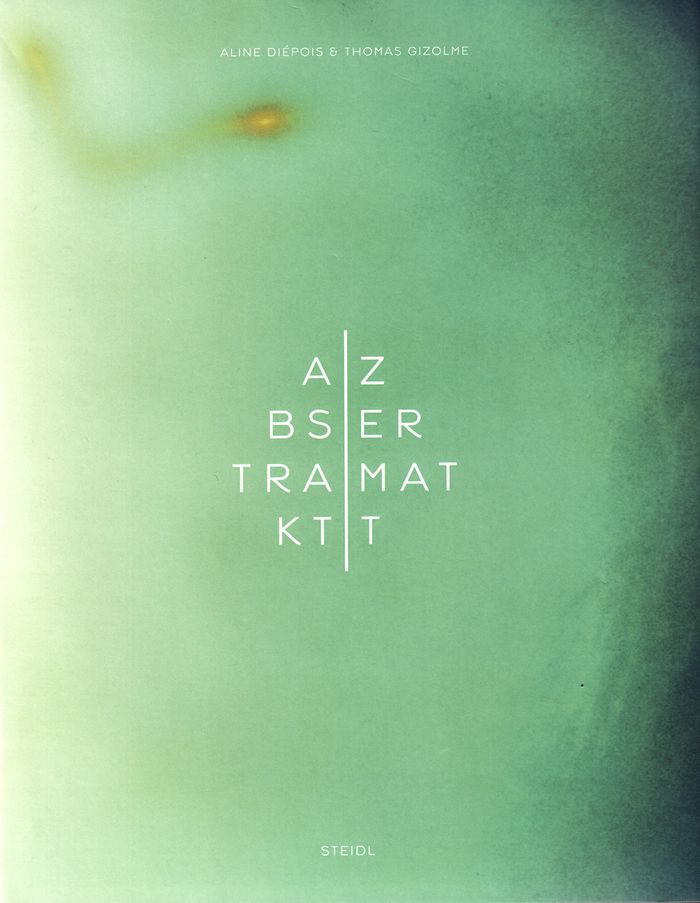
Titre:
Abstrakt Zermatt
Abstrakt Zermatt
Actions:
Prix:
$55.00
(disponible sur commande)
Résumé:
In the valleys, from the high summits that surround Zermatt, the gigantic movement of the glacier is frozen, like an irreversible snapshot. Here, the seasons pass one after the other, but have no power over a history that has fallen to pieces. The rare human silhouettes and colour are incorporated into this immobile flux like annexes to the autarkic oxygen of Zermatt as a(...)
Titre:
Abstrakt Zermatt
Actions:
Prix:
$55.00
(disponible sur commande)
Résumé:
In the valleys, from the high summits that surround Zermatt, the gigantic movement of the glacier is frozen, like an irreversible snapshot. Here, the seasons pass one after the other, but have no power over a history that has fallen to pieces. The rare human silhouettes and colour are incorporated into this immobile flux like annexes to the autarkic oxygen of Zermatt as a place. The imprint of plants appears to be mineral and gigantic, the summits and perspectives are turned upside down, the immobility of stone and ice resembles a fossilized tumult, a flow of ages. The almost total effacing of intention in these photographs lets other things appear—as if by imposition—in the glacial mist or the pastel intoxicated by altitude: a form of nature in which texture and matter take on the aspect of puzzles, fractals, the interweaving of crystals and of gypsum.
Classification:
livres
livres
Publication:
novembre 2017
novembre 2017
Sujet:
Monographies photo
Monographies photo


