


4271 Résultats
Classification:
livres
livres
Actions:
Prix:
$88.00
(disponible en magasin)
Résumé:
A retrospective of Edward Burtynsky's (born 1955) photography from the past 40 years, The Great Acceleration reveals the depth of the photographer's investigation into the human alteration of natural landscapes around the world, showing their present fragility and enduring beauty in equal measure. "The Great Acceleration" is an established term used to describe the rapid(...)
$88.00
(disponible en magasin)
Résumé:
A retrospective of Edward Burtynsky's (born 1955) photography from the past 40 years, The Great Acceleration reveals the depth of the photographer's investigation into the human alteration of natural landscapes around the world, showing their present fragility and enduring beauty in equal measure. "The Great Acceleration" is an established term used to describe the rapid(...)
Titre:
Edward Burtynsky: The great acceleration
Actions:
Prix:
$88.00
(disponible en magasin)
Résumé:
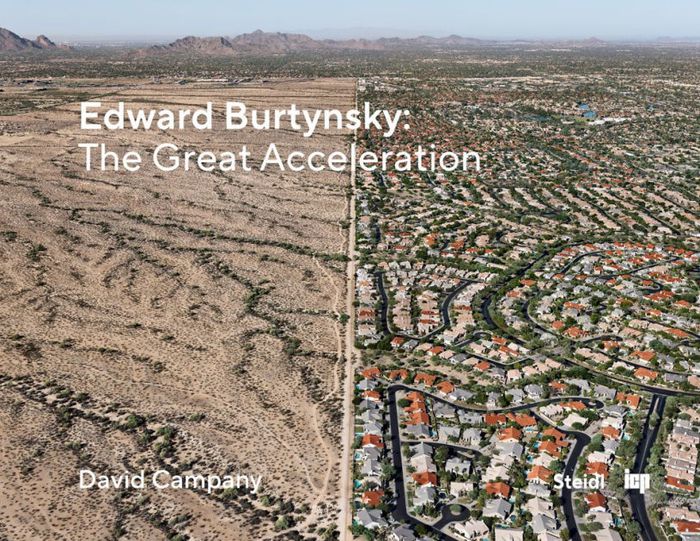
A retrospective of Edward Burtynsky's (born 1955) photography from the past 40 years, The Great Acceleration reveals the depth of the photographer's investigation into the human alteration of natural landscapes around the world, showing their present fragility and enduring beauty in equal measure. "The Great Acceleration" is an established term used to describe the rapid rise of human impact on our planet, among them population growth, water usage, transportation, greenhouse gas emissions, resource extraction and food production, each of which Burtynsky has photographed the signs of in great detail throughout his career. From open pit mines across North America to oil derricks in Azerbaijan, from rice terraces in China to oil bunkering in Nigeria, Burtynsky has traveled the world and back again as part of his restless and seemingly inexhaustible drive to discover the ways, both old and new, that organized human activity has transformed the earth. Including many of Burtynsky's landmark images, and which have never been published, the book is an urgent call to action, inviting us to appreciate the sublimity that remains in nature while deepening our understanding of the challenges and responsibilities confronting us today.
Edward Burtynsky: The great acceleration
Actions:
Prix:
$88.00
(disponible en magasin)
Résumé:
A retrospective of Edward Burtynsky's (born 1955) photography from the past 40 years, The Great Acceleration reveals the depth of the photographer's investigation into the human alteration of natural landscapes around the world, showing their present fragility and enduring beauty in equal measure. "The Great Acceleration" is an established term used to describe the rapid rise of human impact on our planet, among them population growth, water usage, transportation, greenhouse gas emissions, resource extraction and food production, each of which Burtynsky has photographed the signs of in great detail throughout his career. From open pit mines across North America to oil derricks in Azerbaijan, from rice terraces in China to oil bunkering in Nigeria, Burtynsky has traveled the world and back again as part of his restless and seemingly inexhaustible drive to discover the ways, both old and new, that organized human activity has transformed the earth. Including many of Burtynsky's landmark images, and which have never been published, the book is an urgent call to action, inviting us to appreciate the sublimity that remains in nature while deepening our understanding of the challenges and responsibilities confronting us today.
Classification:
livres
livres
Publication:
décembre 2025
décembre 2025
Sujet:
Monographies photo
Monographies photo
Classification:
livres
livres

Titre:
White rapids
White rapids
Actions:
Prix:
$29.95
(disponible sur commande)
Résumé:
Award-winning Quebecois cartoonist Pascal Blanchet’s graphic novel is a compelling account of the rise and fall of the small northern town of White Rapids. In the first English translation of his work, Blanchet seamlessly blends fact and fiction as he weaves together the official history of the town and snapshots of the quotidian life of its residents. Founded in 1928 in(...)
$29.95
(disponible sur commande)
Résumé:
Award-winning Quebecois cartoonist Pascal Blanchet’s graphic novel is a compelling account of the rise and fall of the small northern town of White Rapids. In the first English translation of his work, Blanchet seamlessly blends fact and fiction as he weaves together the official history of the town and snapshots of the quotidian life of its residents. Founded in 1928 in(...)
Titre:
White rapids
Actions:
Prix:
$29.95
(disponible sur commande)
Résumé:
Award-winning Quebecois cartoonist Pascal Blanchet’s graphic novel is a compelling account of the rise and fall of the small northern town of White Rapids. In the first English translation of his work, Blanchet seamlessly blends fact and fiction as he weaves together the official history of the town and snapshots of the quotidian life of its residents. Founded in 1928 in an isolated region of Quebec forest, the town was conceived and constructed by the Shawinigan Water & Power Company to function as a fully equipped, self-contained living community for workers at the nearby dam and their families. Intended as an incentive to lure workers to the remote and inaccessible region, White Rapids provided its residents with all the luxuries of middle-class modern life in a pastoral setting—until the town was abruptly shut down in 1971, when the company changed hands. Blanchet’s unique, streamlined, retro-inspired aesthetic draws on art deco and fifties modernist design to vividly conjure up idyllic scenes of lazy summer days and crisp winter nights in White Rapids, transporting the reader back to a more innocent time.
White rapids
Actions:
Prix:
$29.95
(disponible sur commande)
Résumé:
Award-winning Quebecois cartoonist Pascal Blanchet’s graphic novel is a compelling account of the rise and fall of the small northern town of White Rapids. In the first English translation of his work, Blanchet seamlessly blends fact and fiction as he weaves together the official history of the town and snapshots of the quotidian life of its residents. Founded in 1928 in an isolated region of Quebec forest, the town was conceived and constructed by the Shawinigan Water & Power Company to function as a fully equipped, self-contained living community for workers at the nearby dam and their families. Intended as an incentive to lure workers to the remote and inaccessible region, White Rapids provided its residents with all the luxuries of middle-class modern life in a pastoral setting—until the town was abruptly shut down in 1971, when the company changed hands. Blanchet’s unique, streamlined, retro-inspired aesthetic draws on art deco and fifties modernist design to vividly conjure up idyllic scenes of lazy summer days and crisp winter nights in White Rapids, transporting the reader back to a more innocent time.
Classification:
livres
livres
Publication:
septembre 2007
septembre 2007
Sujet:
Architecture du Québec
Architecture du Québec
Classification:
livres
livres
Titre:
Grain elevators
Grain elevators
Actions:
Prix:
$93.95
(disponible sur commande)
Résumé:
Bernd and Hilla Becher's almost fifty-year collaboration constitutes one important project in objective and conceptual photography today. With this volume, grain elevators join the list of building types documented by the Bechers in their book-length studies: water towers, blast furnaces, gas tanks, oil tanks, mineheads, frame houses, and cooling towers. Grain(...)
$93.95
(disponible sur commande)
Résumé:
Bernd and Hilla Becher's almost fifty-year collaboration constitutes one important project in objective and conceptual photography today. With this volume, grain elevators join the list of building types documented by the Bechers in their book-length studies: water towers, blast furnaces, gas tanks, oil tanks, mineheads, frame houses, and cooling towers. Grain(...)
Sujet:
Monographies photo
Monographies photo
Publication:
novembre 2006, Cambridge (MA), London
novembre 2006, Cambridge (MA), London
Titre:
Grain elevators
Actions:
Prix:
$93.95
(disponible sur commande)
Résumé:
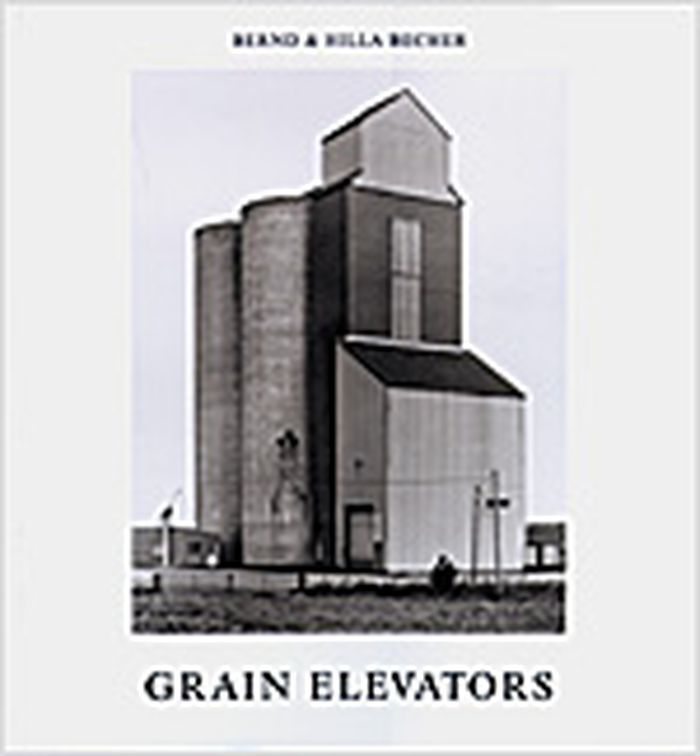
Bernd and Hilla Becher's almost fifty-year collaboration constitutes one important project in objective and conceptual photography today. With this volume, grain elevators join the list of building types documented by the Bechers in their book-length studies: water towers, blast furnaces, gas tanks, oil tanks, mineheads, frame houses, and cooling towers. Grain elevators are towering structures in the flat, vast landscape of the world's granaries. Providing a fast and efficient method of loading and unloading grain to keep pace with the industrial production methods of the nineteenth century, they made possible a tremendous increase in the trafficking and processing of grain. Scooping, pouring, and spitting, they both illustrated and inspired Le Corbusier's idea of buildings as functioning machines. Monumental, essential, and visually arresting, grain elevators belong as much to the American imagination and landscape as to the European. The photographs of grain elevators in this volume were taken in Germany, Belgium, France, and America. But the specificity of time and place is erased in these photographs; the monolithic structures evoke the agricultural prosperity of a vanished era and the vacancy that replaces it today.
Grain elevators
Actions:
Prix:
$93.95
(disponible sur commande)
Résumé:
Bernd and Hilla Becher's almost fifty-year collaboration constitutes one important project in objective and conceptual photography today. With this volume, grain elevators join the list of building types documented by the Bechers in their book-length studies: water towers, blast furnaces, gas tanks, oil tanks, mineheads, frame houses, and cooling towers. Grain elevators are towering structures in the flat, vast landscape of the world's granaries. Providing a fast and efficient method of loading and unloading grain to keep pace with the industrial production methods of the nineteenth century, they made possible a tremendous increase in the trafficking and processing of grain. Scooping, pouring, and spitting, they both illustrated and inspired Le Corbusier's idea of buildings as functioning machines. Monumental, essential, and visually arresting, grain elevators belong as much to the American imagination and landscape as to the European. The photographs of grain elevators in this volume were taken in Germany, Belgium, France, and America. But the specificity of time and place is erased in these photographs; the monolithic structures evoke the agricultural prosperity of a vanished era and the vacancy that replaces it today.
Classification:
livres
livres
Publication:
novembre 2006, Cambridge (MA), London
novembre 2006, Cambridge (MA), London
Sujet:
Monographies photo
Monographies photo
Classification:
livres
livres
Actions:
Prix:
$35.95
(disponible sur commande)
Résumé:
Does it ever feel like you have no free time? You come home after work and instead of finding a space of rest and relaxation, you’re confronted by a pile of new tasks to complete – cooking, cleaning, looking after the kids, and so on. In this book, Helen Hester and Nick Srnicek lay out how unpaid work in our homes has come to take up an ever-increasing portion of our(...)
$35.95
(disponible sur commande)
Résumé:
Does it ever feel like you have no free time? You come home after work and instead of finding a space of rest and relaxation, you’re confronted by a pile of new tasks to complete – cooking, cleaning, looking after the kids, and so on. In this book, Helen Hester and Nick Srnicek lay out how unpaid work in our homes has come to take up an ever-increasing portion of our(...)
Titre:
After work: The fight for free time
Actions:
Prix:
$35.95
(disponible sur commande)
Résumé:
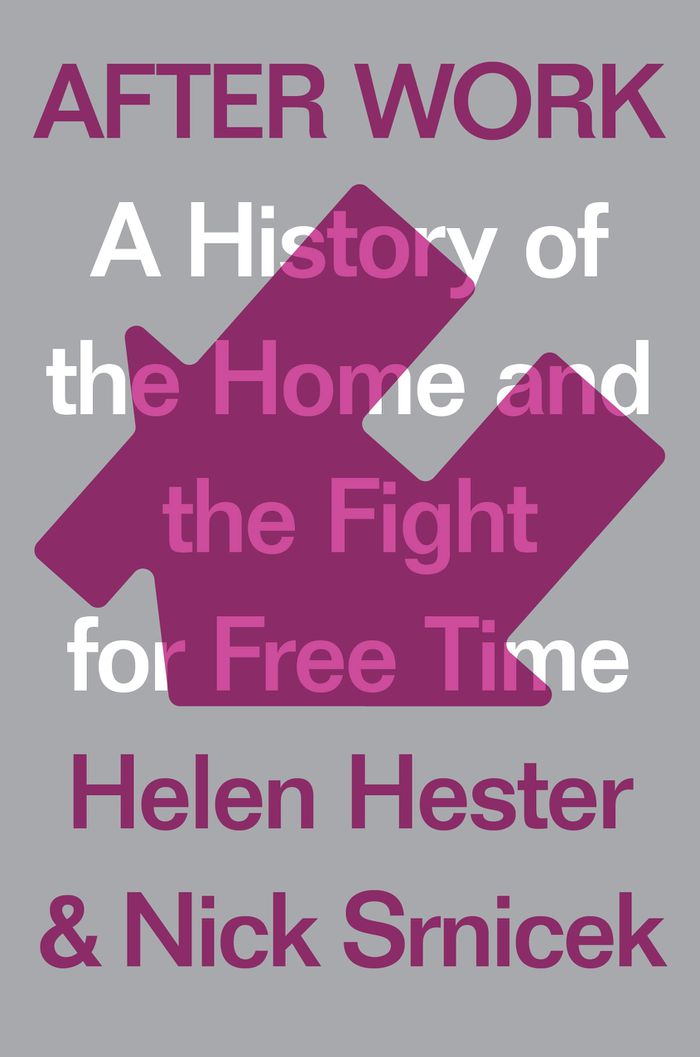
Does it ever feel like you have no free time? You come home after work and instead of finding a space of rest and relaxation, you’re confronted by a pile of new tasks to complete – cooking, cleaning, looking after the kids, and so on. In this book, Helen Hester and Nick Srnicek lay out how unpaid work in our homes has come to take up an ever-increasing portion of our lives – how the vacuum of free time has been taken up by vacuuming. Examining the history of the home over the past century – from running water to white goods to smart homes – they show how repeated efforts to reduce the burden of this work have faced a variety of barriers, challenges, and reversals. Charting the trajectory of our domestic spaces over the past century, Hester and Srnicek consider new possibilities for the future, uncovering the abandoned ideas of anti-housework visionaries and sketching out a path towards real free time for all, where everyone is at liberty to pursue their passions, or do nothing at all. It will require rethinking our living arrangements, our expectations and our cities.
After work: The fight for free time
Actions:
Prix:
$35.95
(disponible sur commande)
Résumé:
Does it ever feel like you have no free time? You come home after work and instead of finding a space of rest and relaxation, you’re confronted by a pile of new tasks to complete – cooking, cleaning, looking after the kids, and so on. In this book, Helen Hester and Nick Srnicek lay out how unpaid work in our homes has come to take up an ever-increasing portion of our lives – how the vacuum of free time has been taken up by vacuuming. Examining the history of the home over the past century – from running water to white goods to smart homes – they show how repeated efforts to reduce the burden of this work have faced a variety of barriers, challenges, and reversals. Charting the trajectory of our domestic spaces over the past century, Hester and Srnicek consider new possibilities for the future, uncovering the abandoned ideas of anti-housework visionaries and sketching out a path towards real free time for all, where everyone is at liberty to pursue their passions, or do nothing at all. It will require rethinking our living arrangements, our expectations and our cities.
Classification:
livres
livres
Publication:
juillet 2023
juillet 2023
Sujet:
Social
Social
Classification:
livres
livres

Actions:
Prix:
$65.00
(disponible sur commande)
Résumé:
Over the past six years, documentary photographer and architectural historian Julia Reyes Taubman has taken more than 30,000 photographs across the sprawled terrain of Detroit, ambitiously mapping out a comprehensive survey of a major American city. Photographing on the ground, in the buildings and by air and water, Reyes Taubman believes that when buildings and landscape(...)
$65.00
(disponible sur commande)
Résumé:
Over the past six years, documentary photographer and architectural historian Julia Reyes Taubman has taken more than 30,000 photographs across the sprawled terrain of Detroit, ambitiously mapping out a comprehensive survey of a major American city. Photographing on the ground, in the buildings and by air and water, Reyes Taubman believes that when buildings and landscape(...)
Titre:
Julie Reyes Taubman: Detroit, 138 squares miles
Actions:
Prix:
$65.00
(disponible sur commande)
Résumé:
Over the past six years, documentary photographer and architectural historian Julia Reyes Taubman has taken more than 30,000 photographs across the sprawled terrain of Detroit, ambitiously mapping out a comprehensive survey of a major American city. Photographing on the ground, in the buildings and by air and water, Reyes Taubman believes that when buildings and landscape are manipulated by nature and time they become more visually compelling than almost any architectural intervention.As Reyes Taubman scrutinizes this 138-square-mile metropolis in transition, she pays particular attention to the scale and the solidity of the buildings that characterized the former “Motor City” at the height of its industrial wealth and power. More than a photographic saturation job of a single city, Detroit: 138 Square Miles provides contextual perspective in an extended caption section in which Reyes Taubman collaborated with University of Michigan professors Robert Fishman and Michael McCulloch to emphasize the social imperatives driving her documentation. An essay by native Detroiter and bestselling author Elmore Leonard addresses the social and cultural significance of the post-industrial condition of this metropolis. The volume's spine is specially treated with black ink to evoke the industrial character of its subject.
Julie Reyes Taubman: Detroit, 138 squares miles
Actions:
Prix:
$65.00
(disponible sur commande)
Résumé:
Over the past six years, documentary photographer and architectural historian Julia Reyes Taubman has taken more than 30,000 photographs across the sprawled terrain of Detroit, ambitiously mapping out a comprehensive survey of a major American city. Photographing on the ground, in the buildings and by air and water, Reyes Taubman believes that when buildings and landscape are manipulated by nature and time they become more visually compelling than almost any architectural intervention.As Reyes Taubman scrutinizes this 138-square-mile metropolis in transition, she pays particular attention to the scale and the solidity of the buildings that characterized the former “Motor City” at the height of its industrial wealth and power. More than a photographic saturation job of a single city, Detroit: 138 Square Miles provides contextual perspective in an extended caption section in which Reyes Taubman collaborated with University of Michigan professors Robert Fishman and Michael McCulloch to emphasize the social imperatives driving her documentation. An essay by native Detroiter and bestselling author Elmore Leonard addresses the social and cultural significance of the post-industrial condition of this metropolis. The volume's spine is specially treated with black ink to evoke the industrial character of its subject.
Classification:
livres
livres
Publication:
septembre 2011
septembre 2011
Sujet:
Monographies photo
Monographies photo
Classification:
livres
livres
Actions:
Exemplaires:
Description:
200 pages : illustrations, maps, plans ; 23 cm.
Description:
200 pages : illustrations, maps, plans ; 23 cm.
Auteur:
Sujet:
Publication:
Wageningen : Blauwdruk Publishers, [2015].
Wageningen : Blauwdruk Publishers, [2015].
Titre:
The rooted city : European capitals and their connection with the landscape = De gewortelde stad : Europese hoofdsteden en hun verbinding met het landschap / Wim Timmermans [and 5 others].
Actions:
Exemplaires:
Description:
200 pages : illustrations, maps, plans ; 23 cm.
The rooted city : European capitals and their connection with the landscape = De gewortelde stad : Europese hoofdsteden en hun verbinding met het landschap / Wim Timmermans [and 5 others].
Actions:
Exemplaires:
Description:
200 pages : illustrations, maps, plans ; 23 cm.
Classification:
livres
livres
Publication:
Wageningen : Blauwdruk Publishers, [2015].
Wageningen : Blauwdruk Publishers, [2015].
Auteur:
Sujet:
Classification:
livres
livres
Actions:
Exemplaires:
Description:
255 pages : illustrations (chiefly color) ; 27 cm
Description:
255 pages : illustrations (chiefly color) ; 27 cm
Auteur:
Sujet:
Publication:
London : Phaidon Press Limited, 2022.
London : Phaidon Press Limited, 2022.
Titre:
Us & our planet : this is how we live / edited by Maisie Skidmore.
Actions:
Exemplaires:
Description:
255 pages : illustrations (chiefly color) ; 27 cm
Us & our planet : this is how we live / edited by Maisie Skidmore.
Actions:
Exemplaires:
Description:
255 pages : illustrations (chiefly color) ; 27 cm
Classification:
livres
livres
Publication:
London : Phaidon Press Limited, 2022.
London : Phaidon Press Limited, 2022.
Auteur:
Sujet:
Classification:
livres
livres
Actions:
Exemplaires:
Description:
64 pages ; 24 cm
Description:
64 pages ; 24 cm
Auteur:
Sujet:
Publication:
Rotterdam : Uitgeverij Ger Guijs ; Utrecht : FORUM, Instituut voor Multiculturele Ontwikkeling, [2008], ©2008
Rotterdam : Uitgeverij Ger Guijs ; Utrecht : FORUM, Instituut voor Multiculturele Ontwikkeling, [2008], ©2008
Titre:
De mantra van de mix : hoe ideaal is een gemengde wijk? / Gideon Bolt en Ronald van Kempen ; m.m.v. Matté Hartog.
Actions:
Exemplaires:
Description:
64 pages ; 24 cm
De mantra van de mix : hoe ideaal is een gemengde wijk? / Gideon Bolt en Ronald van Kempen ; m.m.v. Matté Hartog.
Actions:
Exemplaires:
Description:
64 pages ; 24 cm
Classification:
livres
livres
Publication:
Rotterdam : Uitgeverij Ger Guijs ; Utrecht : FORUM, Instituut voor Multiculturele Ontwikkeling, [2008], ©2008
Rotterdam : Uitgeverij Ger Guijs ; Utrecht : FORUM, Instituut voor Multiculturele Ontwikkeling, [2008], ©2008
Auteur:
Sujet:
Classification:
livres
livres
Actions:
Prix:
$90.00
(disponible sur commande)
Résumé:
The creation of park systems is a historically proven method for communities to stabilize and cultivate healthy ecological habitats in country dwellings as well as in dense urban areas. Park systems ensure clean soil, water, and air for all. Moreover, they offer intergenerational and inclusive recreational opportunities along ecological corridors. Between 1900 and 1950,(...)
$90.00
(disponible sur commande)
Résumé:
The creation of park systems is a historically proven method for communities to stabilize and cultivate healthy ecological habitats in country dwellings as well as in dense urban areas. Park systems ensure clean soil, water, and air for all. Moreover, they offer intergenerational and inclusive recreational opportunities along ecological corridors. Between 1900 and 1950,(...)
Titre:
Living cities: Three centuries of Park systems
Actions:
Prix:
$90.00
(disponible sur commande)
Résumé:
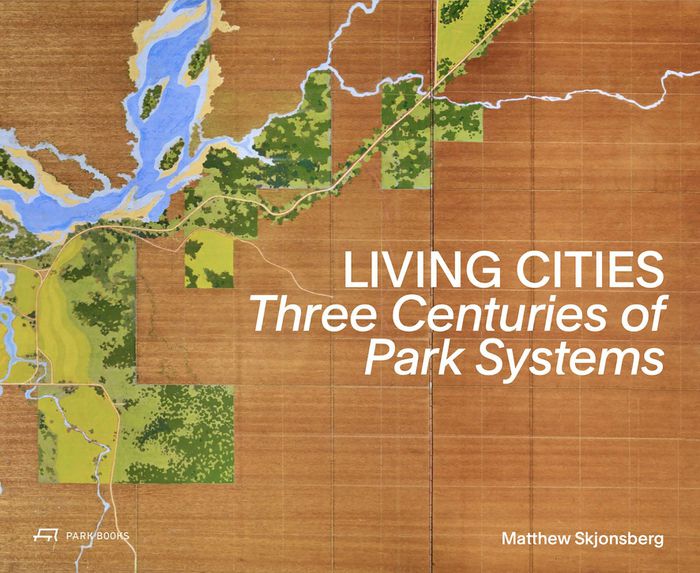
The creation of park systems is a historically proven method for communities to stabilize and cultivate healthy ecological habitats in country dwellings as well as in dense urban areas. Park systems ensure clean soil, water, and air for all. Moreover, they offer intergenerational and inclusive recreational opportunities along ecological corridors. Between 1900 and 1950, civic design—a practice in urban and landscape planning explicitly oriented towards the common good—experienced a heyday. Park systems were successfully used as “green armatures” hosting public facilities such as playgrounds, schools, administrative buildings, hospitals, and gardens. ''Living Cities'' offers a chronological survey of civic design based on more than 30 park systems on five continents. The examples range from Johann Wolfgang von Goethe's Park an der Ilm in Weimar (1778) and John Nash’s Regent Street in London (1806) to Chicago’s park system (1850), Albert Bodmer and Maurice Braillard’s plans for Geneva (1936), and Frank Lloyd Wright’s Taliesin Valley (1947), as well as to contemporary and future projects in Addis Ababa, Madrid, Medellín, New York, and Seoul. Matthew Skjonsberg’s book demonstrates the ecological and social impact of park systems and highlights the diverse challenges that communities face when implementing such projects. At the same time, it encourages a reevaluation of civic design as an intergenerational practice for creating human settlements.
Living cities: Three centuries of Park systems
Actions:
Prix:
$90.00
(disponible sur commande)
Résumé:
The creation of park systems is a historically proven method for communities to stabilize and cultivate healthy ecological habitats in country dwellings as well as in dense urban areas. Park systems ensure clean soil, water, and air for all. Moreover, they offer intergenerational and inclusive recreational opportunities along ecological corridors. Between 1900 and 1950, civic design—a practice in urban and landscape planning explicitly oriented towards the common good—experienced a heyday. Park systems were successfully used as “green armatures” hosting public facilities such as playgrounds, schools, administrative buildings, hospitals, and gardens. ''Living Cities'' offers a chronological survey of civic design based on more than 30 park systems on five continents. The examples range from Johann Wolfgang von Goethe's Park an der Ilm in Weimar (1778) and John Nash’s Regent Street in London (1806) to Chicago’s park system (1850), Albert Bodmer and Maurice Braillard’s plans for Geneva (1936), and Frank Lloyd Wright’s Taliesin Valley (1947), as well as to contemporary and future projects in Addis Ababa, Madrid, Medellín, New York, and Seoul. Matthew Skjonsberg’s book demonstrates the ecological and social impact of park systems and highlights the diverse challenges that communities face when implementing such projects. At the same time, it encourages a reevaluation of civic design as an intergenerational practice for creating human settlements.
Classification:
livres
livres
Publication:
janvier 2025
janvier 2025
Sujet:
Jardins
Jardins
Classification:
livres
livres
Titre:
Proto-Habitat
Proto-Habitat
Actions:
Prix:
$52.00
(disponible en magasin)
Résumé:
Proto-Habitat is a name composed of the prefix proto-, which comes from the ancient Greek protos, meaning "the first", but also its inscription in a series of events of which it is the trigger. Proto-Habitat evokes a return to basics, where "living" resonates in harmony with nature and awakens to the idea of ??human communities in which the social pact is characterized by(...)
$52.00
(disponible en magasin)
Résumé:
Proto-Habitat is a name composed of the prefix proto-, which comes from the ancient Greek protos, meaning "the first", but also its inscription in a series of events of which it is the trigger. Proto-Habitat evokes a return to basics, where "living" resonates in harmony with nature and awakens to the idea of ??human communities in which the social pact is characterized by(...)
Titre:
Proto-Habitat
Actions:
Prix:
$52.00
(disponible en magasin)
Résumé:
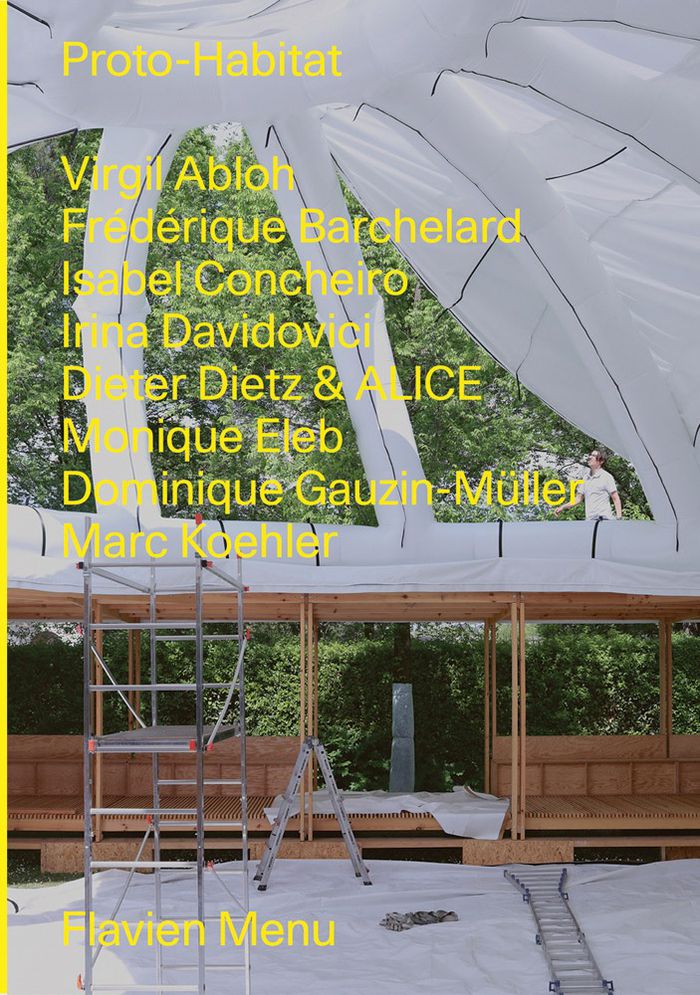
Proto-Habitat is a name composed of the prefix proto-, which comes from the ancient Greek protos, meaning "the first", but also its inscription in a series of events of which it is the trigger. Proto-Habitat evokes a return to basics, where "living" resonates in harmony with nature and awakens to the idea of ??human communities in which the social pact is characterized by diversity, solidarity and the common good. The book "Proto-Habitat" retraces a reflection combining interviews, visits, paintings, objects, images and architecture exploring the imagination of our ways of existing as well as their means of production. This reflection gave rise to and participated in several exhibitions: Fabricating differently: from the prototype to inhabiting it at the Arc en Rêve architecture center, Tiny Lives at the Collection. Lambert and Home Made at CID Grand Hornu. The Proto-Habitat was installed in Bordeaux, in Chamonix for the Artocène festival and Clermont-Ferrand as part of the candidacy for European Capital of Culture 2028. In the meantime two other demonstrator prototypes were built, assembled then dismantled: the protoCAMPO - an events venue for 300 people in the Gardens of the Villa Medici in Rome - and the SOLARproto - an autonomous water and electricity exhibition space on a polder in the Netherlands.
Proto-Habitat
Actions:
Prix:
$52.00
(disponible en magasin)
Résumé:
Proto-Habitat is a name composed of the prefix proto-, which comes from the ancient Greek protos, meaning "the first", but also its inscription in a series of events of which it is the trigger. Proto-Habitat evokes a return to basics, where "living" resonates in harmony with nature and awakens to the idea of ??human communities in which the social pact is characterized by diversity, solidarity and the common good. The book "Proto-Habitat" retraces a reflection combining interviews, visits, paintings, objects, images and architecture exploring the imagination of our ways of existing as well as their means of production. This reflection gave rise to and participated in several exhibitions: Fabricating differently: from the prototype to inhabiting it at the Arc en Rêve architecture center, Tiny Lives at the Collection. Lambert and Home Made at CID Grand Hornu. The Proto-Habitat was installed in Bordeaux, in Chamonix for the Artocène festival and Clermont-Ferrand as part of the candidacy for European Capital of Culture 2028. In the meantime two other demonstrator prototypes were built, assembled then dismantled: the protoCAMPO - an events venue for 300 people in the Gardens of the Villa Medici in Rome - and the SOLARproto - an autonomous water and electricity exhibition space on a polder in the Netherlands.
Classification:
livres
livres
Publication:
novembre 2023
novembre 2023
Sujet:
Architecture expérimentale
Architecture expérimentale


