


995 Résultats
Classification:
expositions
expositions
Titre:
Mies en Amérique
Mies en Amérique
Actions:
Description:
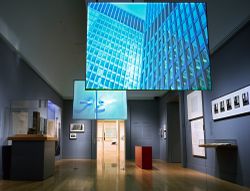
Grand penseur et artiste minutieux, et l’un des plus illustres architectes de l’histoire, Ludwig Mies van der Rohe est déjà une figure dominante de sa profession en Allemagne, lorsque, en 1938, dans la cinquantaine, il émigre aux États-Unis. Transplanté de l’école du Bauhaus (dont il a été le dernier directeur) à un institut technique de Chicago, délaissant le milieu de(...)
Grand penseur et artiste minutieux, et l’un des plus illustres architectes de l’histoire, Ludwig Mies van der Rohe est déjà une figure dominante de sa profession en Allemagne, lorsque, en 1938, dans la cinquantaine, il émigre aux États-Unis. Transplanté de l’école du Bauhaus (dont il a été le dernier directeur) à un institut technique de Chicago, délaissant le milieu de(...)
Localisation:
Salles principales
Salles principales
Date:
17 octobre 2001 au 20 janvier 2002
17 octobre 2001 au 20 janvier 2002
Titre:
Mies en Amérique
Actions:
Description:
Grand penseur et artiste minutieux, et l’un des plus illustres architectes de l’histoire, Ludwig Mies van der Rohe est déjà une figure dominante de sa profession en Allemagne, lorsque, en 1938, dans la cinquantaine, il émigre aux États-Unis. Transplanté de l’école du Bauhaus (dont il a été le dernier directeur) à un institut technique de Chicago, délaissant le milieu de(...)
Mies en Amérique
Actions:
Description:
Grand penseur et artiste minutieux, et l’un des plus illustres architectes de l’histoire, Ludwig Mies van der Rohe est déjà une figure dominante de sa profession en Allemagne, lorsque, en 1938, dans la cinquantaine, il émigre aux États-Unis. Transplanté de l’école du Bauhaus (dont il a été le dernier directeur) à un institut technique de Chicago, délaissant le milieu de(...)
Classification:
expositions
expositions
Date:
17 octobre 2001 au
20 janvier 2002
17 octobre 2001 au
20 janvier 2002
Localisation:
Salles principales
Salles principales
Classification:
dessins
dessins
Numéro de référence:
AP046.S1.1983.PR01.015
Description:
This file includes drawings for land drainage, library level floor plan, site plan (annotated), section through skylight, elevations, sections, Shaughnessy House second and third level floor plan, preliminary drafts and implementation phases.
AP046.S1.1983.PR01.015
Description:
This file includes drawings for land drainage, library level floor plan, site plan (annotated), section through skylight, elevations, sections, Shaughnessy House second and third level floor plan, preliminary drafts and implementation phases.
Personnes et institutions:
Date:
February 1983 - December 1983
February 1983 - December 1983
Titre:
Early Shaughnessy House plans as office space and original scheme for Canadian Centre for Architecture, Montréal, Québec
Actions:
AP046.S1.1983.PR01.015
Description:
This file includes drawings for land drainage, library level floor plan, site plan (annotated), section through skylight, elevations, sections, Shaughnessy House second and third level floor plan, preliminary drafts and implementation phases.
Early Shaughnessy House plans as office space and original scheme for Canadian Centre for Architecture, Montréal, Québec
Actions:
AP046.S1.1983.PR01.015
Description:
This file includes drawings for land drainage, library level floor plan, site plan (annotated), section through skylight, elevations, sections, Shaughnessy House second and third level floor plan, preliminary drafts and implementation phases.
Classification:
dessins
dessins
Date:
February 1983 - December 1983
February 1983 - December 1983
Personnes et institutions:
Classification:
documents textuels
documents textuels
Numéro de référence:
ARCH252257
Description:
-Correspondence with Caesar & Washburn re: IFCCA Prize fundraising -Meeting files and strategy documents produced for IFCCA Prize fundraising by Caesar & Washburn -CC's of letter re: IFCCA Prize fundraising received by Phyllis Lambert's office and sent to Caesar & Washburn -Draft contract between American Friends of the Canadian Centre for Architecture (AFCCA) and Caesar & Washburn, 1 February 1997
ARCH252257
Description:
-Correspondence with Caesar & Washburn re: IFCCA Prize fundraising -Meeting files and strategy documents produced for IFCCA Prize fundraising by Caesar & Washburn -CC's of letter re: IFCCA Prize fundraising received by Phyllis Lambert's office and sent to Caesar & Washburn -Draft contract between American Friends of the Canadian Centre for Architecture (AFCCA) and Caesar & Washburn, 1 February 1997
Personnes et institutions:
Date:
1997
1997
Titre:
Fundraising Strategy: M. Washburn
Actions:
ARCH252257
Description:
-Correspondence with Caesar & Washburn re: IFCCA Prize fundraising -Meeting files and strategy documents produced for IFCCA Prize fundraising by Caesar & Washburn -CC's of letter re: IFCCA Prize fundraising received by Phyllis Lambert's office and sent to Caesar & Washburn -Draft contract between American Friends of the Canadian Centre for Architecture (AFCCA) and Caesar & Washburn, 1 February 1997
Fundraising Strategy: M. Washburn
Actions:
ARCH252257
Description:
-Correspondence with Caesar & Washburn re: IFCCA Prize fundraising -Meeting files and strategy documents produced for IFCCA Prize fundraising by Caesar & Washburn -CC's of letter re: IFCCA Prize fundraising received by Phyllis Lambert's office and sent to Caesar & Washburn -Draft contract between American Friends of the Canadian Centre for Architecture (AFCCA) and Caesar & Washburn, 1 February 1997
Classification:
documents textuels
documents textuels
Date:
1997
1997
Personnes et institutions:
Niveau de description archivistique:
Projet
Projet
Numéro de référence:
AP056.S1.2000.PR08
Description:
This project series documents buildings for Concordia University's downtown campus in Montréal from 2000-2009. The office identified the project number as 0004. This project eventually became known as Le Quartier Concordia. This project was the winning submission of an architectural competition by Kuwabara Payne McKenna Blumberg Architects, in joint-venture with Fichten Soiferman et Associés Architectes, to design an integrated, vertical campus to revitalize and reinvent the University. This project consisted of three interconnected high-rise buildings on either side of Montreal's Guy Street, below De Maisonneuve Boulevard, to rehouse three important faculties: Visual Arts, Engineering and Computer Science, and the John Molson School of Business. These three buildings had glazed curtain wall exteriors with copper-coloured metal lines that created visual consistency inside and outside of all three buildings. Large art installations were also included on the façades. Triple-height atriums on the ground floors of the Engineering Building and the John Molson building added welcoming, public areas to the campus, and connected pedestrians to the Guy-Concordia metro station below. The tops of these two buildings featured massive north-south canopies that pointed from Montreal's Mont Royal down to the St. Lawrence River. The shorter Visual Arts building was directly connected to the Engineering building and today they are known together as the EV Building. The building interiors, comprised largely of stone tiles and concrete, featured large, multi-storey spiral staircases in a nod to the famous exterior spiral stairs of Montreal homes.[1] The Engineering and Visual Arts buildings were completed in 2005 and the John Molson building in 2009. Recladding of the exterior of another campus building to match these was completed in 2011.[2] It should be noted that these project materials were donated to the CCA part way through the project's realization. The project is recorded through drawings and textual records dating from 2000-2003. The drawings are mostly originals but reprographic copies and printouts of CAD drawings are also included. The drawings consist of sketches, digital renderings, plans, elevations, sections, perspectives, details and construction drawings. The textual records are arranged within the drawings and consist of research. [1]Contributions from Phyllis Lambert et al., The Architecture of Kuwabara, Payne, McKenna, Blumberg (Boston, MA: Birkhäuser-Publishers for Architecture, 2004), 180. [2]"Le Quartier Concordia." KPMB. Accessed July 11, 2019. http://www.kpmb.com/project/concordia-university-john-molson-school-of-business/
AP056.S1.2000.PR08
Description:
This project series documents buildings for Concordia University's downtown campus in Montréal from 2000-2009. The office identified the project number as 0004. This project eventually became known as Le Quartier Concordia. This project was the winning submission of an architectural competition by Kuwabara Payne McKenna Blumberg Architects, in joint-venture with Fichten Soiferman et Associés Architectes, to design an integrated, vertical campus to revitalize and reinvent the University. This project consisted of three interconnected high-rise buildings on either side of Montreal's Guy Street, below De Maisonneuve Boulevard, to rehouse three important faculties: Visual Arts, Engineering and Computer Science, and the John Molson School of Business. These three buildings had glazed curtain wall exteriors with copper-coloured metal lines that created visual consistency inside and outside of all three buildings. Large art installations were also included on the façades. Triple-height atriums on the ground floors of the Engineering Building and the John Molson building added welcoming, public areas to the campus, and connected pedestrians to the Guy-Concordia metro station below. The tops of these two buildings featured massive north-south canopies that pointed from Montreal's Mont Royal down to the St. Lawrence River. The shorter Visual Arts building was directly connected to the Engineering building and today they are known together as the EV Building. The building interiors, comprised largely of stone tiles and concrete, featured large, multi-storey spiral staircases in a nod to the famous exterior spiral stairs of Montreal homes.[1] The Engineering and Visual Arts buildings were completed in 2005 and the John Molson building in 2009. Recladding of the exterior of another campus building to match these was completed in 2011.[2] It should be noted that these project materials were donated to the CCA part way through the project's realization. The project is recorded through drawings and textual records dating from 2000-2003. The drawings are mostly originals but reprographic copies and printouts of CAD drawings are also included. The drawings consist of sketches, digital renderings, plans, elevations, sections, perspectives, details and construction drawings. The textual records are arranged within the drawings and consist of research. [1]Contributions from Phyllis Lambert et al., The Architecture of Kuwabara, Payne, McKenna, Blumberg (Boston, MA: Birkhäuser-Publishers for Architecture, 2004), 180. [2]"Le Quartier Concordia." KPMB. Accessed July 11, 2019. http://www.kpmb.com/project/concordia-university-john-molson-school-of-business/
Personnes et institutions:
Date:
2000-2003
2000-2003
Titre:
Concordia University, Montréal (2000-2009)
Actions:
AP056.S1.2000.PR08
Description:
This project series documents buildings for Concordia University's downtown campus in Montréal from 2000-2009. The office identified the project number as 0004. This project eventually became known as Le Quartier Concordia. This project was the winning submission of an architectural competition by Kuwabara Payne McKenna Blumberg Architects, in joint-venture with Fichten Soiferman et Associés Architectes, to design an integrated, vertical campus to revitalize and reinvent the University. This project consisted of three interconnected high-rise buildings on either side of Montreal's Guy Street, below De Maisonneuve Boulevard, to rehouse three important faculties: Visual Arts, Engineering and Computer Science, and the John Molson School of Business. These three buildings had glazed curtain wall exteriors with copper-coloured metal lines that created visual consistency inside and outside of all three buildings. Large art installations were also included on the façades. Triple-height atriums on the ground floors of the Engineering Building and the John Molson building added welcoming, public areas to the campus, and connected pedestrians to the Guy-Concordia metro station below. The tops of these two buildings featured massive north-south canopies that pointed from Montreal's Mont Royal down to the St. Lawrence River. The shorter Visual Arts building was directly connected to the Engineering building and today they are known together as the EV Building. The building interiors, comprised largely of stone tiles and concrete, featured large, multi-storey spiral staircases in a nod to the famous exterior spiral stairs of Montreal homes.[1] The Engineering and Visual Arts buildings were completed in 2005 and the John Molson building in 2009. Recladding of the exterior of another campus building to match these was completed in 2011.[2] It should be noted that these project materials were donated to the CCA part way through the project's realization. The project is recorded through drawings and textual records dating from 2000-2003. The drawings are mostly originals but reprographic copies and printouts of CAD drawings are also included. The drawings consist of sketches, digital renderings, plans, elevations, sections, perspectives, details and construction drawings. The textual records are arranged within the drawings and consist of research. [1]Contributions from Phyllis Lambert et al., The Architecture of Kuwabara, Payne, McKenna, Blumberg (Boston, MA: Birkhäuser-Publishers for Architecture, 2004), 180. [2]"Le Quartier Concordia." KPMB. Accessed July 11, 2019. http://www.kpmb.com/project/concordia-university-john-molson-school-of-business/
Concordia University, Montréal (2000-2009)
Actions:
AP056.S1.2000.PR08
Description:
This project series documents buildings for Concordia University's downtown campus in Montréal from 2000-2009. The office identified the project number as 0004. This project eventually became known as Le Quartier Concordia. This project was the winning submission of an architectural competition by Kuwabara Payne McKenna Blumberg Architects, in joint-venture with Fichten Soiferman et Associés Architectes, to design an integrated, vertical campus to revitalize and reinvent the University. This project consisted of three interconnected high-rise buildings on either side of Montreal's Guy Street, below De Maisonneuve Boulevard, to rehouse three important faculties: Visual Arts, Engineering and Computer Science, and the John Molson School of Business. These three buildings had glazed curtain wall exteriors with copper-coloured metal lines that created visual consistency inside and outside of all three buildings. Large art installations were also included on the façades. Triple-height atriums on the ground floors of the Engineering Building and the John Molson building added welcoming, public areas to the campus, and connected pedestrians to the Guy-Concordia metro station below. The tops of these two buildings featured massive north-south canopies that pointed from Montreal's Mont Royal down to the St. Lawrence River. The shorter Visual Arts building was directly connected to the Engineering building and today they are known together as the EV Building. The building interiors, comprised largely of stone tiles and concrete, featured large, multi-storey spiral staircases in a nod to the famous exterior spiral stairs of Montreal homes.[1] The Engineering and Visual Arts buildings were completed in 2005 and the John Molson building in 2009. Recladding of the exterior of another campus building to match these was completed in 2011.[2] It should be noted that these project materials were donated to the CCA part way through the project's realization. The project is recorded through drawings and textual records dating from 2000-2003. The drawings are mostly originals but reprographic copies and printouts of CAD drawings are also included. The drawings consist of sketches, digital renderings, plans, elevations, sections, perspectives, details and construction drawings. The textual records are arranged within the drawings and consist of research. [1]Contributions from Phyllis Lambert et al., The Architecture of Kuwabara, Payne, McKenna, Blumberg (Boston, MA: Birkhäuser-Publishers for Architecture, 2004), 180. [2]"Le Quartier Concordia." KPMB. Accessed July 11, 2019. http://www.kpmb.com/project/concordia-university-john-molson-school-of-business/
Niveau de description archivistique:
Project
Project
Date:
2000-2003
2000-2003
Personnes et institutions:
Niveau de description archivistique:
Projet
Projet
Numéro de référence:
AP046.S1.1983.PR01
Description:
This project series documents the design and construction of the Canadian Centre for Architecture, Montréal, Québec. After initially working as a consultant on the CCA warehouse project in the early 1980s, Peter Rose began designing the current CCA building in 1983. Architect, Erol Argun joined the project in 1985. The CCA building integrates the historic Shaughnessy House whose restoration ran concurrently with the CCA construction and was supervised by architect Denis St-Louis. For the realization of the Canadian Centre for Architecture, Rose worked in collaboration with the CCA’s founder and consulting architect, Phyllis Lambert and architects Erol Argun and Denis St. Louis. The CCA’s unique design and construction earned Rose a Prix d'excellence from the Ordre des architectes du Québec (1989), a National Honour Award from the American Institute of Architects (1992), a Governor General’s Award for Architecture (1992), and a Medal of Excellence from the Royal Architectural Institute of Canada (1993). The drawings in this project are largely arranged chronologically from the restoration of the Shaughnessy House to the design and construction of the CCA building. The bulk of the drawings are dated between 1985 and 1989 which correspond with the dates of construction, however there is a large number of sketches from 1983 on. Any materials which are not explicitly dated have been given the date range of the project. The textual records include minutes, correspondence with contractors, consultants and suppliers which often include discussions of design revisions, reports, architectural plan record sets, administrative files, architectural change orders, and files specific to the Shaughnessy House restoration. The majority of the records follow the original file structure, the largest two categories being Consultants, and Builder / Construction manager. There are also approximately 1.32 l.m. of architectural and shop drawings which were kept with the textual records. The photographic material includes mainly research and reference photographs and documents the CCA construction phases as well as a few photographs that document the Shaughnessy House restoration. The models are presentation and development models for the CCA building. These models provide views of Shaughnessy House, the entrance pavilion to the CCA, the galleries, library, Alcan Scholar’s wing, the Paul Desmarais Theatre, mock-ups of the CCA’s handrails and exterior wall facades as well as lamp bases for the Shaughnessy House. In order to better navigate the materials it is important to note that when referring exclusively to the CCA floor plans or to floor plans which show both the CCA and Shaughnessy House, Rose often uses the term “level” with the height in feet above sea level, for example, level 149’ 9” is the main floor. However, architectural plans exclusively for Shaughnessy House often use floor numbers. It should also be noted that all plans for the Paul Desmarais Theatre are labeled as auditorium.
AP046.S1.1983.PR01
Description:
This project series documents the design and construction of the Canadian Centre for Architecture, Montréal, Québec. After initially working as a consultant on the CCA warehouse project in the early 1980s, Peter Rose began designing the current CCA building in 1983. Architect, Erol Argun joined the project in 1985. The CCA building integrates the historic Shaughnessy House whose restoration ran concurrently with the CCA construction and was supervised by architect Denis St-Louis. For the realization of the Canadian Centre for Architecture, Rose worked in collaboration with the CCA’s founder and consulting architect, Phyllis Lambert and architects Erol Argun and Denis St. Louis. The CCA’s unique design and construction earned Rose a Prix d'excellence from the Ordre des architectes du Québec (1989), a National Honour Award from the American Institute of Architects (1992), a Governor General’s Award for Architecture (1992), and a Medal of Excellence from the Royal Architectural Institute of Canada (1993). The drawings in this project are largely arranged chronologically from the restoration of the Shaughnessy House to the design and construction of the CCA building. The bulk of the drawings are dated between 1985 and 1989 which correspond with the dates of construction, however there is a large number of sketches from 1983 on. Any materials which are not explicitly dated have been given the date range of the project. The textual records include minutes, correspondence with contractors, consultants and suppliers which often include discussions of design revisions, reports, architectural plan record sets, administrative files, architectural change orders, and files specific to the Shaughnessy House restoration. The majority of the records follow the original file structure, the largest two categories being Consultants, and Builder / Construction manager. There are also approximately 1.32 l.m. of architectural and shop drawings which were kept with the textual records. The photographic material includes mainly research and reference photographs and documents the CCA construction phases as well as a few photographs that document the Shaughnessy House restoration. The models are presentation and development models for the CCA building. These models provide views of Shaughnessy House, the entrance pavilion to the CCA, the galleries, library, Alcan Scholar’s wing, the Paul Desmarais Theatre, mock-ups of the CCA’s handrails and exterior wall facades as well as lamp bases for the Shaughnessy House. In order to better navigate the materials it is important to note that when referring exclusively to the CCA floor plans or to floor plans which show both the CCA and Shaughnessy House, Rose often uses the term “level” with the height in feet above sea level, for example, level 149’ 9” is the main floor. However, architectural plans exclusively for Shaughnessy House often use floor numbers. It should also be noted that all plans for the Paul Desmarais Theatre are labeled as auditorium.
Personnes et institutions:
Date:
1983-1989
1983-1989
Titre:
Canadian Centre for Architecture, Montréal, Québec
Actions:
AP046.S1.1983.PR01
Description:
This project series documents the design and construction of the Canadian Centre for Architecture, Montréal, Québec. After initially working as a consultant on the CCA warehouse project in the early 1980s, Peter Rose began designing the current CCA building in 1983. Architect, Erol Argun joined the project in 1985. The CCA building integrates the historic Shaughnessy House whose restoration ran concurrently with the CCA construction and was supervised by architect Denis St-Louis. For the realization of the Canadian Centre for Architecture, Rose worked in collaboration with the CCA’s founder and consulting architect, Phyllis Lambert and architects Erol Argun and Denis St. Louis. The CCA’s unique design and construction earned Rose a Prix d'excellence from the Ordre des architectes du Québec (1989), a National Honour Award from the American Institute of Architects (1992), a Governor General’s Award for Architecture (1992), and a Medal of Excellence from the Royal Architectural Institute of Canada (1993). The drawings in this project are largely arranged chronologically from the restoration of the Shaughnessy House to the design and construction of the CCA building. The bulk of the drawings are dated between 1985 and 1989 which correspond with the dates of construction, however there is a large number of sketches from 1983 on. Any materials which are not explicitly dated have been given the date range of the project. The textual records include minutes, correspondence with contractors, consultants and suppliers which often include discussions of design revisions, reports, architectural plan record sets, administrative files, architectural change orders, and files specific to the Shaughnessy House restoration. The majority of the records follow the original file structure, the largest two categories being Consultants, and Builder / Construction manager. There are also approximately 1.32 l.m. of architectural and shop drawings which were kept with the textual records. The photographic material includes mainly research and reference photographs and documents the CCA construction phases as well as a few photographs that document the Shaughnessy House restoration. The models are presentation and development models for the CCA building. These models provide views of Shaughnessy House, the entrance pavilion to the CCA, the galleries, library, Alcan Scholar’s wing, the Paul Desmarais Theatre, mock-ups of the CCA’s handrails and exterior wall facades as well as lamp bases for the Shaughnessy House. In order to better navigate the materials it is important to note that when referring exclusively to the CCA floor plans or to floor plans which show both the CCA and Shaughnessy House, Rose often uses the term “level” with the height in feet above sea level, for example, level 149’ 9” is the main floor. However, architectural plans exclusively for Shaughnessy House often use floor numbers. It should also be noted that all plans for the Paul Desmarais Theatre are labeled as auditorium.
Canadian Centre for Architecture, Montréal, Québec
Actions:
AP046.S1.1983.PR01
Description:
This project series documents the design and construction of the Canadian Centre for Architecture, Montréal, Québec. After initially working as a consultant on the CCA warehouse project in the early 1980s, Peter Rose began designing the current CCA building in 1983. Architect, Erol Argun joined the project in 1985. The CCA building integrates the historic Shaughnessy House whose restoration ran concurrently with the CCA construction and was supervised by architect Denis St-Louis. For the realization of the Canadian Centre for Architecture, Rose worked in collaboration with the CCA’s founder and consulting architect, Phyllis Lambert and architects Erol Argun and Denis St. Louis. The CCA’s unique design and construction earned Rose a Prix d'excellence from the Ordre des architectes du Québec (1989), a National Honour Award from the American Institute of Architects (1992), a Governor General’s Award for Architecture (1992), and a Medal of Excellence from the Royal Architectural Institute of Canada (1993). The drawings in this project are largely arranged chronologically from the restoration of the Shaughnessy House to the design and construction of the CCA building. The bulk of the drawings are dated between 1985 and 1989 which correspond with the dates of construction, however there is a large number of sketches from 1983 on. Any materials which are not explicitly dated have been given the date range of the project. The textual records include minutes, correspondence with contractors, consultants and suppliers which often include discussions of design revisions, reports, architectural plan record sets, administrative files, architectural change orders, and files specific to the Shaughnessy House restoration. The majority of the records follow the original file structure, the largest two categories being Consultants, and Builder / Construction manager. There are also approximately 1.32 l.m. of architectural and shop drawings which were kept with the textual records. The photographic material includes mainly research and reference photographs and documents the CCA construction phases as well as a few photographs that document the Shaughnessy House restoration. The models are presentation and development models for the CCA building. These models provide views of Shaughnessy House, the entrance pavilion to the CCA, the galleries, library, Alcan Scholar’s wing, the Paul Desmarais Theatre, mock-ups of the CCA’s handrails and exterior wall facades as well as lamp bases for the Shaughnessy House. In order to better navigate the materials it is important to note that when referring exclusively to the CCA floor plans or to floor plans which show both the CCA and Shaughnessy House, Rose often uses the term “level” with the height in feet above sea level, for example, level 149’ 9” is the main floor. However, architectural plans exclusively for Shaughnessy House often use floor numbers. It should also be noted that all plans for the Paul Desmarais Theatre are labeled as auditorium.
Niveau de description archivistique:
Project
Project
Date:
1983-1989
1983-1989
Personnes et institutions:
Classification:
archives
Niveau de description archivistique:
Fonds
archives
Niveau de description archivistique:
Fonds
Titre:
Fonds Myron Goldsmith
Fonds Myron Goldsmith
Numéro de référence:
AP032
Résumé:
The Myron Goldsmith fonds consists primarily of 30.4 metres of textual documents, including notebooks, research and reading notes, travel journals, documentation files, correspondence, sketchbooks and personal and office papers. There are also 2,800 original drawings and prints, 10,000 photographs and slides, and 5 architectural models. The material ranges in date from c.1933 to 1996. In shedding light on Goldsmith's student years and working career, the fonds' rich collection of documents also provides material on activities in the architectural profession, architectural education, and architectural and engineering theory and building techniques through the 1940s to the 1990s.
AP032
Résumé:
The Myron Goldsmith fonds consists primarily of 30.4 metres of textual documents, including notebooks, research and reading notes, travel journals, documentation files, correspondence, sketchbooks and personal and office papers. There are also 2,800 original drawings and prints, 10,000 photographs and slides, and 5 architectural models. The material ranges in date from c.1933 to 1996. In shedding light on Goldsmith's student years and working career, the fonds' rich collection of documents also provides material on activities in the architectural profession, architectural education, and architectural and engineering theory and building techniques through the 1940s to the 1990s.
Personnes et institutions:
Date:
1933-1996
1933-1996
Titre:
Fonds Myron Goldsmith
Actions:
AP032
Résumé:
The Myron Goldsmith fonds consists primarily of 30.4 metres of textual documents, including notebooks, research and reading notes, travel journals, documentation files, correspondence, sketchbooks and personal and office papers. There are also 2,800 original drawings and prints, 10,000 photographs and slides, and 5 architectural models. The material ranges in date from c.1933 to 1996. In shedding light on Goldsmith's student years and working career, the fonds' rich collection of documents also provides material on activities in the architectural profession, architectural education, and architectural and engineering theory and building techniques through the 1940s to the 1990s.
Fonds Myron Goldsmith
Actions:
AP032
Résumé:
The Myron Goldsmith fonds consists primarily of 30.4 metres of textual documents, including notebooks, research and reading notes, travel journals, documentation files, correspondence, sketchbooks and personal and office papers. There are also 2,800 original drawings and prints, 10,000 photographs and slides, and 5 architectural models. The material ranges in date from c.1933 to 1996. In shedding light on Goldsmith's student years and working career, the fonds' rich collection of documents also provides material on activities in the architectural profession, architectural education, and architectural and engineering theory and building techniques through the 1940s to the 1990s.
Classification:
archives
Niveau de description archivistique:
Fonds
archives
Niveau de description archivistique:
Fonds
Date:
1933-1996
1933-1996
Personnes et institutions:
Classification:
photographies
photographies
Actions:
Numéro de référence:
PH2001:0259:001-002
PH2001:0259:001-002
Personnes et institutions:
Sujet:
architecture, architecture de paysage, sculpture
architecture, architecture de paysage, sculpture
Date:
October 1995
October 1995
Classification:
photographies
photographies
Date:
October 1995
October 1995
Personnes et institutions:
Sujet:
architecture, architecture de paysage, sculpture
architecture, architecture de paysage, sculpture
Classification:
photographies
photographies
Actions:
Numéro de référence:
PH1990:0155
PH1990:0155
Personnes et institutions:
Sujet:
architecture
architecture
Date:
6 October 1985
6 October 1985
Classification:
photographies
photographies
Date:
6 October 1985
6 October 1985
Personnes et institutions:
Sujet:
architecture
architecture
Classification:
photographies
photographies
Actions:
Numéro de référence:
PH2001:0259:002
PH2001:0259:002
Personnes et institutions:
Sujet:
architecture, architecture de paysage, sculpture
architecture, architecture de paysage, sculpture
Date:
October 1995
October 1995
Classification:
photographies
photographies
Date:
October 1995
October 1995
Personnes et institutions:
Sujet:
architecture, architecture de paysage, sculpture
architecture, architecture de paysage, sculpture
Classification:
photographies
photographies
Actions:
Numéro de référence:
PH1989:0058
PH1989:0058
Personnes et institutions:
Sujet:
architecture
architecture
Date:
November 1988
November 1988
Classification:
photographies
photographies
Date:
November 1988
November 1988
Personnes et institutions:
Sujet:
architecture
architecture


