


37761 Résultats
Classification:
documents textuels
documents textuels
Numéro de référence:
AP075.S3.SS1.089
Description:
Original folder entitled "TREES in the City / WRITING, RESEARCH, MISCELLANEOUS".
AP075.S3.SS1.089
Description:
Original folder entitled "TREES in the City / WRITING, RESEARCH, MISCELLANEOUS".
Personnes et institutions:
Date:
1976
1976
Titre:
Writtings and research for the Trees in the City publication
Actions:
AP075.S3.SS1.089
Description:
Original folder entitled "TREES in the City / WRITING, RESEARCH, MISCELLANEOUS".
Writtings and research for the Trees in the City publication
Actions:
AP075.S3.SS1.089
Description:
Original folder entitled "TREES in the City / WRITING, RESEARCH, MISCELLANEOUS".
Classification:
documents textuels
documents textuels
Date:
1976
1976
Personnes et institutions:
Niveau de description archivistique:
Projet
Projet
Numéro de référence:
AP075.S1.1984.PR03
Description:
Project series documents Cornelia Hahn Oberlander's landscape project for Terminal City Tower for the private club Terminal City Club located between West Hastings Street and Cordova Street in Vancouver, British Columbia. Oberlander worked on this project in 1984 with Charles Bentall architects. The project consisted in designing the landscape for a plaza situated between the Terminal City Tower and the Vancouver Club next door, linking West Hastings Street and Cordova Street. She also worked on the landscape design for a rock garden on the terrace roof of the first floor of the building. The project series contains two plantings sketches and four design development drawings, including a ground floor planting plan with plant list, and a floor plan showing the rock garden. The project is also documented through textual records, including correspondence with client, Oberlander's notes, a plant list, a some photographs.
AP075.S1.1984.PR03
Description:
Project series documents Cornelia Hahn Oberlander's landscape project for Terminal City Tower for the private club Terminal City Club located between West Hastings Street and Cordova Street in Vancouver, British Columbia. Oberlander worked on this project in 1984 with Charles Bentall architects. The project consisted in designing the landscape for a plaza situated between the Terminal City Tower and the Vancouver Club next door, linking West Hastings Street and Cordova Street. She also worked on the landscape design for a rock garden on the terrace roof of the first floor of the building. The project series contains two plantings sketches and four design development drawings, including a ground floor planting plan with plant list, and a floor plan showing the rock garden. The project is also documented through textual records, including correspondence with client, Oberlander's notes, a plant list, a some photographs.
Personnes et institutions:
Date:
1984
1984
Titre:
Terminal City Tower, Vancouver, British Columbia (1984)
Actions:
AP075.S1.1984.PR03
Description:
Project series documents Cornelia Hahn Oberlander's landscape project for Terminal City Tower for the private club Terminal City Club located between West Hastings Street and Cordova Street in Vancouver, British Columbia. Oberlander worked on this project in 1984 with Charles Bentall architects. The project consisted in designing the landscape for a plaza situated between the Terminal City Tower and the Vancouver Club next door, linking West Hastings Street and Cordova Street. She also worked on the landscape design for a rock garden on the terrace roof of the first floor of the building. The project series contains two plantings sketches and four design development drawings, including a ground floor planting plan with plant list, and a floor plan showing the rock garden. The project is also documented through textual records, including correspondence with client, Oberlander's notes, a plant list, a some photographs.
Terminal City Tower, Vancouver, British Columbia (1984)
Actions:
AP075.S1.1984.PR03
Description:
Project series documents Cornelia Hahn Oberlander's landscape project for Terminal City Tower for the private club Terminal City Club located between West Hastings Street and Cordova Street in Vancouver, British Columbia. Oberlander worked on this project in 1984 with Charles Bentall architects. The project consisted in designing the landscape for a plaza situated between the Terminal City Tower and the Vancouver Club next door, linking West Hastings Street and Cordova Street. She also worked on the landscape design for a rock garden on the terrace roof of the first floor of the building. The project series contains two plantings sketches and four design development drawings, including a ground floor planting plan with plant list, and a floor plan showing the rock garden. The project is also documented through textual records, including correspondence with client, Oberlander's notes, a plant list, a some photographs.
Niveau de description archivistique:
Project
Project
Date:
1984
1984
Personnes et institutions:
Classification:
photographies
photographies

Actions:
Numéro de référence:
PH1987:0484
PH1987:0484
Personnes et institutions:
Classification:
photographies
photographies
Personnes et institutions:
Classification:
documents textuels
documents textuels
Numéro de référence:
AP075.S3.SS1.090
Description:
Original folder entitled "TREES in the City - Business / WRITING, RESEARCH, MISCELLANEOUS".
AP075.S3.SS1.090
Description:
Original folder entitled "TREES in the City - Business / WRITING, RESEARCH, MISCELLANEOUS".
Personnes et institutions:
Date:
1975-1977
1975-1977
Titre:
Writtings and research for the Trees in the City publication
Actions:
AP075.S3.SS1.090
Description:
Original folder entitled "TREES in the City - Business / WRITING, RESEARCH, MISCELLANEOUS".
Writtings and research for the Trees in the City publication
Actions:
AP075.S3.SS1.090
Description:
Original folder entitled "TREES in the City - Business / WRITING, RESEARCH, MISCELLANEOUS".
Classification:
documents textuels
documents textuels
Date:
1975-1977
1975-1977
Personnes et institutions:
Classification:
photographies
photographies
Actions:
Numéro de référence:
PH1979:0474:011
PH1979:0474:011
Personnes et institutions:
Date:
1932
1932
Classification:
photographies
photographies
Date:
1932
1932
Personnes et institutions:
Niveau de description archivistique:
Projet
Projet
Numéro de référence:
AP056.S1.1987.PR02
Description:
This project series documents a competition entry for the design of Ottawa City Hall in Ottawa, Ontario from 1987-1988. The office identified the project number as 8711. This competition for Ottawa's new city hall called for a contemporary building that would integrate the old city hall, originally built in the 1950s and located on Green Island in the Rideau Canal. Set between Sussex Drive and Union Street, this project consisted of 1 building with 6 distinct parts: the old office building, the new office building, the City Room, the Council Chamber, the podium, and the daycare centre. The old office building was the original modernist-style city hall that would now serve as office spaces for civic workers. It would be renovated to create better circulation with the new extension. The new office building, serving a similar function, would sit behind the old one to create an L-shape on half of the perimeter. It had a large civic tower on one end that would serve as an observation deck. The City Room, a three-storey element in the centre of the structure, had a distinctive roof made up of more than a dozen small pyramids. Whitton Hall would be used as a ceremonial space, the building's lobby, a major central assembly hall, and meeting rooms. The council chambers were located in a self-contained rotunda, which also had press offices on the ground floor. The daycare centre consisted of a rectangular pavilion, set on a diagonal axis from the rest of City Hall. All of these elements sat on a raised podium that had landscaped terraces and gardens around the building's exterior. The terrace offered stunning views of the Ottawa cityscape across the canal. The podium contained one level of parking, with two additional levels below ground. This project was conceptualized to have two distinct fronts, one with its formal address on Sussex Drive that had a ceremonial entrance called the Plaza of Nations, and one off Union Street beneath the podium and underneath the Peace Bell. KPMB's entry proposed a building that would integrate with the existing system of green parks and walkways already present on the island. However, this was not the winning design for the competition and the project was eventually realized by architect Moshe Safdie. This project is recorded through drawings, photographs, a model and watercolour paintings dating from 1987-1988. The drawings are mostly originals and include sketches, surveys and site plans, floor plans, elevations, sections, perspectives and axonometrics of the design. There are also a number of presentation panels that show the final competition submission with short texts about the design intention and construction phasing. The watercolours present the building's exterior and photographs show different views of the project model.
AP056.S1.1987.PR02
Description:
This project series documents a competition entry for the design of Ottawa City Hall in Ottawa, Ontario from 1987-1988. The office identified the project number as 8711. This competition for Ottawa's new city hall called for a contemporary building that would integrate the old city hall, originally built in the 1950s and located on Green Island in the Rideau Canal. Set between Sussex Drive and Union Street, this project consisted of 1 building with 6 distinct parts: the old office building, the new office building, the City Room, the Council Chamber, the podium, and the daycare centre. The old office building was the original modernist-style city hall that would now serve as office spaces for civic workers. It would be renovated to create better circulation with the new extension. The new office building, serving a similar function, would sit behind the old one to create an L-shape on half of the perimeter. It had a large civic tower on one end that would serve as an observation deck. The City Room, a three-storey element in the centre of the structure, had a distinctive roof made up of more than a dozen small pyramids. Whitton Hall would be used as a ceremonial space, the building's lobby, a major central assembly hall, and meeting rooms. The council chambers were located in a self-contained rotunda, which also had press offices on the ground floor. The daycare centre consisted of a rectangular pavilion, set on a diagonal axis from the rest of City Hall. All of these elements sat on a raised podium that had landscaped terraces and gardens around the building's exterior. The terrace offered stunning views of the Ottawa cityscape across the canal. The podium contained one level of parking, with two additional levels below ground. This project was conceptualized to have two distinct fronts, one with its formal address on Sussex Drive that had a ceremonial entrance called the Plaza of Nations, and one off Union Street beneath the podium and underneath the Peace Bell. KPMB's entry proposed a building that would integrate with the existing system of green parks and walkways already present on the island. However, this was not the winning design for the competition and the project was eventually realized by architect Moshe Safdie. This project is recorded through drawings, photographs, a model and watercolour paintings dating from 1987-1988. The drawings are mostly originals and include sketches, surveys and site plans, floor plans, elevations, sections, perspectives and axonometrics of the design. There are also a number of presentation panels that show the final competition submission with short texts about the design intention and construction phasing. The watercolours present the building's exterior and photographs show different views of the project model.
Personnes et institutions:
Date:
1987-1988
1987-1988
Titre:
Ottawa City Hall Competition, Ontario (1987-1988)
Actions:
AP056.S1.1987.PR02
Description:
This project series documents a competition entry for the design of Ottawa City Hall in Ottawa, Ontario from 1987-1988. The office identified the project number as 8711. This competition for Ottawa's new city hall called for a contemporary building that would integrate the old city hall, originally built in the 1950s and located on Green Island in the Rideau Canal. Set between Sussex Drive and Union Street, this project consisted of 1 building with 6 distinct parts: the old office building, the new office building, the City Room, the Council Chamber, the podium, and the daycare centre. The old office building was the original modernist-style city hall that would now serve as office spaces for civic workers. It would be renovated to create better circulation with the new extension. The new office building, serving a similar function, would sit behind the old one to create an L-shape on half of the perimeter. It had a large civic tower on one end that would serve as an observation deck. The City Room, a three-storey element in the centre of the structure, had a distinctive roof made up of more than a dozen small pyramids. Whitton Hall would be used as a ceremonial space, the building's lobby, a major central assembly hall, and meeting rooms. The council chambers were located in a self-contained rotunda, which also had press offices on the ground floor. The daycare centre consisted of a rectangular pavilion, set on a diagonal axis from the rest of City Hall. All of these elements sat on a raised podium that had landscaped terraces and gardens around the building's exterior. The terrace offered stunning views of the Ottawa cityscape across the canal. The podium contained one level of parking, with two additional levels below ground. This project was conceptualized to have two distinct fronts, one with its formal address on Sussex Drive that had a ceremonial entrance called the Plaza of Nations, and one off Union Street beneath the podium and underneath the Peace Bell. KPMB's entry proposed a building that would integrate with the existing system of green parks and walkways already present on the island. However, this was not the winning design for the competition and the project was eventually realized by architect Moshe Safdie. This project is recorded through drawings, photographs, a model and watercolour paintings dating from 1987-1988. The drawings are mostly originals and include sketches, surveys and site plans, floor plans, elevations, sections, perspectives and axonometrics of the design. There are also a number of presentation panels that show the final competition submission with short texts about the design intention and construction phasing. The watercolours present the building's exterior and photographs show different views of the project model.
Ottawa City Hall Competition, Ontario (1987-1988)
Actions:
AP056.S1.1987.PR02
Description:
This project series documents a competition entry for the design of Ottawa City Hall in Ottawa, Ontario from 1987-1988. The office identified the project number as 8711. This competition for Ottawa's new city hall called for a contemporary building that would integrate the old city hall, originally built in the 1950s and located on Green Island in the Rideau Canal. Set between Sussex Drive and Union Street, this project consisted of 1 building with 6 distinct parts: the old office building, the new office building, the City Room, the Council Chamber, the podium, and the daycare centre. The old office building was the original modernist-style city hall that would now serve as office spaces for civic workers. It would be renovated to create better circulation with the new extension. The new office building, serving a similar function, would sit behind the old one to create an L-shape on half of the perimeter. It had a large civic tower on one end that would serve as an observation deck. The City Room, a three-storey element in the centre of the structure, had a distinctive roof made up of more than a dozen small pyramids. Whitton Hall would be used as a ceremonial space, the building's lobby, a major central assembly hall, and meeting rooms. The council chambers were located in a self-contained rotunda, which also had press offices on the ground floor. The daycare centre consisted of a rectangular pavilion, set on a diagonal axis from the rest of City Hall. All of these elements sat on a raised podium that had landscaped terraces and gardens around the building's exterior. The terrace offered stunning views of the Ottawa cityscape across the canal. The podium contained one level of parking, with two additional levels below ground. This project was conceptualized to have two distinct fronts, one with its formal address on Sussex Drive that had a ceremonial entrance called the Plaza of Nations, and one off Union Street beneath the podium and underneath the Peace Bell. KPMB's entry proposed a building that would integrate with the existing system of green parks and walkways already present on the island. However, this was not the winning design for the competition and the project was eventually realized by architect Moshe Safdie. This project is recorded through drawings, photographs, a model and watercolour paintings dating from 1987-1988. The drawings are mostly originals and include sketches, surveys and site plans, floor plans, elevations, sections, perspectives and axonometrics of the design. There are also a number of presentation panels that show the final competition submission with short texts about the design intention and construction phasing. The watercolours present the building's exterior and photographs show different views of the project model.
Niveau de description archivistique:
Project
Project
Date:
1987-1988
1987-1988
Personnes et institutions:
Classification:
photographies
photographies
Actions:
Numéro de référence:
PH1985:0176
PH1985:0176
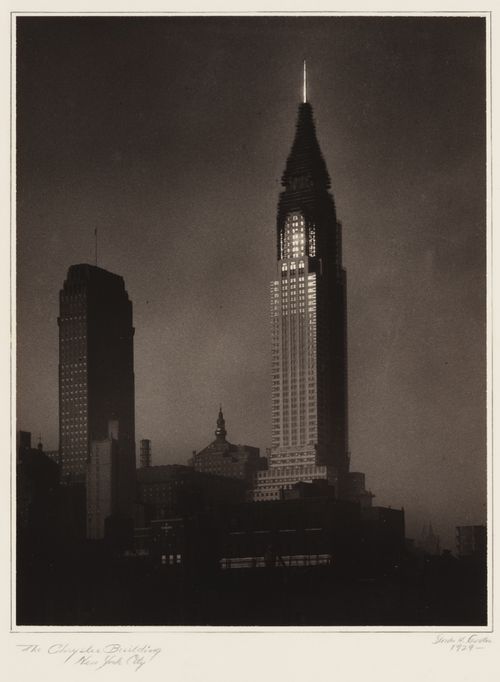
Personnes et institutions:
Date:
1929
1929
Classification:
photographies
photographies
Date:
1929
1929
Personnes et institutions:
Classification:
photographies
photographies
Actions:
Numéro de référence:
PH1977:0016:024
PH1977:0016:024
Personnes et institutions:
Date:
assembled December 1976
assembled December 1976
Titre:
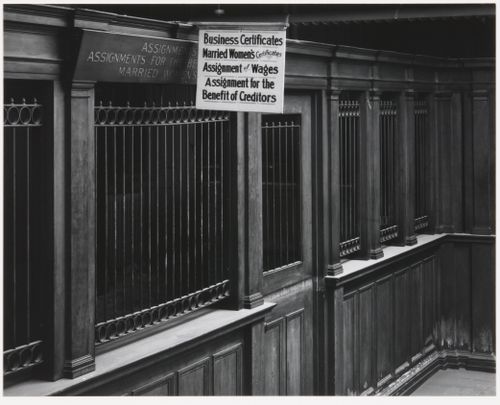
View of cages, city clerk's office, second floor, Old City Hall, Boston, Massachusetts, United States
Actions:
PH1977:0016:024
View of cages, city clerk's office, second floor, Old City Hall, Boston, Massachusetts, United States
Actions:
PH1977:0016:024
Classification:
photographies
photographies
Date:
assembled December 1976
assembled December 1976
Personnes et institutions:
Classification:
photographies
photographies
Titre:
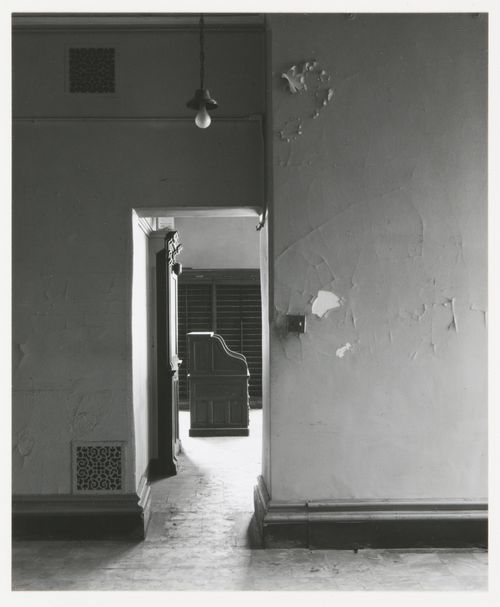
View of rolltop desk, city clerk, second floor, Old City Hall, Boston, Massachusetts, United States
View of rolltop desk, city clerk, second floor, Old City Hall, Boston, Massachusetts, United States
Actions:
Numéro de référence:
PH1977:0016:027
PH1977:0016:027
Personnes et institutions:
Date:
assembled December 1976
assembled December 1976
Titre:
View of rolltop desk, city clerk, second floor, Old City Hall, Boston, Massachusetts, United States
Actions:
PH1977:0016:027
View of rolltop desk, city clerk, second floor, Old City Hall, Boston, Massachusetts, United States
Actions:
PH1977:0016:027
Classification:
photographies
photographies
Date:
assembled December 1976
assembled December 1976
Personnes et institutions:
Classification:
photographies
photographies
Titre:
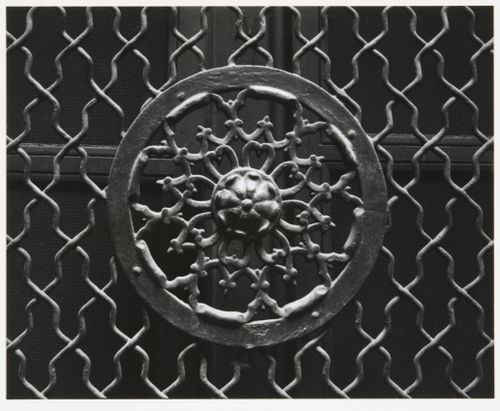
Detail view of window grill, City Hall Avenue, Old City Hall, Boston, Massachusetts, United States
Detail view of window grill, City Hall Avenue, Old City Hall, Boston, Massachusetts, United States
Actions:
Numéro de référence:
PH1977:0016:035
PH1977:0016:035
Personnes et institutions:
Date:
assembled December 1976
assembled December 1976
Titre:
Detail view of window grill, City Hall Avenue, Old City Hall, Boston, Massachusetts, United States
Actions:
PH1977:0016:035
Detail view of window grill, City Hall Avenue, Old City Hall, Boston, Massachusetts, United States
Actions:
PH1977:0016:035
Classification:
photographies
photographies
Date:
assembled December 1976
assembled December 1976
Personnes et institutions:


