


4353 Résultats
Classification:
périodiques
périodiques
Titre:
e-flux index #3
e-flux index #3
Actions:
Prix:
$65.00
(disponible en magasin)
Résumé:
Today we are accustomed to the apophatic gesture of free-speech fundamentalists and far-right demagogues, who use the flimsy legal cover of “just asking questions” to broadcast ever more widely the most violent and reactionary forms of hate speech. In resisting this enclosure of thought, art and theory continue to be instructive, if not essential activities. The late(...)
$65.00
(disponible en magasin)
Résumé:
Today we are accustomed to the apophatic gesture of free-speech fundamentalists and far-right demagogues, who use the flimsy legal cover of “just asking questions” to broadcast ever more widely the most violent and reactionary forms of hate speech. In resisting this enclosure of thought, art and theory continue to be instructive, if not essential activities. The late(...)
Titre:
e-flux index #3
Actions:
Prix:
$65.00
(disponible en magasin)
Résumé:
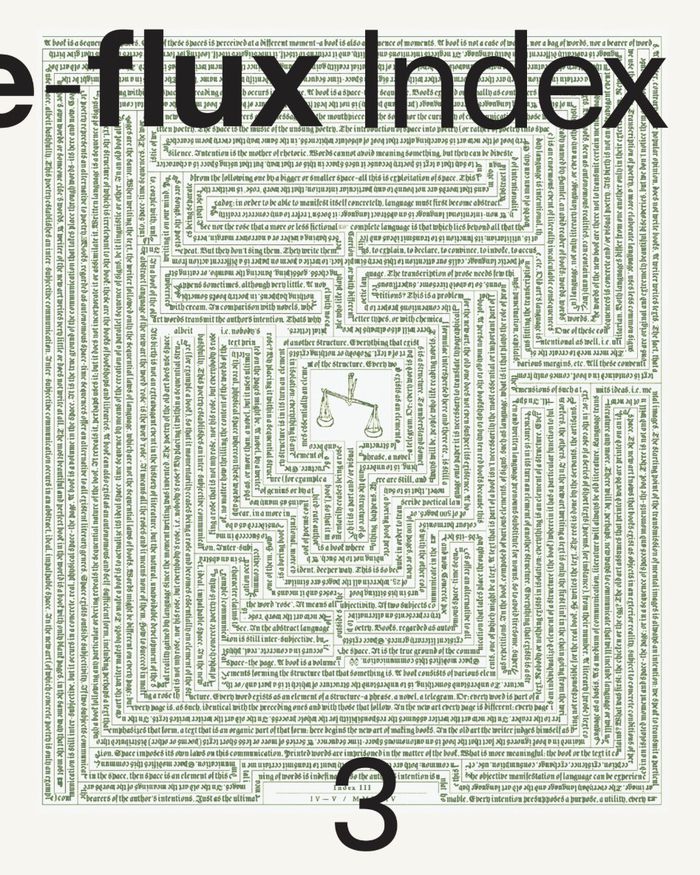
Today we are accustomed to the apophatic gesture of free-speech fundamentalists and far-right demagogues, who use the flimsy legal cover of “just asking questions” to broadcast ever more widely the most violent and reactionary forms of hate speech. In resisting this enclosure of thought, art and theory continue to be instructive, if not essential activities. The late Lawrence Weiner memorably declared that “the purpose of art is to ask questions… it doesn’t answer anybody’s question but gives them the means to answer a particular question at a particular moment.” All the better when those questions can provoke a certain illuminating friction with the contradictions of one’s environment and disrupt the automaticity of one’s learned responses, remaining themselves ambiguous or unanswered—because unanswerable. This third issue of e-flux Index, bringing together all the content commissioned and published by e-flux between April and May 2024, contains many such unexpected and unanswered (or unanswerable) questions across its 76 contributions, each of which cut across and reach beyond existing disciplines and borders: “Who is willing to care?”; “Who is the addressee at the end of the regulated pipelines of the English language?”; “Yes, but is it edible?”; “Why does everyone hate college students?”; “Is some form of suffering the condition for the emergence of an organic type of intelligence?”; “What does it mean to make a film today, in 2024, when most of our image consumption has been transferred to other (smaller) screens and other media?; “How to represent history?”; “Whose lives are worth remembering—or even, living?”; “How is it possible to speak the language of imperial renaissance and decolonization in the same breath?”; “Today is which day of the revolution?”—“Are these all just notes for a poem?”
e-flux index #3
Actions:
Prix:
$65.00
(disponible en magasin)
Résumé:
Today we are accustomed to the apophatic gesture of free-speech fundamentalists and far-right demagogues, who use the flimsy legal cover of “just asking questions” to broadcast ever more widely the most violent and reactionary forms of hate speech. In resisting this enclosure of thought, art and theory continue to be instructive, if not essential activities. The late Lawrence Weiner memorably declared that “the purpose of art is to ask questions… it doesn’t answer anybody’s question but gives them the means to answer a particular question at a particular moment.” All the better when those questions can provoke a certain illuminating friction with the contradictions of one’s environment and disrupt the automaticity of one’s learned responses, remaining themselves ambiguous or unanswered—because unanswerable. This third issue of e-flux Index, bringing together all the content commissioned and published by e-flux between April and May 2024, contains many such unexpected and unanswered (or unanswerable) questions across its 76 contributions, each of which cut across and reach beyond existing disciplines and borders: “Who is willing to care?”; “Who is the addressee at the end of the regulated pipelines of the English language?”; “Yes, but is it edible?”; “Why does everyone hate college students?”; “Is some form of suffering the condition for the emergence of an organic type of intelligence?”; “What does it mean to make a film today, in 2024, when most of our image consumption has been transferred to other (smaller) screens and other media?; “How to represent history?”; “Whose lives are worth remembering—or even, living?”; “How is it possible to speak the language of imperial renaissance and decolonization in the same breath?”; “Today is which day of the revolution?”—“Are these all just notes for a poem?”
Classification:
périodiques
périodiques
Publication:
décembre 2024
décembre 2024
Sujet:
Revues
Revues
Classification:
livres
livres
Actions:
Prix:
$71.95
(disponible sur commande)
Résumé:
Although many people view virtual reality as a totally new phenomenon, it has its foundations in an unrecognized history of immersive images. Indeed, the search for illusionary visual space can be traced back to antiquity. In this book Oliver Grau shows how virtual art fits into the art history of illusion and immersion. He describes the metamorphosis of the concepts of(...)
$71.95
(disponible sur commande)
Résumé:
Although many people view virtual reality as a totally new phenomenon, it has its foundations in an unrecognized history of immersive images. Indeed, the search for illusionary visual space can be traced back to antiquity. In this book Oliver Grau shows how virtual art fits into the art history of illusion and immersion. He describes the metamorphosis of the concepts of(...)
Titre:
Virtual art from illusion to immersion
Actions:
Prix:
$71.95
(disponible sur commande)
Résumé:
Although many people view virtual reality as a totally new phenomenon, it has its foundations in an unrecognized history of immersive images. Indeed, the search for illusionary visual space can be traced back to antiquity. In this book Oliver Grau shows how virtual art fits into the art history of illusion and immersion. He describes the metamorphosis of the concepts of art and the image and relates those concepts to interactive art, interface design, agents, telepresence, and image evolution. Grau retells art history as media history, helping us to understand the phenomenon of virtual reality beyond the hype. Grau shows how each epoch used the technical means available to produce maximum illusion. He discusses frescoes such as those in the Villa dei Misteri in Pompeii and the gardens of the Villa Livia near Primaporta, Renaissance and Baroque illusion spaces, and panoramas, which were the most developed form of illusion achieved through traditional methods of painting and the mass image medium before film. Through a detailed analysis of perhaps the most important German panorama, Anton von Werner's 1883 The Battle of Sedan, Grau shows how immersion produced emotional responses. He traces immersive cinema through Cinerama, Sensorama, Expanded Cinema, 3-D, Omnimax and IMAX, and the head mounted display with its military origins. He also examines those characteristics of virtual reality that distinguish it from earlier forms of illusionary art. His analysis draws on the work of contemporary artists and groups ART+COM, Maurice Benayoun, Charlotte Davies, Monika Fleischmann, Ken Goldberg, Agnes Hegedues, Eduardo Kac, Knowbotic Research, Laurent Mignonneau, Michael Naimark, Simon Penny, Daniela Plewe, Paul Sermon, Jeffrey Shaw, Karl Sims, Christa Sommerer, and Wolfgang Strauss. Grau offers not just a history of illusionary space but also a theoretical framework for analyzing its phenomenologies, functions, and strategies throughout history and into the future.
Virtual art from illusion to immersion
Actions:
Prix:
$71.95
(disponible sur commande)
Résumé:
Although many people view virtual reality as a totally new phenomenon, it has its foundations in an unrecognized history of immersive images. Indeed, the search for illusionary visual space can be traced back to antiquity. In this book Oliver Grau shows how virtual art fits into the art history of illusion and immersion. He describes the metamorphosis of the concepts of art and the image and relates those concepts to interactive art, interface design, agents, telepresence, and image evolution. Grau retells art history as media history, helping us to understand the phenomenon of virtual reality beyond the hype. Grau shows how each epoch used the technical means available to produce maximum illusion. He discusses frescoes such as those in the Villa dei Misteri in Pompeii and the gardens of the Villa Livia near Primaporta, Renaissance and Baroque illusion spaces, and panoramas, which were the most developed form of illusion achieved through traditional methods of painting and the mass image medium before film. Through a detailed analysis of perhaps the most important German panorama, Anton von Werner's 1883 The Battle of Sedan, Grau shows how immersion produced emotional responses. He traces immersive cinema through Cinerama, Sensorama, Expanded Cinema, 3-D, Omnimax and IMAX, and the head mounted display with its military origins. He also examines those characteristics of virtual reality that distinguish it from earlier forms of illusionary art. His analysis draws on the work of contemporary artists and groups ART+COM, Maurice Benayoun, Charlotte Davies, Monika Fleischmann, Ken Goldberg, Agnes Hegedues, Eduardo Kac, Knowbotic Research, Laurent Mignonneau, Michael Naimark, Simon Penny, Daniela Plewe, Paul Sermon, Jeffrey Shaw, Karl Sims, Christa Sommerer, and Wolfgang Strauss. Grau offers not just a history of illusionary space but also a theoretical framework for analyzing its phenomenologies, functions, and strategies throughout history and into the future.
Classification:
livres
livres
Publication:
janvier 1900, Cambridge, Mass.
janvier 1900, Cambridge, Mass.
Sujet:
Épistémologie et réseau
Épistémologie et réseau
Classification:
livres
livres
Prix:
$33.95
(disponible sur commande)
Résumé:
Mucking around in the messy terrain of American trash, Jani Scandura tells the story of the United States during the Great Depression through evocative and photo-rich portraits of four different locales: Reno, Harlem, Key West, and Hollywood. In investigating these depression-era �dumps,� places that she claims contained and reclaimed the cultural, ideological, and(...)
$33.95
(disponible sur commande)
Résumé:
Mucking around in the messy terrain of American trash, Jani Scandura tells the story of the United States during the Great Depression through evocative and photo-rich portraits of four different locales: Reno, Harlem, Key West, and Hollywood. In investigating these depression-era �dumps,� places that she claims contained and reclaimed the cultural, ideological, and(...)
Titre:
Down in the dumps: place, modernity, american depression
Actions:
Prix:
$33.95
(disponible sur commande)
Résumé:
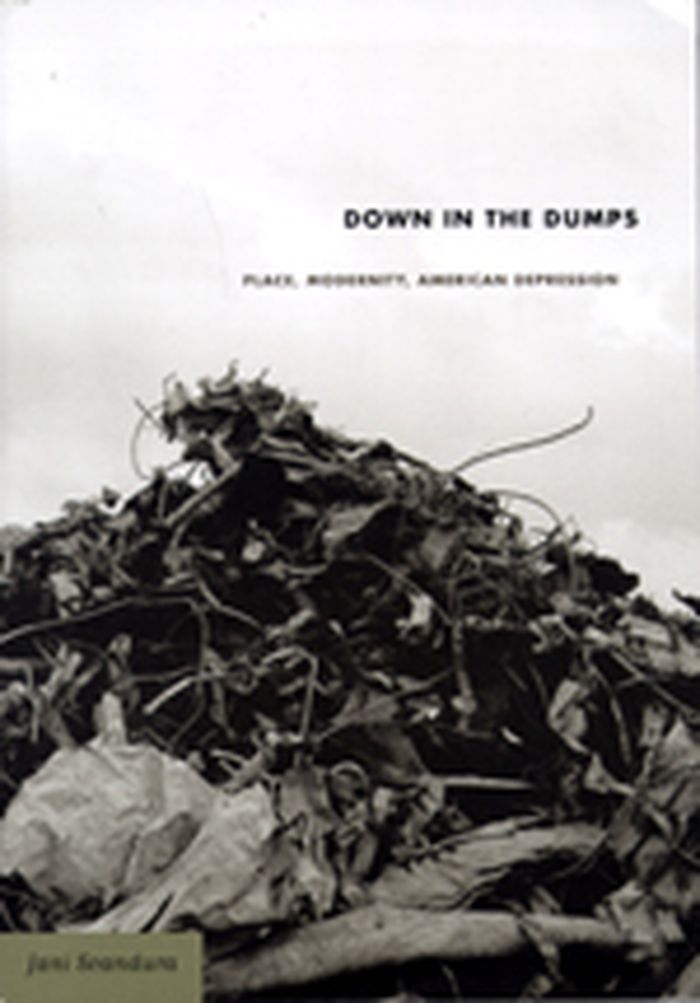
Mucking around in the messy terrain of American trash, Jani Scandura tells the story of the United States during the Great Depression through evocative and photo-rich portraits of four different locales: Reno, Harlem, Key West, and Hollywood. In investigating these depression-era �dumps,� places that she claims contained and reclaimed the cultural, ideological, and material refuse of modern America, Scandura introduces the concept of �depressive modernity,� an enduring affective component of American culture that exposes itself at those moments when the foundational myths of America and progressive modernity�capitalism, democracy, individualism, secularism, utopian aspiration�are thrown into question. Depressive modernity is modernity at a standstill. Such a modernity is not stagnant or fixed, nor immobile, but is constituted by an instantaneous unstaging of desire, territory, language, and memory that reveals itself in the shimmering of place. An interpretive bricolage that draws on an unlikely archive of 1930s detritus�office memos, scribbled manuscripts, scrapbooks, ruined photographs, newspaper clippings, glass eyes, incinerated stage sets, pulp novels, and junk washed ashore�Down in the Dumps escorts its readers through Reno�s 1930s divorce factory, where couples from across the United States came to quickly dissolve matrimonial bonds; Key West�s multilingual salvage economy and the island that became the center of an ideological tug-of-war between the American New Deal government and a politically fraught Caribbean; post-Renaissance Harlem, in the process of memorializing, remembering, grieving and rewriting a modernity that had already passed; and Studio-era Hollywood, Nathanael West�s �dump of dreams,� in which the introduction of sound film and shifts in art direction began to transform how Americans understood place-making and even being itself. A coda on Alcatraz and the Pentagon brings the book into the present, exploring how American Depression comes to bear on post-9/11 America.
Down in the dumps: place, modernity, american depression
Actions:
Prix:
$33.95
(disponible sur commande)
Résumé:
Mucking around in the messy terrain of American trash, Jani Scandura tells the story of the United States during the Great Depression through evocative and photo-rich portraits of four different locales: Reno, Harlem, Key West, and Hollywood. In investigating these depression-era �dumps,� places that she claims contained and reclaimed the cultural, ideological, and material refuse of modern America, Scandura introduces the concept of �depressive modernity,� an enduring affective component of American culture that exposes itself at those moments when the foundational myths of America and progressive modernity�capitalism, democracy, individualism, secularism, utopian aspiration�are thrown into question. Depressive modernity is modernity at a standstill. Such a modernity is not stagnant or fixed, nor immobile, but is constituted by an instantaneous unstaging of desire, territory, language, and memory that reveals itself in the shimmering of place. An interpretive bricolage that draws on an unlikely archive of 1930s detritus�office memos, scribbled manuscripts, scrapbooks, ruined photographs, newspaper clippings, glass eyes, incinerated stage sets, pulp novels, and junk washed ashore�Down in the Dumps escorts its readers through Reno�s 1930s divorce factory, where couples from across the United States came to quickly dissolve matrimonial bonds; Key West�s multilingual salvage economy and the island that became the center of an ideological tug-of-war between the American New Deal government and a politically fraught Caribbean; post-Renaissance Harlem, in the process of memorializing, remembering, grieving and rewriting a modernity that had already passed; and Studio-era Hollywood, Nathanael West�s �dump of dreams,� in which the introduction of sound film and shifts in art direction began to transform how Americans understood place-making and even being itself. A coda on Alcatraz and the Pentagon brings the book into the present, exploring how American Depression comes to bear on post-9/11 America.
Classification:
livres
livres
Publication:
janvier 2008, Durham, London
janvier 2008, Durham, London
Sujet:
Théorie de l’urbanisme
Théorie de l’urbanisme
Classification:
livres
livres
Prix:
$24.95
(disponible sur commande)
Résumé:
Freakier rich people. More suburban art. A venue for new music. Better staplers. An infrastructure for hip-hop. Laneway art. More wi-fi. A more understanding marriage between art and business. Affordable live-work spaces. What would make Toronto a better place for the arts? City Hall proclaimed 2006 the Year of Creativity. ‘Live With Culture’ banners flap over the city.(...)
$24.95
(disponible sur commande)
Résumé:
Freakier rich people. More suburban art. A venue for new music. Better staplers. An infrastructure for hip-hop. Laneway art. More wi-fi. A more understanding marriage between art and business. Affordable live-work spaces. What would make Toronto a better place for the arts? City Hall proclaimed 2006 the Year of Creativity. ‘Live With Culture’ banners flap over the city.(...)
Sujet:
Architecture du Canada
Architecture du Canada
Publication:
novembre 2006, Toronto
novembre 2006, Toronto
Titre:
The state of the arts: living with culture in Toronto
Actions:
Prix:
$24.95
(disponible sur commande)
Résumé:
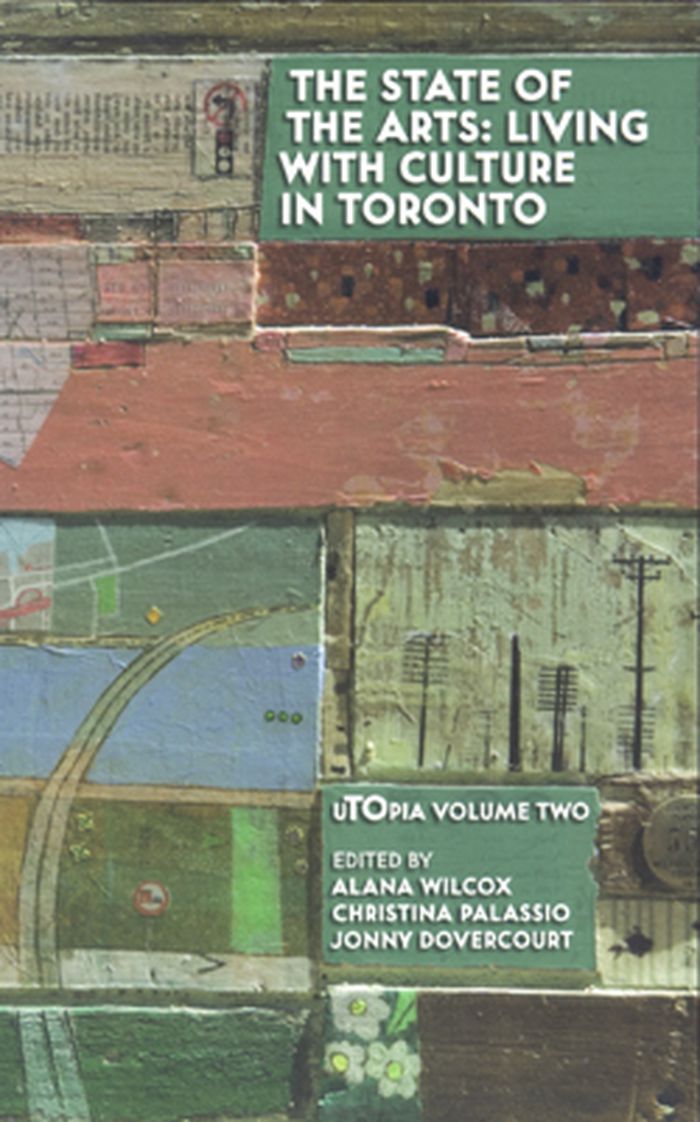
Freakier rich people. More suburban art. A venue for new music. Better staplers. An infrastructure for hip-hop. Laneway art. More wi-fi. A more understanding marriage between art and business. Affordable live-work spaces. What would make Toronto a better place for the arts? City Hall proclaimed 2006 the Year of Creativity. ‘Live With Culture’ banners flap over the city. And across the city, donors are ponying up millions for the ROM and the AGO. Culture’s never had it so good. Right? The State of the Arts explores the Toronto culture scene from every angle, applauding, assailing and arguing about art in our fair burg. The essays consider the big-ticket and the ticket-free, from the CNE to unintentional art. In between, you'll find thoughts on the ’creative city’ and photobloggers, Toronto on film and the fine line between part and art. Taken together the thoughts of these writers, artists and city-builders create a snapshot of culture in T.O. as it grows from ’Toronto the Good’ to ’Toronto the Could’ to ’Toronto the Can-Do.’ Includes sixteen colour pages of eye-level Toronto, and cover art by Susan Szenes. With essays by Sandra Alland, Jason Anderson, Anna Bowness, Stephen Cain, Kate Carraway, Hanna Cho, Brendan Cormier, Natalie De Vito, Liz Forsberg, Mark Fram, Marc Glassman, Katarina Gligorijevic-Collins, Brenda Goldstein, Amy Lavender Harris, Karen Hines, Sarah B. Hood, Christopher Hume, Sam Javanrouh, Dory Kornfeld, Adam Krawesky, More Or Les, John Lorinc, James MacNevin, Claudia McKoy, Brian McLachlan, Ryan McLaren, Shawn Micallef, Jill Murray, Matt O'Sullivan, Christopher Pandolfi, Michael Redhill, Dylan Reid, Damian Rogers, Stuart Ross, Lisa Rundle, Dana Samuel, Nadja Sayej, Susan Szenes, Kevin Temple, Pablo Torres, Gayla Trail, Rannie Turingan, Jason van Eyk, Adam Vaughan, RM Vaughan, Stéphanie Verge, Lisa Whittington-Hill and Carl Wilson.
The state of the arts: living with culture in Toronto
Actions:
Prix:
$24.95
(disponible sur commande)
Résumé:
Freakier rich people. More suburban art. A venue for new music. Better staplers. An infrastructure for hip-hop. Laneway art. More wi-fi. A more understanding marriage between art and business. Affordable live-work spaces. What would make Toronto a better place for the arts? City Hall proclaimed 2006 the Year of Creativity. ‘Live With Culture’ banners flap over the city. And across the city, donors are ponying up millions for the ROM and the AGO. Culture’s never had it so good. Right? The State of the Arts explores the Toronto culture scene from every angle, applauding, assailing and arguing about art in our fair burg. The essays consider the big-ticket and the ticket-free, from the CNE to unintentional art. In between, you'll find thoughts on the ’creative city’ and photobloggers, Toronto on film and the fine line between part and art. Taken together the thoughts of these writers, artists and city-builders create a snapshot of culture in T.O. as it grows from ’Toronto the Good’ to ’Toronto the Could’ to ’Toronto the Can-Do.’ Includes sixteen colour pages of eye-level Toronto, and cover art by Susan Szenes. With essays by Sandra Alland, Jason Anderson, Anna Bowness, Stephen Cain, Kate Carraway, Hanna Cho, Brendan Cormier, Natalie De Vito, Liz Forsberg, Mark Fram, Marc Glassman, Katarina Gligorijevic-Collins, Brenda Goldstein, Amy Lavender Harris, Karen Hines, Sarah B. Hood, Christopher Hume, Sam Javanrouh, Dory Kornfeld, Adam Krawesky, More Or Les, John Lorinc, James MacNevin, Claudia McKoy, Brian McLachlan, Ryan McLaren, Shawn Micallef, Jill Murray, Matt O'Sullivan, Christopher Pandolfi, Michael Redhill, Dylan Reid, Damian Rogers, Stuart Ross, Lisa Rundle, Dana Samuel, Nadja Sayej, Susan Szenes, Kevin Temple, Pablo Torres, Gayla Trail, Rannie Turingan, Jason van Eyk, Adam Vaughan, RM Vaughan, Stéphanie Verge, Lisa Whittington-Hill and Carl Wilson.
Classification:
livres
livres
Publication:
novembre 2006, Toronto
novembre 2006, Toronto
Sujet:
Architecture du Canada
Architecture du Canada
Classification:
livres
livres
Titre:
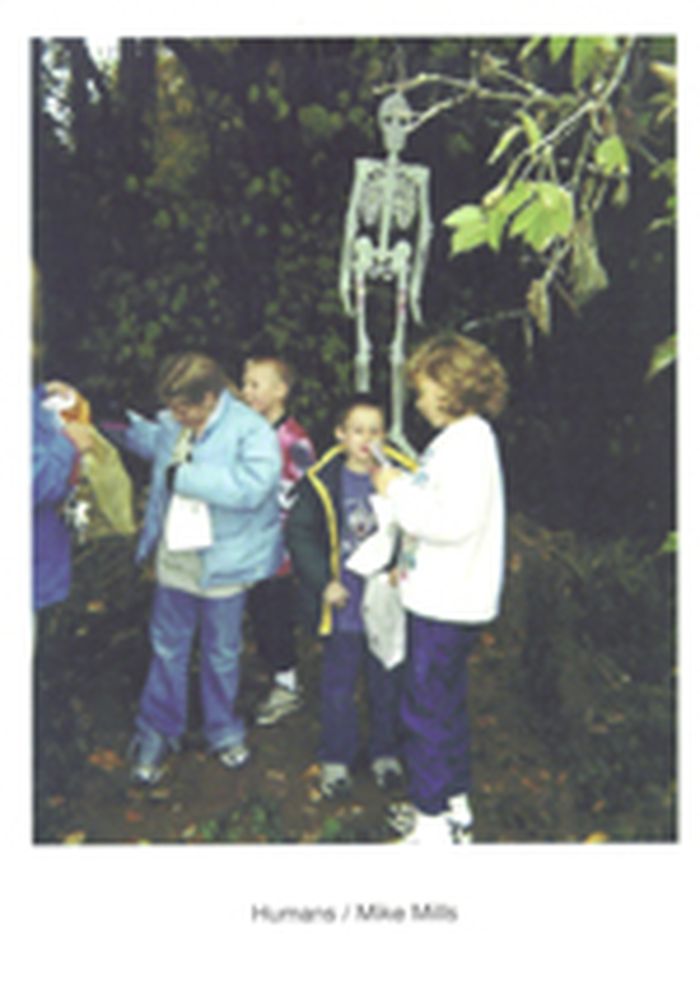
Humans / Mike Mills
Humans / Mike Mills
Actions:
Prix:
$20.00
(disponible en magasin)
Résumé:
'Humans Manifesto. No plan survives first contact with the enemy. Sometimes being dumb is the only smart alternative. Shy people are secretly egoists. Nothing is real. Everything you see is a dream you project onto the world. Children live out their parents unconscious. The only animals that suffer from anxiety are the ones that associate with humans. I don’t(...)
$20.00
(disponible en magasin)
Résumé:
'Humans Manifesto. No plan survives first contact with the enemy. Sometimes being dumb is the only smart alternative. Shy people are secretly egoists. Nothing is real. Everything you see is a dream you project onto the world. Children live out their parents unconscious. The only animals that suffer from anxiety are the ones that associate with humans. I don’t(...)
Titre:
Humans / Mike Mills
Actions:
Prix:
$20.00
(disponible en magasin)
Résumé:
'Humans Manifesto. No plan survives first contact with the enemy. Sometimes being dumb is the only smart alternative. Shy people are secretly egoists. Nothing is real. Everything you see is a dream you project onto the world. Children live out their parents unconscious. The only animals that suffer from anxiety are the ones that associate with humans. I don’t trust people who are very articulate. The only way to be sane is to embrace your insanity. When you feel guilty about being sad, remember Walt Disney was a manic depressive. Everything I said could be totally wrong.' Mills’ intent is not to make a statement but to ask questions, to make people more curious: “I hope the things I make can grow on people over time. At first it is just a drawing of cracks, then later, after living with the design you have more personal associations with it, it means more things, it becomes more emotional.” Mike Mills is widely renown as a graphic artist and filmmaker. He has been defined as one of the creative visionaries of our times, responsible for album covers and music videos for bands such as the Beastie Boys, Sonic Youth, Beck and Air. Mills has directed various commercials, music videos, and short films and his first feature film, Thumbsucker, adapted by Mills from the homonymous novel by Walter Kirn will be released this fall. As a graphic designer, Mills designed the famous X-Girl logo and shirts graphics, Kim Gordon and Daisy Von Furth’s clothing company, as well as skateboard graphics for Supreme, Stereo and Subliminal. For Marc Jacobs he designed scarves and fabrics, and other fashion related graphics for Esprit and The Gap
Humans / Mike Mills
Actions:
Prix:
$20.00
(disponible en magasin)
Résumé:
'Humans Manifesto. No plan survives first contact with the enemy. Sometimes being dumb is the only smart alternative. Shy people are secretly egoists. Nothing is real. Everything you see is a dream you project onto the world. Children live out their parents unconscious. The only animals that suffer from anxiety are the ones that associate with humans. I don’t trust people who are very articulate. The only way to be sane is to embrace your insanity. When you feel guilty about being sad, remember Walt Disney was a manic depressive. Everything I said could be totally wrong.' Mills’ intent is not to make a statement but to ask questions, to make people more curious: “I hope the things I make can grow on people over time. At first it is just a drawing of cracks, then later, after living with the design you have more personal associations with it, it means more things, it becomes more emotional.” Mike Mills is widely renown as a graphic artist and filmmaker. He has been defined as one of the creative visionaries of our times, responsible for album covers and music videos for bands such as the Beastie Boys, Sonic Youth, Beck and Air. Mills has directed various commercials, music videos, and short films and his first feature film, Thumbsucker, adapted by Mills from the homonymous novel by Walter Kirn will be released this fall. As a graphic designer, Mills designed the famous X-Girl logo and shirts graphics, Kim Gordon and Daisy Von Furth’s clothing company, as well as skateboard graphics for Supreme, Stereo and Subliminal. For Marc Jacobs he designed scarves and fabrics, and other fashion related graphics for Esprit and The Gap
Classification:
livres
livres
Publication:
janvier 2003, Zürich
janvier 2003, Zürich
Classification:
livres
livres
Actions:
Prix:
$33.95
(disponible sur commande)
Résumé:
"Fuel" is an idiosyncratic, speculative dictionary of fuels, real and imagined, historical and futuristic, hopeless and utopian. Drawing on literature, film, and scientific treatises--most produced long before "climate change" was in circulation--"Fuel" argues for a distinction between energy (a system of power) and fuel (a substance, which can be thought of as(...)
$33.95
(disponible sur commande)
Résumé:
"Fuel" is an idiosyncratic, speculative dictionary of fuels, real and imagined, historical and futuristic, hopeless and utopian. Drawing on literature, film, and scientific treatises--most produced long before "climate change" was in circulation--"Fuel" argues for a distinction between energy (a system of power) and fuel (a substance, which can be thought of as(...)
Titre:
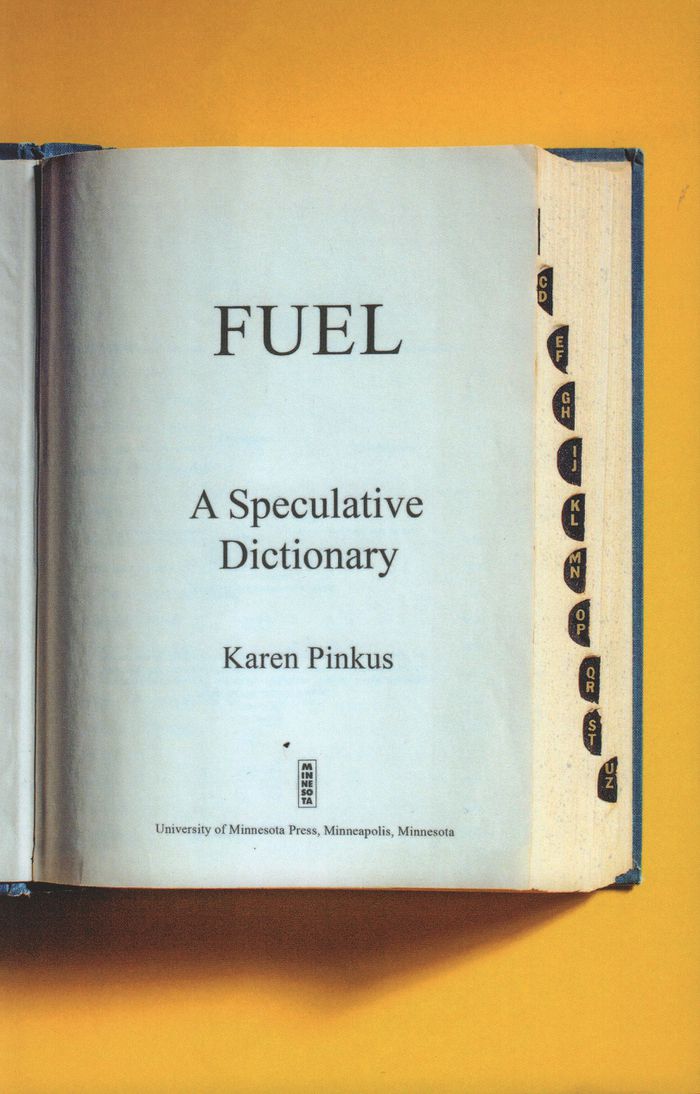
Fuel : a speculative dictionary
Actions:
Prix:
$33.95
(disponible sur commande)
Résumé:
"Fuel" is an idiosyncratic, speculative dictionary of fuels, real and imagined, historical and futuristic, hopeless and utopian. Drawing on literature, film, and scientific treatises--most produced long before "climate change" was in circulation--"Fuel" argues for a distinction between energy (a system of power) and fuel (a substance, which can be thought of as "potentiality") as it endeavors to undo the dream that we can simply switch to renewables and all will be golden. From "Air" to "Zyklon B," entries in this unusual "dictionary" include Algae, Clathrates, Dilithium, Fleece, Goats, Theology, Whale Oil, and many, many more. The tone of the entries ranges as widely as the topics: from historical anecdotes (the Ford Fiesta "boozemobile") to eccentric readings of the classics of "energy lit" ( Germinal and Oil! ); from literary observations (a high octane Odyssey ?) to excursions into literary theory. The dictionary draws from an eccentric canon, including works by Jules Verne, George Eliot's Silas Marner , Paolo Bacigalupi's Windup Girl , and the Tom Cruise vehicle Oblivion , among others. A message from this ambitious project is that energy can be understood as a heterogeneous set of self-mystifying systems or machines that block access to thought as they fascinate us. Fuels emerge as more primal elements that the audience can grasp at various points along the way to consumption/combustion. This dictionary can help scramble our thinking about fuel--not in order to demonize energy and not in order to create a new hierarchy in which certain renewables take over from fossil fuels but instead to open up potential ways of interacting with real and imaginary substances, by wrenching them out of narrative and placing them into an idiosyncratic dictionary to be applied by readers into new narratives.
Fuel : a speculative dictionary
Actions:
Prix:
$33.95
(disponible sur commande)
Résumé:
"Fuel" is an idiosyncratic, speculative dictionary of fuels, real and imagined, historical and futuristic, hopeless and utopian. Drawing on literature, film, and scientific treatises--most produced long before "climate change" was in circulation--"Fuel" argues for a distinction between energy (a system of power) and fuel (a substance, which can be thought of as "potentiality") as it endeavors to undo the dream that we can simply switch to renewables and all will be golden. From "Air" to "Zyklon B," entries in this unusual "dictionary" include Algae, Clathrates, Dilithium, Fleece, Goats, Theology, Whale Oil, and many, many more. The tone of the entries ranges as widely as the topics: from historical anecdotes (the Ford Fiesta "boozemobile") to eccentric readings of the classics of "energy lit" ( Germinal and Oil! ); from literary observations (a high octane Odyssey ?) to excursions into literary theory. The dictionary draws from an eccentric canon, including works by Jules Verne, George Eliot's Silas Marner , Paolo Bacigalupi's Windup Girl , and the Tom Cruise vehicle Oblivion , among others. A message from this ambitious project is that energy can be understood as a heterogeneous set of self-mystifying systems or machines that block access to thought as they fascinate us. Fuels emerge as more primal elements that the audience can grasp at various points along the way to consumption/combustion. This dictionary can help scramble our thinking about fuel--not in order to demonize energy and not in order to create a new hierarchy in which certain renewables take over from fossil fuels but instead to open up potential ways of interacting with real and imaginary substances, by wrenching them out of narrative and placing them into an idiosyncratic dictionary to be applied by readers into new narratives.
Classification:
livres
livres
Publication:
novembre 2016
novembre 2016
Classification:
livres
livres
Actions:
Prix:
$22.99
(disponible sur commande)
Résumé:
In 1923, a group of young radical German thinkers and intellectuals came together to at Victoria Alle 7, Frankfurt, determined to explain the workings of the modern world. Among the most prominent members of what became the Frankfurt School were the philosophers Walter Benjamin, Theodor Adorno, Max Horkheimer, and Herbert Marcuse. Not only would they change the way we(...)
$22.99
(disponible sur commande)
Résumé:
In 1923, a group of young radical German thinkers and intellectuals came together to at Victoria Alle 7, Frankfurt, determined to explain the workings of the modern world. Among the most prominent members of what became the Frankfurt School were the philosophers Walter Benjamin, Theodor Adorno, Max Horkheimer, and Herbert Marcuse. Not only would they change the way we(...)
Titre:
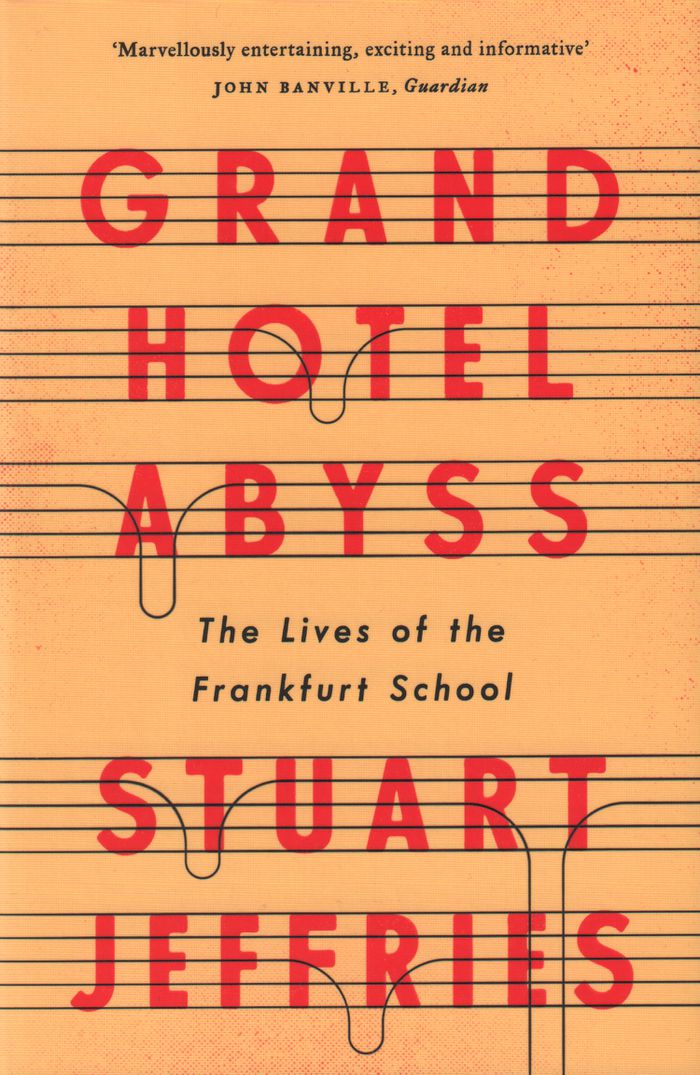
Grand Hotel Abyss: the lives of the Frankfurt school
Actions:
Prix:
$22.99
(disponible sur commande)
Résumé:
In 1923, a group of young radical German thinkers and intellectuals came together to at Victoria Alle 7, Frankfurt, determined to explain the workings of the modern world. Among the most prominent members of what became the Frankfurt School were the philosophers Walter Benjamin, Theodor Adorno, Max Horkheimer, and Herbert Marcuse. Not only would they change the way we think, but also the subjects we deem worthy of intellectual investigation. Their lives, like their ideas, profoundly, sometimes tragically, reflected and shaped the shattering events of the twentieth century. "Grand Hotel Abyss" combines biography, philosophy, and storytelling to reveal how the Frankfurt thinkers gathered in hopes of understanding the politics of culture during the rise of fascism. Some of them, forced to escape the horrors of Nazi Germany, later found exile in the United States. Benjamin, with his last great work—the incomplete Arcades Project—in his suitcase, was arrested in Spain and committed suicide when threatened with deportation to Nazi-occupied France. On the other side of the Atlantic, Adorno failed in his bid to become a Hollywood screenwriter, denounced jazz, and even met Charlie Chaplin in Malibu. After the war, there was a resurgence of interest in the School. From the relative comfort of sun-drenched California, Herbert Marcuse wrote the classic One Dimensional Man, which influenced the 1960s counterculture and thinkers such as Angela Davis; while in a tragic coda, Adorno died from a heart attack following confrontations with student radicals in Berlin. By taking popular culture seriously as an object of study—whether it was film, music, ideas, or consumerism—the Frankfurt School elaborated upon the nature and crisis of our mass-produced, mechanised society. Grand Hotel Abyss shows how much these ideas still tell us about our age of social media and runaway consumption.
Grand Hotel Abyss: the lives of the Frankfurt school
Actions:
Prix:
$22.99
(disponible sur commande)
Résumé:
In 1923, a group of young radical German thinkers and intellectuals came together to at Victoria Alle 7, Frankfurt, determined to explain the workings of the modern world. Among the most prominent members of what became the Frankfurt School were the philosophers Walter Benjamin, Theodor Adorno, Max Horkheimer, and Herbert Marcuse. Not only would they change the way we think, but also the subjects we deem worthy of intellectual investigation. Their lives, like their ideas, profoundly, sometimes tragically, reflected and shaped the shattering events of the twentieth century. "Grand Hotel Abyss" combines biography, philosophy, and storytelling to reveal how the Frankfurt thinkers gathered in hopes of understanding the politics of culture during the rise of fascism. Some of them, forced to escape the horrors of Nazi Germany, later found exile in the United States. Benjamin, with his last great work—the incomplete Arcades Project—in his suitcase, was arrested in Spain and committed suicide when threatened with deportation to Nazi-occupied France. On the other side of the Atlantic, Adorno failed in his bid to become a Hollywood screenwriter, denounced jazz, and even met Charlie Chaplin in Malibu. After the war, there was a resurgence of interest in the School. From the relative comfort of sun-drenched California, Herbert Marcuse wrote the classic One Dimensional Man, which influenced the 1960s counterculture and thinkers such as Angela Davis; while in a tragic coda, Adorno died from a heart attack following confrontations with student radicals in Berlin. By taking popular culture seriously as an object of study—whether it was film, music, ideas, or consumerism—the Frankfurt School elaborated upon the nature and crisis of our mass-produced, mechanised society. Grand Hotel Abyss shows how much these ideas still tell us about our age of social media and runaway consumption.
Classification:
livres
livres
Publication:
septembre 2017
septembre 2017
Sujet:
Théorie/ philosophie
Théorie/ philosophie
Classification:
livres
livres
Actions:
Prix:
$99.95
(disponible sur commande)
Résumé:
While the history of photography is a well-established canon, much less critical attention has been directed at the phenomenon of the photobook, which for many photographers is perhaps the most significant vehicle for the display of their work and the communication of their vision to a mass audience. In the first of two volumes, both co-edited by Martin Parr and Gerry(...)
$99.95
(disponible sur commande)
Résumé:
While the history of photography is a well-established canon, much less critical attention has been directed at the phenomenon of the photobook, which for many photographers is perhaps the most significant vehicle for the display of their work and the communication of their vision to a mass audience. In the first of two volumes, both co-edited by Martin Parr and Gerry(...)
Sujet:
Photographie- collections
Photographie- collections
Publication:
novembre 2004, London
novembre 2004, London
Titre:
The photobook : a history, volume 1
Actions:
Prix:
$99.95
(disponible sur commande)
Résumé:
While the history of photography is a well-established canon, much less critical attention has been directed at the phenomenon of the photobook, which for many photographers is perhaps the most significant vehicle for the display of their work and the communication of their vision to a mass audience. In the first of two volumes, both co-edited by Martin Parr and Gerry Badger, "The Photobook" provides a comprehensive overview of the development of the photobook, from its inception at the dawn of photography in the early nineteenth century through to the radical Japanese photobooks of the 1960s and 70s, by way of the modernist and propaganda books of the 1930s and 40s. In his introduction, Badger argues that the photobook is one of the most significant photographic genres due to the extent of its distribution and level of availability, and contests the traditional notion that the history of photography is best represented by the original print. This study provides an important corrective to the traditional history of photography. The selection of photographers made by Badger and Parr challenges the popular canon, and their survey of the history of the photobook reveals a secret web of influence and interrelationships between photographers and photographic movements around the world. The book is divided into a series of thematic and broadly chronological chapters, each featuring a general introductory text providing background information and highlighting the dominant political and artistic influences on the photobook in the period, followed by more detailed discussion of the individual photobooks. The chapter texts are followed by spreads and images from over 200 books, which provide the central means of telling the history of the photobook. Chosen by Parr and Badger, these illustrations show around 200 of the most artistically and culturally important photobooks in three dimensions, with the cover or jacket and a selection of spreads from the book shown. Volume One also features an illuminating and provocative introduction, ‘The Photobook: Between the Film and the Novel’ by Badger, which is accompanied by a preface written by Parr.
The photobook : a history, volume 1
Actions:
Prix:
$99.95
(disponible sur commande)
Résumé:
While the history of photography is a well-established canon, much less critical attention has been directed at the phenomenon of the photobook, which for many photographers is perhaps the most significant vehicle for the display of their work and the communication of their vision to a mass audience. In the first of two volumes, both co-edited by Martin Parr and Gerry Badger, "The Photobook" provides a comprehensive overview of the development of the photobook, from its inception at the dawn of photography in the early nineteenth century through to the radical Japanese photobooks of the 1960s and 70s, by way of the modernist and propaganda books of the 1930s and 40s. In his introduction, Badger argues that the photobook is one of the most significant photographic genres due to the extent of its distribution and level of availability, and contests the traditional notion that the history of photography is best represented by the original print. This study provides an important corrective to the traditional history of photography. The selection of photographers made by Badger and Parr challenges the popular canon, and their survey of the history of the photobook reveals a secret web of influence and interrelationships between photographers and photographic movements around the world. The book is divided into a series of thematic and broadly chronological chapters, each featuring a general introductory text providing background information and highlighting the dominant political and artistic influences on the photobook in the period, followed by more detailed discussion of the individual photobooks. The chapter texts are followed by spreads and images from over 200 books, which provide the central means of telling the history of the photobook. Chosen by Parr and Badger, these illustrations show around 200 of the most artistically and culturally important photobooks in three dimensions, with the cover or jacket and a selection of spreads from the book shown. Volume One also features an illuminating and provocative introduction, ‘The Photobook: Between the Film and the Novel’ by Badger, which is accompanied by a preface written by Parr.
Classification:
livres
livres
Publication:
novembre 2004, London
novembre 2004, London
Sujet:
Photographie- collections
Photographie- collections
Classification:
livres
livres
Actions:
Prix:
$39.95
(disponible sur commande)
Résumé:
In postwar France, the aesthetics of appropriation and collage gave cultural form to a struggle over meaning. A new wave of avant-garde experimentation used - or stole, plagiarized, and expropriated - elements from advertising, journalism, literature, art, and other sources of common discourse (the ironically named "beautiful language" of this book's title, itself an(...)
$39.95
(disponible sur commande)
Résumé:
In postwar France, the aesthetics of appropriation and collage gave cultural form to a struggle over meaning. A new wave of avant-garde experimentation used - or stole, plagiarized, and expropriated - elements from advertising, journalism, literature, art, and other sources of common discourse (the ironically named "beautiful language" of this book's title, itself an(...)
Publication:
février 2007, Cambridge (MA)
février 2007, Cambridge (MA)
Titre:
The beautiful language of my century : reinventing the language of contestation in postwar France, 1945-1968
Actions:
Prix:
$39.95
(disponible sur commande)
Résumé:
In postwar France, the aesthetics of appropriation and collage gave cultural form to a struggle over meaning. A new wave of avant-garde experimentation used - or stole, plagiarized, and expropriated - elements from advertising, journalism, literature, art, and other sources of common discourse (the ironically named "beautiful language" of this book's title, itself an appropriation from Guy Debord's collaged Mémoires). Redeployed, often in startling or pointed juxtapositions, these elements took on newly oppositional meanings. A famous photograph taken inside the occupied Sorbonne in May 1968, for example, shows a massive academic painting altered by a clever cartoonish speech bubble that transforms the painting into a parody of itself and memorializes an event very different from the one captured by the original artist."The beautiful language of my century" describes the various forms of critical culture that culminated in the events of May 1968, and investigates the ways those forms have come down to us today. McDonough explores the montage practice developed by Guy Debord and his situationist colleagues under the name of détournement and its expression in the later fifties as a form of cultural theft. He addresses the influence of colonialism on these practices, examining a 1961 exhibit of torn posters of the Algerian War ("La France déchirée"), Godard's early film Le Petit Soldat, and Christo's Project for a Temporary Wall of Steel Drums. He discusses the French left's adoption in the mid-sixties of the "end of art" as a theoretical position and describes the leftist idea of the fête as a Rabelaisian and revolutionary upwelling of everything that is low. This influential conception, inspired equally by the American urban revolts of the sixties and the writings of theorists Marcel Mauss and Georges Bataille, coalesced into a new image of revolution, a new model of contestation, in the events of May 1968 - when the struggle over language and culture merged with a broader resistance to capitalist modernization.
The beautiful language of my century : reinventing the language of contestation in postwar France, 1945-1968
Actions:
Prix:
$39.95
(disponible sur commande)
Résumé:
In postwar France, the aesthetics of appropriation and collage gave cultural form to a struggle over meaning. A new wave of avant-garde experimentation used - or stole, plagiarized, and expropriated - elements from advertising, journalism, literature, art, and other sources of common discourse (the ironically named "beautiful language" of this book's title, itself an appropriation from Guy Debord's collaged Mémoires). Redeployed, often in startling or pointed juxtapositions, these elements took on newly oppositional meanings. A famous photograph taken inside the occupied Sorbonne in May 1968, for example, shows a massive academic painting altered by a clever cartoonish speech bubble that transforms the painting into a parody of itself and memorializes an event very different from the one captured by the original artist."The beautiful language of my century" describes the various forms of critical culture that culminated in the events of May 1968, and investigates the ways those forms have come down to us today. McDonough explores the montage practice developed by Guy Debord and his situationist colleagues under the name of détournement and its expression in the later fifties as a form of cultural theft. He addresses the influence of colonialism on these practices, examining a 1961 exhibit of torn posters of the Algerian War ("La France déchirée"), Godard's early film Le Petit Soldat, and Christo's Project for a Temporary Wall of Steel Drums. He discusses the French left's adoption in the mid-sixties of the "end of art" as a theoretical position and describes the leftist idea of the fête as a Rabelaisian and revolutionary upwelling of everything that is low. This influential conception, inspired equally by the American urban revolts of the sixties and the writings of theorists Marcel Mauss and Georges Bataille, coalesced into a new image of revolution, a new model of contestation, in the events of May 1968 - when the struggle over language and culture merged with a broader resistance to capitalist modernization.
Classification:
livres
livres
Publication:
février 2007, Cambridge (MA)
février 2007, Cambridge (MA)
Classification:
livres
livres
Actions:
Prix:
$45.00
(disponible sur commande)
Résumé:
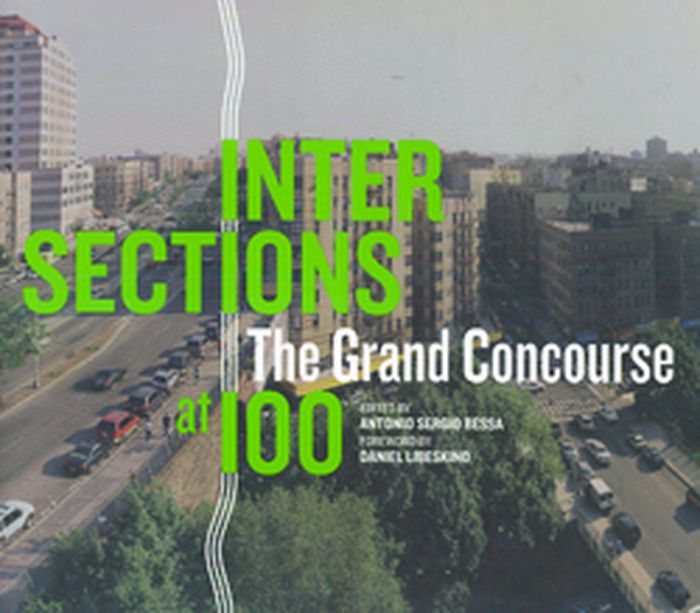
November 2009 marks the 100th anniversary of the Grand Boulevard and Concourse, the Bronx’s crown jewel of urban planning, which stretches over four miles from 138th Street to the Mosholu Parkway. This famous roadway represents Art Deco and Art Moderne architecture at its grandest, including a cornucopia of apartment complexes, the Concourse Plaza Hotel, the Loews(...)
$45.00
(disponible sur commande)
Résumé:
November 2009 marks the 100th anniversary of the Grand Boulevard and Concourse, the Bronx’s crown jewel of urban planning, which stretches over four miles from 138th Street to the Mosholu Parkway. This famous roadway represents Art Deco and Art Moderne architecture at its grandest, including a cornucopia of apartment complexes, the Concourse Plaza Hotel, the Loews(...)
Titre:
Intersections : the grand concourse at 100
Actions:
Prix:
$45.00
(disponible sur commande)
Résumé:
November 2009 marks the 100th anniversary of the Grand Boulevard and Concourse, the Bronx’s crown jewel of urban planning, which stretches over four miles from 138th Street to the Mosholu Parkway. This famous roadway represents Art Deco and Art Moderne architecture at its grandest, including a cornucopia of apartment complexes, the Concourse Plaza Hotel, the Loews Paradise Theater, the Bronx County Courthouse, and, of course, Yankee Stadium. Modeled on the Champs Élysées in Paris and described in the 1939 WPA Guide to New York as “the Park Avenue of the middle-class,” it offered residents amenities not seen before in the city, such as private bathrooms and central heating. This publication examines the rich history of the Bronx’s most famous thoroughfare through a collection of pieces — written by historians and contemporary museum curators, and accompanied by two original texts by Alsatian-born engineer Louis Risse, who designed and oversaw the construction of the Grand Concourse — on the context that informed its planning and construction, along with a vast collection of photographs that bring this period back to life. The book also features six art projects especially commissioned for the occasion : a series of large-scale color photographs by Jeff Liao; a time line by Skowmon Hastanan; The Tree Museum, a project by Katie Holten on the green spaces along the Concourse; a documentary film by Pablo Helguera on three buildings along the Concourse, namely, Poe’s cottage, the Paradise Theater, and the Freedman Home; a project by Kabir Carter about capturing sounds from different areas along the Concourse; and a special lobby installation by Acconci Studio. Traveling the Concourse today offers a lesson in architecture, history, and sociology as you see the faces and places that call it home. It is truly New York, but more important, authentically the Bronx. You can’t experience the Bronx until you travel the Grand Boulevard and Concourse. Foreword by Daniel Libeskind.
Intersections : the grand concourse at 100
Actions:
Prix:
$45.00
(disponible sur commande)
Résumé:
November 2009 marks the 100th anniversary of the Grand Boulevard and Concourse, the Bronx’s crown jewel of urban planning, which stretches over four miles from 138th Street to the Mosholu Parkway. This famous roadway represents Art Deco and Art Moderne architecture at its grandest, including a cornucopia of apartment complexes, the Concourse Plaza Hotel, the Loews Paradise Theater, the Bronx County Courthouse, and, of course, Yankee Stadium. Modeled on the Champs Élysées in Paris and described in the 1939 WPA Guide to New York as “the Park Avenue of the middle-class,” it offered residents amenities not seen before in the city, such as private bathrooms and central heating. This publication examines the rich history of the Bronx’s most famous thoroughfare through a collection of pieces — written by historians and contemporary museum curators, and accompanied by two original texts by Alsatian-born engineer Louis Risse, who designed and oversaw the construction of the Grand Concourse — on the context that informed its planning and construction, along with a vast collection of photographs that bring this period back to life. The book also features six art projects especially commissioned for the occasion : a series of large-scale color photographs by Jeff Liao; a time line by Skowmon Hastanan; The Tree Museum, a project by Katie Holten on the green spaces along the Concourse; a documentary film by Pablo Helguera on three buildings along the Concourse, namely, Poe’s cottage, the Paradise Theater, and the Freedman Home; a project by Kabir Carter about capturing sounds from different areas along the Concourse; and a special lobby installation by Acconci Studio. Traveling the Concourse today offers a lesson in architecture, history, and sociology as you see the faces and places that call it home. It is truly New York, but more important, authentically the Bronx. You can’t experience the Bronx until you travel the Grand Boulevard and Concourse. Foreword by Daniel Libeskind.
Classification:
livres
livres
Publication:
septembre 2009
septembre 2009
Sujet:
Théorie de l’urbanisme
Théorie de l’urbanisme


